

Note: This article contains affiliate links. If you click on these links and make a purchase, I may earn a small commission at no extra cost to you. This helps support my research and content. Read my full affiliate disclosure here.
If your 1997-2001 Honda CR-V feels loose in corners or makes clunking noises over bumps, worn sway bar links are a likely culprit. The right sway bar links restore lateral control, reduce body roll, and remove annoying suspension noise without changing ride height or alignment. This guide covers six carefully shortlisted sway bar link options that suit the CR-V's front or rear stabilizer locations and specific 1997–2001 fitment.We evaluated each candidate for correct fitment, joint durability, and resistance to road corrosion. Below you will find the top options for replacing or upgrading sway bar links on your CR-V, plus practical advice on symptoms, installation, and torque guidance to help you make a confident choice.
Looking for other parts? See all Honda CR-V parts & accessories.
Top Picks at a Glance
| Best Overall The best all-around choice for most situations | BOXI Front & Rear Sway Bar End Link Kit (Set of 4) for Honda CR-V 1997–2001 |  |
| Best Quality Built to a higher standard if you want something more solid | Metrix Premium Chassis Parts 4‑Piece Front & Rear Stabilizer Bar Link Kit for 1997–2001 Honda CR‑V |  |
| Best Value The sweet spot between price and what you get | HHCM 4‑Piece Front and Rear Sway Bar Link Kit for Honda CR-V (1997–2001) |  |
| Best Budget The cheapest option that still gets the job done reliably | MYSMOT Rear Stabilizer Sway Bar End Links for Honda CR-V (1997–2001), Pack of 2 |  |
| Highest Rated A top-rated pick with lots of positive feedback | MOOG K90668 Front Right Sway Bar Link for Honda CR-V |  |
| Most Popular A crowd favorite that many people choose with confidence | Detroit Axle 4 Sway Bar End Links Kit for 1997–2001 Honda CR-V |  |
1. BOXI Front & Rear Sway Bar End Link Kit (Set of 4) for Honda CR-V 1997–2001

| Fitment | Honda CR-V 1997–2001 All Models |
|---|---|
| Included Components | Front left, front right, rear left, rear right sway bar end links |
| Material Type | Metal |
| Manufacturer | ShangHai BOXI Auto Parts Co., Ltd. |
This BOXI kit supplies both front and rear sway bar end links so you can replace all four worn links in one job. It is marketed as a direct-fit replacement for 1997–2001 Honda CR-V models and comes with matching left and right links for each axle, which simplifies installation and reduces parts hunting. The links are metal with factory-style mounting points and are intended to meet or exceed factory specifications; customers report good fitment on original-style suspension setups. Practical benefits include restoring steering stability and reducing clunks or looseness from tired links, and replacing all four at once avoids uneven wear. Some buyers reported premature failures on a minority of units, so while the kit is a budget-friendly way to refresh suspension, it may not match the longevity of higher-end branded parts. Expect straightforward bolt-on installation for a mechanically inclined DIYer or a quick shop job, and check interchangeable part numbers against your vehicle to confirm compatibility before ordering.
Best for: Buyers who want an affordable, all-in-one replacement that restores suspension feel and eliminates clunks, prioritizing straightforward fitment and value over premium longevity.
Less Ideal for: If you prioritize longest-lasting, heavy-duty components for high-mileage or off-road use, consider higher-end or heavy-duty aftermarket links instead.
- Complete set of four links for front and rear so you can replace all wear points at once
- Direct-fit design using OEM interchange numbers for straightforward installation
- Metal construction and factory-style mounts aimed at restoring steering stability
- Some reports of early failures on a minority of units indicating variable durability
Verdict: A budget-friendly, direct-fit four-piece kit that restores handling and eliminates sway-bar noise for 1997–2001 Honda CR-Vs.
2. Metrix Premium Chassis Parts 4‑Piece Front & Rear Stabilizer Bar Link Kit for 1997–2001 Honda CR‑V

| Compatible vehicle | 1997–2001 Honda CR‑V |
|---|---|
| Kit contents | 2 front links, 1 rear right link, 1 rear left link, hardware |
| Construction | High-grade steel with some aluminum components |
| Design features | Greasable fittings; cataphoresis corrosion coating |
| Certifications | IATF 16949 and ISO 9001 |
This Metrix 4-piece kit replaces both front links and both rear links on 1997–2001 Honda CR‑V to restore steering stability and reduce body roll. The kit includes the two front links and two rear links plus necessary hardware for a complete swap, and many of the studs have grease fittings for easy periodic maintenance. Metrix highlights heat-treated studs, high-grade steel construction, aluminum components where used, and cataphoresis coating for enhanced corrosion resistance — practical details for a vehicle often exposed to road salt or harsh conditions. Installation is straightforward for a competent DIYer or tech: lift the vehicle, remove the wheel, swap the worn links and torque to spec. The greasable design and factory-style fitment aim to extend service life and maintain factory handling characteristics, making it a good match for drivers who want firmer, predictable cornering without changing ride geometry. Note that this is a direct replacement kit sized for 1997–2001 CR‑Vs only, so buyers should verify fitment and plan for a wheel alignment check after installation.
Best for: Drivers who want to restore or preserve the CR‑V's handling with a factory‑style replacement that emphasizes durability and maintainability.
Less Ideal for: People looking to change handling characteristics with performance aftermarket links or those who need adjustable end links for lowered or heavily modified suspensions.
- Complete 4-piece kit covers front and rear links so both axle ends are refreshed at once
- Greasable joints on several pieces allow periodic lubrication to extend service life
- Cataphoresis coating and heat-treated studs improve corrosion and wear resistance
- Includes necessary hardware for a direct, factory-style replacement
- Fitment limited to 1997–2001 Honda CR‑V and not adjustable for aftermarket sway bar setups
Verdict: Choose this kit to get a full, durable factory‑style replacement that restores CR‑V handling and lets you maintain joints with grease fittings.
3. HHCM 4‑Piece Front and Rear Sway Bar Link Kit for Honda CR-V (1997–2001)
| Compatible vehicles | Honda CR-V 1997–2001 |
|---|---|
| Kit contents | 2 front links (K90667), 1 rear right (K90668), 1 rear left (K90669) |
| Brand | HHCM |
| Manufacturer | HHCM |
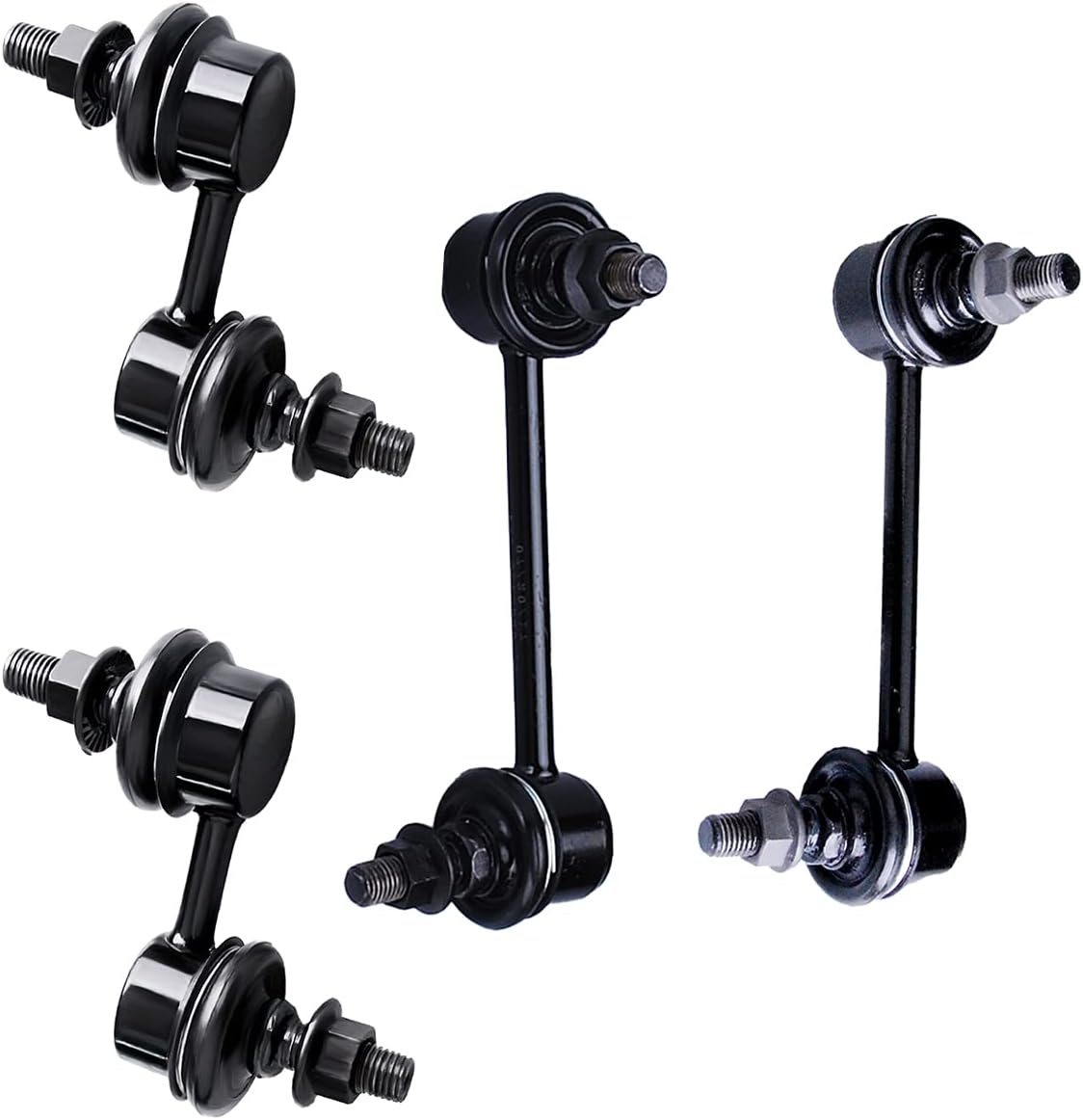
This HHCM kit supplies both front and rear stabilizer links needed to restore steering stability and reduce body roll on a 1997–2001 Honda CR-V. It includes two front link pieces (K90667) and left/right rear links (K90668, K90669) so you can replace worn links in one job rather than piecemeal. Components are made to factory-spec tolerances and the listing notes precision fit for straightforward installation and easier alignment. In daily driving the kit should tighten up loose, clunky handling and remove sway-related noises; the materials and construction are presented as comparable to original-style parts. Practical buyers will appreciate the complete set approach and the 12-month warranty for peace of mind. Limitations are that this is a direct replacement style part rather than an upgraded performance link, so it restores factory handling but will not alter ride characteristics or stiffness for aggressive driving styles.
Best for: Buyers who want a practical, one-stop replacement to restore factory handling and eliminate sway-link noise on a 1997–2001 Honda CR-V without modifying ride behavior.
Less Ideal for: Drivers seeking performance-tuned suspension parts or firmer aftermarket links for aggressive cornering should look at upgraded stabilizer components instead.
- Complete four-piece set covers both front and rear links so all worn links can be replaced at once
- Made to factory-spec tolerances for an easier fit and simpler steering alignment after installation
- Precision manufacturing aimed at reducing installation fiddliness and typical sway-link noise
- Includes left and right rear links so no additional purchases are needed for a full rear replacement
- Not marketed as a performance upgrade so it does not increase sway bar stiffness or improve aggressive handling
Verdict: A convenient factory-style four-piece replacement kit that lets practical owners quickly restore original sway-bar feel and remove clunking on 1997–2001 Honda CR-Vs.
4. MYSMOT Rear Stabilizer Sway Bar End Links for Honda CR-V (1997–2001), Pack of 2

| Auto Part Position | Rear |
|---|---|
| Compatible with Vehicle Type | Car |
| Reference Part Number | K90668, K90669 |
These MYSMOT rear stabilizer end links are a direct replacement set for the rear sway bar on 1997–2001 Honda CR-Vs and come as a pair for left and right sides. They arrive fully assembled and use solid steel/aluminum construction with an electrophoretic coating intended to resist corrosion, so they are suitable for restoring a tired or noisy rear suspension without special tools. Typical use is straightforward: swap out the worn links to reduce sway, vibration, and clunking while improving ride stability during cornering. The kit claims easy installation and includes both left and right links, which simplifies the repair and gets the vehicle back on the road quickly. Limitations are that installation instructions are not included and professional installation may be needed if you are not comfortable with suspension work. Fitment is limited to CR-V 1997–2001, so this set is not a universal solution for other vehicles.
Best for: Buyers replacing worn or noisy rear sway bar links on a 1997–2001 Honda CR-V who want an affordable, ready-to-install pair that restores rear stability without needing special parts ordering.
Less Ideal for: People looking for a premium performance upgrade or adjustable aftermarket links should consider higher-end options instead.
- Direct replacement fit for 1997–2001 Honda CR-V rear sway bar links
- Comes as a fully assembled left and right pair for one-stop repair
- Solid steel/aluminum construction with electrophoretic coating for corrosion resistance
- Designed to reduce noise, vibration, and improve ride comfort and cornering stability
- No printed installation instructions included, which may complicate DIY replacement
Verdict: A budget-friendly, factory‑replacement pair of rear sway bar end links that restores handling and reduces rear-end noise on 1997–2001 Honda CR-Vs.
5. MOOG K90668 Front Right Sway Bar Link for Honda CR-V

| Compatible with Vehicle Type | Honda CR-V |
|---|---|
| Auto Part Position | Right |
| Automotive Fit Type | Vehicle Specific Fit |
| Material Type | Rubber |
The MOOG K90668 is a direct-fit front right sway bar link designed for 1997–2001 Honda CR-V models. It replaces the worn factory link to stop knocking noises, restore tighter steering, and improve cornering stability. MOOG highlights a greaseable socket and reinforced design that help inhibit corrosion and wear while allowing periodic lubrication to flush debris, which extends functional life compared with a sealed, non-greaseable link. Installation is straightforward for anyone with basic suspension tools and often noticeable immediately as reduced play and quieter operation. The part is vehicle-specific so fitment and alignment issues are less likely than with universal links. Trade-offs are that this is a single-link unit intended for a particular side and model years only, so buyers replacing both sides should plan accordingly, and it does not include matching hardware or additional links. For owners prioritizing long-term reliability and a factory-replacement feel, this MOOG link is a practical upgrade that focuses on durability and serviceability.
Best for: Buyers who want a durable, serviceable replacement to fix knocking, restore steering precision, and avoid frequent re-replacement on an older CR-V.
Less Ideal for: If you need a full multi-part suspension refresh or a complete set of links and hardware in one purchase, this single replacement link may not cover everything you need.
- Vehicle-specific fit for 1997–2001 Honda CR-V reduces fitment guesswork
- Greaseable socket allows periodic lubrication to reduce wear and corrosion
- Stiffer, reinforced design improves steering response and reduces knocking
- Designed to restore like-new steering feel and quieter operation
- Sold as a single side unit so you may need to purchase a matching link separately
Verdict: Choose this MOOG sway bar link when you want a durable, greaseable, vehicle-specific replacement to restore steering control and eliminate knocking on a 1997–2001 Honda CR-V.
6. Detroit Axle 4 Sway Bar End Links Kit for 1997–2001 Honda CR-V
| Fitment | 1997–2001 Honda CR-V |
|---|---|
| Kit contents | 4 sway bar end links (front and rear) |
| Material | Premium alloy |
| Grease fittings | Zerk fittings included |
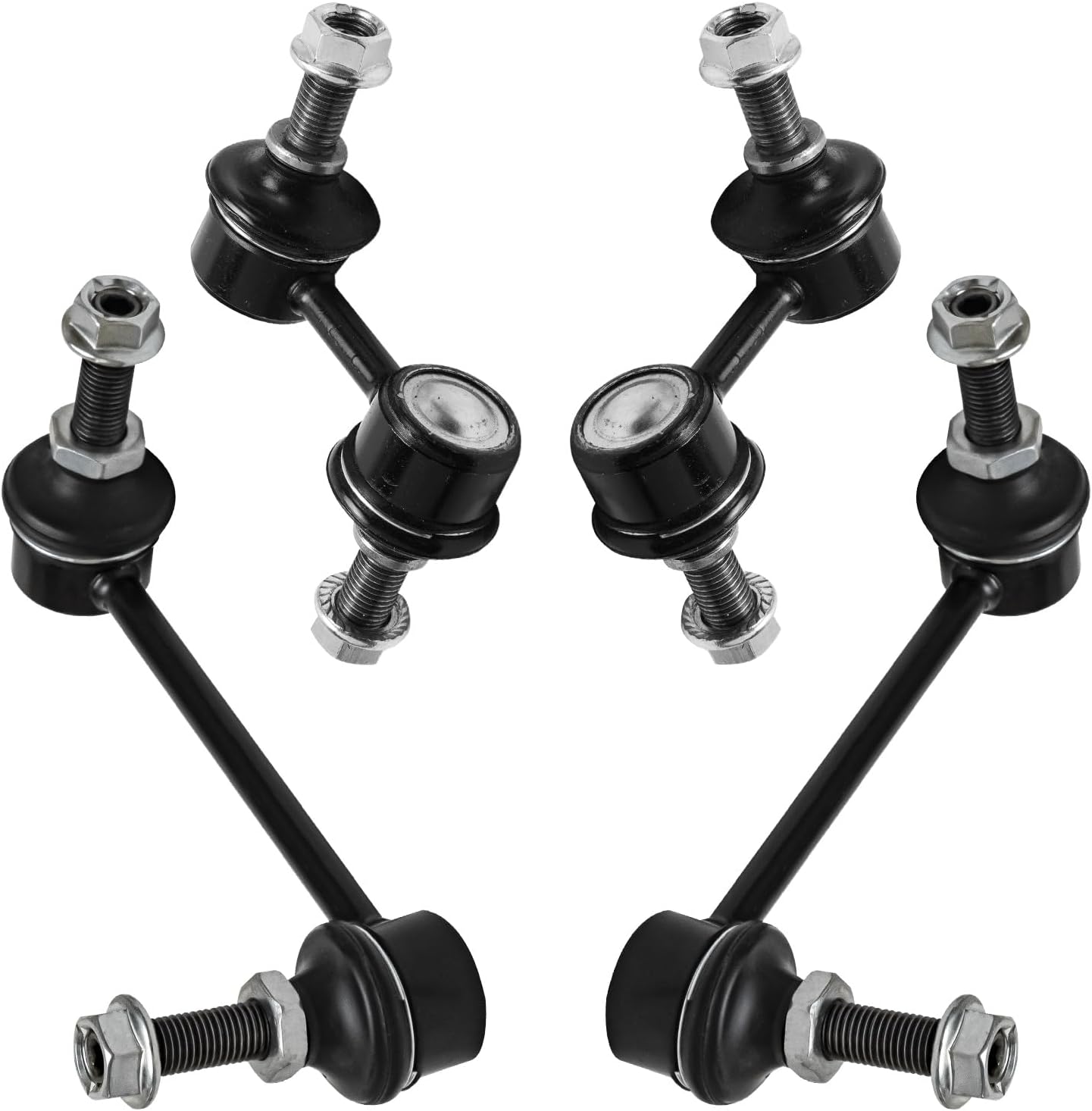
This Detroit Axle kit supplies four sway bar end links intended to replace both front and rear worn links on 1997–2001 Honda CR-Vs. Each link is made from premium alloy with a high-strength structure and comes as direct-fit pieces so installation follows factory attachment points. In practice the kit restores steering stability and removes rattle and looseness associated with old or failed links, improving body roll control during cornering and everyday driving. The parts arrive dry and include zerk fittings so you should grease them during installation for smooth articulation. Reviewers report a noticeably beefier feel than stock and that the thicker construction simplifies removal of seized hardware, though some stubborn rusty nuts may still require heat or extra tools. The kit is a practical, budget-friendly way to refresh suspension behavior on older CR-Vs without modifying factory geometry.
Best for: Buyers who want a straightforward, factory-style replacement to eliminate sway bar noise and restore cornering stability on an older CR-V, with an emphasis on proven user experience and reliability.
Less Ideal for: Drivers seeking performance-tuned or adjustable sway bar links for modified handling should look to specialty aftermarket options instead.
- Direct-fit design for straightforward replacement on specified CR-V model years
- Premium alloy construction with reinforced structure for increased durability
- Includes zerk fittings so joints can be greased for longer life and smoother operation
- Kit covers all four links so both front and rear suspension feel consistent after replacement
- Ships dry so installer must apply grease to the zerk fittings before use
- Rusty or seized original fasteners can still make removal time consuming
Verdict: A solid, direct-fit four-piece link kit that reliably restores steering stability and removes rattle on 1997–2001 Honda CR-Vs.
Choosing the Right 1997-2001 Honda CR-V Sway Bar Link: Key Factors to Consider
Fitment and Mounting Geometry
Correct fitment is the foundation of a successful sway bar link replacement for a 1997–2001 Honda CR-V. Links must match the original stud length, bend, and attachment type for either the front or rear stabilizer link position. Mismatch can change sway bar preload or cause clearance issues with control arms and tie rods, which will negatively affect steering feel.
Verify vehicle side and whether the link is front or rear when selecting parts. Some replacement kits include hardware to adapt to minor differences, but ideal choices replicate the factory geometry exactly so you preserve handling characteristics and avoid extra labor.
Joint Type and Noise Control
Sway bar links use either ball joints, stud-and-bushing assemblies, or bonded rubber/polymer bushings. Each design influences NVH, longevity, and steering feedback. Ball-joint style links tend to provide precise movement with less slop but require good seals to prevent contamination. Bushing-style links can be quieter initially, but lower-quality polymers compress over time and introduce play.
For a CR-V that exhibits a sway bar link noisy clunk, choose joints with proven sealing or higher-quality polymer compounds. A tighter joint reduces lateral play, which directly reduces bump-induced clunks and improves perceived stiffness during cornering.
Materials and Corrosion Resistance
The environmental exposure for a 1997–2001 Honda CR-V can be significant, especially in climates with salt or heavy moisture. Corrosion can seize studs, nuts, and clamshell housings, complicating future service and potentially leading to premature failure. Look for zinc plating, e-coating, or stainless hardware to resist rust.
Solid steel construction with protective coatings extends service life. Also consider whether replacement kits include new nuts and washers; fresh fasteners help retain clamping force and reduce the chance of galling during installation or removal.
Durability and Expected Service Life
Durability impacts both cost of ownership and safety. Components with reinforced joints, thicker studs, and better seals last longer under repeated road inputs. For owners who routinely carry cargo or tow light loads, sway bar link stress increases, making rugged designs more valuable.
Pay attention to warranty terms and manufacturer descriptions of joint cycles or test data when available. Even without lab data, parts built with sealed ball joints and heavier-gauge hardware typically outlast basic bushing replacements.
Ease Of Installation And Included Hardware
Ease of installation saves time and reduces frustration for DIYers working on a CR-V. Some sway bar link kits arrive as complete assemblies that drop in with standard wrenches, while others require pressing bushings or swapping studs. Kits that include new nuts, washers, and grease fittings simplify the job and avoid the need to source extras.
If you plan to replace links yourself, consider whether the design accepts a standard torque wrench and whether the job requires special tools. Clear instructions and labeled hardware make the process faster and reduce the likelihood of installation mistakes.
Serviceability And Replacement Parts
Think long term about whether the link design allows replacing worn components individually or requires full assembly swaps. Some manufacturers sell individual bushings or ball joints separately, which can be cost-effective when only one part fails. Others offer complete sway bar link kits that ensure all wear points are refreshed at once.
Serviceability also covers availability of replacement fasteners and whether the design permits greasing or re-lubrication. For older CR-Vs, having parts that are easy to source locally or online avoids extended downtime.
Common Symptoms of Worn Sway Bar Links
Worn stabilizer links on a 1997–2001 Honda CR-V often reveal themselves through auditory and handling cues. The most common symptom is a distinct clunk or knock when driving over bumps or during weight transfer in corners. This occurs when the joint or bushing develops excessive play and no longer keeps the sway bar and control arm tightly coupled.
Other signs include increased body roll in turns and a loose or vague steering feel at low speeds. You may also notice uneven tire wear if the sway bar is not transferring forces consistently. Inspect both front sway bar link and rear sway bar link locations because wear can appear in either place depending on usage and road conditions.
- Clunking over bumps or during corner entry
- More body lean and reduced cornering confidence
- Intermittent rattles from under the vehicle
- Visible cracking or separation in polymer bushings
Visual Inspection Checklist
A quick visual check helps confirm whether sway bar links need service. With the vehicle on level ground and safely supported, look for torn boots, separated bushings, or corrosion at the stud and nut interfaces. Excessive play can sometimes be seen as a gap between the joint housing and the stud.
Also check for bent studs or missing hardware. If the coating is flaking or the threads are heavily corroded, replacement hardware is recommended during service. Keep in mind that minor surface rust alone does not always indicate imminent failure, but combined with joint looseness it is a clear sign to act.
- Check boot seals for tears or grease leakage
- Look for loose or missing nuts and washers
- Inspect for bent studs or worn ball-joint movement
- Assess bushing rubber for cracking or flattening
DIY Replacement Tips for the CR-V
Replacing sway bar links on the 1997–2001 Honda CR-V is a common home job that many owners can complete with basic tools. Standard tools include jack stands, a torque wrench, penetrating oil, and an appropriate set of sockets and wrenches. Lifting the vehicle safely and supporting it before working under the suspension is essential.
When removing old links, apply penetrating oil to corroded nuts and allow time for it to soak. Some studs may be under tension; take care when separating joints. If you are following replace sway bar link DIY steps, use new hardware if threads are damaged. Tighten fasteners to the manufacturer's recommended sway bar link torque specs to ensure proper clamping without overstressing studs.
- Use penetrating oil and let it soak to ease removal
- Support vehicle securely with jack stands before work
- Always torque new hardware to specified values
- Replace both sides when one link shows significant wear
When To Replace Front Versus Rear Links
Deciding whether to replace front sway bar link or rear sway bar link depends on where symptoms originate. If clunks are heard from the front over bumps or when turning, prioritize the front links. Rear-side noise typically signals rear link wear. In many cases, replacing both corresponding links on the same axle helps restore balanced handling.
Consider driving habits and mileage. Front links often experience more load during steering and may wear faster on a CR-V used in stop-and-go urban driving. If one side shows signs of failure, inspect the opposite side and the sway bar mounts to determine whether matched replacement is prudent.
- Front links affect low-speed steering feel most
- Rear links influence overall roll balance and stability
- Replace both links on an axle for consistent handling
- Inspect sway bar bushings and mounts when replacing links
Torque And Maintenance Guidelines
Correct torque is critical to prevent loosening and to avoid overloading studs. While exact numbers vary slightly by model variant, following the factory-recommended sway bar link torque specs for the 1997–2001 Honda CR-V ensures clamps remain secure without damaging threads or crushing bushings. Use a calibrated torque wrench and tighten in stages when applicable.
After installation, re-check torque after a short test drive to confirm nothing settled loose. Periodic checks during routine service intervals help catch loosening or corrosion early. Lubricate any grease fittings if present and replace any fasteners that show signs of galling or severe corrosion.
- Use a torque wrench and follow factory spec steps
- Re-check fastener torque after initial test drive
- Apply anti-seize on threads where appropriate
- Inspect after winter months for corrosion and wear
Still looking for the perfect fit?
Select your Honda CR-V configuration to see the most relevant Sway Bar Links recommendations
How We Chose the Best 1997-2001 Honda CR-V Sway Bar Link
We prioritized parts and kits that match the exact 1997–2001 Honda CR-V fitment and mounting geometry to ensure proper sway bar alignment and safe steering response. Durability was assessed by focusing on joint type and materials, favoring designs with sealed bushings or corrosion-resistant hardware that extend service intervals. Corrosion resistance and coating quality mattered because these CR-Vs often face road salt and wet environments that accelerate fastener and stud corrosion.Noise and movement control was another key metric. We looked for links with tight ball joints or robust polymer bushings to minimize the noisy clunk symptom that owners commonly report. Ease of installation and availability of replacement hardware or complete sway bar link kits were included to reflect real-world repair needs. Finally, we considered documented torque specifications and whether the components accept standard replacement procedures without special tools.We excluded any components lacking clear year-range fitment or those that require modifying the sway bar or control arms. Items without adequate corrosion protection or with questionable joint sealing were also removed. The result is a shortlist of options that balance fitment accuracy, longevity, and straightforward installation for your CR-V.
Our full evaluation process is outlined in our review methodology.
FAQ
How can I tell if my CR-V's sway bar link is bad?
Common signs include clunking noises over bumps, increased body roll in corners, and visible play or torn bushings at the link. A physical inspection with the vehicle safely supported will often reveal a loose joint or damaged boot.
Should I replace both sway bar links at the same time?
It often makes sense to replace both links on the same axle for consistent handling, especially if one link shows substantial wear. Replacing them as a pair helps maintain balanced roll control and avoids a second service soon after.
Can I drive with a worn sway bar link on my CR-V?
You can drive short distances but expect reduced cornering stability and potential noisy clunks. Prolonged driving with a worn link can lead to extra wear on related suspension components, so timely replacement is recommended.
Are sway bar links difficult to replace at home?
Many owners complete the job with basic hand tools, jack stands, penetrating oil, and a torque wrench. Some seized fasteners may require additional effort. If you are uncomfortable lifting the vehicle or dealing with rusted hardware, professional service is a safe alternative.
Do replacement links come as individual pieces or kits?
Both options exist. Full sway bar link kits include new studs, nuts, and washers which simplifies installation, while individual components allow targeted repairs. Kits can reduce the chance of reusing corroded fasteners on the 1997–2001 CR-V.
How often should I inspect the sway bar links on my CR-V?
Inspect links during routine maintenance or after unusual noises, and more frequently if you drive on rough roads. Annual checks and additional inspections after winter months help catch stabilizer link wear before it affects handling.
Final Verdict
Choose sway bar links that match the 1997–2001 Honda CR-V mounting geometry and provide durable, well-sealed joints to eliminate noise and restore handling. Prioritize corrosion-resistant materials and complete kits with fresh hardware for easier installation and longer service life.Balancing durability, fitment accuracy, and ease of installation will guide the best choice for your CR-V. If you value quiet operation and precise steering response, opt for links with sealed ball joints or high-quality polymer bushings and follow proper torque procedures during installation.
Explore More:
- Check out all Honda CR-V parts & accessories
- Explore Sway Bar Links Maintenance & Repair Guides
- Explore Suspension & Steering
- Browse all Auto Parts
