

Note: This article contains affiliate links. If you click on these links and make a purchase, I may earn a small commission at no extra cost to you. This helps support my research and content. Read my full affiliate disclosure here.
If you plan to raise your Ford Explorer Sport Trac, choosing the right lift kit changes how the truck rides, handles, and fits larger tires. A proper kit preserves steering geometry, prevents premature wear, and makes sure the truck remains safe for daily driving and light off road use.This guide shortlists the top seven lift kits suited to the Sport Trac, focusing on fitment, installation complexity, and real-world performance tradeoffs. We evaluate each kit for compatibility, suspension travel, and installation requirements so you can pick the option that matches your use case and mechanical comfort level.
Looking for other parts? See all Ford Explorer parts & accessories.
Top Picks at a Glance
| Best Overall Lift Kit The best all-around lift kit combining performance and reliability | Truxxx 2.5" Front & 1.25" Rear Lift Kit for Ford Explorer (2003–2010) & Sport Trac (2006–2010) |  |
| Best Budget Lift Kit A low-cost lift kit that improves stance without breaking the bank | TORCH 3" Lift Kit for 2001–2005 Ford Explorer Sport Trac (Torsion Bar Models) |  |
| Best Premium Lift Kit Higher-end components and refinement for serious performance and longevity | RTZ 1–3" Front Adjustable Torsion Keys Lift Kit with Rear Adjustable Shackles and DT9000 Shocks |  |
| Best 2-Inch Lift Kit A moderate-height kit focused on drivability and minimal modification | iiLentes Add-A-Leaf Rear Lift Kit (1.5"–2") for 1995–2005 Ford Explorer and Sport Trac |  |
| Best Bolt-On Lift Kit Easily installed kits with straightforward bolt-on components and hardware | ReadyLIFT 66-2020 2.25" Leveling Kit with Forged Torsion Key |  |
1. Truxxx 2.5" Front & 1.25" Rear Lift Kit for Ford Explorer (2003–2010) & Sport Trac (2006–2010)
Best Overall Lift Kit
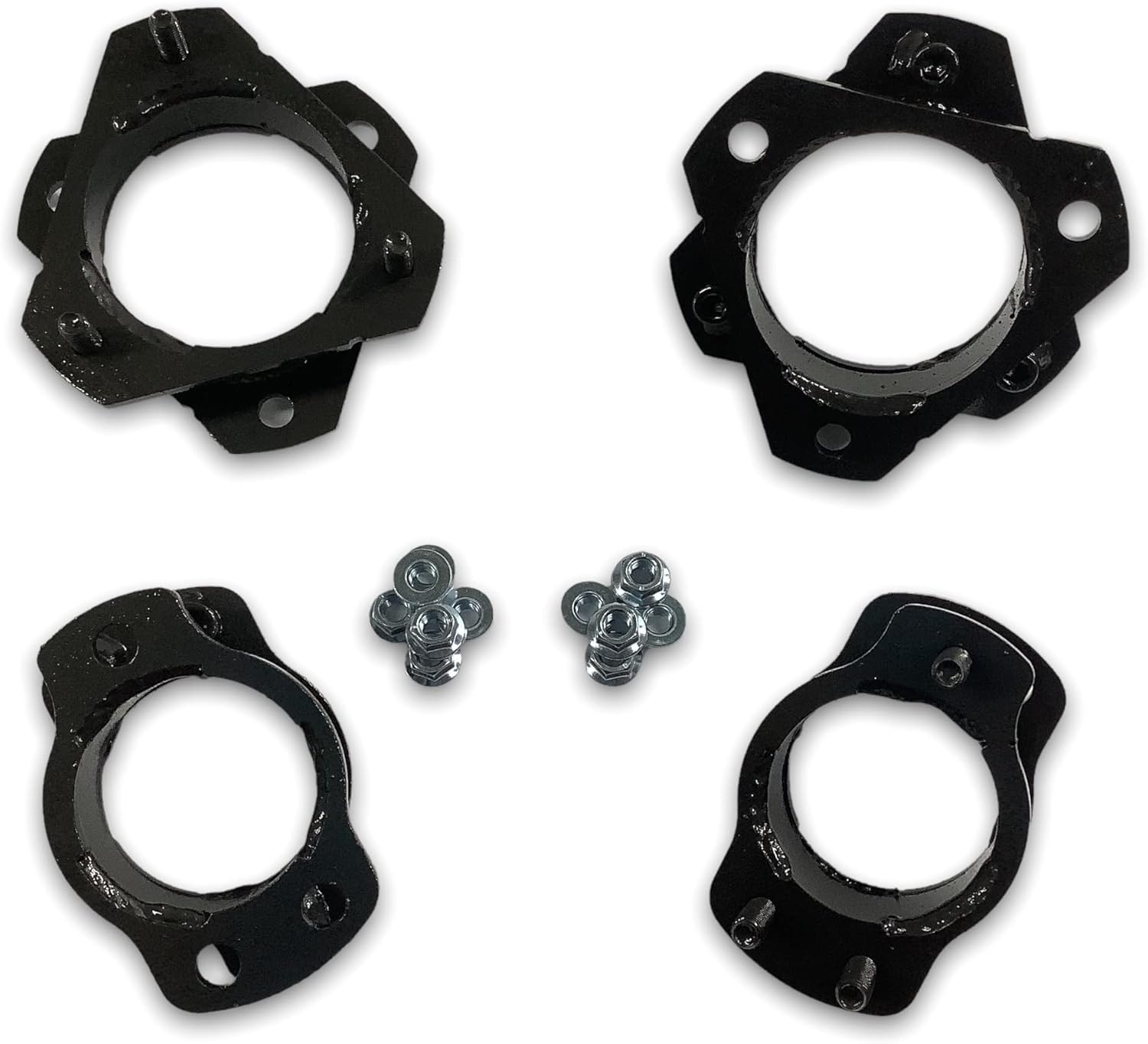
| Front lift | 2.5 Inches |
|---|---|
| Rear lift | 1.25 Inches |
| Included components | Front strut spacers, rear strut spacers and hardware |
| Material | Carbon Steel |
This Truxxx leveling/lift kit raises the front of compatible Ford Explorers and Sport Tracs about 2.5 inches and the rear about 1.25 inches using front and rear strut spacers and supplied hardware. It is designed to keep factory-style shocks and struts in place, so you retain near-stock ride quality while gaining a more balanced, slightly lifted stance that commonly fits 32" tires on stock-offset wheels. The kit is laser-cut from US mill-certified steel, includes alignment specs and detailed instructions, and is intended for a straightforward 3 to 4 hour DIY install plus alignment for someone with basic mechanical skills. Important limitations: it excludes air-ride models, may require opening rear strut mount holes on some early model years, and is not recommended for quick-strut or quick-strut-style coilover units. For everyday drivers who want a reliable, factory-friendly height increase without changing dampers, this kit delivers durable hardware and clear fitment for the specified model years.
Best for: Drivers who want a modest, factory-friendly lift for an Explorer or Sport Trac to improve stance and tire clearance while keeping the original ride and avoiding shock replacement.
Less Ideal for: Buyers seeking large suspension travel, heavy off-road use, or a full shock and coilover upgrade should choose a different complete suspension system.
- Vehicle-specific design for Ford Explorer (2003–2010) and Sport Trac (2006–2010) ensures fitment with factory struts
- Uses US mill-certified carbon steel and laser-cut parts for consistent durability
- Retains factory shock and strut setup so ride quality remains close to stock
- Includes all hardware, instructions, and alignment specs for a typical DIY install
- Not compatible with air-ride suspension or quick-strut style coilovers
- Some 2003–2005 models may require enlarging rear strut mount holes during installation
Verdict: The best all-around lift kit that balances ride quality, durability, installability, and value for most buyers and DIY mechanics.
2. TORCH 3" Lift Kit for 2001–2005 Ford Explorer Sport Trac (Torsion Bar Models)
Best Budget Lift Kit

| Fitment | 2001–2005 Ford Explorer Sport Trac 4WD torsion bar models |
|---|---|
| Front lift range | 1"–3" adjustable |
| Rear lift range | 1.5"–2" add-a-leaf |
| Included components | Torsion keys, add-a-leaf spring, alignment pins, isolator pads, hardware |
| Manufacturer | TORCH Off Road |
This TORCH lift kit is a focused, budget-friendly solution to level and raise a 2001–2005 Ford Explorer Sport Trac with torsion bar suspension. The kit replaces the front torsion keys with forged adjustable units to lift the front 1"–3" while a rear add-a-leaf increases ride height about 1.5"–2" and adds load-carrying capacity. Installation is bolt-on with supplied hardware and alignment pins and is aimed at DIY mechanics — the maker estimates a 2–4 hour install and includes instructions. Practical benefits include better ground clearance for larger tires, reduced squat under load, and firmer rear spring rate for towing. The kit does not include extended U-bolts so you must confirm enough thread remains on your factory U-bolts or source extensions. Expect a firmer ride after adding rear leaves and plan an alignment after lifting. For the price you get a vehicle-specific kit with heavier torsion keys and thicker leaf construction, but it is a basic lift rather than a full suspension overhaul.
Best for: Buyers wanting the lowest-cost way to lift and level a 2001–2005 Sport Trac with acceptable durability who prefer a DIY bolt-on installation and improved load handling.
Less Ideal for: Drivers seeking a soft ride, full suspension replacement, large lift heights, or heavy off-road use should consider more comprehensive suspension systems instead.
- Vehicle-specific fit for 2001–2005 Sport Trac torsion bar models for straightforward compatibility.
- Forged adjustable torsion keys allow 1"–3" front lift and simplified leveling.
- Add-a-leaf rear pack increases rear lift and improves load and towing capacity.
- Includes alignment pins, isolator pads, and installation hardware for a DIY bolt-on install.
- Does not include extended U-bolts so additional parts may be required for some vehicles.
Verdict: The best low-cost lift kit for buyers prioritizing price who still want acceptable performance and basic durability for DIY installation.
3. RTZ 1–3" Front Adjustable Torsion Keys Lift Kit with Rear Adjustable Shackles and DT9000 Shocks
Best Premium Lift Kit

| Fitment | 1995–2005 Ford Explorer & Sport Trac |
|---|---|
| Front lift range | 1–3 Inches |
| Rear lift range | 1–2 Inches |
| Included shocks | Doestch Tech DT9000 Nitrogen Gas Charged |
This RTZ kit is a bolt-on lift package for 1995–2005 Ford Explorer and Sport Trac that raises the front 1 to 3 inches using forged adjustable torsion keys and lifts the rear 1 to 2 inches with adjustable shackles. Installation is designed to be drop-in with no cutting or welding required, although a professional installer is recommended for safe handling and alignment after fitment. The forged front keys and precision laser-cut rear shackles are built from alloy steel and are powder-coated for corrosion resistance, while the included Doestch Tech DT9000 nitrogen-charged shocks are intended to restore control and stability after raising the suspension. In practice this kit delivers an aggressive stance and increased ground clearance while aiming to keep ride quality close to factory feel. Limitations are that adjustments are manual and the kit does not include springs or extended brake/drive-line components, so taller lifts or heavy off-road use may require additional parts and setup tuning.
Best for: Buyers who prioritize build quality and a tuned, durable lift setup for a 1995–2005 Explorer or Sport Trac and want a largely bolt-on solution that preserves near-factory ride characteristics.
Less Ideal for: Drivers seeking a full off-road overhaul or lifts above the included heights who will need additional suspension components, springs, or driveline modifications.
- Vehicle-specific fit for 1995–2005 Ford Explorer and Sport Trac for straightforward compatibility
- Forged front torsion keys and laser-cut adjustable rear shackles increase durability and allow fine tuning of ride height
- Includes DT9000 nitrogen gas charged shocks to improve stability and drivability after lift
- Powder-coated shackles and alloy steel components resist corrosion for longer service life
- Does not include springs or extended brake/driveline parts needed for larger lifts or heavy loads
Verdict: The best premium lift kit for buyers willing to pay more for superior materials, tuned ride characteristics, and long-term durability.
4. iiLentes Add-A-Leaf Rear Lift Kit (1.5"–2") for 1995–2005 Ford Explorer and Sport Trac
Best 2-Inch Lift Kit

| Fits | 1995–2001 Ford Explorer 2WD/4WD; 2001–2005 Explorer Sport-Trac 2WD/4WD |
|---|---|
| Item Type Name | Add A Leaf Lift Kit |
| Manufacturer | iiLentes |
| Manufacturer Warranty Description | 1 year |
This rear add-a-leaf kit increases rear ride height roughly 1.5 to 2 inches by inserting two replacement leaf springs, extended alignment pins, and isolator pads. It is a simple bolt-on solution intended to firm the rear and reduce sag from heavy loads or mild lift requirements without changing front geometry. Typical use is restoring level stance after hauling or gaining modest ground clearance for light off-road use and larger tires that do not require steering or driveline modifications. The kit keeps installation straightforward for mechanics comfortable with leaf springs because it uses existing u-bolts and alignment pins; the listing notes you need at least 1/2 inch of thread left on the factory u-bolts. Practical benefits include a lower-cost, reversible lift that preserves factory handling much better than tall block lifts. Limitations are that the lift amount depends on the condition of the original pack, ride can become slightly firmer, and it does not address front ride height so additional components may be needed for a level front-to-rear stance if required.
Best for: Buyers who want a modest, factory-friendly rear lift to correct sag or gain small clearance without major suspension changes and who prefer a simple, reversible bolt-on solution.
Less Ideal for: Drivers seeking a level front-to-rear lift, larger lifts over 2 inches, or serious off-road suspension upgrades should look at full spring or multi-component lift systems instead.
- Bolt-on installation using existing u-bolts and alignment pins for straightforward fitment
- Provides a modest 1.5"–2" lift suitable for reducing rear sag or fitting slightly larger tires
- Includes isolator pads to reduce metal-on-metal contact and noise
- Reversible and lower cost compared with full replacement spring packs or suspension lifts
- Lift height varies with the condition and thickness of the vehicle's original leaf pack
Verdict: The best 2-inch lift kit for buyers who want a modest, factory-friendly lift that preserves handling and requires few additional changes.
5. ReadyLIFT 66-2020 2.25" Leveling Kit with Forged Torsion Key
Best Bolt-On Lift Kit
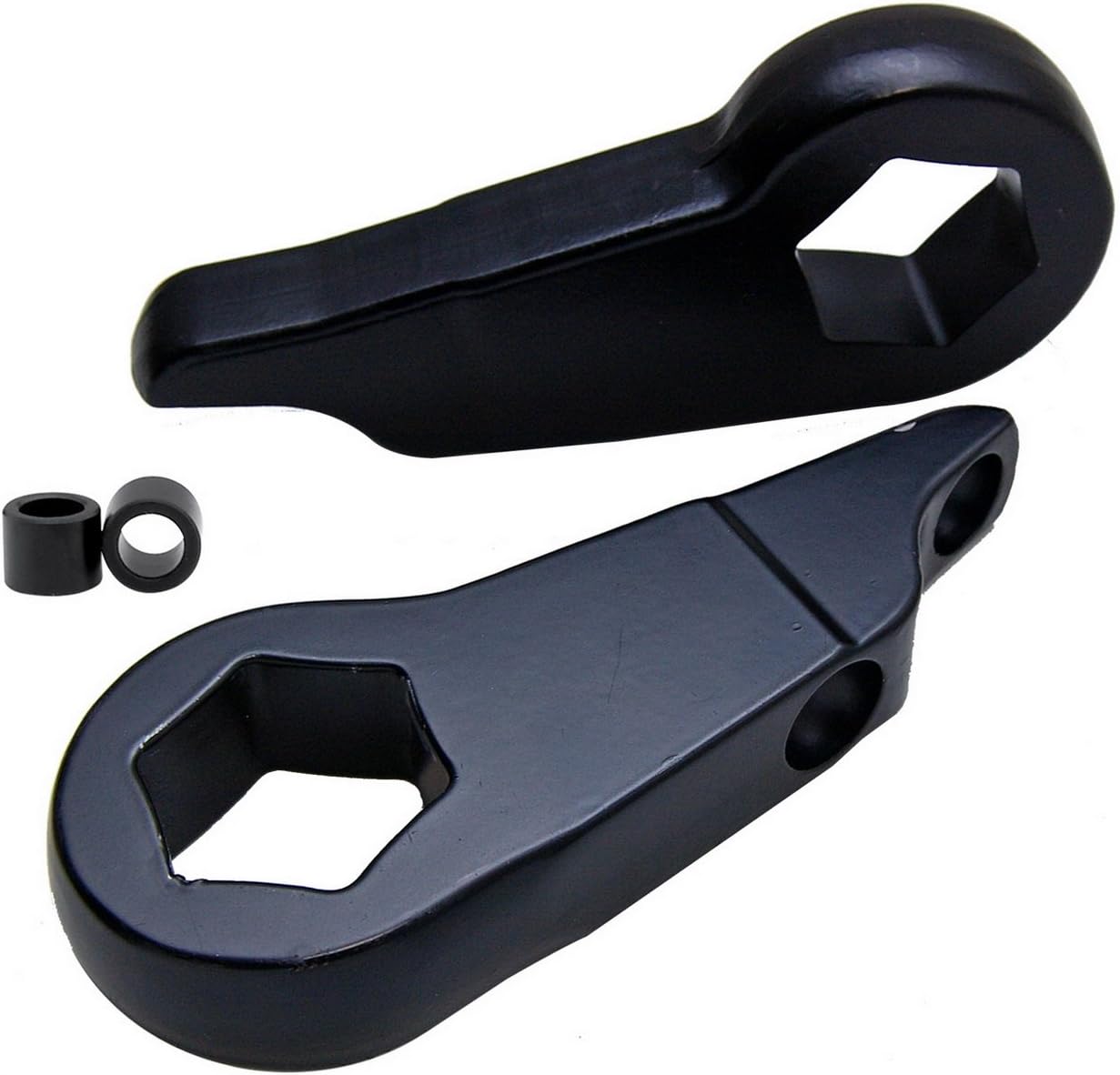
| Maximum Lifting Height | 5 Inches |
|---|---|
| Material | Alloy Steel |
| Automotive Fit Type | Vehicle Specific Fit |
| Model | 66-2020 |
This ReadyLIFT leveling kit uses a forged torsion key and matching hardware to lift the front of compatible Ford Ranger and Explorer Sport Trac trucks about 2.25 inches, bringing the nose level with the rear and creating room for slightly larger tires. Installation is designed to be bolt-on and reversible, so a competent DIY mechanic with basic hand tools can complete the job in roughly an hour per manufacturer guidance. The forged torsion key provides strength and the machined, powder-coated finish helps resist corrosion. Because it retains the factory suspension geometry, the kit keeps steering and ride characteristics close to stock while avoiding cutting, welding, or permanent frame changes. Limitations include the modest lift height and the need to verify wheel and tire fitment; larger lifts or major off-road use will require a more comprehensive lift system and possible alignment adjustments after installation.
Best for: DIY-minded owners who want a simple, reversible front leveling solution to improve stance and allow slightly larger tires without cutting or welding.
Less Ideal for: Drivers seeking larger lifts, heavy off-road use, or a full suspension overhaul should choose a multi-inch lift kit with longer-travel components and additional hardware.
- True bolt-on installation using a forged torsion key for strength
- Reversible and preserves factory steering geometry
- Powder-coated, machined components for corrosion resistance
- Quick install time suitable for experienced DIY mechanics
- Only provides a modest 2.25 inch front lift, not a full suspension overhaul
Verdict: The best bolt-on lift kit for DIY mechanics seeking a simple, reversible installation that avoids cutting, welding, or complex modification.
Choosing the Right Ford Explorer Sport Trac Lift Kit: Key Factors to Consider
Fitment and Model-Specific Compatibility
Correct fitment is the baseline for any lift kit on the Ford Explorer Sport Trac. Even small differences in model years, factory suspension options, or the Sport Trac configuration can change bracket locations and required hardware. Confirm that the kit lists the Sport Trac explicitly and includes the right strut or spring sizes.
Incorrect fitment can force aftermarket modifications, void warranties, or lead to unsafe suspension geometry. Look for kits that supply vehicle-specific mounting hardware and clear instructions for front and rear installations. Also verify whether additional components such as extended brake lines, sway bar links, or track bar brackets are included or must be purchased separately.
Lift Height and Intended Use
Decide how much lift you need based on the Sport Trac's intended use. Small lifts preserve on-road comfort and steering feel, while larger lifts enable bigger tires and more ground clearance for light off road use. Each incremental inch of lift changes handling, driveline angles, and potential need for additional parts.
Consider that a higher lift often requires alignment adjustments, possible driveshaft or CV modifications, and different wheel offsets. Match lift height to realistic goals such as tire clearance or obstacle negotiation rather than maximum possible height. Manufacturers often specify recommended tire sizes for each lift height; use those as a planning guide.
Suspension Design and Ride Quality
Different lift approaches yield different ride characteristics. Spacer-style or strut-top lifts raise the body with minimal changes to suspension geometry but may stiffen the ride. Coil spring or full suspension kits replace springs and dampers, offering better control over ride quality and travel but increasing complexity and cost.
Think about how you use the Sport Trac daily. If you spend most time on paved roads, a kit that maintains comfort and predictable damping is preferable. For aggressive trail use, systems designed to increase travel with matched shocks provide improved articulation and durability.
Installation Complexity and Tools Required
Installation difficulty varies widely. Some lift kits are bolt-on with simple strut spacers and basic hand tools, while others require spring compressors, press-fit bushings, or alignment equipment. Realistic assessment of your mechanical experience and tool access will influence which kits are practical.
Also factor in labor time and whether you have a safe workspace and jack stands rated for the Sport Trac. Kits that include comprehensive instructions, labeled hardware, and torque specifications reduce installation errors. If professional installation is likely, verify the kit does not require specialized fabrication that can increase labor costs.
Impact on Steering, Brakes, and Drivetrain
Raising ride height affects steering geometry, brake line lengths, and driveshaft/cv angles. Some kits include track bar relocation brackets, drop brackets, or extended brake line hardware to address these changes. Neglecting these areas leads to accelerated wear, vibrations, and handling issues.
Review whether a kit maintains recommended steering center and caster/camber ranges, and whether additional parts are needed to avoid binding or overload. Ensuring brake line length and ABS sensor wiring remain within safe limits is critical for safety.
Tire and Wheel Fitment Expectations
One of the main reasons Sport Trac owners lift their trucks is to fit larger tires. The choice of lift height, wheel offset, and tire size interact. Manufacturers often publish recommended tire sizes for each lift increment; adhere to those to avoid rubbing under full suspension compression and steering lock.
Also consider wheel backspacing and offset so that load on wheel bearings and steering components stays within acceptable range. If the kit changes scrub radius significantly, it can alter steering effort and tire wear patterns. Plan wheel and tire choices alongside the lift selection to avoid surprises.
Types of Lift Kits and How They Affect the Sport Trac
Lift kits commonly fall into three groups: spacer or strut-top lifts, coil spring replacement kits, and complete suspension systems with matched shocks. Each approach has tradeoffs for ride, articulation, and installation complexity on the Sport Trac.
Spacer-style lifts are often the simplest to install and preserve the factory springs and dampers, but they do not increase suspension travel and can make the ride firmer. Coil spring kits replace springs to achieve a more balanced lift and can be paired with upgraded shocks for better control. Full suspension kits are the most capable for off road use, providing increased travel and durability but requiring greater expense and mechanical work.
- Spacer/strut-top: easier install, limited travel change
- Coil spring replacement: better ride control, moderate complexity
- Full suspension systems: maximum capability, higher cost and install time
Preparing Your Sport Trac Before Installation
Before starting any lift installation, inspect the vehicle for worn suspension components. Replacing tired bushings, ball joints, and tie rod ends before installing a lift prevents transferring old wear into the new geometry.
Gather necessary tools and safety equipment, including quality jack stands, torque wrench, spring compressors if needed, and any specialty tools specified by the kit instructions. Mark existing alignment settings and take photos during disassembly to aid reassembly.
- Inspect and replace worn suspension parts first
- Have alignment shop contact info ready
- Charge battery and secure parking brake before work
Wheel, Tire, and Brake Considerations After Lifting
After lifting the Sport Trac, plan wheel and tire changes in tandem. Larger tires require verification of clearance at full compression and full steering lock. In many cases modest tire size increases are possible without trimming, but larger jumps can need fender adjustments or trimming.
Check that brake hoses and ABS wiring have adequate slack. Some lift kits include longer brake lines; others do not. If extended lines are required, use components rated for brake system pressure and routing that avoids chafing.
- Test clearance at full suspension travel
- Confirm brake line slack and ABS sensor wiring
- Consider wheel offset to maintain proper scrub radius
Maintenance and Long-Term Effects on the Sport Trac
A lift changes loads on suspension and steering components, which can accelerate wear if not monitored. Regularly inspect ball joints, tie rods, and control arm bushings after installation, especially during the first few thousand miles.
Keep alignment checks on the maintenance schedule and re-torque critical fasteners after initial use. Documenting changes helps when diagnosing noise or premature wear. Properly installed kits matched to intended use minimize unexpected maintenance.
- Inspect suspension components frequently after lift
- Schedule alignment after installation and periodically thereafter
- Re-torque fasteners after break-in miles
Common Installation Pitfalls and How to Avoid Them
Typical installation mistakes include incorrect torqueing, omitting required relocation brackets, and not checking for brake or ABS wiring tension. Carefully follow the kit instructions and compare their parts list to the hardware you receive.
If the kit requires spring compressors or pressing bushings, do not improvise. Using improper tools can be dangerous and damage components. When in doubt, consult a professional mechanic experienced with Sport Trac suspensions.
- Verify all included hardware before starting
- Use the correct torque specs and sequencing
- Do not reuse damaged rubber bushings or crushed hardware
Still looking for the perfect fit?
Select your Ford Explorer configuration to see the most relevant Lift Kits recommendations
How We Chose the Best Ford Explorer Sport Trac Lift Kit
We applied a focused editorial process to select lift kits that suit the Ford Explorer Sport Trac and its common use cases. Evaluation prioritized correct vehicle fitment, suspension geometry preservation, component quality, and clarity of installation instructions. We weighed kits that maintain factory steering and brake line safety, those that allow recommended wheel and tire sizes, and systems that minimize required additional parts such as drop brackets or extended brake lines.Key criteria included material and finish quality, the design approach (strut spacers, coil spring replacements, or full suspension systems), and how a kit affects ride height and wheel travel. We also considered installation complexity and whether common home-garage tools suffice, plus the availability of clear torque specs and alignment guidance. Exclusions applied to kits without explicit Sport Trac fitment data, products lacking detailed installation instructions, or systems that require extensive chassis modification.The result is a selection emphasizing reliable fitment, predictable handling changes, and realistic installation expectations for owners of the Sport Trac.
Our full evaluation process is outlined in our review methodology.
FAQ
How much lift is safe for a Ford Explorer Sport Trac?
Safe lift height depends on the kit design and intended use. Small lifts that preserve suspension geometry are generally safer for daily driven Sport Tracs, while larger lifts need matched components and may require additional brackets or extended lines. Follow manufacturer recommendations and account for alignment and driveshaft angles.
Will a lift kit affect my Sport Trac's alignment and handling?
Yes. Any lift changes steering geometry and wheel alignment settings. Expect to need a professional alignment after installation, and anticipate changes in handling such as increased body roll or different steering response depending on lift height and suspension design.
Can I install a lift kit at home on the Sport Trac?
Many Sport Trac lift kits are designed for home installation with common tools, but some require spring compressors, press tools, or an alignment afterward. Evaluate your tool access and mechanical experience; complex installations may be better handled by a shop.
Do I need longer brake lines after lifting the Sport Trac?
It depends on the lift height and kit design. Some kits include extended brake lines or brackets, while others rely on existing hose slack. Verify brake line routing and slack during installation to prevent binding or overstress under full wheel travel.
How does a lift affect tire selection for a Sport Trac?
Larger tires require checking clearance at full compression and steering lock. Manufacturers usually list recommended maximum tire sizes for each lift height. Matching wheel offset and keeping tire width within those recommendations helps minimize rubbing and bearing loads.
Will lifting my Sport Trac void warranties or affect inspections?
Vehicle warranty and inspection implications vary by region and warranty terms. Modifications that cause damage or alter emissions and safety systems could have consequences. Review your warranty terms and local regulations before modifying the suspension.
Final Verdict
Choosing a lift kit for your Ford Explorer Sport Trac means balancing clearance goals with the impacts on handling, steering geometry, and maintenance. Prioritize kits that list explicit Sport Trac fitment, provide necessary relocation hardware, and align with how you use the vehicle.For daily-driven Sport Tracs, conservative lifts that maintain ride quality and require minimal additional parts are often the best tradeoff. If you intend regular off road use or larger tires, opt for kits designed to increase suspension travel with matched components and plan for professional alignment and periodic inspections.
Explore More:
- Check out all Ford Explorer parts & accessories
- Explore Suspension & Steering
- Browse all Accessories
