

Note: This article contains affiliate links. If you click on these links and make a purchase, I may earn a small commission at no extra cost to you. This helps support my research and content. Read my full affiliate disclosure here.
If you want better ground clearance, room for larger tires, or a more commanding stance, choosing the right Ford Explorer AWD lift kit matters. The right kit balances ride quality, suspension geometry, and durability so your Explorer remains safe and predictable both on pavement and on rough trails. This guide covers a curated shortlist of top kits for the Ford Explorer AWD, focusing on fitment, installation complexity, and how each option affects handling and tire fitment. Read on for practical guidance that helps you compare options and decide which kit aligns with your driving priorities and budget.
Looking for other parts? See all Ford Explorer parts & accessories.
Top Picks at a Glance
| Best Overall Lift Kit The top all-around choice balancing performance, fit, and reliability | Truxxx 2.5" Front & 1.5" Rear Leveling Lift Kit for Ford Explorer (2011–2019) |  |
| Best Budget Lift Kit A low-cost kit that improves ride height without breaking the bank | ECCPP Front and Rear Leveling Lift Kit for Ford Explorer |  |
| Best Premium Lift Kit Higher-end components and engineering for long-term performance | dynofit Leveling Lift Kit for Ford Explorer (2011–2019) — Front 2.5" / Rear 1.25" |  |
| Best Complete Lift Kit Includes all necessary components for a full, proper suspension lift | KSP Performance Explorer Suspension Lift Kit (2011–2019) |  |
| Best 2-Inch Lift Kit A common moderate-height lift balancing clearance and drivability | ECCPP 2.5" Front / 2" Rear Leveling Lift Kit for Ford Explorer (2011–2019) |  |
| Best Bolt-On Lift Kit Designed for straightforward bolt-on installation with no cutting | maXpeedingrods Lift Leveling Kit for Ford Explorer (2002–2005) — 3" Front, 2" Rear |  |
1. Truxxx 2.5" Front & 1.5" Rear Leveling Lift Kit for Ford Explorer (2011–2019)
Best Overall Lift Kit

| Front lift | 2.5 Inches |
|---|---|
| Rear lift | 1.5 Inches |
| Material Type | Carbon Steel |
| Included components | Front struts, rear struts, sway bar extension, shock brackets and hardware |
| Automotive Fit Type | Vehicle Specific Fit |
This Truxxx leveling kit is built for 2011–2019 Ford Explorer AWD and 2WD models, including Police Interceptor versions, and raises the front 2.5 inches with a 1.5-inch rear lift to correct rake and allow larger tires. The kit uses high-quality North American carbon steel components, includes front and rear strut mounts, sway bar extension, shock brackets, and all necessary hardware, and is designed to work with the factory struts and shocks so you normally do not need aftermarket dampers. Detailed instructions and alignment specs are provided, and the design emphasizes retaining a factory-style ride rather than changing handling dramatically. Installation is suitable for experienced DIY mechanics comfortable with suspension work, though measuring vehicle rake and test-fitting wheels and tires before finishing is important. The kit is durable and precisely laser-cut, but it does not convert the Explorer into a serious off-road setup and Ford chassis limits should be respected. For most street-oriented owners who want a lifted stance and room for 265/60R18 tires on compatible wheels, this is a solid, complete option that keeps everyday drivability intact.
Best for: Drivers who want a balanced, factory-like ride while improving front-end height and tire clearance and who are comfortable with a DIY suspension install or working with a local shop.
Less Ideal for: Drivers seeking a full off-road conversion, large lift for extreme terrain, or those unwilling to perform suspension-level installation work or measurements beforehand.
- Vehicle-specific kit with front and rear mounts plus hardware for a complete installation
- Designed to retain factory struts and shocks so aftermarket dampers are usually not required
- Made from North American mill-certified carbon steel and laser-cut for consistent fit
- Includes alignment specs and installation instructions to aid DIY installation
- Not intended to turn the Explorer into a heavy-duty off-road vehicle and limited by factory chassis and drivetrain capabilities
Verdict: The best all-around lift kit that balances ride quality, parts completeness, durability, and ease of installation for most DIY mechanics.
2. ECCPP Front and Rear Leveling Lift Kit for Ford Explorer
Best Budget Lift Kit

| Fitment | 2011–2019 Ford Explorer (listed engines) |
|---|---|
| Material | 6061-T6 aluminum |
| Front lift | 3 inch (front spacer variant) |
| Rear lift | 2 inch (rear spacer variant) |
This ECCPP leveling lift kit is a straightforward bolt-on solution to reduce factory rake and give a Ford Explorer a more level stance. It installs as strut spacers for the front and lift blocks for the rear, includes hardened bolts, and is manufactured from 6061-T6 aircraft-grade aluminum with an anodized finish to resist corrosion. Typical use is for drivers who want extra fender clearance for larger wheels and a more aggressive look without changing ride or steering feel. The kit claims no cutting or modification of factory components and aims to preserve factory ride quality. Expect a simple install that does not require strut pre-loading, but note the kit uses basic spacer and block components rather than full suspension replacements, so it does not increase suspension travel or improve damping. Fitment is limited to selected 2011–2019 Ford Explorer engines listed by the manufacturer. For those seeking a low-cost, easy-to-fit lift that maintains stock handling, this kit delivers; buyers wanting full off-road suspension upgrades should look elsewhere.
Best for: Buyers who need a noticeable, reliable lift on a tight budget and prioritize easy bolt-on installation and maintaining stock ride characteristics over upgraded suspension performance.
Less Ideal for: Drivers who plan heavy off-road use, want increased suspension travel, or expect performance-tuned damping from a lift should choose a full suspension kit instead.
- Bolt-on installation with no cutting or modification of factory parts required
- 6061-T6 aluminum spacers with anodized finish resist corrosion while keeping weight low
- Includes hardened, heat-treated bolts for secure mounting
- Preserves factory ride and steering feel rather than altering damping characteristics
- Does not increase suspension travel or improve shock damping since it is a spacer/block kit, not a full suspension replacement
- Actual lift height may differ from spacer thickness due to suspension geometry
Verdict: The best budget lift kit for mechanics who want a noticeable, reliable lift at minimal cost while accepting simpler components and fewer included extras.
3. dynofit Leveling Lift Kit for Ford Explorer (2011–2019) — Front 2.5" / Rear 1.25"
Best Premium Lift Kit

| Fitment | 2011–2019 Ford Explorer 2WD and 4WD (no air-ride) |
|---|---|
| Front lift | 2.5 Inches |
| Rear lift | 1.25 Inches |
| Material Type | Carbon Steel |
| Included components | Coil spacers, shock extenders, hardware, instructions |
This dynofit kit is a bolt-on leveling lift designed specifically for 2011–2019 Ford Explorer 2WD and 4WD (excluding air-ride equipped vehicles). It installs with front coil spacers, rear spacers and both L- and U-style shock extenders so you keep the factory struts while gaining about 2.5 inches up front and 1.25 inches in the rear. The kit’s heavy carbon steel plates and included hardware aim for durability and corrosion resistance, and no cutting or major modification is claimed during installation. In practice this kit is useful for drivers who want extra ground clearance and room for larger tires without replacing springs or shocks. Expect a firmer ride compared with factory springs since spacers change suspension geometry and the kit does not include tuned dampers. Also note the seller warns that very large tires (over ~33 inches) may rub the fender. Fitment is vehicle-specific and the package includes instructions and replacement shock extenders, but buyers seeking refined ride tuning or premium components like matched performance shocks will need to upgrade those separately.
Best for: Buyers who want a durable, vehicle-specific leveling solution to increase clearance and fit slightly larger tires while keeping factory struts in place and prioritizing a straightforward bolt-on install.
Less Ideal for: Drivers seeking a premium, fully tuned suspension package with matched performance shocks, extensive ride refinement, or those who plan to fit very large off-road tires without additional modifications.
- Vehicle-specific fit for 2011–2019 Ford Explorer 2WD and 4WD models
- Includes both front and rear coil spacers plus L- and U-style shock extenders for a complete bolt-on installation
- Made from carbon steel with powder coat for corrosion resistance
- No vehicle cutting required and comes with necessary hardware and installation instructions
- Does not include tuned shocks or springs so ride refinement and long-term suspension tuning are limited
- May cause tire-to-fender rubbing with very large tires around or above 33 inches
Verdict: The best premium lift kit for buyers willing to pay more for superior materials, refined ride tuning, longer-lasting components, and professional-grade fitment.
4. KSP Performance Explorer Suspension Lift Kit (2011–2019)
Best Complete Lift Kit
| Automotive Fit Type | Vehicle Specific Fit |
|---|---|
| Auto Part Position | Front |
| Material Type | Alloy Steel |
| Maximum Lifting Height | 2.5 Inches |
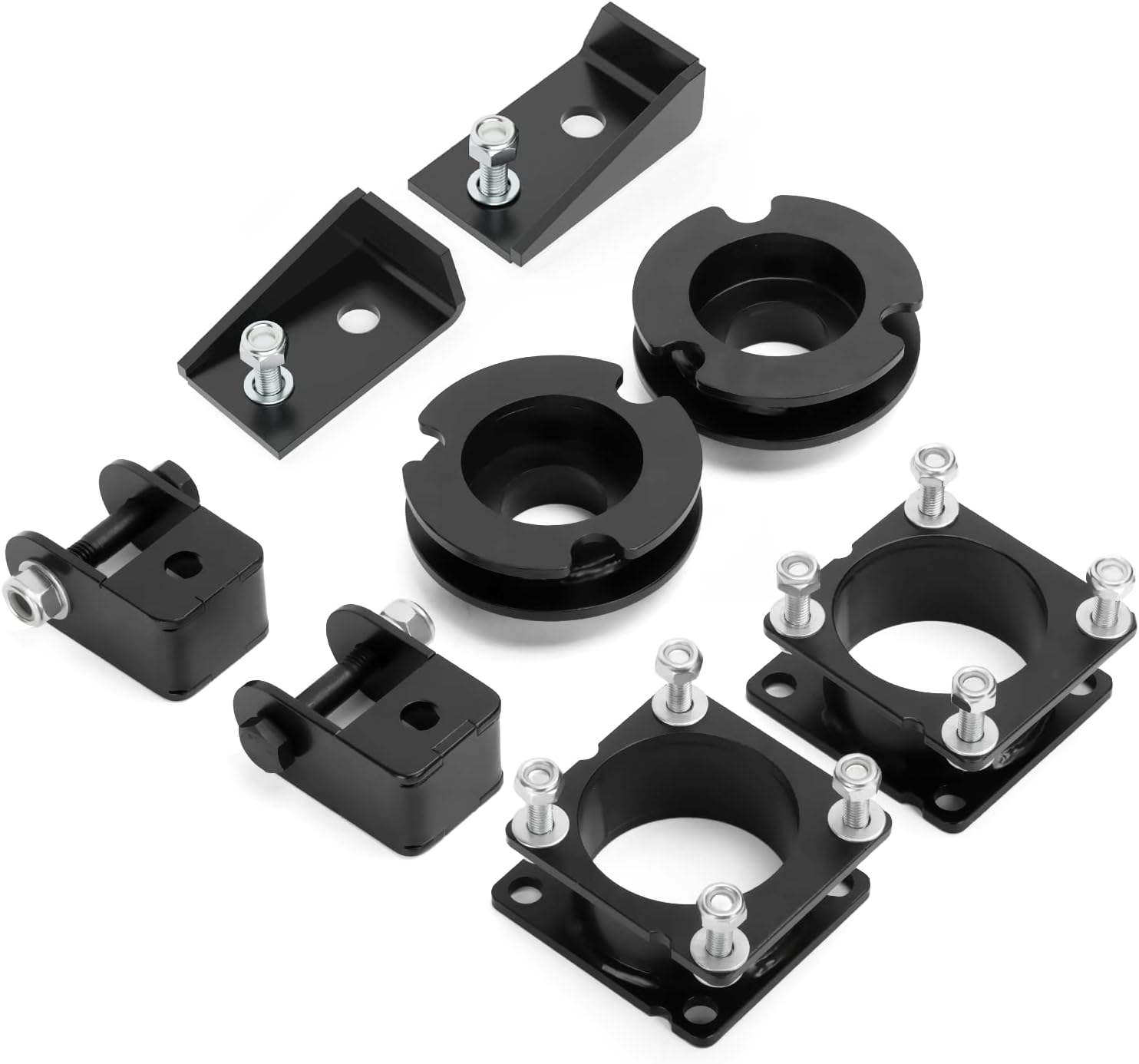
This KSP lift kit is a bolt-on, vehicle-specific option for 2011–2019 Ford Explorers that raises the front approximately 2.5 inches and the rear about 1.25 inches. It includes front and rear coil spacers plus shock extenders and the hardware needed for installation, so a handy DIYer can complete the work in a few hours with basic tools. The kit is built from thicker alloy steel plates intended to resist bending and the manufacturer includes special lug bolts and instructions to simplify fitment. In use it provides a modest, factory-friendly lift that improves clearance for slightly taller tires and gives a more level stance without modifying factory struts or springs. Important limitations are the modest lift height and the warning that tires over 33 inches may rub the fender. Also the kit is not compatible with Explorers that have the air-ride suspension option, and it does not include full replacement shocks or alignment camber components, so a full long-travel lift or heavy-duty off-road build will require additional parts.
Best for: DIY-minded owners of 2011–2019 Ford Explorers who want a single kit to add a modest, factory-friendly lift and install it themselves with common tools.
Less Ideal for: Owners planning a large suspension overhaul, heavy off-road builds, or those with air-ride equipped Explorers should look at more comprehensive or compatible systems.
- Vehicle-specific fitment for 2011–2019 Explorer models simplifies installation
- Includes coil spacers, shock extenders, hardware, and instructions for a bolt-on DIY install
- Constructed from thicker alloy steel plate for increased strength
- Designed to raise front and rear heights while retaining factory struts and ride geometry
- Not compatible with vehicles that have the air-ride suspension option
- Does not include replacement shocks or alignment camber hardware for more extensive lifts
Verdict: The best complete lift kit for DIYers who want a single purchase that includes all required springs, shocks, hardware, and alignment components for a full installation.
5. ECCPP 2.5" Front / 2" Rear Leveling Lift Kit for Ford Explorer (2011–2019)
Best 2-Inch Lift Kit

| Fitment | 2011–2019 Ford Explorer 2WD/4WD |
|---|---|
| Front lift | 2.5 inches |
| Rear lift | 2 inches |
| Material | 6061-T6 aluminum |
This ECCPP leveling kit uses CNC-machined 6061-T6 aluminum spacers and hardened hardware to lift the front and rear of 2011–2019 Ford Explorer models by approximately 2.5 inches front and 2 inches rear, lowering factory rake and creating room for larger tires. Installation is bolt-on and does not require cutting or modifying factory components, so it is a relatively quick shop job; the kit includes the necessary bolts and claims no strut pre-loading. The aluminum spacers and anodized finish keep weight down and resist corrosion compared with heavier steel spacers. In practical use the kit provides a modest, factory-friendly ride height increase that maintains original steering feel and ride comfort while improving ground clearance and fender clearance. Note that actual lift height can vary with suspension geometry so spacer thickness is not a one-to-one measure of rise, and this is a spacer-type solution rather than a full suspension overhaul so it will not change spring or damping characteristics or significantly alter off-road articulation.
Best for: Buyers who want a modest, factory-friendly height increase for a Ford Explorer that improves clearance and stance without changing ride quality or requiring major suspension work.
Less Ideal for: Drivers who need a full suspension lift, increased suspension travel, or revised ride tuning for heavy off-road use should look at complete lift systems instead.
- Bolt-on spacer design for simple installation without cutting or modifying factory parts
- 6061-T6 aircraft-grade aluminum spacers reduce weight and resist corrosion compared with steel
- Includes hardened, heat-treated bolts for secure factory-style clamping
- Designed to level front-to-rear rake and free up clearance for larger tires
- Maintains factory steering feel and ride comfort since springs and dampers are unchanged
- Does not alter spring rate or damping so handling and off-road articulation remain the same
Verdict: The best 2-inch lift kit for owners seeking a modest, factory-friendly ride height increase that improves ground clearance without major geometry or driveline changes.
6. maXpeedingrods Lift Leveling Kit for Ford Explorer (2002–2005) — 3" Front, 2" Rear
Best Bolt-On Lift Kit

| Vehicle fit | Ford Explorer 2002-2005 (2WD & 4WD) |
|---|---|
| Lift height | 3" front, 2" rear |
| Material | Carbon Steel |
| Tire fitment | Up to 33×12.50 |
This maXpeedingrods leveling kit uses strut spacer extensions to raise a 2002–2005 Ford Explorer 3 inches up front and 2 inches in the rear without replacing the factory shocks. It installs as a bolt-on using factory mounting points, so a DIY mechanic can fit the spacers on top of the struts without a spring compressor in most cases. The kit is steel, powder coated for corrosion resistance, and includes front and rear spacers plus hardware. In use it preserves the stock shock behavior and ride comfort while giving extra clearance to run up to 33×12.50 tires and reduce bumper scrape on rough terrain. Important limitations are that it is a leveling spacer kit rather than a full suspension overhaul, so it does not increase suspension travel or improve off-road damping, and professional installation is recommended if you are not confident with strut work. No detailed instructions are included, so plan for additional time or reference guides during installation.
Best for: A DIY-oriented owner who wants a quick, reversible bolt-on lift to gain clearance for larger tires while keeping factory ride characteristics and using mostly common hand tools.
Less Ideal for: Drivers seeking improved off-road performance, greater wheel travel, or a complete suspension overhaul should look at full lift kits with upgraded shocks and springs instead.
- Bolt-on strut spacer design uses factory mounting points for a relatively quick, reversible install
- Keeps stock shocks and ride quality so daily driving comfort is retained
- Powder-coated carbon steel construction resists rust and should be durable
- Includes front and rear spacers and hardware to achieve the advertised lift and tire clearance
- Does not increase suspension travel or improve damping since shocks and springs are unchanged
- No installation instructions included which can complicate a first-time DIY install
Verdict: The best bolt-on lift kit for DIY mechanics who prefer fast, reversible installations using factory mounting points and minimal special tools.
Choosing the Right Ford Explorer AWD Lift Kit: Key Factors to Consider
Fitment and Model-Year Coverage
Correct fitment is the starting point for any Ford Explorer AWD lift kit. Fitment determines whether the kit includes the proper brackets, control-arm geometry corrections, and hardware for your model year of Explorer. Even within a single vehicle model, differences in steering components, brake line routing, and suspension mounting points can change between model years. Verifying that a kit explicitly lists compatibility with your Explorer AWD reduces the risk of needing additional modifications.
Fitment also affects warranty and return options from manufacturers and sellers. Kits designed specifically for the Explorer are more likely to include the right length shocks, sway bar links, and extended brake lines when needed. If you have an Explorer with optional equipment such as adaptive dampers or factory tow packages, confirm the kit notes any special considerations so drivability and safety are not compromised.
Lift Height and Intended Use
Choose a lift height that matches how you use the Explorer. Small lifts, often 1 to 2 inches, mainly improve tire clearance and ground clearance while preserving near-stock handling. Larger lifts above 2 inches provide more off-road capability and room for much larger tires but can change steering feel and suspension geometry significantly.
Consider whether your primary goal is aesthetic, mild off-roading, or regular rough-terrain use. Higher lifts often require additional components such as longer control arms, adjustable track bars, and recalibration of alignment settings. Match the kit's advertised height to practical outcomes like approach and departure angles, and remember increased center of gravity affects cornering and braking distances.
Suspension Design and Component Quality
Inspect what the kit actually changes: coil springs, strut spacers, new struts or shocks, or full suspension modules. Kits that replace springs and shocks together usually yield more balanced handling than spacer-only solutions because damping is matched to the new ride height. Component quality matters for longevity and performance; thicker materials, properly rated springs, and durable bushings reduce noise and premature wear.
Pay attention to whether the kit includes upgraded sway bar links, bump stops, or control arms. These help maintain intended suspension travel and reduce the risk of binding or premature wear. Corrosion-resistant finishes and robust fasteners are beneficial in regions with winter salt or heavy off-road exposure.
Tire Fitment and Wheel Offset
One main reason owners fit a lift is to run larger tires on their Explorer AWD. Determine the target tire size and check how the lift height combines with wheel offset and backspacing to affect rubbing. Even with a lift, aggressive offsets or oversized tires can still contact fenders or steering components.
Consider whether you will need fender trimming, aftermarket fender flares, or wheel spacers. Some lifts create room for modest increases in tire width and diameter without modifying suspension geometry, while other configurations require more extensive adjustments. Planning tire and wheel choices alongside the lift ensures the final setup meets clearance and handling expectations.
Installation Complexity and Tools Required
Installation difficulty varies from bolt-on spacer kits that a confident DIYer can fit in a weekend to full suspension installs that require a lift, press, and alignment equipment. Assess your mechanical skills and available tools. Kits that provide detailed instructions, torque specs, and necessary hardware reduce the chance of mistakes during installation.
Some kits require disassembly of steering or drivetrain components and torque-sensitive reassembly. If you do not have access to alignment equipment, factor in the additional cost of professional alignment after installation. Also consider aftermarket support and the availability of replacement parts or installation guides for the specific Explorer AWD configuration.
Impact on Ride Quality and Handling
A lift changes the vehicle's center of gravity and suspension geometry, which affects ride comfort and road manners. Well-designed kits aim to preserve predictable handling by matching spring rates and damping to the new height, but tradeoffs exist. Firmer spring rates reduce bottoming and sag under load but may transmit more road harshness to the cabin.
Evaluate how the kit balances comfort with control. If you frequently carry passengers or cargo, pick a kit that maintains a level stance under load. Consider whether the kit includes adjustable components that allow tuning of ride height and damping to better match driving preferences and load conditions.
Common Lift Kit Types and How They Work
Lift kits for the Ford Explorer AWD generally fall into a few categories: spacer or strut-top lifts, full spring-and-shock kits, and modular systems that replace multiple suspension components. Spacer lifts raise the vehicle by adding a spacer above the strut or coil; they are often the most budget-friendly and simplest to install but do not change spring rate or damping.
Full spring-and-shock kits replace the coil springs and shocks or struts with pieces rated for the increased height. These kits tend to deliver a more balanced ride because the damping characteristics are matched to the new spring rates. Modular systems can include new control arms, track bars, and other geometry-correcting parts to maintain alignment and driveline angles on larger lifts.
- Spacer lifts: easier install, lower cost, limited performance gains
- Spring-and-shock: better ride and control, more comprehensive
- Modular systems: address geometry for larger lifts and heavy use
How a Lift Affects AWD Drivetrain and Alignment
Raising an AWD vehicle like the Explorer changes the angles of CV joints, drive shafts, and steering linkages. Small lifts typically keep these angles within acceptable ranges, but larger lifts may increase stress on driveline components and necessitate additional hardware to correct geometry. Maintaining proper driveshaft and CV angles reduces vibration and premature wear.
Alignment parameters such as camber, caster, and toe can shift after a lift. Many kits include or recommend adjustable components to return alignment to safe specifications. Plan on a professional alignment after installation to ensure tire wear is controlled and handling remains predictable.
- Check driveshaft and CV joint angles after lift
- Expect alignment adjustments for camber and toe
- Consider geometry-correcting components on bigger lifts
Preparation Checklist Before You Install
Before beginning any work on your Ford Explorer AWD, gather the right tools and workspace. A flat level surface, jack stands rated for your vehicle weight, spring compressors if needed, and torque wrenches are essential. Confirm that the kit includes all fasteners and any special brackets the kit requires.
Document the vehicle's current ride height and take photos during disassembly to help reassembly. Make sure replacement shocks or struts are compatible with any factory electronic damping systems on your Explorer. Finally, arrange for a post-installation alignment and a short test drive to check for noises, unusual vibrations, or handling changes.
- Secure jack stands and wheel chocks
- Verify included hardware and read all instructions
- Plan for post-install alignment and test drive
Planning Tires, Wheels, and Fender Clearance
When increasing ride height, plan tire diameter and width alongside wheel offset. A modest lift might allow an extra inch or two of tire diameter without trimming, while larger jumps require careful measurement. Use measurements of hub-to-fender distance and mock up wheels or use templates to confirm clearance for full suspension compression and steering lock.
Consider whether you will need fender rolling or flares to prevent rubbing during articulation. Choose wheels with offsets that move the tire inward or outward as needed to maintain clearance from suspension components and the inner fender lip. Proper planning prevents unexpected rubbing under load or at full steering lock.
- Measure hub-to-fender gap and account for suspension travel
- Mock up wheel and tire combos before final purchase
- Plan for fender work or flares if running aggressive widths
Maintenance and Long-Term Ownership Considerations
Lifted Explorers may require more frequent inspections of suspension fasteners, bushings, and driveline components. Increased component stresses from altered angles or heavier tires can accelerate wear on ball joints, tie rods, and wheel bearings. Routine checks and timely replacement of worn parts help maintain safety and performance.
Consider upgrading brake components if you plan significantly larger tires, as increased rotational mass can affect stopping distances. Keep an eye on alignment and tire wear patterns, and adjust tire pressures and rotation intervals to suit the new setup. Budget for periodic maintenance items that may see increased wear after a lift.
- Inspect suspension and driveline hardware regularly
- Monitor tire wear and steering component condition
- Budget for potential brake or driveline upgrades
Still looking for the perfect fit?
Select your Ford Explorer configuration to see the most relevant Lift Kits recommendations
How We Chose the Best Ford Explorer AWD Lift Kit
We focused on lift kits that offer reliable fitment for the Ford Explorer AWD and that address the most common owner goals: increased ground clearance, tire fitment for larger-diameter tires, and preserved vehicle handling. Our selection filters prioritized kits with clear vehicle-specific fitment documentation, hardware included for safe installation, and designs that keep suspension geometry within acceptable factory tolerances. Key evaluation criteria included ride quality and damping behavior after lift, compatibility with AWD driveline components, the degree of additional tire clearance, and installation complexity for common DIY and professional shops.We excluded generic, universal kits without Explorer-specific instructions and any options that required major chassis modification or compromised critical systems such as steering or driveline angles. We also filtered out kits that rely solely on cosmetic spacers without addressing spring or shock duties. The final list balances common use cases from light off-road duty and larger-tire fits to budget-conscious lifts that still maintain predictable on-road behavior.
Our full evaluation process is outlined in our review methodology.
FAQ
How much lift can I safely add to my Ford Explorer AWD?
It depends on the specific model year and the kit design. Small lifts of 1 to 2 inches usually preserve stock geometry and drivability. Lifts above 2 inches often require additional geometry-correcting parts to maintain safe handling and avoid undue stress on drivetrain components.
Will a lift kit affect my fuel economy and ride comfort?
Yes. Raising the vehicle and fitting larger tires typically increases aerodynamic drag and rolling resistance, which can reduce fuel economy. Ride comfort may change depending on spring and shock choices; properly matched components minimize negative effects but some tradeoffs between comfort and control are common.
Can I install a lift kit at home, or should I go to a shop?
Some spacer-style and basic spring-and-shock kits can be installed by experienced DIYers with proper tools and a safe workspace. More comprehensive lifts that modify control arms or require precise alignment work are better handled by a professional shop. If you lack alignment tools or experience with suspension torque specs, plan for professional installation.
Do lifted Explorers need different alignment settings?
Usually yes. Lifts change camber, caster, and toe angles, so a professional alignment after installation is recommended. Some kits include adjustable components to help bring alignment within acceptable ranges, but verification and fine-tuning are still important.
Will lifting my Explorer allow me to fit much larger tires?
A lift increases the available clearance, but how much larger a tire you can fit depends on the lift height, wheel offset, and whether any trimming or flares are used. Plan tire size alongside the chosen lift and confirm clearance for full suspension travel and steering lock.
Are there specific maintenance items to watch after installing a lift?
Yes. Check suspension fasteners, bushings, and driveline components more frequently, and monitor tire wear. Upgraded components like longer sway bar links or extended brake lines should be inspected for proper routing and wear to avoid issues over time.
Final Verdict
When choosing a lift kit for a Ford Explorer AWD, prioritize correct fitment and a kit design that matches how you plan to use the vehicle. Small lifts are a practical way to gain clearance and room for slightly larger tires while preserving on-road comfort. Larger lifts increase capability but often require additional components to maintain alignment and driveline health.Decide which tradeoffs you accept between ride comfort, handling, and off-road clearance, and factor in installation complexity and long-term maintenance. Choosing a kit that addresses suspension damping and geometry will deliver the most predictable results for daily driving and occasional off-road use.
Explore More:
- Check out all Ford Explorer parts & accessories
- Explore Suspension & Steering
- Browse all Accessories
