

Note: This article contains affiliate links. If you click on these links and make a purchase, I may earn a small commission at no extra cost to you. This helps support my research and content. Read my full affiliate disclosure here.
If your Ford Explorer Sport is showing hesitation, rough idle, or reduced throttle response, the intake manifold can be a likely culprit. Choosing the right Ford Explorer Sport intake manifold matters because it directly affects airflow balance, engine efficiency, and how reliably the vehicle runs under load.This guide shortlists the top options for the Sport configuration and explains the criteria we used to evaluate each choice. You will see how we weighed fitment, airflow performance, construction quality, and installation concerns so you can pick a solution that matches your driving goals. Read on for the key considerations before the product list.
Looking for other parts? See all Ford Explorer parts & accessories.
Top Picks at a Glance
| Best Overall The best all-around choice for most situations | ERISTJ Upper Plastic Intake Manifold for Ford Explorer/Sport Trac/Mercury Mountaineer |  |
| Best Quality Built to a higher standard if you want something more solid | A-Premium Engine Upper Intake Manifold with Valve and Gasket |  |
| Best Budget The cheapest option that still gets the job done reliably | FZJDSD Upper Plastic Intake Manifold for Ford Explorer/Mountaineer 4.0L V6 |  |
| Highest Rated A top-rated pick with lots of positive feedback | TRQ Upper Intake Manifold Assembly for 4.0L V6 Ford Explorer / Mercury Mountaineer |  |
| Most Popular A crowd favorite that many people choose with confidence | TRQ Upper Intake Manifold Assembly for 4.0L V6 Ford Explorer / Mercury Mountaineer |  |
| Best Seller A high-volume bestseller chosen again and again | Garage-Pro Upper Intake Manifold for Ford Explorer 4.0L (2004–2010) |  |
1. ERISTJ Upper Plastic Intake Manifold for Ford Explorer/Sport Trac/Mercury Mountaineer

| Manufacturer | ERISTJ |
|---|---|
| Model | Engine Intake Manifold |
| Item model number | 615-296 |
| Manufacturer Part Number | ER1A0452A0006 |
| OEM Part Number | 615-296, 615296, 7L2Z9424B |
This ERISTJ upper plastic intake manifold replaces the factory upper intake on compatible Ford Explorer, Sport Trac, and Mercury Mountaineer models. It is molded from high-grade plastic to resist heat and chemical exposure while keeping weight low, and the internal runner shape is designed to promote smoother airflow for more consistent engine breathing. Installation is intended to be straightforward as a direct-fit aftermarket unit, making it suitable for routine maintenance or when rebuilding the intake system. The part includes a one-year warranty and the seller offers VIN-based fitment help to confirm compatibility. Limitations are that it is an aftermarket plastic unit rather than a metal or performance-tuned manifold, so gains will be modest and it should be checked for compatibility with modified engines or accessory sensors. Buyers should confirm their exact OEM part numbers before ordering to ensure a correct match.
Best for: Someone who wants a reliable, easy-to-install replacement intake that restores factory airflow and durability without chasing performance upgrades; ideal for routine maintenance or rebuilding a stock engine.
Less Ideal for: Not the best choice for builders seeking significant horsepower improvements or for heavily modified engines that need performance-specific intake tuning.
- Direct-fit replacement for specified Ford 4.6L intake applications
- Lightweight plastic construction offers resistance to heat and chemicals
- Designed runner shape to improve airflow consistency compared with worn stock parts
- Seller offers VIN support to confirm fitment and includes a one-year warranty
- Aftermarket plastic construction limits potential power gains compared with performance metal manifolds
Verdict: Choose this ERISTJ upper plastic intake manifold when you need a dependable, direct-fit replacement that restores factory airflow and reliability for Explorer/Sport Trac/Mountaineer applications.
2. A-Premium Engine Upper Intake Manifold with Valve and Gasket

| Material | Plastic |
|---|---|
| Port Quantity | 6 |
| Compatible Engines | V6 4.0L |
| Includes | Intake manifold and gaskets |
This A-Premium upper intake manifold is a direct replacement for the 4.0L V6 Explorer/Sport Trac and Mountaineer models and ships with the valve and gasket needed for installation. Constructed from molded plastic with smooth internal runners, it is intended to restore airflow and resolve issues like stalling or poor acceleration caused by a failing manifold. Typical use is a bolt-in swap during engine repair or refresh; the included gaskets simplify reinstall and the packaged valve replaces the worn factory piece. Practical benefits include weight savings over heavier cast units and a streamlined inner surface that can improve intake flow consistency. Important limitations are that this is an aftermarket reproduction rather than an upgraded performance metal manifold, so it will primarily restore factory power and reliability rather than deliver significant horsepower gains. Fitment is limited to the listed 2004–2010 V6 4.0L applications, and long-term durability of plastic compared with metal alternatives can vary by driving conditions.
Best for: Buyers wanting a reliable, ready-to-install replacement to restore throttle response and eliminate intake-related drivability issues on a 2004–2010 4.0L V6 Explorer or Sport Trac.
Less Ideal for: People seeking a high‑performance or forged-metal intake upgrade for increased horsepower should look at dedicated performance manifolds instead.
- Direct-fit replacement for specified 4.0L V6 Explorer, Sport Trac and Mountaineer years
- Includes replacement valve and gaskets for a more complete repair
- Smooth inner runners designed to promote consistent airflow
- Molded plastic construction reduces weight compared with heavier cast units
- Aftermarket plastic design is aimed at restoring factory performance rather than producing major power gains
Verdict: A practical direct-replacement manifold that restores airflow and drivability on 2004–2010 4.0L V6 Explorers and Sport Tracs without aiming for big performance gains.
3. FZJDSD Upper Plastic Intake Manifold for Ford Explorer/Mountaineer 4.0L V6

| Fitment | Ford Explorer/Explorer Sport Trac/Mercury Mountaineer 2004–2010 V6 4.0L Upper |
|---|---|
| Material | Plastic |
| Manufacturer Part Number | 6L2Z9424A, 7L2Z9424B |
This FZJDSD upper intake manifold is a direct replacement designed for the 4.0L V6 in Ford Explorer, Explorer Sport Trac, and Mercury Mountaineer from 2004 to 2010. Made of machined plastic, it replaces the factory upper manifold and installs in the same location to restore proper air distribution to the engine. Typical use is as a cost-conscious repair when the original manifold is cracked, warped, or leaking vacuum. Notable features include multiple quality inspections during production and match to factory part numbers 6L2Z9424A and 7L2Z9424B for fitment. Practically, the plastic construction keeps weight and cost down while providing adequate durability for everyday driving; buyers should plan for a standard gasket and hardware swap and expect installation to require basic mechanical skill or professional help. Limitations are the plastic material compared with metal options and the need to confirm exact fitment to the vehicle and engine before purchase.
Best for: Buyers looking for an affordable, factory-style replacement to repair a cracked or leaking upper intake manifold on a 2004–2010 4.0L V6 Explorer or Mountaineer and who prioritize cost and correct fitment.
Less Ideal for: Drivers seeking heavy-duty or high-performance upgrades, or those who prefer metal manifolds for extreme heat or off-road use, should consider sturdier aftermarket options.
- Made to match factory part numbers for direct-fit replacement on specified 4.0L V6 vehicles
- Plastic construction reduces cost and vehicle weight
- Undergoes multiple quality inspections during manufacturing
- Included as a single complete upper manifold ready for installation
- Plastic material is less impact- and heat-resistant than metal alternatives
Verdict: A budget-friendly, factory-style upper intake manifold replacement that restores fit and function for 2004–2010 4.0L V6 Explorers and Mountaineers.
4. TRQ Upper Intake Manifold Assembly for 4.0L V6 Ford Explorer / Mercury Mountaineer
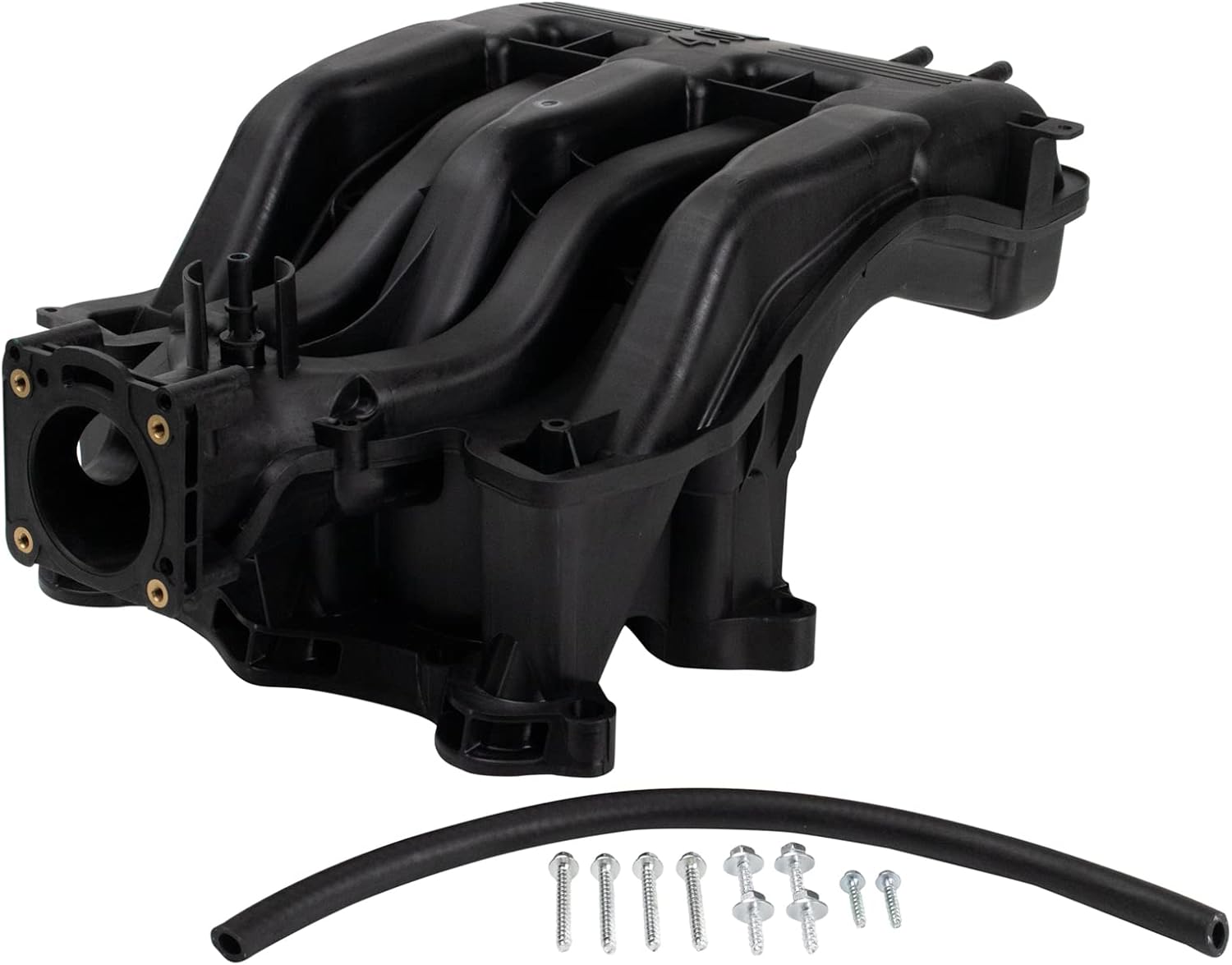
| Fitment | 2004–10 Ford Explorer, 2007–10 Explorer Sport Trac, 2004–10 Mercury Mountaineer V6 4.0L Upper |
|---|---|
| Material | Plastic |
| Gasket Or Seal Included | Yes |
| Position | Upper |
| Manufacturer Part Number | IMA08042 |
This TRQ upper intake manifold replaces the factory upper manifold on 4.0L V6 Ford Explorer, Explorer Sport Trac, and Mercury Mountaineer models from the mid 2000s. It arrives pre-assembled with gaskets included so installation is straightforward for a competent DIYer or a shop replacing a leaking or cracked manifold. The machined plastic construction is standard for many late-model intake manifolds and keeps weight down while resisting corrosion. Practical benefits include direct-fit compatibility with the listed Ford part numbers and the inclusion of mounting details that reduce modification needs. Expect the same basic routing and port alignment as the original, and the part is a sensible choice when restoring vacuum integrity and idle stability after a failing manifold. Limitations are typical of aftermarket plastic manifolds: long-term heat cycling may eventually show wear compared with metal options, and users should confirm fitment against their exact model year and engine before ordering.
Best for: Buyers who prioritize a reliable, ready-to-install replacement that restores proper sealing and drivability on older 4.0L V6 Explorers and Mountaineers.
Less Ideal for: Those seeking a heavy-duty performance upgrade or a long-term metal manifold for extreme high-heat or forced-induction applications should consider alternate designs.
- Direct-fit replacement for 2004–2010 4.0L V6 Explorers and Mountaineers
- Comes pre-assembled with gaskets to simplify installation
- Machined plastic construction resists corrosion and is lightweight
- Matches factory mounting points and referenced Ford part numbers
- Plastic construction can be less durable than metal under extreme heat cycling
Verdict: A practical, direct-fit upper intake manifold that restores sealing and drivability for 4.0L V6 Ford Explorers and Mountaineers without requiring modifications.
5. TRQ Upper Intake Manifold Assembly for 4.0L V6 Ford Explorer / Mercury Mountaineer

| Position | Upper |
|---|---|
| Material | Plastic |
| Gasket Included | Yes |
| Manufacturer Part Number | IMA08043 |
| OEM Part Number | 1L2Z9424CA |
This TRQ upper intake manifold replaces the factory upper plenum on 2002–2003 Ford Explorer and Mercury Mountaineer 4.0L V6 engines. It ships as a machined, preassembled plastic unit that includes the gasket, so installation skips fabrication and reduces bench time for DIYers or independent shops. In use it restores the intake air path and mounting points to factory-style alignment, which helps eliminate vacuum leaks, rough idle, and drivability issues tied to a failing manifold. The part is positioned as a standard replacement rather than a performance upgrade, so buyers should expect stock-level fit and flow rather than gains in horsepower. Practical benefits include direct-fit compatibility for the specified model years, included gasket for a one-part swap, and TRQ's supplemental installation videos that can assist less-experienced installers. Important limitations are that it only fits the listed 2002–2003 4.0L V6 upper application and it does not change engine performance beyond restoring factory function.
Best for: Buyers who want a reliable, drop-in replacement to restore factory drivability and avoid long repair times, and who value community feedback and installation support when choosing parts.
Less Ideal for: Do not choose this if you need a performance-oriented manifold, if your vehicle is outside the specified years or engine, or if you require metal aftermarket uprated components for extreme use.
- Direct-fit replacement for 2002–2003 4.0L V6 Explorer/Mountaineer upper manifold
- Preassembled unit with gasket included simplifies installation
- Machined exterior and factory-style mounting reduce need for modifications
- Manufacturer provides DIY videos to guide installation
- Plastic construction is standard replacement grade and not a performance upgrade
Verdict: A straightforward, preassembled direct-fit upper intake manifold that restores factory function for 2002–2003 4.0L V6 Explorer and Mountaineer owners who want a dependable replacement.
6. Garage-Pro Upper Intake Manifold for Ford Explorer 4.0L (2004–2010)

| Manufacturer | Garage-Pro |
|---|---|
| Model | Intake Manifold |
| Manufacturer Part Number | GPRF31190006 |
| OEM Part Number | 6L2Z9424A, 7L2Z9424B |
| Compatibility | Ford Explorer 2004-2010, Sport Trac 2007-2010 |
This Garage-Pro upper intake manifold is a direct-fit replacement for the 4.0L 6-cylinder Explorer and Sport Trac from the 2004–2010 era. It installs in place of the factory upper manifold and ships with gaskets, so it is used when a cracked or leaking OEM manifold needs a like-for-like swap. The design matches the original mounting locations and part numbers listed for compatibility, which simplifies installation for a home mechanic or shop working on these specific models. Benefits include restoring intake sealing and airflow without modifying sensors or throttle components, and the included gaskets reduce the parts you need to source separately. Limitations are that this is an upper manifold only and does not address other intake-related failures like a warped lower manifold or vacuum fittings, and buyers should verify the exact submodel fit before ordering. For risk-averse buyers this provides a straightforward replacement path with familiar form and function compared with custom or performance manifolds.
Best for: Buyers who want a straightforward, factory-style replacement for a failing intake manifold on a mid-2000s Explorer or Sport Trac and prefer a low-risk, install-ready option.
Less Ideal for: Shoppers looking for performance upgrades, multi-vehicle compatibility, or a complete intake system rebuild should consider other products or additional parts.
- Direct-fit design that matches factory mounting points for easier installation
- Ships with gaskets so you get a ready-to-install upper manifold
- Compatible with specified 2004–2010 Explorer and 2007–2010 Sport Trac submodels listed
- Replaces common failing OEM part numbers to restore proper intake sealing
- Only the upper intake manifold is supplied so additional intake components may be needed separately
Verdict: A ready-to-install, factory-style upper intake manifold that restores proper sealing and fitment for mid-2000s Ford Explorer and Sport Trac owners who want a low-risk replacement.
Choosing the Right Ford Explorer Sport Intake Manifold: Key Factors to Consider
Fitment And Compatibility
Correct fitment is the primary concern because the intake manifold must align with the cylinder head ports, throttle body, and all vacuum and sensor ports on the Ford Explorer Sport. Even minor mismatches in flange geometry or bolt hole placement can cause installation headaches, force sealant use, or create stress that leads to leaks. When choosing an intake manifold, confirm the Sport configuration alignment, throttle body bore size, and sensor mounting locations. Also check that any required vacuum lines, PCV connections, and coolant passages (if applicable) match factory locations to avoid routing compromises.
Compatibility matters for long-term reliability. A manifold that requires adapter plates or re-drilled holes introduces potential failure points. Properly matched manifolds also maintain intended torque sequences and gasket seating, which reduces the chance of warping or progressive leaks as the engine cycles through temperature changes.
Airflow Design And Performance
The internal runner shape, plenum volume, and throttle body opening all determine how air flows into the engine and how the Explorer Sport responds across the rev range. Manifolds with smoother transitions and optimized runner lengths can reduce turbulence and improve cylinder filling, which helps throttle response and torque delivery. For owners seeking a performance upgrade, consider manifolds that advertise improved flow numbers or that use larger, well-contoured plenums while remaining compatible with the factory fuel delivery system.
Keep in mind that aggressive airflow modifications can shift power bands. A design that favors high-rpm flow might sacrifice low-end torque, which may not suit daily driving. Balance claimed performance gains with real-world driving needs for the Sport model.
Materials And Construction Quality
Materials influence heat soak, durability, and resistance to warping—factors that affect long-term sealing and performance. Cast aluminum manifolds are common for their strength and heat tolerance, while high-quality composite manifolds can offer weight savings and resistance to heat transfer. Pay attention to machining quality at the flange faces and the finish of internal passages because rough machining can create turbulence and reduce effective airflow.
Reinforced mounting bosses, properly located gasket seats, and corrosion-resistant coatings extend service life. Poorly cast or thin-walled designs risk distortion under thermal cycling, which increases the likelihood of intake manifold gasket failure and vacuum leaks on the Explorer Sport.
Gasket And Seal Interface
The seal between the intake manifold and the cylinder head is a common failure point, especially if torque specs are missed or the mating surfaces are uneven. A properly designed gasket interface reduces the chance of intake manifold gasket leaks that cause vacuum issues, low idle, and check engine lights. Look for manifolds that provide clear gasket seats, consistent flange flatness, and that are compatible with OEM gasket designs or offer robust upgrade gaskets.
Consider whether the manifold allows for straightforward gasket replacement and whether the gasket surface protects sealing material from exposure to hot coolant, oil, or excessive vibration. Proper gasket integration simplifies maintenance and reduces the risk of slow-developing intake manifold leaks.
Serviceability And Installation
Installation ease affects labor time and the likelihood of correct reassembly. Manifolds that preserve access to bolt heads, sensors, and vacuum fittings make torque sequences achievable and reduce the risk of dropped bolts or improperly connected lines. Check whether the design forces removal of additional components like accessory brackets or intake tubing that increase installation complexity on the Ford Explorer Sport.
Serviceability also covers routine tasks like intake manifold cleaning and access to nearby components such as fuel injectors or the throttle body. A design that simplifies periodic maintenance saves time and reduces the chance of errors during service.
Vacuum Integrity And Leak Resistance
Vacuum leaks are a frequent source of drivability problems on intake systems, producing rough idle, hesitation, and diagnostic trouble codes. The manifold design should minimize the number of external vacuum fittings and use robust ports to reduce leakage risk. Integrated vacuum passages should be molded or machined with clean transitions and strong retention features for hoses and fittings.
Also evaluate how the manifold handles PCV routing and whether it reduces stress on small vacuum lines. A manifold that prioritizes vacuum integrity will lower the chances of intermittent intake manifold vacuum leak symptoms and make long-term operation more reliable.
Common Intake Manifold Symptoms On The Explorer Sport
Intake manifold issues on the Ford Explorer Sport often present as rough idle, stalling at low speed, or reduced throttle response. These symptoms come from vacuum leaks or improper air distribution between cylinders, which upset the engine control system's fuel trims.
Other indicators include intermittent misfires, a noticeable loss of low-end torque, or diagnostic trouble codes related to trim or airflow sensors. Recognizing symptom patterns helps prioritize inspection points like gasket faces, vacuum ports, and PCV connections when diagnosing the Sport model.
- Rough or fluctuating idle
- Hesitation or stumbling under acceleration
- Check engine light with trim or MAP/MAF related codes
- Visible coolant or oil weep at gasket seams if applicable
Diagnosing Vacuum Leaks And Intake Manifold Leak Sources
A systematic approach is essential for locating intake manifold vacuum leaks on the Sport configuration. Start with a visual inspection of gasket seams, vacuum hoses, and PCV connections. Small cracks or loose fittings can cause measurable vacuum loss and irregular idle behavior.
Techniques include using a smoke machine to reveal escaping smoke from leak points or carefully listening for hiss around the intake when the engine is idling. Pressure testing the intake tract and checking for consistent vacuum at test ports will help isolate leaks without removing the manifold initially.
- Visual check of gasket seating and flange flatness
- Smoke test to reveal small leaks
- Listen for hissing around vacuum fittings during idle
- Pressure test intake to confirm integrity before disassembly
Intake Manifold Maintenance And Cleaning Tips
Routine maintenance can prolong manifold life and preserve airflow. Carbon and oil buildup inside the runners degrade flow and can cause uneven cylinder filling. When cleaning, remove the manifold where practical to access runner surfaces and ports for thorough cleaning.
Use suitable cleaners and ensure all gasket surfaces are free of old sealant or debris before reassembly. Replace intake manifold gaskets whenever the manifold is removed, and follow the specified torque sequence to prevent distortion.
- Clean carbon deposits from runners during scheduled service
- Inspect and replace gaskets when manifold is removed
- Avoid harsh abrasives that may roughen internal surfaces
- Recheck torque after initial heat cycles if recommended
Torque Specs And Proper Fastening Procedure
Following correct torque specs and a staged tightening sequence is critical to avoid warping the intake manifold flange and causing gasket leaks. Tighten fasteners in the recommended pattern and in incremental steps to reach final torque. This ensures even clamping and reduces the risk of deformation under heat.
When replacing gaskets, use a calibrated torque wrench and verify that bolt threads and mating surfaces are clean. Some installations call for a final torque check after a few heat cycles to account for any component settlement.
- Use a calibrated torque wrench and manufacturer-specified sequence
- Tighten bolts in stages to final torque value
- Confirm clean threads and dry mating surfaces prior to assembly
- Re-torque if recommended after initial thermal cycling
Performance Upgrades Versus OEM-Style Replacements
Deciding between a performance-oriented manifold and an OEM-style replacement depends on driving goals. An upgrade that improves flow can boost high-rpm power and throttle responsiveness, but it may require matching intake tuning and could alter low-speed drivability on the Explorer Sport.
OEM-style replacements focus on restoring factory fit and vacuum integrity without changing power characteristics. For owners prioritizing daily drivability and low maintenance, sticking to a direct-fit replacement often reduces installation time and risk.
- Performance options trade low-end torque for high-rpm gains in some designs
- OEM-style parts restore original behavior and simplify fitment
- Consider necessary supporting mods if choosing a performance upgrade
- Evaluate whether claimed airflow gains align with real-world driving needs
When To Replace The Intake Manifold Gasket
Replace the intake manifold gasket if you observe persistent vacuum-related symptoms, visible fluid weep at the seam, or failed sealing after re-torque attempts. Gasket replacement is recommended whenever the manifold is removed for maintenance to ensure a fresh sealing surface.
Also consider replacement if you detect coolant contamination in the intake tract or if the gasket shows signs of hardening, cracking, or compression set. Fresh gaskets reduce the risk of recurrent leaks and improve long-term engine stability.
- Persistent rough idle or vacuum-related fault codes
- Visible seepage at the manifold-to-head junction
- Gasket removal during other maintenance tasks
- Cracked, hardened, or deformed gasket material
Still looking for the perfect fit?
Select your Ford Explorer configuration to see the most relevant Intake Manifolds recommendations
How We Chose the Best Ford Explorer Sport Intake Manifold
We evaluated potential intake manifolds for the Ford Explorer Sport using a focused set of category-specific filters to ensure reliability, fitment, and performance. Primary criteria included exact fitment to the Sport configuration and flange geometry to avoid alignment issues during installation. Airflow performance was assessed based on manifold runner design and stated flow improvements, since even modest gains can change throttle response and low-end torque. Construction and materials were reviewed for thermal resilience and resistance to warping, including whether designs reduce common gasket stress points.We also considered compatibility with factory sensors and ports to avoid additional modifications, plus how the manifold interfaces with the PCV and vacuum systems to limit leak-prone connections. Ease of installation and access to torque points were counted, including whether the design allows for standard torque specs and straightforward gasket replacement. Exclusions included manifolds that required extensive machine work, non-original sensor provision, or known fitment adaptations. The final list balances practical installability with measurable airflow or reliability advantages.
Our full evaluation process is outlined in our review methodology.
FAQ
What are common intake manifold symptoms on a Ford Explorer Sport?
Common symptoms include rough idle, hesitation on acceleration, loss of low-end torque, and diagnostic codes related to fuel trims or airflow sensors. These signs often point to vacuum leaks or uneven airflow between cylinders.
How can I test for an intake manifold vacuum leak on the Sport model?
Start with a visual inspection of vacuum hoses, gasket seams, and PCV connections. Use a smoke test or listen for hissing while the engine idles. Pressure testing the intake tract can further confirm leak locations before disassembly.
Should I replace the intake manifold gasket when servicing the manifold?
Yes. Replacing the intake manifold gasket whenever the manifold is removed is good practice. New gaskets ensure a reliable seal and reduce the chance of repeat leaks after reassembly.
Can intake manifold cleaning improve performance on the Explorer Sport?
Cleaning carbon and oil buildup from runners can restore airflow balance and improve throttle response. Thorough cleaning during scheduled maintenance helps maintain performance without altering engine tuning.
Do performance intake manifolds affect low-end drivability?
Some performance-oriented manifolds prioritize high-rpm flow and can reduce low-end torque or change throttle feel. The actual effect depends on runner design and should be weighed against everyday driving needs for the Sport model.
How important are correct torque specs during installation?
Very important. Following the specified torque sequence and values prevents flange distortion and gasket failure. Use a calibrated torque wrench and tighten bolts in stages to ensure even clamping.
Final Verdict
For the Ford Explorer Sport, prioritize a manifold that offers correct Sport-specific fitment, robust gasket sealing, and a runner design that matches your driving goals. Balance any airflow-focused gains against potential changes to low-end response and service complexity.If you seek straightforward reliability and minimal installation fuss, favor a direct-fit replacement that preserves vacuum integrity. If performance is the priority, choose a design with proven airflow benefits and confirm compatibility with factory sensors and torque procedures so you avoid common installation pitfalls.
Explore More:
- Check out all Ford Explorer parts & accessories
- Explore Intake Manifolds Maintenance & Repair Guides
- Explore Engine
- Browse all Auto Parts
