

Note: This article contains affiliate links. If you click on these links and make a purchase, I may earn a small commission at no extra cost to you. This helps support my research and content. Read my full affiliate disclosure here.
If you own a Ford Explorer with the 4.0L V6, the intake manifold is one of the few components that can dramatically affect vacuum integrity, idle quality, and drivability. Worn runners, leaking gaskets, or warped surfaces can cause rough idle, decreased fuel economy, and check-engine lights. This guide shortlists seven top intake manifolds chosen for the Explorer 4.0L V6 and explains the practical tradeoffs you should weigh.Below you will find the leading replacement and upgrade options for this engine and clear criteria we used to evaluate them, including fitment, sealing durability, and ease of installation. Use the guide to pick the manifold that best matches your repair or performance goals.
Looking for other parts? See all Ford Explorer parts & accessories.
Top Picks at a Glance
| Best Overall The best all-around choice for most situations | GXARTS Upper Plastic Intake Manifold for 4.0L V6 (Fits Ford Explorer / Sport Trac, Mercury Mountaineer) |  |
| Best Quality Built to a higher standard if you want something more solid | A-Premium Engine Upper Intake Manifold with Valve and Gasket for Ford 4.0L V6 |  |
| Best Value The sweet spot between price and what you get | FZJDSD Upper Plastic Intake Manifold for 4.0L V6 (fits Ford Explorer, Sport Trac, Mercury Mountaineer) |  |
| Best Budget The cheapest option that still gets the job done reliably | Sawyer Auto Replacement Upper Intake Manifold for Ford 4.0L V6 (2002–2003) |  |
| Highest Rated A top-rated pick with lots of positive feedback | MITZONE Intake Manifold with Gasket for Ford Explorer V6 4.0L and Select Polaris Models |  |
| Most Popular A crowd favorite that many people choose with confidence | TRQ Engine Upper Intake Manifold Assembly for 4.0L V6 |  |
1. GXARTS Upper Plastic Intake Manifold for 4.0L V6 (Fits Ford Explorer / Sport Trac, Mercury Mountaineer)

| Fitment | Ford Explorer 2004-2010, Explorer Sport Trac 2007-2010, Mercury Mountaineer 2004-2010 |
|---|---|
| Engine | 4.0L V6 |
| Part Number | 6L2Z9424A, 7L2Z9424B |
| Package | 1 Pc Intake Manifold |
This GXARTS upper intake manifold replaces the factory upper manifold on 4.0L V6 Ford Explorer, Explorer Sport Trac, and Mercury Mountaineer models from 2004 through 2010. It is a direct-fit aftermarket plastic manifold supplied as a single piece and intended for owners repairing a cracked or leaking upper manifold. Installation is typical of a bolt-on intake swap and can be done with standard hand tools; the seller states installation guides and technical support are available. The practical benefits are straightforward: it restores proper air routing to the top of the engine, stops vacuum leaks that cause rough idle or misfires, and avoids the higher cost of dealer parts. Because it is plastic, the part is lightweight and resists corrosion, but plastic manifolds can be less tolerant of extreme heat or repeated overtightening compared with metal units. This product is best for a budget-conscious owner who wants a near-factory fit and ease of replacement rather than an upgraded performance manifold.
Best for: A practical owner seeking an affordable, OEM-style replacement to fix leaks or cracks and return street drivability without paying dealer prices.
Less Ideal for: Not aimed at builders seeking performance gains, race applications, or high-heat forced-induction setups where an upgraded metal or performance manifold is preferable.
- Direct-fit replacement for 2004–2010 4.0L V6 Explorer, Sport Trac, and Mountaineer for straightforward swap-in repair
- Plastic construction resists corrosion and reduces weight compared with some metal replacements
- Sold as a complete upper manifold so no need to assemble multiple components before installation
- Manufacturer provides installation tutorials and technical support to assist DIY installers
- Plastic construction may be less durable under extreme heat or repeated stress compared with high-end metal performance manifolds
Verdict: A cost-effective, direct-fit upper intake manifold replacement for 4.0L V6 Explorers and Mountaineers that restores drivability without the premium of dealer parts.
2. A-Premium Engine Upper Intake Manifold with Valve and Gasket for Ford 4.0L V6

| Compatible engines | V6 4.0L |
|---|---|
| Port quantity | 6 |
| Material | Plastic |
| Includes | Intake manifold and gaskets |
| Manufacturer part number | APIM063 |
This A-Premium upper intake manifold replaces the factory upper plenum on 4.0L V6 Explorers, Sport Tracs, and Mountaineers and is supplied with the valve and gaskets needed for installation. It is molded from plastic with smooth internal runners intended to improve airflow and reduce turbulence compared with a worn OEM part. Typical use is a direct-fit replacement during a repair or when restoring throttle response and drivability; the included gaskets simplify a one-job swap. The manifold lists the factory reference numbers for straightforward cross-referencing and is advertised with a one-year unlimited-mileage guarantee. Expect a reasonably simple bolt-on installation for anyone comfortable with moderate engine work, but builders chasing maximum horsepower gains should note this is a like-for-like replacement rather than a high-flow race manifold. Fitment is limited to the specified 4.0L V6 Ford/Mercury models so confirm year and engine before ordering.
Best for: Buyers wanting to restore or modestly improve throttle response and drivability on a 4.0L V6 Explorer or Mountaineer with a straightforward bolt-on replacement and factory-style fitment.
Less Ideal for: People building a high-performance or forced-induction 4.0L engine who need a metal or purpose-built high-flow manifold should look at specialty performance parts instead.
- Direct replacement for 4.0L V6 Explorer, Sport Trac, and Mountaineer with matching OEM reference numbers
- Smooth internal runners aimed at improving airflow and throttle response over a worn original
- Includes valve and gaskets so you get necessary parts for installation
- One-year unlimited-mileage guarantee provides added peace of mind
- Made from plastic so it is not intended for extreme high-heat or high-boost performance modifications
Verdict: A practical, factory-style replacement that restores airflow and drivability on 4.0L V6 Explorers and Mountaineers without requiring modifications.
3. FZJDSD Upper Plastic Intake Manifold for 4.0L V6 (fits Ford Explorer, Sport Trac, Mercury Mountaineer)

| Fitment | Ford Explorer / Explorer Sport Trac / Mercury Mountaineer 2004–2010 V6 4.0L Upper |
|---|---|
| Material | Plastic |
| Manufacturer Part Number | 6L2Z9424A, 7L2Z9424B |
| Brand | FZJDSD |
This upper intake manifold replaces the factory upper manifold on 4.0L V6 Ford Explorer, Explorer Sport Trac, and Mercury Mountaineer models from the 2004–2010 model years. Made from molded plastic with a machined exterior, it installs in the engine bay where the OEM upper manifold routes intake air to the cylinder heads. Buyers will appreciate that the part comes with common OEM part numbers 6L2Z9424A and 7L2Z9424B for cross-reference and that the listing states multiple quality inspections were performed during production. In typical use it restores proper air delivery after the original manifold cracks or warps, which can cure rough idle, vacuum leaks, and related drivability issues. The plastic construction keeps weight and cost down but may not match the longevity of metal replacements under extreme heat or boost. Installation requires basic mechanical skill and common hand tools; gasket mating surfaces and torque specs should be followed to avoid leaks. This part is a practical, budget-focused factory-style replacement for routine repair needs on the specified 4.0L V6 vehicles.
Best for: A practical buyer looking to return a 4.0L V6 vehicle to reliable daily operation without overspending, prioritizing a straightforward replacement that matches factory fitment.
Less Ideal for: Enthusiasts planning high-boost tuning or heavy-duty high-heat applications should consider stronger aftermarket metal manifolds instead.
- Direct fit for 4.0L V6 Explorer, Sport Trac, and Mountaineer 2004–2010 using listed part numbers for easy cross-reference
- Molded plastic construction reduces weight and cost compared with metal replacements
- Machined exterior and stated quality inspections suggest consistent fit and finish
- Includes one complete upper intake manifold ready for installation
- Plastic material can be more susceptible to heat-related wear or cracking over long term compared with metal alternatives
Verdict: A cost-conscious, factory-style upper intake manifold replacement that restores proper air delivery for 4.0L V6 Explorers and Mountaineers without extra features.
4. Sawyer Auto Replacement Upper Intake Manifold for Ford 4.0L V6 (2002–2003)

| Fitment | 2002–2003 Ford Explorer and Mercury Mountaineer V6 4.0L |
|---|---|
| Manufacturer | Sawyer Auto |
| Exterior | Machined |
| Item model number | TRQ26_662515 |
This Sawyer Auto upper intake manifold is a budget-focused direct-fit replacement for the 4.0L V6 used in 2002–2003 Ford Explorer and Mercury Mountaineer models. It reproduces factory mounting points and port locations so installation uses the existing bolts and sensors with standard tools, and the product listing notes dimensional verification to help ensure compatibility. Made from molded black plastic, it restores the intake plenum and sealing surfaces when the original has cracked or developed vacuum leaks. The listing also indicates gaskets where required, which simplifies a typical reinstall. Practical benefits include lower cost compared with dealer parts and straightforward installation for mechanically comfortable DIYers or independent shops. Limitations are material choice and longevity compared with higher-end aftermarket or remanufactured metal options, so expect typical lifespan similar to other plastic factory-style manifolds under normal driving conditions.
Best for: Buyers on a tight budget who need a straightforward, ready-to-install replacement to stop vacuum leaks or cracking and prefer a part that installs using existing hardware.
Less Ideal for: People seeking a long-term performance upgrade or a premium metal manifold for high-boost or heavy-duty use should consider more robust aftermarket options.
- Direct-fit design that uses factory mounting points for straightforward installation
- Dimensional verification improves chances of proper fit on listed 2002–2003 4.0L V6 vehicles
- Includes gaskets where noted to simplify replacement and sealing
- Lower-cost alternative to dealer replacement parts
- Constructed from molded plastic which may not match the longevity of metal or premium aftermarket manifolds
Verdict: An affordable, direct-fit replacement that restores sealing and fit for 2002–2003 4.0L V6 Explorers and Mountaineers without extensive modification.
5. MITZONE Intake Manifold with Gasket for Ford Explorer V6 4.0L and Select Polaris Models
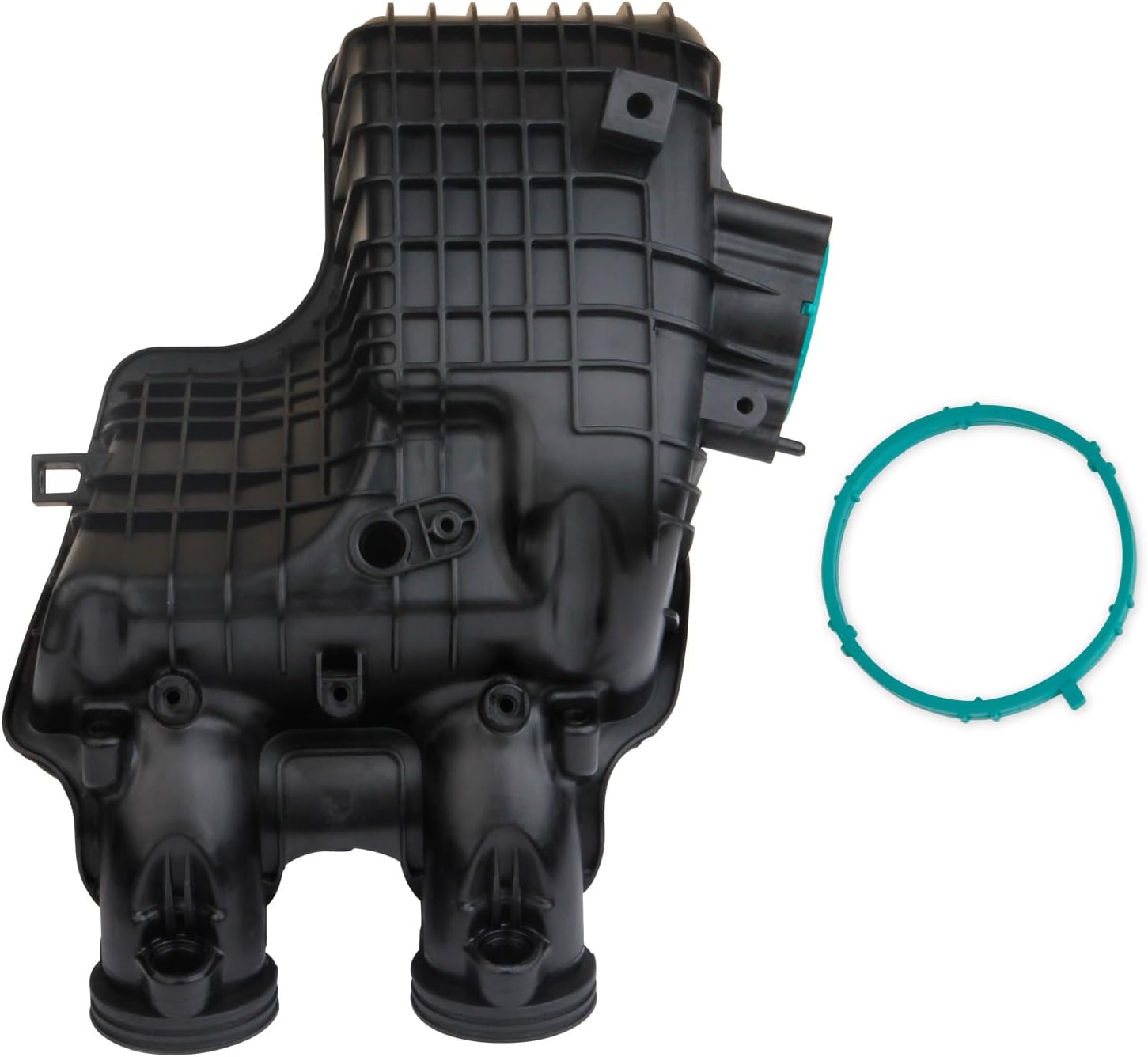
| Brand | MITZONE |
|---|---|
| Model | Intake Manifold |
| Exterior | Plastic |
| Manufacturer Part Number | 009-175 |
| OEM Part Number | 2207917 |
This MITZONE intake manifold is a direct replacement-style unit designed for Ford Explorer and similar V6 4.0L engines and includes a matching gasket for installation. It is made from reinforced plastic intended to resist heat and prevent vacuum leaks, so it is meant as a like-for-like service part for aging or cracked factory manifolds. Typical use is swapping out a failed manifold during routine engine repair or when vacuum leaks cause idle or drivability issues. The listing notes a one-year repair coverage and recommends hand-tightening then torquing bolts to spec, which helps avoid installation damage. Practical benefits are straightforward: a full manifold plus gasket in one kit, materials claimed to withstand high temperatures, and broad fitment notes for Explorer 4.0L years. Limitations are that it is a plastic aftermarket part rather than a metal performance piece and proper fit depends on verifying interchange numbers and vehicle model; professional installation is advisable to ensure correct sealing and torque values.
Best for: Buyers seeking a straightforward, reliability-focused replacement to stop vacuum leaks and restore normal idle and engine performance on Explorer 4.0L V6 engines who prefer a complete kit ready for installation.
Less Ideal for: Drivers looking for performance upgrades, long-term motorsport use, or those who prefer a metal aftermarket manifold should consider other options.
- Includes intake manifold and matching gasket for a single repair event
- Plastic construction designed to resist heat and minimize vacuum leaks
- Covers a wide range of Ford Explorer 4.0L model years listed for straightforward replacement
- Manufacturer guidance on installation and recommended torque practice
- Aftermarket plastic construction may not match the longevity of metal or higher-grade OEM replacements
Verdict: A practical, ready-to-install replacement manifold and gasket kit aimed at restoring reliable sealing and drivability for Ford Explorer 4.0L V6 engines.
6. TRQ Engine Upper Intake Manifold Assembly for 4.0L V6

| Position | Upper |
|---|---|
| Material | Plastic |
| Gasket Included | Yes |
| Manufacturer Part Number | IMA08043 |
| OEM Part Number | 1L2Z9424CA |
This TRQ upper intake manifold is a direct-fit replacement intended for 2002–2003 Ford Explorer and Mercury Mountaineer 4.0L V6 engines. It arrives preassembled with the upper manifold and included gasket, so installation is straightforward for a competent DIYer or shop and requires no fabrication. The component is molded plastic with a machined exterior finish intended to match factory contours and mounting points, which helps preserve throttle response and vacuum routing when swapped in. TRQ highlights compatibility resources and DIY videos to guide installation, which is helpful for buyers who want reassurance before committing. Practical benefits include faster repair time versus rebuilding the original manifold and restored engine breathing where the old unit was cracked or leaking. Limitations are that this is a direct replacement for the upper manifold only and fitment is limited to the specified model years and engines, so it will not work for other model years or engine variants without verification.
Best for: Buyers who want a straightforward, factory-style replacement to stop intake leaks and restore engine performance with resources to verify fitment and guide installation.
Less Ideal for: Anyone looking for performance upgrades, a complete intake system overhaul, or fitment outside the listed 2002–2003 4.0L V6 vehicles should consider other options.
- Direct-fit design for 2002–2003 Ford Explorer and Mercury Mountaineer 4.0L V6 for easy replacement
- Comes preassembled with gasket to reduce installation time and complexity
- Plastic construction with machined exterior to match factory mounting and vacuum ports
- Manufacturer provides DIY videos and compatibility guidance to reduce installation uncertainty
- Only replaces the upper intake manifold so additional components may be required for a full intake overhaul
Verdict: Choose this TRQ upper intake manifold when you need a direct, preassembled replacement to stop leaks and restore factory-style performance on a 2002–2003 4.0L V6 Explorer or Mountaineer.
Choosing the Right Ford Explorer 4.0L V6 Intake Manifold: Key Factors to Consider
Fitment and Port Alignment
Precise fitment is critical on the Explorer 4.0L V6 because misaligned ports cause air leaks and poor sealing at the head interface. A manifold that matches factory port spacing and bolt patterns reduces the chance of vacuum leaks and makes installation straightforward.
Port alignment also affects airflow into each cylinder. Uneven or misaligned runners can produce cylinder-to-cylinder imbalance, which shows up as rough idle and lower low-end torque. When evaluating options, confirm that the manifold is designed for the 4.0L V6 intake flange geometry and that all vacuum and sensor ports are present and correctly positioned.
Sealing Surface and Gasket Compatibility
The condition of the mating flange and the gasket design determine long-term sealing performance. Manifolds with flat, machined flanges reduce point loading on gaskets and resist leak paths caused by warpage. Some replacements include matched gaskets engineered to handle the specific flange finish and compression characteristics of this engine.
Pay attention to whether the manifold requires a specific gasket type, additional sealant, or torque sequence. Correct gasket selection matters because the wrong thickness or material can change sealing pressure and increase the risk of an intake manifold leak over time.
Material and Thermal Durability
Intake manifolds on the 4.0L V6 face repeated heat cycles and exposure to intake temperatures that affect material stability. Cast aluminum and composite designs each have tradeoffs. Aluminum is strong and resists deformation when properly machined, but thin casting sections can crack. Composite manifolds resist heat soak differently and can provide improved thermal isolation, but quality varies.
Choose manifolds built from materials known to withstand under-hood temperatures and vibration without cracking or warping. Consider the manufacturing tolerances and whether the part includes reinforcement at common stress points.
Vacuum and Sensor Port Provisioning
The 4.0L V6 requires multiple vacuum and sensor connections for accessories, brake boosters, and emission systems. A replacement manifold must provide the same number and location of ports to avoid additional fittings or hoses. Missing or incorrectly placed ports can force you to modify the manifold or reroute vacuum lines, increasing installation time and risk of leaks.
Confirm that vacuum fittings, sensor bosses, and PCV connections match the vehicle configuration so you can reuse existing lines and sensors without adapters. Properly placed ports also simplify diagnosing intake manifold vacuum leak symptoms.
Installation Complexity and Hardware
Some manifolds are direct-fit replacements while others require supplemental hardware or new gaskets and bolts. Ease of installation affects labor time and the chance of installation-related leaks. Manifolds that retain factory mounting hardware patterns and include clear torque specs reduce the risk of uneven clamping and gasket failure.
Also consider whether the manifold requires removal of ancillary components such as the intake fuel rails, sensors, or throttle body for fitment. Replacement parts that minimize required disassembly save time and lower the chance of disturbing other systems.
Potential Performance Impact
If you are pursuing a performance upgrade rather than a straight replacement, runner length, plenum volume, and internal geometry influence torque and throttle response on the 4.0L V6. Small changes to runner shape can shift the torque curve, improving midrange power or top-end breathing depending on design.
However, aggressive performance-oriented manifolds can change idle quality and may require supporting modifications to fuel mapping or intake tuning. For most owners focused on reliable operation, subtle improvements to airflow and reduced restriction should be balanced against possible tradeoffs in drivability.
Common Intake Manifold Symptoms on the Explorer 4.0L V6
Knowing typical symptoms helps you decide whether a manifold replacement is necessary. Common signs include a rough or fluctuating idle, misfires at low RPM, unexplained vacuum-related trouble codes, and reduced fuel economy. Some symptoms overlap with other systems, so targeted diagnosis is important.
You may also notice coolant loss if the manifold interfaces with coolant passages, as some 4.0L V6 manifolds use coolant passages that can leak when the manifold fails. Hissing sounds under the hood at idle or a spongy brake pedal are additional indicators of vacuum loss tied to intake manifold issues.
- Rough idle or stalling at low RPM
- Check-engine light with misfire or vacuum-related codes
- Hissing or whistling from the intake area
- Coolant loss in manifolds that carry coolant passages
Diagnosis: Finding an Intake Manifold Vacuum Leak
Start with a visual inspection for cracked plastic, warped flanges, or deteriorated gasket material. Follow by checking for vacuum around gasket seams and vacuum ports using a smoke tester or a controlled spray of a safe diagnostic aerosol while the engine is idling. Changes in engine speed indicate where leaks exist.
Also test vacuum lines and sensor fittings for integrity. If you suspect an intake manifold leak specifically, isolate the manifold by blocking off known vacuum sources and monitoring idle response. Document any codes from the engine control module and correlate them to physical symptoms to narrow down the issue.
- Visual inspection for cracks and gasket condition
- Use a smoke test or safe aerosol to locate leak points
- Verify vacuum lines and sensor port sealing
- Cross-check engine codes with observed symptoms
Gasket Replacement and Torque Practices
Replacing the intake manifold gasket is often required even when the manifold itself appears undamaged. Proper gasket installation and following the correct torque sequence and torque specs prevents uneven clamping and future leaks. Always use new gaskets and manufacturer-recommended fasteners when available.
Torque specs for the 4.0L V6 vary by bolt size and sequence; using a calibrated torque wrench and following the specified pattern reduces the chance of flange distortion. If the replacement manifold does not provide torque guidance, refer to factory service documentation for the correct sequence and values.
- Always replace gaskets when removing the manifold
- Follow the correct bolt torque sequence and specs
- Use a calibrated torque wrench for final tightening
- Inspect bolt holes and threads for damage before reuse
When to Consider an Upgrade Instead of a Direct Replacement
If you regularly tow, carry heavy loads, or want improved midrange torque, an intake manifold with slightly different runner geometry can help. Upgrades designed for better flow or reduced restriction may yield modest gains in throttle response and torque, particularly on modified engines.
However, for a daily-driven Explorer used primarily for commuting, a direct-fit replacement focused on sealing reliability and OEM-like flow characteristics is usually the best tradeoff. Upgrades that shift torque characteristics may require additional tuning to maintain smooth idle and emissions compliance.
- Upgrade for towing or performance-oriented torque gains
- Direct-fit for daily reliability and OEM drivability
- Upgrades may require tuning to optimize fuel delivery
- Consider long-term serviceability when selecting upgrades
Routine Intake Manifold Cleaning and Maintenance
Carbon and oil residue can accumulate in intake runners over time, especially with PCV system recirculation. Periodic inspection and cleaning of the manifold and throttle body can restore airflow balance and improve idle. Use methods compatible with the manifold material to avoid damage.
When performing maintenance, inspect gasket surfaces for flatness and look for hairline cracks in plastic or thin-cast sections. Replace any compromised gaskets and re-torque bolts after a short break-in period to ensure continued sealing performance.
- Clean carbon deposits from runners and plenum periodically
- Use material-appropriate cleaners and tools
- Inspect gaskets and sealing surfaces during cleaning
- Re-torque bolts after initial heat cycles if recommended
Still looking for the perfect fit?
Select your Ford Explorer configuration to see the most relevant Intake Manifolds recommendations
How We Chose the Best Ford Explorer 4.0L V6 Intake Manifold
We evaluated intake manifolds specifically for the Ford Explorer 4.0L V6 using criteria that matter to owners tackling common intake-system issues. Primary evaluation points included fitment accuracy to factory mounting bosses and port alignment, sealing reliability measured by flange flatness and gasket interface design, and material durability to resist warping or cracking under heat cycles. We also considered throttle and runner design where applicable for drivability and torque characteristics, plus provisions for vacuum and sensor ports to avoid fabrication work during installation.Installation complexity and parts needed were assessed, including whether common hardware and gaskets are retained or require replacement. We prioritized options that minimize additional machining or modification. Reliability history and typical failure modes informed exclusions; manifolds with known cracking or chronic leak reports were removed. The final picks balance correct fitment, sealing robustness, and installation practicality while offering sensible performance upside when appropriate.
Our full evaluation process is outlined in our review methodology.
FAQ
What are the most common causes of intake manifold leaks on the 4.0L V6?
Common causes include degraded gaskets, warped or cracked flange surfaces from heat cycling, and brittle plastic sections that develop hairline cracks. Improper torque during previous installations can also lead to uneven sealing and eventual leaks.
Can I replace just the intake manifold gasket or do I need a full manifold replacement?
Often a gasket replacement will fix a simple leak, but if the flange is warped, cracked, or the manifold has damaged vacuum ports, a full manifold replacement is necessary. Inspect the mating surfaces carefully before deciding.
How can I tell if a vacuum leak is coming from the intake manifold or a vacuum line?
A smoke test or controlled use of a diagnostic aerosol around gasket seams and vacuum ports while the engine is idling will show where intake leaks exist. Vacuum lines can be visually inspected and pressurized separately to confirm their integrity.
Do I need special tools to install an intake manifold on the Explorer 4.0L V6?
Common hand tools and a calibrated torque wrench are usually sufficient. Some installations may require removal of accessories or fuel rail components, so basic automotive tools and extension bars are helpful. Specialized tools are rarely required for a direct-fit replacement.
Will a different intake manifold change engine tuning or drivability?
Yes, manifolds with different runner geometry or plenum volume can shift the torque curve and affect idle quality. Minor improvements in airflow often do not need tuning, but significant performance-oriented changes may require fuel or ignition adjustments.
How long should a properly installed intake manifold last on this engine?
With correct installation, proper torqueing, and maintenance, a well-made manifold can last many years. Lifespan depends on material quality, exposure to heat cycles, and driving conditions, so regular inspections are recommended.
Final Verdict
For the Ford Explorer 4.0L V6, prioritize correct fitment and flange sealing when choosing an intake manifold. Proper port alignment, compatible gasket design, and durable materials reduce the risk of vacuum leaks and maintain reliable idle and throttle response. If you need a modest performance gain for towing or load carrying, consider manifolds with revised runner geometry but be aware that such changes may require supporting adjustments.Focus first on options that minimize installation complexity and match factory vacuum and sensor provisions. That approach delivers the most predictable results for everyday driving while leaving room to pursue performance upgrades if your use case demands it.
Explore More:
- Check out all Ford Explorer parts & accessories
- Explore Intake Manifolds Maintenance & Repair Guides
- Explore Engine
- Browse all Auto Parts
