

Note: This article contains affiliate links. If you click on these links and make a purchase, I may earn a small commission at no extra cost to you. This helps support my research and content. Read my full affiliate disclosure here.
If you own a 2012-2015 Honda Civic, choosing the right intake manifold matters for drivability, fuel economy, and engine longevity. These model years correspond to the FB and FG chassis code used in many owner searches, so this guide focuses specifically on fit, sealing, and mounting requirements for those Civics. Whether you need a replacement because of a leak or you are considering a performance upgrade, the shortlisted options all match the Civic's intake ports and mounting points for direct fitment.This guide covers the top seven intake manifolds selected for fitment, material quality, and sealing performance. We evaluate each option on compatibility, gasket sealing, and installation factors like torque specs and vacuum integrity to help you choose the right unit for repairs or upgrades.
Looking for other parts? See all Honda Civic parts & accessories.
Top Picks at a Glance
| Best Overall The best all-around choice for most situations | Suzanne Engine Intake Manifold Assembly with Gasket |  |
| Best Quality Built to a higher standard if you want something more solid | Autotecnica Intake Manifold 17100-R40-A00 |  |
| Best Value The sweet spot between price and what you get | TOM Intake Manifold for 2.4L Honda (17100R40A00) |  |
| Best Budget The cheapest option that still gets the job done reliably | maXpeedingrods Intake Manifold Assembly (direct replacement) |  |
| Highest Rated A top-rated pick with lots of positive feedback | A-Premium Intake Manifold Assembly with Gasket for 2.4L DOHC L4 | 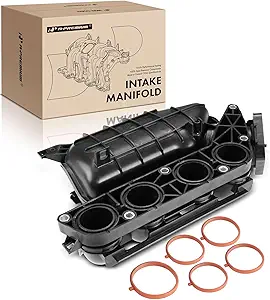 |
| Most Popular A crowd favorite that many people choose with confidence | TRQ Intake Manifold Assembly for 2.4L Honda/Acura Engines |  |
| Best Seller A high-volume bestseller chosen again and again | Brock Replacement Intake Manifold with Gaskets for 2.4L Honda 17100-R40-A00 |  |
1. Suzanne Engine Intake Manifold Assembly with Gasket
| Manufacturer | Suzanne |
|---|---|
| Model | Engine Intake Manifold Assembly with Gasket |
| Manufacturer Part Number | 17100R40A00,17100-R40-A00 |
| Exterior | Machined |
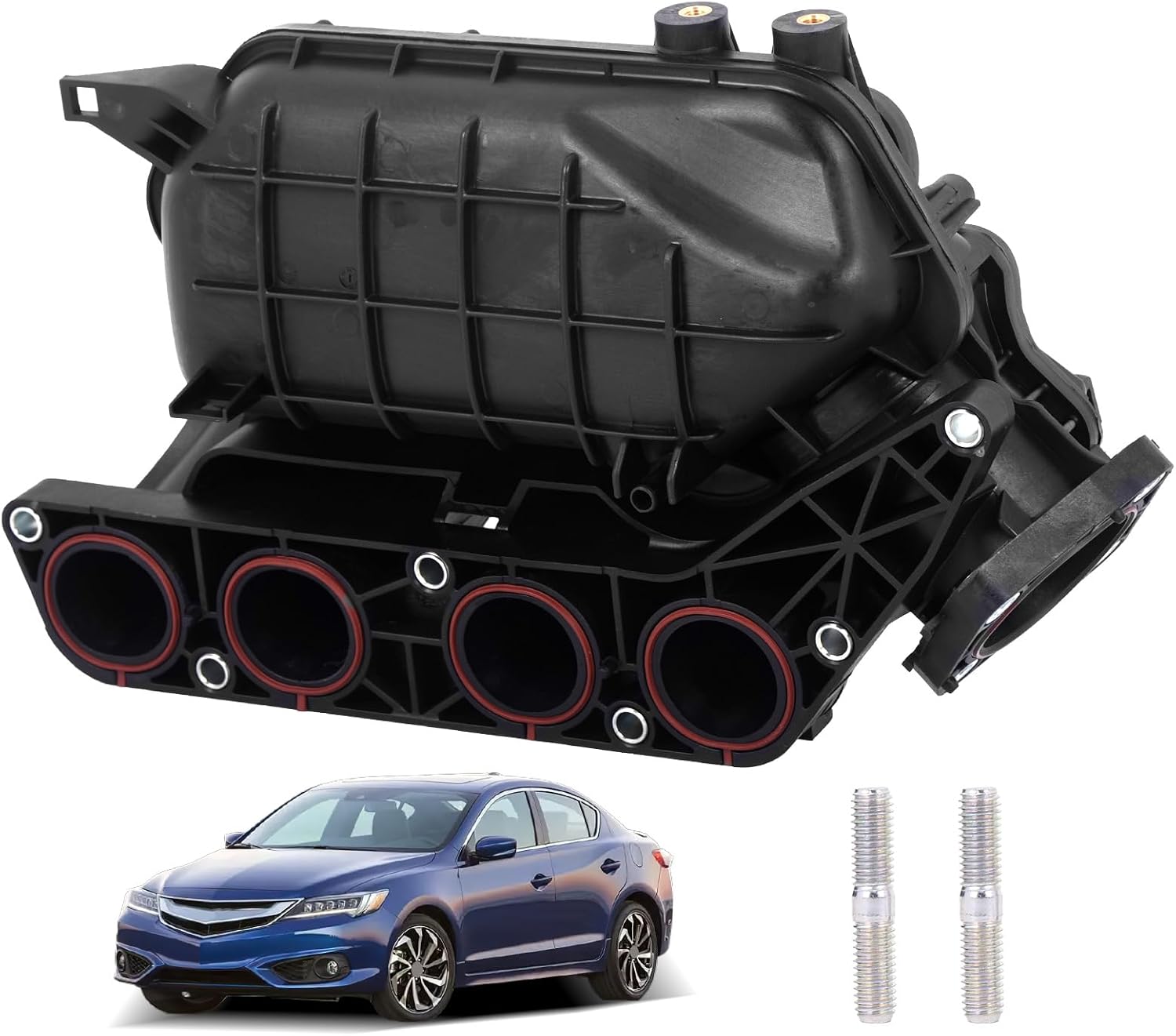
This Suzanne intake manifold is a bolt-in replacement intended to restore factory airflow on compatible 2.4L Honda and Acura engines. It comes as a complete assembly with the gasket included and is machined to match factory mounting points so installation typically requires no modification. The listing calls out internal geometry optimized to reduce turbulence, which in practice should improve throttle response and help regain lost performance on worn manifolds. For a mechanically focused install it simplifies the job by providing pre-drilled mounting holes and the correct OEM part numbers for cross-reference. Limitations include the usual considerations for aftermarket manifolds: long-term durability and exact match to factory tolerances can vary by manufacturer, and any installation that exposes sensors or vacuum lines still requires careful routing. This part is best used when replacing a cracked or leaking factory manifold or when restoring intake performance during engine service.
Best for: Buyers who want a ready-to-install replacement to restore intake performance on a 2012–2015 Civic or similar 2.4L Honda/Acura engines and prefer a complete assembly with gasket included.
Less Ideal for: Buyers seeking a high-performance race intake or an engineered aftermarket upgrade for major power gains should consider purpose-built performance manifolds instead.
- Includes gasket and is sold as a complete assembly for straightforward replacement
- Machined exterior and pre-drilled mounting points for direct fit installation
- Designed to match OEM part numbers and fitment for the listed Honda and Acura models
- Internal geometry claimed to reduce airflow turbulence for improved throttle response
- Long-term durability and factory-level fitment depend on manufacturer quality control
- Compatibility limited to the specific model years and engine configurations listed
Verdict: A ready-to-install replacement manifold that restores factory airflow and throttle response for compatible 2.4L Honda and Acura engines.
2. Autotecnica Intake Manifold 17100-R40-A00

| Model | Intake Manifold |
|---|---|
| Manufacturer | Autotecnica |
| Exterior | Machined |
| Item model number | HA1419311 |
This Autotecnica intake manifold is a direct-fit replacement made to match factory dimensions for the 2.4L Honda engines found in 2012–2015 Civics and related vehicles. It is machined and built from corrosion-resistant materials designed to withstand oil vapor and engine heat, so it installs easily without modification and holds up under typical driving conditions. Installers will appreciate that the part is intended to mirror OEM fit and function, which reduces setup time and avoids intake leaks or alignment issues common with poorer aftermarket pieces. For enthusiasts seeking modest performance gains, this unit is primarily a reliable factory-quality swap rather than a high-flow performance manifold; any measurable power improvements would require complementary modifications to intake plumbing, throttle body, or tuning. The manufacturer backs the part with a two-year unlimited-mileage warranty, and its precise construction makes it a solid choice when you need a durable, OEM-style replacement that simplifies maintenance and repair of the 2.4L Civic engine.
Best for: Buyers who want a dependable, factory-spec replacement for the 2.4L Civic intake that installs cleanly and minimizes shop time while keeping the engine stock-oriented.
Less Ideal for: Drivers focused on extracting significant horsepower from the intake side should look for a purpose-built performance manifold and supporting intake upgrades instead.
- Made to factory manifold dimensions for straightforward direct-fit installation
- Machined exterior and corrosion-resistant materials designed for engine heat and oil vapor
- Durable construction backed by a two-year unlimited-mileage warranty
- Reduces installation time and risk of alignment or sealing issues compared with lower-quality aftermarket units
- Designed as a factory-quality replacement rather than a high-flow performance manifold
Verdict: A precise, factory-dimension replacement that makes swapping the 2.4L Civic intake quick and reliable without modifying the engine.
3. TOM Intake Manifold for 2.4L Honda (17100R40A00)

| Manufacturer Part Number | 17100R40A00 |
|---|---|
| Item model number | N02-106 |
| Exterior | Polished |
| Fits | 2012-2015 Honda Civic; 2008-2012 Accord; 2012-2014 CR-V; 2012-2015 Crosstour; 2009-2014 Acura TSX; 2013-2015 Acura ILX |
This TOM intake manifold replaces the factory unit on 2.4L Honda engines and is offered as a direct-fit, vehicle-specific replacement. It is typically used when an original manifold is cracked, leaking, or being upgraded during an engine service. The polished exterior suggests corrosion resistance and a finished look for an engine bay, while the listing emphasizes precision engineering to match factory mounting points and ports for straightforward, low-hassle installation. Practical benefits include restored intake sealing and airflow routing to return engine performance and drivability, plus compatibility across several Honda and Acura 2.4L models so you can swap in a known-fit part. Limitations to consider are that the listing gives no performance-tuning gains beyond stock and does not include supporting hardware or gaskets, so plan to reuse or replace those separately. Buyers should also confirm the exact model year and engine code before purchase to ensure fitment and avoid returns.
Best for: Buyers who want a reliable, ready-to-install replacement to restore factory intake function on a 2012–2015 Civic and similar 2.4L Honda engines and who value fitment and ease of installation.
Less Ideal for: Drivers seeking a performance intake for increased power or a custom aftermarket upgrade should look at tuned intake options instead.
- Vehicle-specific design intended to match factory mounting points for easier installation
- Polished exterior that resists corrosion and improves engine bay appearance
- Covers multiple 2.4L Honda/Acura applications so one part fits several compatible models
- Does not include gaskets or additional hardware needed for a complete installation
Verdict: A practical, polished direct-fit replacement that restores factory intake function on 2.4L Honda Civic engines with minimal fuss.
4. maXpeedingrods Intake Manifold Assembly (direct replacement)

| Manufacturer Part Number | LT60TV |
|---|---|
| OEM Part Number | 17100R40A00, 17100-R40-A00 |
| Fitment | Select Honda Accord, Civic, CR-V and Acura ILX/TSX model years listed |
| Item Weight | 7.94 pounds |
This maXpeedingrods intake manifold is a bolt-on replacement that restores the intake plenum and runners for compatible Honda and Acura 4-cylinder engines. It is typically used when a cracked or leaking factory manifold causes rough idle, poor fuel economy, or check-engine codes. The unit claims a durable, integrated design that simplifies installation and replaces the original part number 17100-R40-A00 without additional modification. For everyday drivers it provides a straightforward way to recover engine performance and drivability after manifold failure. Practical benefits include the ability to match factory fitment for an OEM-style repair and a lower-cost alternative to dealer parts. Limitations are that this is an aftermarket part so finish and long-term durability may vary compared with factory-brand components, and fitment must be checked carefully against the listed vehicle applications before purchase.
Best for: Buyers looking for an affordable, no-frills replacement to restore a failing intake manifold and get a Civic back on the road with minimal fuss.
Less Ideal for: Drivers seeking an exact factory-branded part for long-term peace of mind or those planning performance upgrades should consider OEM or performance-specific manifolds instead.
- Direct-replacement design matching OEM part number for simple swap
- Integrated construction intended to simplify installation
- Made from materials intended to restore airflow and engine efficiency
- Covers a wide range of common Honda and Acura 4-cylinder model years relevant to Civics 2012–2015
- Aftermarket construction may not match long-term durability of factory-brand manifolds
Verdict: A budget-friendly, direct-replacement intake manifold that lets Civic owners quickly restore factory-style airflow without the premium cost of dealer parts.
5. A-Premium Intake Manifold Assembly with Gasket for 2.4L DOHC L4
| Fitment | 2.4L DOHC L4 (specified Honda/Acura models) |
|---|---|
| Material | Plastic |
| Type | Single plane |
| Package quantity | 1 |
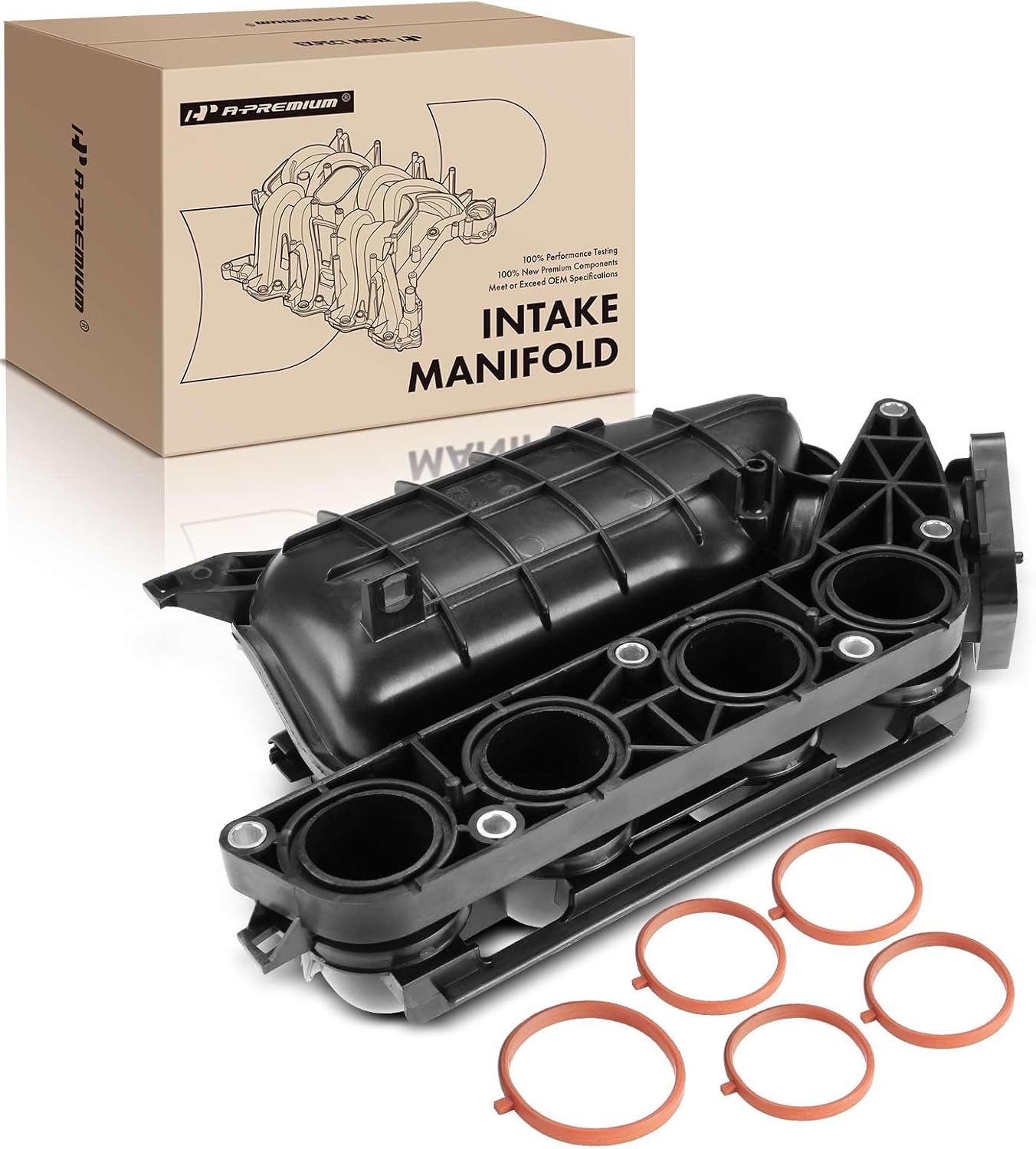
This intake manifold assembly is a direct-replacement plastic manifold made for 2.4L DOHC L4 engines and arrives with gaskets for a straightforward swap. It is typically used to replace a cracked or leaking OEM manifold that is causing rough idle, loss of power, or intake air leaks. The single-plane design and smooth internal surfaces are intended to improve airflow consistency and help the engine run smoothly during acceleration. The kit includes multiple gaskets and aligns to factory mounting points, which customers report makes installation and sealing easier. As a plastic aftermarket unit, it balances cost savings with expected durability for everyday driving rather than heavy performance use. The manufacturer states precision manufacturing and offers a one-year unlimited-mileage guarantee, giving some assurance for long-term reliability. Buyers should note that plastic manifolds can be more vulnerable than metal under extreme heat or repeated mechanical stress, so careful installation and avoiding over-torquing fasteners matters for longevity.
Best for: Engineers and DIY owners seeking a reliable, budget-friendly factory-quality replacement to restore normal drivability on a 2.4L DOHC Civic within the 2012–2015 model scope.
Less Ideal for: Do not choose this if you need a heavy-duty or high-heat-performance manifold for track use or modified engines that raise thermal or pressure stresses beyond stock conditions.
- Direct replacement fit for specified 2.4L DOHC L4 models for straightforward installation
- Comes with intake and throttle-body gaskets to simplify sealing at install
- Smooth inner wall and single-plane design promote consistent airflow and smoother acceleration
- Includes multiple gaskets and aligns to factory mounting points according to listings and user reports
- Plastic construction may be less resistant to extreme heat or impact than metal alternatives
Verdict: A cost-effective, factory-style replacement that reliably restores intake sealing and smooth airflow for stock 2.4L DOHC Civic engines.
6. TRQ Intake Manifold Assembly for 2.4L Honda/Acura Engines
| Material | Plastic |
|---|---|
| Includes | Gaskets |
| Fitment | Honda/Acura 2.4L L4 (listed years/models) |
| Manufacturer Part Number | IMA08041 |
| OEM Part Number | 17100-R40-A00 |
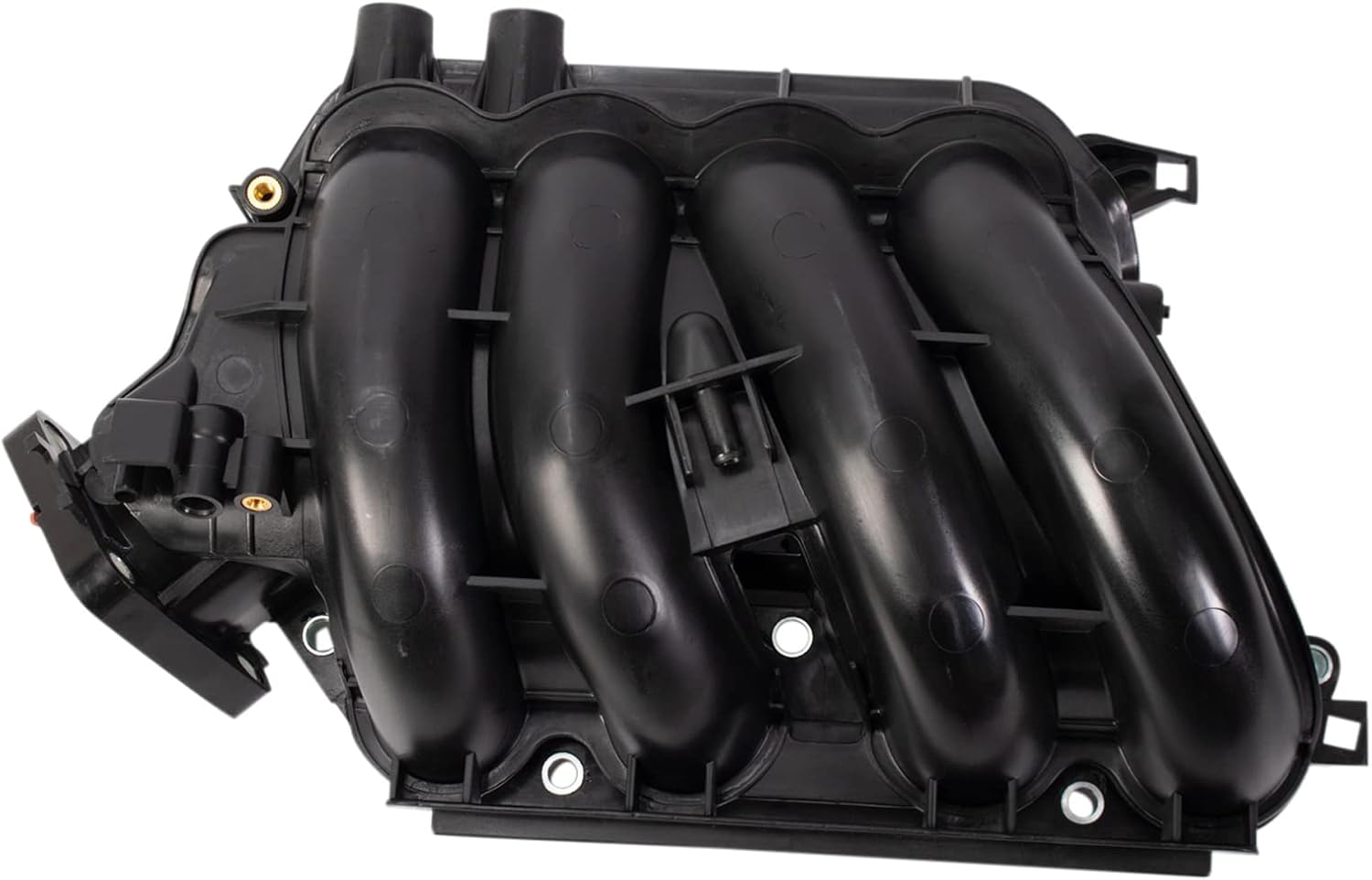
This TRQ intake manifold is a direct-replacement designed for 2.4L four-cylinder Honda and Acura engines and ships with the upper manifold gaskets included. It is made from molded plastic with a machined exterior and aims to match factory fit so you can swap it into Accord, Civic, CR-V, ILX, TSX, and Crosstour applications listed. Installation is straightforward for a competent DIYer since the part arrives preassembled and TRQ provides troubleshooting and how-to videos to walk through the process. In real use owners report good fit and restored drivability when the original manifold was leaking or cracked, and some notice a modest change in cabin engine noise. A few reviewers have reported durability issues on certain V6 applications where internal baffles broke loose, so long-term robustness may vary by engine and usage. The unit replaces the OEM reference number and includes gaskets but confirm the exact vehicle fit and any required sensor relocation before starting the job.
Best for: Buyers who want a straightforward, vehicle-specific replacement to repair intake leaks or restore driveability and who prefer to follow step-by-step installation guidance rather than sourcing multiple components.
Less Ideal for: People seeking a heavy-duty performance upgrade or metal intake designed for racing use should look at dedicated performance manifolds instead.
- Direct-fit design intended to match factory mounting and simplify installation
- Includes upper manifold gaskets to reduce parts hunting during replacement
- Preassembled unit with manufacturer DIY videos to guide installation
- Machined exterior and reinforced construction for a neater fit and appearance
- Made from plastic which may be less durable long term than metal designs on some engines
Verdict: Choose this TRQ intake manifold when you need a ready-to-install, vehicle-specific replacement that restores factory fit and function for 2.4L Honda/Acura engines.
7. Brock Replacement Intake Manifold with Gaskets for 2.4L Honda 17100-R40-A00

| Manufacturer Part Number | 7772-0001 |
|---|---|
| OEM Part Number | 17100-R40-A00 |
| Position | Front |
| Special Features | OE Fit, OE Function |
| Voltage | 12 Volts |
This Brock intake manifold kit replaces the factory manifold on 2.4L Honda engines and ships with the required gaskets for installation. It is intended as a direct-fit aftermarket replacement that restores proper air and fuel distribution to each cylinder in Civic applications. Typical use is a do-it-yourself or shop replacement when the original manifold is cracked, leaking, or the gasket set has failed. The listing emphasizes OE-style fit and function and the part carries a manufacturer part number that matches the factory reference. Practical benefits include complete gasket coverage so you do not need to source separate seals, and a construction meant to provide a stable mounting surface for fuel injectors and sensors. Limitations to be aware of are that compatibility is limited to 2.4L engine models and you should confirm the OEM part number before ordering; professional installation is recommended if you are not experienced with intake plumbing and sensor reconnection.
Best for: Buyers who want a straightforward, factory-style replacement for a 2.4L Honda intake manifold and prefer a ready-to-install kit that minimizes additional parts sourcing.
Less Ideal for: Do not choose this if you need performance upgrades, different engine displacement compatibility, or if you prefer an OEM-sourced Honda part from a dealer.
- Includes intake gaskets so the manifold can be installed without buying additional seal components
- Engineered for OE-style fit and function to simplify replacement and reduce fitment adjustments
- Designed to provide secure mounting for injectors and sensors to restore factory alignment
- Fitment is specific to 2.4L Honda engines so it will not work on other displacements or unrelated vehicles
Verdict: A complete, OE-style replacement manifold kit for 2.4L Honda Civics that simplifies repair by including the necessary gaskets.
Choosing the Right 2012-2015 Honda Civic Intake Manifold: Key Factors to Consider
Fitment and Port Alignment
Precise fitment to the 2012-2015 Honda Civic intake flange and port pattern is essential. Even small misalignments can cause poor sealing, vacuum leaks, and difficulty aligning the throttle body and fuel injectors. When evaluating options, check that the intake manifold matches the Civic's intake port shape and spacing so the gasket seats evenly and the intake bolts engage without stress.
Port alignment also affects airflow symmetry. Unequal runner lengths or mismatched port shapes can change idle quality and throttle response. For replacement or upgrade, prefer manifolds specified for the FB and FG chassis to minimize clearance issues with accessories, heat shields, and wiring harnesses.
Material and Construction
Intake manifolds for these Civic years are typically made from composite plastic, aluminum, or a hybrid construction. Material choice matters for thermal behavior and durability. Composite materials can reduce heat soak but must be reinforced to resist cracking; aluminum offers strength and easier port matching but can transfer more heat to the incoming air.
Look for manifolds with consistent casting or molding, no thin ribs, and well-finished gasket surfaces. Reinforced mounting bosses and integrated bosses for sensor fitment reduce the risk of stripped threads. For FP/FG Civic engines, durability against heat cycles and resistance to warpage are important for long-term sealing.
Gasket and Sealing Design
A good intake manifold works with a dependable gasket system. The gasket material and sealing method determine how well the assembly resists vacuum leaks and coolant seepage where applicable. Some manifolds use molded or integrated sealing lips to improve compression; others rely on separate multi-layer gaskets.
Consider whether replacement gaskets are readily available and whether the manifold design allows for even clamp load across the flange. Uneven clamping creates high-stress points that can lead to leaks. For owners replacing a leaking manifold, matching gasket type and ensuring clean mating surfaces are critical steps.
Vacuum and Sensor Ports
The intake manifold provides vacuum for brake boosters, PCV systems, and vacuum-actuated components. Verify the location and size of vacuum ports match the Civic routing so stock hoses and fittings connect without adapters. Incorrect port placement can complicate installation and increase the chance of vacuum leaks.
Sensor bosses for MAP, IAT, or other sensors should be positioned for correct probe depth and electrical harness clearance. A manifold that places sensors in awkward positions can cause misreads or require bracket modifications, so matching features to the FB and FG Civic layout reduces installation work.
Installation and Torque Considerations
Proper installation procedures and torque sequence are crucial to avoid warping the intake manifold or creating sealing issues. Many Civic intake flanges require a specific tightening pattern and torque specification to ensure even pressure across the gasket. Using the correct torque specs prevents stripped threads and uneven sealing that could lead to vacuum leaks or coolant seep-through.
Also consider ease of access to fasteners and whether other components must be removed to gain clearance. Manifolds that allow the throttle body, sensors, and hoses to be transferred without heavy modification save time and reduce the risk of installation errors.
Maintenance and Long-Term Serviceability
Think about long-term service needs such as intake manifold cleaning, gasket replacement, and access to vacuum ports. Composite manifolds that resist carbon buildup and are easy to clean reduce the need for aggressive cleaning procedures that could damage sealing surfaces. If you plan to perform periodic intake manifold cleaning, look for designs with accessible runners and removable throttle housings.
Availability of replacement gaskets, vacuum fittings, and sensor hardware also matters. Choosing a manifold that uses common fastener sizes and standard sensors simplifies repairs and reduces downtime if a gasket or seal begins to fail.
Common Intake Manifold Symptoms on 2012-2015 Civics
Recognizing intake manifold symptoms early can prevent more serious engine problems. Typical signs on FB and FG Civics include rough idle, decreased throttle response, and an illuminated check engine light driven by misfires or lean condition codes. These symptoms often result from vacuum leaks or failing gasket seals rather than the manifold body itself.
Other symptoms to watch for are hissing noises under the intake, unexpected stalling, or increased fuel consumption. Vapor or coolant odor near the intake flange can indicate a leaking gasket where coolant passages are present on certain engine variants. Diagnosing the root cause requires inspecting the manifold flange, gaskets, and vacuum connections.
- Rough or unstable idle
- Hissing or whistling vacuum noises
- Check engine light with lean or misfire codes
- Reduced throttle response or power
- Coolant smell near intake flange (if applicable)
Diagnosing an Intake Manifold Leak
For a 2012-2015 Civic, start by doing a visual inspection of the intake flange and gasket area for cracks, carbon streaks, or signs of oil and coolant seepage. A vacuum leak often shows as soot or dirt accumulation along the joint. Also inspect vacuum hoses connected to the manifold for brittleness or splits.
Use simple diagnostic methods before disassembly. A smoke test introduced into the intake system can reveal the location of leaks quickly by showing where smoke escapes. Alternatives include spraying a carb cleaner or propane around the intake flange while the engine is idling and observing changes in engine speed, but take necessary safety precautions when using flammable sprays.
- Visual check for cracks, seepage, and loose bolts
- Smoke testing to pinpoint leak locations
- Spray test around flange for idle changes
- Inspect vacuum hoses and sensor fittings
Intake Manifold Cleaning and Maintenance Tips
Carbon and oil deposits can build up in runners over time and affect airflow. When cleaning the intake manifold on an FB and FG Civic, remove the manifold only if you need to replace gaskets or if deposits are excessive. Light carbon can sometimes be cleaned with intake-specific cleaners through the throttle body with care to avoid damaging sensors.
When the manifold is off the engine, use non-abrasive brushes and solvent to remove buildup from runners and the gasket surface. Ensure all ports and vacuum fittings are clean and that threaded bosses are free of debris. Replace gaskets and any brittle vacuum hoses during reassembly to reduce the chance of future leaks.
- Clean gasket surfaces with solvent, not abrasive tools
- Replace gaskets and vacuum hoses during reassembly
- Avoid aggressive cleaners near sensor bosses
- Inspect throttle body and PCV passages while manifold is off
Torque Specs and Tightening Sequence Guidance
Correct torque values and sequence are essential when installing an intake manifold to prevent warpage and ensure even gasket compression. For the FB and FG Civic intake flange, follow the manufacturer-recommended torque sequence and use a calibrated torque wrench to tighten bolts in incremental steps. Tighten in the specified pattern and to the exact torque values for final pass.
If the service manual specifies an angle torque or a two-step torque process, follow those instructions precisely. Using incorrect torque or skipping steps increases the chance of vacuum leaks and stripped threads. If threads in the head are damaged, address those before reinstalling the manifold to prevent repeated failures.
- Use a calibrated torque wrench and follow the factory pattern
- Tighten bolts in incremental steps to final torque
- Follow any angle-torque instructions if specified
- Repair or chase damaged threads prior to reassembly
When to Replace the Intake Manifold Vs. Re-gasketing
Minor leaks or seepage often respond well to replacing the intake manifold gasket and ensuring proper torque on the flange bolts. Gasket replacement is the first repair step when you detect vacuum leaks originating at the flange and find no visible cracks in the manifold body. Re-gasketing is less invasive and typically restores sealing if the mating surfaces are flat.
Replace the manifold body if there are visible cracks, distorted mounting bosses, or persistent leaks after gasket replacement. Also consider replacement when the manifold has internal damage, stripped sensor bosses, or when the material has degraded enough that it will likely fail again. In performance upgrade scenarios, replacement manifolds designed for improved flow may be chosen instead of re-gasketing for stock parts.
- Re-gasket for minor flange leaks and flat mating surfaces
- Replace manifold for visible cracks or warped flange
- Replace if sensor bosses or mounting points are damaged
- Consider replacement for flow improvements in upgrades
Still looking for the perfect fit?
Select your Honda Civic configuration to see the most relevant Intake Manifolds recommendations
How We Chose the Best 2012-2015 Honda Civic Intake Manifold
We prioritized options that deliver reliable fit and service life on 2012-2015 Honda Civic (FB and FG) engines. Selection criteria included flange and port compatibility with the Civic intake geometry, material and casting quality, and gasket sealing design. We also evaluated mounting point accuracy to reduce the risk of vacuum leaks and to simplify installation.Performance-related metrics were assessed where relevant, such as flow path design for bolt-on performance upgrades and runner shape that affects throttle response. Practical installation concerns factored in heavily: accessibility of fasteners, availability of matching intake manifold gaskets, and whether the manifold requires special torque procedures or sequence to avoid warping.We excluded any listings that did not match the 2012-2015 Civic intake bolt pattern or used non-durable materials prone to cracking under heat cycles. Also excluded were manifolds that required extensive modification to vacuum lines or the throttle body. The final picks balance compatibility, long-term sealing reliability, and straightforward installation for owners and mechanics working on the FB and FG Civic platform.
Our full evaluation process is outlined in our review methodology.
FAQ
How do I know if my Civic's intake manifold gasket is leaking?
Common signs include rough idle, a hissing noise near the intake, and diagnostic trouble codes related to lean conditions. A visual inspection of the flange for soot or oil, combined with a smoke test, usually confirms a gasket leak.
Can I clean the intake manifold without removing it on a 2012-2015 Civic?
Light cleaning through the throttle body can address minor carbon buildup, but heavy deposits are best cleaned with the manifold removed. Removing the manifold also lets you replace gaskets and inspect sealing surfaces for damage.
Do intake manifold replacements require special tools or skills?
A basic set of hand tools and a calibrated torque wrench cover most installations. Some steps like following torque sequence and handling vacuum lines carefully require attention to detail, but a competent DIYer or independent mechanic can handle the job without specialized equipment.
Will a vacuum leak at the intake manifold cause the check engine light?
Yes, vacuum leaks commonly trigger the check engine light with codes indicating lean mixtures or misfires. The exact code depends on how the leak affects airflow and sensor readings, but it is a frequent symptom when seals fail.
Are torque specifications different for aftermarket intake manifolds?
Aftermarket manifolds may specify the same or slightly different torque values depending on material and bolt design. Always follow the torque specs and sequence provided with the replacement manifold, or default to the factory procedure for the Civic when not specified.
How long does an intake manifold gasket replacement usually take?
The time depends on experience and whether other components need removal, but a typical job takes a few hours. Allow extra time to clean mating surfaces, replace vacuum hoses if needed, and follow correct torque procedures for a reliable seal.
Final Verdict
For a 2012-2015 Honda Civic (FB and FG), prioritize intake manifolds that match the Civic's flange geometry, offer durable sealing features, and are straightforward to install with correct torque procedures. Addressing gasket condition and vacuum port integrity typically resolves most drivability issues without replacing the entire manifold.When choosing between re-gasketing and replacement, weigh the condition of the manifold body, sensor bosses, and mounting points. Prioritize reliable sealing and ease of service to ensure a durable repair or a practical performance upgrade for your Civic.
Explore More:
- Check out all Honda Civic parts & accessories
- Explore Intake Manifolds Maintenance & Repair Guides
- Explore Engine
- Browse all Auto Parts
