

Note: This article contains affiliate links. If you click on these links and make a purchase, I may earn a small commission at no extra cost to you. This helps support my research and content. Read my full affiliate disclosure here.
If you own a 2006-2011 Honda Civic the intake manifold is a small component that has an outsized effect on drivability and engine longevity. Problems with the intake path can cause rough idle, reduced throttle response, and vacuum leaks that lead to erratic behavior. This guide focuses on the 2006-2011 (FA and FG) Civic generation and presents a short list of the top intake manifolds matched to that chassis code.The shortlisted options were chosen for correct fitment, material quality, and ease of installation, and the evaluation also looks at sealing performance and compatibility with common maintenance tasks like gasket replacement and throttle-body access. Read on for practical guidance to help you pick an intake manifold that restores proper airflow and prevents recurring leaks.
Looking for other parts? See all Honda Civic parts & accessories.
Top Picks at a Glance
| Best Overall The best all-around choice for most situations | PKSABB High-Volume Intake Manifold and Fuel Rail Kit for 2006–2011 Honda Civic Si / 2004–2008 Acura TSX K-Series Engines |  |
| Best Quality Built to a higher standard if you want something more solid | PKSABB Intake Manifold with 70mm Aluminum Throttle Body and TPS (fits 2006–2011 Honda Civic Si, Acura TSX K20/K24) |  |
| Best Value The sweet spot between price and what you get | DIFNWCFE Aluminum Intake Manifold for K24A2/K20Z3 (2006–2011 Honda Civic, 2004–2008 Acura TSX) |  |
| Best Budget The cheapest option that still gets the job done reliably | SMMS Aluminum Intake Manifold for Honda Civic Si K-series (2006–2011) |  |
| Highest Rated A top-rated pick with lots of positive feedback | PKSABB Aluminum 70mm Intake Manifold for 2006–2011 Honda Civic Si / 2004–2008 Acura TSX K-series |  |
| Best Seller A high-volume bestseller chosen again and again | PKSABB Intake Manifold with 70mm Throttle Body, TPS and Fuel Rail Kit |  |
1. PKSABB High-Volume Intake Manifold and Fuel Rail Kit for 2006–2011 Honda Civic Si / 2004–2008 Acura TSX K-Series Engines
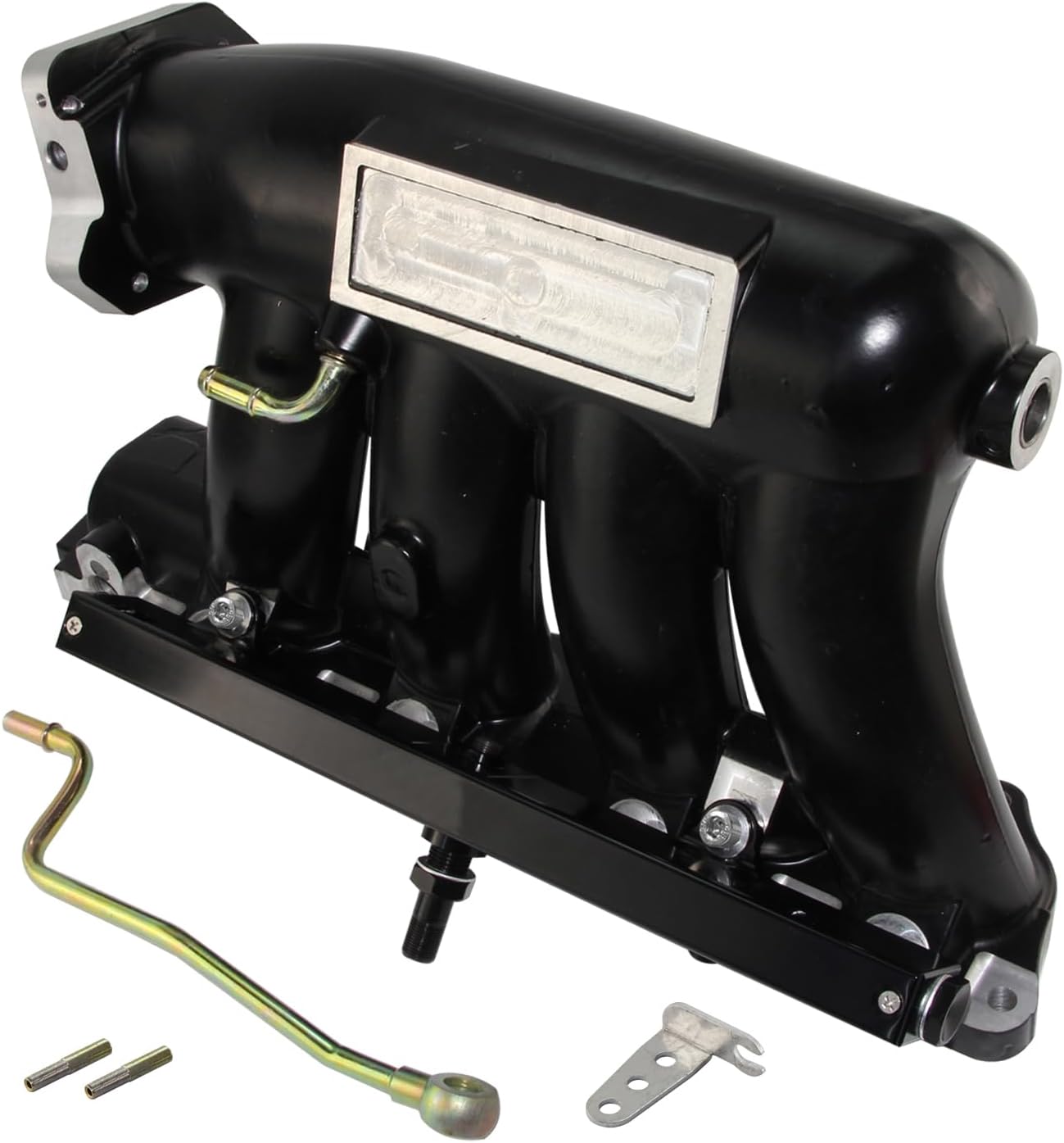
| Application | 2006–2011 Civic Si; 2004–2008 Acura TSX K-series |
|---|---|
| Material | Aluminum |
| Fuel rail bore | 1/2-inch |
| Includes | Housing and fuel rail with factory fuel line fitting |
| IACV | Retains IACV circuit |
This PKSABB kit replaces the factory intake manifold and adds large-bore fuel rails to support higher fuel flow for modified K-series engines. It is built from aluminum with a tapered plenum and larger runner bores intended to preserve mid-range response while improving top-end power, and the high-volume rails use a 1/2-inch bore to reduce back-pressure with larger injectors. The kit retains the IACV circuit and is compatible with the factory throttle cable and a factory fuel line adapter is included for easier hookup. Practical benefits include better airflow and fuel delivery for turbo or naturally aspirated builds targeting significant horsepower gains, plus a port for a fuel pressure gauge and pre-tapped rail ends for -6 AN or 9/16×18 fittings. Important limitations are that this is a direct-fit only for the specified K-series models, installation requires mechanical skill or professional help since no instructions are provided, and additional tuning and possible supporting mods will be necessary to realize safe, reliable power gains.
Best for: Buyers who want an affordable performance intake and fuel system upgrade for a K20Z3 or K24A2 build and plan to tune and support increased power.
Less Ideal for: Drivers seeking a simple bolt-on with no tuning or fabrication should avoid this kit; daily drivers unwilling to modify supporting systems are better served by factory replacements.
- High-volume 1/2-inch fuel rails support high-flow applications and help dampen injector pulse pressure.
- Tapered plenum and larger runner bores increase airflow for stronger top-end power while aiming to keep mid-range response.
- Includes factory fuel line fitting and pre-tapped rail ends for easier integration with custom lines and a fuel pressure gauge port.
- No installation guide included and seller recommends professional installation, which adds cost and complexity.
Verdict: Choose this kit if you want a direct-fit intake and high-volume fuel rail package to increase top-end power on a K-series Civic or TSX while keeping the IACV and factory throttle compatibility.
2. PKSABB Intake Manifold with 70mm Aluminum Throttle Body and TPS (fits 2006–2011 Honda Civic Si, Acura TSX K20/K24)

| Included Components | Comes with housing |
|---|---|
| Unit Count | 1.0 Count |
| Brand Name | PKSABB |
| Compatible Engines | K20Z3, K24A2 |
This PKSABB kit combines a larger-bore intake manifold with a 70mm aluminum throttle body and included TPS to boost airflow for K20Z3 and K24A2 applications in 2006–2011 Civic Si and specified Acura engines. It retains the IACV circuit and accepts the factory throttle cable, so it can be a direct-fit replacement for the stock assembly while offering increased Venturi effect and runners sized for improved mid-range and especially top-end power. The sealed bearing throttle shaft promises smoother operation and the tapered plenum is intended to preserve mid-range response while accelerating high-rpm flow. It is aimed at enthusiasts running naturally aspirated or turbocharged builds who want a straightforward upgrade without extensive fabrication. There is no installation guide included and professional installation is recommended; buyers should also verify exact engine compatibility before purchase. Expect real gains at higher RPMs rather than dramatic low-end torque changes, and plan for recalibration or tuning if used on a modified engine.
Best for: Drivers focused on extracting more high-rpm power from K-series 2006–2011 Civic Si engines who plan modest bolt-on upgrades or forced induction and want a mostly direct-fit intake upgrade.
Less Ideal for: Casual owners seeking simple, plug-and-play replacements for daily drivability without tuning or those using non-K-series engines.
- Large 70mm aluminum throttle body increases maximum airflow for higher RPM power.
- Designed to accept factory throttle cable and retain IACV circuit for easier fitment.
- Tapered plenum and larger bores aim to preserve mid-range response while improving top-end performance.
- Sealed ball bearings in the throttle shaft for smoother, more reliable operation.
- No installation instructions included and the manufacturer recommends professional installation.
- Specifically limited to K-series 2006–2011 Civic Si and listed Acura engines so it is not a universal fit.
Verdict: A direct-fit K-series intake and 70mm throttle body package built to increase high-rpm airflow and top-end power for 2006–2011 Civic Si performance builds.
3. DIFNWCFE Aluminum Intake Manifold for K24A2/K20Z3 (2006–2011 Honda Civic, 2004–2008 Acura TSX)

| Brand | DIFNWCFE |
|---|---|
| ASIN | B0DPS9DR9M |
| Date First Available | December 7, 2024 |
This aluminum intake manifold replaces the factory intake on K24A2 and K20Z3 engines and is intended for direct-fit installation on the specified Civic and TSX years. Made from aluminum, it offers improved heat tolerance and a rigid mounting surface compared with many plastic factory manifolds. In practice it serves the same role as the stock part by routing intake air to the cylinders, but the metal construction can help reduce distortion under higher under-hood temperatures or mild performance upgrades. Buyers should expect typical installation steps: unbolt the old manifold, transfer sensors and fittings, and torque to factory specs; professional installation is recommended if you lack experience. Notable features shown in the listing include model-specific compatibility and a full aluminum build. Limitations are that the listing does not include gasket hardware or confirm included sensors or fittings, so you may need to reuse or purchase additional components for a complete swap. Fitment discussion should be limited to the specified Civic and TSX engines and years.
Best for: Buyers who prioritize a durable, factory-style replacement manifold for routine use or mild performance builds on the specified Civic and TSX engines and want a long-lasting, metal alternative to plastic stock parts.
Less Ideal for: Do not choose this if you need a manifold for a different engine or model year, or if you require a plug-and-play performance manifold with documented internal flow tuning or included hardware.
- Aluminum construction offers greater heat resistance and rigidity versus plastic manifolds
- Built for K24A2 and K20Z3 engine fitment for the specified Civic and TSX model years
- Direct-replacement design simplifies swap with factory mounting points
- Listing does not specify included gaskets, bolts, or sensors which may require additional purchases
Verdict: A durable aluminum, model-specific replacement for K24A2/K20Z3 intake manifolds that offers a more heat-resistant, long-term option than the factory plastic piece.
4. SMMS Aluminum Intake Manifold for Honda Civic Si K-series (2006–2011)

| Fits | Honda Civic Si K20Z3 2006–2011; Acura TSX K24A2 2004–2008 |
|---|---|
| Material | Aluminum |
| Finish | Black machined |
| Manufacture | CNC machined |
This SMMS intake manifold is a CNC-machined aluminum direct-fit replacement built to improve airflow for K-series engines used in the 2006–2011 Civic Si and 2004–2008 Acura TSX. It installs like a factory replacement and comes with related hardware, making it suitable for DIY installation or a workshop swap. The machined aluminum construction offers better longevity than many plastic manifolds and the black finish resists wear while giving the engine bay a cleaner look. Because it is designed to match the OE fitment for the listed engines, it preserves stock routing and connections so you do not need to modify sensors or plumbing. Expect modest gains in throttle response and breathing when paired with other bolt-on intake or exhaust upgrades, though it is not a radical performance part by itself. The main compromises are that this is a single-piece aftermarket unit from a third-party brand and it may not include the same fit-and-finish as higher-end performance manifolds, so careful pre-install inspection and proper gasket use are recommended.
Best for: Buyers looking for a budget-friendly, durable replacement that improves airflow slightly and installs without major modification on K-series Civic Si engines.
Less Ideal for: Shoppers seeking a race-oriented, multi-piece performance manifold or an exact match to high-end brand fit-and-finish should consider upgraded alternatives.
- CNC-machined aluminum construction for improved durability over stock plastic manifolds
- Direct-fit design with included related parts simplifies DIY installation
- Black machined finish provides wear resistance and a cleaner engine-bay appearance
- Intended to enhance engine airflow and modestly improve throttle response
- Aftermarket third-party unit may have variable fit-and-finish compared with premium replacements
- Not a high-end performance manifold so gains are modest unless combined with other upgrades
Verdict: A cost-conscious, CNC-machined aluminum direct-fit intake manifold that upgrades durability and airflow for 2006–2011 Civic Si K-series engines.
5. PKSABB Aluminum 70mm Intake Manifold for 2006–2011 Honda Civic Si / 2004–2008 Acura TSX K-series

| Material Type | Aluminum |
|---|---|
| Nominal Wall Thickness | 1.5 millimeters |
| Throttle Body Size | 70MM |
| Compatible Engines | K20Z3, K24A2 |
This PKSABB 70mm aluminum intake manifold is a factory-replacement style piece aimed at K-series Honda engines in 2006–2011 Civic Si and 2004–2008 Acura TSX. It swaps in using the stock sensor locations so it keeps your engine management simple while providing a larger plenum and runners plus an oversized throttle body opening for improved airflow. The acid-etched nameplate and vacuum testing noted by the seller suggest attention to build checks, and the aluminum construction should resist heat soak better than many plastisol units. It suits both naturally aspirated and forced-induction setups, making it a flexible choice for modest power upgrades. Important limitations are that no installation instructions are included and professional installation is recommended, so budget for a shop if you are not experienced; minor fitment or throttle-body adapter work may be needed depending on your setup. Overall this is a solid, serviceable intake for someone who wants a durable, airflow-focused replacement that works with factory sensors.
Best for: A buyer who prioritizes a reliable, factory-compatible airflow upgrade for a K-series Civic Si or TSX and wants a durable aluminum manifold that integrates with stock sensors and engine controls.
Less Ideal for: Shoppers looking for a plug-and-play bolt-on with detailed DIY instructions or those who prefer heavier cast or billet one-piece designs for extreme builds.
- Aluminum construction for better heat resistance and durability than many plastic manifolds
- 70mm throttle body opening and larger plenum/runners for improved airflow potential
- Uses stock sensor locations to simplify installation with factory engine management
- Vacuum tested at the factory to help ensure it is leak-free out of the box
- No installation guide included so professional installation is recommended
- Nominal wall thickness is thin at 1.5 mm which may be less robust than heavier castings
Verdict: Choose this manifold when you want a durable, factory-compatible aluminum intake that improves airflow for K-series 2006–2011 Civic Si and 2004–2008 TSX engines.
6. PKSABB Intake Manifold with 70mm Throttle Body, TPS and Fuel Rail Kit

| Application | 2006–2011 Civic Si K-series; Acura TSX 2004–2008; Acura K24A2; Honda K20Z3 |
|---|---|
| Throttle body diameter | 70mm |
| Fuel rail bore | 1/2 inch |
| Includes | Throttle body, TPS, fuel rails, fittings |
This PKSABB intake manifold kit replaces the factory manifold on 2006–2011 Honda Civic Si and compatible Acura K-series engines and bundles a 70mm throttle body, TPS and large-bore fuel rails. It is built to increase airflow with larger runner bores and a tapered plenum that aims to preserve mid-range response while improving top-end power. The included high-volume rails have a 1/2-inch bore to support higher fuel flow and are pre-tapped for -6 AN fittings or factory-style connections, plus an extra port for a fuel pressure gauge. The kit keeps the IACV circuit and is claimed to accept the OEM throttle cable for a straightforward mechanical fit. Practical benefits include noticeably better high-rpm breathing on tuned or heavily modified engines and fewer additional purchases since key components are bundled. Important limitations are the lack of an installation guide and the seller recommendation to use professional installation, plus the product is intended only for specific K-series Si engines so it is not a universal swap. Expect some tuning and professional plumbing to fully realize the gains.
Best for: Buyers who want a ready-made intake upgrade for a 2006–2011 Civic Si K-series engine and prefer a bundled solution that reduces parts sourcing and supports higher fuel flow for tuned builds.
Less Ideal for: Drivers seeking a direct bolt-on replacement with step-by-step guidance or those with non-K-series Civics should look at simpler factory-style replacements or vehicle-specific options with documented fitment.
- Complete kit includes 70mm throttle body, TPS and high-volume fuel rails for a bundled upgrade
- Tapered plenum and larger runner bores increase high-rpm airflow while aiming to retain mid-range response
- Fuel rails with 1/2-inch bore and pre-tapped ends support high-flow setups and allow -6 AN fittings
- Retains IACV circuit and is designed to accept the factory throttle cable for easier integration
- No installation instructions included and professional installation is recommended
- Compatibility limited to 2006–2011 Civic Si K-series engines and specified Acura K24A2/K20Z3 only
Verdict: A convenient all-in-one intake and fuel-rail upgrade for 2006–2011 Civic Si K-series owners who want improved high-rpm power and high-flow fueling capability.
Choosing the Right 2006-2011 Honda Civic Intake Manifold: Key Factors to Consider
Fitment and Chassis Compatibility
Exact fitment to the 2006-2011 Civic FA and FG intake ports, throttle-body interface, and mounting bosses is critical. Even small misalignments can cause vacuum leaks or stress on mounting studs, so verify that bolt patterns and flange geometry match the FA and FG cylinder head and throttle-body locations.
Compatibility also covers sensor bosses and vacuum fittings. Confirm that MAP, IAC, TPS, and any vacuum ports align without needing adapters. Proper fit reduces installation time and limits the chance of introducing leaks during service.
Material and Construction
Manifolds come in several materials with different tradeoffs. Composite and high-temperature nylon designs resist heat soak and can reduce intake air temperatures, while aluminum options offer higher structural rigidity and are easier to port for performance upgrades. Consider the typical driving conditions for the Civic when choosing; corrosive environments or frequent heat cycles favor more stable materials.
Pay attention to mating surface finish and reinforcement around bolt holes. Thinner materials can crack or warp under repeated torque cycles, so look for manifolds with thicker flanges or metal inserts where studs or bolts pass through.
Sealing Surfaces and Gasket Compatibility
A reliable seal is the first defense against vacuum leaks and coolant intrusion where applicable. Check whether the manifold accepts a dedicated intake manifold gasket or uses an integrated seal. Good gasket seating surfaces and clear, even flange faces prevent leaks even if bolts are not torqued perfectly.
Also consider whether replacement gaskets are readily available and if the design allows for straightforward gasket replacement without disturbing adjacent components. Proper sealing matters for idle stability, emissions, and engine performance.
Serviceability and Access
Routine maintenance tasks such as intake manifold cleaning, gasket replacement, or throttle-body servicing should be straightforward. Manifolds that require extensive disassembly of surrounding components add labor time and potential for installation error.
Look for designs that allow access to mounting bolts, sensors, and vacuum lines without removing other major assemblies. Features like clear vacuum port labeling and well-placed sensor bosses reduce the chance of incorrect reconnection during reassembly.
Thermal Behavior and Heat Management
How the manifold handles heat affects air density and long-term durability. Materials and finishes that limit heat soak help preserve intake charge density, which supports consistent power delivery. For Civics used in warmer climates or spirited driving, thermal stability reduces the risk of deformation over time.
Consider coatings or insulating designs if intake air temperature is a concern. Also evaluate whether the manifold design places heat-sensitive sensors in locations that might be affected by elevated under-hood temperatures.
Performance Potential and Port Geometry
If you plan to increase engine output, manifold port shape and runner length matter. Shorter, larger runners favor higher rpm power while longer, tuned runners support low-end torque. For most street-driven 2006-2011 Civics, a balanced runner profile that preserves midrange torque is preferable.
Also consider whether the manifold can be modified easily for flow improvements or whether its geometry limits aftermarket tuning. Smooth internal transitions and careful runner-to-port matching reduce turbulence and improve throttle response.
Common Intake Manifold Symptoms on 2006-2011 Civics
Owners often notice symptoms that point to intake manifold or related sealing issues. Typical signs include rough idle, stumbling on acceleration, or higher than normal idle speed caused by unmetered air entering the intake tract.
You may also encounter Check Engine Light codes related to fuel trims or misfires when the manifold leaks or when gasket surfaces fail. Some drivers report coolant loss or overheating when coolant passages share surfaces with the intake; while this is less common on these Civics, it is worth inspecting the manifold area when coolant issues arise.
- Rough or fluctuating idle
- Poor throttle response or hesitation
- High or erratic idle speed
- Vacuum-related diagnostic trouble codes
- Visible signs of gasket deterioration or oil residue at flange joints
Diagnosing an Intake Manifold Leak
Start with a visual inspection around gasket seams and vacuum fittings. Look for oil or dirt accumulation that often marks escaping air paths. A hand-held smoke test or spray of a safe starter-fluid alternative while the engine idles can reveal changes in rpm where leaks exist.
For Civics in the 2006-2011 range, confirm vacuum hose integrity and check the condition of the manifold gasket surfaces. Listening for hissing sounds with the engine running and using a carburetor cleaner or propane in controlled diagnostics can help isolate leaks, but take care to follow safety precautions when introducing flammable vapors near a running engine.
- Visual inspection for residue at joints
- Controlled smoke test to find escaping air
- Monitor fuel trim values with a scan tool for signs of vacuum leaks
- Check vacuum hoses and sensor ports for cracks or loose fittings
Intake Manifold Maintenance and Cleaning Tips
Cleaning the intake manifold can restore airflow and remove carbon deposits that affect idle and throttle response. Remove the manifold following the correct torque-sequence and labeling of vacuum lines and sensors to avoid reassembly mistakes. Use non-corrosive intake cleaners and avoid damaging machined sealing faces.
When cleaning, inspect gasket surfaces and replace gaskets if you see pitting or warping. Clean throttle-body mating areas and sensor ports, and ensure all passages are clear before reinstallation. Regular visual checks during scheduled maintenance will catch early signs of gasket failure.
- Use intake-safe cleaners and soft brushes
- Replace gaskets when mating surfaces show wear
- Label vacuum lines and sensors during disassembly
- Re-torque bolts to the proper sequence and specs on reassembly
Torque Specs and Proper Installation Practice
Adhering to correct torque specs and tightening sequence prevents warping and ensures a reliable seal. Tighten manifold bolts in the specified sequence and in stages to the recommended torque values for the 2006-2011 Civic FA and FG heads. If you do not have the factory manual, consult a reliable technical reference to avoid over-torquing and damaging the flange.
Use new gaskets and replace any worn studs or bolts. Apply thread locker or anti-seize only where appropriate according to service guidance. After installation, check for vacuum integrity and re-check torque after a short break-in period once the engine has reached operating temperature and cooled again.
- Tighten bolts in progressive stages following the specified pattern
- Always use new gaskets and inspect bolt threads
- Re-check torque after a heat cycle and short driving period
- Avoid over-tightening which can cause flange distortion
When to Consider a Performance Upgrade
If you are pursuing measurable power gains along with intake upgrades on a 2006-2011 Civic, look for manifolds whose runner geometry supports the rpm range you plan to tune for. A performance-oriented manifold may help with airflow at higher rpm but can change low-end drivability, so match the choice to your build goals and any supporting modifications like cam timing or intake throttles.
Also evaluate whether the manifold allows for future tuning or porting. Some designs are easier to modify or to adapt to larger throttle bodies and sensor locations, which can be helpful if you plan staged upgrades over time.
- Match runner length and port size to target powerband
- Consider future tunability and compatibility with intake accessories
- Be mindful of idle and low-end tradeoffs with performance-focused designs
Common Mistakes During Intake Manifold Replacement
A common error is reusing old gaskets or failing to properly clean the mating surfaces before installing a new manifold. Contaminants on the flange will undermine any new gasket and lead to premature leaks. Another mistake is skipping progressive bolt torquing which can cause uneven sealing and warp the flange.
Misrouting vacuum lines or swapping sensor connectors is also frequent when work is done without labeling. Take time to mark hoses and electrical plugs and verify connections against photos or a service diagram before starting the engine after reassembly.
- Do not reuse gaskets or ignore flange cleaning
- Follow torque sequence and specified torque values
- Label hoses and sensors to avoid misconnection
- Inspect and replace any corroded studs or bolts
Still looking for the perfect fit?
Select your Honda Civic configuration to see the most relevant Intake Manifolds recommendations
How We Chose the Best 2006-2011 Honda Civic Intake Manifold
Our selection process prioritized items that address the most common failure modes on 2006-2011 Civic intake systems while ensuring correct fit for the FA and FG chassis. We evaluated candidates across several concrete dimensions: material and manufacturing quality, flange and port alignment tolerances, compatibility with stock throttle bodies and sensors, sealing surfaces and gasket fitment, and serviceability for routine tasks such as cleaning or replacing gaskets. We also considered designs that reduce the risk of vacuum leaks and those that simplify torque-sequence access for proper installation.We excluded anything that required extensive modification to the intake or fuel systems, manifolds not explicitly produced for the 2006-2011 Civic FA and FG range, and designs that compromise sensor mounting locations. The final list represents parts that balance durability, correct geometries, and straightforward installation while supporting common upgrades and maintenance items owners are likely to perform.
Our full evaluation process is outlined in our review methodology.
FAQ
How do I know if my Civic needs an intake manifold replacement or just a gasket?
It often depends on the failure location. A leaking gasket usually shows oil or dirt at the seam and can often be resolved by replacing the gasket and cleaning surfaces. Manifold cracks or warped flanges require replacement. A pressure or smoke test combined with visual inspection helps determine whether the manifold itself is damaged.
Can I clean the intake manifold myself on a 2006-2011 Civic?
Yes, many owners can do the cleaning if they are comfortable with basic engine disassembly. Remove the manifold, use intake-safe cleaners, and avoid damaging machined sealing surfaces. Replace gaskets and follow torque specs on reassembly. If you are unsure about torque values or sensor reconnections, consult a repair manual or a professional.
Will a performance intake manifold improve low-end torque on the FA and FG Civic?
Performance manifolds typically shift airflow characteristics and may favor higher rpm power at the expense of low-end torque depending on runner geometry. For street-driven Civics, look for designs that balance midrange performance to avoid losing everyday drivability.
What are the signs of an intake manifold vacuum leak on these Civics?
Common signs include rough idle, surging or hesitation under throttle, diagnostic trouble codes related to fuel trim, and audible hissing. Monitoring fuel trims with a scan tool and conducting a smoke test are reliable ways to confirm a vacuum leak.
How important are torque specs when installing an intake manifold?
Very important. Proper torque values and sequence prevent flange warping and ensure an even seal. Progressive tightening in stages minimizes the risk of leaks and helps gaskets seat correctly. Re-checking torque after a heat cycle is also recommended.
Final Verdict
When replacing or upgrading the intake manifold on a 2006-2011 Civic, prioritize correct FA and FG-chassis fitment, reliable sealing surfaces, and material choices that match your driving conditions. Balance serviceability and thermal behavior against any performance goals to avoid unintended compromises to idle quality or drivability.Choose a part that makes routine maintenance easier and reduces the risk of vacuum leaks. Focus on proper installation practice, new gaskets, and correct torque sequencing to ensure a durable repair or upgrade that restores consistent engine performance.
Explore More:
- Check out all Honda Civic parts & accessories
- Explore Intake Manifolds Maintenance & Repair Guides
- Explore Engine
- Browse all Auto Parts
