

Note: This article contains affiliate links. If you click on these links and make a purchase, I may earn a small commission at no extra cost to you. This helps support my research and content. Read my full affiliate disclosure here.
Replacing worn rotors has a big impact on braking feel, pedal stability, and overall safety for a 2001-2005 Honda Civic. For owners of the ES, EM, and EP era Civics, selecting rotors that match factory fitment and withstand everyday driving loads matters more than flashy features.This guide covers seven carefully shortlisted rotors that fit the 2001-2005 (ES, EM, and EP) Civic, explains the evaluation criteria we used, and walks through installation, measurement, and maintenance considerations so you can make a confident choice.
Looking for other parts? See all Honda Civic parts & accessories.
Top Picks at a Glance
| Best Overall The best all-around choice for most situations | TRQ Front & Rear Brake Pad and Rotor Kit, Ceramic — Compatible with 2001–2005 Honda Civic |  |
| Best Quality Built to a higher standard if you want something more solid | Metrix Premium Chassis Parts Front Vented Brake Rotor and D465 Ceramic Pad Kit (10.31 in) | 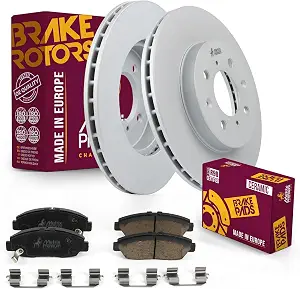 |
| Best Value The sweet spot between price and what you get | KAX Front Brake Kit with Ceramic Pads and Rotors |  |
| Best Budget The cheapest option that still gets the job done reliably | ALLCOMBO Front Vented Brake Rotors (Pair) N3295AB |  |
| Highest Rated A top-rated pick with lots of positive feedback | Detroit Axle 1.7L Front and Rear Brake Kit for 2001–2005 Honda Civic |  |
| Most Popular A crowd favorite that many people choose with confidence | Detroit Axle Front Brake Kit with 10.32" Rotors and Ceramic Pads |  |
| Best Seller A high-volume bestseller chosen again and again | ACDelco Silver Front Brake Rotor (18A912A) |  |
1. TRQ Front & Rear Brake Pad and Rotor Kit, Ceramic — Compatible with 2001–2005 Honda Civic

| Fitment | 2001–2005 Honda Civic (front & rear) |
|---|---|
| Brake Pad Material | Ceramic |
| Kit Contents | Front pad set, rear shoe set, 2 front rotors, 2 rear drums |
| Exterior | Machined |
This TRQ kit supplies everything needed for a complete front and rear brake refresh on compatible 2001–2005 Honda Civic variants, including ceramic front pads, two front rotors, rear brake shoes and rear drums. It is intended for DIY or shop installation as a direct-fit replacement, with machined rotors and factory-style hardware to simplify fitment. Ceramic pads generally run quieter and produce less dust than semi-metallic compounds, which is helpful for everyday street driving and city commuting. The inclusion of rear shoes and drums makes this a convenient one-purchase solution for owners doing a full service. Some buyers report tight fit in the caliper brackets or occasional issues with retention clips, so expect to check fitment and be ready to adjust small hardware during installation. TRQ provides installation videos and aims for OEM-like fit, but results vary by vehicle condition and installer experience.
Best for: Drivers who want a practical, all-in-one brake service kit to restore stopping performance on a 2001–2005 Honda Civic and prefer a quieter, lower-dust ceramic pad option while keeping the job DIY-friendly.
Less Ideal for: High-performance drivers who need track-capable friction or heavy towing users who require heavy-duty commercial-grade brake components should consider specialized performance or heavy-duty options instead.
- Complete kit covers front pads, front rotors, rear shoes and rear drums for a single purchase brake service
- Ceramic friction material reduces dust and tends to be quieter during normal driving
- Machined rotors provide ready-to-install surfaces that simplify installation
- Designed as direct-fit replacements to match factory mounting points and reduce modification
- Some users report tight pad fit or difficulty with included retention clips that may require minor adjustments
- Mixed quality reports across vehicles suggest occasional fitment or balance issues on some units
Verdict: If you want a convenient, DIY-friendly full front and rear brake service for a 2001–2005 Honda Civic with quieter, lower-dust ceramic pads, this TRQ kit is a strong value choice.
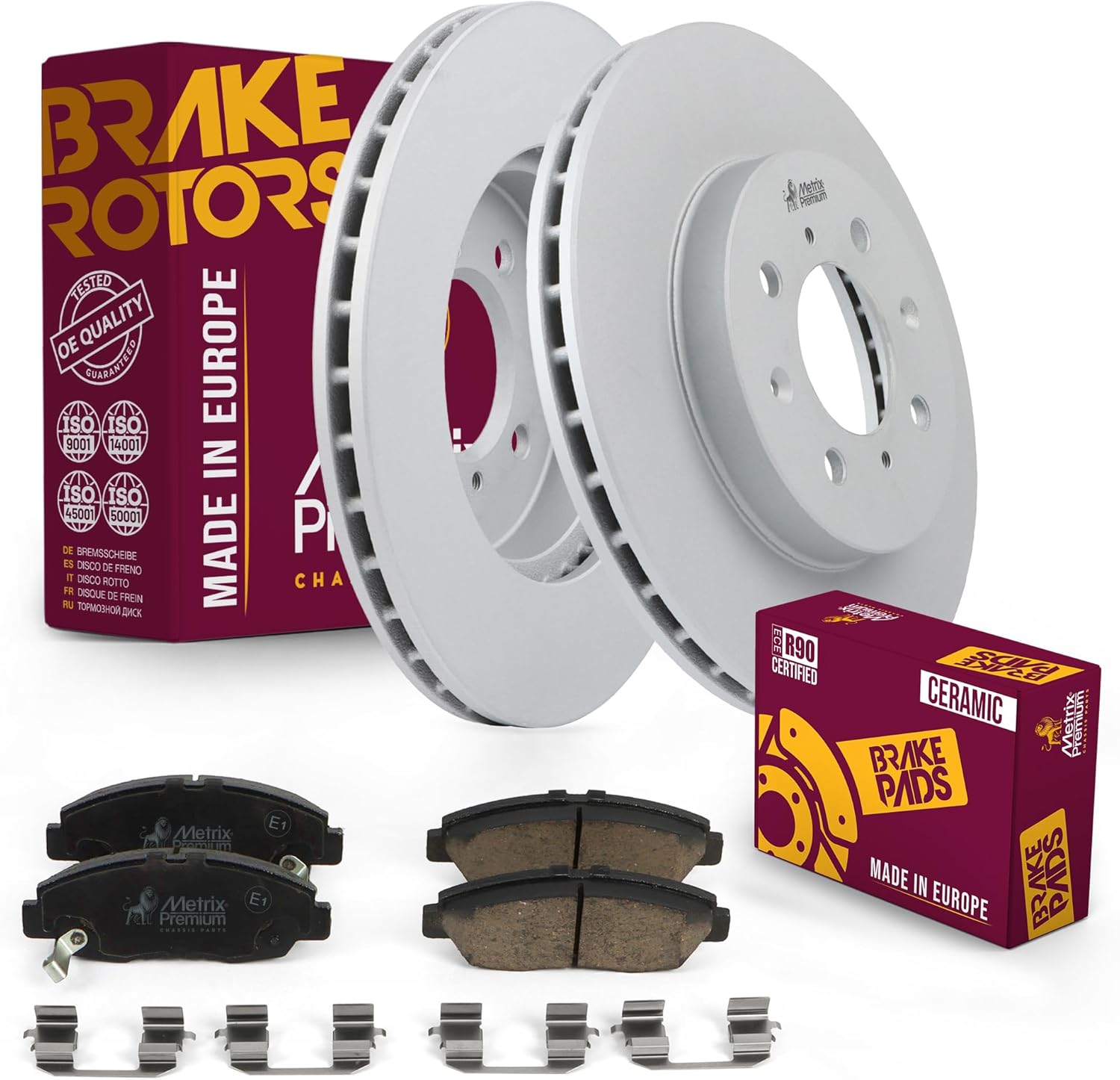
2. Metrix Premium Chassis Parts Front Vented Brake Rotor and D465 Ceramic Pad Kit (10.31 in)
| Compatible with Vehicle Type | Car |
|---|---|
| Included Components | Indicator, Mounting Hardware Kit, Pad Wear Sensor |
| Manufacturer Warranty Description | 3 Year / 36,000 miles Limited Warranty |
| Item Type Name | Disc Brake Kit |
This Metrix front brake kit combines 10.31-inch vented rotors with a D465 ceramic pad set to deliver smooth, consistent stopping for 1997–2005 Acura EL and 1996–2005 Honda Civic fitments listed. The rotors are factory-balanced, ECE R-90 certified, and feature a corrosion-resistant coating that keeps wheels cleaner and helps resist warping under heat. The ceramic pads use multilayer shims and chamfered edges to reduce vibration and noise while producing less dust than semi-metallic alternatives. In real-world use that means quieter daily driving, predictable pedal feel, and improved aesthetics through the wheel. For a performance-minded driver this kit offers solid thermal stability for spirited street use but leans toward comfort over aggressive track performance since the pads prioritize low noise and low dust rather than maximum fade-resistance. Note that pad hardware and fit should be checked against your specific submodel before installation because some customers reported hardware mismatches on nonlisted vehicles. The kit includes wear indicators and mounting hardware to simplify a straightforward DIY replacement or pro install.
Best for: A buyer who wants a direct-fit, OEM-matched replacement that improves everyday braking feel and reduces noise and wheel dust while retaining reliable performance during spirited street driving.
Less Ideal for: Drivers who need pads and rotors tuned for repeated high-heat track sessions or competitive braking where semi-metallic, high-friction compounds are preferred.
- Factory-balanced vented rotors certified to ECE R-90 for reduced pulsation and vibration
- Corrosion-resistant coating helps prevent rust and keeps wheels cleaner
- Ceramic pads with multi-layer shims deliver quiet braking and low dust
- Includes pad wear sensor, indicator, and mounting hardware for easier installation
- Ceramic pads prioritize low noise and dust over maximum high-temperature stopping power for track use
Verdict: Choose this kit if you want a quiet, low-dust, factory-matched rotor and ceramic pad upgrade that improves street braking feel for 2001–2005 Honda Civic fitments.
3. KAX Front Brake Kit with Ceramic Pads and Rotors

| Included components | 2x front rotors, 4x front ceramic pads |
|---|---|
| Compatible vehicles | Honda Civic 1999-2005, Acura EL 1997-2005, Honda Insight 2010-2014 |
| Rotor outside diameter | 10.32 inch (261.5 mm) |
| Fit type | Vehicle Specific Fit |
This KAX front brake kit combines two precision-cut rotors with four ceramic pads to replace the front braking components on compatible Civics and related models. It is intended for direct, vehicle-specific replacement and is typically used by DIYers or shops during a front brake service. Notable features include zinc-coated rotors to resist corrosion, drilled and slotted ventilation for improved cooling, and ceramic pads formulated for lower noise and reduced dust. In practice the kit delivers predictable stopping power and quieter operation compared with many semi-metallic pads, and the rotors’ drilled/slotted design helps with heat dissipation during extended driving. Installation is straightforward when the correct fitment is chosen, but confirm the vehicle match carefully because one review reports receiving an incomplete shipment. Performance-oriented drivers should expect standard daily-driving braking rather than track-level fade resistance. For a practical, cost-conscious Civic owner this kit is a sensible way to replace worn front rotors and pads without stepping up to premium branded parts.
Best for: Buyers who want a complete, cost-effective front brake replacement for 2001–2005 Honda Civic models and prioritize lower noise, clean wheels, and straightforward DIY installation.
Less Ideal for: Drivers who need heavy-duty or track-capable braking upgrades or who prefer top-tier performance brake brands should look elsewhere.
- Vehicle-specific fit for compatible Honda/Acura models simplifies installation
- Ceramic pads offer lower noise and reduced brake dust compared with many metallic pads
- Zinc-coated rotors resist surface rust and maintain appearance longer
- Drilled and slotted rotor design improves cooling and helps manage heat during sustained braking
- Not engineered for aggressive track use where extreme fade resistance is required
Verdict: A practical, budget-friendly front brake kit that gives 2001–2005 Civic owners quieter, lower-dust braking and swap-in rotors for routine maintenance.
4. ALLCOMBO Front Vented Brake Rotors (Pair) N3295AB

| Position | Front |
|---|---|
| Rotor Type | Vented |
| Material Type | Alloy Steel |
| Outside Dia | 10.31 in |
| Mounting Bolt Hole Quantity | 4 |
These ALLCOMBO front vented rotors are a straightforward factory-style replacement for worn front discs. Sold as a pair, they use alloy steel construction with a silver zinc plating to resist corrosion and the vented design helps dissipate heat during repeated stops. Installation follows standard rotor swap procedures and they match common bolt patterns and hub centering dimensions for compatible Civic years, so they are suitable for routine street driving and brake pad replacements. The main benefits are the simple fitment coverage across many older Honda and Acura models and the plated finish that reduces surface rust while sitting on the shelf or after installation. Expect OEM-like braking feel for everyday commuting, city driving, and light highway use. Limitations are that these are plain vented rotors with no performance slots or drilled features, so they do not provide extra bite or cooling for aggressive driving or track use. Buyers should also verify bolt pattern and centering dimensions against their hub before purchase.
Best for: Buyers replacing worn front rotors on older Hondas who prioritize an affordable, no-nonsense factory-style replacement that restores everyday braking performance.
Less Ideal for: Drivers who do a lot of spirited driving, towing, or track days and need performance-oriented rotors with improved cooling or pad bite should look at slotted or performance-specific options.
- Sold as a matched pair for front axle replacement
- Vented rotor design improves heat dissipation under normal driving
- Silver zinc plating helps resist surface corrosion
- Alloy steel construction for standard durability and consistent wear
- No drilled or slotted features for enhanced wet or high-performance braking
Verdict: A budget-friendly, factory-style pair of vented front rotors that restore reliable everyday braking for older Honda Civics.
5. Detroit Axle 1.7L Front and Rear Brake Kit for 2001–2005 Honda Civic

| Fitment | 2001-2005 Honda Civic (1.7L) |
|---|---|
| Front rotors | Drilled and slotted |
| Front pads | Ceramic |
| Rear brakes | Brake drums with semi-metallic shoes |
| Warranty | 10-Year |
This Detroit Axle kit is a full replacement package built to fit the 2001–2005 Honda Civic 1.7L and is aimed at owners who want a one-stop solution for brakes. The kit supplies two drilled and slotted front rotors, two rear brake drums, ceramic front pads and semi-metallic rear shoes plus brake cleaner and a small bottle of DOT3 fluid. Drilled and slotted rotors help dissipate heat and resist glazing during heavier use, while the ceramic front pads provide quiet, smooth stops and longer pad life compared with generic metallic pads. Parts arrive zinc plated and machined with locating holes for direct fitment, so installation is straightforward for someone with basic mechanical skill and the right tools. The included consumables are convenient for a DIY job, though some customers report mixed quality in small hardware bags and a lack of printed instructions in the box. If you value reliable, factory-quality fit and a complete parts set that gets you back on the road quickly, this kit covers the essential components for the Civic 1.7L service interval.
Best for: Buyers who prioritize dependable, factory-style replacements and want a single kit that supplies both front and rear brake components for routine servicing on a 2001–2005 Civic 1.7L.
Less Ideal for: Drivers seeking performance upgrades for track use or heavy towing should consider dedicated performance rotors and pads rather than this OEM-focused replacement kit.
- Complete kit includes front rotors, rear drums, front ceramic pads, rear shoes and basic consumables
- Drilled and slotted rotors designed for improved heat dissipation and reduced brake fade
- Zinc plating and machined locating holes for direct, factory-style fit without modifications
- Ceramic front pads offer quieter braking and longer life than standard metallic pads
- Some small hardware (clips) in the kit may not fit precisely and might require reusing OEM parts
- No printed installation instructions included in the box
Verdict: A convenient, reliability-focused full brake replacement kit that supplies factory-style front and rear components to get a 2001–2005 Civic 1.7L back to safe, quiet braking with minimal sourcing effort.
6. Detroit Axle Front Brake Kit with 10.32" Rotors and Ceramic Pads

| Fitment Rotor Diameter | 10.32 inch (262mm) |
|---|---|
| Orientation | Front |
| Brake Pad Type | Ceramic |
This Detroit Axle front brake kit supplies both rotors and ceramic pads for a direct replacement on compatible Civic and Insight front hubs. The rotors are vented for faster cooling and zinc plated to resist corrosion and visible wheel dust, while the ceramic pads come with hardware and are formulated to reduce noise. Installation is intended to be bolt-on with machined locating holes to match factory fitment so professional or experienced DIY installers can swap the pair without modifications. For everyday driving the vented rotors help manage heat during repeated stops and the ceramic pads offer quieter, lower-dust operation than semi-metallic pads. The kit is focused on front brake service only, so buyers replacing rear components will need a separate kit. Also this is an aftermarket replacement rather than a factory-branded part, so drivers who demand track-level performance should consider performance-grade rotors and pads instead.
Best for: Buyers who value proven results and want a complete, plug-and-play front brake service that matches factory fitment and reduces noise and dust.
Less Ideal for: Not a good choice for drivers needing high-performance or track-capable brake components or those who want a full axle overhaul in one purchase.
- Complete front service kit including two rotors and two ceramic pads with installation hardware
- Vented rotor design improves heat dissipation during repeated braking
- Zinc plating helps resist corrosion and reduces visible wheel dust
- Machined locating holes for straightforward, factory-quality fitment
- Covers front brakes only so rear components must be purchased separately
- Aftermarket kit aimed at street use rather than high-performance or track driving
Verdict: A ready-to-install front brake kit that delivers quieter, low-dust ceramic pads and vented zinc-plated rotors for reliable everyday stopping on compatible Civic and Insight models.
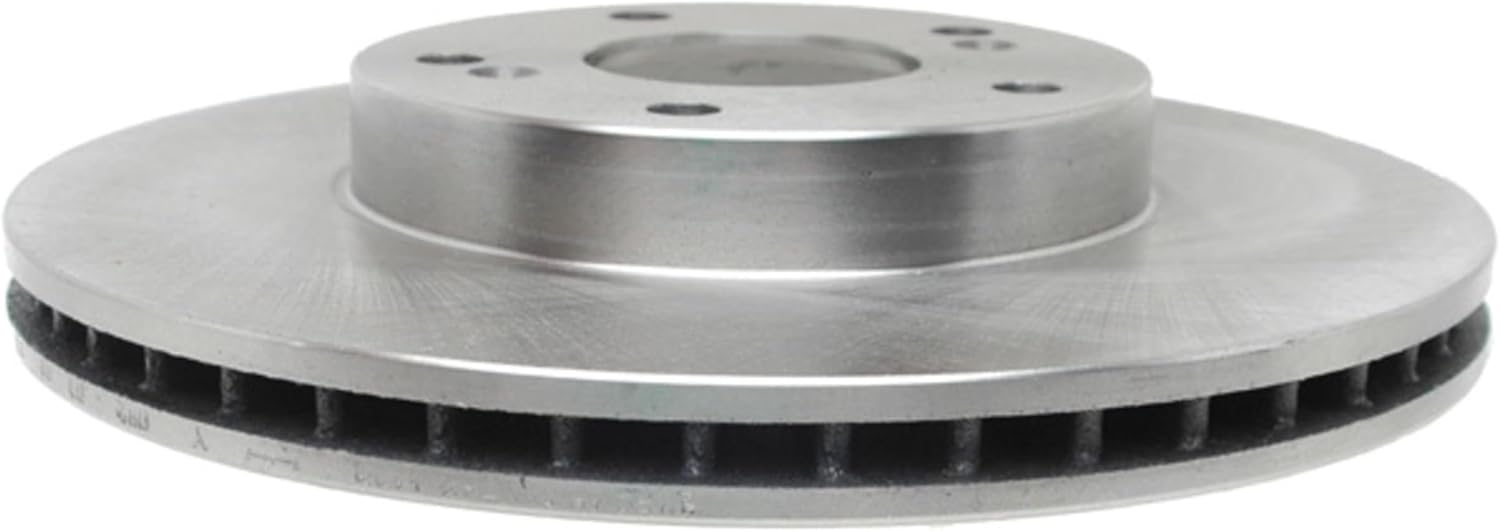
7. ACDelco Silver Front Brake Rotor (18A912A)
| Material Type | Cast Iron |
|---|---|
| Exterior Finish | Painted |
| Automotive Fit Type | Vehicle Specific Fit |
| Compatible with Vehicle Type | Car, Sedan |
This ACDelco Silver front rotor is a vehicle-specific replacement intended for front brakes on select cars and sedans. It uses cast iron construction with multi-alloy features and an application-specific vane design to improve heat dissipation and reduce brake fade during repeated stops. The non-directional ground finish and mill-balanced design aim to minimize noise, vibration, and uneven pad wear, which helps maintain smooth, consistent braking and can extend pad life. Installation is straightforward for a front rotor swap and the painted finish provides basic corrosion resistance. As a Silver-tier part backed by ACDelco and GM, it targets buyers who want a factory-quality feel without paying for top-tier OE parts. Limitations to note are that this listing supplies one front rotor only rather than a paired set and fitment varies across model subsets, so confirming exact vehicle compatibility before purchase is important. For everyday driving and typical replacement cycles this rotor delivers dependable stopping performance at a value-oriented price.
Best for: A cautious buyer who prioritizes reliable, factory-quality replacement parts at a reasonable cost for routine front-rotor service on compatible Hondas and similar sedans.
Less Ideal for: Drivers who need a matched pair or a performance rotor upgrade for track use should consider a full kit or specialized performance rotors instead.
- Vehicle-specific fit designed to match factory replacement requirements
- Multi-alloy construction and vane configuration improve cooling and reduce brake fade
- Non-directional ground finish and balance reduce noise, vibration, and uneven pad wear
- Painted finish offers basic corrosion protection and a clean appearance
- Sold as a single front rotor rather than a two-piece or full-axle kit
Verdict: Choose this rotor if you want a dependable, factory-style front replacement that balances durability and price for routine braking maintenance.
Choosing the Right 2001-2005 Honda Civic Brake Rotors: Key Factors to Consider
Fitment and Bolt Pattern
Correct fitment is the foundational factor when choosing rotors for a 2001-2005 Honda Civic. The rotor must seat accurately on the hub with the correct center bore diameter and the OEM bolt pattern to avoid runout and uneven pad contact.
Improper fitment can cause vibration, premature pad wear, and wheel wobble. When shopping, confirm the rotor matches the vehicle's model year and ES, EM, and EP generation hub specs. If the rotor uses a different registration surface or requires spacers, that can change braking geometry and introduce new failure points. For a straightforward replacement, prioritize direct-fit rotors that list compatibility with the 2001-2005 Civic or the ES, EM, and EP chassis code.
Material and Casting Quality
Rotor metallurgy affects thermal conductivity, wear rate, and resistance to cracking. Most street rotors are made from grey cast iron; higher quality castings use consistent grain structure and fewer casting defects, which reduces the chance of heat-related warping.
Pay attention to the casting finish and whether the rotor has been balanced at the factory. Poor casting or balance issues increase vibration and reduce pedal feel. For Civics that see frequent stop-and-go driving, choose rotors with proven casting quality and uniform heat distribution to maintain consistent braking performance over time.
Rotor Thickness and Minimum Spec
Rotor thickness directly influences thermal mass and the rotor's ability to resist warping. New rotors should meet or exceed the vehicle manufacturer's nominal thickness, giving you adequate material for future resurfacing if needed.
Always check the minimum service thickness specification for the 2001-2005 Civic before installing or resurfacing. Installing a rotor that is already close to the minimum limits the number of safe resurfacings and can shorten service life. Measuring thickness accurately and comparing it to spec prevents unsafe braking and helps you decide between resurfacing versus replacement.
Vented Design and Cooling
Vented rotors manage heat by increasing surface area and promoting airflow through internal vanes. For a Civic in daily use, a ventilated or well-vented rotor reduces brake fade during repeated stops and extends pad life by keeping operating temperatures lower.
Consider the vane design and spacing because tightly packed vanes can trap debris and salt, while sparse vanes may offer less cooling. Select a rotor whose venting matches your driving patterns—commuting and occasional highway use favor balanced venting that clears heat without compromising longevity.
Surface Features and Corrosion Protection
Rotor surface treatments, such as protective coatings or plated hats, help resist rust on the rotor face and mounting surfaces. Corrosion can cause uneven pad contact, noisy braking, and difficulty during future removal of the rotor.
Coatings do not change braking friction but extend service life in wet or salted environments common in many regions. Check whether the rotor has anti-rust finishes on the non-friction surfaces and whether the friction faces are machined to a smooth, factory-like finish prior to shipping.
Rotor Type: Solid, Slotted, or Drilled
The rotor style affects pad bedding, heat dissipation, and noise. Solid rotors are simple and durable for everyday driving, while slotted or drilled faces can aid gas and debris evacuation, improving bite under aggressive braking.
However, slotted or drilled rotors can increase pad wear and may be noisier. For a 2001-2005 Civic used primarily for commuting, solid or lightly slotted rotors often provide the best balance of longevity and quiet operation. If you perform spirited driving, consider slots for improved pad cleaning, but be mindful of the tradeoffs in wear and potential cracking with drilled designs.
How To Measure Rotor Thickness
Measuring rotor thickness ensures the part is within safe service limits before installation or after resurfacing. Use a calibrated micrometer across the friction surface, taking measurements at multiple points around the rotor to detect taper or uneven wear.
Record the thinnest measurement and compare it to the Civic's minimum service thickness. If the rotor is below or very close to that minimum, replacement is the safer option rather than resurfacing.
- Clean the rotor surface before measuring to remove rust and debris.
- Measure at least three positions 120 degrees apart and note the lowest reading.
- Reference the 2001-2005 Honda Civic minimum thickness in the service manual.
- If resurfacing, ensure post-machine thickness remains above the minimum.
Common Brake Rotor Wear Symptoms
Recognizing rotor wear symptoms helps you decide whether resurfacing or replacement is needed. Typical signs include pulsation in the brake pedal, steering wheel vibration under braking, visible scoring on the rotor surface, and noise such as squeal or scraping.
Some corrosion or light surface rust is normal, but deep grooves, cracks, or heat discoloration indicate the rotor has exceeded its useful life and should be replaced rather than machined.
- Pulsation under braking often points to lateral runout or uneven thickness.
- Squealing that persists after pad replacement can be caused by glazed surfaces.
- Visible cracks on drilled holes or the rotor face require immediate replacement.
Single Vs Two-Piece Rotors: What Works for a Civic
Single-piece rotors are the standard direct-fit choice for most 2001-2005 Civic owners. They combine the hat and friction ring as a single casting, offering simplicity, lower weight, and proven durability for daily driving.
Two-piece rotors separate the hat and friction ring, allowing different materials or replacement of just the ring. While two-piece designs can reduce unsprung weight or simplify some service scenarios, they often add cost and complexity that are unnecessary for typical Civic use.
- Choose single-piece rotors for cost-effective, straightforward replacements.
- Consider two-piece designs only if you have specific weight or thermal management needs.
- Ensure any two-piece option matches OEM mounting dimensions for ES, EM, and EP chassis fitment.
Rotor Resurfacing Vs Replacement
Resurfacing can restore a rotor with light glazing or minor surface scoring, as long as enough thickness remains above the minimum spec. Resurfacing removes material and can extend the rotor's life for a limited time, but repeated machining eventually leaves the rotor too thin for safe use.
Replacement is the right choice when runout, deep scoring, heat cracks, or thickness near the minimum are present. For the 2001-2005 Civic, prioritize replacement when you need consistent ride comfort, brake pedal feel, and long-term reliability.
- Always measure post-machine thickness to confirm safety.
- Do not resurface rotors with visible cracks or structural damage.
- Replacement avoids compounding small tolerance issues that cause vibration.
Installation Tips and Torque Specs
Proper installation prevents premature issues. Clean the hub mounting surface of rust and debris to ensure the rotor seats flush. Hand-thread lug nuts initially and torque to the manufacturer's sequence to center the rotor during the first tightening.
Use a calibrated torque wrench to apply final lug torque to the Civic's specification. Also, torque caliper bracket bolts and guide pins to spec, and confirm caliper pistons retract evenly to avoid uneven pad contact.
- Clean the hub and apply a light anti-seize to the hat contact surface if recommended.
- Tighten lug nuts in a star pattern and torque to the Civic's specified values.
- After installation, perform a controlled bed-in procedure to seat pads and rotors.
When To Upgrade Rotor Style for Performance
If you use your Civic for occasional track days or spirited canyon runs, upgrading rotor style can yield benefits. Slotted faces improve pad bite and evacuate gases, while performance venting helps sustain braking under repeated high-energy stops.
Keep in mind upgrades change pad wear characteristics and may increase noise. Stick with rotors engineered for street use and compatible with the Civic's ES, EM, and EP brake system to preserve safety and caliper operation.
- Select slotted rotors for improved pad cleaning during aggressive stops.
- Avoid heavily drilled rotors for repeated high-heat use due to crack risk.
- Confirm upgraded rotors maintain OE thickness and bolt pattern for fitment.
Still looking for the perfect fit?
Select your Honda Civic configuration to see the most relevant Brake Rotors recommendations
How We Chose the Best 2001-2005 Honda Civic Brake Rotors
We shortlisted rotors based on fitment accuracy, metallurgical composition, and durability metrics that matter for the 2001-2005 Honda Civic. Fitment accuracy focused on hub-to-rotor bore, bolt pattern, and thickness tolerance to ensure correct centering and caliper alignment for ES, EM, and EP chassis variants. Material and manufacturing quality were weighted toward rotors made from consistent cast iron formulations or iron alloys that resist thermal cracking and warping under repeated stops. Venting and cooling design were evaluated for their influence on fade resistance in normal commuting and occasional spirited driving. Surface finishing and coating were considered for corrosion protection in wet or salted-road conditions.We also examined rotor thickness dimensions and tolerance to make sure replacements meet or exceed minimum service limits. Noise and vibration potential were assessed by looking at runout and balancing characteristics commonly reported for each rotor type. We excluded any rotors that required nonstandard hub modifications or adapters, and we did not consider specialty rotors intended only for racing. The final list emphasizes reliable, direct-fit options that match the Civic's OE mounting and braking system.
Our full evaluation process is outlined in our review methodology.
FAQ
How often should I check my Civic's rotors for wear?
Check rotor condition at every brake pad service or roughly every 12,000 to 15,000 miles for typical driving. More frequent inspections are advisable if you drive in hilly areas or do repeated heavy braking.
Can I measure rotor thickness myself?
Yes, with a micrometer or caliper you can measure rotor thickness at multiple points. Ensure the rotor surface is clean and compare the lowest measurement to the vehicle's minimum service thickness to decide on resurfacing or replacement.
Is it okay to resurface rotors on my 2001-2005 Civic?
Resurfacing is acceptable if the rotor has minor scoring and sufficient thickness above the minimum spec afterward. Avoid resurfacing if there are cracks, severe heat spot discoloration, or if the post-machine thickness would be at or below the minimum.
Do slotted or drilled rotors improve everyday braking?
Slotted rotors can help pad cleaning and initial bite, which some drivers notice during spirited stops. Drilled rotors may increase noise and have a higher risk of cracking under repeated high heat, so solid or lightly slotted rotors are usually better for daily driving.
Will new rotors stop brake pulsation completely?
New rotors can resolve pulsation caused by uneven wear or excessive runout, but vibration can also stem from caliper issues, wheel runout, or improperly torqued wheels. Diagnose all potential causes before assuming the rotor is the only issue.
How do I know if a rotor is compatible with my Civic's ES, EM, and EP chassis?
Check that the rotor lists compatibility with the 2001-2005 Honda Civic ES, EM, and EP chassis or matches the OE bolt pattern, center bore, and thickness. Avoid rotors that require hub machining or adapters to fit correctly.
Final Verdict
When replacing rotors on a 2001-2005 Honda Civic, prioritize correct fitment, sufficient thickness, and good casting quality to restore consistent pedal feel and braking performance. Balance desired features such as slots for improved bite against tradeoffs like increased pad wear and potential noise.Focus on direct-fit rotors that maintain the Civic's OEM mounting geometry and meet minimum thickness specifications. That approach delivers reliable braking, minimizes vibration risks, and simplifies future maintenance decisions for ES, EM, and EP generation Civic owners.
Explore More:
- Check out all Honda Civic parts & accessories
- Explore Brake Rotors Maintenance & Repair Guides
- Explore Brake System
- Browse all Auto Parts
