

Note: This article contains affiliate links. If you click on these links and make a purchase, I may earn a small commission at no extra cost to you. This helps support my research and content. Read my full affiliate disclosure here.
If your Ford Ranger is running rough, making ticking noises, or losing power, the exhaust manifold is a common source of those problems. Choosing the right Ford Ranger exhaust manifold affects engine performance, noise levels, and emissions, and a poor choice can lead to repeated repairs.This guide shortlists the top options for the Ford Ranger and explains the evaluation criteria we used, such as fitment accuracy and material durability. Read on to see the top picks and what to watch for when replacing the manifold.
Looking for other parts? See all Ford Ranger parts & accessories.
Top Picks at a Glance
| Best Overall The best all-around choice for most situations | Marketplace Auto Parts Exhaust Manifold with Gasket and Hardware for 1983–1992 Ford Ranger 2.0L/2.3L |  |
| Best Quality Built to a higher standard if you want something more solid | A-Premium V6 3.0L Exhaust Manifold Kit with Gasket & Studs, Left Side |  |
| Best Value The sweet spot between price and what you get | A-Premium V6 3.0L Left Exhaust Manifold with Gasket for Ford Ranger 1997–2000 |  |
| Best Budget The cheapest option that still gets the job done reliably | Marketplace Auto Parts Right Exhaust Manifold for 1986–1992 Ford Ranger 2.9L V6 |  |
| Highest Rated A top-rated pick with lots of positive feedback | A-Premium Right Side Exhaust Manifold Kit with Gasket & Studs for 4.0L Ford Ranger/Explorer/Mountaineer |  |
| Best Seller A high-volume bestseller chosen again and again | Dorman 674-153 Passenger Side Exhaust Manifold Kit with Gaskets and Hardware |  |
1. Marketplace Auto Parts Exhaust Manifold with Gasket and Hardware for 1983–1992 Ford Ranger 2.0L/2.3L

| Compatible Engines | 2.0L and 2.3L 4-cylinder |
|---|---|
| Fit Years | 1983-1992 |
| Gasket Included | Yes |
| Mounting Hardware Included | Yes |
This exhaust manifold is a direct-fit replacement designed for 1983–1992 Ford Ranger 2.0L and 2.3L 4-cylinder engines and ships complete with a manifold gasket, two bolts, and two washers. It is intended to restore a leaking or damaged factory manifold and is typically used during routine exhaust repairs or when replacing a warped or cracked manifold. The listing emphasizes durable construction that resists warping and cracking and claims precision engineering to match factory fit and function. Including the gasket and downpipe hardware simplifies installation and reduces the chance of missing parts during a repair. Practical benefits include getting the vehicle back to proper exhaust routing and sealing without sourcing separate components and avoiding short-term leaks. Limitations are that this is a regular-grade aftermarket part rather than a high-performance unit, and buyers should verify fitment for their specific model year and any nonfactory modifications before installation.
Best for: Balanced all-round buyers who want a straightforward, factory-style replacement to restore proper exhaust sealing and performance on an older Ranger without overinvesting in upgrades.
Less Ideal for: Not the best choice for owners seeking performance headers, heavy-duty upgraded manifolds, or parts tailored to modified engines or custom exhaust systems.
- Includes manifold gasket and mounting hardware so you have the parts needed for installation
- Built to match factory fit and function to simplify replacement and reduce installation adjustments
- Constructed to resist warping and cracking for longer service life compared with damaged stock pieces
- Marketed as a regular-grade aftermarket part rather than a performance or heavy-duty upgrade
Verdict: A ready-to-install, factory-style replacement manifold that comes with gasket and hardware to make exhaust repair straightforward for 1983–1992 Ford Ranger 2.0L/2.3L trucks.
2. A-Premium V6 3.0L Exhaust Manifold Kit with Gasket & Studs, Left Side
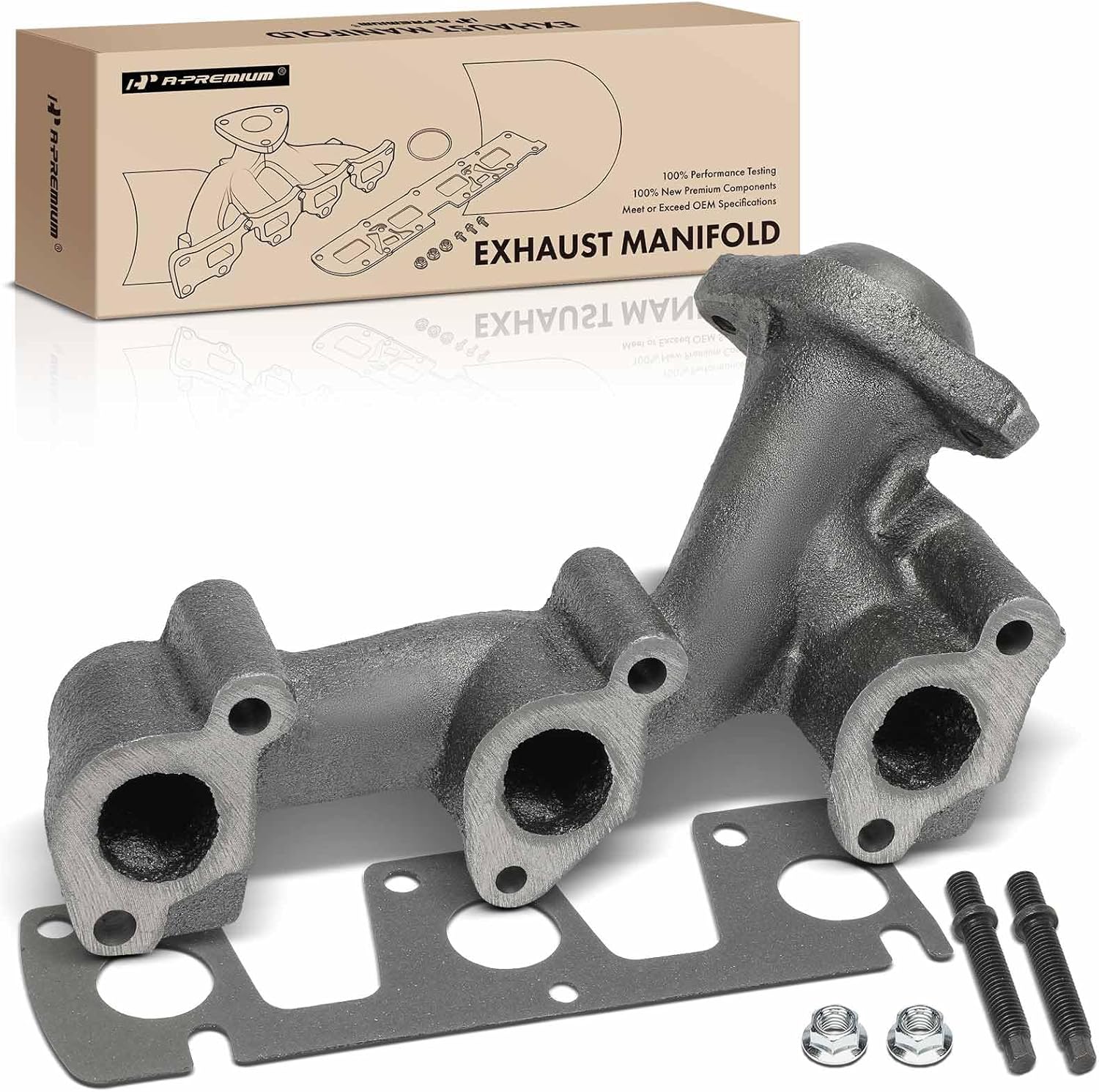
| Application Vehicles | Ford Ranger 2001-2008, Mazda B3000 2001-2008 V6 3.0L |
|---|---|
| Material | Cast Iron |
| Included Parts | Gasket and 2 studs |
| Fitment Type | Direct Replacement |
This cast iron exhaust manifold replaces the left-side unit on 2001–2008 Ford Ranger and Mazda B3000 3.0L V6 engines and comes packaged with a gasket and two studs to simplify installation. Designed as a direct replacement, it uses factory-style ports and mounting points so it installs without modification and restores proper exhaust routing and backpressure for performance-focused drivers. Cast iron construction gives good heat tolerance and durability under repeated thermal cycling, and the included gasket and studs reduce parts hunting during a repair. The product does not include a heat shield, so depending on surrounding components you may need to transfer the original shield or fit one separately. Fitment is specific to the left side of the V6 3.0L model years listed, so confirm engine and production date before ordering. For someone rebuilding or upgrading an aging Ranger exhaust, this delivers a straightforward, long-lasting replacement that keeps exhaust flow and sound close to factory behavior.
Best for: Performance-oriented buyers who prioritize durable, factory-style replacement parts to restore exhaust flow and maintain engine behavior on a Ford Ranger 2001–2008 V6 3.0L.
Less Ideal for: Drivers who need a universal or performance-modified manifold or those working on different engine families or non-listed model years should look for alternative options.
- Cast iron construction for high heat tolerance and long service life.
- Includes gasket and two studs so you can install the manifold without sourcing extra hardware.
- Direct-replacement fit that preserves factory exhaust routing and mounting points.
- Designed to reduce noise and vibration compared with damaged or cracked original manifolds.
- No heat shield included which may require transferring the factory shield or purchasing one separately.
- Fitment limited to left-side V6 3.0L Ranger/B3000 models and specific production dates.
Verdict: A durable cast iron direct-replacement manifold that restores factory exhaust flow and simplifies installation for performance-focused Ford Ranger 3.0L owners.
3. A-Premium V6 3.0L Left Exhaust Manifold with Gasket for Ford Ranger 1997–2000

| Fitment | Ford Ranger 1997-2000 V6 3.0L Left Side |
|---|---|
| Material | Cast Iron |
| Includes | Gasket and 2 studs |
| Port Shape | Round |
This cast iron exhaust manifold replaces the left-side manifold on 1997–2000 Ford Ranger 3.0L V6 trucks and is sold as a direct factory-replacement style part. It installs in place of the original manifold and ships with a gasket and two studs to simplify reassembly. Made from cast iron with a round-port design, the manifold aims to restore correct exhaust routing and backpressure for a stock engine; the listing notes noise reduction and shock absorption benefits that help keep cabin sound and vibration closer to factory levels. Installation is typical for a manifold swap and will require standard hand tools and some penetrating oil if bolts are corroded. There is no heat shield included, so plan for any missing shielding on older trucks. As a budget-focused aftermarket option, it offers an economical path to fixing exhaust leaks or replacing a cracked factory piece, though it lacks some premium refinements like ceramic coating or included shield hardware that higher-end assemblies sometimes provide.
Best for: Practical optimizer buyers who want a low-cost, functional factory-replacement manifold to restore reliability and quiet operation without paying for premium finishes.
Less Ideal for: Customers seeking a performance-upgrade manifold, ceramic-coated finish, or a complete heat-shielded assembly should consider higher-end options instead.
- Direct-fit replacement for Ford Ranger 1997–2000 V6 3.0L left side simplifying fitment
- Includes gasket and two studs to reduce the number of separate parts to source
- Cast iron construction matches factory material for durability and heat resistance
- Heat shield is not included which may require reusing the original shield or sourcing a replacement
Verdict: A budget-friendly cast iron direct-replacement manifold that restores exhaust sealing and function for Ford Ranger 3.0L V6 trucks.
4. Marketplace Auto Parts Right Exhaust Manifold for 1986–1992 Ford Ranger 2.9L V6

| Position | Right |
|---|---|
| Compatible Engines | 1986–1992 Ford Ranger 2.9L V6 |
| Manufacturer | Marketplace Auto Parts |
This right-side exhaust manifold is a direct replacement for the 1986–1992 Ford Ranger with the 2.9L V6 and is intended to restore exhaust routing and backpressure to factory-style operation. It is typically used by DIY owners or independent shops to replace a cracked or leaking manifold and to stop exhaust leaks that cause noise and reduced engine efficiency. The listing highlights that the part meets or exceeds factory specifications and that the manufacturer applies quality control checks, which suggests a focus on basic fit and function rather than performance upgrades. Practical benefits include straightforward bolt-on installation in most cases and the ability to return the truck to normal exhaust sound and emissions behavior without modifying other components. Limitations are that this is a budget replacement, so finish quality and long-term corrosion resistance may not match higher-end or factory parts and buyers should verify fitment and gasket condition during install.
Best for: Value-focused owners who need a cost-effective, straightforward repair part to stop leaks and restore normal exhaust function without spending on premium components.
Less Ideal for: Owners who prioritize longevity, corrosion-resistant coatings, or performance gains should consider higher-end or factory-quality manifolds instead.
- Direct replacement for the right side of 1986–1992 Ford Ranger 2.9L V6 for straightforward fitment
- Claims to meet or exceed factory specifications for basic performance and fit
- Simplifies repair of exhaust leaks and restores normal exhaust routing and engine operation
- Budget construction may have lower corrosion resistance and finish quality compared with premium or factory parts
- Limited information on materials and coating which can affect long-term durability
Verdict: A low-cost, direct-fit right-side replacement manifold to get a 1986–1992 Ford Ranger 2.9L V6 back to normal exhaust operation.
5. A-Premium Right Side Exhaust Manifold Kit with Gasket & Studs for 4.0L Ford Ranger/Explorer/Mountaineer

| Fitment | Ford Ranger/Explorer/Sport Trac/Mercury Mountaineer 4.0L (listed years) |
|---|---|
| Material | Cast Iron |
| Includes | Exhaust manifold, 1 gasket, 2 studs |
| Port shape | Round |
This A-Premium right-side exhaust manifold is a direct-replacement cast-iron unit intended for Ford 4.0L applications on Ranger, Explorer, Sport Trac and Mercury Mountaineer models. It replaces the factory manifold and is used to route exhaust gases from the cylinder head into the downstream exhaust system; installation typically involves unbolting the old manifold, fitting the supplied gasket and studs, and torquing to spec. Notable features include cast-iron construction for temperature resistance and strength, a round port shape to match the cylinder head, and bundled hardware to simplify installation. In practice the manifold should restore proper exhaust flow, reduce leaks compared with a cracked or warped OEM manifold, and withstand normal driving heat cycles. Limitations to consider are that this is a passenger-side unit only and it does not include a heat shield, so vehicles that rely on a shield for nearby component protection will need to reuse the original shield or source one separately. Fitment is specific to the listed Ford/Mercury 4.0L years, so confirm year and engine before ordering.
Best for: Reliability-focused owners seeking a factory-style, long-lasting replacement manifold to restore leak-free exhaust performance on 4.0L Ford Ranger and related vehicles.
Less Ideal for: Customers looking for performance upgrades, aftermarket headers, or a complete exhaust system solution should consider other products rather than this direct-fit replacement.
- Cast iron construction offers good high-temperature durability and structural strength.
- Supplied gasket and studs make it easier to replace the manifold in one job.
- Manufactured to match original specifications for direct fitment to listed 4.0L Ford/Mercury engines.
- Does not include a heat shield, which may require transferring the original shield or buying one separately.
Verdict: A durable, cast-iron direct-replacement right-side manifold that restores factory-style exhaust sealing for 4.0L Ford/Mercury trucks and SUVs.
6. Dorman 674-153 Passenger Side Exhaust Manifold Kit with Gaskets and Hardware

| Manufacturer | Dorman Products |
|---|---|
| Model | 674-153 |
| Bolt Pattern (Number of Holes) | 8 |
| Automotive Fit Type | Universal Fit |
This Dorman passenger-side exhaust manifold kit is a ready-to-install replacement intended to match the fit and function of the factory manifold on supported Ford applications. It is typically used to replace a cracked, warped, or leaking exhaust manifold during routine exhaust repairs or restoration work. Notable features include reverse-engineered, factory-style fit, durable construction intended to resist warping and cracking, and included gaskets and downpipe hardware so you do not need separate orders for basic installation. For a risk-averse buyer the practical benefit is a single-box repair that reduces parts-sourcing mistakes and downtime. Some users report tidy fit and quiet operation after installation, while others found casting flash or interference in tight engine bays that required light finishing or mock-up checks. Fitment confirmation for your Ranger's year and trim is essential before purchase because vehicle-specific clearance issues have been reported on some applications.
Best for: Risk-averse mainstream buyers who prioritize a straightforward, factory-replacement style repair and prefer buying a kit that reduces the chance of missing gaskets or basic downpipe hardware.
Less Ideal for: Drivers who want a performance-tuned or custom exhaust solution or those unwilling to perform minor modifications to ensure clearance should look elsewhere.
- Includes gaskets and downpipe hardware for a more complete repair in one kit
- Engineered to match factory fit and function for the listed applications
- Durable construction designed to resist warping and cracking
- Covers many older Ford applications so replacement parts are easier to source
- Some units may require minor finishing or trimming to clear tight engine bay obstacles
- Not guaranteed to include every bolt or block-side hardware for every installation
Verdict: A practical, single-box replacement manifold kit that simplifies exhaust repairs with included gaskets and downpipe hardware for supported Ford applications.
Looking for the perfect fit?
Select your Ford Ranger configuration to see the most relevant Exhaust Manifolds recommendations
Choosing the Right Ford Ranger Exhaust Manifold: Key Factors to Consider
Material and Construction
The material used for the manifold determines how well it resists heat, corrosion, and stress-related failure. Cast iron is common for durability and thermal mass, while stainless steel or coated alloys offer lighter weight and better corrosion resistance. Thicker flanges and reinforced welds or castings reduce the chance of cracking under thermal cycling.
Construction quality also affects long-term sealing and alignment. Look for consistent wall thickness, clean welds or cast finishes, and attention to flange flatness. These attributes influence how often you may need to re-torque bolts or replace the part due to warping or stress fractures.
Fitment and Alignment
Correct fitment ensures the ports and bolt holes align precisely with the cylinder head and downstream exhaust components. Proper alignment reduces stress on studs and gaskets and minimizes the risk of exhaust leaks. Incorrect fitment can cause misaligned exhaust gas flow, leading to heat hotspots and faster gasket failure.
Check whether the manifold is engineered for your Ranger's specific engine and emissions configuration. Parts that require minimal modification usually lead to fewer installation headaches and a lower chance of secondary issues like stripped threads or bent studs.
Gasket Interface and Sealing Design
The area where the manifold meets the head is a frequent leak point, so the design of the gasket interface matters a great deal. A well-machined flange and a gasket with proper sealing material reduce the chance of exhaust manifold leak and the need for repeat repairs. Raised or recessed port designs should match the head to avoid gaps.
Consider whether additional sealing features are present, such as integrated raised lips, bead sealing, or compatibility with multi-layer steel gaskets. These characteristics affect how reliably the joint holds up to heat cycles and vibration over time.
Thermal Performance and Heat Management
How the manifold handles heat impacts engine bay temperatures and nearby components. Materials and coatings that reflect or dissipate heat can help protect sensors, wiring, and intake components. Excessive heat can accelerate gasket degradation and increase the chance of cracks developing.
Evaluate whether the design controls heat buildup through thicker sections, heat-resistant coatings, or balanced flow paths. Good thermal management reduces the likelihood of symptoms such as ticking noises and boosts the part's lifespan under typical driving conditions.
Durability Against Cracks and Warping
Thermal cycling and mechanical stress can lead to cracks or warped flanges, both of which cause exhaust manifold symptoms like reduced power or visible leaks. Durability features include reinforced transition areas, appropriate material selection, and stress-relief design elements.
Assess the expected lifecycle based on construction features and whether the part's design mitigates stress concentrations at mounting points. A robust manifold reduces the chance you'll face recurrent repairs or need premature replacement.
Installation and Serviceability
Ease of installation affects total downtime and the likelihood of proper torque and seal. Manifolds that require only standard tools and follow the factory mounting pattern simplify installation and reduce the risk of installation-related leaks. Parts designed with accessible bolt patterns and clear instructions typically result in fewer post-installation problems.
Also consider whether the part requires new gaskets, studs, or hardware. Availability of replacement gaskets and clear torque specifications helps ensure a reliable seal and reduces the chance of follow-up service.
How We Chose the Best Ford Ranger Exhaust Manifold
We focused on solutions specifically designed to fit the Ford Ranger, prioritizing parts that address common failure modes for this vehicle. Key evaluation criteria included material and construction quality to resist warping and cracking under heat, precision of port and bolt-hole alignment for proper fitment, gasket sealing surface design to minimize exhaust leaks, and manufacturer specifications for heat cycling and corrosion resistance. We also considered ease of installation, including whether the part requires supplemental hardware or minor modifications, and compatibility with common Ranger engine configurations.We excluded universal-fit and non-vehicle-specific components, as well as options lacking clear material or fitment specifications. We did not include parts with known widespread warranty or documentation gaps. The resulting list reflects parts that meet practical durability, sealing, and fitment standards important for Ford Ranger owners.
Our full evaluation process is outlined in our review methodology.
FAQ
What are common exhaust manifold symptoms on a Ford Ranger?
Common signs include a ticking or tapping noise from the engine bay, reduced engine performance, and a noticeable exhaust smell in the cabin. Symptoms often arise from leaks at the gasket or hairline cracks in the manifold, and they can be more apparent during cold starts or under acceleration.
How can I diagnose an exhaust manifold leak?
Diagnosis typically starts with a visual inspection for soot, rust, or hairline cracks around the flange and ports. You can also listen for high-frequency ticking while the engine is idling and have an assistant rev the engine while you monitor the manifold area. In professional settings, a smoke test or a pressure check is often used to confirm a leak.
Do I always need a new gasket when replacing the manifold?
Most technicians recommend installing a new gasket whenever the manifold is removed, because gaskets compress and conform to surfaces over time. Reusing an old gasket increases the risk of leaks and often leads to earlier rework. Using the correct gasket type for the flange design improves sealing reliability.
Can a cracked manifold be repaired or must it be replaced?
Small cracks may be repairable with welding or metal stitching, depending on the material and crack location, but repairs do not always restore original strength or heat resistance. In many cases, replacement is the more reliable long-term solution, especially if the crack is near mounting points or across a flange where sealing is critical.
Will swapping the exhaust manifold affect engine performance?
Swapping to a properly fitting manifold can restore lost power and eliminate noise associated with leaks, but changes in backpressure or flow dynamics can also alter engine behavior. If the replacement matches the original flow characteristics and has good sealing, performance should return to expected levels without adverse effects.
What should I budget for installation complexity when changing a manifold?
Installation complexity depends on access, whether studs or bolts are seized, and whether additional components must be removed. Expect jobs that require basic disassembly to be straightforward, while rusted fasteners or hard-to-reach bolts increase labor. Allow for the possibility of replacing related hardware like studs, nuts, or gaskets to ensure a lasting repair.
Conclusion
When choosing a Ford Ranger exhaust manifold, prioritize correct fitment, material durability, and a well-designed gasket interface to minimize leaks and repairs. Balance heat management and construction quality against installation ease to find a part that delivers reliable, long-lasting performance.Keep in mind that tradeoffs exist between heavier, more durable materials and lighter designs that may offer better corrosion resistance. Focus on the factors discussed here to pick a solution that suits how you drive and how long you want the repair to last.
Explore More:
- Check out all Ford Ranger parts & accessories
- Explore Exhaust Manifolds Maintenance & Repair Guides
- Explore Exhaust & Emissions
- Browse all Auto Parts
