

Note: This article contains affiliate links. If you click on these links and make a purchase, I may earn a small commission at no extra cost to you. This helps support my research and content. Read my full affiliate disclosure here.
If your Ranger V6 is showing rough idle, poor fuel economy, or a persistent check-engine light, the catalytic converter could be the cause. Replacing this component matters because it directly affects exhaust emissions, engine performance, and whether your truck passes inspections or onboard diagnostics.This guide walks you through six shortlisted catalytic converters chosen for the Ford Ranger V6. We focus on how each option addresses fitment, emissions control, and installation practicality so you can pick the right replacement for daily driving, towing, or compliance with local emissions rules. Read on for the evaluation criteria used and what to expect during installation.
Looking for other parts? See all Ford Ranger parts & accessories.
Top Picks at a Glance
| Best Overall The best all-around choice for most situations | FortunaFlow High-Flow Catalytic Converter — Front Direct-Fit for 2004–2006 Ford Ranger 3.0L / Mazda B3000 |  |
| Best Quality Built to a higher standard if you want something more solid | PHILTOP Front Catalytic Converter Kit for 2004-2006 Ranger/B3000 3.0L (EPA Compliant) |  |
| Best Value The sweet spot between price and what you get | PHILTOP High-Flow Catalytic Converter for 1998–2000 Ranger/B3000/B4000 3.0/4.0L |  |
| Best Budget The cheapest option that still gets the job done reliably | ACZCR Rear Catalytic Converter 645442, Direct-Fit for 2004–2006 Ford Ranger / Mazda B3000 B4000 |  |
| Highest Rated A top-rated pick with lots of positive feedback | JT Exhaust Catalytic Converter for Ford Ranger 2004–2006 3.0L V6 (EPA Compliant) |  |
| Most Popular A crowd favorite that many people choose with confidence | ZonCar Stainless Steel High-Flow Catalytic Converter Y-Pipe for 2004–2006 Ford Ranger 3.0L |  |
1. FortunaFlow High-Flow Catalytic Converter — Front Direct-Fit for 2004–2006 Ford Ranger 3.0L / Mazda B3000

| Brand | FortunaFlow |
|---|---|
| Model | FRF044.0 |
| Position | Front |
| Compatible engines | 2004–2006 3.0L Ford Ranger / Mazda B3000 |
This FortunaFlow catalytic converter is a front-position direct-fit replacement built to match factory mounting points for 2004–2006 Ford Ranger and Mazda B3000 3.0L applications. It is intended to clear P0420/P0430 codes and help a vehicle pass OBD-II emissions checks by restoring proper converter function. The unit is described as high-flow and machined with the flange and bolt holes aligned to standard factory specifications, and it ships with gaskets and hardware to simplify installation for a typical bolt-on swap. For everyday driving this means smoother idle and normalized emissions readings compared with a degraded converter, while the higher flow design can reduce backpressure slightly. Important limitations are state emission restrictions this listing cannot ship to California, New York, Colorado, or Maine, and as an aftermarket part it may differ in longevity and internal substrate formulation compared with factory-quality converters. Buyers should confirm the exact fit using the vehicle compatibility table before ordering.
Best for: Drivers who need a reliable, straightforward replacement to restore emissions function and pass OBD-II checks on a 2004–2006 Ford Ranger or Mazda B3000 while keeping installation simple.
Less Ideal for: Owners in states with stricter emissions regulations that prohibit this unit should look for a certified state-compliant or dealer-supplied replacement; those seeking an exact factory replacement may prefer a dealer unit.
- Direct-fit flange and mounting holes for 2004–2006 Ford Ranger/Mazda B3000 front position for easier bolt-on installation
- Ships with gaskets and hardware to simplify replacement
- High-flow design can lower backpressure compared to a clogged converter and help restore performance
- Designed to address P0420/P0430 codes and stabilize OBD-II emissions readings
- Not permitted for sale or shipment to certain states with stricter emissions rules
- Aftermarket construction may not match factory converters in long-term durability or exact internal substrate formulation
Verdict: A direct-fit, high-flow front replacement that makes it easy to restore emissions function and clear related OBD-II codes on 2004–2006 Ranger V6s.
2. PHILTOP Front Catalytic Converter Kit for 2004-2006 Ranger/B3000 3.0L (EPA Compliant)

| Position | Front |
|---|---|
| OEM Part Number | 641224, 14613, 30515 |
| Manufacturer | PHILTOP |
| Compliance | EPA Compliant |
This PHILTOP front catalytic converter is a direct-fit replacement for 2004–2006 Ranger and B3000 3.0L trucks that aims to restore emissions control while improving exhaust flow. It uses a high-flow honeycomb ceramic substrate inside a stainless steel shell and arrives with OE-style gaskets and hardware for bolt-on installation that most mechanics can complete in a few hours. The high-flow design reduces backpressure compared with a degraded unit, which can slightly improve throttle response and engine breathing for drivers looking for crisper midrange power without modifying the exhaust. The stainless shell and firm welds promise durability under heat and road exposure, and the unit is EPA-compliant for use outside states with stricter rules. Buyers should note this is a replacement emission part rather than a performance-only race component, so gains are modest and the part is not legal for use in California, New York, Colorado, or Maine.
Best for: Drivers who want a factory-quality replacement that slightly improves throttle response and restores emissions control on a 2004–2006 Ranger/B3000 V6 while keeping a bolt-on, reliable installation.
Less Ideal for: Enthusiasts seeking large horsepower gains or race-only exhaust components, and vehicle owners who must meet California-style emissions rules should look elsewhere.
- Direct-fit, flange-to-flange design with included gaskets and hardware for straightforward installation
- High-flow ceramic substrate intended to reduce backpressure and improve engine breathing
- Stainless steel outer shell and welded connections designed for durability under heat
- EPA-compliant for federal emissions regions
- Not legal for use in states with stricter emissions (California, New York, Colorado, Maine)
- Performance gains are modest compared with dedicated high-performance or race converters
Verdict: A direct-fit, high-flow front converter for 2004–2006 Ranger/B3000 V6s that restores emissions control while delivering modest improvements in exhaust flow and throttle response.
3. PHILTOP High-Flow Catalytic Converter for 1998–2000 Ranger/B3000/B4000 3.0/4.0L

| Position | Rear |
|---|---|
| Compatible engines | 3.0L and 4.0L V6 |
| Certification | EPA-compliant (federal) |
| Manufacturer | PHILTOP |
This PHILTOP catalytic converter is a direct-fit replacement for the rear converter on 1998–2000 Ranger and related B3000/B4000 V6 models and is built with a stainless steel outer shell and a high-flow ceramic substrate. It installs using the included OE-style gaskets and hardware and is intended to be a bolt-in swap that can be completed in a few hours without modification. The high-flow internal honeycomb aims to reduce backpressure compared with a clogged or damaged original unit, which can improve throttle response and help the engine run more efficiently while also reducing rattling or loud exhaust symptoms caused by internal breakdown. PHILTOP states the part meets EPA federal emissions standards so it is legal in most states, though not for sale in states with stricter emissions rules. Buyers should expect standard installation labor and remember this is a direct replacement rear converter rather than a performance tuning part, so gains are modest and focused on restoring proper emissions function and exhaust flow rather than big power increases.
Best for: A practical buyer who needs a reliable, no-frills replacement to restore emissions compliance and normal exhaust flow on a 1998–2000 Ranger V6 without chasing large performance gains.
Less Ideal for: Drivers seeking a high-performance or racing-oriented exhaust upgrade or those who need a part certified for California and other states with stricter emissions rules should look elsewhere.
- Direct-fit design with OE-style gaskets and mounting hardware for straightforward installation
- High-flow ceramic substrate reduces backpressure to help restore throttle response and efficiency
- Stainless steel outer shell and firm welds for improved durability under heat and vibration
- EPA-certified for federal emissions compliance so it restores legal emissions operation in non-restricted states
- Not approved for sale in states with stricter emissions rules, so it cannot be used there
Verdict: Choose this direct-fit PHILTOP converter if you want a durable, EPA-compliant replacement that restores emissions function and improves exhaust flow on a 1998–2000 Ranger V6 without unnecessary upgrades.
4. ACZCR Rear Catalytic Converter 645442, Direct-Fit for 2004–2006 Ford Ranger / Mazda B3000 B4000
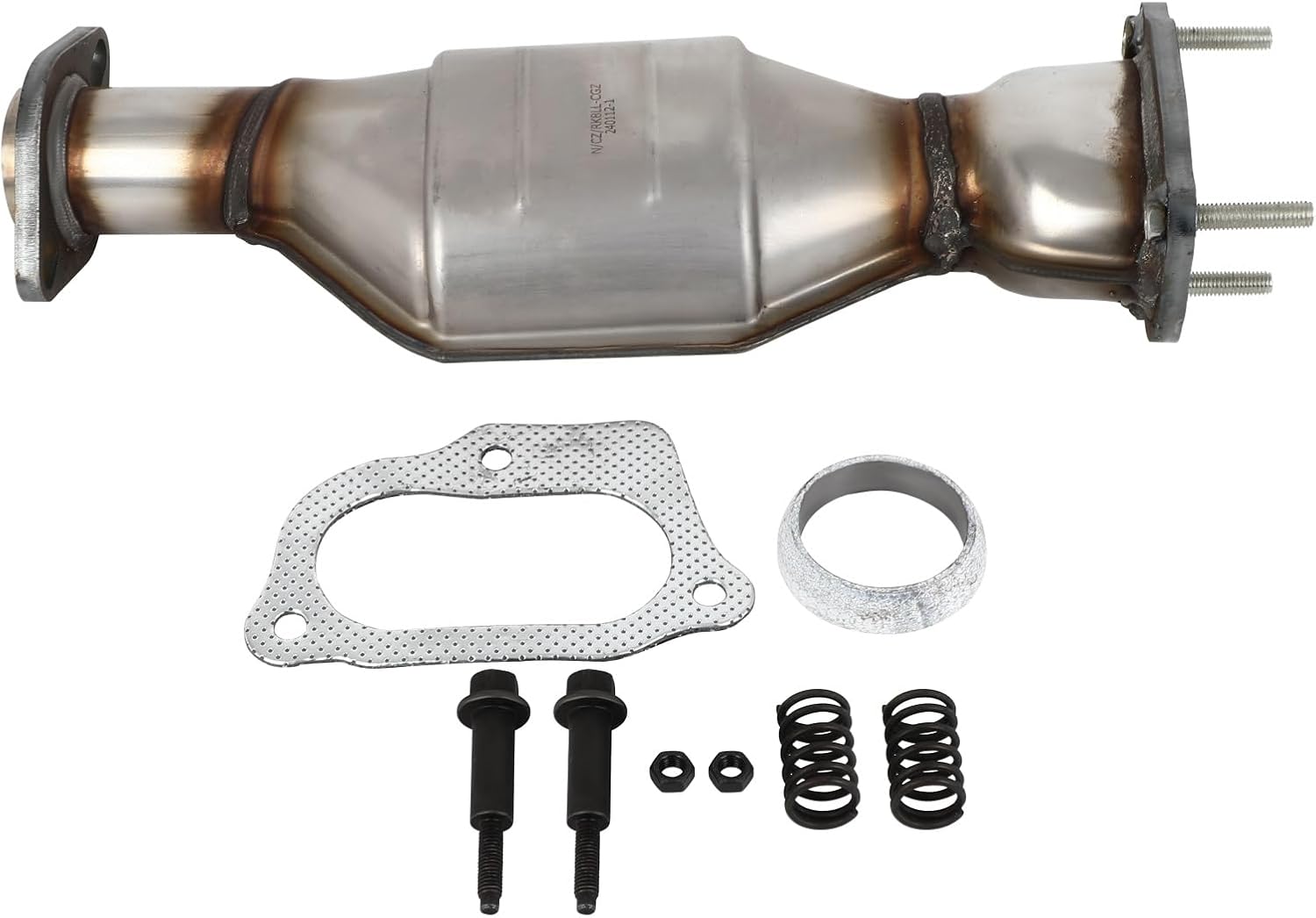
| Fitment years | 2004-2006 |
|---|---|
| Position | Rear |
| Material | 409L stainless steel |
| Substrate | 400-cell honeycomb ceramic with Pt/Rh/Pd coating |
| Inlet type | 3-bolt welded flange |
This ACZCR rear catalytic converter replaces the factory unit on 2004–2006 Ford Ranger V6 models and compatible Mazda B3000/B4000 trucks. It is a bolt-on, direct-fit design that uses a 400-cell honeycomb ceramic substrate coated with platinum, rhodium, and palladium to reduce emissions while matching factory flange locations so no cutting or welding is required for standard installs. The housing is 409L stainless steel with robotic welds and the listing says all necessary mounting hardware is included, which simplifies installation for DIYers or independent shops. It is EPA compliant but not CARB compliant, so it is intended for federal-emissions vehicles only. Practical benefits include simplified fitment, factory-style performance, and corrosion resistance from stainless construction. Important limitations are the lack of CARB approval meaning it cannot be used in restricted states and the part only fits the listed years and configurations, so buyers must confirm flange positions and O2 bung counts before ordering.
Best for: Buyers who need an affordable, ready-to-install replacement that restores factory-style emissions control on 2004–2006 Ford Ranger V6 trucks and prefer a straightforward DIY or shop installation.
Less Ideal for: Drivers in states requiring CARB-compliant parts or owners who need a converter for a different model year or modified exhaust configuration should look elsewhere.
- Direct-fit bolt-on design with flanges and included hardware avoids cutting or welding for standard installs
- 409L stainless steel housing with robotic welds for corrosion resistance
- OEM-grade 400-cell ceramic substrate with platinum, rhodium and palladium coating for effective emissions control
- Includes mounting hardware and matches factory flange positions to simplify installation
- Not CARB compliant so it cannot be used in California, New York, Colorado, or Maine
Verdict: A budget-friendly, direct-fit stainless steel rear catalytic converter that restores factory-style emissions control on 2004–2006 Ranger V6 trucks without cutting or welding.
5. JT Exhaust Catalytic Converter for Ford Ranger 2004–2006 3.0L V6 (EPA Compliant)

| Fitment | Ford Ranger 2004, 2005, 2006 3.0L V6 |
|---|---|
| Emission Standard | EPA OBDII compliant |
| Shell Material | Stainless Steel 409 |
| Substrate | OEM-grade honeycomb ceramic |
| Manufacturer Part Number | FDRG042 |
This JT Exhaust catalytic converter is a direct-fit replacement engineered for the Ford Ranger 2004–2006 3.0L V6 to restore emission control and resolve P0420-style codes. It uses a stainless steel 409 shell and an OEM-grade honeycomb ceramic substrate with an increased coating of precious metals to improve conversion efficiency and extend service life. The manufacturer says the unit is produced with 3D scanning and robot welding for consistent fit and weld quality, so installation should mirror the original part and rarely require modification. In real use this part is intended to get a vehicle back to factory-like emissions performance and keep the check engine light from returning when the catalytic is the source of the fault. Limitations include reliance on correct fitment for the specified years and that long-term durability still depends on engine health and fuel/maintenance habits; it is not a performance upgrade but an emissions replacement. Buyers should expect a mostly straightforward swap-in replacement when the part matches their Ranger’s year and engine variant.
Best for: Buyers who prioritize a dependable, factory-like emissions repair for a Ford Ranger V6 and want a straightforward replacement to resolve emissions faults and keep the check engine light off.
Less Ideal for: Drivers looking for performance gains, custom exhaust tuning, or universal-fit converters for multiple vehicle types should consider other options.
- Direct-fit design using 3D scanning for installation that matches factory mounting points
- Stainless steel 409 shell and OEM-grade ceramic substrate for corrosion resistance and stable structure
- Higher precious metal coating to improve catalytic conversion efficiency and better chance to pass emissions tests
- Robot-welded production process for consistent build quality and fit
- Not a performance-oriented part; intended solely to restore emissions function rather than increase power
Verdict: Choose this JT converter when you need a reliable, direct-fit emissions replacement to restore factory-level catalytic performance on a 2004–2006 Ford Ranger 3.0L V6.
6. ZonCar Stainless Steel High-Flow Catalytic Converter Y-Pipe for 2004–2006 Ford Ranger 3.0L

| Brand | ZonCar |
|---|---|
| Model | Ranger 2004-2006 |
| Manufacturer Part Number | 9068EXP618SUS |
| Position | Front |
| OEM Part Number | 641224, 14613, 30515, EC30515 |
This ZonCar catalytic converter is a replacement front Y-pipe unit engineered for 2004–2006 Ford Ranger 3.0L V6 applications. Built with a stainless steel shell and a honeycomb ceramic substrate coated with precious metal catalysts, it is intended to lower emissions while maintaining exhaust flow. Installation is straightforward for mechanics familiar with Ranger undercar work since the unit matches the Y-pipe position and OEM-style connections. The heavy-gauge stainless housing resists corrosion and high heat, and the high-load catalyst coating claims improved conversion efficiency compared with cheap aftermarket cores. In practice this means you can expect restored emissions performance and minimal impact to engine power. Limitations are typical of direct-fit aftermarket converters: you should confirm exact part numbers and fitment before ordering and professional installation or welding may be required for a leak-free seal. It is not a performance race part but a replacement aimed at meeting emissions needs for the specified Ranger V6 models.
Best for: Buyers who want a direct replacement catalytic converter for a 2004–2006 Ranger 3.0L and prioritize a proven, corrosion-resistant unit that restores emissions control with minimal fuss.
Less Ideal for: Drivers seeking a performance-oriented or race-grade exhaust upgrade or those who need a universal or multi-vehicle converter solution.
- Designed specifically for the 2004–2006 Ford Ranger 3.0L Y-pipe front position for straightforward fitment.
- Stainless steel shell resists rust and heat for better long-term durability under the vehicle.
- High-load precious metal coating on the ceramic substrate for improved catalytic conversion efficiency.
- High-flow design intended to preserve exhaust flow and avoid power loss compared with restrictive replacements.
- Requires verification of OEM part numbers and possible welding or professional installation for a proper seal.
Verdict: A factory-style, stainless steel direct-fit replacement that restores emissions performance for the 2004–2006 Ranger 3.0L without sacrificing exhaust flow.
Choosing the Right Ford Ranger V6 Catalytic Converter: Key Factors to Consider
Fitment And Mounting
Correct fitment is critical because the Ranger V6 uses a specific exhaust routing and flange pattern. A converter that matches the vehicle's inlet and outlet diameters, flange bolt pattern, and oxygen sensor port locations will install cleanly and avoid exhaust leaks.
Poor fitment often leads to exhaust noise, improper backpressure, and repeated gasket failures. When evaluating options, check whether the unit is listed for the Ranger V6 configuration and whether it requires any cutting, welding, or adaptor pieces. Bolt-on units save time and reduce labor costs while preserving the factory exhaust geometry and sensor positions.
Emissions Performance
The core job of the catalytic converter is to reduce harmful exhaust emissions. Look for substrate and washcoat descriptions that indicate effective conversion of hydrocarbons, carbon monoxide, and nitrogen oxides. Higher cell density and appropriate precious metal loadings generally improve conversion efficiency, particularly after repeated thermal cycles.
Adequate emissions performance matters for passing inspections and preventing long-term engine management issues. Select a converter designed to bring tailpipe readings into compliance for the Ranger V6 rather than a generic universal piece that may not meet local requirements.
Oxygen Sensor Compatibility
Modern engine controls rely on upstream and downstream oxygen sensors to monitor catalyst function and adjust fueling. A replacement converter must provide correct sensor bung placement and thread sizes, or you risk triggering a check-engine light for sensor circuit errors.
Misplaced or missing sensor ports can force you to install extension harnesses or relocate sensors, which complicates installation and can affect diagnostic accuracy. Confirm the sensor locations match the Ranger V6 layout so the vehicle's on-board diagnostics continue to operate as intended.
Durability And Construction
Converters are exposed to heat, road debris, and corrosive elements, so robust construction is essential for longevity. Features to consider include corrosion-resistant steel for housings, reinforced welds at joints, and sturdy flanges that resist warping.
A well-built converter reduces the likelihood of premature failure from cracking or rust-through. Consider units with thicker tubing, protective coatings, or stainless-steel components where the regional climate accelerates corrosion. Durable construction also helps maintain a tight seal at mating surfaces, reducing noise and leak issues.
Backpressure And Engine Performance
Catalytic converters affect exhaust backpressure, which in turn influences engine responsiveness and fuel economy. A converter designed with appropriate flow characteristics for the Ranger V6 maintains a balance between emissions conversion and minimal restriction.
Excessive restriction can cause reduced power, elevated temperatures, and increased fuel consumption, while an overly free-flowing unit might compromise emissions performance. Choose a converter engineered for the V6's displacement and typical operating conditions, whether you mainly tow, haul cargo, or use the truck for commuting.
Warranty And Support
A clear warranty gives confidence in product quality and indicates that the manufacturer stands behind emissions performance and construction. Warranty terms should cover catalyst failure and premature corrosion for a reasonable period.
Also factor in availability of replacement parts, ease of obtaining warranty service, and whether technical support is offered for fitment questions. Strong post-sale support reduces downtime and helps resolve fitment or installation questions specific to the Ranger V6.
Common Symptoms Of A Failing Catalytic Converter
Recognizing early signs of converter problems helps you decide whether repair or replacement is necessary. Typical symptoms on the Ranger V6 include a persistent check-engine light, reduced engine power, increased fuel consumption, and a rotten-egg or sulfur smell from the tailpipe.
A clogged catalyst often causes a noticeable loss of power under load or while towing. Conversely, a physically damaged converter may rattle or cause loud exhaust noise. Identifying the symptom pattern helps determine whether the unit is failing internally or if downstream exhaust leaks or sensor faults are producing similar alerts.
- Persistent check-engine light with codes related to catalyst efficiency
- Reduced acceleration or hesitation under load
- Sulfur-like odor from the exhaust
- Rattling sounds indicating a broken substrate
- Higher than normal fuel consumption
How Fitment Affects Installation Time
Exact-fit converters for the Ranger V6 typically install in a few hours with basic tools and a lift or jack stands. Universal or fabricator-style units often require cutting pipes, welding, and repositioning oxygen sensors, which significantly increases labor time and complexity.
Opting for a direct-fit replacement minimizes fabrication, retains factory sensor locations, and reduces the risk of leaks. If you plan to do the job yourself, confirm flange types, bolt sizes, and included hardware before starting so you can avoid surprises.
- Direct-fit units: shorter install time, typically bolt-on
- Universal units: may need cutting, welding, and custom flanges
- Verify included gaskets/hardware to avoid extra trips to the parts store
Legal And Emissions Inspection Considerations
Local emissions regulations may dictate the type of converter you can install. For the Ranger V6, some jurisdictions require a certified emissions component or restrict removal of catalytic devices. Installing the correct emissions-grade converter ensures compliance and avoids inspection failures.
Before purchasing, verify that the replacement meets your local inspection standards and that any necessary certification or documentation is available. Using parts designed to match the factory emissions performance reduces the risk of failing tailpipe tests or OBD-II emissions checks.
- Check local rules for emissions control device requirements
- Choose converters that meet or match factory emissions output
- Retain documentation showing compliance when available
DIY Replacement Basics For The Ranger V6
If you plan to replace the catalytic converter yourself, prepare by gathering the right tools: penetrating oil, appropriate sockets and torque wrench, a quality jack and stands or ramp, and new gaskets or hardware. Allow for extra time if bolts are rusted or access is tight.
Follow safe procedures: work on a cooled exhaust, support the vehicle securely, and torque flange bolts to specification. If the replacement requires welding, ensure you have the skills and equipment, or consider professional help to avoid leaks and structural issues.
- Wear eye protection and gloves when working under the vehicle
- Use penetrating oil on rusted bolts and let it soak before removing
- Support the exhaust when unbolting to avoid strain on hangers
Maintaining Converter Health To Prevent Future Failures
Regular engine maintenance helps prolong converter life. Address misfires, oil consumption, and coolant leaks promptly because unburned fuel or contaminants can damage the catalyst. Routine tune-ups and timely repair of ignition or fuel delivery issues reduce the risk of premature converter failure.
Avoid persistent short trips that prevent the exhaust system from reaching normal operating temperature, as colder operation can lead to buildup. Inspect the underside of the truck regularly for physical damage from road debris and repair small exhaust leaks before they escalate.
- Fix engine misfires and oil leaks quickly to avoid catalyst contamination
- Keep oxygen sensors and exhaust tubing in good condition
- Inspect and repair exhaust leaks to maintain proper backpressure
Still looking for the perfect fit?
Select your Ford Ranger configuration to see the most relevant Catalytic Converters recommendations
How We Chose the Best Ford Ranger V6 Catalytic Converter
We prioritized items that address the specific fitment and emissions needs of the Ford Ranger V6. Selection criteria included exact vehicle fitment to the Ranger V6 exhaust layout, catalyst substrate type and washcoat for emissions performance, and oxygen sensor port compatibility to ensure the truck's diagnostics run correctly. We also evaluated construction quality of flanges and tubing for long-term durability, warranty coverage that reflects manufacturer confidence, and whether the design minimizes need for additional modifications during installation.We excluded products that required extensive fabrication, universal converters without clear V6-specific fitment, or those lacking clear emissions performance data. Practical installation factors such as bolt-on fit, included gaskets or hardware, and whether the unit supports existing oxygen sensor locations were important. Finally, we considered documented user reports about longevity and symptom relief, focusing on attributes that reliably restore emissions compliance and engine smoothness for this vehicle.
Our full evaluation process is outlined in our review methodology.
FAQ
What error codes typically indicate a catalytic converter issue on the Ranger V6?
Codes that show reduced catalyst efficiency or wide differences between upstream and downstream O2 sensor readings often point to converter problems. Other codes related to oxygen sensor performance or excessive emissions can also suggest catalyst degradation.
Can I temporarily drive my Ranger V6 with a failing catalytic converter?
You can usually drive short distances, but extended operation with a failing converter can increase emissions, reduce fuel economy, and risk further engine or exhaust damage. If the check-engine light is active, have the condition diagnosed to avoid worsening problems.
Will replacing the catalytic converter clear a check-engine light?
Replacing a defective converter can clear related diagnostic trouble codes once the vehicle completes its drive cycles and the engine control module verifies improved emissions. However, if underlying issues like misfires remain, the light may return until those are fixed.
Do I need to replace oxygen sensors when replacing the converter?
Not always, but it is wise to inspect the sensors. If they are old, contaminated, or producing erroneous readings, replacing them alongside the converter helps ensure accurate diagnostics and avoids false fault codes after installation.
How long does a typical catalytic converter last on the Ranger V6?
Lifespan varies widely depending on driving conditions, maintenance, and regional climate. Proper engine maintenance can extend service life, but converters exposed to severe corrosion or contamination often fail sooner than those on well-maintained trucks.
Will a direct-fit converter affect towing performance?
A properly specified direct-fit unit designed for the Ranger V6 maintains the intended balance of flow and backpressure, so towing capability should remain consistent. Avoid converters that excessively restrict exhaust flow if you regularly tow heavy loads.
Final Verdict
When replacing the catalytic converter on a Ranger V6, prioritize correct fitment, oxygen sensor compatibility, and emissions performance to restore smooth operation and ensure inspection compliance. Balance flow characteristics with conversion efficiency so you do not trade emissions control for temporary performance gains.Focus on durable construction and a sensible warranty, and address any underlying engine issues before installing a new converter. With those priorities in mind, you can confidently select a replacement that keeps your Ranger V6 reliable and emissions-compliant for years to come.
Explore More:
- Check out all Ford Ranger parts & accessories
- Explore Catalytic Converters Maintenance & Repair Guides
- Explore Exhaust & Emissions
- Browse all Auto Parts
