

Note: This article contains affiliate links. If you click on these links and make a purchase, I may earn a small commission at no extra cost to you. This helps support my research and content. Read my full affiliate disclosure here.
If you own a 2010-2014 Subaru Outback, selecting the right coolant matters for engine longevity and reliable climate performance. The cooling system on these engines has aluminum heads and radiators that are sensitive to corrosion and pH drift, so using a coolant with the proper inhibitor chemistry and service life reduces the risk of leaks, clogged passages, and premature component wear. This guide shortlists the top options suited to the Outback's needs and explains the practical tradeoffs between longer service intervals, corrosion protection, and winter/boil protection.Below you will find the top-picked coolants that meet the vehicle scope, plus clear buying guidance on compatibility, maintenance, and how to choose the right formulation for your driving and service preferences.
Looking for other parts? See all Subaru Outback parts & accessories.
Top Picks at a Glance
| Best Overall Coolant A balanced, reliable coolant that fits most DIY repair needs | Subaru Super Coolant Blue Prediluted 1 Gallon (50/50) |  |
| Best Budget Coolant A low-cost option that still provides basic engine protection | Prestone MAX Asian Green 50/50 Antifreeze Coolant |  |
| Best Extended-Life Coolant Formulated for long service intervals and reduced change frequency | PEAK OET Extended Life Blue 50/50 Prediluted Antifreeze/Coolant, 1 gal |  |
| Best Pre-Mixed Coolant Ready-to-use coolant that requires no dilution or measuring | Zerex Asian Vehicle Green 50/50 Ready-to-Use Antifreeze/Coolant, 1 Gallon |  |
| Best Concentrate Coolant Undiluted concentrate for custom mixing and lower shipping weight | Zerex Asian Vehicle Green Antifreeze/Coolant Concentrate, 1 Gallon |  |
1. Subaru Super Coolant Blue Prediluted 1 Gallon (50/50)
Best Overall Coolant

| Brand | Subaru |
|---|---|
| Model | SOA868V9270 |
| Formulation | Prediluted 50/50 |
| Cold protection | -62°F |
This Subaru Super Coolant arrives premixed 50/50, so it is ready to pour for routine cooling system maintenance without measuring or adding distilled water. It is formulated with organic corrosion inhibitors to protect aluminum and other cooling system metals and claims cold-weather protection to -62°F, which covers typical freeze and highway driving conditions. For DIY mechanics working on 2010–2014 Subaru Outback models, the factory formulation simplifies topping off or full coolant changes while maintaining system compatibility and warranty-friendly chemistry. The one-gallon container is sized for a single drain-and-fill or multiple top-offs, and the bittering agent helps deter accidental ingestion. The obvious compromise is that a prediluted product is heavier to store and transport than concentrate, and it offers less flexibility for custom freeze/boil tuning if you prefer to mix your own ratios. If you need a simple, factory-grade coolant that minimizes fuss and matches Subaru's recommended formulation, this is a practical choice.
Best for: DIY owners who want a hassle-free, factory-formulated coolant that is ready to pour for routine maintenance on 2010–2014 Subaru Outback vehicles.
Less Ideal for: Drivers who prefer to adjust freeze/boil protection by mixing concentrate themselves or who need a smaller single-use package.
- Premixed 50/50 ready to use so no measuring or distilled water required
- Formulated with organic corrosion inhibitors to protect cooling system metals
- Factory Subaru formulation intended for 2009-and-newer Subaru models for compatibility
- Provides cold-weather protection down to -62°F
- Prediluted formula reduces flexibility for custom mix ratios to optimize freeze or boil points
- One-gallon container is heavier and bulkier to store compared with concentrate options
Verdict: The best all-around coolant for DIY mechanics that balances corrosion protection, freeze/boil performance, compatibility, and ease of use for routine maintenance.
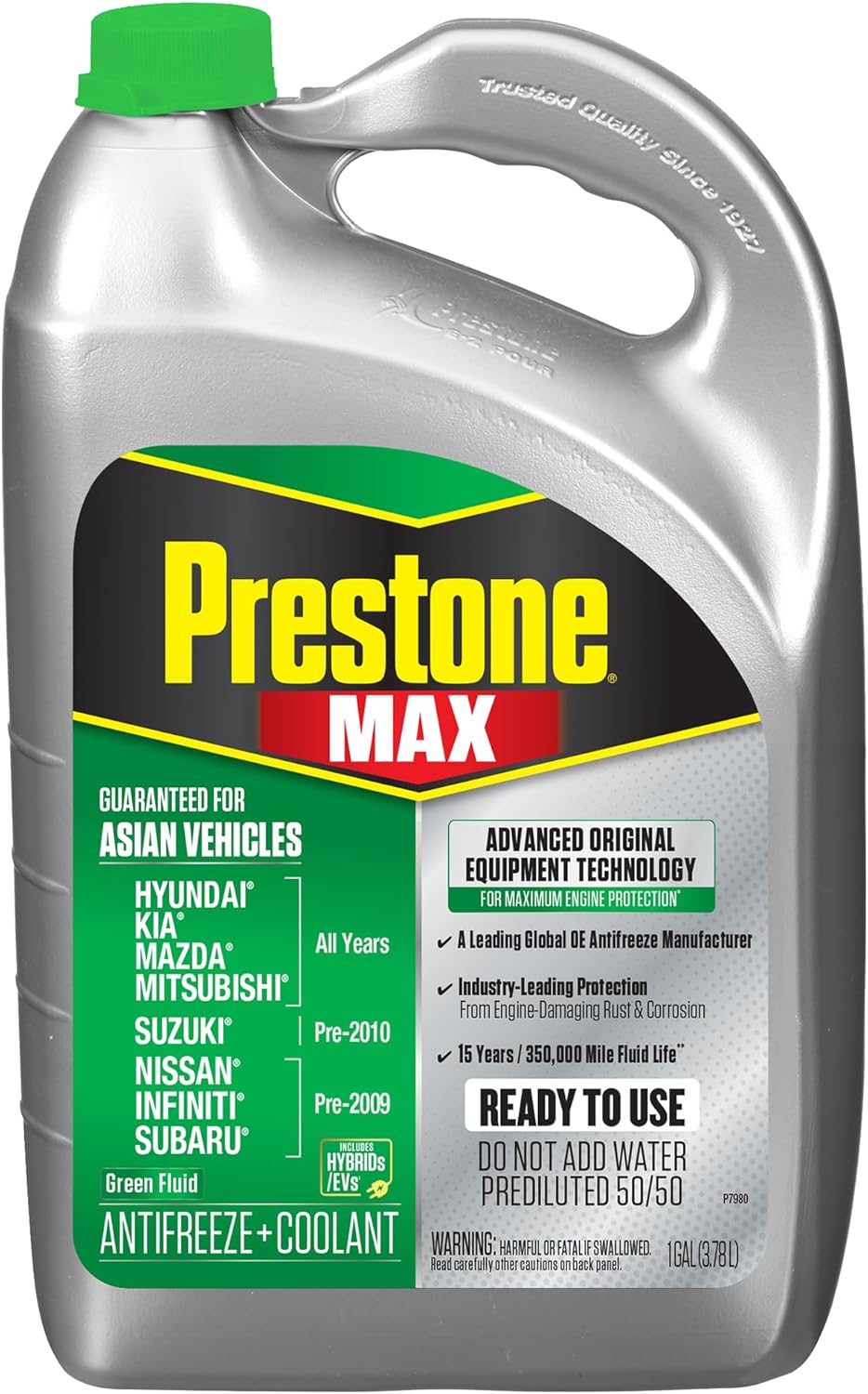
2. Prestone MAX Asian Green 50/50 Antifreeze Coolant
Best Budget Coolant
| Brand | Prestone |
|---|---|
| Model | AF6610/F |
| Mixture | 50/50 ready-mixed |
| Compatibility | Asian vehicle formula |
| Item Weight | 9.17 pounds |
This Prestone MAX Asian Green 50/50 coolant is a pre-mixed antifreeze formulated for Asian vehicles and comes ready to add to the cooling system. It provides freeze and boil protection while including corrosion inhibitors aimed at extending radiator and component life. Typical use is top‑up or full system fill when servicing the cooling system; the 50/50 mix removes the need to blend concentrate and simplifies maintenance. Notable features include Prestone CorGuard corrosion protection technology and a bitterant to discourage accidental ingestion. In practice it offers dependable thermal protection and helps the cooling system run efficiently without the extra cost or specialty chemistries of premium coolants. Limitations are that it is a single-spec formulation intended for Asian-compatible systems and does not advertise extended-life intervals beyond standard replacement schedules, so frequent monitoring and routine changes are still recommended for long-term care.
Best for: Buyers who need a low-cost, no-fuss coolant that delivers solid freeze and corrosion protection for routine maintenance on Asian-spec vehicles.
Less Ideal for: Drivers looking for long-life or specialty performance coolants with extended service intervals or race/track-grade formulations should consider alternatives.
- Ready-mixed 50/50 formulation eliminates mixing mistakes and saves time.
- Formulated for Asian vehicles, matching coolant chemistry for compatible systems.
- Includes corrosion inhibitors to help protect radiators and engine cooling components.
- Contains a bitterant to reduce risk of accidental ingestion.
- No extended-life interval is specified, so it follows standard replacement schedules.
Verdict: The best low-cost coolant for buyers who want dependable freeze and corrosion protection on a tight budget without extra premium features.
3. PEAK OET Extended Life Blue 50/50 Prediluted Antifreeze/Coolant, 1 gal
Best Extended-Life Coolant

| Volume | 1 gallon |
|---|---|
| Dilution | 50/50 prediluted |
| Chemistry | Phosphate-enhanced POAT |
| Vehicle focus | Asian vehicles (blue) |
This 1-gallon PEAK OET extended-life coolant is a prediluted 50/50 blue formula designed for Asian vehicle cooling systems and is intended to reduce how often you need full coolant changes. It uses a phosphate-enhanced Organic Acid Technology blend to protect against rust and corrosion across cooling system components, and the prediluted mix makes topping off straightforward without measuring concentrate. PEAK guarantees service-life protection up to 150,000 miles or five years when installed after a complete flush and fill, which suits owners who prefer long maintenance intervals. Practical benefits include compatibility with other extended-life coolants and a bittering agent to deter accidental ingestion. Limitations: the product is formulated specifically for vehicles that call for a blue POAT Asian-style coolant, so it should only be used where that chemistry matches the vehicle maker's requirement, and it is not a universal replacement for coolants with different additive packages.
Best for: Drivers who want a low-maintenance coolant that supports long service intervals and prefer a ready-to-use 50/50 solution matched to Asian vehicle coolant chemistry.
Less Ideal for: People whose vehicles specify a different coolant chemistry or color, or those who prefer concentrate products for custom mixing should consider alternatives.
- Prediluted 50/50 mix for easy top-offs and no onsite mixing.
- Extended-life formulation claims up to 150,000 miles or 5 years when used after a full flush.
- Phosphate-enhanced POAT formula protects against rust and corrosion in cooling systems.
- Designed for Asian vehicles that require blue POAT chemistry, improving compatibility when matched to the vehicle spec.
- Intended chemistry restricts use to vehicles that require blue POAT coolant and is not suitable for systems needing other formulations.
Verdict: The best extended-life coolant for owners who prefer fewer coolant changes thanks to long-lasting additives and stable chemistry.
4. Zerex Asian Vehicle Green 50/50 Ready-to-Use Antifreeze/Coolant, 1 Gallon
Best Pre-Mixed Coolant

| Formulation | 50/50 pre-mixed |
|---|---|
| Technology | Hybrid Organic Acid Technology (HOAT) |
| Free of | Silicates, borates, 2-EHA, amines, nitrites |
| Volume | 1 gallon |
Zerex Asian Vehicle Green is a ready-to-use 50/50 coolant formulated with Hybrid Organic Acid Technology and a phosphate additive to protect aluminum and other cooling system metals. It is intended for topping off or performing a full coolant flush and is silicate- and borate-free, so it avoids chemistry that some Asian manufacturers discourage. For DIYers the main benefit is convenience: the gallon arrives pre-mixed to the correct concentration, so there is no need to measure or dilute concentrate. The formula claims strong protection against corrosion, deposits, freezing and boiling and is compatible with components like radiators, water pumps and hoses. A practical limitation is that this product is targeted at vehicles specifying a green HOAT-type coolant; owners should confirm their Subaru Outback’s factory coolant spec before use. Also, pre-mixed gallons carry extra shipping volume compared with concentrate, so storing spares takes more space in a garage.
Best for: Do-it-yourselfers who want a convenient, ready-to-pour coolant for routine top-offs or full system flushes and prioritize simple, correct mixing without extra tools.
Less Ideal for: Anyone who needs a coolant matched to a different chemistry or color requirement, or who prefers concentrated coolant for long-term storage or mixing flexibility.
- Comes pre-mixed 50/50 for immediate use with no measuring or distilled water needed.
- HOAT formula with phosphate additive for corrosion and scale protection on aluminum cooling parts.
- Silicate- and borate-free formulation suited to vehicles that require those chemistries to be absent.
- Formulated specifically for Asian-vehicle green coolant specs, so it may not match every vehicle manufacturer requirement.
Verdict: The best pre-mixed coolant for DIYers who want a convenient, ready-to-pour option that removes the need to mix concentrate with water.
5. Zerex Asian Vehicle Green Antifreeze/Coolant Concentrate, 1 Gallon
Best Concentrate Coolant

| Brand | Zerex |
|---|---|
| Type | Concentrate |
| Technology | Hybrid Organic Acid Technology (HOAT) |
| Volume | 1 gallon |
Zerex Asian Vehicle Green is a one-gallon concentrate coolant formulated with Hybrid Organic Acid Technology and a phosphate additive to protect metal cooling system components, including aluminum. Buyers mix it to their chosen ratio, so you can control freeze and boilover protection by using distilled or demineralized water and adjusting concentration for local climate. The formula is silicate-, borate-, nitrite- and amine-free and includes inhibitors to resist corrosion, scale and rust while remaining safe for hoses, gaskets and plastics. Practical benefits include OEM-accepted chemistry for many Asian cars and a long service claim designed to reduce the frequency of coolant changes. The concentrate format is cost-effective for bulk topping or full system flushes but requires careful mixing and proper disposal of old coolant. This product is intended for vehicles specified to use a green HOAT-type coolant and should be used following vehicle maker guidance on coolant type and change intervals.
Best for: Drivers who prefer to mix their own coolant and manage water quality or buy larger quantities for routine flushing and topping of their 2010–2014 Subaru Outback cooling system.
Less Ideal for: People who want a ready-to-use premix or who are uncomfortable measuring concentrate and mixing with demineralized water should choose a premixed coolant instead.
- Concentrate format lets buyers set exact mix ratio and control water quality
- HOAT formulation with phosphate protects aluminum and other metals from corrosion
- Free of silicates, borates, nitrites and amines which matches many Asian vehicle requirements
- Safe for cooling system plastics, hoses and gaskets when mixed properly
- Requires accurate mixing and appropriate water to achieve specified freeze/boil protection
Verdict: The best concentrate coolant for buyers who prefer to mix their own coolant ratio, buy in bulk, or control water quality for optimal protection.
Choosing the Right 2010-2014 Subaru Outback Coolant: Key Factors to Consider
Coolant Chemistry and Inhibitor Type
Different coolant chemistries use distinct corrosion inhibitor packages that interact differently with aluminum, copper, and cast-iron components. For the 2010-2014 Subaru Outback, chemistry matters because the engine and radiator contain significant aluminum surfaces. Organic acid formulations, hybrid organic acid formulations, and silicate-containing coolants each protect metal surfaces in different ways and have varying service lives.
Choosing a coolant with an inhibitor package recommended for aluminum reduces the risk of pitting and electrochemical corrosion. It also affects how long the coolant will remain effective before its additives deplete. When evaluating options, prioritize clear labeling about inhibitor type and compatibility with aluminum; ambiguous or generic labels can indicate a product that might not provide adequate protection over time.
Service Interval and Longevity
Service interval describes how long a coolant retains protective properties before needing replacement. Long-life coolants advertise extended drain intervals, which reduce maintenance frequency but require reliable inhibitor chemistry. For the Outback, consider how often you perform routine service and whether you prefer a coolant that supports two- to five-year intervals or a conventional product with shorter intervals.
Longer intervals can save time and reduce the frequency of flushing the system, but they also demand confidence in the product's inhibitor stability and in following correct mixing ratios. If the vehicle has a history of coolant contamination or unknown service records, shorter-interval products or a full system flush may be the safer choice.
Freeze and Boil Protection
Freeze and boil protection determine the coolant concentration needed for winter and high-temperature conditions. Freeze point is critical if you drive in subfreezing climates because inadequate protection can lead to frozen coolant and cracked components. Boil protection matters for heavy towing, long climbs, or stop-and-go traffic that can raise coolant temperatures.
Most products provide freeze and boil point tables when mixed to common concentrations. For the Outback, match the recommended concentration for your local climate and driving load to ensure both freeze protection and an adequate margin above the engine's normal operating temperature. Remember that mixing with distilled or deionized water is essential for achieving the stated protection levels.
Compatibility with Existing Coolants and Materials
Mixing different coolant chemistries can cause rapid depletion of inhibitors and may form gels or precipitates that clog passages. Before topping off or refilling the cooling system, identify whether the existing coolant is an organic acid, OAT, HOAT, or contains silicates. For the 2010-2014 Outback, sticking to a compatible chemistry prevents unexpected reactions with aluminum surfaces and avoids accelerated corrosion.
If the vehicle's coolant history is unknown, performing a complete flush and refill with the chosen chemistry is the safest approach. Also consider hose, seal, and radiator material compatibility; some additives can affect rubber components over long periods if the formulation is not matched to automotive cooling-system materials.
Maintenance Procedures and Serviceability
How you plan to maintain the cooling system affects the best coolant choice. If you perform routine coolant flushes, choose products that are easy to drain and fully replace without leaving residues. If you prefer top-offs between long intervals, pick a product that offers clear concentration and mixing guidance to avoid under-protection.
Also consider whether you will be doing the work yourself or relying on a technician. Clear labeling, accessible mixing charts, and commonly available test strips or refractometers make it easier to verify protection levels during service. Some coolants require specific flushing procedures to avoid cross-contamination, so account for those needs in your maintenance plan.
Corrosion Monitoring and Additive Depletion
Even long-life coolants can lose protective additives over time, especially if the system has contaminants or frequent temperature cycling. Monitoring coolant pH and inhibitor levels provides an early warning of declining protection and helps you decide when a flush is needed. For Subaru Outback owners, being proactive about testing prevents corrosion-related failures down the line.
Use test strips, refractometers, or lab testing if you suspect contamination. Regular checks during scheduled maintenance help confirm whether the coolant still meets freeze/boil and corrosion protection specifications. This factor matters because preventive monitoring can extend component life and avoid emergency repairs.
When To Flush Vs When To Top Off
Deciding between a full coolant flush and a top-off depends on the coolant's age, visible condition, and service history. If the coolant is discolored, contains particulates, or the service interval is unknown, a full flush and refill using the chosen chemistry is recommended to protect the Outback's aluminum components.
For recent fills with documented long-life coolant and clear concentration, top-offs can be acceptable to maintain levels between scheduled services. Always match the chemistry when topping off to avoid chemical interactions that could reduce inhibitor effectiveness.
- Flush if coolant is rusty, cloudy, or contains debris
- Top off only with compatible chemistry and proper concentration
- Replace hoses or clamps showing wear during a major coolant service
Mixing Ratios and Water Quality
Correct mixing ratio is essential for achieving stated freeze and boil protection. Most coolants are formulated to be mixed 50/50 with distilled or deionized water unless the product specifies a different ratio. Using tap water can introduce minerals that reduce corrosion protection and promote scale formation in the radiator and passages.
When preparing coolant for the Outback, use the manufacturer-recommended concentration for your climate and avoid topping off with untreated water. If you need more precise boiling-point protection for heavy-load driving, consult the concentration tables provided by the coolant manufacturer.
- Use distilled or deionized water for mixing
- Follow concentration tables for freeze/boil targets
- Record the date and concentration on the service sticker after refill
Storing and Handling Coolant Safely
Coolant is toxic to people and animals and should be stored in clearly labeled, sealed containers away from children and pets. When draining the system, capture fluid to prevent environmental contamination and dispose of it according to local regulations.
Avoid breathing vapors in confined spaces and wear gloves and eye protection when handling concentrated coolant. Clean up spills promptly and wash any tools or surfaces that contact the fluid to prevent corrosion or contamination.
- Store in original, sealed containers out of reach of children
- Collect used coolant for proper disposal
- Wear gloves and eye protection during service
Symptoms of Coolant-Related Problems
Early signs of coolant issues include discolored fluid, visible rust or scale, frequent low-coolant warnings, or cooling system overheating. For the 2010-2014 Outback, watch for persistent overheating or unexplained coolant loss, which can indicate internal corrosion, leaks, or compromised head gaskets.
Address symptoms promptly: continued operation with degraded coolant increases the risk of component damage. Use diagnostics to identify leaks, test for combustion gases in the coolant, and inspect hoses, clamps, and the radiator during service.
- Discolored or gritty coolant indicates contamination
- Frequent low levels suggest leaks or head gasket issues
- Overheating under load can point to insufficient boil protection or flow restrictions
Tools and Tests to Verify Protection
Several simple tools help confirm that your coolant still provides adequate protection. pH strips and test kits give a quick read on acidity, while refractometers or hydrometers estimate freeze point based on concentration. More thorough lab tests can measure specific inhibitor levels if you suspect depletion.
Regular use of these tools during scheduled maintenance helps you track coolant condition and decide if a flush is needed. Keep maintenance records noting test results, service dates, and any products added to the system to maintain a clear history for future service.
- Use pH test strips to monitor acidity
- Refractometers estimate freeze/boil protection based on mixture
- Consider lab testing for precise inhibitor level analysis
Still looking for the perfect fit?
Select your Subaru Outback configuration to see the most relevant Coolants recommendations
How We Chose the Best 2010-2014 Subaru Outback Coolant
We focused on technical fit and real-world durability when selecting coolants appropriate for 2010-2014 Subaru Outback models. Evaluation emphasized corrosion protection for aluminum engine components, inhibitor package stability over time, and compatibility with the vehicle's recommended coolant chemistries. Thermal performance under cold-start and high-load conditions was reviewed through published freeze and boil point data when mixed to typical concentrations. We also considered recommended service intervals and whether a product supports extended drain schedules without sacrificing protection.Other filters included OEM compatibility or clear formulation guidance for mixing with deionized water, low-foam behavior to avoid air entrapment, and suitability for common maintenance actions like coolant flushes and top-offs. Products that required uncommon additives, had unclear mixing instructions, or were unsuitable for aluminum engines were excluded. Our criteria prioritized straightforward installation, clear labeling for concentration and service life, and the inhibitor profiles most relevant to the Outback's cooling system.
Our full evaluation process is outlined in our review methodology.
FAQ
Can I mix different coolant types in my 2010-2014 Subaru Outback?
Mixing coolant chemistries is generally not recommended. Different inhibitor packages can neutralize each other or form precipitates that clog the cooling system. If you do not know the existing coolant chemistry, perform a full flush and refill with a single, compatible coolant.
How often should I change coolant in a 2010-2014 Outback?
It depends on the coolant's specified service life and the vehicle's history. Long-life formulations often recommend multi-year intervals, while conventional products may require more frequent changes. Check the product guidance and inspect the fluid condition to set an appropriate schedule.
Is distilled water necessary when mixing coolant?
Yes. Distilled or deionized water is recommended because it avoids minerals that reduce corrosion protection and promote scale. Using tap water can shorten coolant life and harm the radiator and passages.
What are common signs that coolant needs replacing in an Outback?
Signs include discolored or rusty fluid, visible debris, frequent low-coolant warnings, overheating under normal conditions, or a sweet smell indicating leaks. Any of these warrant inspection and likely a coolant drain and refill.
Will a coolant flush fix overheating issues?
A flush can resolve problems caused by contaminated or degraded coolant and restore flow if deposits are present. However, if overheating is due to mechanical faults like a failing water pump, blocked radiator, or head gasket issues, a flush alone will not solve the problem.
Can I use long-life coolant if the system has older fluid?
You can, but it is best to perform a complete flush before switching to a long-life formulation. Mixing old fluid with a long-life product can dilute inhibitors and reduce the new coolant's effective service life.
Final Verdict
For the 2010-2014 Subaru Outback, prioritize a coolant formulation that explicitly protects aluminum components and offers clear mixing and service-interval guidance. Balance the convenience of long-life products against the condition and history of your cooling system. If the system's service history is unknown or contamination is present, prefer a full flush before switching chemistries.Ultimately, focus on corrosion protection, correct concentration using distilled water, and routine monitoring to maintain freeze and boil safety. Following these priorities will help you choose confidently and keep the Outback's cooling system reliable for years of service.
Explore More:
- Check out all Subaru Outback parts & accessories
- Explore Fluids & Chemicals
- Browse all Accessories
