

Note: This article contains affiliate links. If you click on these links and make a purchase, I may earn a small commission at no extra cost to you. This helps support my research and content. Read my full affiliate disclosure here.
If you own a 1997-2001 Honda CR-V, worn control arms can mean wandering steering, uneven tire wear, and a harsher ride. Replacing the control arm is one of the most effective ways to restore proper suspension geometry and the vehicle's original handling characteristics. This guide covers the top shortlisted control arms for the 1997-2001 CR-V, focusing on fitment, bushing durability, and ball joint integrity so you can pick a long-lasting replacement.Below you will find the selected options and the criteria used to evaluate them, followed by practical guidance on installation, alignment, and signs that a control arm needs service.
Looking for other parts? See all Honda CR-V parts & accessories.
Top Picks at a Glance
| Best Overall The best all-around choice for most situations | Detroit Axle Front End 12‑pc Suspension Kit for 1997–2001 Honda CR-V |  |
| Best Quality Built to a higher standard if you want something more solid | Truhart Front Upper Adjustable Control Arm Camber Kit for 1997–2001 CR-V |  |
| Best Value The sweet spot between price and what you get | Detroit Axle Front 8-Piece Suspension Kit for 1997–2001 Honda CR-V |  |
| Best Budget The cheapest option that still gets the job done reliably | TUCAREST Front Left Upper Control Arm with Ball Joint (Driver Side) |  |
| Highest Rated A top-rated pick with lots of positive feedback | Detroit Axle Front Upper Control Arms with Ball Joints for 1997–2001 Honda CR-V (pair) |  |
| Most Popular A crowd favorite that many people choose with confidence | Detroit Axle 12-piece Front Suspension Kit for 1997–2001 Honda CR-V |  |
| Best Seller A high-volume bestseller chosen again and again | Detroit Axle Front 12‑Piece Suspension Kit for 1997–2001 Honda CR‑V |  |
1. Detroit Axle Front End 12‑pc Suspension Kit for 1997–2001 Honda CR-V

| Fit Type | Vehicle Specific Fit |
|---|---|
| Auto Part Position | Front |
| Includes | Upper control arms with ball joints, lower ball joints, tie rod ends, sway bar end links, boots |
| Manufacturer Part Number | 80032-6B |
This Detroit Axle 12-piece front end suspension kit is a comprehensive replacement package for 1997–2001 Honda CR-V models, supplying both upper control arms with ball joints, lower ball joints, inner and outer tie rod ends, sway bar end links, and protective boots. It is intended as a direct-fit, vehicle-specific kit for routine front suspension rebuilds and brings together parts you would normally buy separately, which simplifies parts sourcing and reduces installation time. The control arms are made from a premium alloy with a high-strength structure to resist wear and corrosion and to handle repeated impact loads. Practical advantages include matching factory fitment for bolt-in installation and bundled components that restore steering response and front-end geometry when worn parts cause play or noise. Limitations are typical for aftermarket kits: some components may require minor adjustment or professional alignment after installation, and buyers replacing only one failed item may find the full kit excessive. For a balanced buyer wanting a complete front-end refresh, this kit covers the usual wear items in one purchase.
Best for: Buyers who want a practical, all-in-one front suspension refresh for a 1997–2001 Honda CR-V and prefer replacing all common wear items at once to restore steering feel and eliminate front-end noise.
Less Ideal for: People who only need a single replacement component or who prefer sourcing OEM-branded individual parts should consider buying individual items instead.
- Complete kit contains upper control arms with ball joints plus lower ball joints, inner and outer tie rod ends, sway bar end links, and boots so you get all common front wear items at once
- Vehicle-specific design intended for direct-fit installation on 1997–2001 Honda CR-V front suspension
- Control arms made from premium alloy and described as high-strength for improved corrosion resistance and durability
- Bundling parts reduces time and effort sourcing individual components and helps ensure matched wear replacement
- Some parts may need fine adjustment during installation and a professional wheel alignment is required after replacement
Verdict: If you want a straightforward, factory-form front suspension rebuild for a 1997–2001 Honda CR-V, this bundled kit replaces the common wear items in one purchase.
2. Truhart Front Upper Adjustable Control Arm Camber Kit for 1997–2001 CR-V

| Fit Type | Vehicle Specific Fit |
|---|---|
| Auto Part Position | Front Upper |
| Auto Part Orientation | Passengers Side |
| Material Type | Alloy Steel |
This Truhart front upper control arm kit replaces the passenger-side and includes a matching left arm when purchased as a pair, giving a flat ball joint that allows camber adjustment from the bottom. It is intended for lowered CR-Vs where camber needs correction after lowering and for owners who want stronger, more adjustable front suspension geometry. The arms are alloy steel with a factory-quality appearance and use factory-style bushings manufactured in-house according to the brand. In practice the adjustable joint simplifies alignment changes without removing the arm and the kit is straightforward for a competent DIYer or a shop to install. Practical benefits include improved tire wear and cornering predictability on lowered cars and a durable construction aimed at regular street and spirited driving. Limitations are that the listing is vehicle-specific for 1997–2001 CR-V and the part covers the front upper passenger side configuration, so it is not a universal fix for other suspension locations or different vehicles.
Best for: Enthusiasts fitting a lowered 1997–2001 CR-V who prioritize suspension adjustability and improved front-end geometry for better handling and tire wear.
Less Ideal for: Those seeking a universal or multi-location suspension solution or owners who need a direct drop-in without any alignment adjustment work.
- Adjustable flat ball joint allows on-arm camber correction without disassembly
- Alloy steel construction for increased strength over stamped replacements
- Manufactured bushings produced in-house for consistent fit and durability
- Sold as a pair to ensure matched arms and symmetric alignment adjustments
- Fitment is vehicle-specific and only for front upper passenger-side application when not buying the matching side separately
Verdict: Choose this kit if you want a durable, adjustable front upper arm to correct camber on a lowered 1997–2001 CR-V and improve handling predictability.
3. Detroit Axle Front 8-Piece Suspension Kit for 1997–2001 Honda CR-V

| Fitment | 1997-2001 Honda CR-V |
|---|---|
| Kit contents | 2 upper control arms with ball joints, 2 lower ball joints, 2 sway bar links, 2 outer tie rod ends |
| Fit Type | Vehicle Specific Fit |
| Auto Part Orientation | Drivers Side |
This Detroit Axle 8-piece front suspension kit supplies the main front-end wear parts needed when refreshing a 1997–2001 Honda CR-V's steering and suspension. It includes two upper control arms with ball joints, two lower ball joints, two sway bar end links, and two outer tie rod ends to restore steering response and reduce play. The parts are described as direct-fit replacements made from premium alloy with enhanced structural strength and corrosion resistance, so installation is straightforward for a DIY mechanic or a shop performing a comprehensive front-end service. In use the kit should tighten steering feel, help correct alignment stability, and eliminate common clunks from worn joints. Buyers should know this is a complete front-end hardware kit rather than replacement struts or hubs, so additional components or alignment are typically required after installation. The kit targets durability and value rather than upgraded performance handling, making it a sensible repair-level option to return a CR-V to factory-quality steering and suspension behavior.
Best for: Buyers seeking a practical, cost-effective front suspension refresh for a 1997–2001 Honda CR-V who prioritize reliability and straightforward, DIY-friendly replacement parts to restore factory steering feel.
Less Ideal for: Drivers looking for performance upgrades, heavier-duty components, or a full suspension overhaul that includes struts or upgraded bushings should consider other options.
- Complete front-end kit covers upper control arms, lower ball joints, sway bar links, and outer tie rod ends for a single service interval
- Direct-fit design intended for easy installation and factory-quality fitment
- Premium alloy construction and reinforced structure aimed at improved wear resistance and corrosion protection
- Restores steering response and reduces play when replacing worn components
- Does not include struts, wheel bearings, or other suspension components often replaced at the same time
- Requires alignment after installation to ensure correct steering geometry
Verdict: A practical, all-in-one front suspension kit to restore factory steering and eliminate worn-joint noise on 1997–2001 Honda CR-Vs.
4. TUCAREST Front Left Upper Control Arm with Ball Joint (Driver Side)

| Fit Type | Universal |
|---|---|
| Auto Part Position | Bottom |
| Auto Part Orientation | Drivers Side |
| Material Type | Alloy Steel |
This TUCAREST control arm is a direct-replacement front left upper assembly that combines the control arm and ball joint into a single unit for the 1997–2001 Honda CR-V. It is made from alloy steel and is engineered to match factory fit and function so installation is straightforward for anyone doing a suspension repair. The integrated ball joint removes the need to press out components separately, which speeds up a replacement job and reduces intervention during an alignment. TUCAREST emphasizes production quality with stamping and CNC finishing and offers a limited 12 month/12,000 mile warranty. Practical benefits include restored steering geometry and improved lateral stability compared with a worn arm, and the part is supplied as a ready-to-install assembly. Limitations are that professional installation is recommended to ensure correct torque and alignment and the listing notes control arms are best replaced in pairs for balanced handling, which raises the total repair cost compared with replacing a single side.
Best for: Buyers looking to restore steering and suspension performance on a 1997–2001 CR-V while keeping costs down and minimizing shop time will appreciate a preassembled control arm that simplifies replacement.
Less Ideal for: Drivers who want to replace only individual components or are seeking factory-brand parts with explicit OEM branding should consider other options.
- Integrated ball joint and control arm supplied as a ready-to-install assembly
- Alloy steel construction and factory-style manufacturing processes for durability
- Engineered to match fit and function of the original part for straightforward replacement
- Fitment requires confirming compatibility and professional installation is recommended rather than a DIY press-in job
Verdict: A budget-friendly, ready-to-install front left upper control arm with integrated ball joint that restores handling on 1997–2001 Honda CR-Vs while reducing labor complexity.
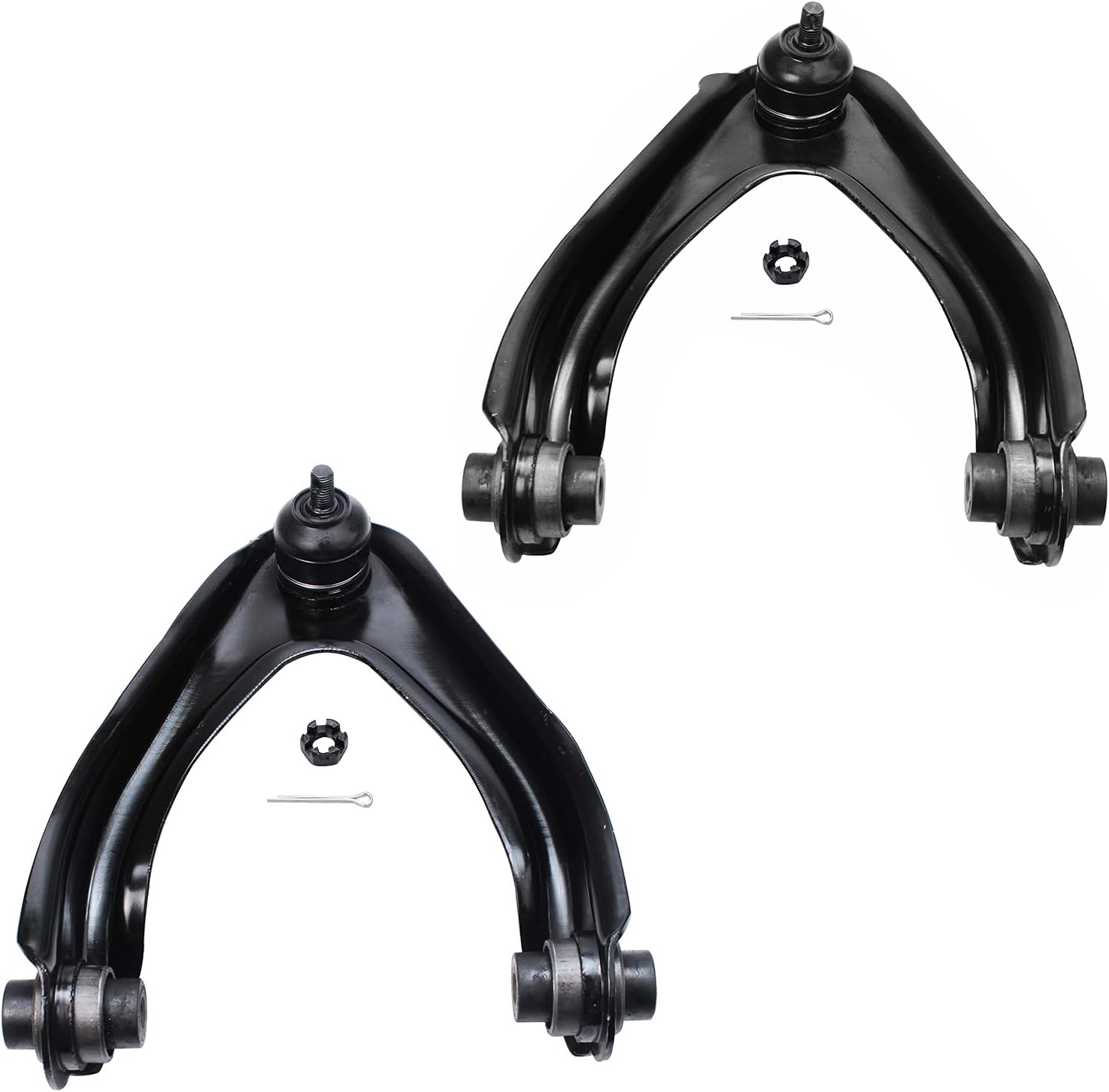
5. Detroit Axle Front Upper Control Arms with Ball Joints for 1997–2001 Honda CR-V (pair)
| Fit Type | Vehicle Specific Fit |
|---|---|
| Auto Part Position | Front Upper |
| Unit Count | 2.0 Count |
These Detroit Axle front upper control arms are a direct-fit replacement for 1997–2001 Honda CR-Vs and come as a pair with ball joints already installed. They are intended for routine suspension refreshes when worn bushings or failing ball joints cause looseness, uneven tire wear, or poor steering response. Built from a premium alloy with enhanced structural strength and a black corrosion-resistant finish, the assemblies aim to match factory fit and function while resisting wear from road exposure. Preinstalled ball joints simplify installation and reduce press-fit work, so a competent DIYer or a neighborhood shop can swap them with common hand tools and a torque wrench. Review feedback notes solid fit and improved front-end tightness after installation, though there are occasional reports of packaging damage or tight joints that require persuasion during assembly. These parts are focused on restoring reliable steering geometry and suspension stability rather than performance tuning, making them a practical choice for returning an aging CR-V to dependable, factory-like handling.
Best for: Buyers who prioritize restoring dependable, factory-quality steering and suspension on a 1997–2001 Honda CR-V and want a straightforward replacement that minimizes installation complexity.
Less Ideal for: Not a good choice for drivers seeking performance upgrades or altered suspension geometry; tuning or heavy-duty off-road use calls for purpose-built performance components.
- Direct-fit, vehicle-specific design for 1997–2001 Honda CR-V simplifies installation
- Preinstalled ball joints eliminate pressing operations and speed up replacement
- Premium alloy construction and reinforced structure for durability and corrosion resistance
- Some customers reported damage to packaging or a compromised ball joint on arrival indicating occasional quality control issues
Verdict: If you need a reliable, direct-fit replacement to restore factory steering feel on a 1997–2001 Honda CR-V, this pair with preinstalled ball joints is a practical and straightforward choice.
6. Detroit Axle 12-piece Front Suspension Kit for 1997–2001 Honda CR-V

| Fitment | 1997–2001 Honda CR-V |
|---|---|
| Kit contents | 2 upper control arms w/ ball joints, 2 lower ball joints, 4 tie rod ends, 4 sway bar end links |
| Manufacturer | Detroit Axle |
| Manufacturer part number | 12CS3200086 |
| Warranty | 10-Year Warranty |
This Detroit Axle 12-piece front suspension kit bundles the parts you need to refresh the front end on a 1997–2001 Honda CR-V. It replaces both front upper control arms with integrated ball joints, the lower ball joints, inner and outer tie rod ends, and four sway bar end links so you can address common wear items in one job. The components are aftermarket, manufactured to meet typical replacement standards, and the control arms are offered as steel replacements intended to withstand everyday driving. Installation is a hands-on repair that often requires a press and front-end service tools and an alignment afterward. Buyers report good fitment when parts are matched to the vehicle and note the kit is a budget-friendly way to replace multiple suspension parts at once. Some users mention variability in long-term durability and the need to grease fittings where provided, so expect to monitor wear and be ready to replace individual items later if you drive aggressively or encounter heavy corrosion. This kit is best used as a full front-end refresh to restore steering feel and remove play before alignment.
Best for: Buyers who need a single, budget-conscious solution to replace worn front suspension parts on a 1997–2001 Honda CR-V and who prioritize getting the car back to safe, predictable steering over premium name-brand components.
Less Ideal for: Drivers seeking long-term, heavy-duty components for off-road or high-mileage use or those who prefer to replace individual suspension items with top-tier name-brand parts should consider alternatives.
- Includes all major front suspension wear parts needed for a full refresh on the specified CR-V model years
- Control arms include integrated ball joints so fewer separate parts to source during replacement
- Good fitment reports for the 1997–2001 Honda CR-V when compared to original parts
- Cost-effective way to replace multiple components in one purchase
- Aftermarket build quality may vary so some components can wear sooner than premium brands
- Some parts require greasing and periodic maintenance rather than being sealed for life
- Installation requires specialized tools and an alignment after fitting
Verdict: A practical, budget-friendly full front suspension kit for 1997–2001 Honda CR-V owners who want to replace multiple worn components in one go and restore steering feel.
7. Detroit Axle Front 12‑Piece Suspension Kit for 1997–2001 Honda CR‑V
| Fitment | 1997–2001 Honda CR‑V |
|---|---|
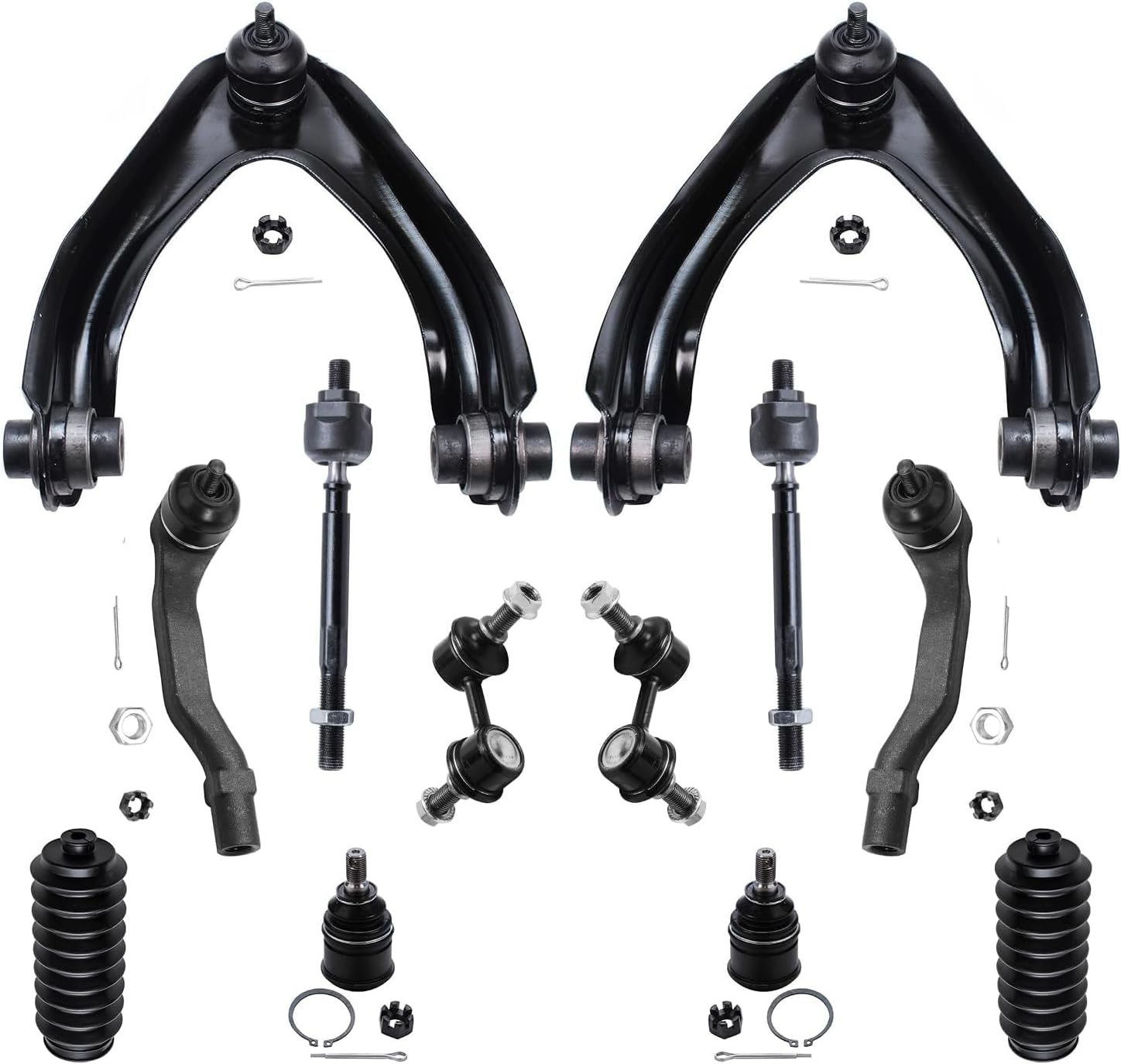
| Kit contents | 2 upper control arms w/ball joints, 2 lower ball joints, 2 sway bar end links, 2 inner tie rod ends, 2 outer tie rod ends, 2 tie rod boots |
| Position | Front |
| Manufacturer | Detroit Axle |
| Warranty | 10-Year Warranty |
This Detroit Axle front 12‑piece suspension kit supplies the main front-end wear items you need to refresh a 1997–2001 Honda CR‑V. The kit includes upper control arms with ball joints, lower ball joints, inner and outer tie rod ends, sway bar end links, and tie‑rod boots so you can replace multiple components at once rather than sourcing parts individually. Detroit Axle states the control arms are premium alloy with a high‑strength structure and corrosion resistance, which should hold up on everyday roads and restore firmer steering feel. Typical use is a full front suspension refresh during a DIY job or a shop repair; several reviews report direct-fit installation and good fitment when matched to the specified model years. Downsides to note are that some buyers report occasional missing hardware and mixed quality on small components like grease fittings or sway link studs, so inspect the box and keep original fasteners handy. For a risk‑averse buyer, this kit offers a factory-style, bundled replacement that reduces ordering complexity but you should verify all pieces on arrival before installation.
Best for: Buyers who want a single, factory-style front suspension kit to replace all common wear items on a 1997–2001 Honda CR‑V and prefer bundled convenience over sourcing individual parts.
Less Ideal for: Owners who expect premium OEM-brand components for high-mileage or heavy-duty use should consider buying individual name-brand parts or upgrading specific items instead.
- Complete kit covers upper/lower ball joints, inner and outer tie rods, sway bar end links, and boots so you can do a full front-end refresh in one purchase.
- Designed as direct-fit replacements for 1997–2001 Honda CR‑V to simplify installation and reduce fitment guesswork.
- Control arms are made from premium alloy and designed for enhanced structural strength and corrosion resistance.
- Includes prefilled lower ball joints and some new fasteners which can speed up a DIY repair or shop install.
- Some customers reported missing small hardware or incorrect quantities so you may need to reuse or buy a few fasteners and clamps.
- A few reviews describe inconsistent quality on small parts such as grease fittings and sway link components, requiring inspection and possible replacement.
Verdict: If you want a straightforward, factory-style full front suspension replacement for a 1997–2001 Honda CR‑V, this all-in-one Detroit Axle kit makes the job easy and reduces fitment uncertainty.
Choosing the Right 1997-2001 Honda CR-V Control Arm: Key Factors to Consider
Fitment and Mounting Points
Exact fitment to the 1997-2001 CR-V is essential because the vehicle's suspension geometry is specific to that generation. A control arm that matches OEM mounting hole spacing, bushing diameters, and ball joint taper ensures the arm installs without bending, drilling, or modifying other suspension components.
Incorrect fitment can change caster and camber settings, leading to persistent alignment issues and uneven tire wear. When shopping, confirm the part references the 1997-2001 CR-V year range and matches the vehicle's factory mounting orientation to avoid installation headaches.
Bushing Type and Hardness
Bushings control how much compliance the control arm allows. Softer rubber bushings absorb road shock and isolate vibration, improving ride comfort, while harder polyurethane bushings increase steering precision but can transmit more road noise and vibration.
For the 1997-2001 CR-V, consider driving style: daily street use often benefits from higher-quality rubber or dual-durometer bushings, while more spirited drivers may prefer firmer compounds. Check bushing bonding quality and whether the bushing is replaceable, since bushing wear is a common failure mode on these vehicles.
Ball Joint Design and Serviceability
Many control arms incorporate a ball joint that is either pressed in or removable. A well-designed ball joint maintains steering responsiveness and resists play that leads to wandering or sudden bump steer. For the 1997-2001 CR-V, look for ball joints with sealed boots and robust stud tapers to reduce failure risk.
Serviceable designs that allow ball joint replacement without replacing the entire arm can save money over time. Also consider whether the ball joint is greasable or sealed, balancing maintenance needs against longevity and contamination resistance.
Material, Construction, and Corrosion Protection
Control arms endure road debris, moisture, and salt, so material choice and protective finishes matter. Stamped steel arms are common and durable when properly welded and treated, while cast or forged components can offer higher strength for the same weight.
Look for arms with welded reinforcements at stress points and factory-applied corrosion protection such as e-coating or powder coat. Poor finish or thin plating can lead to premature rust and weakened structure, particularly on older CR-Vs exposed to winter roads.
Included Hardware and Ease of Installation
A control arm that ships with correct mounting bolts, nuts, and any required sleeves simplifies installation and reduces ambiguity about torque specs and bushing orientation. For owners planning a DIY install, clear instructions and included hardware minimize trips to the parts store and lower the chance of improper assembly.
Check whether the arm requires a press for bushings or ball joints and whether replacement sleeves are supplied. Items that reduce the need for specialized tools are valuable for the typical CR-V owner doing weekend maintenance.
Impact on Alignment and Tire Wear
Replacing a control arm can shift suspension geometry enough to require a professional alignment. The quality of the arm and the precision of its mounting affect camber and toe settings; a hand-built or poorly jigsawed arm may introduce misalignments.
Choose a control arm that maintains factory geometry and tolerances to avoid persistent alignment issues and accelerated tire wear. Also consider whether the design allows for minor alignment adjustments or requires additional shims or eccentric bolts to achieve proper settings.
Symptoms That Indicate a Worn Control Arm
Recognizing early signs of control arm failure helps you avoid secondary damage to tires, ball joints, and alignment. Common symptoms on a 1997-2001 CR-V include clunking or knocking noises over bumps, excessive vibration through the steering wheel, or a feeling that the front end wanders on the highway.
You may also notice uneven tire wear concentrated on the inner or outer edges, or visible play when the front wheel is rocked back and forth with the vehicle safely lifted. Identifying these symptoms early lets you plan a control arm replacement before additional suspension components become compromised.
- Clunking noise during acceleration, braking, or over bumps
- Vibration in the steering wheel at low speeds
- Uneven or rapid tire wear on one edge
- Loose or imprecise steering feel
- Visible play in the ball joint or bushings when inspected
Preparing for Control Arm Installation on a CR-V
Preparation reduces time and frustration during a control arm replacement. Start by securing the vehicle on level ground and supporting it with quality jack stands under the frame. Remove the wheel and inspect surrounding components such as sway bar links and tie-rod ends to determine if those should be serviced at the same time.
Document bolt locations and take photos if needed to ensure correct reassembly. Clean mounting surfaces and apply penetrating lubricant to corroded fasteners before attempting removal. If you plan to reuse any hardware, inspect it for thread or head damage and replace suspect items.
- Gather tools: torque wrench, breaker bar, ball joint separator, sockets, and pry bars
- Have replacement hardware or anti-seize ready
- Plan for a post-install alignment
Alignment Considerations After Replacement
Any front control arm work on the 1997-2001 CR-V should be followed by a full alignment. Even with exact-fit arms, slight differences in bushing preload or ball joint seating can alter camber and toe. A professional alignment restores handling, reduces tire wear, and ensures the steering wheel tracks straight.
When scheduling alignment, note whether the replacement arm allows for camber or caster adjustment. Some aftermarket arms maintain factory geometry without added adjustments, while others may require minor tweaks. If you accept a used or remanufactured arm, expect to budget for alignment as part of the service.
- Verify camber and toe are within factory specifications
- Bring the vehicle on a full tank or with normal ride height for accurate results
- Confirm steering wheel center and road test after alignment
DIY Vs Professional Replacement
A competent DIYer with the right tools can replace a CR-V front control arm and save labor costs. Key skills include safely lifting and supporting the vehicle, separating the ball joint without damaging the boot, and torquing mounting bolts to spec. If bushings or ball joints require pressing, a hydraulic press or specialized tools will be needed.
Professional replacement is advisable if you lack tools, workspace, or experience with front suspension work. A shop can also perform the alignment and identify related issues like worn sway bar links or tie-rod ends, which often accompany control arm wear on older CR-Vs.
- DIY is feasible with correct tools and torque specs
- Professional work reduces risk of alignment errors or improper torquing
- Factor in the need for an alignment regardless of who does the install
Maintaining New Control Arms and Related Components
After installation, maintaining the control arm helps maximize service life. Periodically inspect bushings and ball joint boots for cracking, split seals, or grease leakage. Clean off road salt and debris and touch up any areas where protective coating has been compromised.
For greasable ball joints, follow a maintenance schedule to add grease and flush contaminants. Also monitor adjacent suspension pieces like sway bar links, shocks, and tie rods because their condition influences how quickly a control arm may wear.
- Inspect boots and bushings every oil change interval
- Keep mounting hardware torque-checked after initial 50 to 100 miles
- Address alignment issues promptly to avoid uneven wear
Still looking for the perfect fit?
Select your Honda CR-V configuration to see the most relevant Control Arms recommendations
How We Chose the Best 1997-2001 Honda CR-V Control Arm
We evaluated control arms for the 1997-2001 Honda CR-V using criteria that matter to long-term owners and independent mechanics. Key factors included exact fitment to the 1997-2001 CR-V suspension geometry, the type and hardness of bushings, and the design and serviceability of integrated ball joints. We also considered corrosion protection and finish, since these vehicles often face varied climates and road conditions, plus the quality of mounting hardware and included replacement bushings or bolts.Our filters excluded units that required extensive suspension modification, did not match OEM mounting points, or lacked clear part-number traceability for the 1997-2001 CR-V. We prioritized control arms that balance durability with ride comfort and that make alignment straightforward after installation. Finally, we looked for straightforward return and warranty policies and clear installation instructions as signals of manufacturer confidence.
Our full evaluation process is outlined in our review methodology.
FAQ
How can I tell if a control arm is bad on my 1997-2001 CR-V?
Common indicators include clunking noises over bumps, excessive steering vibration, and uneven tire wear. With the vehicle lifted, check for play by rocking the wheel and visually inspecting the bushing and ball joint for cracks or looseness.
Can I replace just the bushing instead of the entire control arm?
In some cases you can press out and replace bushings, but the feasibility depends on the control arm design. Serviceable arms that accept replacement bushings can save cost, while others are designed as sealed assemblies intended to be replaced whole.
Do I need an alignment after installing a new control arm?
Yes. Replacing a front control arm usually alters suspension geometry enough to require a full alignment to correct camber and toe and to prevent premature tire wear.
How long should a replacement control arm last on a CR-V?
Longevity depends on materials, bushing type, driving conditions, and maintenance. Under normal driving conditions with proper corrosion protection and quality bushings, a control arm can last many years, but exposure to road salt and heavy use will shorten service life.
Are greasable ball joints better than sealed ones for this vehicle?
Greasable ball joints allow periodic maintenance that can extend life if they are serviced regularly. Sealed joints require no routine greasing but will need replacement when the boot fails. Choice depends on your maintenance habits and exposure to contaminants.
What tools are essential for replacing a front control arm on the CR-V?
Essential tools include a torque wrench, breaker bar, appropriate socket set, ball joint separator or pickle fork, jack stands, and a pry bar. If bushings or ball joints must be pressed, a hydraulic press or removal tool will also be required.
Final Verdict
When replacing a control arm on a 1997-2001 Honda CR-V, prioritize exact fitment, high-quality bushings, and a robust ball joint design to preserve steering accuracy and minimize future maintenance. Balance the desire for firmer handling against increased noise and vibration when selecting bushing materials.Plan for a professional alignment after installation and inspect surrounding suspension components while the vehicle is lifted. Focusing on these tradeoffs will help you choose a replacement that restores ride quality and extends the service life of the front suspension.
Explore More:
- Check out all Honda CR-V parts & accessories
- Explore Control Arms Maintenance & Repair Guides
- Explore Suspension & Steering
- Browse all Auto Parts
