

Note: This article contains affiliate links. If you click on these links and make a purchase, I may earn a small commission at no extra cost to you. This helps support my research and content. Read my full affiliate disclosure here.
If your 2009-2013 Subaru Forester is showing a check engine light, reduced power, or failing emissions testing, swapping the catalytic converter can often fix the issue. Choosing the right 2009-2013 Subaru Forester catalytic converter matters because fit, emissions efficiency, and durability affect drivability and legal compliance.This guide shortlists seven top options suited to the 2009-2013 Forester and explains the evaluation criteria used to rank them. We focus on fitment, conversion efficiency, and long-term reliability so you can pick a replacement that restores performance and meets emissions expectations. Read on for practical guidance before you select a unit or schedule installation.
Looking for other parts? See all Subaru Forester parts & accessories.
Top Picks at a Glance


1. PHILTOP High-Flow Catalytic Converter for Subaru 2.5L (Rear)

| Position | Rear |
|---|---|
| Compatible engine | 2.5L Subaru models |
| Manufacturer | PHILTOP |
| EPA status | EPA compliant |
This PHILTOP catalytic converter is a direct-fit, rear replacement for select Subaru 2.5L models and is built around a high-flow ceramic honeycomb substrate to reduce backpressure and restore emissions control. It is typically used when a clogged, damaged, or stolen factory converter needs replacement or when a failed emissions test requires a compliant unit. Notable features include a stainless steel aluminized body for corrosion resistance, a double-layer high-temperature ceramic carrier for increased flow and surface area, and included OE-style gaskets and hardware for bolt-on installation. In practice the high-flow design can improve throttle response and help the engine run with lower exhaust restriction while still being EPA-compliant for federal states. Installation is intended as plug-and-play and can usually be completed in a few hours without cutting or welding. Limitations are that EPA-compliant converters are not legal for sale or use in states with stricter rules like California and may require verifying fitment against your vehicle VIN prior to purchase.
Best for: Buyers who want a reliable, direct-replacement catalytic converter that restores emissions compliance and improves exhaust flow without modifying the exhaust system.
Less Ideal for: Drivers in states with stricter aftermarket catalytic converter regulations or anyone who needs a state-specific certified converter should look for a parts source approved for that jurisdiction.
- High-flow ceramic substrate reduces backpressure and can improve engine breathing.
- Stainless aluminized steel body resists rust for longer service life.
- Includes OE-style gaskets and hardware for bolt-on installation.
- EPA-compliant for federal emissions standards where allowed.
- Not legal for sale or use in states with stricter aftermarket converter rules such as California.
Verdict: Choose this PHILTOP rear high-flow converter if you need a bolt-on, EPA-compliant replacement that restores emissions function while improving exhaust flow on compatible Subaru 2.5L models.
2. Walker Ultra 55585 Direct-Fit Catalytic Converter

| Brand | Walker |
|---|---|
| Model | Catalytic Converter |
| Manufacturer Part Number | 55585 |
| Item model number | 55585 |
The Walker Ultra 55585 is a direct-fit catalytic converter built for straightforward replacement on compatible Subaru models. It installs like a factory replacement using OE-style hangers, flanges, brackets, and heat shields so you can avoid welding or fabrication during swap-out. The unit is engineered to meet EPA requirements for OBDII vehicles and uses a high-technology washcoat and precious metal load to reduce tailpipe emissions to match the intended application. Its stainless-steel construction and thick flanges and hangers improve durability under normal driving conditions and road exposure. In practice this is a solid choice for a technician or DIYer who needs a compliant, plug-and-play converter that restores emissions control without modifying the exhaust layout. Limitations are typical for replacement converters: it is specific to certain model years and engine configurations so confirm fitment, and it does not target increased flow or performance gains beyond restoring factory emissions function.
Best for: Buyers who prioritize returning a Forester to compliant, factory-standard emissions performance with a straightforward bolt-on replacement and minimal garage time.
Less Ideal for: Drivers seeking a high-flow or performance-focused converter for power gains or motorsport use should look at performance-specific units instead.
- Direct-fit design with OE-style hangers and flanges for bolt-on installation
- Engineered to meet EPA OBDII emissions standards for compliant operation
- Stainless-steel body and reinforced flanges/hangers for long-term durability
- Factory-style heat shields and washcoat to maintain undercarriage protection and emissions performance
- Not designed to increase exhaust flow or horsepower; intended for emissions restoration only
Verdict: Choose this Walker Ultra if you want a rugged, EPA-compliant direct-fit converter that restores factory emissions performance with minimal installation hassle.
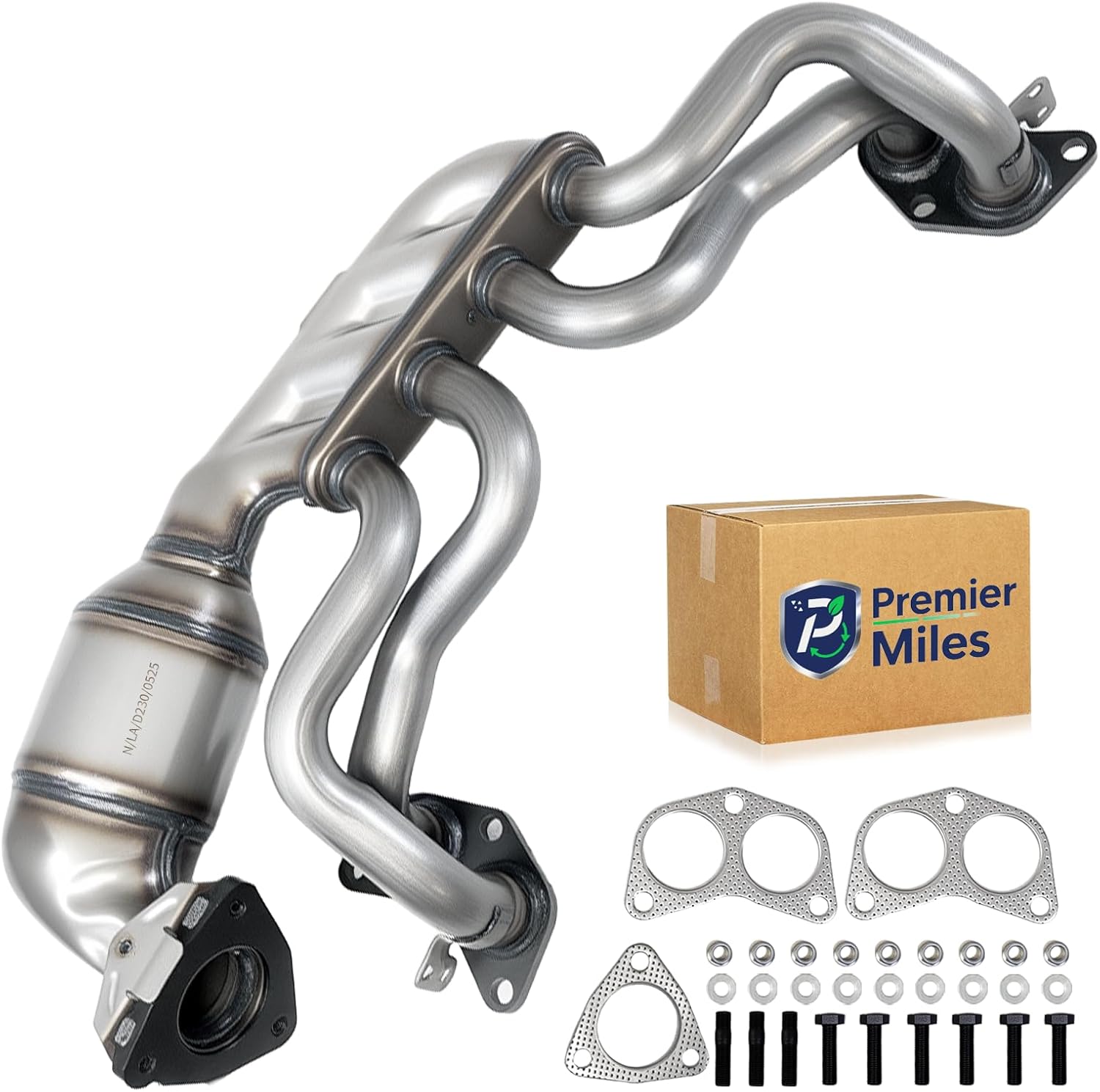
3. PREMIER MILES Catalytic Converter for Subaru 2.5L/2.0L (2011–2016 Forester, 2012–2016 Impreza, 2013–2014 Outback)
| Compatible engines | 2.5L and 2.0L |
|---|---|
| EPA compliance | Yes |
| Substrate | 400-cell ceramic |
| Warranty | 5-year structural; 2.5-year/25,000-mile emissions performance |
This PREMIER MILES catalytic converter is built as a direct replacement for select Subaru 2.5L and 2.0L applications and is intended to restore proper emissions control and exhaust flow after a failed unit. It uses a 400-cell ceramic substrate and precious-metal catalyst to balance filtration and flow, which helps reduce backpressure and can prevent the fuel-economy and drivability issues that occur with clogged converters. The unit is EPA-compliant and reportedly passed the 25,000-mile road test, so it is suitable where federal emissions compliance is required but not for CARB-regulated areas. Fitment is tailored to the listed model years for a straightforward bolt-in swap for most installations, though professional installation is recommended because welding or exhaust work may be needed. Premier Miles backs the part with a multi-year structural and emissions performance warranty, which adds reassurance for long-term use. Buyers should plan for shop labor and verify exact submodel fit before purchase since this is not CARB compliant and only covers the stated vehicle years and engines.
Best for: Buyers who want a practical, factory-style replacement to restore emissions compliance and normal exhaust performance on covered Subaru 2.5L or 2.0L models without looking for aftermarket performance gains.
Less Ideal for: Anyone who needs a California-compliant converter or is seeking a high-flow performance upgrade for increased horsepower should look elsewhere.
- Direct-fit design for the specified Subaru 2.5L and 2.0L model years simplifies replacement
- 400-cell ceramic substrate balances exhaust flow and emissions control
- EPA-compliant and tested to the 25,000-mile long-term requirement
- Includes multi-year structural and emissions performance warranty
- Not CARB compliant so unusable in California and other CARB jurisdictions
Verdict: A practical, EPA-compliant direct-fit replacement that restores emissions control and exhaust flow for the listed Subaru 2.5L and 2.0L models.
4. Auto Shack Rear Catalytic Converter for Subaru Forester 2009-2010, AWD H4 2.5L

| Fitment | Rear converter for Subaru Forester 2009-2010 (AWD H4 2.5L) and listed Subaru models |
|---|---|
| Exterior | Stainless Steel and Ceramic |
| Includes | 1 Rear catalytic converter |
| Manufacturer | Auto Shack |
This Auto Shack rear catalytic converter is a direct-fit replacement for certain Subaru AWD H4 2.5L models and is intended to restore exhaust flow and emissions performance. It installs in place of the factory rear converter to help reduce harmful exhaust gases and can smooth engine operation that suffers from a clogged or failing converter. The unit uses stainless steel and ceramic components and ships as a single rear converter; mounting hardware is not included so plan for gaskets or bolts if your original fasteners are corroded. It is best installed by a professional because fitment must be verified and some welding or hardware transfer may be needed. Note that this converter is not legal for sale or use in California, Colorado, New York, or Maine, so it is only appropriate where local emissions rules allow aftermarket replacement. For budget-focused buyers looking to get a working replacement without paying for a dealer part, this offers a practical path back to acceptable emissions and drivability.
Best for: Buyers prioritizing a low-cost, vehicle-specific replacement to restore emissions performance and drivability on qualifying Subaru Forester models within states that allow aftermarket converters.
Less Ideal for: Drivers in states with strict emissions laws or buyers who want a fully compliant, plug-and-play OEM factory-quality part with included hardware and warranty support.
- Direct-fit design for specified Subaru 2.5L AWD rear application
- Stainless steel and ceramic construction resists corrosion and handles exhaust heat
- Restores exhaust flow and reduces harmful emissions to improve drivability
- Sold as a single complete rear converter for straightforward replacement
- Does not include installation hardware, so additional parts or fabrication may be required
- Not legal for sale or use in California, Colorado, New York, or Maine
Verdict: A cost-focused, direct-fit rear converter that restores emissions function and drivability for qualifying 2009–2010 Subaru Forester 2.5L AWD models where aftermarket converters are permitted.
5. SPEEDFusion Catalytic Converter Compatible with 2011–2016 Forester and Select Subaru 2.0/2.5L H4 (EPA Compliant)

| EPA compliance | Federal emission standards |
|---|---|
| Compatible engines | 2011–2016 Forester 2.5L H4 and select Subaru 2.0/2.5L H4 models |
| Substrate | OEM-grade 400-hole ceramic |
| Materials | 409L stainless steel shell |
This SPEEDFusion catalytic converter is a direct-fit replacement designed for 2011–2016 Forester and other select Subaru H4 models that meet federal emissions. It uses a polished stainless steel shell and an OEM-grade 400-hole ceramic substrate plated with platinum, rhodium, and palladium to improve conversion efficiency and help keep the check engine light off for PO420/PO430 codes. Installation is straightforward for a professional shop or a confident DIYer because it is sized to match factory connections. The unit is EPA certified for federal-compliant vehicles but is not CARB legal, so it cannot be used in states with stricter regulations. SpeedFusion backs the part with a 5-year structural warranty and a 2.5-year emissions performance warranty, which adds peace of mind for long-term use. Buyers should plan to have it installed by a reputable shop to ensure proper fit and to avoid installation-related issues.
Best for: Buyers who prioritize a reliable, factory-style replacement that restores emissions performance and reduces the chance of emission-related fault codes while keeping long-term durability in mind.
Less Ideal for: Drivers in states that require CARB-compliant parts or those seeking aftermarket performance tuning that increases exhaust flow beyond factory specifications.
- Direct-fit design that matches factory connections for straightforward installation
- Constructed from 409L stainless steel for corrosion resistance in typical driving conditions
- OEM-grade 400-hole ceramic substrate with platinum, rhodium, and palladium for improved catalytic conversion
- EPA certified for federal emission standards and designed to prevent common PO420/PO430 fault codes
- Includes a 5-year structural warranty and a 2.5-year/25,000-mile emissions performance warranty
- Not CARB-compliant and therefore illegal for use in states with California-equivalent emissions rules
Verdict: A durable, direct-fit EPA-approved replacement that restores emissions control and reliability for federal-compliant Subaru Forester H4 models.
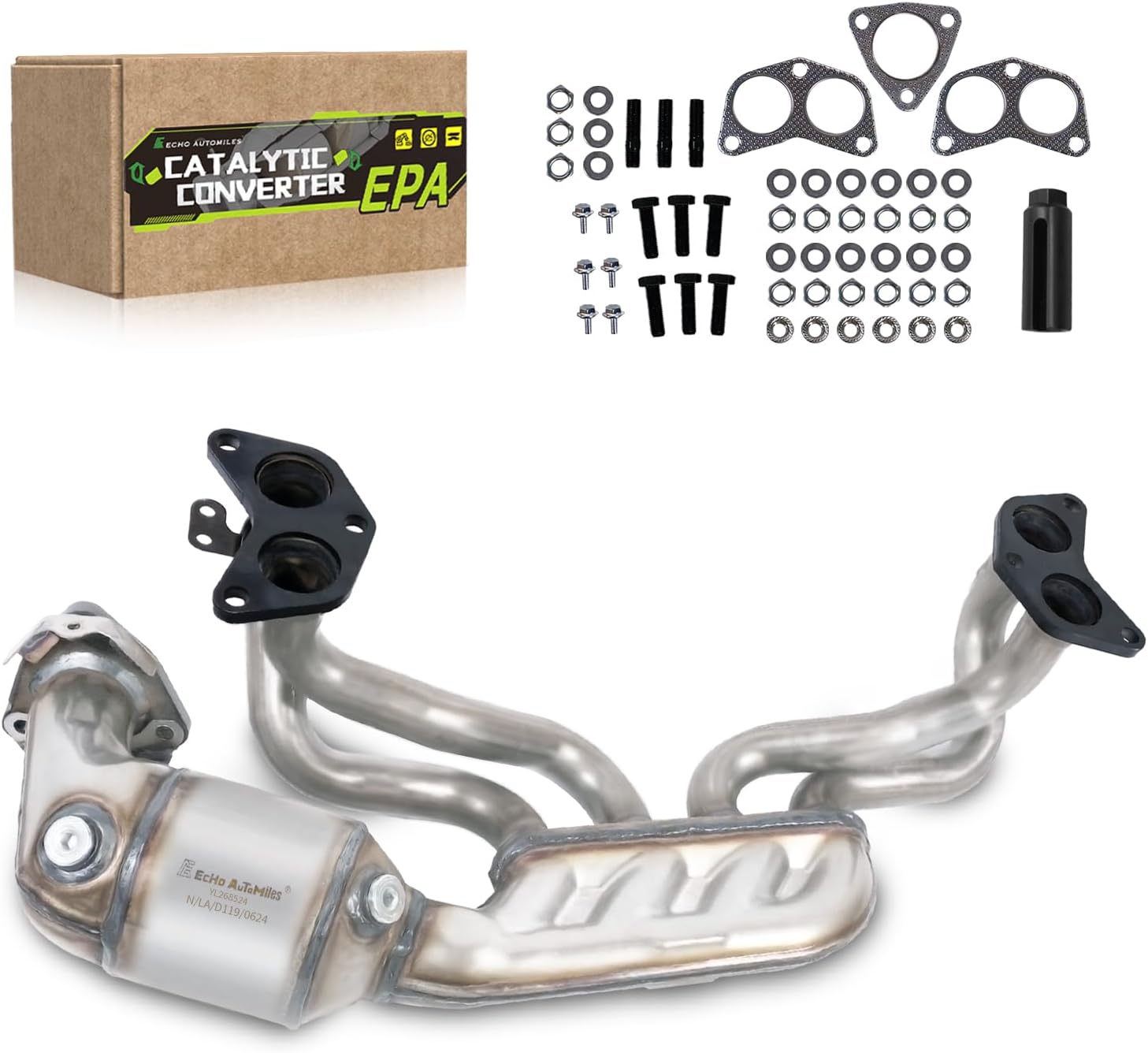
6. ECHO AUTOMILES Catalytic Converter Compatible with Subaru Forester 2011-2016 2.5L (EPA Compliant)
| Manufacturer | ECHO AUTOMILES |
|---|---|
| Model | For Forester 2011-2016 |
| Exterior | Polished |
| Manufacturer Part Number | YL268524 |
This ECHO AUTOMILES catalytic converter is a direct-replacement unit designed to restore emissions control and exhaust flow on compatible Subaru 2.5L models. It uses a 400-cell honeycomb substrate intended to match factory flow characteristics, which helps maintain engine power and can reduce fuel consumption versus a clogged OEM unit. The converter ships with the gaskets and hardware needed for installation, so it is typically fitted in a backyard or shop by a mechanic during exhaust work. Notable practical benefits are the high-temperature durability of the substrate and the inclusion of installation hardware, plus a 2.5-year or 25,000-mile warranty for buyer confidence. Important limitations are regulatory: it is not eligible for sale or installation in California or Colorado and has additional state restrictions, so it is only appropriate where local rules permit aftermarket replacements. Buyers should also confirm vehicle fitment for the 2011 to 2016 Forester and related Subaru models before ordering.
Best for: Buyers who want a factory-style replacement that restores emissions function and exhaust flow and who prioritize products backed by visible reviews and a limited warranty.
Less Ideal for: Drivers in states with strict aftermarket emissions rules or anyone needing a converter certified for California-specific emissions standards should look for a compliant alternative.
- 400-cell honeycomb substrate designed to preserve exhaust flow and engine power
- Includes gaskets and hardware for a complete replacement installation
- EPA-compliant design and high-temperature structural durability
- Comes with a 2.5-year or 25,000-mile warranty for added purchase assurance
- Not eligible for sale or installation in California or Colorado and has other state restrictions
Verdict: A robust, direct-fit replacement that restores emissions control and exhaust flow for compatible Subaru 2.5L models while offering installation hardware and a mid-length warranty.
7. SPEEDFusion 2" Universal High-Flow Catalytic Converter with O2 Port (Bottom)

| Inlet/Outlet Diameter | 2 inches |
|---|---|
| O2 Sensor Port | Bottom positioning |
| Certification | EPA compliant (federal) |
| Material | Stainless steel shell with ceramic substrate |
This SPEEDFusion universal catalytic converter is a 2-inch inlet/outlet, high-flow unit with a bottom-position oxygen sensor port intended as a replacement piece for compatible exhaust systems. It is built with a stainless-steel shell and an OEM-grade ceramic substrate plated with platinum, rhodium, and palladium to boost catalytic conversion and help keep the malfunction indicator light from triggering. Typical installation is a direct-fit weld or slip-in join to a 2-inch exhaust pipe and it is best fitted by a professional shop to ensure correct alignment and sensor placement. The converter is EPA compliant for federal emissions but not CARB-approved, so it is only appropriate where federal rules apply. Practical benefits include improved exhaust flow compared with restrictive cores and a design meant to resist core separation under normal driving. The main limitations are its universal 2-inch sizing, which may require modification or adapters for some Forester exhausts, and the lack of California emissions approval for vehicles registered there.
Best for: A Forester owner seeking a reliable, higher-flow replacement catalytic converter that prioritizes keeping check-engine lights off and meets federal emissions standards while preferring a professional installation.
Less Ideal for: Owners in CARB-regulated states or those who need a guaranteed direct factory-fit part specific to their 2009–2013 Forester without any exhaust modifications should look elsewhere.
- High-flow ceramic substrate with precious-metal coating improves catalytic conversion efficiency
- Stainless-steel shell and anti-core-detachment welding for durability in typical driving conditions
- Built-in O2 sensor port in bottom position simplifies sensor relocation during installation
- EPA compliant for federal emission standards
- Universal 2-inch sizing may need adapters or modification to fit some exhaust systems
- Not CARB-approved and therefore illegal for use in states with CARB requirements
Verdict: Choose this unit if you want a durable, high-flow 2-inch catalytic converter that meets federal emissions and helps prevent MIL codes when professionally installed on a compatible Forester exhaust.
Choosing the Right 2009-2013 Subaru Forester Catalytic Converter: Key Factors to Consider
Fitment and Exhaust Geometry
Accurate fitment is essential for the 2009-2013 Subaru Forester because exhaust flange locations and pipe diameters vary across model years and engine options. A converter designed or listed specifically for this year range minimizes the need for cutting, welding, or additional adapters, reducing installation time and potential leak points.
Poor fitment can create stress on exhaust joints, introduce leaks that trigger the check engine light, or alter backpressure in ways that harm drivability. When assessing fitment, check flange type, inlet and outlet diameters, and whether the unit mounts cleanly to existing hangers or requires new hardware.
Emissions Conversion Efficiency
The primary function of a catalytic converter is to reduce harmful exhaust emissions. For the Forester, prioritize units that specify high conversion rates for hydrocarbons, carbon monoxide, and nitrogen oxides. Documentation of compliance with emissions standards or laboratory conversion claims indicates the unit is likely to help the vehicle pass state emissions testing.
Higher conversion efficiency typically uses a higher cell density or a better washcoat formulation. While conversion numbers alone do not guarantee real-world performance, they are a useful proxy when combined with proper fitment and installation.
Material and Substrate Construction
Catalytic converters use substrates such as ceramic or metallic honeycombs coated with catalytic materials. Ceramic substrates are common and offer established performance, but metallic substrates can provide better thermal shock resistance and faster lightoff in some cases. The housing material and internal supports also influence longevity; thicker housings and robust welds resist road debris and corrosion.
For the Forester, consider local climate and road conditions. In areas with heavy road salt, corrosion-resistant housings and protective coatings extend service life. Evaluate whether the unit includes internal supports or reinforcement to prevent substrate breakage under vibration.
Backpressure and Engine Performance
A replacement converter should maintain backpressure characteristics compatible with the Forester's engine management strategy. Excessive backpressure can reduce power and fuel efficiency, while too little backpressure may affect scavenging and emissions control. Manufacturers that disclose pressure-drop data or design units to OEM-like flow profiles reduce the risk of harming performance.
If you routinely tow, carry heavy loads, or drive at sustained highway speeds, prioritize converters engineered to balance flow and conversion efficiency so you do not lose throttle response or fuel economy.
Durability and Warranty Support
Durability matters because the catalytic substrate and housing are exposed to extreme heat cycles and road hazards. Look for converters with reinforced housings, anti-corrosion finishes, and thermal-resistant internal mounts. Warranty length and terms provide insight into expected longevity and the manufacturer's confidence.
A solid warranty that clearly covers substrate failure and corrosion is valuable for Forester owners who plan to keep the vehicle long-term. Also verify any installation limitations in the warranty language to ensure coverage remains valid after professional fitting.
Installation Complexity and Serviceability
Some replacement converters are direct-fit units that bolt into the stock location with existing hardware, while others may require cutting and welding. Direct-fit options reduce mechanic labor time and the chance of installation errors that can cause exhaust leaks or sensor misalignment. For the 2009-2013 Forester, prioritize units advertised as bolt-on or vehicle-specific to simplify service.
Consider whether the unit includes gaskets, studs, or sensors and whether it requires sensor relocation or aftermarket adapters. Simpler installations usually cost less in labor and reduce downtime, which matters if you rely on the Forester daily.
Signs Your Forester Needs a Catalytic Converter Replacement
Several clear symptoms can indicate catalytic converter issues on a 2009-2013 Subaru Forester. A persistent check engine light with codes related to oxygen sensors or catalyst efficiency, notably single or dual sensor readings that show poor conversion, is a common signal. Reduced acceleration, sluggish throttle response, or an unusual loss of power under load may also point to a clogged or failing converter.
Other indicators include a rotten-egg sulfur smell from the exhaust, unusually hot exhaust components, or visible damage to the converter housing. Routine pre-emissions inspection failures should also prompt inspection of the converter before replacing other components.
- Check engine light with catalyst or oxygen sensor codes
- Decreased power or acceleration, especially under load
- Sulfur or rotten-egg odor from the tailpipe
- Visible external damage or overheating of the converter
Understanding Emissions Standards and Testing
Emissions testing for the 2009-2013 Forester checks that the catalytic converter reduces hydrocarbons, carbon monoxide, and NOx to acceptable levels. A properly functioning converter helps the vehicle pass these inspections and maintain compliance with local regulations. When selecting a replacement, prioritize units that provide documentation of emissions performance or compliance with relevant standards.
Keep in mind that sensor readings and the health of upstream components like oxygen sensors influence test results. If you replace the converter but leave failing sensors unaddressed, the vehicle may still fail testing.
- Converters affect hydrocarbon, CO, and NOx readings during testing
- Oxygen sensor health influences reported conversion efficiency
- Documentation of emissions performance supports compliance
Sensor Compatibility and OBD-II Considerations
The 2009-2013 Forester uses upstream and downstream oxygen sensors to monitor catalyst efficiency. When replacing the converter, ensure sensor bungs or provisions match the stock sensor locations so diagnostic monitoring remains accurate. Incorrect sensor placement or missing bungs can cause false error codes and trigger the check engine light.
Some replacement units include pre-fitted sensor bungs or come with blank ports for sensor installation. Verify whether the replacement requires sensor relocation or additional wiring, and plan for OBD-II readiness checks after installation to confirm proper operation.
- Verify sensor bung locations match the factory positions
- Plan for OBD-II checks after installation
- Avoid units that omit required sensor provisions
Installation Tips for the 2009-2013 Forester
Have a qualified technician inspect the exhaust system before replacement to confirm the converter is the root cause of symptoms. If the unit is a direct-fit, ensure all gaskets and mounting hardware are replaced to prevent leaks. For units that need welding, use a shop experienced with Subaru exhaust geometry to preserve hanger alignment and avoid stress points.
After installation, clear diagnostic codes and perform a short drive cycle to allow the vehicle's engine control unit to re-evaluate sensor readings. Recheck for leaks, abnormal noises, and that the check engine light remains off.
- Replace gaskets and mounting hardware during installation
- Use a technician familiar with Subaru exhaust layouts for welded installs
- Clear codes and complete a drive cycle to verify diagnostics
Maintaining Your Replacement Converter
Regular maintenance helps extend converter life. Keep the engine properly tuned and promptly address misfires or rich-running conditions, which can overload the catalyst. Use the correct fuel and address oil or coolant leaks that could contaminate the substrate.
Periodic inspections for external damage and corrosion, especially in winter climates with road salt, will help catch issues early. If you notice a drop in fuel economy or recurring emissions-related codes, have the exhaust and sensors tested before assuming the converter has failed.
- Address engine misfires and rich conditions promptly
- Inspect for corrosion and physical damage regularly
- Test sensors and exhaust flow if emissions codes recur
Still looking for the perfect fit?
Select your Subaru Forester configuration to see the most relevant Catalytic Converters recommendations
How We Chose the Best 2009-2013 Subaru Forester Catalytic Converter
We prioritized replacements that balance proper fitment, emissions performance, and long-term durability for the 2009-2013 Subaru Forester. Our selection criteria emphasized converters engineered to match the Forester's factory exhaust geometry or that require minimal modification, ensuring installation is straightforward for most repair shops.We evaluated conversion efficiency based on claims of emissions reduction and EPA or CARB compliance where applicable, because effective catalytic conversion directly affects exhaust emissions and test results. Durability and construction were weighed next, focusing on substrate type, housing quality, and protections against thermal shock and road corrosion. Heat management and backpressure characteristics were considered since they influence engine performance and fuel economy.We also examined warranty coverage and documented fitment support to reduce the risk of mismatch and premature failure. Exclusions: items without specific fitment information for the 2009-2013 Forester, universal-fit cores that require extensive fabrication, or listings lacking clear emissions compliance details were not considered. The result is a curated list of units that offer reliable fit, documented emissions performance, and reasonable longevity for this Forester range.
Our full evaluation process is outlined in our review methodology.
FAQ
What are common catalytic converter symptoms specific to my Forester?
Common symptoms include a check engine light with catalyst or oxygen sensor codes, reduced acceleration under load, and a sulfur-like smell from the exhaust. Some Forester owners also notice higher exhaust temperatures or a failing emissions test as early indicators.
Will replacing the catalytic converter clear my check engine light?
Replacing a failed converter often clears codes related to catalyst efficiency, but only if upstream components like oxygen sensors and ignition systems are functioning correctly. After replacement, clear codes and run the vehicle through a drive cycle to confirm the light stays off.
Can I install a replacement converter on my Forester myself?
If the replacement is a direct-fit bolt-on unit and you have solid mechanical skills, you may be able to install it yourself. However, units that require cutting or welding are best handled by a professional to ensure proper alignment and avoid exhaust leaks.
How does a clogged converter affect fuel economy on the Forester?
A clogged converter increases backpressure, which can reduce engine efficiency and result in lower fuel economy. The engine may work harder to maintain performance, especially under acceleration or when carrying loads.
What should I check before replacing the catalytic converter?
Confirm diagnostic codes indicate catalyst issues, inspect oxygen sensors and ignition components for faults, and verify there is no upstream engine problem causing contamination. Also assess physical condition and fitment requirements to choose the correct replacement.
How long should a replacement catalytic converter last on a Forester?
Lifespan varies with driving habits and conditions; a well-made unit with proper installation can last many years. Factors like engine tune, exposure to road salt, and thermal cycling influence longevity, so maintenance and prompt repairs help maximize service life.
Final Verdict
For the 2009-2013 Subaru Forester, prioritize a catalytic converter that matches the vehicle's exhaust geometry and provides documented emissions conversion. Balancing fitment, conversion efficiency, and durability reduces installation headaches and helps ensure the vehicle passes emissions checks while maintaining drivability.Weigh tradeoffs between flow and conversion when you choose a unit: higher flow can benefit performance but should not sacrifice conversion efficiency needed for emissions compliance. Focus on a direct-fit unit with proper sensor provisions and solid warranty coverage to make a confident long-term choice.
Explore More:
- Check out all Subaru Forester parts & accessories
- Explore Catalytic Converters Maintenance & Repair Guides
- Explore Exhaust & Emissions
- Browse all Auto Parts
