

Note: This article contains affiliate links. If you click on these links and make a purchase, I may earn a small commission at no extra cost to you. This helps support my research and content. Read my full affiliate disclosure here.
If you own a 2005-2009 Subaru Legacy, a failing catalytic converter can cause a drop in fuel economy, trigger the check engine light, and risk failed emissions testing. Choosing the right catalytic converter matters because fitment, substrate construction, and emissions performance all affect drivability and legal compliance.This guide covers our shortlist of top catalytic converters chosen for the 2005-2009 Legacy. We evaluated each option for fit accuracy, emissions output, durability, and ease of installation so you can quickly identify candidates that match your repair or replacement needs. Read on for the key decision points and what to expect when swapping a converter on this Legacy range.
Looking for other parts? See all Subaru Legacy parts & accessories.
Top Picks at a Glance
| Best Overall The best all-around choice for most situations | Anytek Front Catalytic Converter for 2.5L Subaru (2006–2012) |  |
| Best Quality Built to a higher standard if you want something more solid | AISIN Front Catalytic Converter (EPA Compliant) for H4 2.5L Subaru |  |
| Best Value The sweet spot between price and what you get | PREMIER MILES Catalytic Converter for 2.5L Subaru 2006–2012 Vehicles |  |
| Best Budget The cheapest option that still gets the job done reliably | KAC Rear High Flow Catalytic Converter for Subaru 2.5L (EPA Compliant) |  |
| Highest Rated A top-rated pick with lots of positive feedback | Walker Ultra 55585 Direct-Fit Catalytic Converter |  |
| Most Popular A crowd favorite that many people choose with confidence | AUTOSAVER88 Catalytic Converter Compatible with 2006-2012 Subaru Legacy/Outback 2.5L (Direct-Fit, EPA Compliant) |  |
| Best Seller A high-volume bestseller chosen again and again | SPEEDFusion 2" Universal High-Flow Catalytic Converter with O2 Port (Bottom) |  |
1. Anytek Front Catalytic Converter for 2.5L Subaru (2006–2012)

| Manufacturer | Anytek |
|---|---|
| Manufacturer Part Number | 10080110-N |
| OEM Part Number | 16564, 642803, 40859, 44620AA740, 44620AA76A, 44620AB43A, 44620AC07A, 44620AC12A |
| Position | Front |
| Special Features | 1-year warranty; not legal in CA, CO, NY, ME |
This Anytek front catalytic converter replaces the factory unit on Subaru 2.5L H4 models (Forester, Impreza, Legacy, Outback) and is intended as a direct-fit, emission-control replacement. It uses a high-flow catalyst housed in a 409L stainless steel shell and is welded for high-temperature resistance, so it addresses common goals like restoring emissions function and clearing check-engine codes while resisting corrosion. Installation is typical for a front converter and will usually involve unbolting the old unit and fitting the replacement to existing exhaust flanges; professional install is recommended if rusted hardware is present. The product claims to meet original-standard size and performance and carries EPA compliance for most states, but it is not legal for sale or use in California, Colorado, New York, or Maine. The listing includes OEM reference numbers for fit verification and a one-year warranty from the brand. Buyers should plan around state emissions restrictions and expect an outcome similar to a factory-quality replacement rather than a performance upgrade.
Best for: Buyers seeking a reliable, factory-style replacement to restore emissions function and drivability on a mid-2000s Subaru who value a straightforward fit and corrosion-resistant construction.
Less Ideal for: Drivers in states with stricter emissions rules or owners looking for a performance-oriented or high-flow aftermarket upgrade.
- Direct-fit design with OEM reference numbers for straightforward vehicle matching.
- 409L stainless steel shell and high-temperature welding for improved corrosion and heat resistance.
- High-flow catalyst aimed at restoring emissions control and clearing codes.
- EPA-compliant in permitted states so it meets federal emissions requirements where allowed.
- Not legal for sale or use in California, Colorado, New York, or Maine due to state emissions regulations.
Verdict: A practical, factory-style front catalytic converter option to restore emissions control on mid-2000s Subaru 2.5L models where EPA-compliant replacements are permitted.
2. AISIN Front Catalytic Converter (EPA Compliant) for H4 2.5L Subaru

| Position | Front |
|---|---|
| E.P.A. Compliant | Yes |
| Vehicle's Emissions Specifications | Federal Emissions |
| Body Material | Stainless Steel |
| O2 Sensor Ports | 2 |
This Aisin front catalytic converter is a factory-quality replacement for Subaru vehicles with the H4 2.5L engine, intended to restore emissions control and engine response after a failed or clogged unit. It installs in the front position and includes two O2 sensor ports, so you can reuse the factory sensors and maintain proper engine management. The part is EPA compliant for federal emissions and made from stainless steel with a ceramic substrate, which should provide corrosion resistance and consistent conversion efficiency over time. Aisin supplies installation accessories and step-by-step instructions to simplify swapping the unit, and the design aims for a sealed, leak-free fit to prevent exhaust leaks that hurt performance. Limitations to consider are that it is not legal for sale in certain restricted states and it is a direct replacement focused on emissions compliance rather than freer-flow performance, so drivers seeking maximum exhaust flow or power gains should look at performance-oriented options instead.
Best for: Drivers who want a reliable, factory-quality catalytic converter to restore emissions compliance and normal engine response on a Subaru with the H4 2.5L motor, and who prioritize durability and hassle-free installation.
Less Ideal for: Enthusiasts seeking a high-flow or performance-oriented converter for increased power or aggressive exhaust sound should consider aftermarket performance units instead.
- Direct-fit front-position replacement tailored for H4 2.5L Subaru applications
- EPA-compliant design that restores emissions control to federal standards
- Stainless steel construction with a ceramic substrate for durability and stable conversion
- Two O2 sensor ports allow reuse of factory sensors and proper engine tuning
- Includes installation accessories and instructions for a straightforward swap
- Not intended to increase exhaust flow or provide performance gains over stock
Verdict: Choose this Aisin front catalytic converter when you need a dependable, factory-quality replacement to restore emissions compliance and normal engine behavior on a Subaru H4 2.5L.
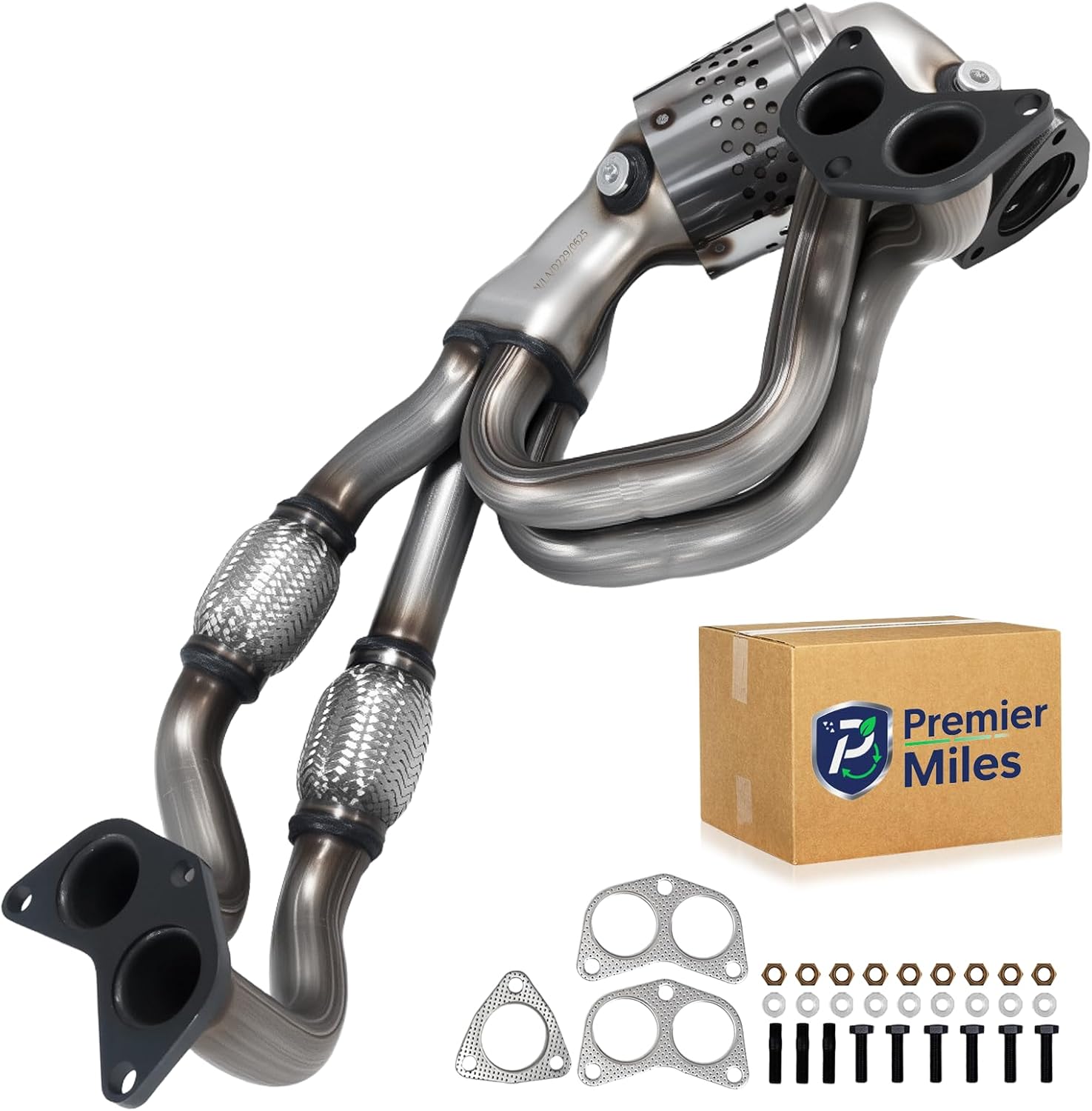
3. PREMIER MILES Catalytic Converter for 2.5L Subaru 2006–2012 Vehicles
| Compatible engines | 2.5L H4 |
|---|---|
| EPA compliance | Yes |
| Substrate | 400-cell ceramic |
| Manufacturer | PREMIER MILES |
| Model fitment years | 2006-2012 |
This Premier Miles catalytic converter is built as a vehicle-specific replacement for Subaru 2.5L applications from the mid-2000s and is intended to restore emissions control and exhaust flow. It uses a 400-cell OEM-grade ceramic substrate and precious-metal catalyst coating to balance filtration and flow, which helps reduce backpressure compared with clogged or failing units and supports normal fuel economy. The part is EPA-compliant and reportedly passed long-term durability testing, making it suitable for states that accept federal emissions parts. Fitment is aimed at models in the 2006–2012 range for Forester, Impreza, Outback and the Saab 9-2X with the 2.5L H4, so installation follows existing mounting points for a bolt-in style replacement on compatible cars. Practical benefits include restored emissions performance, improved exhaust flow, and a manufacturer structural warranty. Note that this unit is not CARB-compliant, so it is not legal for California or CARB-regulated vehicles, and buyers should confirm exact model-year fit before purchase to avoid fitment issues.
Best for: Buyers who prioritize a practical, direct-fit replacement that restores emissions function and exhaust flow on compatible mid-2000s Subaru 2.5L vehicles without modifying the exhaust system.
Less Ideal for: Do not choose this part if your vehicle requires California/CARB-compliant parts or if you need a universal or custom performance converter for modified engines.
- Vehicle-specific fitment for mid-2000s Subaru 2.5L lineup reduces installation complexity
- EPA-compliant and tested for long-term emissions performance
- 400-cell ceramic substrate designed to balance filtration and exhaust flow
- Manufacturer offers a multi-year structural and emissions performance warranty
- Not CARB-compliant so unusable in California and other CARB jurisdictions
Verdict: A practical, EPA-compliant direct-replacement catalytic converter that restores emissions and exhaust flow for compatible mid-2000s Subaru 2.5L cars.
4. KAC Rear High Flow Catalytic Converter for Subaru 2.5L (EPA Compliant)

| Position | Rear |
|---|---|
| Compatibility reference | Subaru 2.5L models (listed years) |
| Manufacturer part number | 7752EXP284LUS |
| EPA compliance | EPA-compliant |
This KAC rear high-flow catalytic converter is a direct-fit replacement for certain Subaru 2.5L models and is sold as an EPA-compliant kit that includes gaskets and mounting hardware. It is intended to resolve P0420/P0430 trouble codes, restore exhaust efficiency, and reduce abnormal noise while retaining emissions legality outside states that restrict aftermarket converters. The unit uses a stainless steel body with aluminized piping and a double-layer ceramic carrier to increase flow and surface area, which the listing says can improve power and fuel economy. Installation is plug-and-play with no cutting or drilling required for compatible vehicles, making it suitable for DIY replacement or quick shop work. Limitations include state-specific legal restrictions on sale or installation and the fact that long-term durability claims are implied but not independently verified in the listing. For buyers focused on an affordable replacement that restores emissions function and drivability, this converter presents a practical balance of features and value.
Best for: Buyers looking for an economical, ready-to-install replacement to clear emissions faults and restore drivability on an older Subaru 2.5L who prioritize keeping their car road-legal outside restricted states.
Less Ideal for: Drivers in states with stricter aftermarket catalytic converter laws or those who want a documented, tested OEM-equivalent warranty-backed unit.
- Designed to fit specific Subaru 2.5L rear applications for a direct replacement
- EPA-compliant design for passing emissions tests in most states
- Includes gaskets and hardware for plug-and-play installation
- Stainless steel and aluminized piping construction resists corrosion and promotes longevity
- Not legal for sale or installation in California and certain other states due to local regulations
Verdict: A budget-friendly, plug-and-play rear catalytic converter that restores emissions performance and drivability for affected Subaru 2.5L models while meeting federal EPA standards where permitted.
5. Walker Ultra 55585 Direct-Fit Catalytic Converter

| Brand | Walker |
|---|---|
| Model | Catalytic Converter |
| Manufacturer Part Number | 55585 |
| EPA Compliance | For OBDII vehicles (1996 and newer) |
The Walker Ultra 55585 is a direct-fit catalytic converter built to replace the factory unit on compatible Subaru Legacy and other listed models. It installs using OE-style hangers, flanges, brackets and heat shields so most technicians can bolt it in without cutting or welding. Walker specifies EPA compliance for OBDII vehicles and uses a high-technology washcoat with optimized precious metal load to restore emissions control to factory-quality levels. The stainless-steel body and thick flanges/hangers improve durability in everyday driving and road-salt environments. Use is straightforward: remove the old converter and bolt this unit in place, then confirm fit and any notes for your exact year/engine. The main limitations are that fitment is vehicle-specific so you must confirm compatibility for your exact model year and trim, and replacement converters do not change performance beyond restoring proper emissions function.
Best for: Buyers who prioritize a reliable, factory-style emissions replacement for their Subaru and want a direct-fit part that restores proper emissions control without fabrication.
Less Ideal for: Anyone seeking a performance upgrade or a universal/multi-vehicle converter should look for performance-specific or universal options instead.
- Direct-fit design with OE-style hangers and flanges for bolt-on installation
- EPA-compliant for OBDII vehicles to meet emissions regulations
- Stainless-steel construction and thick flanges for improved durability
- Factory-style heat shields where originally equipped to protect the undercarriage
- Compatibility is limited to specified Subaru model years and trims so verification is required before purchase
Verdict: Choose the Walker Ultra 55585 when you want a dependable, factory-style catalytic converter that restores emissions compliance with a direct-fit installation for the specified Subaru models.
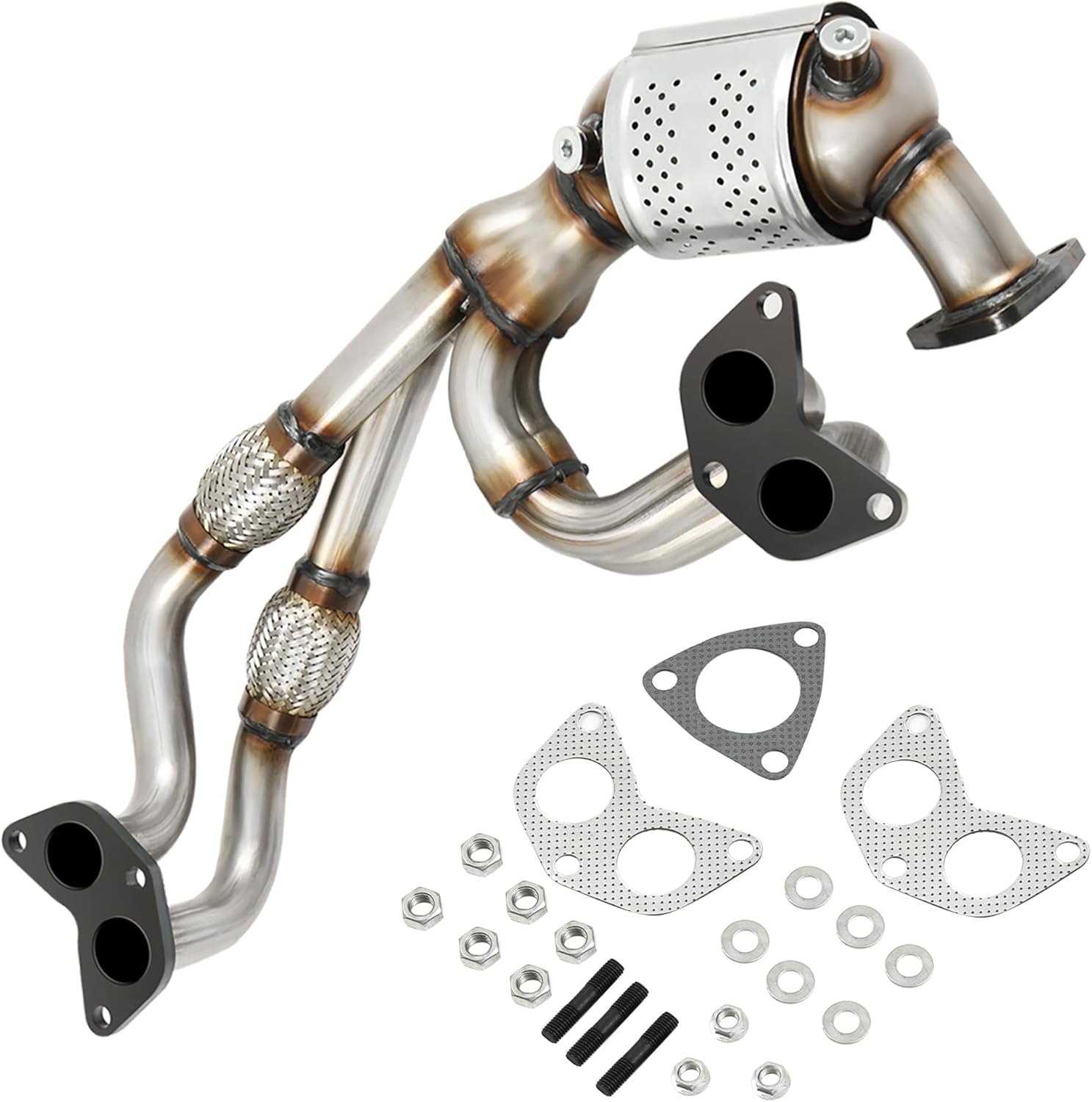
6. AUTOSAVER88 Catalytic Converter Compatible with 2006-2012 Subaru Legacy/Outback 2.5L (Direct-Fit, EPA Compliant)
| Position | Front |
|---|---|
| Manufacturer | TWG |
| Brand | AUTOSAVER88 |
| OEM Part Number | 44620AB620,44620AC07A,44620AA76A |
This AUTOSAVER88 catalytic converter is a bolt-on replacement engineered for 2.5L Subaru platforms covering the Legacy/Outback model years listed and closely follows factory fitment to simplify installation. It uses a larger honeycomb ceramic substrate and increased precious metal loading to improve conversion efficiency, while the T409 stainless steel shell resists heat and corrosion for longer service life. The unit is EPA certified for federal emissions and ships with gaskets and hardware intended to align bolt holes without modification. In practice this means fewer headaches at install and restored emissions performance compared with a damaged or clogged original. The main caveat is regional restrictions as it is not available for some states and professional installation is recommended to ensure seals and sensors are correctly handled. For drivers watching reliability and emissions compliance, this converter offers a cost-conscious path back to factory-quality operation, provided you confirm fitment and local emissions rules first.
Best for: Buyers who prioritize a reliable, factory-quality emissions fix and want social proof of effectiveness before committing, especially if restoring emissions performance on a Subaru Legacy/Outback 2.5L.
Less Ideal for: Shoppers in states with restricted sales or those who need a converter certified for state-specific emissions programs should look for alternatives approved locally.
- Direct-fit flange and included gaskets/hardware for bolt-on installation
- EPA federal certification for emissions compliance
- Larger ceramic substrate and higher precious metal loading for improved conversion efficiency
- T409 stainless steel shell offers strong heat and corrosion resistance
- Not available for sale in certain states due to regional restrictions
- Professional installation recommended, so DIY savings may be limited
Verdict: A cost-conscious, EPA-certified direct-fit replacement that restores factory-style emissions performance on the 2.5L Subaru Legacy/Outback when you want a proven, reliable fix.
7. SPEEDFusion 2" Universal High-Flow Catalytic Converter with O2 Port (Bottom)

| Inlet/Outlet Diameter | 2 inches |
|---|---|
| Material | 409L stainless steel |
| Substrate | 400-hole ceramic with Pt/Rh/Pd |
| Compliance | EPA compliant (not CARB) |
This SPEEDFusion 2-inch universal catalytic converter is a high-flow, stainless-steel replacement designed to reduce emissions and help keep the check engine light off by improving catalytic efficiency. It is intended for exhaust pipes with a 2-inch outer diameter and includes a bottom-positioned O2 sensor port for straightforward integration with systems that use that sensor location. The converter uses a 400-hole ceramic substrate coated with platinum, rhodium, and palladium to raise conversion rates and is EPA compliant for vehicles that meet federal standards. Installation is direct-fit style for a universal unit but will require welding or proper clamps to match a vehicle-specific exhaust; professional installation is recommended to ensure correct sensor placement and sealing. Note this unit is not CARB compliant and is therefore not legal for use in states with California-equivalent regulations. For a conservative buyer seeking a durable, factory-quality-feeling replacement that keeps emissions controls functioning, this is a practical option when used on compatible 2-inch exhaust systems.
Best for: Buyers who prioritize a reliable, emission-restoring replacement that minimizes check-engine codes and want a durable unit they can install professionally on a compatible 2-inch exhaust.
Less Ideal for: Do not choose this if you need a California-compliant (CARB) converter or if your vehicle uses a nonstandard sensor location or non-2-inch exhaust without planned modifications.
- High-flow design improves exhaust flow while supporting emissions control
- Stainless steel shell and anti-core-detachment welding for durability under road conditions
- Includes bottom-position O2 sensor port for systems requiring that location
- EPA compliant for vehicles meeting federal emission standards
- Uses a 400-hole ceramic substrate with precious metal coatings to boost catalytic efficiency
- Universal 2-inch sizing requires confirmation and possible modification to fit specific exhausts
Verdict: A durable, EPA-compliant high-flow universal catalytic converter best suited for conservative buyers who want a professional, emissions-restoring 2-inch replacement.
Choosing the Right 2005-2009 Subaru Legacy Catalytic Converter: Key Factors to Consider
Fitment And Mounting
Exact fitment is the single most important factor when replacing a catalytic converter on a 2005-2009 Subaru Legacy. Differences in flange shape, bolt pattern, pipe diameter, and hanger placement can turn a simple swap into a fabrication job. A converter that matches OEM mounting points reduces labor time and the risk of exhaust leaks at joints.
Verify whether the replacement provides the same inlet and outlet diameters and whether the unit includes factory-style flanges or requires separate gaskets. Units that keep the stock heat shield locations and O2 sensor bung positions avoid interference with underbody components. For owners who prefer a bolt-on repair, prioritizing direct-fit descriptors and documented Legacy compatibility will save time and ensure correct alignment.
Emissions Efficiency
Emissions efficiency determines whether the converter will bring exhaust outputs within regulatory limits and keep the vehicle from failing state inspections. The substrate material, cell density, and precious metal loading influence conversion rates for hydrocarbons, carbon monoxide, and nitrogen oxides.
Higher washcoat and precious metal loadings typically improve conversion but can increase weight and cost. For the 2005-2009 Legacy, choose a converter designed to meet or exceed federal or CARB-equivalent standards applicable to your vehicle. Look for documentation on emissions compliance and conversion efficiency rather than vague marketing claims.
O2 Sensor Compatibility
The 2005-2009 Subaru Legacy uses upstream and downstream oxygen sensors to monitor catalytic converter performance and fuel trim. Proper sensor bung placement and thread size are essential to maintain correct sensor readings. A misplaced or missing bung will cause false readings, erratic fuel delivery, and likely trigger the check engine light.
Ensure the replacement has the correct number of bungs in the factory positions and that they accept the OEM sensor threads. Some aftermarket converters include pre-welded bungs in the right locations to simplify installation. Maintaining the factory sensor geometry preserves the vehicle's ability to self-diagnose catalyst efficiency.
Durability And Materials
Catalytic converters must tolerate high exhaust temperatures and road conditions. Shell material and internal construction affect longevity and resistance to cracking or rattling. Stainless steel housings and high-quality welds resist corrosion and thermal cycling common to Subaru Legacy use, especially in regions with road salt.
Consider whether the substrate is ceramic or metallic; ceramic cores are common and provide reliable conversion, while metallic substrates can offer quicker light-off times. Heat shielding and robust mounting flanges reduce stress on the converter during engine movement, so material quality directly affects service life and noise issues.
Backpressure And Engine Performance
A catalytic converter introduces some restriction to exhaust flow, and excessive backpressure can reduce throttle response, lower power, and harm fuel economy. For the 2005-2009 Legacy, selecting a converter with balanced flow characteristics keeps exhaust scavenge and engine breathing near stock levels.
Look for units designed to match the factory flow profile for this engine. If the converter is significantly more restrictive than OEM, you may notice sluggishness or increased fuel consumption. Conversely, very high-flow cores may reduce emissions conversion efficiency, so balance is key.
Installation And Serviceability
Installation complexity affects labor time and cost. Direct-fit converters that use OE-style flanges, include gaskets or pre-mounted hardware, and have properly positioned O2 sensor bungs are easier to install without modifications. Consider whether the unit requires cutting the old pipe, reusing clamps, or welding.
Also evaluate availability of replacement parts like gaskets and whether the converter design allows future servicing if needed. Clear instructions and compatibility notes specific to the 2005-2009 Legacy can reduce shop hours. For DIY installers, accessibility of the converter location under the car and the need to remove heat shields or suspension components are practical concerns.
Understanding Catalytic Converter Fitment For Your Legacy
Not all converters labeled "universal" will work cleanly on a 2005-2009 Subaru Legacy. Fitment for this vehicle is governed by inlet/outlet diameter, flange type, and O2 sensor placement. When shopping, match the converter's physical dimensions to the factory pipe and confirm the presence of the correct number of sensor bungs.
If you plan to perform the swap yourself, inspect the existing exhaust for corrosion or damaged hangers before ordering. In some cases the flange or pipe near the old converter may be corroded and need repair, so factor that into installation planning.
- Measure inlet/outlet diameters before ordering
- Confirm flange bolt pattern and orientation
- Check for required O2 sensor bung locations
Signs Your Legacy Needs A New Converter
Several clear symptoms indicate the catalytic converter may be failing on a 2005-2009 Legacy. A persistent check engine light with drivetrain or catalyst-related codes, reduced fuel economy, sulfur or rotten-egg odor, or a rattling noise from under the vehicle all point to internal damage or substrate breakage.
Milder symptoms like occasional hesitation or higher than normal emissions readings during inspection can also indicate declining converter efficiency. Addressing these early avoids collateral damage to oxygen sensors and downstream components.
- Check engine light showing catalyst efficiency codes
- Distinct sulfur smell from exhaust
- Rattling from the converter area at idle or low speeds
Emissions Testing And Legal Considerations
If your region requires periodic emissions testing, the catalytic converter is a regulated component. Replacing a failed converter on a 2005-2009 Legacy should restore measured emissions to acceptable levels when the replacement meets applicable standards. Keep documentation of the part's emissions compliance in case you need to demonstrate repair to testing authorities.
Tampering with emissions equipment or installing non-compliant parts can lead to failed inspections and legal penalties. Choose a converter specified for the Legacy years in question and retain receipts and any supplied certification.
- Retain emissions compliance documentation
- Avoid non-compliant or heavily modified units
Preparing For Installation On A 2005-2009 Legacy
Before starting the replacement, gather the necessary hardware such as gaskets, bolts, and anti-seize for sensor threads. Raise the vehicle safely and allow the exhaust to cool. Inspect surrounding components like heat shields and hangers so you can address any rusted fasteners or damaged parts while the system is accessible.
If you plan to reuse O2 sensors, remove and inspect them first. Clean mating surfaces and check torque specifications to avoid leaks. For converters that require welding, factor in additional labor and consider a shop with experience on the Legacy's underbody layout.
- Have replacement gaskets and hardware on hand
- Inspect and, if needed, replace corroded hangers or shields
- Use proper torque and anti-seize on O2 sensor threads
How Converter Choice Affects Long-Term Ownership
A well-chosen catalytic converter reduces the chance of repeat failures and minimizes downstream repairs to oxygen sensors and exhaust components. Investing in durability and correct fitment lowers the likelihood of exhaust leaks and rattle-related complaints over the vehicle's remaining life.
Conversely, choosing a poorly matched unit can lead to recurring check engine lights and potential emissions test failures, increasing overall ownership cost. Consider the converter as an emissions system repair rather than a disposable part.
- Prioritize corrosion-resistant materials for longevity
- Correct fitment reduces the chance of exhaust leaks
DIY Considerations Versus Professional Installation
Some 2005-2009 Legacy owners with basic tools can handle a direct-fit converter swap, especially when the replacement uses OE-style flanges and pre-welded sensor bungs. Welding, cutting rusty flanges, or repairing corroded sections generally requires professional equipment and expertise.
If you are comfortable working under the car and have a torque wrench and jack stands, plan the job with proper safety measures and replacement hardware. For unfamiliar tasks or extensive corrosion, seek a shop familiar with Subaru exhaust layouts to avoid installation issues.
- Direct-fit swaps are achievable for seasoned DIYers
- Seek professional help for welding or heavy corrosion repairs
Still looking for the perfect fit?
Select your Subaru Legacy configuration to see the most relevant Catalytic Converters recommendations
How We Chose the Best 2005-2009 Subaru Legacy Catalytic Converter
Our selection process focused on attributes that matter specifically for replacing a catalytic converter on a 2005-2009 Subaru Legacy. We prioritized fitment and flange geometry to ensure direct bolt-on replacements that align with factory hangers and heat shields. Emissions performance was evaluated by looking at substrate type and washcoat loading, since those factors determine how effectively the converter reduces NOx, CO, and hydrocarbons. Durability considerations included stainless steel shell construction, weld quality, and heat-resistant internal components to handle Legacy exhaust temperatures and long-term exposure.We also weighted backpressure and flow characteristics to avoid creating excessive exhaust restriction that would hurt throttle response or fuel economy. Ease of installation was judged by whether the unit uses OE-style mounting, pre-attached gaskets or O2 sensor bungs in the correct positions, and whether any modifications are typically required. Customer-fitment feedback and common failure modes informed our exclusions: we excluded any units requiring custom fabrication, non-vehicle-specific universal cores, or those lacking proper O2 sensor accommodations. The end result is a shortlist focused on direct-fit, emissions-capable converters that suit the 2005-2009 Subaru Legacy.
Our full evaluation process is outlined in our review methodology.
FAQ
What are common catalytic converter symptoms on a 2005-2009 Subaru Legacy?
Common symptoms include a persistent check engine light with catalyst-related codes, reduced fuel economy, a sulfur or rotten-egg odor in the exhaust, and rattling noises from the converter area. Mild performance issues like hesitation can also signal declining efficiency.
Will replacing the catalytic converter turn off the check engine light?
Replacing a failed converter often clears catalyst efficiency codes after the ECU runs its readiness checks, but you may need to clear stored codes and drive the vehicle through a drive cycle. If oxygen sensors or wiring were damaged, those issues must be resolved as well.
How do I confirm the replacement will fit my 2005-2009 Legacy?
Confirm fitment by matching inlet and outlet diameters, flange bolt patterns, and the number and position of O2 sensor bungs to your vehicle. Look for listings or documentation that specifically reference 2005-2009 Subaru Legacy compatibility and direct-fit descriptions.
Can I reuse the old O2 sensors when installing a new converter?
You can often reuse functioning O2 sensors, but inspect them for contamination or damage before reinstalling. If the sensors are old or have failed, replacing them during the converter swap avoids future check engine lights and ensures accurate post-catalyst monitoring.
What should I do if my vehicle fails an emissions test after replacement?
If emissions remain high after installing a new converter, verify correct fitment, proper O2 sensor placement, and that there are no exhaust leaks. Also ensure the ECU has completed its readiness cycles. If problems persist, have a technician check for engine issues that affect exhaust composition.
Is welding required to install most replacement converters on the Legacy?
Many direct-fit replacements for the 2005-2009 Legacy are designed to bolt on, but units that are universal or have different pipe sections may require cutting and welding. Assess the replacement type beforehand and plan for shop assistance if welding is needed.
Final Verdict
When replacing a catalytic converter on a 2005-2009 Subaru Legacy, prioritize exact fitment, correct O2 sensor placement, and emissions compliance. Durable construction and balanced flow characteristics will preserve engine performance while meeting test standards.Balance longevity against installation complexity: direct-fit, emissions-capable converters reduce labor and the chance of recurring issues, while improperly matched units can lead to persistent check engine lights and failed inspections. Focus on the factors outlined above to make a confident, long-term choice for your Legacy.
Explore More:
- Check out all Subaru Legacy parts & accessories
- Explore Catalytic Converters Maintenance & Repair Guides
- Explore Exhaust & Emissions
- Browse all Auto Parts
