

Note: This article contains affiliate links. If you click on these links and make a purchase, I may earn a small commission at no extra cost to you. This helps support my research and content. Read my full affiliate disclosure here.
Choosing the right brake pads for a 2019-2026 GMC Sierra 1500 matters for safety, towing confidence, and everyday drivability. The wrong pads can increase stopping distance, cause excessive dust, or wear faster when the truck is used for heavy loads.This guide shortlists the top five brake pads suited to the Sierra 1500 across the 2019–2026 range. Each option was selected for real-world factors like material, noise control, and heat resistance. Below you will find why those factors matter, what to expect in service life, and how to pick pads that match your driving and towing needs.
Looking for other parts? See all GMC Sierra 1500 parts & accessories.
Top Picks at a Glance
| Best Overall The best all-around choice for most situations | GM Genuine Parts 85663434 Front Disc Brake Pad |  |
| Best Quality Built to a higher standard if you want something more solid | PowerStop Z36 Truck & Tow Front Carbon-Fiber Ceramic Brake Pads (Z36-2173) |  |
| Best Value The sweet spot between price and what you get | PEYU Ceramic Front and Rear Brake Pads (D2173/D2174) |  |
| Best Budget The cheapest option that still gets the job done reliably | OETEX Rear Ceramic Brake Pads (D1707) — Rear fit for 2014–2019 Silverado/Sierra and 2015–2020 full-size SUVs |  |
| Highest Rated A top-rated pick with lots of positive feedback | Bendix Premium SBC2173 Ceramic Front Brake Pads |  |
1. GM Genuine Parts 85663434 Front Disc Brake Pad

| Manufacturer | ACDelco |
|---|---|
| Brand | GM GENUINE PARTS |
| Position | Front |
| Exterior | Machined |
These GM Genuine Parts front disc brake pads are a factory-quality replacement designed for GMC trucks and engineered to match the original braking feel. They install like a direct-fit front pad set and use integrally molded friction material bonded to steel backing plates for consistent stopping and durability. Premium shims, slots, and chamfers are built in to help reduce noise, vibration, and harshness, which makes highway and city driving quieter after a brake job. For Sierra 1500 owners wanting to maintain the truck’s original brake performance, these pads preserve pedal feel and compatibility with the factory braking system. The pads are not a performance upgrade for heavy towing or aggressive driving, so expect similar wear rates and thermal limits as factory-spec pads; if you need higher fade resistance or track use capability, a performance-specific compound would be better. Overall these are a solid choice when the goal is reliable, OEM-like replacement and quiet operation on a 2019–2026 Sierra 1500.
Best for: Buyers who want a direct-fit, factory-validated replacement that preserves the original braking feel and reduces brake noise on a Sierra 1500 used for daily driving and light hauling.
Less Ideal for: Drivers who regularly tow heavy loads, carry frequent heavy payloads, or do aggressive driving and need a pad formulated for higher heat and reduced fade.
- Factory-quality fit and validation for GM trucks ensures straightforward installation and proper alignment with the braking system
- Integrally molded friction material bonded to backing plates for consistent stopping performance and durability
- Shims, slots, and chamfers included to help reduce noise, vibration, and harshness during everyday driving
- Designed to match factory performance rather than provide improved high-temperature or heavy-tow stopping capability
Verdict: Choose these GM Genuine Parts pads to restore factory braking feel and quiet operation on a 2019–2026 GMC Sierra 1500.
2. PowerStop Z36 Truck & Tow Front Carbon-Fiber Ceramic Brake Pads (Z36-2173)

| Material | Carbon Fiber, Ceramic, Stainless Steel |
|---|---|
| Auto Part Position | Front |
| Automotive Fit Type | Vehicle Specific Fit |
| Specification Met | OEM |
These PowerStop Z36 Truck & Tow front pads are a focused upgrade for full-size trucks and SUVs that need stronger, cleaner braking than stock parts. The carbon-fiber infused ceramic compound aims to deliver higher stopping power under load while keeping brake dust to a minimum; chamfers and slots plus stainless-steel shims target quieter operation and faster bed-in. PowerStop includes grease and premium hardware to simplify installation, and the pads are finished with a powder-coated backing to resist corrosion. In real-world use they suit towing, hauling, or drivers who push heavier Sierra and Yukon-style trucks without swapping rotors or calipers. Expect firmer pedal feel and less wheel grime compared with standard ceramic pads, but aggressive use will still generate heat so pairing with appropriate rotors and proper break-in matters. These are vehicle-specific front pads, so fitment must match the caliper configuration listed. If you want a straightforward brake upgrade that balances everyday drivability with stronger stopping for truck duty, the Z36 set is a practical choice.
Best for: Drivers who prioritize stronger, cleaner braking for heavy-duty use on full-size trucks and SUVs and want a direct-fit upgrade that balances tow/haul performance with everyday drivability.
Less Ideal for: Drivers seeking an all-in-one high-performance race pad or those who need a universal fit across multiple vehicle types should look elsewhere.
- Carbon-fiber infused ceramic compound for increased stopping power under load
- Low-dust formula helps keep wheels cleaner than typical semi-metallic pads
- Chamfers, slots and stainless-steel shims reduce noise and aid consistent bedding
- Includes ceramic lubricant and premium stainless-steel hardware for easier installation
- Designed as a front, vehicle-specific pad so it only upgrades the front axle
- High-load use still requires compatible rotors and proper break-in to avoid excess heat
Verdict: A direct-fit front pad upgrade that gives Sierra-class trucks stronger, lower-dust stopping power for towing and heavy-duty driving.
3. PEYU Ceramic Front and Rear Brake Pads (D2173/D2174)
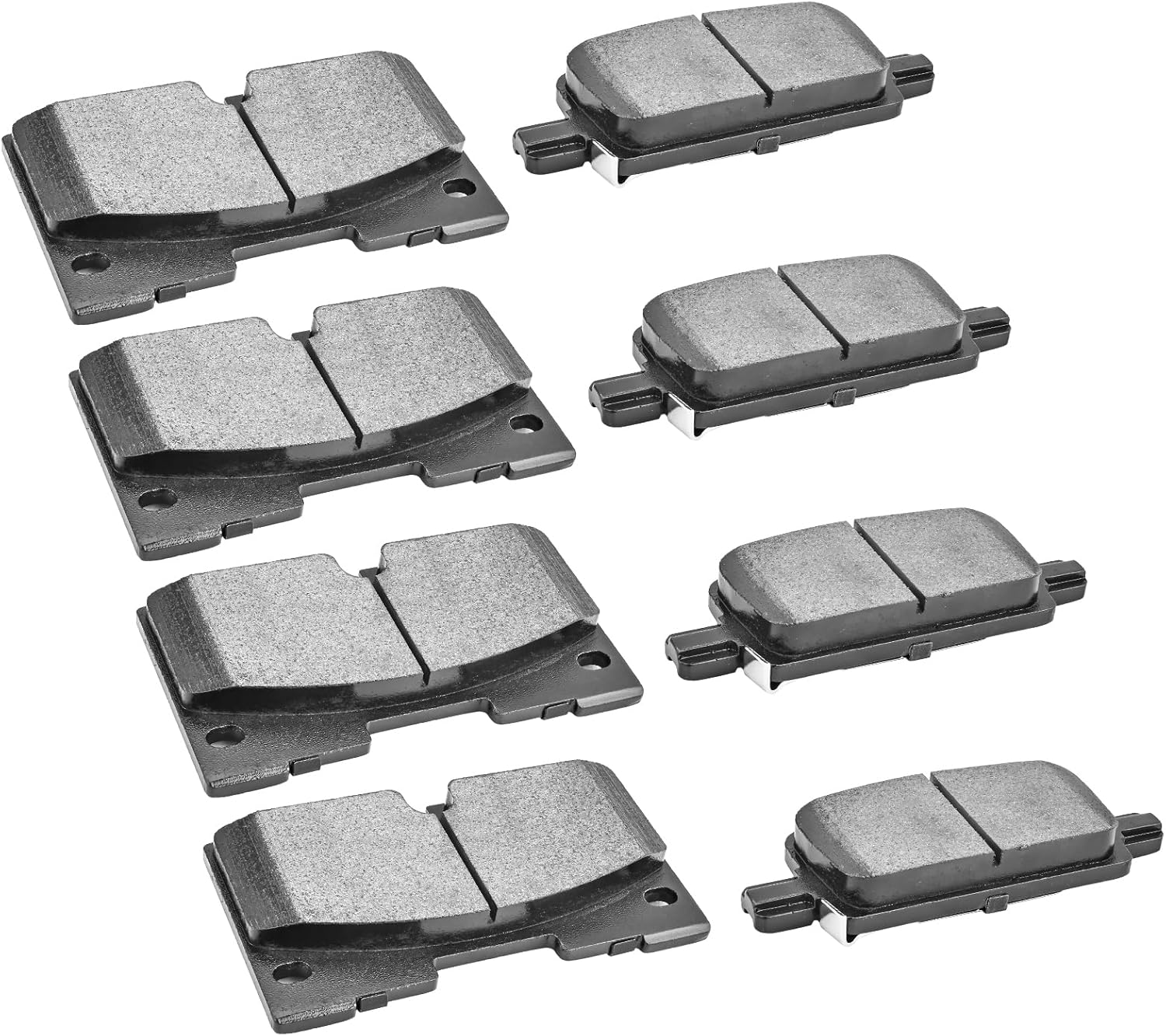
| Material Type | Ceramic |
|---|---|
| Included Components | 8pcs front rear brake pads |
| Model Number | D2173-D2174 |
| Auto Part Position | Front, Rear |
These PEYU ceramic brake pads replace both front and rear pads in one kit and are designed specifically for recent Silverado, Sierra, Tahoe, Yukon, Suburban and Escalade models listed in the fitment. Installation is the same as any factory-style pad set and they are intended as a direct vehicle-specific fit. The ceramic material typically produces quieter operation and less dust than semi-metallic alternatives, which shows in user reports of smooth, reliable braking and a clean wheel appearance. The kit includes four front and four rear pads and matches common replacement part numbers D2173 and D2174. Expect braking to feel predictable for everyday driving, towing light loads, and commuting. Limitations are that these are vehicle-specific fitment parts so correct year and caliper configuration must be confirmed before purchase, and performance under heavy towing or aggressive track use will not match high-performance or heavy-duty friction compounds.
Best for: Buyers who prioritize a practical, factory-style replacement that reduces dust and noise and want a single kit to service both front and rear brakes on the specified model years.
Less Ideal for: Drivers who regularly tow heavy loads, do frequent high-speed driving, or need track-capable friction should choose a heavy-duty or performance-specific pad instead.
- Vehicle-specific kit covers both front and rear so you can replace all pads at once.
- Ceramic compound tends to run quieter and produce less brake dust than semi-metallic pads.
- Included parts match common replacement numbers D2173 and D2174 for straightforward sourcing and reference.
- Fitment depends on caliper and rotor options so verification is required before installation.
Verdict: A convenient vehicle-specific ceramic kit that replaces both front and rear pads for a quieter, lower-dust driving experience on compatible GMC Sierra 1500 models.
4. OETEX Rear Ceramic Brake Pads (D1707) — Rear fit for 2014–2019 Silverado/Sierra and 2015–2020 full-size SUVs

| Auto Part Position | Rear |
|---|---|
| Model Number | D1707 |
| Automotive Fit Type | Vehicle Specific Fit |
| Brand Name | OETEX |
These OETEX rear ceramic pads are a vehicle-specific replacement built to match the factory D1707 fitment for late-model full-size GM trucks and SUVs. They install in the rear and include metal retaining clips and rubberized shims to reduce vibration and noise while keeping pad movement steady. The ceramic compound is promoted for lower brake dust, which helps keep large alloy wheels cleaner, and the pads are described as heavy duty to cope with typical truck loads and towing. Buyers report straightforward installation and quiet operation, and the included hardware simplifies swapping pads without hunting for extra clips. Because they are ceramic, expect a slightly different initial bite and bedding procedure compared with metallic pads; ceramic formulas can also run warmer under extreme towing compared with some semi-metallic heavy-duty options. These pads are best for drivers who want a quiet, low-dust rear pad that fits the specified Chevy/GMC rear D1707 application and who prioritize cost-effective, factory-style replacement performance.
Best for: Buyers looking for an affordable, quiet rear pad replacement that keeps wheels cleaner and installs like a factory-style unit on the specified GM rear fitment.
Less Ideal for: Drivers who regularly perform heavy towing, frequent downhill hauling, or demanding fleet duty should consider heavy-duty semi-metallic pads engineered for extreme heat and wear instead.
- Vehicle-specific fit for D1707 rear applications simplifies installation
- Ceramic formulation reduces brake dust for cleaner wheels
- Includes metal retaining clips and rubberized shims for stable, quiet operation
- Designed for heavy-duty use on full-size trucks and SUVs, suitable for light towing
- Ceramic pads may not dissipate heat as well as some semi-metallic pads during sustained heavy towing
Verdict: A budget-friendly ceramic rear pad that delivers quiet, low-dust, factory-style replacement performance for the specified GM rear fitment.
5. Bendix Premium SBC2173 Ceramic Front Brake Pads

| Material | Ceramic |
|---|---|
| Auto Part Position | Front |
| Specification Met | OEM |
| Automotive Fit Type | Vehicle Specific Fit |
Bendix Premium SBC2173 ceramic front pads are a vehicle-specific replacement intended to match factory fit and braking feel on compatible full-size trucks and SUVs. They are typically used as a direct swap during routine brake jobs and are suitable for daily-driven Sierra 1500 models within the covered years. The ceramic friction material and machined exterior aim to deliver quiet, smooth stopping with reduced dust compared with semi-metallic pads, and included hardware like shims helps simplify installation. Bendix emphasizes durability and resistance to fade, so these pads hold consistent pedal feel under normal commuting and light towing. Expect good longevity and minimal noise when installed and bedded correctly, though ceramic pads can have modestly reduced high-heat capacity versus heavy-duty semi-metallic options if you regularly tow large loads or run aggressive downhill braking. They are a sensible factory-quality replacement for owners prioritizing reliable, quiet everyday performance rather than track or heavy commercial use.
Best for: Buyers who want a dependable, factory-quality replacement that prioritizes quiet operation, consistent pedal feel, and low dust for regular driving and occasional towing.
Less Ideal for: Drivers who frequently perform heavy towing, commercial hauling, or aggressive driving and need pads optimized for extreme high-heat stopping should consider heavy-duty semi-metallic or performance-oriented options instead.
- Vehicle-specific fit that mirrors factory braking geometry for straightforward installation
- Ceramic formulation offers quiet operation and lower brake dust than many semi-metallic pads
- Machined exterior and included shims/hardware improve fitment and reduce vibration-related noise
- Designed to resist brake fade for consistent pedal feel during everyday driving
- Ceramic pads may not dissipate heat as well as heavy-duty semi-metallic pads during repeated high-load braking
Verdict: A quiet, low-dust, factory-quality ceramic replacement that delivers reliable everyday stopping for Sierra 1500 owners focused on dependable performance.
Choosing the Right 2019-2026 GMC Sierra 1500 Brake Pads: Key Factors to Consider
Pad Material and Friction Compound
Pad material determines bite, fade resistance, and dust production. Organic compounds offer quiet operation but may wear faster under heavy towing loads. Semi-metallic formulations typically provide stronger initial bite and higher heat tolerance, which helps when hauling trailers or towing. Ceramic compounds often balance low dust and quiet operation with stable friction at normal temperatures, but some ceramics can lose bite under continuous heavy braking.
For the Sierra 1500, consider how you use the truck. Frequent towing, steep downhill runs, or repeated heavy braking favor materials with better heat capacity and fade resistance. The material choice also affects rotor wear and whether additional bedding-in procedures are necessary.
Heat Tolerance and Fade Resistance
Brake pads must sustain braking performance as temperatures rise. Fade is a reduction in braking effectiveness during repeated or sustained stops, common when towing or descending long grades. Pads with higher thermal stability maintain friction longer and reduce the need for aggressive braking that can overwork the system.
Look for pads rated for higher continuous operating temperatures or those with engineered additives that resist glazing. Good heat tolerance also reduces the chance of uneven pad transfer to the rotor, which can cause vibration and uneven rotor wear on the Sierra 1500.
Pad Thickness and Wear Rate
Initial pad thickness and expected wear rate determine service intervals. Thicker pads generally last longer, but material density and friction characteristics also influence lifespan. Monitoring thickness according to the vehicle's service recommendations helps prevent damage to the caliper and rotor.
For Sierra owners, estimate replacement frequency based on driving style and load. Frequent city driving with stop-and-go patterns may wear pads quicker than highway use. When selecting pads, compare published thickness specifications and typical life estimates to match maintenance expectations.
Noise Control and Vibration Dampening
Brake noise is a common complaint on trucks. Noise often stems from pad-to-caliper fit, backing plate stiffness, or lack of adequate shims and damping. Pads designed with chamfers, slots, and bonded shims reduce the chance of squeal and deliver a more refined pedal feel.
Because the Sierra 1500 is a heavier vehicle, momentum can amplify noise and vibration. Choosing pads with proven damping features reduces annoyance and prevents mistaken diagnosis of braking problems. Proper installation and bedding also play a role in minimizing noise.
Rotor Compatibility and Wear Characteristics
Pads interact directly with rotors, so the right pairing minimizes uneven wear and improves longevity. Abrasive pad compounds can accelerate rotor thinning and scoring, which raises replacement costs. Conversely, pads that are too soft may glaze rotors and reduce stopping power.
On the Sierra 1500, which may use vented front rotors and solid or vented rear rotors depending on configuration, select pads that are compatible with factory rotor metallurgy. Consider whether the intended use requires extra rotor cooling or resurfacing intervals.
Fitment Accuracy and Installation Features
Correct fitment eliminates movement that causes noise and uneven wear. Pads engineered to match the Sierra 1500 mounting points, with correct backing plate profiles and secure retention, reduce the risk of caliper hardware damage. Installation-friendly features such as pre-applied shims, anti-rattle clips, and clear left-right indications speed up a correct replacement.
Additionally, consider whether the replacement process requires caliper servicing or new hardware. Some pads come with installation kits or recommendations for replacing wear indicators or clips, which improve long-term reliability on a truck subject to vibration and heavy use.
Understanding Brake Pad Types and How They Behave on the Sierra 1500
Brake pad types include organic, semi-metallic, and ceramic compounds, each with tradeoffs relevant to the Sierra 1500. Semi-metallic pads are often chosen for trucks because they handle heat and heavy loads well, while ceramic pads are favored for lower dust and quieter operation during daily driving. Organic pads can be quiet but may not last as long under the higher demands of towing.
Consider the typical operating temperatures you expect from the Sierra. If you tow regularly or drive in hilly terrain, prioritize materials with better fade resistance. For primarily city and highway driving with occasional light towing, a ceramic or milder semi-metallic compound can strike a balance between noise, dust, and durability.
- Semi-metallic: good heat handling and bite, may create more dust
- Ceramic: low dust and quiet, can be less aggressive under extreme heat
- Organic: quiet initially, shorter lifespan under heavy use
Front Vs Rear Brake Pads on the Sierra 1500
Front pads typically handle a larger share of braking load due to weight transfer during stops. For the Sierra 1500, front pads will often be thicker or use a firmer compound than rears to manage initial bite and heat. Rear pads help stabilize the vehicle and assist with low-speed control and parking braking.
When replacing pads, treat front and rear service decisions separately. You can choose a more aggressive compound for the front to improve stopping performance while keeping the rear pads quieter and less abrasive to avoid premature rear rotor wear.
- Front pads: prioritize heat resistance and initial bite
- Rear pads: balance modulation and rotor friendliness
- Replace axles in pairs to maintain balanced braking performance
Signs Your Sierra 1500 Pads Need Replacement
Watch for common brake pad wear symptoms such as grinding noises, a spongy or soft pedal, increased stopping distance, or an indicator light related to brake wear. Visual inspection of pad thickness and uneven wear patterns on the rotor surface are also reliable indicators. Squeal does not always mean immediate replacement but can signal glazing or hardware issues.
Keeping a maintenance log of miles and driving conditions helps plan replacement intervals. Heavier use like towing or carrying payloads accelerates wear and should trigger more frequent inspections. When in doubt, measure pad thickness against manufacturer specs or a trusted thickness guideline to decide.
- Grinding usually indicates worn-through friction material
- Squeal can point to glazing or missing shims
- Uneven wear may signal caliper or hardware problems
Bedding-In Procedure and Break-In Tips
Proper bedding-in helps transfer a uniform friction layer to the rotor, improving initial performance and reducing the chance of uneven rotor deposits. For the Sierra 1500, a typical bedding sequence involves a series of moderate decelerations from moderate speeds without coming to a full stop, followed by a cool-down period. Avoid aggressive stops during the initial miles after installation.
A conservative break-in reduces the chance of vibration and noise developing later. If you tow soon after installation, check for changes in pedal feel and re-assess after the first few hundred miles to ensure bedding went smoothly.
- Perform staged decelerations rather than repeated full stops
- Allow rotors to cool between bedding cycles
- Recheck hardware torque and pad seating after initial miles
Maintenance Tips to Maximize Pad Life
Regular inspection, cleaning of caliper hardware, and replacing worn clips or shims prolong pad life and reduce noise. Keep brake fluid fresh and bleeding routines current to ensure consistent pedal feel. If rotors show scoring or uneven thickness, resurface or replace them to prevent accelerated pad wear.
For Sierra 1500 owners who use the truck for towing, incorporate visual pad checks into routine trailer maintenance. Periodic resurfacing of rotors or switching to a slightly harder compound for intensive towing seasons can prevent premature replacement and maintain braking performance.
- Inspect pads every oil change interval or sooner with heavy use
- Replace anti-rattle clips and shims when corroded
- Monitor rotor runout and thickness to avoid uneven wear
Still looking for the perfect fit?
Select your GMC Sierra 1500 configuration to see the most relevant Brake Pads recommendations
How We Chose the Best 2019-2026 GMC Sierra 1500 Brake Pads
Our selection focused on criteria that directly affect performance and ownership for the 2019-2026 GMC Sierra 1500. We prioritized pad materials and friction formulations because compound affects initial bite, stopping distance under load, and dust generation. Heat tolerance and fade resistance were included to reflect towing and repeated heavy braking scenarios common to Sierra owners. We evaluated typical pad wear rates and measured thickness specifications to estimate service intervals and replacement planning. Fitment accuracy and backing plate quality were required to avoid fitment-related noise and premature caliper wear. Finally, we considered noise damping features and rotor friendliness to reduce squeal and extend rotor life.Excluded items included pads not specifically engineered for the Sierra 1500 fitment or those with unclear material specs. We did not include expensive specialty compounds aimed only at track use, nor cheap no-name pads with no documented performance history. The dimensions we actually used were friction material type, initial and hot coefficient of friction ranges, pad thickness spec, thermal stability, and proven resistance to glazing and excessive dust.
Our full evaluation process is outlined in our review methodology.
FAQ
How often should I replace brake pads on a 2019-2026 GMC Sierra 1500?
It depends on driving and load. Typical replacement intervals range widely; light highway use may last tens of thousands of miles while frequent towing or city driving shortens life. Inspect pad thickness regularly and follow thickness specs to determine replacement timing.
Can I switch to ceramic brake pads on my Sierra 1500 for less dust?
Yes, many Sierra owners move to ceramic pads to reduce dust and noise. Ceramics offer cleaner operation for routine driving but consider towing needs because some ceramic compounds are less aggressive under sustained high heat.
What does a grinding noise from the brakes usually mean?
Grinding typically means the pad material is worn down to the backing plate or debris is trapped between pad and rotor. It often requires immediate inspection and likely pad and rotor attention to prevent further damage.
Should I replace front and rear pads at the same time on the Sierra 1500?
You do not have to replace both axles at the same time, but keeping pads matched by wear and compound helps maintain balanced braking. Replacing in pairs on the same axle is recommended to preserve consistent pedal feel and stopping behavior.
How important are anti-rattle clips and shims during installation?
They are important. Proper shims and anti-rattle clips reduce squeal and ensure correct pad alignment. Replacing corroded hardware during pad service improves longevity and reduces the chance of noise complaints.
Final Verdict
Prioritize pad material, heat tolerance, and correct fitment when selecting brake pads for the 2019-2026 GMC Sierra 1500. Match the compound to your driving profile: favor higher heat-capacity compounds if you tow frequently, or choose lower-dust, quieter compounds for mostly daily driving. Keep an eye on pad thickness and rotor condition to avoid uneven wear.Balancing stopping performance, noise control, and longevity helps you pick pads that meet your needs. Use the decision factors above to determine the right tradeoffs and plan maintenance so your Sierra 1500 delivers reliable braking under all expected loads.
Explore More:
- Check out all GMC Sierra 1500 parts & accessories
- Explore Brake Pads Maintenance & Repair Guides
- Explore Brake System
- Browse all Auto Parts
