

Note: This article contains affiliate links. If you click on these links and make a purchase, I may earn a small commission at no extra cost to you. This helps support my research and content. Read my full affiliate disclosure here.
If you drive a 2014-2018 GMC Sierra 1500, choosing the right replacement brake pads matters for safety, pedal feel, and long-term maintenance costs. These model years share common brake hardware and service intervals, so picking pads that match your driving style and towing or hauling needs prevents premature wear and unwanted noise. This guide shortlists the top-rated options across compound types and applications to help you find pads that deliver reliable stopping, reduced dust, and acceptable rotor life.Below you will find the curated top picks and an explanation of the evaluation criteria we used to narrow the field. Use the checklist and FAQs to match a pad type to your typical driving and maintenance expectations.
Looking for other parts? See all GMC Sierra 1500 parts & accessories.
Top Picks at a Glance
| Best Overall The best all-around choice for most situations | Bendix Priority1 CFC1363 Ceramic Front Brake Pads |  |
| Best Quality Built to a higher standard if you want something more solid | PowerStop Z36 Truck & Tow Rear Carbon-Fiber Ceramic Brake Pads (Z36-1707) |  |
| Best Value The sweet spot between price and what you get | Detroit Axle Rear Ceramic Brake Pads (P-1707) |  |
| Best Budget The cheapest option that still gets the job done reliably | TadaMark Rear Ceramic Brake Pads, 4‑Piece Set |  |
| Highest Rated A top-rated pick with lots of positive feedback | Bendix Premium SBC1363 Ceramic Front Brake Pads |  |
| Most Popular A crowd favorite that many people choose with confidence | Detroit Axle Front and Rear Brake Kit with Drilled & Slotted Rotors and Ceramic Pads |  |
| Best Seller A high-volume bestseller chosen again and again | PowerStop Z36 Truck & Tow Front Brake Pads (Carbon-Fiber Ceramic) | |
1. Bendix Priority1 CFC1363 Ceramic Front Brake Pads

| Auto Part Position | Front |
|---|---|
| Material Type | Ceramic |
| Automotive Fit Type | Universal Fit |
| Included Components | Pad set with installation hardware |
| Specification Met | OEM |
These Bendix Priority1 CFC1363 ceramic front pads are built as a factory-quality replacement for the front brakes on compatible full-size GM trucks and SUVs in the covered model years. They use advanced ceramic friction material, chamfers, slots, and shims to reduce noise and manage heat, and the set ships with installation hardware and lubricant for the slide plates and pins. In everyday driving the pads deliver steady, progressive bite with low dust and minimal squeal when installed and bedded correctly. They are engineered to resist brake fade under heavier loads, which helps when towing or carrying payloads. On the downside, ceramic pads can feel slightly less initial bite than some semi-metallic options and may wear differently under severe duty; buyers who demand ultimate track or heavy commercial performance might prefer a heavy-duty semi-metallic compound. For a balanced replacement on a 2014–2018 Sierra 1500 front axle these pads offer quiet operation, good stopping power for typical street and towing use, and an OEM-like fit that makes DIY swaps straightforward.
Best for: Buyers who want a quiet, low-dust factory-style front pad replacement that balances everyday stopping power with comfortable daily driving and occasional towing.
Less Ideal for: Drivers who need extreme-duty or track-focused braking performance and those who prioritize the highest possible initial bite should consider heavy-duty semi-metallic options instead.
- Factory-quality fit and included installation hardware simplify installation
- Ceramic compound produces low brake dust and quiet operation
- Shims, slots, and chamfers help reduce noise and improve bedding
- Includes grease for slide plates and caliper pins for smoother hardware operation
- Ceramic pads can have slightly reduced initial bite compared with some semi-metallic compounds
Verdict: A quiet, low-dust ceramic front pad that delivers OEM-style fit and balanced stopping power for everyday driving and light towing on the 2014–2018 Sierra 1500.
2. PowerStop Z36 Truck & Tow Rear Carbon-Fiber Ceramic Brake Pads (Z36-1707)

| Model | Z36-1707 |
|---|---|
| Exterior | Carbon-Fiber Ceramic |
| Position | Rear |
| Manufacturer | Power Stop |
These Z36 rear pads are built for trucks that tow, haul, or carry bigger wheel/tire setups and need more stopping power than a factory rear pad. Installation is straightforward and the kit includes hardware and stainless-steel shims that help dissipate heat and reduce squeal. In real-world use they deliver noticeably firmer, more immediate braking and much lower wheel dust than many stock pads, which keeps wheels cleaner between washes. PowerStop also uses a powder-coated backing plate to resist corrosion and a thermal-scorched surface to accelerate break-in. Expect quiet operation and good initial bite, though a few users report heavy-duty uphill/4WD towing can generate high heat under extreme loads. These are a strong upgrade for drivers who want better fade resistance and cleaner wheels without sacrificing daily drivability, but those running sustained downhill loads should monitor temperatures and consider a heavy-duty rotor or auxiliary braking solution for severe duty cycles.
Best for: Drivers who prioritize stronger, more consistent braking for towing, hauling, or larger wheel/tire setups and want a low-dust, quiet pad that retains everyday drivability.
Less Ideal for: Drivers who regularly perform long, steep downhill braking with very heavy trailers and need an extreme-duty braking system should consider heavy-duty rotors or a dedicated auxiliary brake instead.
- Engineered for towing and heavy loads to improve stopping power over factory rear pads
- Carbon-fiber ceramic formulation reduces brake dust for cleaner wheels
- Stainless-steel shims and powder-coated backing plate resist noise and corrosion
- Includes installation hardware and thermal-scorched surface for faster break-in
- Can generate high heat under sustained heavy downhill or extreme towing, which may require additional cooling or rotor upgrades
Verdict: Choose these pads when you want a rear brake upgrade that delivers noticeably stronger, low-dust stopping for towing and heavy-duty truck use.
3. Detroit Axle Rear Ceramic Brake Pads (P-1707)

| Auto Part Position | Rear |
|---|---|
| Compatible with Vehicle Type | Truck |
| Material Type | Ceramic |
| Manufacturer | Detroit Axle |
| Number of Items | 2 |
These Detroit Axle rear ceramic pads are a direct-fit replacement designed for late-model full-size GM trucks and SUVs. They come as a two-piece set for the rear and are built to meet factory-spec stopping performance while reducing noise compared with metallic pads. Typical use is routine rear pad replacement during a service interval or when rotor wear requires new pads; installation is straightforward for a competent DIYer or a shop since the pads are vehicle-specific. The ceramic friction material is quieter and produces less dust than many metallic options, and Detroit Axle states the pads undergo wear and fatigue testing to support durability. You get factory-style fit and finish and a packaging that includes two pads ready to install. Limitations: these are rear pads only, so front replacements require a separate purchase, and the listed warranty is a short six months which may not match longer-term OEM guarantee periods. Fitment must be confirmed against your Sierra 1500 trim and year to ensure proper match.
Best for: Buyers who want a cost-effective, quiet rear pad replacement that matches factory fit and prioritizes low dust and straightforward installation.
Less Ideal for: Drivers seeking a long-term warranty or high-performance/track-oriented pads should consider other formulations or upgrades.
- Vehicle-specific fit for direct replacement on listed GM trucks and SUVs
- Ceramic compound reduces noise and brake dust compared with metallic pads
- Manufactured and tested to meet factory-spec performance claims
- Only a rear pad kit is included so fronts must be purchased separately
- Manufacturer warranty coverage is limited to six months
Verdict: A practical, quiet ceramic rear pad that delivers factory-style fit and lower dust for routine replacement on compatible Sierra 1500 models.
4. TadaMark Rear Ceramic Brake Pads, 4‑Piece Set

| Material Type | Ceramic |
|---|---|
| Auto Part Position | Rear |
| Automotive Fit Type | Vehicle Specific Fit |
| Number of Items | 4 |
These TadaMark rear ceramic pads are a vehicle-specific replacement intended for mid‑2010s full‑size GM trucks and SUVs. They install like a direct replacement and are typically used when rear pads are worn to restore stopping performance and reduce pedal travel. The ceramic compound aims to deliver quieter, more comfortable braking and lower dust compared with semi‑metallic pads, while the set includes four pads for a complete axle service. In practical use they suit routine street and highway driving where noise and brake dust are priorities. Reported limitations include occasional fitment tightness that may require light sanding or adjustment during install and mixed longevity compared with premium brands. There is a one‑year manufacturer warranty and the pads are marketed as tested to industry standards, but buyers seeking heavy towing, frequent trailer braking, or maximum fade resistance may prefer a different material or a performance‑oriented option.
Best for: Buyers looking for an affordable, quieter ceramic rear pad to replace worn pads on compatible mid‑2010s GM trucks and SUVs who prioritize lower dust and ride comfort over heavy towing performance.
Less Ideal for: Drivers who frequently tow heavy loads, do repeated hard braking, or need race/performance braking should choose a heavy‑duty or performance pad designed for high heat and fade resistance.
- Ceramic material reduces brake dust and tends to run quieter than many semi‑metallic pads
- Sold as a full set of four pads for a complete rear axle replacement
- Vehicle‑specific fit designed for compatible 2014–2020 GM full‑size truck and SUV applications
- Includes one‑year warranty and manufacturer testing claims
- Some users report tight fitment that may require light modification during installation
- Durability reports are mixed and may be lower than premium name‑brand pads
Verdict: A budget‑minded ceramic rear pad set that lowers dust and noise for compatible mid‑2010s GM trucks and SUVs while delivering an affordable OEM‑style replacement.
5. Bendix Premium SBC1363 Ceramic Front Brake Pads
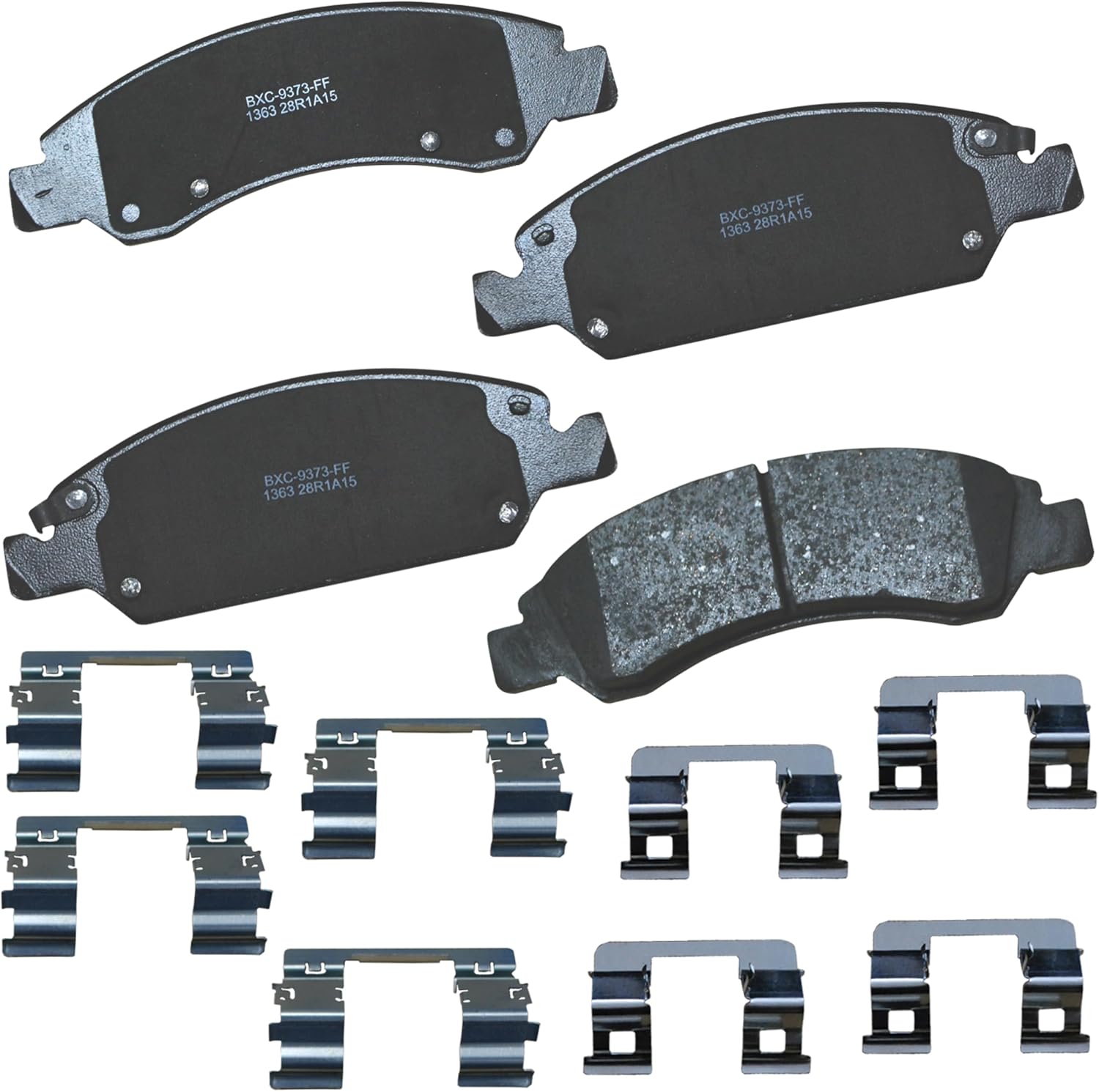
| Auto Part Position | Front |
|---|---|
| Compatible with Vehicle Type | Truck |
| Material Type | Ceramic |
| Included Components | Brake pad set with installation hardware |
| Automotive Fit Type | Vehicle Specific Fit |
These Bendix Premium SBC1363 ceramic front brake pads are built as direct replacements for compatible GM full-size trucks and SUVs and aim to restore factory-style braking feel. They install like a standard front pad set and include installation hardware and anti-rattle clips, which simplifies a DIY swap. The ceramic compound prioritizes quiet operation and low dust compared with semi-metallic options, and reviewers report confident initial bite and smooth pedal feel during everyday driving. Because they are engineered to match factory fit, you should expect straightforward alignment with the caliper and consistent braking performance without the harsh noise some budget pads produce. Limitations to note are typical for ceramic pads: they are optimized for daily street use rather than heavy towing or aggressive repeated high-heat stops, and some installers mention the kit does not include grease for slides so you should have brake lubricant on hand. If your Sierra sees normal commuting and light hauling, these pads deliver quieter, cleaner performance than many economy alternatives.
Best for: Buyers who prioritize dependable, quiet street braking and want a factory-quality replacement for a Sierra used for commuting and light-duty work.
Less Ideal for: Drivers who frequently tow heavy loads, do regular high-speed descending, or demand track-capable stopping power should consider heavy-duty or performance-oriented formulations instead.
- Vehicle-specific fit for compatible GM full-size trucks and SUVs for straightforward replacement
- Ceramic material yields quiet operation and reduced brake dust compared with semi-metallic pads
- Includes installation hardware and anti-rattle clips to simplify installation
- Engineered to match factory fit, form, and function for consistent pedal feel
- Designed primarily for everyday driving and light-duty use rather than heavy towing or repeated high-temperature braking
- Does not include grease for slide pins, so lubricant must be provided separately
Verdict: Choose these Bendix ceramic front pads if you want a quiet, factory-quality replacement that restores reliable daily braking for a 2014–2018 GMC Sierra 1500.
6. Detroit Axle Front and Rear Brake Kit with Drilled & Slotted Rotors and Ceramic Pads

| Fits rotor diameters | 12.99" front, 13.58" rear |
|---|---|
| Pad material | Ceramic |
| Rotor type | Drilled and slotted |
| Brake fluid | DOT3 included |
This Detroit Axle kit supplies everything needed to replace both front and rear rotors and pads on compatible 2014–2018 full-size trucks. The set includes drilled-and-slotted rotors for improved heat dissipation, ceramic pads with hardware, a bottle of DOT3 brake fluid, and a brake-cleaner spray. In use the rotors and pads deliver a firmer pedal feel and noticeably stronger stopping compared with worn factory parts, and many DIY installers report straightforward fitment and trouble-free alignment. The drilled/slotted finish can produce some braking noise and slightly more brake dust than plain rotors, and the kit arrives without step-by-step instructions so a basic comfort with brake work or reference to a service guide is helpful. For owners replacing both rotors and pads at once the bundled hardware and fluids reduce trips to the parts store and simplify the job, while the rotor design helps control heat during repeated heavy stops.
Best for: Buyers who want a single purchase to replace both front and rear brakes on a compatible full-size truck and who prioritize visible customer feedback and predictable, proven replacements over premium branding.
Less Ideal for: Drivers who need near-silent luxury-level braking or who prefer plug-and-play, professional-install-only parts with full instructions provided by the manufacturer.
- Complete kit includes front and rear rotors, ceramic pads, mounting hardware, brake cleaner, and DOT3 fluid
- Drilled and slotted rotors help dissipate heat and resist fade under repeated stopping
- Customers report reliable fitment and improved stopping power versus worn originals
- Bundled hardware and fluids streamline a DIY replacement job
- No printed step-by-step installation instructions included with the kit
Verdict: A complete, customer-validated front-and-rear brake kit that upgrades stopping power and heat control while bundling the hardware and fluids needed for a DIY replacement.
7. PowerStop Z36 Truck & Tow Front Brake Pads (Carbon-Fiber Ceramic)
| Material | Carbon Fiber |
|---|---|
| Auto Part Position | Front |
| Specification Met | OEM |
| Model | Z36 Truck & Tow Pad W/Hdw |
The PowerStop Z36 Truck & Tow front brake pads are a carbon-fiber ceramic upgrade aimed at trucks and large SUVs that tow or haul. They replace the factory-style front pads and come with stainless-steel hardware and a small packet of brake lubricant to simplify installation. In everyday driving they behave like a quiet, low-dust ceramic pad, while under heavier loads or towing they deliver stronger bite and improved heat resistance compared with many stock pads. The chamfered and slotted faces plus stainless shims help control noise and reduce glazing during break-in. Expect a recommended bedding-in procedure for best performance. Limitations to keep in mind: these are a performance-focused ceramic compound so they may require careful bedding and proper lubrication of guide pins for consistent fit and function; a few users report overheating under extreme downhill or heavy-duty use. Fitment must be confirmed for 2014-2018 GMC Sierra 1500 front applications prior to purchase.
Best for: A cautious buyer who wants a quiet, low-dust upgrade that improves braking when towing or hauling and prioritizes reliable, factory-style fit and predictable behavior.
Less Ideal for: Drivers who regularly perform extreme heavy-duty use like long, steep downhill towing without additional heavy-duty brake components should consider a more aggressive commercial-grade compound or cooling strategies.
- Carbon-fiber infused ceramic compound for stronger stopping power under load
- Low-dust formula that keeps wheels cleaner than many metallic pads
- Chamfered and slotted surface with stainless-steel shims to reduce noise and help prevent glazing
- Includes stainless-steel hardware and brake lubricant for a more complete installation
- May get hot under extreme, sustained downhill use according to some reports
Verdict: Choose these Z36 carbon-fiber ceramic front pads if you want a quiet, low-dust factory-style upgrade that improves stopping when towing your Sierra 1500.
Choosing the Right 2014-2018 GMC Sierra 1500 Brake Pads: Key Factors to Consider
Compound Type and Performance
The brake pad compound determines initial bite, fade resistance, noise, and rotor wear. Organic and ceramic-style compounds typically provide quieter operation and less dust, which suits daily driving and light towing. Semi-metallic-like compounds often offer stronger initial bite and higher heat tolerance, which can be beneficial if you do frequent towing or mountain driving.
For the 2014-2018 GMC Sierra 1500, consider how you use the truck. If you tow heavy loads or regularly carry payloads, prioritize a compound with better fade resistance and heat capacity. If quiet operation and low dust are higher priorities, choose a ceramic-focused compound engineered for lighter duty. Recognize tradeoffs: higher-metal-content pads may increase rotor wear and noise but can provide superior stopping under stress.
Wear Rate and Rotor Compatibility
Pad life affects maintenance frequency and total ownership cost. Some compounds deliver long pad life but are abrasive to rotors, requiring more frequent rotor resurfacing or replacement. Other pads are kinder to rotors but may wear faster, shifting cost toward pad replacement.
For a Sierra 1500 owner, factor in expected miles driven and whether you rotate pads with service intervals. Trucks used for towing should favor pads with proven longevity and predictable wear patterns to avoid unexpected rotor damage. Also confirm the manufacturer's recommended minimum pad thickness and monitor wear through routine inspections to prevent metal-on-metal contact.
Noise and Vibration Characteristics
Brake noise ranges from faint squeal to harsh grinding and often stems from compound choice, hardware condition, or improper installation. Noise can be an early indicator of glazing, uneven wear, or missing shims and clips.
Choose pads engineered with noise-dampening features if you prioritize cabin comfort. For the Sierra 1500, ensure that the pad set includes proper shims, backing-plate treatments, or recommended anti-rattle hardware. Plan to inspect caliper slides and replace worn mounting hardware during pad service to minimize vibration-related noise.
Fitment and Ease of Installation
Correct fitment ensures pads seat properly, release cleanly, and maintain consistent contact with the rotor. Poor fitment can cause uneven wear, noise, and reduced braking performance.
When buying pads for the 2014-2018 Sierra 1500, verify back-plate design, pad shape, and included hardware match the truck's calipers and any trim-specific differences. Consider whether you will perform the job yourself or have it done professionally. Some pads arrive with complete hardware kits and clear fitment notes that streamline installation and reduce the chance of call-backs or rework.
Heat Management and Fade Resistance
Heat build-up during repeated or hard stops reduces friction and leads to brake fade. Compounds with higher thermal stability maintain braking performance under stress, which matters for towing or mountain driving.
For Sierra 1500 owners who haul trailers or tow frequently, prioritize pads rated for higher operating temperatures and that maintain consistent pedal feel under repeated braking. Also consider rotor condition and cooling; well-ventilated rotors plus heat-tolerant pads will extend service life and keep stopping distances predictable.
Dust, Finish, and Aesthetics
Brake dust can coat wheels and affect appearance, and different compounds produce different amounts and types of residue. Some pads are engineered to leave lighter, less staining dust and maintain wheel finish better over time.
If you keep alloy wheels clean for appearance or resale value, choose pads that advertise lower dust generation. Also consider finish-related issues like pad glazing that can change appearance and performance. While aesthetics are secondary to safety and performance, lower-dust pads can reduce cleaning frequency and help maintain wheel surfaces on a Sierra 1500.
Front Vs Rear Brake Pad Differences on the Sierra 1500
Front and rear pads on the Sierra 1500 serve different roles and often wear at different rates. The front brakes handle a larger portion of stopping force and heat generation, so front pads are typically thicker, use different compounds, and may require more frequent replacement than rear pads.
When servicing the truck, inspect both axles but expect the fronts to show faster wear. Selecting front-specific compounds with better heat tolerance can improve stopping feel and longevity. Rear pads can prioritize consistent modulation and parking-brake compatibility where applicable.
- Front pads: higher heat, more wear, prioritize fade resistance.
- Rear pads: less heat, longer service intervals, ensure compatibility with parking brake.
How to Check Brake Pad Wear and Thickness
Regular inspections prevent unexpected failures. Measure pad thickness at the thinnest visible point. Many replacement pads recommend a minimum thickness; when remaining friction material nears that spec, plan to replace the pair.
Look for uneven wear across the pad face, which can indicate caliper or slide issues. Also note glazing, deep scoring on the rotor, or contamination with oil or grease, all of which reduce friction and can produce noise.
- Use a caliper or ruler to measure friction material thickness.
- Inspect for uneven wear, glazing, and embedded debris.
- Replace pads before the backing plate contacts the rotor.
Installation Tips and Common Pitfalls
Proper installation reduces the chance of noise and uneven wear. Clean caliper slides, lubricate contact points with high-temperature brake grease, and replace worn hardware. Ensure the pistons are fully and evenly retracted before seating new pads and that anti-rattle clips are correctly installed.
Avoid contaminating new pads with brake cleaner residues or grease on the friction surface. Run a brief bedding procedure after installation to help the pad and rotor mate properly and reduce early noise or glazing incidents.
- Replace hardware if clips or shims are corroded or damaged.
- Lubricate contact points but never on the friction surface.
- Perform a controlled bedding routine after installation.
Maintenance Intervals and When to Service
How often to replace brake pads depends on driving habits, load, and the compound chosen. Trucks used mainly for commuting may go longer between changes, while those used for heavy towing will require more frequent attention. Regular inspections at oil-change intervals are a practical way to monitor wear.
Track symptoms such as increased stopping distance, spongy pedal feel, or brake pad noise grinding to schedule immediate service. Keeping rotors within manufacturer thickness specs helps prevent accelerated pad wear and preserves braking performance.
- Inspect pads visually every 6,000 to 10,000 miles or at each service.
- Address persistent noise, vibration, or reduced braking feel promptly.
- Monitor rotor thickness during pad replacement to assess whether resurfacing is needed.
Choosing Between OEM-Style and Aftermarket Compounds
Aftermarket brake pads offer a range of compounds that can improve specific attributes such as noise control, fade resistance, or dust production. OEM-style pads aim to replicate factory performance and fitment, which can be a reliable baseline for daily driving and warranty-conscious owners.
Decide whether you need an aftermarket specialty or an OEM-style replacement based on your priorities. For many Sierra 1500 owners, an upgraded compound that reduces dust and noise while maintaining rotor friendliness strikes a good balance for mixed-use driving.
- OEM-style: predictable fit and performance for typical driving.
- Aftermarket: tailored compounds for towing, reduced dust, or improved modulation.
Signs You Need Immediate Brake Service
Certain symptoms warrant prompt attention. Grinding suggests the friction material is gone or contaminated and can damage rotors quickly. A soft or sinking pedal can point to fluid issues or severe pad thinning. Persistent squeal that does not diminish after bedding may indicate glazing or missing shims.
Addressing these symptoms early protects rotor life and preserves safe stopping distances. When in doubt, inspect the pads and hardware or consult a qualified technician for a thorough assessment.
- Grinding, metallic scraping, or loss of braking power are urgent.
- Uneven pedal feel or pulling to one side indicates uneven pad wear or caliper problems.
- Rapid or abnormal pad wear after recent installation suggests fitment or hardware issues.
Still looking for the perfect fit?
Select your GMC Sierra 1500 configuration to see the most relevant Brake Pads recommendations
How We Chose the Best 2014-2018 GMC Sierra 1500 Brake Pads
We prioritized pads that deliver consistent stopping performance and predictable wear characteristics on 2014-2018 GMC Sierra 1500 trucks. Evaluation criteria focused on braking effectiveness under light and heavy loads, measured by reported pedal feel and fade resistance during extended use. Durability and wear were assessed via user and technical reports indicating expected pad life and rotor friendliness. Noise and vibration performance were judged based on claims and user feedback about squeal, grinding, and the need for additional shims or hardware. Heat tolerance and fade resistance were considered for owners who tow, haul, or drive in hilly conditions. Fitment accuracy and ease of installation were included to ensure the pads align with the Sierra 1500's caliper designs and common service procedures.We excluded options with repeated compatibility issues, unclear compound descriptions, or those requiring significant caliper modification. We also filtered out pads with consistently poor user reports for dust, noise, or rapid wear. The resulting shortlist emphasizes balanced real-world performance, installation fitment, and long-term serviceability specific to the 2014-2018 GMC Sierra 1500.
Our full evaluation process is outlined in our review methodology.
FAQ
How often should I replace the brake pads on my 2014-2018 Sierra 1500?
It depends on driving habits and load. Typical intervals range widely; inspect pads every 6,000 to 10,000 miles and replace when thickness approaches the minimum specification or if braking performance declines.
Can I replace only the front or rear pads instead of all four?
You can replace one axle at a time, but it is best to service pads in matched pairs on the same axle to maintain balanced braking. Replace the opposite axle sooner if wear is uneven to keep stopping performance predictable.
Will ceramic brake pads reduce dust on my Sierra 1500?
Ceramic-style compounds typically produce less, lighter-colored dust than higher-metal-content pads, which helps keep wheels cleaner. Dust levels vary with compound formulation and driving conditions.
What does brake pad noise grinding usually indicate?
Grinding often indicates severe wear where the backing plate contacts the rotor, or embedded debris. It can also signal rotor damage. Inspect pads and rotors promptly to avoid further harm.
Do I need new hardware when I change pads on the Sierra 1500?
Replacing worn shims, clips, and anti-rattle hardware is recommended when they show corrosion or play. New hardware helps ensure correct pad alignment and reduces noise and uneven wear.
How important is pad thickness spec when replacing pads?
Pad thickness spec is critical. Replacing pads before they reach the minimum material thickness prevents metal contact with the rotor and maintains stopping performance. Measure and compare remaining thickness against the recommended spec during inspections.
Final Verdict
Pick brake pads for your 2014-2018 GMC Sierra 1500 by matching compound characteristics to how you use the truck. Prioritize heat tolerance and consistent bite if you tow or haul frequently, or choose quieter, lower-dust compounds if daily driving and wheel appearance matter more. Ensure correct fitment and install fresh hardware to avoid noise and uneven wear. By weighing the tradeoffs between pad life, rotor friendliness, and noise, you can select a set that gives predictable stopping performance and sensible maintenance intervals.
Explore More:
- Check out all GMC Sierra 1500 parts & accessories
- Explore Brake Pads Maintenance & Repair Guides
- Explore Brake System
- Browse all Auto Parts
