

Note: This article contains affiliate links. If you click on these links and make a purchase, I may earn a small commission at no extra cost to you. This helps support my research and content. Read my full affiliate disclosure here.
Finding the right brake pads for a 2007-2013 GMC Sierra 1500 matters because braking performance affects safety, towing control, and everyday drivability. Your Sierra faces heavy-duty tasks and daily commuting, so pads that balance bite, dust, noise, and lifespan will make the biggest practical difference. This guide shortlists seven top brake pad options chosen for this model years range and explains the practical tradeoffs you should expect. We evaluate stopping power, pad life, dust and noise characteristics, and fitment considerations to help you pick pads that suit how you use your truck.
Looking for other parts? See all GMC Sierra 1500 parts & accessories.
Top Picks at a Glance
| Best Overall The best all-around choice for most situations | Detroit Axle 4-Wheel Drilled & Slotted Brake Kit with Ceramic Pads |  |
| Best Quality Built to a higher standard if you want something more solid | PowerStop Z36 Truck & Tow Front Brake Kit (K2069-36) |  |
| Best Value The sweet spot between price and what you get | Detroit Axle Ceramic Front and Rear Brake Pad Kit with Hardware |  |
| Best Budget The cheapest option that still gets the job done reliably | Auto Shack Front Ceramic Brake Pad Set (front) |  |
| Highest Rated A top-rated pick with lots of positive feedback | Bendix Priority1 CFC1363 Ceramic Front Brake Pads (front) |  |
| Most Popular A crowd favorite that many people choose with confidence | Bendix Premium SBC1363 Ceramic Front Brake Pads (front) |  |
| Best Seller A high-volume bestseller chosen again and again | Acinoparts Front Drilled & Slotted Brake Kit with Ceramic Pads |  |
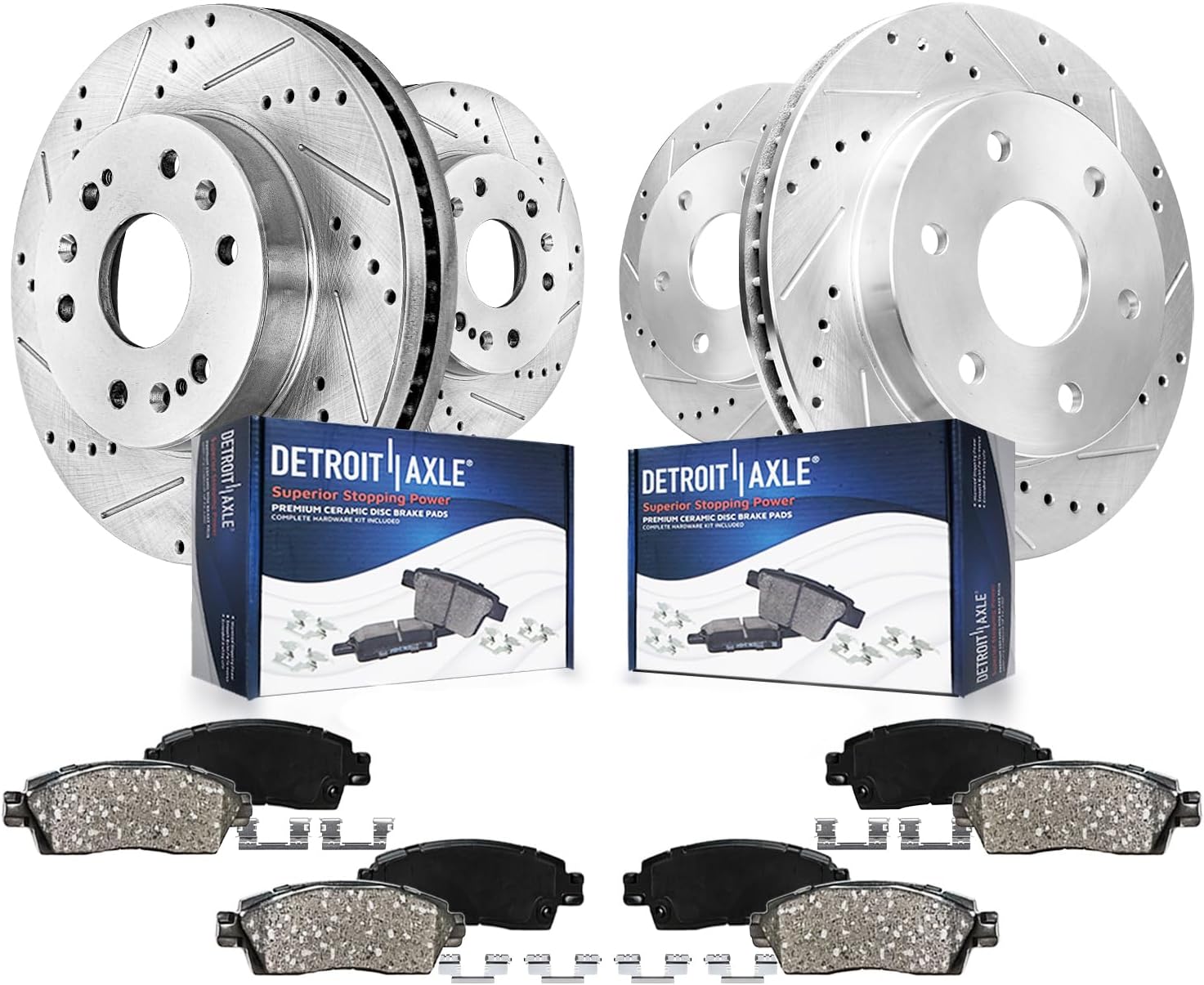
1. Detroit Axle 4-Wheel Drilled & Slotted Brake Kit with Ceramic Pads
| Fitment years/models | 2007-2014 Cadillac Escalade; 2007-2013 Silverado/Sierra; 2008-2014 Tahoe/Suburban/Yukon (see description) |
|---|---|
| Rotor type | Drilled & slotted, ventilated |
| Pad material | Ceramic |
| Rotor finish | Zinc plated |
| Warranty | 10-Year |
This Detroit Axle kit supplies everything needed to refresh braking on compatible full-size GM trucks and SUVs: drilled and slotted front and rear rotors plus matched ceramic pads for both ends. It is intended for vehicles in the specified model years and fits with factory-style mounting—rotors are zinc plated to resist corrosion and feature ventilation slots to help dissipate heat and reduce fade during repeated stops. Ceramic pads come with hardware and are formulated for lower dust and quieter operation compared with semi-metallic pads. For DIYers or shops the kit simplifies a full axle job because it includes all four rotors and pads, and reviewers report good initial bite and consistent fitment. Expect a solid, budget-friendly replacement that improves braking feel and appearance, but buyers seeking high-performance track braking or heavy towing brake longevity may prefer a purpose-built performance rotor or heavy-duty pad compound instead.
Best for: Buyers who want a balanced, cost-effective full brake replacement that improves stopping feel, reduces dust, and installs like a factory-style kit without chasing premium performance upgrades.
Less Ideal for: Drivers who need race-grade braking or who routinely tow maximum loads and want heavy-duty rotors and high-friction pad compounds tailored for sustained high heat.
- Complete kit includes four drilled and slotted rotors and matched ceramic pads for a full brake refresh
- Zinc plating on rotors helps resist corrosion and limits visible wheel dust
- Ventilated, drilled and slotted rotor design aids heat dissipation and reduces fade under repeated stops
- Includes hardware and pad accessories for straightforward installation
- Not intended for track-focused high temperature use where ferrous performance rotors and race pads are preferred
- Limited to the listed vehicle fitment and rotor sizes so verify fit before purchase
Verdict: A practical full-wheel brake kit that delivers improved stopping, lower dust, and reliable factory-style fitment for balanced everyday use on the listed GM trucks and SUVs.
2. PowerStop Z36 Truck & Tow Front Brake Kit (K2069-36)

| Position | Front |
|---|---|
| Automotive Fit Type | Vehicle Specific Fit |
| Model | Power Stop K2069-36 Z36 Truck & Tow Front Brake Kit |
| Exterior | Zinc |
This PowerStop Z36 Truck & Tow front brake kit replaces the factory front pads and rotors with carbon-fiber reinforced ceramic pads, drilled and slotted rotors, and stainless installation hardware to deliver stronger, more consistent stopping performance when towing or hauling. Installation is bolt-on using factory mounting points and the kit includes guide pin boots, hardware, and bedding instructions so you can swap components without extra parts. The drilled and slotted rotors vent heat and clear gases and debris during prolonged or severe-duty braking, while the carbon-fiber ceramic compound aims to reduce dust and maintain bite under load. Practical benefits include shorter stopping distances when towing, reduced fade on long descents, and better corrosion resistance thanks to zinc plating on the rotors. Expect a modest break-in smell during bedding and slightly heavier rotors than stock; a careful pad fitment check is recommended during installation to avoid stick-back issues. Overall this kit targets drivers who need durable, higher-capacity braking without a full big-brake conversion.
Best for: Drivers who prioritize improved, fade-resistant braking for towing, hauling, or severe-duty driving and want a bolt-on upgrade that includes all necessary hardware and bedding guidance.
Less Ideal for: Drivers who only do light city driving and prioritize lowest possible cost or the absolute lightest rotor for sport-oriented unsprung-mass tuning should consider other options.
- Complete kit with pads, drilled & slotted rotors, and stainless-steel hardware for a one-stop upgrade.
- Carbon-fiber reinforced ceramic pads designed for stronger braking under heavy loads with lower dust production.
- Drilled and slotted rotors improve cooling and evacuation of gases to reduce fade during long descents.
- Zinc plating on rotors helps resist rust and extend visual life in wet or salty conditions.
- Rotors are heavier than stock which may slightly increase unsprung mass and feel during low-speed maneuvers.
- Some installers report pad sticking or fitment quirks that require cleaning or minor edge work for smooth operation.
Verdict: A bolt-on front brake upgrade built for towing and severe-duty driving that delivers stronger, fade-resistant stopping power with reduced dust and included hardware.
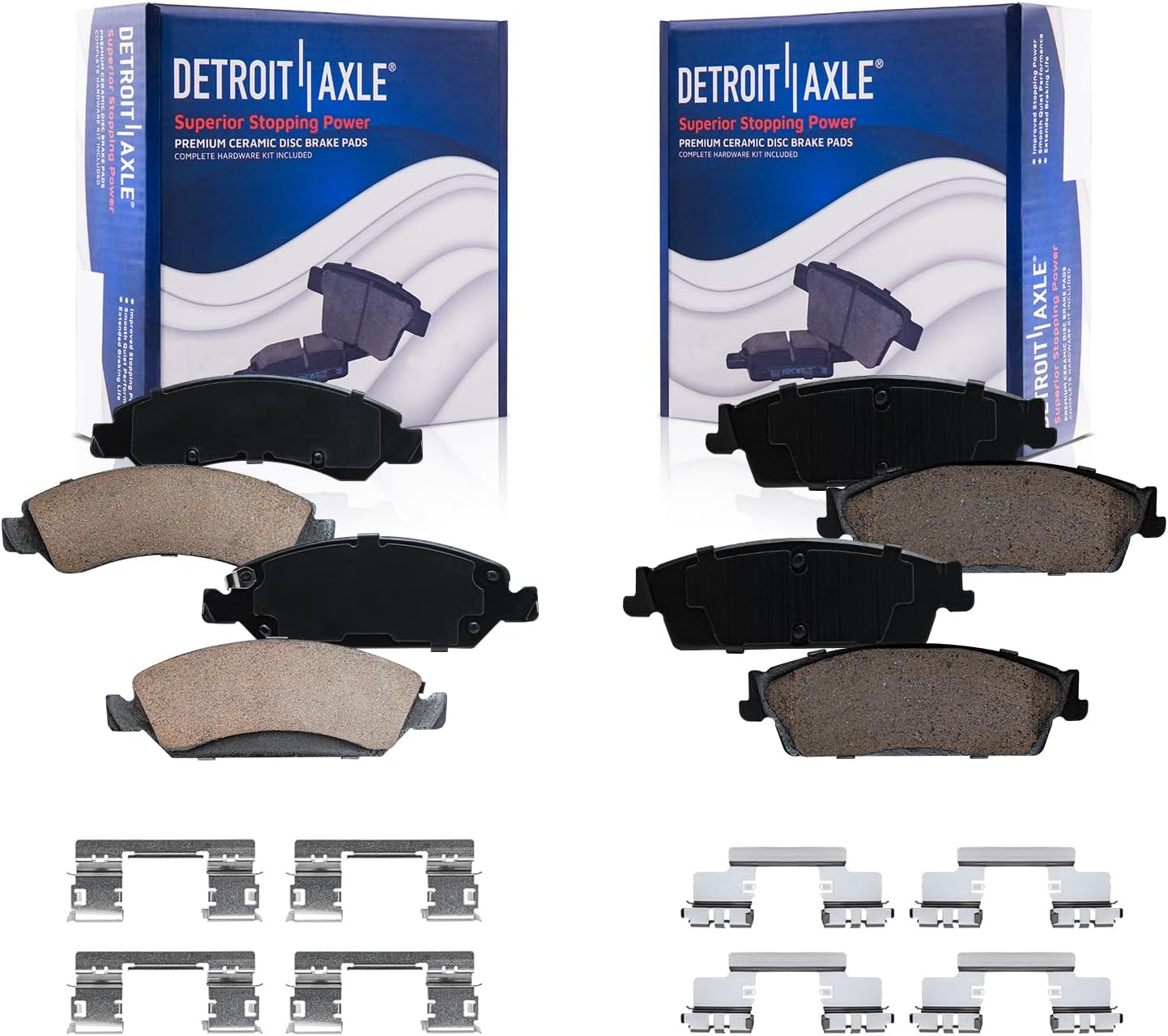
3. Detroit Axle Ceramic Front and Rear Brake Pad Kit with Hardware
| Material Type | Ceramic |
|---|---|
| Auto Part Position | Front, Rear |
| Automotive Fit Type | Vehicle Specific Fit |
| Number of Items | 4 |
This Detroit Axle kit supplies four ceramic brake pads and the basic hardware to replace both front and rear brakes on compatible full-size trucks and SUVs. Designed as a vehicle-specific replacement, the ceramic compound focuses on quiet operation, low dust, and stable friction at higher temperatures to reduce fade during heavy use. The kit includes chamfers and multi-layer materials to limit vibration and help achieve a smooth pedal feel, and many buyers report straightforward fitment and good stopping power. Because it is a ceramic pad, it is gentler on rotors than many semi-metallic options, which can extend rotor life, but ceramic material can wear differently under extreme towing or sustained heavy-duty use. Hardware quality in the box is adequate for most DIY installs though some users noted the included clips are not as robust as factory clips. For someone replacing pads on the listed Chevy/GMC family of trucks and SUVs, this kit is an accessible, quiet, and durable option that balances everyday performance and longevity.
Best for: Buyers looking to restore reliable, quiet braking on a 2007–2013 GMC Sierra 1500 or similar full-size truck who prioritize low dust, rotor-friendly pads, and an easy DIY replacement.
Less Ideal for: Drivers who regularly tow heavy loads, haul frequently, or subject brakes to extreme continuous heat should consider a heavy-duty or performance-oriented pad formulated for severe-duty use.
- Vehicle-specific fitment for the targeted Chevy/GMC truck and SUV applications
- Ceramic compound provides quiet braking and low dust
- Includes both front and rear pads plus basic installation hardware
- Designed for high-temperature resistance to reduce brake fade
- Included hardware clips are reported by some users to be lower quality than factory clips
Verdict: A practical, quiet ceramic pad kit that gives factory-style braking and low dust for 2007–2013 Sierra 1500 owners who want a reliable DIY replacement.
4. Auto Shack Front Ceramic Brake Pad Set (front)

| Automotive Fit Type | Vehicle Specific Fit |
|---|---|
| Auto Part Position | Front |
| Material Type | Ceramic |
| Unit Count | 4.0 Count |
These Auto Shack front ceramic pads are a budget-friendly, vehicle-specific replacement intended for use on the front brakes of compatible Chevrolet, GMC, and Cadillac trucks and SUVs. They deliver quiet, low-dust braking and are formulated to help extend rotor life while providing consistent stopping power in everyday driving. Typical use is street and light-duty truck duty rather than track or heavy towing; installers report straightforward fitment and no unusual bedding-in steps. The pads come as a four-count front set and do not include clips. Strengths are the ceramic compound that reduces brake dust and noise, and the parts match factory fit dimensions for a direct swap. Limitations are that clips are not included and the pads are not marketed for heavy commercial duty or high-temperature performance; some users mentioned a transient burning odor during early use. The set has a six-month manufacturer warranty that covers part defects only and fitment should be verified for the Sierra 1500 before purchase.
Best for: A Sierra 1500 owner prioritizing an affordable, factory-style front pad replacement for daily driving who wants low dust and quiet braking without upgrading to performance compounds.
Less Ideal for: Not a good choice for drivers who routinely tow heavy loads, use the truck for repeated downhill braking, or need high-temperature track-capable pads.
- Vehicle-specific design for direct front-end replacement on compatible trucks and SUVs
- Ceramic compound for lower brake dust and quieter operation during normal driving
- Engineered to help extend rotor life and maintain consistent friction
- Positive user reports of good fit and straightforward installation
- Does not include mounting clips which may be needed on some caliper assemblies
- Not intended for high-temperature track use or heavy towing where performance pads are preferable
Verdict: A cost-conscious, vehicle-specific ceramic front pad set that delivers quiet, low-dust, factory-style braking for daily-driven Sierra 1500s.
5. Bendix Priority1 CFC1363 Ceramic Front Brake Pads (front)

| Auto Part Position | Front |
|---|---|
| Compatible with Vehicle Type | Car, SUV, Truck |
| Material Type | Ceramic |
| Included Components | Brake pad set with installation hardware |
| Specification Met | OEM |
The Bendix Priority1 CFC1363 ceramic front pads are a factory-quality replacement set engineered for direct fit and quiet daily driving. They are built to the maker's fit, form, and function targets and ship with shims, slots, chamfers, and the supplied installation hardware and grease to simplify installation. In typical use these pads deliver steady stopping power with low dust and minimal noise thanks to the built-in shims and chamfers; reviewers report good performance under towing and heavier loads without premature wear. The ceramic compound prioritizes smooth, progressive bite over aggressive initial grab, so pedal feel is predictable for commuting and highway driving. Limitations include a focus on comfort and dust reduction rather than high-performance track braking, and some users note modest initial bite compared with sport or heavy-duty semi-metallic pads. For routine use on a Sierra 1500 these pads offer reliable, quiet braking and easy installation when rotors and hardware are in good condition.
Best for: Buyers who prioritize dependable, low-noise daily braking and want a direct-fit replacement that minimizes dust and installation hassle for a Sierra 1500.
Less Ideal for: Drivers seeking aggressive initial bite for performance driving or heavy commercial duty should consider performance or semi-metallic options instead.
- Factory-spec fit and finish for straightforward installation
- Ceramic formulation that reduces brake dust and keeps wheels cleaner
- Includes shims, chamfers and installation hardware for quieter operation
- Consistent stopping power under normal and loaded driving conditions
- Not optimized for aggressive track use or repeated high-temperature braking
Verdict: A quiet, low-dust ceramic front pad that delivers reliable, factory-quality stopping for everyday Sierra 1500 use.
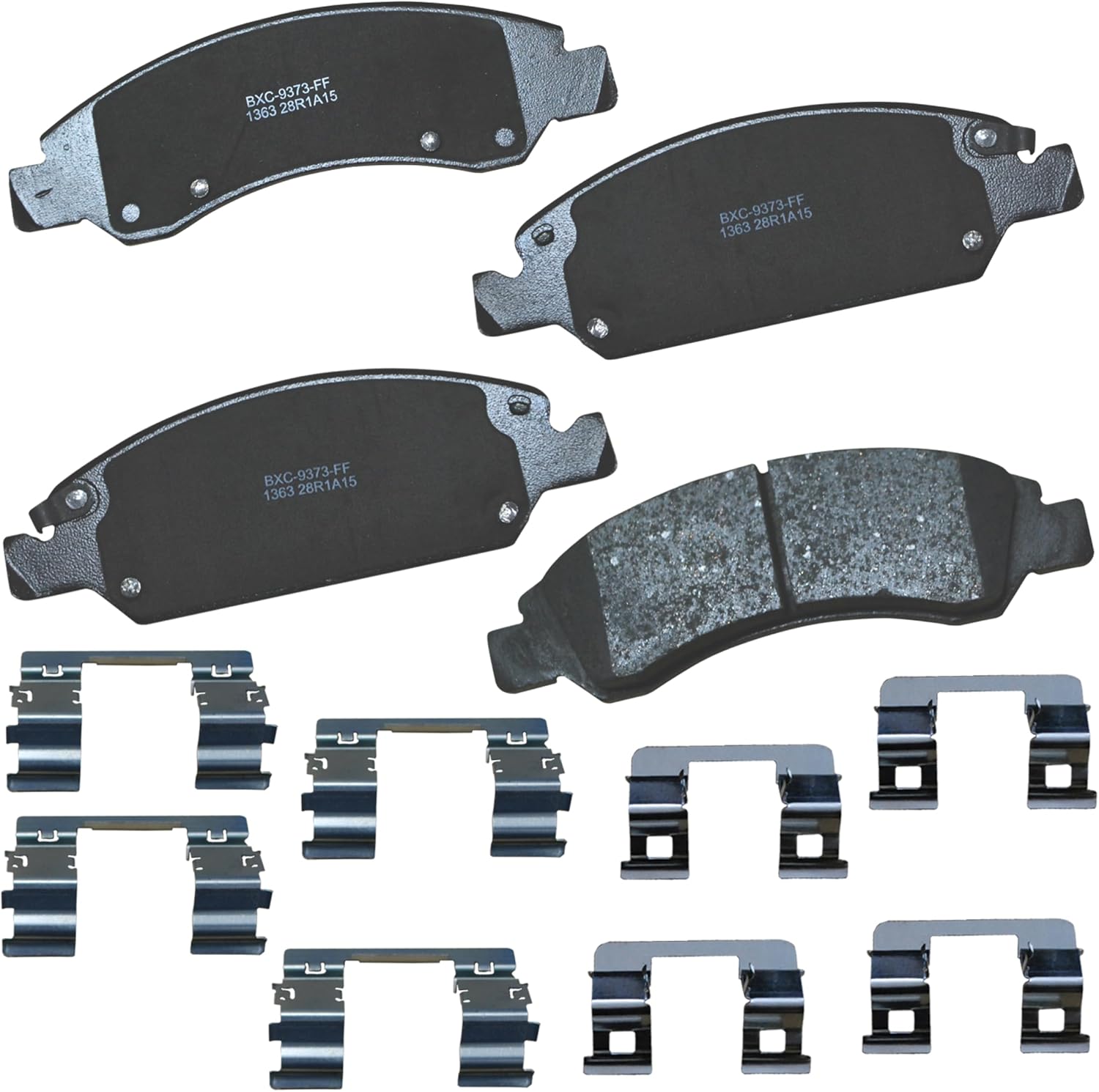
6. Bendix Premium SBC1363 Ceramic Front Brake Pads (front)
| Auto Part Position | Front |
|---|---|
| Compatible with Vehicle Type | Truck |
| Material Type | Ceramic |
| Included Components | Brake pad set with installation hardware |
| Automotive Fit Type | Vehicle Specific Fit |
These Bendix Premium SBC1363 pads are a vehicle-specific ceramic front replacement designed to match factory fit and braking feel on compatible GM trucks and SUVs. They install like a direct replacement and include installation hardware and anti-rattle clips, so a DIY mechanic or tech can swap the pair without sourcing extra parts. In daily driving the ceramic compound delivers quiet operation, predictable initial bite, and reduced brake fade compared with many economy pads, which helps with consistent stopping during highway towing or city commuting. Expect moderate dust compared with semi-metallic racers and note the kit does not include grease for slide pins. Fitment is limited to the listed Sierra and other GM models with the matching brake codes, so confirm your model and brake option before buying. For fleet or owner-operators who value near-factory performance with quieter operation, these pads are a solid, reliable choice.
Best for: Buyers who prioritize reliability and quiet, factory-like braking on a Sierra 1500 and want parts that fit without modification, backed by many positive user experiences.
Less Ideal for: People seeking high-performance or track-focused pads or those who need a no-dust, ultra-low-wear solution for heavy duty towing should consider purpose-built alternatives.
- Vehicle-specific design for direct fit on listed GM front brake applications
- Ceramic compound offers quiet operation and consistent pedal feel
- Includes installation hardware and anti-rattle clips for straightforward replacement
- Durable construction engineered to resist wear and reduce brake fade
- Does not include grease for slide pins or pad backs, which some installers expect
Verdict: If you want a quiet, near-factory replacement front pad for a 2007–2013 GMC Sierra 1500 that installs cleanly and delivers consistent everyday braking, these Bendix ceramic pads are an excellent choice.
7. Acinoparts Front Drilled & Slotted Brake Kit with Ceramic Pads

| Position | Front |
|---|---|
| Vehicle Service Type | Car, Truck |
| Exterior | Antiox Full Coating-Rust Proof and No Need Clean |
| Includes | 2x drilled & slotted rotors, 4x ceramic pads, hardware |
| Rotor Diameter | 330mm |
This Acinoparts front brake kit combines two drilled and slotted 330mm rotors with a set of ceramic front pads and basic installation hardware for a direct replacement on compatible GM trucks and SUVs. It is typically used as a like-for-like front brake refresh and aims to improve heat dissipation and pad bedding thanks to the rotor's slots and holes while keeping dust and noise lower through the ceramic pad compound. The kit includes an anti-corrosion full coating on the rotors to resist rust and a pre-ground friction surface to shorten the bed-in period. Practical benefits are straightforward: stronger, more consistent braking under repeated stops, reduced rotor glazing, and lower visible pad dust compared with semi-metallic pads. Limitations are the usual ones for drilled rotors; they can be marginally noisier under heavy panic stops and some installers prefer non-drilled rotors for severe towing or track use. Professional installation is recommended to ensure proper fitment and safety.
Best for: Buyers who prioritize a reliable, direct-fit front brake replacement that reduces dust and improves everyday braking feel without upgrading to performance-only parts.
Less Ideal for: Drivers who regularly tow heavy loads, do frequent high-temperature braking, or want a dedicated track-focused braking setup should consider heavy-duty or performance rotors and pads instead.
- Vehicle-specific fitment for many full-size GM trucks and SUVs in the listed years
- Drilled and slotted rotors improve heat dissipation and help evacuate gas and dust
- Ceramic pads reduce dust and tend to run quieter during normal driving
- Antiox full coating on rotors reduces surface rust and appearance degradation
- Includes hardware and pre-ground surfaces to shorten bedding time
- Drilled rotors are less ideal for extreme towing or track use where solid or vented plain rotors are preferred
Verdict: A straightforward, vehicle-specific front brake replacement that delivers cleaner ceramic pad operation and improved rotor cooling for daily-driven GM trucks and SUVs.
Choosing the Right 2007-2013 GMC Sierra 1500 Brake Pads: Key Factors to Consider
Pad Material and Compound
Different pad materials change initial bite, longevity, dust, and noise. Organic compounds tend to be quieter at low temperatures but wear faster under heavy loads. Semi-metallic compounds offer strong bite and heat resistance but usually produce more dust and can be noisier.
For a 2007-2013 Sierra 1500 that tows or carries heavy loads, materials with better thermal stability matter because they resist fade during repeated stops. Conversely, if most driving is city commuting, a low-dust ceramic-style compound may be preferable for cleaner wheels and reduced noise. Consider the tradeoff between stopping power and wear rate when choosing the compound.
Noise and Vibration Control
Brake noise and vibration affect driver confidence and perceived quality. Pads with chamfers, quality shims, and robust backing plates reduce squeal and harsh pedal feel. Poorly damped pads can transmit vibration into the steering and brake pedal, which is more noticeable in a pickup with heavier rotating mass.
Choose pads with proven anti-rattle features and full-coverage shims if you prioritize quiet daily driving. Keep in mind that some high-performance compounds sacrifice quietness for extra bite, so match noise tolerance to driving habits.
Heat Resistance and Fade Performance
Thermal performance matters for tow-heavy or mountainous driving. Pads that resist glazing and maintain friction at higher temperatures reduce the risk of brake fade on long descents or repeated stops. Fade leads to longer stopping distances and a mushy pedal feel.
Look for compounds and formulations that list high-temperature stability and for pads designed with good thermal conductivity through the backing plate. For Sierra 1500 owners who tow occasionally, selecting pads with solid heat resistance provides a safety margin under sustained loads.
Wear Life and Abrasion on Rotors
Pad longevity reduces how often you service the brakes but often correlates with how abrasive a compound is on the rotors. Harder compounds usually last longer but can accelerate rotor wear, increasing the chance you will need rotor machining or replacement sooner.
Consider expected mileage per pad set relative to your typical driving. If you aim to minimize overall ownership cost, balance pad life with rotor friendliness. For trucks that see heavy use, choosing a longer-lasting compound can be cost-effective even if it requires occasional rotor attention.
Fitment and Hardware Compatibility
Correct fitment is essential for safety and ease of installation. The 2007-2013 Sierra 1500 has specific pad shapes, backing plate profiles, and available hardware variants for front and rear. Incorrect fitment can lead to rattling, uneven wear, or inability to install pads without modifying calipers.
Confirm that replacement pads match the Sierra 1500's pad profile and include or recommend compatible shims, clips, and wear indicators where applicable. If you plan to reuse existing hardware, verify pad thickness and surface contact to avoid binding or incomplete retraction.
Dust, Cleaning, and Aesthetics
Brake dust affects wheel appearance and cleaning frequency. Some pad compounds produce heavy dark dust that adheres to wheel finishes, while ceramic-style compounds often leave lighter, easier-to-clean residues.
If you keep alloy wheels clean for appearance or resale value, choose pads with low-dust formulations. Also consider how dust interacts with your wheel finish and how often you are willing to clean wheels when selecting a pad type.
Front Vs Rear Brake Pad Roles on the Sierra 1500
The front and rear pads serve different roles. On the 2007-2013 Sierra 1500, the front brakes typically handle the majority of stopping force, so front pads need to deliver solid initial bite and thermal resistance. Rear pads provide balance, parking brake function on some rear setups, and help stabilize braking under load.
- Front pads: prioritize high friction stability and heat resistance.
- Rear pads: emphasize consistent modulation and parking brake compatibility where applicable.
- Consider matching material families front-to-rear for predictable pedal feel.
Installation Tips and Brake Bedding Procedures
Proper installation and bedding affect long-term performance. Before installing new pads, inspect rotors for scoring and thickness; resurface or replace rotors that are below spec or heavily damaged. Clean caliper slides and ensure hardware is in good condition to prevent uneven wear. Bedding new pads typically involves a series of controlled stops from moderate speed to transfer an even layer of friction material onto the rotor. Follow a progressive bedding routine and avoid hard stops until pads have been through a set of warm-up cycles to minimize glazing.
- Clean and lubricate sliding surfaces with high-temperature brake grease.
- Use proper torque values on caliper hardware to avoid warping.
- Perform bedding stops in a safe area, gradually increasing brake intensity.
Signs You Need a Brake Pad Replacement
Recognizing wear symptoms early prevents damage to rotors and maintains stopping performance. Common indicators include reduced pad thickness, a pulsing brake pedal, increased stopping distances, or a persistent squeal. Visual inspection through the wheel can reveal remaining pad material; compare measurements to the manufacturer's thickness spec. Other signs are grinding noises, which often mean the pad backing plate is contacting the rotor, or an illuminated brake warning if the vehicle uses wear sensors. Address symptoms promptly to avoid more expensive repairs.
- Measure pad thickness and compare to factory specs.
- Listen for consistent squeal or grinding that persists after warming brakes.
- Watch for pedal softness or pulsing during braking.
How Towing and Payload Change Your Pad Choice
Towing and heavy payloads increase braking energy and heat generation. A Sierra 1500 that regularly tows a trailer or carries heavy loads places higher demands on pads and rotors. In these cases, prioritize compounds with better fade resistance and cooling characteristics. You may also need shorter service intervals or choose pads rated for higher thermal loads. Consider pairing more heat-resistant pads with rotor upgrades or scheduled inspections to ensure consistent performance under repeated heavy braking.
- Expect higher wear rates when towing frequently.
- Plan for more frequent inspections if you tow or haul heavy loads.
- Choose materials noted for thermal stability and fade resistance.
Maintenance and When to Inspect Brakes
Regular inspections catch wear before it causes additional damage. Check pad thickness and rotor condition at least every 12,000 miles or sooner if you notice changes in braking behavior. After heavy towing seasons or off-road use, inspect brakes for glazing, uneven wear, or contamination. Replacing pads as they approach the minimum thickness specification prevents metal-to-metal contact and keeps repair costs lower over time.
- Inspect pads at each oil change or quarterly for frequent users.
- Check for uneven wear patterns that indicate caliper or hardware issues.
- Replace pads before reaching the minimum pad thickness spec to protect rotors.
Still looking for the perfect fit?
Select your GMC Sierra 1500 configuration to see the most relevant Brake Pads recommendations
How We Chose the Best 2007-2013 GMC Sierra 1500 Brake Pads
We focused on evaluation criteria that matter specifically to 2007-2013 GMC Sierra 1500 owners and used those filters to narrow the field to seven pad options. First, we verified fitment compatibility with the Sierra 1500 front and rear brake hardware common to the 2007-2013 chassis. We prioritized stopping performance across dry and wet braking, then assessed expected longevity based on pad material and compound design. Additional filters included noise and dust generation, since pickup owners often care about low cabin noise and manageable wheel cleanliness, and thermal resistance for drivers who tow or tow regularly. We also considered backing plate and shim design for reduced vibration and ease of installation. Exclusions included pads that required caliper modifications, were designed only for motorsport use, or lacked verifiable fitment for the 2007-2013 Sierra 1500. In short, the list favors solutions that deliver predictable stopping, acceptable wear life, and straightforward fitment for this truck without requiring hardware changes.
Our full evaluation process is outlined in our review methodology.
FAQ
How often should I replace brake pads on a 2007-2013 Sierra 1500?
It depends on driving and towing habits. Many owners replace pads between 30,000 and 70,000 miles. Heavy towing or frequent stop-and-go driving shortens pad life, so inspect more often and plan replacements based on measured pad thickness.
Can I use the same pad material front and rear?
You can, and matching material families often yields more consistent pedal feel. Some owners prefer higher-friction fronts and lower-dust rears, but ensure rear pads remain compatible with parking brake requirements and modulate predictably with the front pads.
What causes grinding or squealing after installing new pads?
Grinding often indicates metal backing contacting the rotor due to extreme wear or incorrect installation. Squeal can come from glazing, lack of shims, or initial bedding. Verify hardware installation, bedding procedure, and that anti-squeal shims are in place.
Should I resurface rotors when changing pads?
Resurfacing depends on rotor thickness and condition. If rotors are within thickness specification and show only light scoring, resurfacing can restore an even surface. Deep scoring or rotors below minimum thickness requires replacement to ensure safe braking.
Do ceramic-style pads reduce brake dust on the Sierra 1500?
Ceramic-style compounds usually produce lighter, less adhesive dust than some semi-metallic pads, which helps keep wheels cleaner. Dust levels vary by compound, so choose pads whose manufacturers report low-dust formulations if wheel cleanliness is a priority.
Will aftermarket pads affect my truck's ABS or stability control?
Most properly sized replacement pads will not affect ABS or stability control function. Issues arise when pads do not match the correct thickness or fit, causing uneven contact or sensor misbehavior. Always confirm correct fitment and inspect sensors if you notice warning lights.
Final Verdict
Prioritize stopping performance, heat resistance, and correct fitment when choosing brake pads for a 2007-2013 GMC Sierra 1500. Your driving style should guide the balance between dust, noise, and pad life: city-driven trucks benefit from lower-dust, quieter compounds, while towing-focused trucks need higher thermal stability. Inspect pads and rotors regularly and replace pads before they reach minimum thickness to protect rotors and maintain consistent braking. Make your decision based on how you use the truck and the tradeoffs you accept between longevity, rotor wear, and noise. That approach will help you choose a pad that delivers reliable braking for your Sierra 1500.
Explore More:
- Check out all GMC Sierra 1500 parts & accessories
- Explore Brake Pads Maintenance & Repair Guides
- Explore Brake System
- Browse all Auto Parts
