

Note: This article contains affiliate links. If you click on these links and make a purchase, I may earn a small commission at no extra cost to you. This helps support my research and content. Read my full affiliate disclosure here.
If you drive a 2018-present Jeep Wrangler you know how important predictable braking is whether on highway runs or light off-road trails. Choosing the right brake pads affects stopping distance, pedal feel, dust and noise, and how often you need to service the brakes. This guide focuses on the most suitable brake pads for the 2018-present Wrangler lineup, including the JL and JLU era models, and explains the tradeoffs between materials and expected lifespan. Below are the top shortlisted options for this vehicle scope and what to expect from each type. The picks were evaluated for braking performance, durability, noise control, and fitment accuracy to help you pick pads that match your driving style. Continue for technical considerations and practical installation notes.
Looking for other parts? See all Jeep Wrangler parts & accessories.
Top Picks at a Glance
| Best Overall The best all-around choice for most situations | Bendix Premium SBC2186 Ceramic Rear Brake Pads |  |
| Best Quality Built to a higher standard if you want something more solid | PowerStop Z36 Truck & Tow Rear Carbon-Fiber Ceramic Brake Pads (Z36-6004) |  |
| Best Value The sweet spot between price and what you get | Detroit Axle Rear Ceramic Brake Pads with Hardware for 2018-2023 Jeep Wrangler (BRY Code) |  |
| Best Budget The cheapest option that still gets the job done reliably | SUPLABEL D1274 Rear Ceramic Brake Pad Set (Rear) |  |
| Highest Rated A top-rated pick with lots of positive feedback | Bendix Priority1 CFC2172 Ceramic Rear Brake Pads |  |
| Most Popular A crowd favorite that many people choose with confidence | Detroit Axle Front Brake Kit with 11.89" Rotors and Ceramic Pads |  |
| Best Seller A high-volume bestseller chosen again and again | SCITOO Ceramic Front and Rear Brake Pad Kit (vehicle-specific fit) |  |
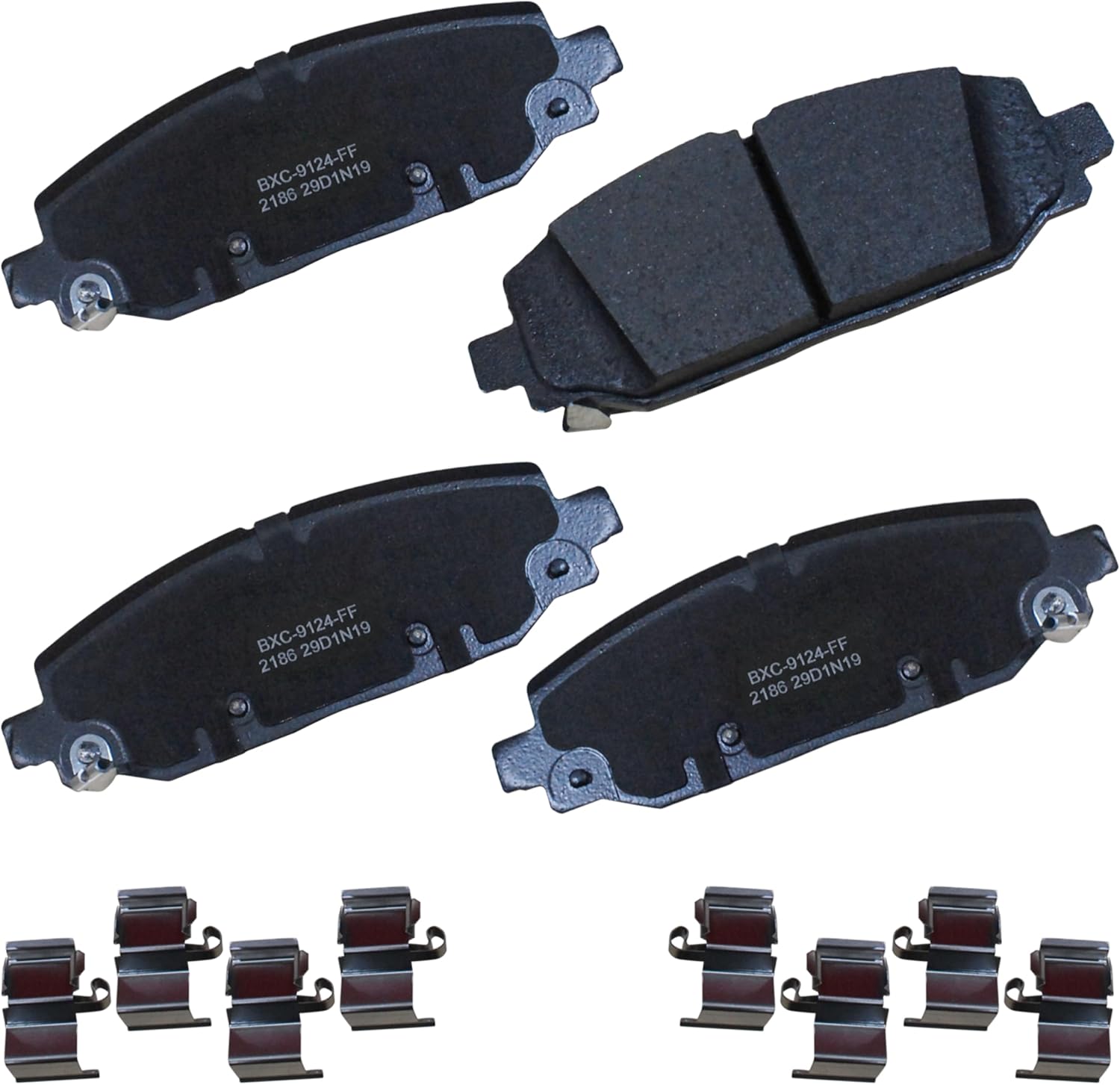
1. Bendix Premium SBC2186 Ceramic Rear Brake Pads
| Auto Part Position | Rear |
|---|---|
| Material Type | Ceramic |
| Automotive Fit Type | Vehicle Specific Fit |
| Compatible with Vehicle Type | Passenger Car, SUV, Truck |
These Bendix Premium ceramic rear pads are a direct-fit replacement designed for Jeep Wrangler models from 2018 onward. They use a ceramic friction compound engineered to give quiet operation and steady stopping power for daily driving. The kit is vehicle-specific and arrives with the pad hardware needed for a straight swap, which makes installation straightforward for a DIYer or tech. In use the pads are described by owners as thicker than some performance pads, which suggests longer wear life while still providing consistent feel and resistance to fade during normal commutes and light towing. Because they prioritize smooth, low-noise operation and durability, they are not aimed at aggressive track use or heavy-duty commercial braking where higher-friction or metallic compounds shine. Expect good OEM-style fitment, quieter brakes, and predictable pedal response for street and highway driving, with the usual limitation that ceramic pads trade a bit of ultimate high-temperature bite for comfort and longevity.
Best for: Drivers who want a quiet, durable rear pad that restores factory braking feel and is easy to install for everyday street and highway use.
Less Ideal for: Enthusiasts who frequently drive the vehicle hard, tow heavy loads, or need maximum high-temperature stopping power should consider performance-oriented metallic pads instead.
- Vehicle-specific fit for seamless replacement on the specified Wrangler models
- Ceramic material yields quiet operation and reduced brake dust
- Includes necessary pad hardware for straightforward installation
- Designed to match factory fit, form, and function for predictable pedal feel
- Ceramic compound is less suited to high‑temperature, aggressive driving compared with performance metallic pads
Verdict: Choose these Bendix ceramic rear pads for quiet, factory-quality braking and long-lasting, low-dust performance on everyday-driven 2018-and-newer Jeep Wranglers.
2. PowerStop Z36 Truck & Tow Rear Carbon-Fiber Ceramic Brake Pads (Z36-6004)

| Auto Part Position | Rear |
|---|---|
| Material Type | Ceramic, Stainless Steel |
| Model Number | Z36-6004 |
| Manufacturer Warranty Description | 12-Month / 12,000-Mile Limited Warranty |
These PowerStop Z36 Truck & Tow rear pads are a bolt-on performance upgrade for 2018–25 Jeep Wrangler rear brakes designed to handle towing, heavy loads, and hilly driving. The carbon-fiber ceramic compound raises the coefficient of friction over factory replacement pads for stronger initial bite and improved fade resistance during sustained braking. Chamfered and slotted faces with stainless-steel shims and a powder-coated backing plate help keep noise low, shed dust, and resist corrosion, while the included stainless hardware simplifies installation. In everyday use they deliver firmer, more confident stops when hauling a trailer or running larger tires, and reviewers report quiet operation and good fitment on JL Wranglers. Watch for fitment variations across brake codes and model years and confirm rear rotor size before ordering, since some customers reported mismatched fit on specific builds. These pads are focused on durable, heavy-duty stopping rather than ultra-short track pads, so they balance performance with low dust and comfort for daily driving and towing.
Best for: Buyers who prioritize stronger, fade-resistant braking for towing, hauling, or modified Wranglers and want a quiet, low-dust upgrade that installs without modification.
Less Ideal for: Drivers seeking track-focused pads optimized for maximum friction at the expense of dust and street comfort should consider competition-specific compounds instead.
- Carbon-fiber ceramic formula for stronger stopping power and improved fade resistance
- Low-dust compound and stainless-steel shims reduce wheel soiling and noise
- Chamfered and slotted design plus included stainless hardware for easier, quieter installation
- Powder-coated backing plate resists rust and extends pad life
- Fitment depends on specific rear brake code and rotor size so you must confirm exact vehicle fit before purchase
Verdict: For 2018–25 Wrangler owners who tow or run larger tires and want a durable, low-dust rear pad with noticeably stronger bite and better fade resistance, the PowerStop Z36 is a practical performance upgrade.
3. Detroit Axle Rear Ceramic Brake Pads with Hardware for 2018-2023 Jeep Wrangler (BRY Code)

| Position | Rear |
|---|---|
| Manufacturer | Detroit Axle |
| Manufacturer Part Number | P-2172 |
| Fitment | 2018-2023 Jeep Wrangler (Standard Brakes BRY Code) |
This Detroit Axle kit supplies two rear ceramic brake pads plus the hardware needed to replace the factory rear pads on 2018–2023 Jeep Wrangler models with BRY-code standard brakes. The ceramic compound and multi-layer construction are intended to offer a quieter stop, lower dust, and stable friction at higher temperatures compared with generic metallic pads. In practice the kit is a straightforward DIY replacement: pads are shaped and chamfered to reduce vibration and the included hardware simplifies refitting. Buyers report generally good fitment and improved pedal feel after break-in, though a few users still saw dust or occasional noise depending on driving style. The ceramic formulation also aims to be rotor-friendly to help preserve rotor life. This is a value-oriented aftermarket option that balances quieter operation and heat resistance with the typical limits of non-premium pads, making it a practical upgrade or direct replacement for owners focused on routine street driving rather than heavy towing or track use.
Best for: Owners who want a direct-fit, cost-conscious replacement that improves quietness and keeps wheels cleaner on daily-driven Wranglers with standard BRY brakes.
Less Ideal for: Drivers who do frequent heavy towing, off-road braking under extreme conditions, or track driving should consider higher-performance friction compounds designed for extreme heat and wear.
- Ceramic formula designed for lower dust and reduced rotor wear
- Includes necessary hardware for a complete rear pad replacement
- Chamfers and multi-layer material to reduce vibration and noise
- Engineered for high-temperature resistance to maintain braking consistency
- Some users still report noticeable dust or intermittent noise in real-world use
Verdict: A practical, factory-fit ceramic rear pad kit that upgrades quietness and rotor longevity for everyday 2018–2023 Jeep Wrangler driving.
4. SUPLABEL D1274 Rear Ceramic Brake Pad Set (Rear)

| Auto Part Position | Rear |
|---|---|
| Compatible with Vehicle Type | ATV |
| Material Type | Ceramic |
| Automotive Fit Type | Universal Fit |
These SUPLABEL D1274 rear ceramic pads are a basic replacement set intended for everyday driving on compatible Jeep Wrangler models. They use a high-density ceramic compound with slots and chamfers to help dissipate heat and reduce noise, and the listing includes multi-layer rubberized shims and stainless hardware to cut vibration and rattle. In practice this means predictable, quiet stopping under normal city and highway use and reasonable resistance to fade during repeated braking. Installation is straightforward for anyone comfortable with a simple brake job, and reviews report good initial stopping power and low noise. Important limitations are fitment consistency and quality control; some buyers reported incorrect fit or packaging issues, so double-check compatibility and inspect parts on arrival. Also these are targeted at daily drivers rather than heavy towing or performance use, so drivers who push brakes hard or need track-capable stopping should look elsewhere.
Best for: A buyer who wants an affordable, quiet replacement set for everyday driving and prioritizes value over performance-grade braking; suitable for routine city and highway use on the specified Wrangler models.
Less Ideal for: Not a good choice for drivers who need heavy-duty, track, or towing-capable brake performance or those who require guaranteed factory-fit precision without verifying fitment first.
- Ceramic compound offers quiet operation and consistent street braking
- Slotted and chamfered design helps dissipate heat and reduce noise
- Includes rubberized shims and stainless hardware to lower vibration and rattle
- Relatively easy to install for DIY brake replacement
- Fitment and quality control appear inconsistent across some orders
Verdict: A budget-friendly ceramic rear pad set that delivers quiet, dependable everyday braking for compatible Jeep Wrangler drivers.
5. Bendix Priority1 CFC2172 Ceramic Rear Brake Pads

| Material Type | Ceramic |
|---|---|
| Auto Part Position | Rear |
| Automotive Fit Type | Vehicle Specific Fit |
| Included Components | (1) Bendix Priority1 Ceramic Brake Pad Set |
These Bendix Priority1 rear ceramic pads are a direct fit for Jeep Wrangler models and come as a vehicle-specific kit with the necessary installation hardware. They use ceramic friction material with shims, slots, and chamfers intended to reduce noise and help the pads bed in smoothly. In everyday use they provide steady stopping power for city and highway driving, resist brake fade under normal loads, and produce noticeably less wheel dust than many semi-metallic options. The included hardware and a packet of silicone lube simplify installation and help achieve quiet operation. On the downside some users report occasional hardware fitment issues on non‑matching caliper designs, so confirm the pad shape and hardware match your vehicle before installing. These pads prioritize comfort and low dust over aggressive track-style bite, so drivers who need maximum high-temperature endurance or aggressive performance braking may prefer a different compound.
Best for: Buyers who want dependable, low-noise replacement rear pads for regular driving and worry-free, consistent stopping on daily commutes and light towing.
Less Ideal for: Drivers who frequently perform spirited driving, heavy towing, or off-road braking that generates extreme heat should consider a performance or semi‑metallic compound instead.
- Vehicle-specific design for direct fit on listed Wrangler models
- Ceramic material yields quiet braking and low brake dust
- Includes installation hardware and silicone brake lube for easier fitment
- Shims, slots, and chamfers engineered to reduce noise and promote even wear
- Not intended for aggressive track use or sustained extreme high-temperature braking
Verdict: Choose these Bendix Priority1 rear ceramic pads for a quiet, low-dust, factory-fit replacement that delivers reliable everyday braking for Jeep Wrangler owners.
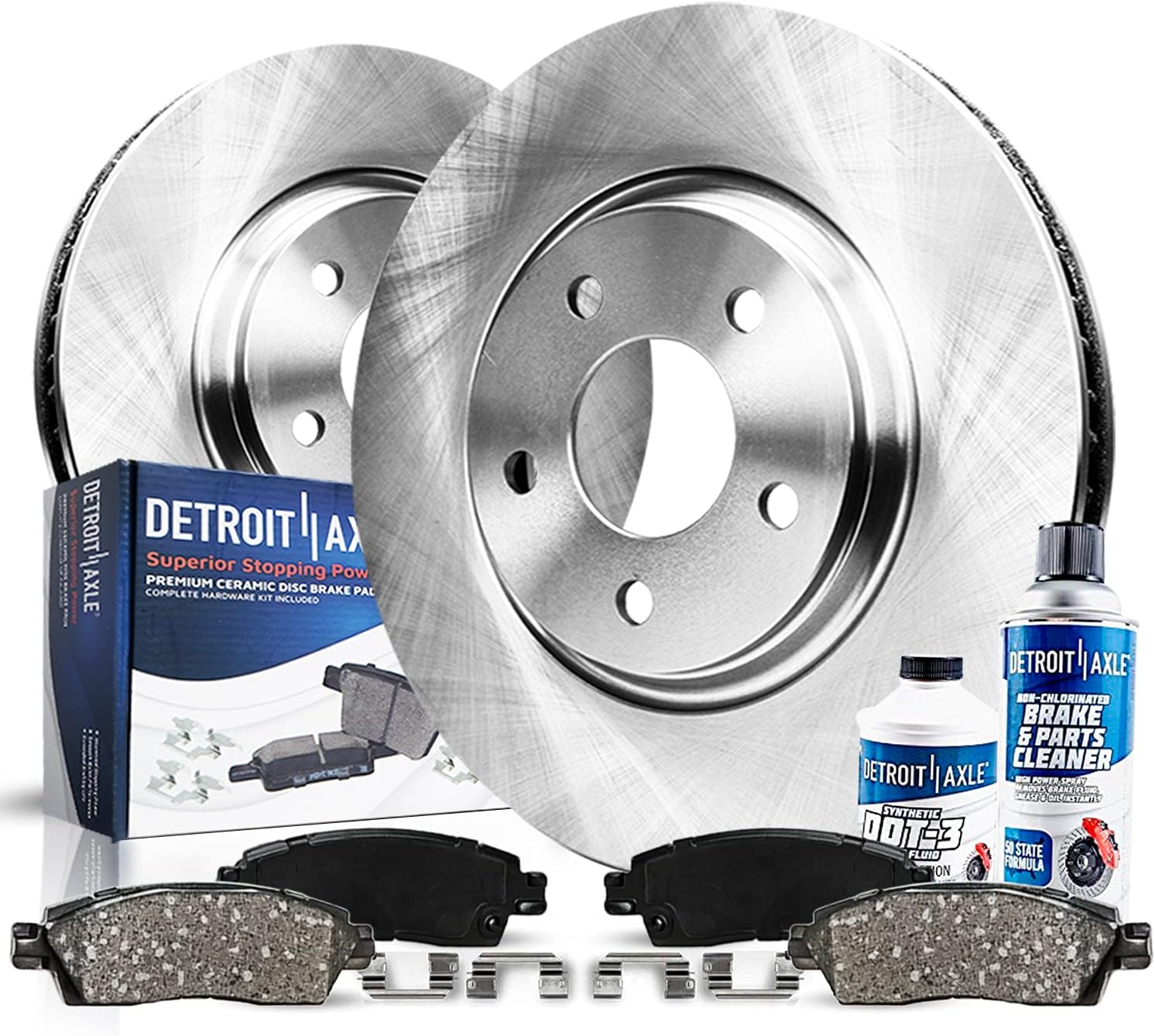
6. Detroit Axle Front Brake Kit with 11.89" Rotors and Ceramic Pads
| Fitment | 2007–2017 Jeep Wrangler; 2018 Wrangler JK |
|---|---|
| Rotor diameter | 11.89 inch (302 mm) |
| Pad type | Ceramic |
| Orientation | Front |
| Warranty | 10 Year |
This Detroit Axle front brake kit supplies everything needed to refresh the front brakes on compatible Jeep Wranglers: two 11.89 inch vented rotors, a set of ceramic front pads with hardware, a can of brake cleaner, and a bottle of brake fluid. The rotors are zinc plated to resist corrosion and have ventilation slots to help dissipate heat during heavy use, while the ceramic pads are designed for quieter operation and lower dust. Installation is straightforward for anyone comfortable with a basic brake job because the locating holes are machined to factory-style tolerances and hardware is included. Practical benefits are improved stopping feel after replacing worn parts, fewer visible dust streaks from the zinc finish, and a one-stop kit that avoids shopping for separate fluids or cleaner. Limitations are that this is an aftermarket replacement rather than factory-branded parts and it covers front braking only, so buyers needing a full front-and-rear refresh will need additional parts. A 10-year warranty is listed but specifics should be confirmed before purchase.
Best for: Buyers who prioritize proven customer feedback and want a ready-to-install front brake refresh with included fluids and cleaner to minimize extra purchases.
Less Ideal for: Drivers looking to replace front and rear brakes together or those who insist on purchasing parts from the vehicle manufacturer should consider other options.
- Complete front kit includes rotors, ceramic pads, mounting hardware, brake cleaner, and brake fluid
- Vented, zinc-plated rotors for faster heat dissipation and corrosion resistance
- Ceramic pads formulated for lower noise and reduced dust
- Machined locating holes and included hardware for straightforward bolt-on installation
- Aftermarket part not a factory-branded replacement
- Kit replaces front brakes only and does not include rear components
Verdict: A well-reviewed, all-in-one front brake kit that gives risk-conscious buyers confidence by combining ventilated zinc-plated rotors and ceramic pads with the extra fluids and hardware needed for a smooth installation.
7. SCITOO Ceramic Front and Rear Brake Pad Kit (vehicle-specific fit)

| Brand | SCITOO |
|---|---|
| Material | Ceramic |
| Auto Part Position | Front |
| OEM Part Number | D1274-8390, D1273-8389 |
This SCITOO kit supplies both front and rear ceramic brake pads intended as a direct vehicle-specific replacement for compatible Jeep Wrangler models. Installation is straightforward for anyone comfortable with basic brake work since the kit is supplied in matched sets and includes hardware in many listings. Ceramic construction aims to deliver quieter stops, reduced dust, and consistent pedal feel compared with older organic pads, while chamfers and slotting help manage heat and reduce noise. Buyers report solid stopping power and minimal squeal in daily driving and light towing duties, and the pads appear to wear reasonably for the price point. Expect typical aftermarket variability though; some users noted shorter life in heavy-duty use. Also, because these are aftermarket ceramic pads, extremely aggressive driving or repeated heavy towing may produce more fade and faster wear than premium performance or heavy-duty formulations. For routine street driving and conservative off-road use this kit gives a quiet, OEM-style brake feel at a budget-friendly cost.
Best for: Buyers who prioritize quiet, low-dust braking and want a straightforward, vehicle-specific replacement that restores factory-like stopping for everyday driving and light off-road use.
Less Ideal for: Drivers who frequently tow heavy loads, engage in aggressive trail driving, or seek high-performance track-capable braking should consider heavy-duty or performance brake compounds instead.
- Ceramic compound offers quieter braking and lower dust compared with many semi-metallic pads.
- Sold as matched front and rear sets for a complete replacement job.
- Slotting and chamfers improve heat management and reduce squeal.
- Reported to fit and install easily with included hardware in most cases.
- May wear faster under heavy towing or aggressive off-road driving compared with heavy-duty or performance brake compounds.
- Aftermarket quality can vary between batches which can affect longevity.
Verdict: A budget-friendly ceramic front and rear pad kit that restores quiet, low-dust braking for everyday Jeep Wrangler use.
Choosing the Right 2018-Present Jeep Wrangler Brake Pads: Key Factors to Consider
Pad Material and Performance
Pad compound determines initial bite, fade resistance, dust production, and rotor friendliness. Organic and ceramic-like compounds usually provide quieter operation and less rotor wear but can offer slightly less initial bite compared with semi-metallic compounds. Semi-metallic compounds generate strong stopping power and handle heat well during repeated heavy braking, which matters if you tow or frequently descend steep grades. Ceramic-oriented pads tend to run cooler and produce less brake dust, which helps wheel appearance and reduces clean-up. Choose a compound that balances stopping performance and rotor preservation based on how you use your Wrangler.
Fitment and Chassis Compatibility
Correct fitment for the 2018-present Wrangler is crucial to avoid uneven wear, noise, or installation issues. The Wrangler family includes JL and JLU era models as well as earlier generations that owners still reference; for 2018-present vehicles ensure the pad profile matches the specific caliper and rotor thickness used on your vehicle. Using pads built to OEM dimensions or verified aftermarket fitment reduces the chance of rubbing, caliper piston misalignment, or retaining clip interference. Always confirm the replacement part references the correct generation code when applicable to your model year and trim.
Pad Thickness and Wear Rates
Initial pad thickness and how quickly it wears determine replacement intervals. Thicker pads can offer a longer service life, but thickness must match caliper clearance and the manufacturer's specifications. Understanding the brake pad thickness spec for your Wrangler helps set realistic expectations for how often to inspect and replace pads. Aggressive driving, towing, or frequent off-road use accelerates wear, so factor driving style into service interval planning.
Noise and Vibration Characteristics
Brake noise ranges from faint squeal to deep grinding and can signal different issues. Some compounds and backing-plate assemblies are engineered to reduce squeal and vibration by including shims, chamfers, or dampening layers. If you prioritize a quiet daily driver, look for pads designed specifically for low-noise operation. Trail-heavy use may introduce more contaminants and require pads that maintain stable friction even when exposed to mud or water.
Rotor Compatibility and Heat Management
Pads impact how rotors wear and how heat is managed in braking events. Certain compounds transfer more heat to the rotor, which can accelerate warping or scoring under repeated heavy braking, while others shed heat more evenly. Consider whether your driving includes long downhill runs or heavy loads; in those cases choose pads with better heat resistance and fade control. Also account for rotor condition and whether resurfacing or replacement is planned when installing new pads.
Installation and Hardware Requirements
Proper installation and matching hardware extend pad life and ensure safe operation. Some pad kits include shims, anti-rattle clips, or new wear sensors, while other options require reusing existing hardware. Verify clearances, torque specs, and whether the caliper requires piston retraction tools. For 2018-present Jeep Wrangler models, attention to hardware condition prevents uneven wear and reduces noise complaints after installation.
Why Generation Codes Matter (JL and JLU)
Owner searches often include chassis codes, and for the 2018-present Jeep Wrangler most vehicles fall into the JL and JLU generation. Generation codes affect caliper design, rotor dimensions, and recommended pad profiles. Confirming the JL and JLU code for your model year ensures the pads you choose match the intended mounting geometry and performance expectations.
- JL and JLU generation typically covers 2018 and later Wrangler models
- Earlier JL and JLU references may appear in owner forums, but verify your vehicle's build in service documentation
- Caliper and rotor variations between generations change pad backing plate shape and retention method
Material Tradeoffs: Ceramic Vs Semi-Metallic
Ceramic-style pads are often preferred for lower noise and dust, while semi-metallic pads excel in heat tolerance and initial bite. For most 2018-present Wrangler owners who use the vehicle primarily on-road with occasional trails, ceramic options strike a good balance between refinement and performance. If you frequently tow or encounter long downhill stretches, a semi-metallic compound provides stronger fade resistance.
- Ceramic-style: low dust, quiet, rotor-friendly
- Semi-metallic: strong initial bite, better fade resistance, may produce more dust
Front Vs Rear Brake Pad Roles
The front pads handle the majority of stopping force and typically wear faster than the rear pads. Understanding front vs rear brake pads behavior helps you plan staggered replacements and ensures balanced braking performance after installation. Replacing both axles when necessary keeps pedal feel consistent and prevents early rotor issues.
- Front pads do most of the work during heavy braking
- Rear pads provide stability and parking brake engagement
- Inspect both axles together to detect uneven wear patterns
Recognizing Brake Pad Wear Symptoms
Common wear symptoms include a high-pitched squeal from the built-in wear indicator, reduced pedal responsiveness, increased stopping distance, or audible grinding which indicates metal-to-metal contact. Early recognition of these signs can prevent rotor damage and preserve braking performance. Regular inspections that measure pad thickness and check for glazing or contaminant buildup are recommended, especially after off-road use where sand and grit accelerate wear.
- Squeal indicates near end-of-life or glazing
- Grinding usually means pads are worn to backing plate
- Vibration or pulsing at the pedal can indicate uneven pad wear or rotor issues
Installation Tips and Safety Checks
When you install new pads on a 2018-present Jeep Wrangler, always clean contact surfaces, lubricate backing-plate contact points with appropriate high-temperature grease, and replace worn hardware. Compress caliper pistons slowly to avoid damaging seals and verify parking brake components if the rear pads were replaced. After installation perform a series of low-speed stops to bed the pads and confirm pedal feel. Check for any unusual noises or uneven braking and re-torque wheel fasteners to the vehicle specification.
- Clean caliper bracket and hardware before installing new pads
- Use high-temperature brake grease on contact points only
- Perform bedding procedure and test stops before regular driving
Still looking for the perfect fit?
Select your Jeep Wrangler configuration to see the most relevant Brake Pads recommendations
How We Chose the Best 2018-Present Jeep Wrangler Brake Pads
Our selection process targeted brake pads that deliver safe, repeatable braking for 2018-present Jeep Wrangler owners while accounting for common driving conditions for this vehicle. We prioritized concrete performance indicators and real-world ownership factors rather than marketing claims. Key evaluation criteria included braking effectiveness under repeated stops, measured fade resistance during sustained use, and consistent pedal modulation. Durability factors such as expected pad life and resistance to glazing or premature wear were weighed next, along with noise and dust characteristics for everyday driving and occasional trail use. Fitment accuracy and backing-plate quality were checked to ensure the pads align with Wrangler caliper geometry and hardware. We also considered material composition and how it influences heat management and rotor wear. Exclusions: we excluded pads that lack clear technical specifications, ambiguous fitment for JL and JLU chassis codes, or pads intended only for racing or heavy commercial use. The final list favors balanced options suitable for street-driven Wranglers and light off-road use.
Our full evaluation process is outlined in our review methodology.
FAQ
How often should I inspect brake pads on a 2018-present Wrangler?
Inspect pad thickness at least every 12,000 miles or sooner if you do heavy towing or off-road driving. Visual checks every oil change catch rapid wear early.
What pad thickness indicates replacement is needed?
When friction material approaches 3 millimeters thickness you should plan replacement. Thinner than that increases risk of metal-to-metal contact and potential rotor damage.
Can I replace only front or only rear pads on the Wrangler?
You can replace a single axle if only one set is worn, but replacing both front pads or both rear pads together maintains balanced braking and consistent pedal feel.
Are ceramic-style pads a good choice for trail use?
Ceramic-style pads are fine for light trail use and offer low dust and quiet operation. For sustained heavy braking or towing, a semi-metallic compound may perform better under high heat.
What causes brake pad noise like grinding or squeal?
Squeal often comes from the wear indicator or vibration from the backing plate. Grinding typically means the pad material is worn away and the backing plate is contacting the rotor, requiring immediate service.
Do I need new hardware when changing brake pads?
New shims, clips, or anti-rattle hardware are not always required but replacing visibly corroded or damaged hardware ensures proper fit and quieter operation. Fresh grease and inspected hardware extend pad life.
Final Verdict
For 2018-present Jeep Wrangler owners, prioritize pads that match your driving profile: choose ceramic-style compounds for quiet daily driving and cleaner wheels, and semi-metallic compounds if you need stronger fade resistance for towing or long descents. Always verify pad fitment for the JL and JLU era caliper geometry on your model and check pad thickness specs before installation. Balance stopping performance, noise control, and rotor preservation when you select replacement pads. With correct fitment and proper installation, you will restore confident braking and predictable pedal feel for your Wrangler.
Explore More:
- Check out all Jeep Wrangler parts & accessories
- Explore Brake Pads Maintenance & Repair Guides
- Explore Brake System
- Browse all Auto Parts
