

Note: This article contains affiliate links. If you click on these links and make a purchase, I may earn a small commission at no extra cost to you. This helps support my research and content. Read my full affiliate disclosure here.
If you drive a 2018-present Jeep Wrangler you rely on its brakes for both on-road confidence and occasional off-road demands. Worn or warped rotors reduce pedal feel, increase stopping distances, and can make normal driving noisy or vibration-prone. Picking the right brake rotors restores consistent braking performance and extends the life of pads and calipers. This guide covers the seven top rotors shortlisted for this Wrangler generation span, including fit and material considerations for the JL and JLU chassis families. We evaluated each option for build quality, fitment accuracy, heat management, and long-term durability so you can pick the rotor that matches your driving style. Next up: the rotor options and the key attributes that matter for this vehicle.
Looking for other parts? See all Jeep Wrangler parts & accessories.
Top Picks at a Glance


1. Detroit Axle Brake Kit for 2018–2023 Jeep Wrangler — Drilled & Slotted Rotors with Ceramic Pads

| Fitment years | 2018-2023 |
|---|---|
| Rotor type | Drilled and slotted |
| Pad material | Ceramic |
| Kit contents | Front and rear rotors, front and rear pads, hardware, brake cleaner, brake fluid |
This Detroit Axle kit supplies everything needed to refresh the brake system on 2018–2023 Jeep Wrangler models specified with heavy duty brakes. The package includes drilled and slotted front and rear rotors sized for the Wrangler, matched ceramic front and rear pads with hardware, a bottle of brake fluid, and brake cleaner so you can replace rotors and pads in one job. The drilled and slotted rotors help dissipate heat and resist glazing for stronger bite during spirited driving or towing, while the ceramic pads aim for quiet, low-dust operation. Buyers report straightforward fitment and noticeably improved stopping feel after installation. Expect a full DIY swap or shop installation; the kit includes hardware but a few customers noted missing small items in rare cases and the need to check for wear-sensor fitment on specific trim codes. This is a value-focused replacement that leans toward durability and everyday driving performance rather than track-level endurance, and it comes with dealer-style support and testing claimed by the brand.
Best for: Drivers who want a full, factory-quality replacement that improves stopping performance and appearance while keeping dust and noise low, and who prefer a one-box solution for a front-and-rear brake service.
Less Ideal for: Enthusiasts seeking high-temperature track or motorsport brake components should consider dedicated performance rotors and pads tailored for sustained track use.
- Complete kit includes front and rear drilled and slotted rotors plus ceramic pads, hardware, brake fluid, and cleaner
- Drilled and slotted rotor design improves heat dissipation and reduces pad glazing under heavy use
- Ceramic pads provide quiet operation and produce less brake dust than many semi-metallic options
- Fits 2018–2023 Jeep Wrangler heavy duty brake applications for a single comprehensive replacement
- Some kits have been reported missing small hardware pieces or wear-sensor components for specific trims, requiring contact with support
Verdict: A turnkey brake refresh for 2018–2023 Jeep Wrangler owners who want better everyday stopping, lower dust, and the convenience of a complete front-and-rear kit.
2. PowerStop Z36 Truck & Tow Front and Rear Brake Kit (K2798-36)

| Fitment | 2007-17 Wrangler, 2018 JK body code |
|---|---|
| Pad type | Carbon-fiber ceramic |
| Rotor style | Drilled & slotted |
| Includes | Front and rear pads, rotors, hardware |
| Warranty | 36 Month / 36,000 Mile Warranty |
The PowerStop Z36 Truck & Tow kit replaces both front and rear pads and rotors with a bolt-on performance upgrade tailored to Jeep Wrangler applications. It combines low-dust, carbon-fiber reinforced ceramic pads with drilled-and-slotted rotors and stainless-steel hardware so installation is straightforward and uses factory mounting points. In use the Z36 pads deliver stronger initial bite and quieter operation than many stock pads, while the drilled and slotted rotors dissipate heat and help resist fade during long descents or towing. The zinc plating on the rotors slows surface corrosion, which is useful for vehicles exposed to road salt or seasonal use. Expect better stopping confidence when hauling, running larger tires, or tackling hilly terrain, but note this is an upgrade kit aimed at tougher duty rather than a full big-brake conversion, so it improves braking without requiring additional caliper or master cylinder changes.
Best for: Drivers who prioritize stronger, confidence-inspiring braking for towing, heavier loads, larger tires, or hilly driving and want a direct-fit, low-dust upgrade that installs like a factory replacement.
Less Ideal for: Drivers seeking track-only, race-level brake components or those planning a full big-brake conversion that requires different calipers and mounting hardware.
- Complete front and rear kit includes pads, drilled-and-slotted rotors, and stainless-steel hardware for a single install.
- Carbon-fiber reinforced ceramic pads offer stronger stopping power with low dust and reduced noise.
- Drilled and slotted rotors vent heat and help prevent brake fade during towing or long downhill runs.
- Zinc dichromate plating improves corrosion resistance for longer-looking rotors.
- Not a full big-brake conversion so extreme track-level braking upgrades may require larger calipers or rotors.
Verdict: Choose this kit to get a bolt-on, low-dust brake upgrade that noticeably improves stopping for towing, heavy loads, and off-road‑equipped Jeep Wranglers.
3. Detroit Axle Drilled & Slotted Brake Rotor Kit for Jeep Wrangler (Front & Rear)

| Fitment rotor sizes | 12.99" front / 12.91" rear |
|---|---|
| Compatibility | 2018–2025 Jeep Wrangler (Brake Code BRY) |
| Orientation | Dual (front and rear included) |
| Finish | Zinc plated |
This Detroit Axle kit supplies two front and two rear drilled and slotted rotors sized for Wrangler models that use 12.99 inch front and 12.91 inch rear rotors. The rotors are vented and zinc plated to help dissipate heat, resist corrosion, and reduce visible wheel dust. Machined locating holes and factory-style fit aim to simplify installation with no modification required, and the drilled and slotted surfaces promote faster cooling and improved water/contaminant evacuation under repeated stops. In practice this kit is used as a direct replacement when your factory rotors are warped, scored, or worn through; it is also a reasonable upgrade for drivers who tow or do light off-road work and want better fade resistance. The kit comes as a complete four-rotor set so you can refresh the whole axle at once. Limitations are typical of drilled designs: they can be noisier with some pad compounds and may show more surface wear over very high-mileage use compared with plain rotors. Overall the rotors strike a balance between improved cooling and straightforward bolt-on fit for Wrangler owners seeking practical braking performance.
Best for: Buyers who want a practical, bolt-on rotor upgrade for their Wrangler that improves cooling and braking consistency during towing, trail driving, or frequent stops without requiring other brake system changes.
Less Ideal for: Drivers seeking a silent, low-wear daily driver rotor or those who require heavy-duty track or competitive use should consider other rotor types optimized for those conditions.
- Drilled and slotted surface improves heat dissipation and water removal during repeated braking
- Zinc plating reduces corrosion and limits visible wheel dust
- Vented design supports faster cooling under heavy use
- Machined locating holes and factory-style fit for direct bolt-on installation
- Includes both front and rear rotors for a complete axle refresh
- Drilled rotors can be louder with certain brake pad compounds compared with plain rotors
- Drilled patterns may show increased surface wear over extremely high mileage compared with smooth rotors
Verdict: A straightforward drilled-and-slotted rotor kit that gives 2018–2025 Wrangler owners improved cooling and reliable bolt-on fit for towing and light off-road use.
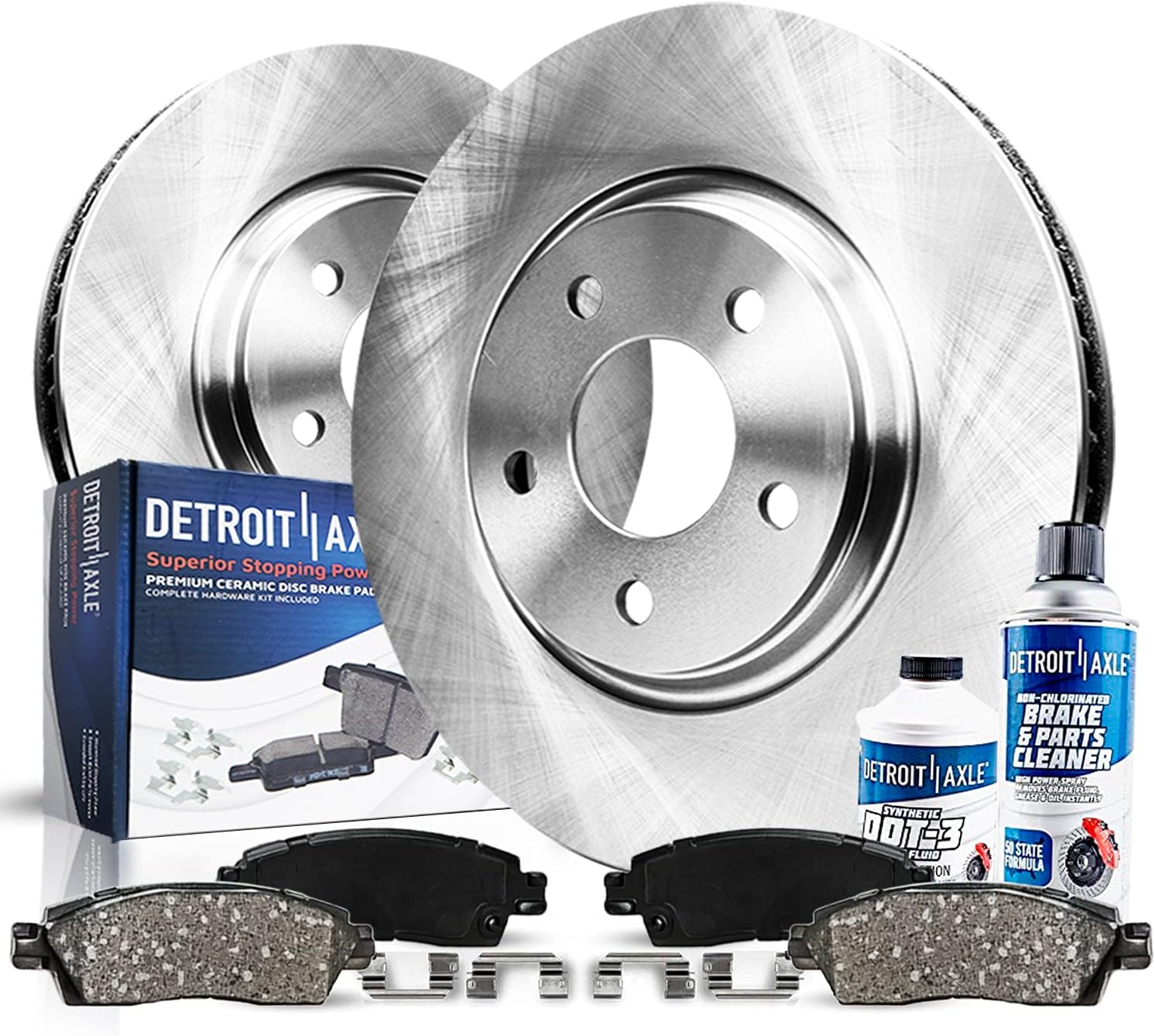
4. Detroit Axle Front Brake Kit with 11.89" Rotors and Ceramic Pads
| Fitment rotor diameter | 11.89 inch (302 mm) |
|---|---|
| Kit contents | 2 front rotors, 2 ceramic pads, hardware, brake cleaner, brake fluid |
| Orientation | Front |
| Manufacturer warranty | 10 Year |
This Detroit Axle front brake kit supplies everything needed to refresh the front braking system on a 2018 Wrangler JK: two 11.89" vented rotors, two ceramic pads with hardware, a can of brake cleaner and a small bottle of brake fluid. The rotors are zinc plated to resist corrosion and have ventilation slots to help dissipate heat for more consistent performance under repeated stops. Ceramic pads are quiet by design and paired to the machined locating holes for straightforward installation with no modifications. The included cleaner and fluid are convenient for a one-stop install. Build quality and fitment are aimed at matching factory replacement standards, and many buyers report easy installation and reduced noise. Limitations are that ceramic pads can dust more than some premium compounds and may not deliver the same high-temperature fade resistance as performance-oriented pads under extreme towing or track use. This kit is best for routine maintenance and street driving where dependable stopping, low noise, and value matter most.
Best for: Drivers looking for an affordable, all-in-one front brake refresh for a 2018 Wrangler JK who prioritize straightforward fitment, low noise, and good everyday stopping performance.
Less Ideal for: Drivers who regularly tow heavy loads, drive aggressively, or need track-capable braking should consider performance rotor and pad options tuned for high-temperature durability.
- Complete kit includes rotors, pads, hardware, brake cleaner and brake fluid for one-front-axle service.
- Vented, slotted rotors and zinc plating improve cooling and corrosion resistance.
- Machined locating holes and included hardware simplify installation and ensure proper fit.
- Ceramic pads run quietly and are packaged to match factory-style fit.
- Ceramic pads may produce more brake dust and are not optimized for extreme high-temperature or heavy towing use.
Verdict: A budget-friendly, full front brake replacement kit that delivers factory-quality fit and quiet everyday braking for 2018 Wrangler JK drivers.
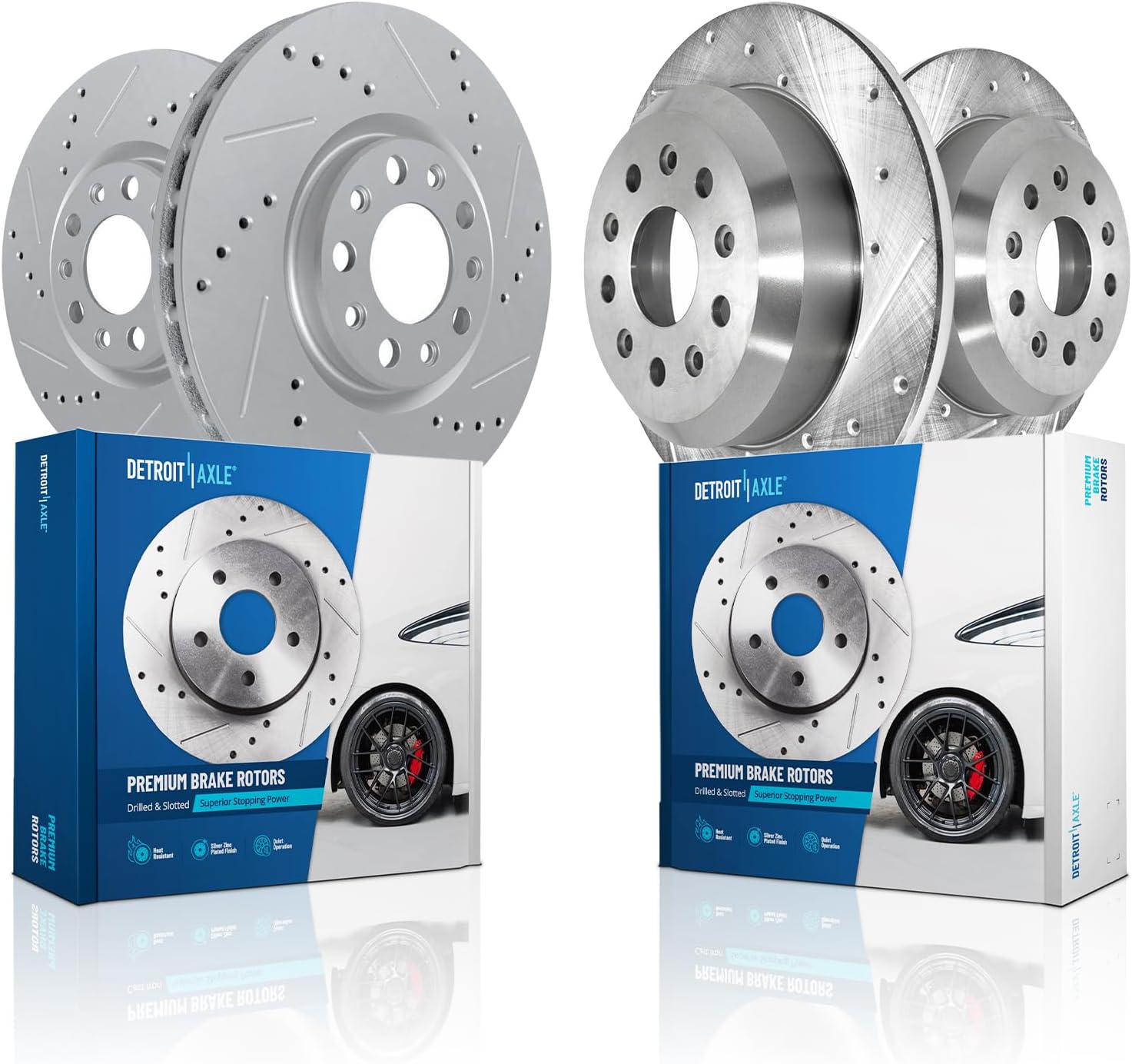
5. Detroit Axle Drilled & Slotted Front and Rear Brake Rotor Kit for 2018–2025 Wrangler
| Fitment rotor sizes | 12.99" front / 13.46" rear |
|---|---|
| Includes | 2 front + 2 rear drilled & slotted rotors |
| Brake codes | BR2 and BR6 compatibility |
| Finish | Zinc plated |
This Detroit Axle kit supplies two drilled and slotted front rotors and two drilled and slotted rear rotors sized for Wrangler applications that use 12.99 inch front and 13.46 inch rear rotors. The rotors are vented to help dissipate heat and reduce fade during repeated stops, and zinc plating on visible surfaces improves corrosion resistance compared with bare cast iron. Machined locating holes and factory-style machining mean the rotors install without custom fitting, so they are typically used as a direct replacement during a brake service or rotor upgrade. In practice the drilled-and-slotted pattern improves water and gas evacuation when paired with good pads, giving crisper pedal response under heavier use, while the zinc finish and testing claims point toward durability for daily and occasional off-road use. Limitations include the drilled slots which can attract more pad wear than plain rotors for some pad compounds and the product description only lists compatibility for Wrangler brake codes BR2 and BR6, so confirm your rotor size and brake code before buying.
Best for: Buyers who prioritize dependable, factory-style replacements that resist corrosion and handle repeated hard stops will appreciate this kit for routine maintenance or a performance-minded rotor refresh.
Less Ideal for: Drivers seeking the lowest possible pad wear or those who prefer plain smooth rotors for low-noise, long-life cruising should consider an alternative rotor design.
- Complete front and rear kit for matched braking performance
- Drilled and slotted, vented design helps with heat dissipation and wet-weather clearing
- Zinc-plated surfaces reduce visible corrosion compared with untreated rotors
- Factory-style machining and locating holes for straightforward bolt-on installation
- Undergoes impact, wear, and fatigue testing according to the listing
- Drilled and slotted pattern can increase pad wear with some friction materials
Verdict: A direct-fit drilled-and-slotted rotor kit built for reliable, cooler braking and improved corrosion resistance on 2018–2025 Wrangler models with BR2 or BR6 brake codes.
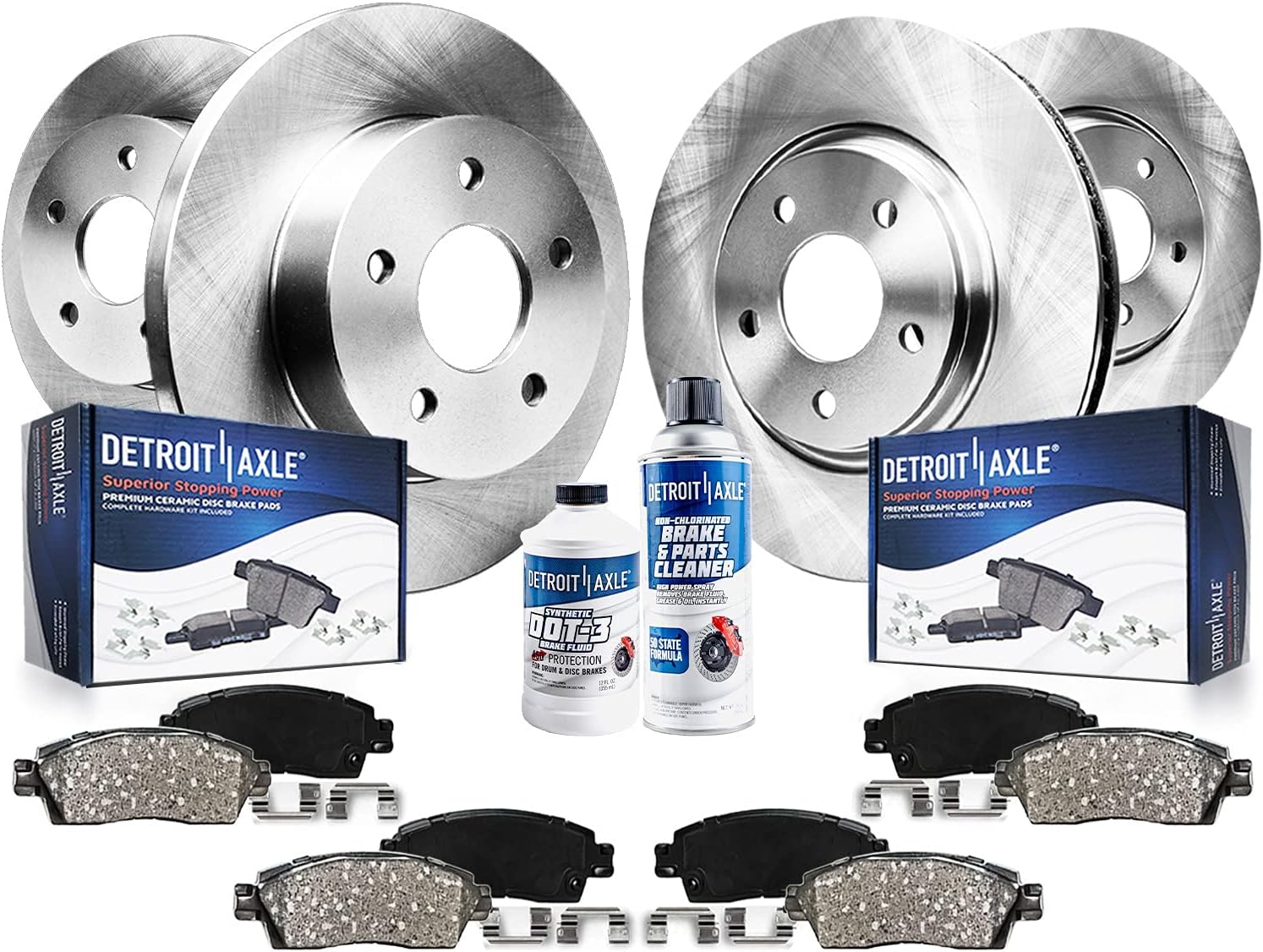
6. Detroit Axle Front & Rear Brake Kit with Ceramic Pads for 2007–2018 Jeep Wrangler
| Fitment | 2007–2018 Jeep Wrangler (includes 2018 Wrangler JK) |
|---|---|
| Rotor sizes | 11.89 in front, 12.44 in rear |
| Pad type | Ceramic |
| Kit contents | Front and rear rotors, front and rear pads, hardware, brake cleaner, brake fluid |
| Orientation | Dual |
This Detroit Axle brake kit supplies everything needed for a full front and rear brake refresh on 2007–2018 Jeep Wranglers, including matched rotors and ceramic pads plus installation hardware, a brake cleaner spray, and brake fluid. The rotors are vented and zinc plated to shed heat and resist surface corrosion while the ceramic pads aim to deliver quiet, low-dust stopping for everyday driving. The kit is sold as vehicle-specific replacement parts and is intended for bolt-on installation without modifications. Practical benefits include having both front and rear components matched for consistent pedal feel and the convenience of included cleaner and fluid so you can finish a DIY job in one visit. Limitations to note: some buyers report surface rust developing on rotors over time and a few mention pad dust or noise under heavy stop-and-go conditions, so this is best for typical street use rather than heavy towing or track driving.
Best for: Buyers who value visible social proof and want a risk-aware, all-in-one replacement that lets them perform a confident DIY brake job for daily driving on a Jeep Wrangler.
Less Ideal for: Drivers who regularly tow heavy loads, use the vehicle off-road aggressively, or need high-performance track-capable brakes should consider heavier-duty or performance-oriented options instead.
- Complete kit covers front and rear so pads, rotors, and hardware match for balanced braking
- Zinc-plated rotors resist surface corrosion and include ventilation slots to help cool brakes
- 100% ceramic brake pads offer lower dust levels and aim for quieter operation
- Includes brake cleaner and brake fluid so a single purchase supports a DIY brake job
- Some customers report quicker-than-expected surface rust on rotors in certain environments
- A few users experienced pad noise or dust during heavy stop-and-go driving
Verdict: A convenient, vehicle-specific full brake kit that delivers matched rotors and ceramic pads for reliable everyday stopping and an easy DIY installation.
7. Detroit Axle Front and Rear Brake Kit with Ceramic Pads and Coated Rotors for 2007–2017 Jeep Wrangler

| Fitment | 2007-2017 Jeep Wrangler (includes 2018 JK note) |
|---|---|
| Pad Type | Ceramic |
| Rotor Exterior | Zinc coated |
| Kit Contents | Front and rear rotors plus front and rear pads and hardware |
| Manufacturer | Detroit Axle |
This Detroit Axle brake kit supplies matched front and rear rotors plus ceramic brake pads so you can replace all four corners in one job. It is intended as a direct factory-replacement style kit that installs where factory parts came out and includes hardware and zinc-coated rotors to resist corrosion. Typical use is a full brake refresh for a Wrangler that needs new rotors and pads; the ceramic pads aim to reduce dust and provide a firm pedal feel while the rotors are tested for wear and fatigue. The kit is convenient for DIYers who prefer a single purchase to do a complete service and for shops doing straightforward brake jobs. Limitations: this is a replacement-style aftermarket kit rather than a directional performance upgrade, so drivers seeking track-grade stopping or specialty compounds should look elsewhere. Also fitting and finish depend on correct year and trim fitment, so verify vehicle application before you buy.
Best for: Buyers who prioritize a reliable, low-risk full-brake replacement for a Wrangler and want parts that fit like factory components with easier installation and lower maintenance.
Less Ideal for: Drivers seeking aggressive track performance, specialty pad compounds, or race-oriented rotors should consider performance-specific options instead.
- Complete kit covers front and rear so you can replace all four rotors and pads in one purchase
- Ceramic pads reduce brake dust and offer a predictable, firm pedal feel
- Coated/zinc rotors resist corrosion for longer life in wet or salty conditions
- Includes necessary hardware for installation to simplify a DIY or shop replacement
- Designed as a factory-replacement style kit rather than a high-performance or track-focused package
Verdict: A convenient, factory-style full brake kit for Wrangler owners who want a dependable, low-risk replacement with ceramic pads and corrosion-resistant rotors.
Choosing the Right 2018-Present Jeep Wrangler Brake Rotors: Key Factors to Consider
Fitment and Hub Tolerances
Correct fitment is the single most important factor for Wrangler brake rotors. Rotors must match the hub bore diameter, bolt pattern, and pad contact surface dimensions to avoid vibration, abnormal wear, or false runout readings. For the 2018-present Wrangler span, differences between JL and JLU hubs can affect rotor selection, so verify the rotor's listed hub diameter and offset before purchase. Even small mismatches in the hat surface or center bore can produce a pulsing pedal or steering vibration that appears during braking. A rotor that mounts securely with minimal runout reduces stress on wheel bearings and caliper mounts. If a rotor lists a hub bore that requires a hubcentric ring or adapter, factor that into installation complexity and long-term reliability.
Material and Cast Quality
Rotor material determines wear rate, heat capacity, and susceptibility to cracking. Gray iron castings are common and offer predictable wear and good heat absorption, but the quality of the casting and the iron grade matter. Higher quality castings have fewer internal porosities and more uniform grain structure, which reduces the chance of stress fractures under repeated braking cycles. Manufacturers may use different machining tolerances and balancing processes. Rotors with a smoother, trued friction surface from the factory reduce bedding-in time and limit uneven pad transfer. Inspect the specification sheet for indications of controlled casting processes and finishing steps that improve durability.
Thermal Design and Heat Dissipation
How a rotor handles heat affects brake fade, pad life, and performance during heavy use like trail descents or towing. Vane design, venting patterns, and cross-sectional thickness determine how quickly a rotor moves heat away from the friction surface. A rotor with efficient internal vanes and adequate thickness will better resist glazing and warping. Consider your typical use. If you frequently tow, drive in mountainous areas, or run long downhill stretches, prioritize rotors with superior ventilation or enhanced thermal features. For mostly city or light off-road use, standard ventilated rotors with good cast quality may be adequate and more cost-effective over time.
Surface Treatments and Corrosion Resistance
The Wrangler spends time in wet or salty environments, so corrosion protection matters. Surface treatments on the hat and mounting surfaces reduce rust buildup that can make future rotor removal difficult and affect hub seating. Protective coatings on the rotor faces help slow peripheral rust formation, though the friction surface must remain uncoated where the pads contact. Rotors with coated hats and inner vanes preserve fitment tolerances and make brake servicing simpler. Also check whether the rotor uses sacrificial zinc or specialty coatings and how those coatings hold up under heat cycling.
Design: Solid, Slotted, or Drilled Patterns
Rotor face design influences how a rotor manages gases, debris, and heat. Solid rotors are durable and often preferable for heavier applications where structural strength is important. Slotted rotors help clear pad material and gas buildup, improving initial bite and responsiveness during repeated stops. Drilled rotors aid in rapid heat escape and water shedding but can create stress risers if drilled improperly. For Wrangler owners who do light trail work or need improved wet performance, slotted or a properly engineered drilled-and-slotted design can offer better pedal feel. For heavy-duty use or heavy tow cycles, solid or ventilated vented rotors with robust internal vane designs reduce the risk of cracking and uneven wear.
Serviceability and Resurfacing Options
Knowing whether a rotor can be resurfaced affects long-term maintenance costs. Rotors have a minimum thickness spec; resurfacing removes material and should only be done when the rotor will remain above that minimum. Thicker rotors or two-piece designs often allow for more machining over the life of the part. If you plan to reuse rotors, select options with clear minimum thickness specs and stable metallurgy that machines well without inducing additional stress. Conversely, some modern rotors are intended to be replaced rather than resurfaced; verify the manufacturer's guidance and local shop capabilities before committing.
Understanding Wrangler Generations: JL and JLU Differences
The 2018-present Wrangler period spans generation-specific details that matter when you choose rotors. The JL and JLU chassis families share overall architecture but may differ in hub dimensions, brake backing plate fitment, and caliper mounting details. Verify the part listing and any generation notes when specifying a rotor to avoid fitment surprises.
Generation codes such as JL and JLU are commonly used in service documentation and parts catalogs. When a rotor lists compatibility by generation code, it helps confirm the intended hub bore and vent layout. Double-check physical measurements against your vehicle when in doubt.
- Confirm hub bore and bolt pattern listed for JL and JLU fitment
- Check pad contact diameter and hat height against the vehicle
- Look for generation-specific notes on venting and mounting features
Single-Piece Vs Two-Piece Rotors: Pros and Cons
Single-piece rotors are machined from a single casting and are typically less expensive and simpler to install. They provide predictable heat transfer and are widely serviceable. Two-piece rotors use a separate hat attached to a friction ring, often offering weight savings and easier hat corrosion protection.
Two-piece designs can reduce unsprung weight and simplify replacement of the friction ring, but they introduce additional complexity at the joint and may not be necessary for everyday Wrangler use. Consider two-piece rotors if you prioritize wheel unsprung mass reduction for handling or plan extensive heavy-duty use where ring replacement is anticipated.
- Single-piece: simpler, generally lower cost, easier to resurface
- Two-piece: lighter, replaceable friction ring, potentially better corrosion control
How to Measure Rotor Thickness and Minimum Specs
Measuring rotor thickness requires a caliper and knowledge of the rotor's minimum thickness specification. Measure across the friction surface at several points and average the readings. Compare the average to the stamped minimum thickness on the rotor or the spec in your service manual for the 2018-present Wrangler.
If the average thickness is close to the minimum, resurfacing may not be advisable. Always measure after the rotor has cooled and is free of heavy rust or deposits that could skew readings. Keep a record of measurements during routine service to monitor wear rates and plan future replacement.
- Use a digital caliper for consistent readings
- Measure at multiple points around the rotor surface
- Compare to the stamped minimum thickness or factory spec
Recognizing Brake Rotor Wear Symptoms
Common symptoms of rotor wear include vibration or pulsing under braking, a thumping noise, visible scoring on the friction surface, and increased stopping distance. For Wrangler owners who frequently encounter water, mud, or salt, corrosion can accelerate visible wear and lead to uneven surfaces that transmit vibration into the pedal or steering wheel.
Some symptoms appear gradually, like subtle loss of initial bite or increasing pedal travel. Others, such as a sudden dragging noise or visible cracks, indicate immediate replacement is necessary. Use symptom assessment together with thickness measurements to decide whether resurfacing or replacing the rotor is appropriate.
- Vibration or pedal pulsing suggests runout or uneven wear
- Scoring or grooves indicate foreign debris or worn pads
- Cracks or severe rust mean replacement rather than resurfacing
Slotted Vs Drilled Rotor Face Designs
Slotted rotors channel gases and debris away from the pad contact area, which often improves bite and limits pad glazing during repeated braking. They are generally a safer choice for off-road use because the slots avoid the stress concentration issues that drilling can create.
Drilled rotors evacuate water quickly and can reduce surface temperatures, but poorly executed drilling can create stress risers that lead to cracking. For a Wrangler that sees mixed use, a well-engineered slotted or cross-drilled-and-slotted pattern can balance wet performance and thermal control. Assess the quality of the machining and the presence of chamfers or reinforced drilling techniques to reduce cracking risk.
- Slotted: clears material from pad face, improves bite
- Drilled: sheds water, may reduce surface temperature but risk cracks
- Combined patterns: aim to capture benefits of both when engineered properly
Rotor Resurfacing Vs Replacement: When to Machine
Resurfacing a rotor can extend its life if the rotor remains above the minimum thickness and has no cracks. Machining removes a small amount of material to restore a true, flat surface, which can cure minor runout and remove glazing. However, each resurfacing reduces thickness and heat capacity.
Replace rotors that are below minimum thickness, have hairline or through cracks, or exhibit severe taper that cannot be corrected within safe limits. For Wranglers used in heavier duty service, replacement is often the safer long-term choice because fresh rotors regain full thermal mass and surface integrity.
- Resurface only when thickness remains well above the minimum
- Replace when cracks or severe taper are present
- Track cumulative material removed over multiple services
Still looking for the perfect fit?
Select your Jeep Wrangler configuration to see the most relevant Brake Rotors recommendations
How We Chose the Best 2018-Present Jeep Wrangler Brake Rotors
We selected the seven rotors listed based on criteria that reflect real-world needs for 2018-present Jeep Wrangler owners, focusing on fitment, durability, thermal performance, braking feel, and long-term maintenance. Fitment accuracy: We prioritized rotors manufactured to the factory hub and bolt pattern tolerances for the JL and JLU generations to minimize installation issues and ensure correct rotor runout. Material and casting quality: We looked for rotors made from high-quality cast iron or billet-faced constructions with attention to grain structure and surface finish to resist cracking and premature wear. Heat management: Design features that reduce heat buildup, such as cross-drilling, slotting patterns, or cooled vane architectures, were evaluated for their impact on fade resistance under towing or heavy-duty use. Corrosion protection: Coatings and machining treatments that limit rust on mounting surfaces and hats were considered to preserve fit and make future service easier. Serviceability: We favored rotors that support common maintenance practices like resurfacing where appropriate and those that have accessible specs for service shops. Exclusions: We excluded products that lacked clear specification data for the vehicle fitment, rotors with nonstandard hub bore dimensions that required additional adapters, and entries without documented thermal or material specifications. The final list balances proven construction and real-world durability with correct fit for the Wrangler chassis families covered by the 2018-present model years.
Our full evaluation process is outlined in our review methodology.
FAQ
How often should I check rotor thickness on a 2018-present Wrangler?
Check rotor thickness during every pad change or at least every 12,000 miles. If you do heavy towing or frequent off-road driving, inspect them more often because those conditions accelerate wear.
Can I resurface rotors on the JL and JLU chassis interchangeably?
Resurfacing depends on the rotor's remaining thickness and metallurgy rather than chassis label. Ensure the rotor meets the minimum thickness spec for your generation and that machining will not produce unsafe heat-related issues.
Are slotted rotors better for trail use?
Slotted rotors often perform better for intermittent off-road use because they clear debris and maintain pad bite without the increased cracking risk associated with poorly drilled designs.
What causes a pulsing brake pedal after installing new rotors?
Pulsing is usually caused by rotor runout, improper hub seating, or uneven material transfer from pads. Confirm hub mating surfaces are clean and the rotor is within runout tolerances before concluding a product defect.
Do coated rotor hats affect fitment?
Coatings on the hat should not change critical dimensions, but heavy or uneven coatings can affect seating and runout. Choose rotors with factory-applied coatings designed to preserve tolerances under heat cycles.
When should I choose two-piece rotors over single-piece on my Wrangler?
Consider two-piece rotors if you are optimizing unsprung weight, need a replaceable friction ring, or want improved corrosion protection at the hat. For most daily drivers, single-piece rotors provide reliable service with simpler maintenance.
Final Verdict
For a 2018-present Jeep Wrangler, prioritize correctly fitting rotors with strong cast quality and adequate thermal design. Match the rotor to how you use the vehicle: choose venting and face design that handle the heat and debris you encounter, and prefer options with clear minimum thickness and corrosion protections for easier long-term service. Balance immediate stopping needs against long-term serviceability. If you do heavy towing or frequent trail work, pick rotors with superior heat dissipation and robust construction. For mostly street-driven Wranglers, high-quality ventilated or slotted rotors that match JL and JLU hub specs will deliver dependable performance and simplify future maintenance.
Explore More:
- Check out all Jeep Wrangler parts & accessories
- Explore Brake Rotors Maintenance & Repair Guides
- Explore Brake System
- Browse all Auto Parts
