

Note: This article contains affiliate links. If you click on these links and make a purchase, I may earn a small commission at no extra cost to you. This helps support my research and content. Read my full affiliate disclosure here.
If you own a 2000-2004 Subaru Legacy, choosing the right brake pads matters for everyday safety and vehicle comfort. Worn or inappropriate pads can increase stopping distances, produce vibration, or create persistent noise that masks other brake issues. This guide shortlists the top brake pads for these model years and explains how each option meets common owner priorities such as consistent stopping performance, low dust, and long service life.The selections below were narrowed to six top candidates that suit typical Legacy driving conditions, from commuting to light highway work. Read on to understand the key criteria we used to evaluate pad performance and fitment, and which characteristics to prioritize when replacing pads on your Legacy.
Looking for other parts? See all Subaru Legacy parts & accessories.
Top Picks at a Glance
| Best Overall The best all-around choice for most situations | PowerStop Z23 Rear Brake Pad and Drilled/Slotted Rotor Kit (K3124) |  |
| Best Quality Built to a higher standard if you want something more solid | Bosch QuietCast Premium Ceramic Rear Disc Brake Pad Set (BC770) |  |
| Best Value The sweet spot between price and what you get | YXPCARS Ceramic Front and Rear Brake Pads Kit |  |
| Best Budget The cheapest option that still gets the job done reliably | MAGMA MaxValue MXD770C Semi-Metallic Rear Brake Pads |  |
| Highest Rated A top-rated pick with lots of positive feedback | KAX Ceramic Rear Brake Pads (D770) – Set of 4 |  |
| Most Popular A crowd favorite that many people choose with confidence | Detroit Axle Rear Brake Kit with 11.42" Rotors and Ceramic Pads |  |
1. PowerStop Z23 Rear Brake Pad and Drilled/Slotted Rotor Kit (K3124)

| Included components | Rear pads, drilled & slotted rotors, hardware |
|---|---|
| Pad type | Z23 Carbon-Fiber Ceramic |
| Rotor treatment | Drilled & Slotted, Zinc Dichromate plated |
| Fitment | Vehicle specific rear fit (Subaru Legacy/Outback/Baja listed) |
This PowerStop Z23 kit replaces the rear pads and rotors with carbon-fiber reinforced ceramic pads and drilled-and-slotted discs engineered for everyday driving. Installation is straightforward because the kit includes stainless-steel hardware, rubberized shims, and grease so it bolts onto the vehicle without modification. The Z23 carbon-fiber ceramic pads aim to deliver stronger stopping power than factory replacements while keeping noise and dust low, making them suitable for daily commuting and occasional spirited driving. The rotors are cast to tight tolerances from G3000 metallurgy, with precision drill holes and slots that help vent heat and clear debris to reduce fade under repeated stops; the silver zinc plating adds corrosion resistance for longer life in wet climates. Expect a noticeable improvement in pedal feel and cleaner wheels versus stock, though the drilled surface can be more prone to collecting road grime than plain rotors. Overall this kit targets drivers who want a balanced, low-dust upgrade that improves stopping without sacrificing quiet operation or drivability.
Best for: Buyers who want a balanced daily-driver upgrade that improves braking performance, reduces dust, and stays quiet without sacrificing everyday drivability.
Less Ideal for: Drivers seeking track-only performance components or extreme heavy-duty towing upgrades should consider high-friction or purpose-built aftermarket options instead.
- Complete rear kit with pads, drilled-and-slotted rotors, and stainless-steel installation hardware for a single purchase install.
- Carbon-fiber infused ceramic pads designed for low dust and reduced noise while improving stopping power over stock.
- Drilled and slotted rotors help dissipate heat and clear gas/debris to reduce brake fade in repeated stops.
- Silver zinc dichromate plating on rotors provides added corrosion resistance for longer service life.
- Drilled rotors can attract road grime and may require more frequent cleaning than plain rotors.
Verdict: A practical, low-dust rear brake upgrade that boosts stopping power and corrosion resistance while remaining quiet and easy to install for daily-driven 2000–2004 Subaru Legacy vehicles.
2. Bosch QuietCast Premium Ceramic Rear Disc Brake Pad Set (BC770)

| Auto Part Position | Rear |
|---|---|
| Material Type | Ceramic |
| Manufacturer | Bosch Automotive |
| Manufacturer Part Number | BC770 |
| Automotive Fit Type | Vehicle Specific Fit |
These Bosch QuietCast rear ceramic pads are designed as a factory-quality replacement for compatible Subaru models from the 2000s. They use a ceramic friction formulation and OE-style multilayer rubber core shims to reduce noise and vibration while keeping rotor wear low and brake dust minimal. The kit includes pads for one axle plus hardware and synthetic lubricant to help ensure smooth caliper slides during installation. In real-world use the pads deliver predictable, progressive stopping power suitable for everyday driving and occasional spirited runs, and the protective powder-coated backing plate helps resist corrosion over time. They are not an aggressive track compound, so drivers seeking maximum fade resistance under repeated high-temperature laps will want a performance-oriented or track-specific pad instead. For routine and performance-minded street use on a 2000–2004 Subaru Legacy these pads balance quietness, longevity, and strong stopping feel.
Best for: Drivers who want a quiet, low-dust factory-quality rear pad for regular and spirited street driving on a 2000–2004 Subaru Legacy and prioritize durability and NVH reduction.
Less Ideal for: Enthusiasts who plan frequent high-speed track sessions or heavy repeated braking should choose a track-focused compound instead.
- OE-style multilayer rubber core shim reduces noise and vibration
- Ceramic friction formula produces low dust and consistent everyday stopping power
- Powder-coated backing plate resists corrosion for longer service life
- Includes hardware kit and synthetic lubricant to simplify installation
- Not optimized for heavy track use or repeated high-temperature braking
Verdict: A quiet, low-dust factory-quality rear pad that delivers reliable street stopping and durability for 2000–2004 Subaru Legacy drivers who want performance-friendly everyday brakes.
3. YXPCARS Ceramic Front and Rear Brake Pads Kit

| Included Components | 4x Front Brake Pads, 4x Rear Brake Pads |
|---|---|
| Material Type | Ceramic |
| Automotive Fit Type | Vehicle Specific Fit |
| Manufacturer Warranty Description | 6 months |
This YXPCARS kit supplies four front and four rear ceramic brake pads intended as a direct replacement for specified Subaru models from the early 2000s. The pads use a carbon-ceramic formula and are chamfered, slotted, and shimmed where applicable to reduce noise, limit dust, and improve heat resistance during repeated braking. In everyday driving the low-dust compound keeps wheels cleaner and the anti-noise shims help maintain a quiet pedal feel, while the manufacturer claims improved pad transfer layer life that reduces rotor wear. Installation is straightforward for anyone comfortable with a brake job, and the kit is sold as a vehicle-specific fit to match factory mounting points. Limitations to note are that pad performance still depends on rotor condition and correct hydraulic components, and the product carries only a six month warranty, so long-term durability beyond typical replacement intervals is not guaranteed by the seller.
Best for: Buyers looking to replace aging pads on early 2000s Subaru models who prioritize quieter, lower-dust ceramic pads and a complete front-and-rear kit for a single service.
Less Ideal for: Drivers seeking heavy track use or racing-grade pads should choose a dedicated performance compound designed for extreme temperatures and repeated hard stops.
- Ceramic/carbon-ceramic compound produces low brake dust for cleaner wheels
- Chamfered, slotted, and shimmed design reduces noise and improves initial bite
- Kit includes both front and rear pads for a full-vehicle replacement
- Manufacturer states improved thermal stability and reduced rotor wear
- Six month manufacturer warranty is relatively short compared with some competitors
- Performance and longevity depend on rotor condition and brake system maintenance
Verdict: A practical full front-and-rear ceramic pad kit for early 2000s Subaru owners who want quieter, lower-dust replacements that read like a direct factory-style swap.
4. MAGMA MaxValue MXD770C Semi-Metallic Rear Brake Pads
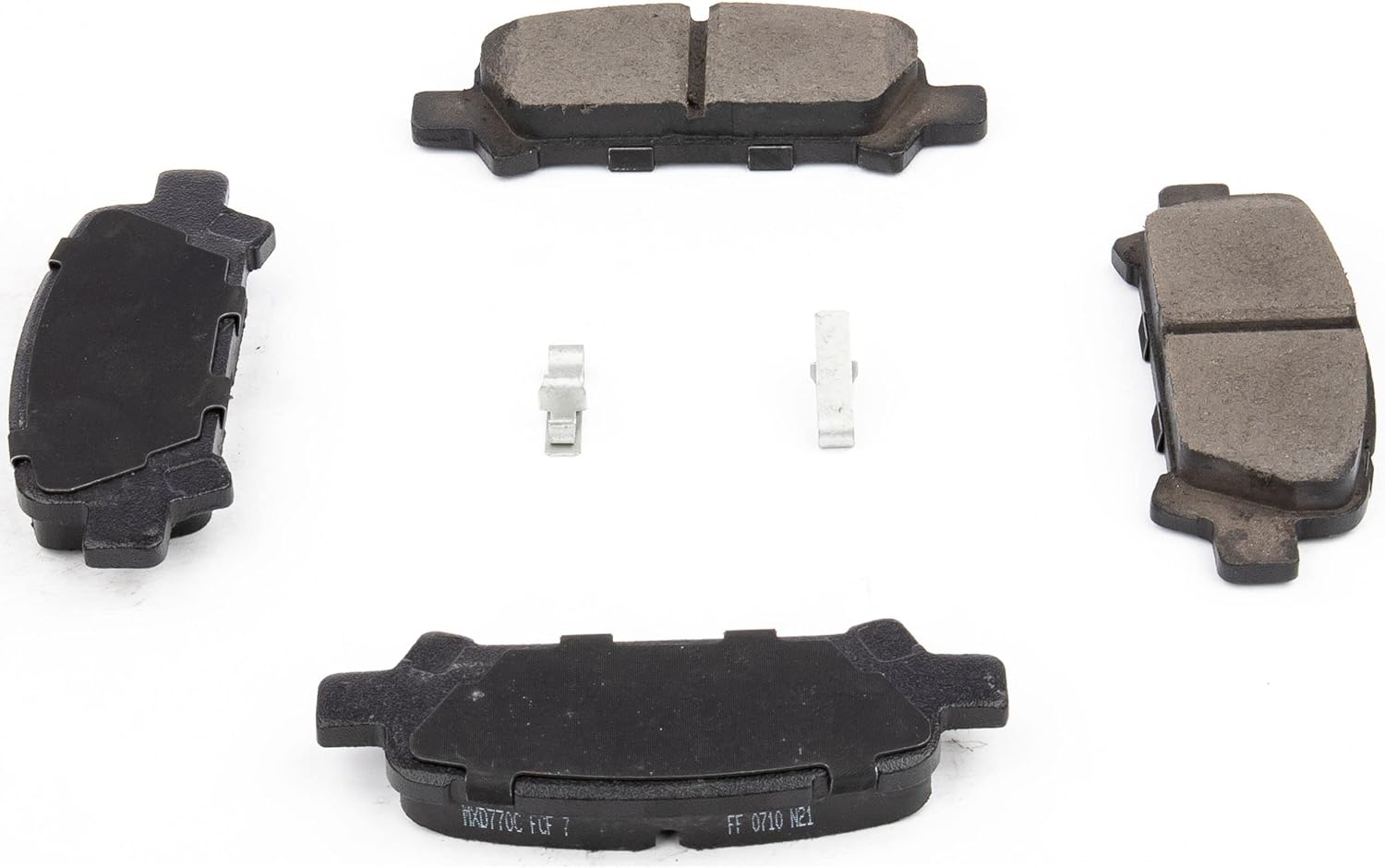
| Auto Part Position | Rear |
|---|---|
| Compatible with Vehicle Type | SUV, Truck |
| Material Type | Semi-metallic |
| Included Components | Abutment Clips, Brake Lubricant, Pad Shims |
| Specification Met | OEM |
These MAGMA MaxValue rear brake pads are a budget-focused, vehicle-specific replacement for many early 2000s Subaru models. They use semi-metallic friction material and include woven noise-insulating shims, abutment clips, and high-heat brake lubricant so installation is straightforward and stopping power is solid for everyday driving and moderate towing or hauling. The anti-corrosion coating and precision backing plates help keep the pads and hardware cleaner over time, while the post-cured friction is intended to deliver good braking performance right out of the box. Expect a slightly firmer feel compared with ceramic pads and more dust than ultra-premium formulations, but better heat tolerance and longevity in stop-and-go or hill driving. These pads are a practical choice when you need a direct-fit, cost-conscious replacement that balances performance and durability, though drivers seeking the quietest, lowest-dust option may prefer a ceramic alternative.
Best for: Buyers who prioritize a low-cost, direct-fit replacement for 2000–2004 Subaru Legacy rear brakes and want reliable stopping performance without aftermarket modification.
Less Ideal for: Drivers who prioritize the lowest dust and softest pedal feel or who want a premium noise-free luxury pad should consider ceramic or high-end options instead.
- Vehicle-specific fit for select Subaru rear applications reduces installation hassle
- Semi-metallic friction offers strong stopping power and good heat resistance
- Includes shims, abutment clips, and high-heat brake lubricant for a more complete install
- Noise-suppressing multi-layer insulator reduces squeal compared with basic pads
- Anti-corrosion coating extends service life in wet or salty climates
- Semi-metallic compound produces more brake dust and a firmer pedal feel than ceramic pads
Verdict: A cost-effective, direct-fit rear pad that gives Subaru Legacy owners dependable stopping power and easier installation without overspending.
5. KAX Ceramic Rear Brake Pads (D770) – Set of 4

| Auto Part Position | Rear |
|---|---|
| Material Type | Ceramic |
| Included Components | 4x Rear brake pads – D770 |
| Automotive Fit Type | Vehicle Specific Fit |
These KAX ceramic rear brake pads are a vehicle-specific replacement for 2000–2004 Subaru Legacy models and similar Subaru platforms. They use a ceramic compound with chamfered edges and grooves to reduce noise, shed dust, and help dissipate heat during repeated stops. In everyday city and highway driving they deliver quiet, predictable braking with reduced rotor wear compared with many metallic pads, and the noise-damping layer reduces squeal and vibration for a more comfortable cabin. The pads are supplied as a set of four for the rear axle and claim improved fade resistance under normal driving conditions. Limitations to expect are that ceramic pads generally offer a milder initial bite than aggressive metallic compounds, so they are not aimed at track use or heavy towing, and performance under extreme sustained high-temperature braking will be behind dedicated performance pads. For homeowners or independent shops, installation is straightforward but you should verify hardware and rotor condition during replacement.
Best for: Drivers prioritizing calm, reliable daily braking and lower maintenance who want quiet operation and reduced wheel dust for regular street and highway use.
Less Ideal for: Drivers who frequently do high-speed track sessions, heavy towing, or need maximum initial bite should choose a high-performance metallic pad instead.
- Low dust ceramic compound keeps wheels cleaner versus metallic pads
- Noise-damping layer and chamfered edges reduce squeal and vibration
- Chamfered and slotted design improves heat dissipation and fit
- Less abrasive on rotors, which can extend rotor life
- Not formulated for track or heavy towing where aggressive metallic pads perform better
Verdict: Choose these KAX ceramic rear pads for dependable, quiet everyday braking and lower rotor wear on 2000–2004 Subaru Legacy models.
6. Detroit Axle Rear Brake Kit with 11.42" Rotors and Ceramic Pads

| Fitment rotor size | 11.42 inch (290mm) Rear Rotor Size |
|---|---|
| Includes | 2 rotors, 2 ceramic pads, hardware, brake cleaner, brake fluid |
| Orientation | Rear |
| Compatible Vehicle Type | Car |
This Detroit Axle rear brake kit supplies everything needed to replace the rear discs and pads on compatible 2000–2004 Subaru Legacy and Outback models and 2003–2006 Baja with 11.42" rear rotors. The kit bundles two vented, zinc-plated rotors plus two ceramic pads, mounting hardware, a small bottle of brake fluid and a brake cleaner spray so you can complete a basic brake service without buying extra consumables. Vented rotors and zinc plating help with heat dissipation and corrosion resistance, while the ceramic pads are formulated to reduce dust and noise compared with metallic compounds. The parts are machined with locating holes to match factory mounting and should install without modification. The kit is convenient for a DIYer or independent shop doing a rear-only replacement, but it does not include calipers or advanced hardware like load-rated hoses or premium fluid, so technicians replacing multiple components or chasing performance stopping should plan accordingly. For routine maintenance and restoring rear braking on the specified Subaru models, this kit is a straightforward, all-in-one option.
Best for: Buyers who want a single-purchase rear brake service solution that restores factory-style stopping on specified Subaru rear-disc models and prefer verified, commonly used replacement parts.
Less Ideal for: Drivers seeking high-performance or track-oriented braking upgrades or anyone needing a complete system overhaul including calipers and hoses should consider more comprehensive or performance-focused options.
- Complete kit including rotors, ceramic pads, hardware, brake cleaner and brake fluid for a single rear-axle service
- Vented rotors and zinc plating improve cooling and help resist corrosion for longer service life
- Ceramic pads produce lower dust and are engineered to reduce noise compared with many semi-metallic pads
- Machined locating holes and factory-style fitment aimed at direct replacement without modifications
- Kit covers rear disc components only and does not include calipers or premium performance parts
- Brake fluid and cleaner are small service-sized quantities not intended for full-system overhauls
Verdict: If you need a risk-conscious, all-in-one rear brake replacement for 2000–2004 Subaru Legacy/Outback or 2003–2006 Baja, this kit supplies factory-compatible rotors, ceramic pads, and basic consumables in one package.
Choosing the Right 2000-2004 Subaru Legacy Brake Pads: Key Factors to Consider
Stopping Power and Bite
How quickly and consistently pads convert pedal effort into braking force directly affects safety on the Legacy. Strong initial bite helps short stops from city speeds, while stable friction across a range of temperatures prevents fade on long descents. For the 2000-2004 Legacy you should consider pads that maintain consistent friction at both cold and warm operating conditions to avoid unpredictable pedal feel.
Differences in friction material formulations change how the car feels under braking. Some compounds give immediate, firm response but wear rotors faster; others are gentler on rotors but feel less aggressive. Think about the driving you do most often and choose a pad whose braking profile matches that usage.
Wear Life and Rotor Impact
Pad life matters for maintenance frequency and overall ownership cost. Longer-lasting pads reduce how often you service the brakes, while very hard compounds can accelerate rotor wear and drive up repair bills. For the Legacy, pay attention to reported pad thickness spec at installation and typical mileage-to-replacement estimates for the specific compound you choose.
Also factor in whether pads tend to generate uneven wear that leads to pulsing or warped-rotor symptoms. Pads that are kinder to rotors but still offer acceptable stopping power are often the best choice for daily-driven Legacy models.
Noise, Vibration, and Harshness (NVH)
Braking noise is one of the most common complaints on older vehicles. Squeal, chirp, or grinding noises can indicate material mismatches, missing shims, or adhesive problems. For a 2000-2004 Legacy, look for pad designs that include proper backing-plate treatments, anti-squeal shims, and proven bedding procedures to reduce NVH.
If low noise is a priority, ceramic and high-quality semi-metallic formulations often perform better in comfort metrics. However, no pad eliminates noise entirely, so plan for correct installation and bedding to minimize unwanted sounds.
Dust and Wheel Cleanliness
Brake dust affects wheel appearance and can lead owners to brush off certain compounds. Some pad materials produce heavy dark dust that adheres to wheel surfaces, while ceramic-oriented formulations generally produce finer, lighter-colored dust that is easier to clean. For Legacy owners who keep the factory or aftermarket wheels clean, dust generation is a practical consideration.
Also consider whether the dust contributes to caliper or wheel-hub buildup that complicates servicing. Lower-dust pads reduce cleaning frequency and help maintain a tidy brake assembly.
Front Versus Rear Requirements
The front and rear brake systems on the 2000-2004 Legacy serve different roles. Front pads typically handle the majority of braking load and therefore wear faster; rear pads often prioritize stability and parking-brake compatibility. When choosing pads, ensure you select the correct front or rear compound and thickness for the Legacy to preserve balanced braking and proper pedal feel.
Mismatching front and rear pad types can change pedal modulation and could lead to premature wear on one axle. Always confirm axle-specific fitment and choose pads designed to work together for a stable braking bias.
Fitment and Installation Hardware
Correct mechanical fit is essential. Clipped edges, pad backing dimensions, and the location of wear sensors or shims must match the Legacy calipers for safe operation. For the 2000-2004 Legacy, verify that the replacement pads include compatible anti-rattle clips or that those clips are reusable and in good condition.
Consider whether new hardware is recommended with the pads. In many cases, replacing guide-pin boots, anti-rattle clips, and pad shims during a pad job simplifies installation and reduces future noise or movement issues.
Brake Pad Materials and What They Mean for Your Legacy
Brake pads are offered in several material families, each with tradeoffs in noise, dust, and performance. Ceramic-style compounds are known for quieter operation and lighter dust, while semi-metallic varieties tend to offer stronger initial bite and better heat tolerance. For a 2000-2004 Subaru Legacy, pick a material that matches your driving style: ceramic for daily comfort and lower dust, semi-metallic if you occasionally tow or carry heavier loads that demand higher heat resistance.
- Ceramic: quieter, less dust, moderate wear life
- Semi-metallic: stronger bite, better heat handling, more dust
- Low-metallic/organic blends: compromise between comfort and performance
Bedding In New Pads for Reliable Performance
Proper bedding helps deposit a thin, even layer of friction material onto the rotor, which establishes consistent stopping behavior and reduces noise. A typical bedding procedure involves a series of moderate stops from around 30-40 mph, followed by cooling periods. Avoid repeated hard stops until the initial bedding cycle is complete to prevent uneven transfer and glazing.
Proper bedding is particularly important on older Legacy rotors that may have surface glazing or unevenness. If rotors show scoring or heavy wear, consider machining or replacing them before installing new pads to ensure an even mating surface and predictable performance.
- Perform progressive decelerations rather than immediate hard stops during bedding
- Allow cooling intervals between bedding sequences
- Inspect rotors for scoring before pad installation
When To Replace Brake Pads On Your Legacy
Several indicators tell you pads need replacement. Reduced pad thickness near or below manufacturer thickness specs, persistent squeal that does not abate after bedding, reduced stopping performance, or vibration under braking all signal it is time for new pads. For many drivers of the 2000-2004 Legacy, visual inspections every 6,000 to 12,000 miles help catch wear before it affects safety.
If your Legacy has wear indicators, listen for high-pitched squeal under light braking; that often means the pads are near their service limit. Also check for uneven wear across the pad surface, which suggests caliper or hardware issues that should be addressed at the same time as pad replacement.
- Check pad thickness at regular intervals
- Watch for consistent squeal or grinding noises
- Address uneven wear to prevent rotor damage
Tools and Parts You Should Have On Hand
A successful pad replacement requires a handful of basic tools and replacement consumables. Prepare a quality torque wrench, caliper piston tool or C-clamp, brake cleaner, a wire brush for hardware, and a supply of high-temperature brake grease for caliper slides and backing-plate contact points. Having replacement anti-rattle clips and new guide-pin boots on hand often streamlines the job.
Make sure to have the correct torque specs and a service manual reference for the 2000-2004 Legacy. Proper torque on caliper bolts and wheel-lug nuts ensures safe reassembly and consistent brake performance.
- Torque wrench and caliper piston tool
- Brake cleaner and wire brush
- High-temperature brake grease and replacement hardware kits
Still looking for the perfect fit?
Select your Subaru Legacy configuration to see the most relevant Brake Pads recommendations
How We Chose the Best 2000-2004 Subaru Legacy Brake Pads
We focused on criteria that matter specifically to owners of 2000-2004 Subaru Legacy vehicles. First, fitment accuracy was nonnegotiable: only pads that match the Legacy front or rear caliper configurations and mounting hardware common to these years were considered. Second, stopping performance under normal and repeated braking was evaluated based on reported friction characteristics and heat resistance for similar vehicle weights.Third, pad longevity and wear patterns were assessed through service-life expectations and user reports about rotor wear. Fourth, noise and NVH behavior—how often pads produce squeal, chatter, or grinding—was a key filter because Legacy owners often report sensitivity to braking noise. Finally, dust generation and rotor compatibility were factored in for owners who want cleaner wheels and minimal rotor scoring.We excluded pads that are known to require caliper modification, rare or obsolete fitment kits, or ones intended only for heavy-duty racing use. The final list balances performance, longevity, and everyday comfort for typical Legacy driving conditions.
Our full evaluation process is outlined in our review methodology.
FAQ
How often should I inspect the brake pads on my 2000-2004 Subaru Legacy?
Inspect pads visually every 6,000 to 12,000 miles depending on driving habits. More frequent checks are wise if you do stop-and-go commuting or tow light loads, because those conditions accelerate wear.
Can I replace only the front pads and leave the rears alone?
You can replace only the front pads if they are the only ones worn, but it is important to consider matched friction characteristics. Different pad compounds front to rear can change pedal feel, so choose compatible materials and inspect the rear hardware when servicing the fronts.
What causes a grinding noise when I brake on my Legacy?
Grinding usually indicates metal-on-metal contact from worn pads or loose backing plate material. It can also come from debris embedded in the pad. If you hear grinding, inspect the pads and rotors promptly to avoid further damage.
Are ceramic brake pads a good choice for the 2000-2004 Subaru Legacy?
Ceramic pads are often a good option for owners prioritizing low dust and quiet operation. They provide adequate performance for daily driving, but if you need higher heat tolerance for heavy loads or aggressive driving, a semi-metallic compound may be preferable.
How thick should new brake pads be when installed?
New pad thickness varies by design, but confirm the pad thickness spec for your Legacy axle. Many replacement pads start around 10 to 12 millimeters; check the product fitment guide and measure against the factory specification during installation.
Will replacing pads fix a soft or spongy brake pedal?
Not usually. A soft pedal often points to issues with fluid, air in the system, or worn caliper components rather than pad material. Inspect pads as part of the diagnosis, but also check brake fluid condition and system integrity.
Final Verdict
When replacing brake pads on a 2000-2004 Subaru Legacy, prioritize correct fitment, consistent stopping power, and NVH performance that matches your driving. Consider pad material tradeoffs: ceramics for quiet, low-dust operation and semi-metallics when you need greater heat tolerance.Plan for proper bedding, inspect rotors and hardware, and address any caliper issues while pads are accessible. By balancing stopping performance, wear life, and noise control, you can choose pads that restore confident braking and reduce maintenance hassles.
Explore More:
- Check out all Subaru Legacy parts & accessories
- Explore Brake Pads Maintenance & Repair Guides
- Explore Brake System
- Browse all Auto Parts
