

Note: This article contains affiliate links. If you click on these links and make a purchase, I may earn a small commission at no extra cost to you. This helps support my research and content. Read my full affiliate disclosure here.
If you drive a 2005-2009 Subaru Legacy, worn or warped rotors can erode braking confidence and increase stopping distances. Choosing the right brake rotors matters because rotors influence pedal feel, heat management, and long-term wear—all critical for safe everyday driving and occasional spirited use. This guide covers seven shortlisted options that suit the Legacy's braking system and driving demands, and it explains the practical tradeoffs between longevity, noise, and performance.We evaluate candidates by braking performance and durability, plus fitment and serviceability. Read on to understand how each factor affects real-world driving and maintenance before you inspect the rotor options for your car.
Looking for other parts? See all Subaru Legacy parts & accessories.
Top Picks at a Glance


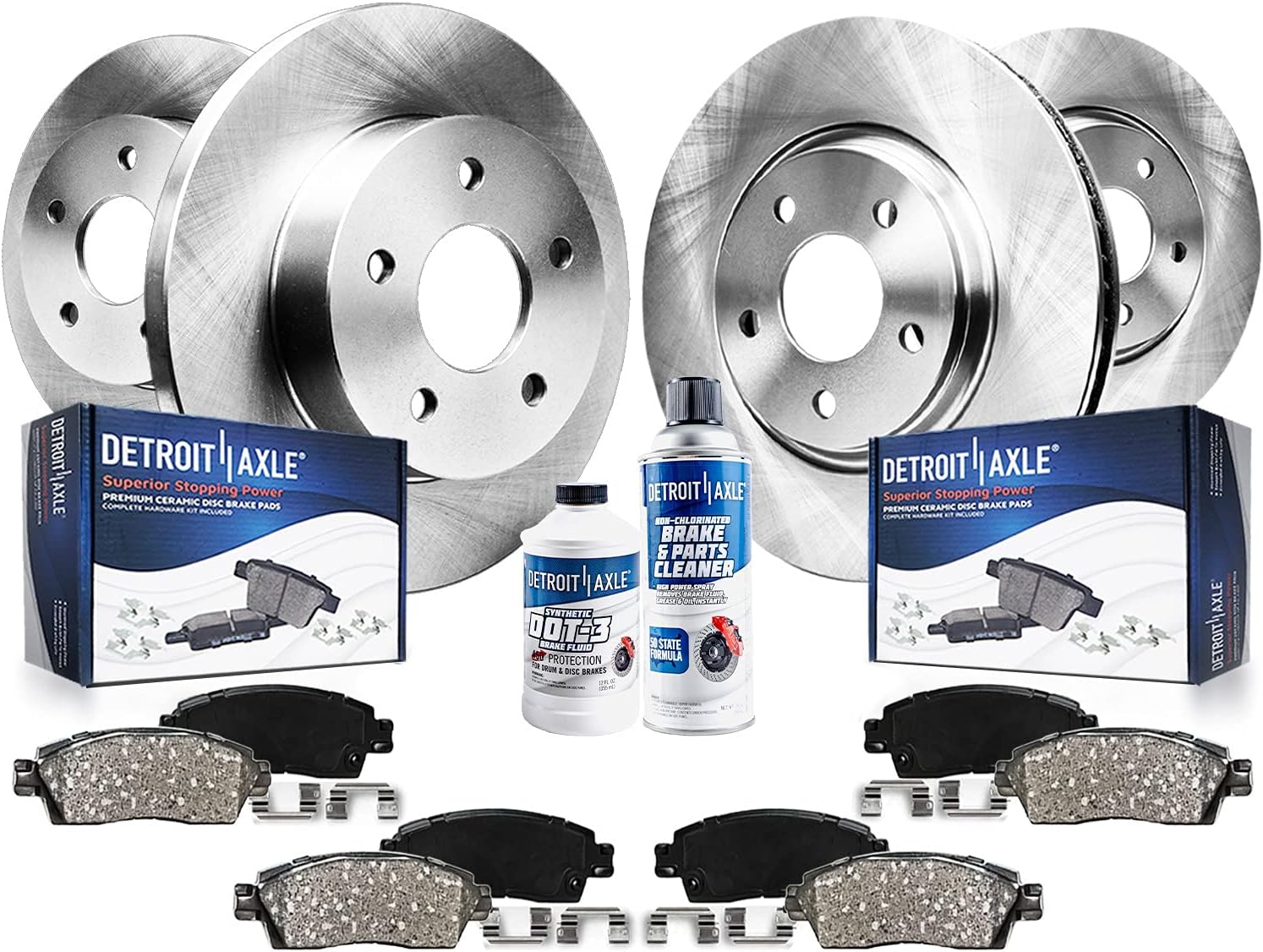
1. Detroit Axle Front and Rear Brake Kit with Rotors and Ceramic Pads for 2005-2009 Subaru Legacy/Outback
| Front Rotor Size | 11.54 inch (293mm) |
|---|---|
| Rear Rotor Size | 10.79 inch (274mm) |
| Pad Type | Ceramic |
| Fit Type | Vehicle Specific Fit |
This Detroit Axle brake kit supplies everything needed to refresh the front and rear braking on compatible 2005–2009 Subaru Legacy and Outback models with the specified rotor sizes. The kit includes two front and two rear disc rotors, front and rear ceramic pads with hardware, a brake cleaner spray, and a small bottle of brake fluid, which makes it convenient for a full DIY replacement. Rotors are vented up front and zinc plated to aid cooling and resist corrosion, while machined locating holes promise a direct fit without modifications. Ceramic pads typically offer quieter operation and less dust than semi-metallic pads, which helps daily driving comfort. Limitations are the strict fitment requirement for vehicles with the listed rotor diameters and the included fluid quantity is only enough for topping up rather than a full system bleed on all vehicles. Installers should verify rotor size and have the proper tools and brake bleeding supplies for a complete service.
Best for: Drivers who want a balanced, do-it-yourself refresh of both front and rear braking with a single vehicle-specific kit that prioritizes quiet operation and corrosion resistance.
Less Ideal for: Shops or owners needing parts for multiple different vehicles or those who require heavy-duty, track-oriented braking components should look elsewhere.
- Complete kit includes front and rear rotors, ceramic pads, hardware, brake cleaner, and fluid for a single service
- Front rotors are vented and zinc plated to help cooling and resist corrosion
- Machined locating holes for direct, bolt-on fitment with no modifications
- Ceramic pads generally run quieter and produce less brake dust than semi-metallic pads
- Fitment is limited to vehicles with the specified 11.54" front and 10.79" rear rotor sizes
- Included brake fluid quantity is small and may not suffice for a full system bleed
Verdict: A complete, vehicle-specific brake service kit that gives a balanced, quiet, and corrosion-resistant replacement for compatible 2005–2009 Subaru Legacy and Outback models.
2. R1 Concepts eLINE Front and Rear Drilled & Slotted Brake Kit with Semi-Metallic Pads

| Included Components | 4 drilled & slotted rotors and 8 semi-metallic brake pads |
|---|---|
| Rotor Pattern | Drilled and diamond slotted |
| Material Grade | G3000 iron |
| Fit Type | Vehicle specific fit |
| Warranty | 1 year manufacturer |
This R1 Concepts eLINE kit replaces both front and rear rotors and pads with direct-fit components aimed at improving stopping performance for daily driving and light performance use. The rotors are cross-drilled and diamond-slotted to help dissipate heat, clear debris, and reduce pad glazing, which supports more consistent braking during spirited driving or light towing. Rotors are made from a G3000-grade iron and include zinc coating for corrosion resistance on exposed areas, while the included semi-metallic pads prioritize stronger initial bite with reduced dust and noise compared with older aggressive compounds. Installation is straightforward since parts are built to factory-fit dimensions and require no modification. Limitations are that this kit is targeted at street and occasional light track use rather than heavy-duty racing, and semi-metallic pads will still wear faster than higher-end compounds under hard repeated track sessions. The one-year manufacturer coverage protects against defects but is not an extended performance warranty.
Best for: Drivers who prioritize sharper, more consistent street braking and occasional spirited driving on a 2005–2009 Subaru Legacy or Outback and want a single kit to replace rotors and pads.
Less Ideal for: Enthusiasts who plan frequent track days or heavy towing should consider full performance rotors and higher-temperature pad compounds instead.
- Cross-drilled and diamond-slotted rotor design improves heat dissipation and helps prevent pad glazing.
- Direct-fit rotors and pads designed to match factory mounting for easy installation.
- G3000 iron rotors with zinc coating for improved corrosion resistance and durability.
- Includes both front and rear rotors plus semi-metallic pads so braking is upgraded across the entire axle set.
- Semi-metallic pads are not optimized for repeated high-heat track use and will wear faster under hard driving.
Verdict: Choose this kit if you want a direct-fit rotor and pad upgrade that improves street braking feel and heat control for spirited driving on 2005–2009 Subaru Legacy and Outback models.
3. Betthand Front and Rear Brake Rotors and Ceramic Pads Kit

| Manufacturer Warranty Description | 3 Years |
|---|---|
| Included Components | 2 Front Rotors, 2 Rear Rotors, 4 Front Pads, 4 Rear Pads, Mounting Hardware |
| Compatible with Vehicle Type | Car |
| Automotive Fit Type | Vehicle Specific Fit |
This Betthand kit supplies both front and rear rotors plus matching ceramic pads and hardware so you can replace all four corners in one service. The rotors come with a Geomet corrosion-resistant coating that helps keep surfaces clean and resists rust, while the ceramic pads are engineered to run quieter and produce much less dust than semi-metallic compounds. In practice this kit fits vehicle-specific mounting points and simplifies timing because the pads and rotors are matched for everyday driving—expect stable pedal feel, good heat management for normal street use, and cleaner wheels over time. It is aimed at straightforward brake jobs rather than high-performance track braking, so it is a solid practical upgrade for owners who want lower dust and longer-looking rotors without changing calipers or bedding in exotic compounds. Installation requires standard brake tools and basic mechanical skill, and drivers wanting aggressive stopping or heavy towing should consider performance-focused alternatives.
Best for: Buyers who want a practical, all-in-one brake replacement that reduces dust and corrosion while restoring reliable daily braking without modifying factory components.
Less Ideal for: Drivers who need high-performance racing brakes or heavy-duty towing upgrades should look at track-capable or heavy-duty brake options instead.
- Complete kit includes front and rear rotors, pads, and mounting hardware for a full replacement
- Geomet anti-rust coating prolongs rotor appearance and helps resist corrosion
- Ceramic pads reduce brake dust and minimize noise for cleaner wheels and quieter stops
- Matched rotor and pad set simplifies installation and ensures consistent pedal feel for daily driving
- Designed for everyday driving rather than aggressive track use or heavy towing
Verdict: A ready-to-install, vehicle-specific kit that refreshes all four brakes with quieter, lower-dust ceramic pads and corrosion-resistant rotors for dependable daily driving.
4. PM Auto Rear Brake Disc Rotor (273.75 mm) for 2005–2009 Subaru Legacy

| Material Type | Cast Iron |
|---|---|
| Unit Count | 2 Count |
| Included Components | Brake Disc Rotor |
| Manufacturer Part Number | PM2000402 |
These PM Auto rear rotors are replacement cast-iron discs made to fit 2005–2009 Subaru Legacy and compatible Outback rear hubs with 5-stud wheels. They are sold as vehicle-specific parts and marketed to match factory fitment so installation should be straightforward for a DIYer or a shop using the original mounting hardware. The rotors are mill-balanced to reduce vibration and feature a grey corrosion-resisting coating intended to slow rust. The listing highlights low-dust and reduced-noise characteristics achieved through machining features such as chamfers and slots on paired rotors. Practical benefits include straightforward bolt-on replacement and reduced post-installation squeal or roughness when paired with compatible pads. Limitations are the usual ones for cast-iron rotors: they will eventually rust without coating maintenance and they are a basic replacement design rather than a high-performance or drilled/slotted racing rotor, so they are best for routine street use rather than heavy towing or track duty.
Best for: Buyers replacing worn rear rotors on a Subaru Legacy or Outback who prioritize an affordable, direct-fit part that installs without modifications and reduces common noise and vibration issues.
Less Ideal for: Drivers who need heavy-duty, high-performance, or track-oriented rotors should choose performance or vented/drilled alternatives designed for sustained high heat.
- Vehicle-specific fit for 2005–2009 Subaru Legacy/Outback rear hubs for easier installation
- Mill-balanced manufacture to reduce vibration and improve smoothness
- Protective grey coating to slow surface rust and corrosion
- Designed for lower noise and reduced brake dust when used with compatible pads
- Basic cast-iron replacement design not intended for high-performance or track use
Verdict: A budget-friendly, factory-fit replacement rear rotor that gives smooth, low-noise braking for everyday 2005–2009 Subaru Legacy and Outback use.
5. Detroit Axle Front Brake Kit with 11.54" Rotors and Ceramic Pads

| Orientation | Front |
|---|---|
| Compatible with Vehicle Type | Car |
| Measurement | 11.54 inch rotor |
This Detroit Axle front brake kit supplies two 11.54 inch disc rotors and a pair of ceramic front pads intended as a direct replacement for specified 2005 to 2009 Subaru Legacy applications. The rotors are produced to exceed factory specifications and the pads are ceramic, which helps reduce dust and maintain quieter operation compared with semi-metallic compounds. For installation it is a typical bolt-on replacement used when front rotors or pads reach service limits; the kit simplifies sourcing both wear items at once. Practical benefits include predictable stopping power from rotors tested for impact and fatigue and lower pad dust for cleaner wheels. Expect a standard bedding-in period for the ceramic pads and modestly firmer initial pedal feel compared with softer pads. The kit appears focused on reliable, factory-style performance rather than performance-oriented cooling features, so drivers wanting aggressive fade resistance under track use should consider upgraded sport rotors and pads instead.
Best for: Buyers who prioritize dependable, factory-style braking replacements for routine street driving and want a single kit that covers both rotors and pads for scheduled front brake service.
Less Ideal for: Drivers who regularly push brakes hard on track days or need aggressive fade resistance should look for performance rotors and high-temperature pad compounds instead.
- Includes both front rotors and ceramic pads for a complete front brake service
- Rotors manufactured to exceed factory specifications and tested for impact and fatigue
- Ceramic pads produce lower dust and quieter operation than many semi-metallic pads
- Designed specifically for vehicles that require 11.54 inch (293 mm) front rotors, simplifying fitment
- Not optimized for heavy track or high-temperature aggressive braking compared with drilled/slotted or high-performance kits
Verdict: Choose this kit when you want a reliable, factory-style front rotor and ceramic pad replacement that reduces dust and restores everyday braking performance on 2005–2009 Subaru Legacy models requiring 11.54" rotors.
6. Detroit Axle Rear Brake Kit with 10.79" Rotors and Ceramic Pads for 2005–2009 Subaru Legacy/Outback

| Fitment | 2005–2009 Subaru Legacy and Outback (rear) |
|---|---|
| Rotor diameter | 10.79 inch (274 mm) |
| Rotor type | Vented, zinc plated |
| Brake pad type | Ceramic |
| Kit contents | 2 rotors, 2 pads, hardware, brake cleaner, brake fluid |
This Detroit Axle rear brake kit supplies everything needed to refresh the rear braking system on compatible 2005–2009 Subaru Legacy and Outback models. The kit includes two 10.79 inch vented rotors, a pair of ceramic rear pads with installation hardware, plus a brake cleaner and a bottle of brake fluid for a one-stop swap. Vented, zinc-plated rotors help shed heat and resist corrosion while the ceramic pads are marketed for quieter operation and low dust compared with semi-metallic pads. The rotors are machined with accurate locating holes to fit factory mounting without modification, so installation should be straightforward for a DIYer or a shop. Important limits: ceramic pads prioritize low noise and dust over ultimate fade resistance in heavy towing or track use, and the kit covers rear only so front components must be handled separately. For buyers who value a full rear service kit with parts matched to Subaru fitment, this is a convenient option with solid real-world features.
Best for: Buyers who want a complete, vehicle-specific rear brake service package that fits factory mounting and favors quiet, low-dust street driving. They value products with broad positive customer feedback and prefer a straightforward DIY or shop installation.
Less Ideal for: Drivers who regularly tow, carry heavy loads, or do high-speed track driving should choose a performance-oriented rotor and pad set with higher fade resistance and different pad composition.
- Complete rear service kit including rotors, ceramic pads, hardware, brake cleaner and fluid
- Vented rotors and zinc plating improve heat dissipation and corrosion resistance
- Machined locating holes for direct fit to factory mounting points reduce need for modifications
- Ceramic pads produce less dust and tend to run quieter than many metallic pads
- Kit covers rear brakes only so fronts must be purchased separately if due for replacement
- Ceramic pads may not offer the same high-temperature fade resistance as performance metallic pads
Verdict: A convenient, vehicle-specific rear brake service kit that delivers direct-fit vented rotors and quieter, low-dust ceramic pads for street-focused Subaru Legacy and Outback owners.
7. Detroit Axle Front and Rear Drilled & Slotted Brake Rotor and Ceramic Pad Kit for 2005–2009 Subaru Legacy/Outback

| Fitment years | 2005-2009 Subaru Legacy/Outback (vehicle specific fit) |
|---|---|
| Front rotor size | 11.54 inch (293mm) — measure to confirm |
| Rear rotor size | 10.79 inch (274mm) |
| Pad type | Ceramic brake pads |
| Warranty | 10 Year |
This Detroit Axle brake kit supplies both front and rear drilled-and-slotted rotors plus matching ceramic pads and small consumables so you can replace the entire friction system in one job. It is packaged as a vehicle-specific fit for 2005–2009 Subaru Legacy and Outback models that use the listed rotor sizes. The drilled and slotted rotors help dissipate heat and shed water for more consistent braking under daily driving and light towing, while the ceramic pads reduce dust and tend to run quieter than semi-metallic compounds. Detroit Axle includes zinc plating to limit corrosion and locates the holes precisely for a direct fit without modification. The kit also adds a small brake cleaner and fluid bottle to simplify installation. Important limitations are that Legacy models used two different front rotor sizes, so you must measure your rotors before ordering, and drilled rotors can be louder under heavy use than plain rotors. This kit is best when you want a full, matching set that balances better cooling and low dust with straightforward vehicle-specific fitment.
Best for: Buyers who prioritize a reliable, full-system replacement with factory-style fit and quieter, lower-dust ceramic pads for everyday driving and light-duty use.
Less Ideal for: Drivers seeking track-capable rotors or heavy towing upgrades should consider more robust performance or specialty rotors rather than this all-in-one street-oriented kit.
- Complete kit includes front and rear drilled and slotted rotors plus matching ceramic pads and hardware for a one-stop replacement.
- Drilled and slotted rotor design improves heat dissipation and helps clear water for more consistent stopping in varied conditions.
- Zinc plating and machined locating holes provide corrosion resistance and a precise, direct fit to the hub.
- Includes small consumables (brake cleaner and brake fluid) to simplify a do-it-yourself installation.
- Two different front rotor sizes exist for Legacy models so incorrect selection is possible if rotor diameter is not measured first.
- Drilled rotors can be noisier or develop cracking over extreme or track use compared with plain solid rotors.
Verdict: Choose this kit if you want a complete, vehicle-specific rotor and ceramic pad replacement that improves cooling and reduces dust while fitting directly to 2005–2009 Legacy/Outback models.
Choosing the Right 2005-2009 Subaru Legacy Brake Rotors: Key Factors to Consider
Rotor Material and Casting Quality
Rotor material determines heat capacity, wear rate, and susceptibility to cracking. For the 2005-2009 Legacy, look for rotors made from high-quality cast iron or equivalent alloys that list grade or tensile properties. Better casting processes reduce internal porosity and heat-induced warping, which translates to steadier pedal feel and lower vibration over time.
Casting quality also affects surface consistency where the pad contacts the rotor. A uniform contact surface helps pads bed evenly and reduces spot glazing. Poorly cast rotors can develop hot spots that accelerate pad wear and cause uneven thickness, leading to pulsation at the pedal.
Thickness, Minimum Thickness, and Service Limits
New rotor thickness and the manufacturer-specified minimum thickness determine how many times a rotor can be resurfaced before it must be replaced. For a Legacy owner, this matters because frequent resurfacing reduces rotor life and can change braking feel. Always compare the new rotor nominal thickness to the minimum thickness stamped on the part or listed in paperwork to understand remaining service margin.
Measuring rotor thickness accurately is essential during inspections. Rotors that start with a thicker blank give you more safe machining allowance and a longer interval between replacements. If you often drive in hilly terrain or tow, prioritize thicker rotors to handle the extra thermal and mechanical load.
Run-Out, Balance, and Machining Tolerances
Radial run-out and lateral run-out affect whether you will experience pedal vibration or steering wheel shake. Tight machining tolerances and proper balancing reduce the chance of pulsation on the Legacy. When selecting rotors, references to run-out spec or quality-control machining are useful indicators of consistent fitment.
Even small variations can amplify when paired with rigid caliper mounts and worn suspension components. Choosing rotors with documented low run-out helps minimize noise and improves perceived braking quality, especially during repeated stops or emergency braking.
Surface Finish and Slot/Drill Pattern Considerations
Surface finish and any slot or drill pattern influence pad bedding, gas and debris evacuation, and noise. For everyday driving in a Legacy, a smooth, precisely machined finish promotes quiet, even pad wear. Slotted rotors help clear gases and maintain bite during heavier use, while drilled patterns can aid in heat dissipation but may risk cracking under repeated high thermal cycling.
Consider how you drive: mostly commuting and occasional highway runs favor solid or slotted rotors with conservative machining. If you encounter wet roads frequently, particular surface finishes and slot patterns can help maintain consistent braking performance.
Compatibility and Fitment Accuracy
Correct fitment ensures the rotor clears the caliper and fits the hub without requiring modifications. For the 2005-2009 Legacy, verify rotor diameter, center bore, and bolt pattern before purchase. A rotor that is technically compatible but marginal in clearance can cause noise or interfere with caliper components during heavy braking.
Fitment accuracy also affects installation time and the need for additional parts such as hub rings. Rotors supplied with hub-centric specifications or clear vehicle-fitment notes reduce the risk of mismatches and simplify replacement for DIY owners or independent shops.
Longevity, Warranty, and Replacement Frequency
Rotor longevity ties back to material, thickness, and how you drive the Legacy. Rotors designed with better metallurgy and thicker blanks typically last longer and require fewer replacements. Consider expected replacement intervals based on your driving style: city commuting with frequent stops increases wear compared to steady highway use.
Warranty terms and manufacturer support can indicate confidence in product durability. While warranty specifics vary, longer coverage often correlates with stricter quality control. Factor in how often you want to service the brakes and choose rotors that match that maintenance cadence.
When To Resurface Rotors Vs Replace Them
Deciding whether to resurface or replace rotors on a 2005-2009 Legacy depends on remaining thickness, run-out, and the extent of surface damage. Minor scoring and light glazing can often be corrected by machining if the rotor remains above the minimum thickness specified by the manufacturer.
Deep grooves, cracks, or a thickness below the minimum require replacement. Resurfacing repeatedly reduces the rotor blank and can alter heat dissipation, so plan for full replacement once the service limit approaches to maintain safety and consistent brake performance.
- Check minimum thickness stamped on the rotor or in the service manual.
- Measure run-out and thickness before machining to ensure specifications can be met.
- Replace if visible cracks exist or if machining would reduce thickness below the limit.
How To Measure Rotor Thickness and Run-Out
Use a micrometer to measure rotor thickness in multiple spots around the contact surface and compare to the minimum thickness value. Take measurements after removing the rotor from the hub to get accurate readings and to inspect both friction surfaces.
For run-out, mount the rotor to the hub and use a dial indicator against the rotor face while slowly rotating the wheel. Lateral run-out beyond factory tolerance typically causes pedal pulsation and indicates replacement or precise machining is necessary.
- Measure thickness at several points to detect tapering.
- Record run-out at the outer edge where the pad contacts the rotor.
- Follow factory torque specs when reinstalling to avoid introducing run-out.
Single-Piece Vs Two-Piece Rotors: Practical Pros and Cons
Single-piece rotors are the standard fitment and are generally more cost-effective and simpler to replace on the 2005-2009 Legacy. They offer consistent thermal mass and are straightforward for routine service.
Two-piece rotors separate the hat from the friction ring and can reduce unsprung weight while improving dissipation in high-stress applications. For typical Legacy use, the added expense and complexity usually outweigh the marginal performance gains.
- Single-piece: simpler, heavier, cost-effective for daily driving.
- Two-piece: lighter, potentially better heat control, higher cost and complexity.
Slotting and Drilling: What Works for Daily Driving
Slotted rotors help remove gas and maintain pad bite without significantly weakening the rotor structure. They are a balanced choice for drivers who want improved fade resistance in heavier braking scenarios while maintaining longevity.
Drilled rotors can reduce weight and provide rapid heat escape, but the holes can create stress concentrations that may lead to cracking under repeated high-heat cycles. For a 2005-2009 Legacy used primarily for commuting and occasional spirited driving, slotted or plain machined rotors are often the most practical.
- Slotted: good compromise for bite and longevity.
- Drilled: more risk of cracking, better for specific light-duty applications.
Installation Tips and Torque Sequence
When fitting new rotors, clean the hub face and mating surfaces to ensure proper seating. Lightly apply anti-seize to the hub if recommended, but avoid contaminating the braking surface. Use a torque wrench and follow the manufacturer-specified wheel-lug sequence and torque to prevent induced run-out.
After installation, perform a few moderate stops to bed the pads to the new rotor surface and then re-torque the wheel nuts after a short drive. Proper installation reduces noise, vibration, and improves the longevity of both pads and rotors.
- Clean mating surfaces before installation.
- Use factory torque specs and re-check after initial drive.
- Bed new pads with gradual stops to establish even contact.
Common Brake Rotor Wear Symptoms and What They Mean
Pulsation in the brake pedal often indicates lateral run-out or uneven thickness. If you feel vibration under braking in a 2005-2009 Legacy, measure rotor run-out and thickness to determine whether machining or replacement is required.
Squeal or persistent noise can come from glazing, uneven pad transfer, or surface contamination. Deep scoring usually points to foreign debris between pad and rotor or severely worn pads that exposed backing plates.
- Pedal pulsation: check run-out and thickness.
- Grinding noise: inspect for deep scoring and pad wear.
- Reduced stopping power: inspect rotor surface and thickness first.
Still looking for the perfect fit?
Select your Subaru Legacy configuration to see the most relevant Brake Rotors recommendations
How We Chose the Best 2005-2009 Subaru Legacy Brake Rotors
We prioritized concrete, vehicle-specific criteria to assemble a useful list for 2005-2009 Subaru Legacy owners. Key evaluation factors included material grade and casting quality to predict thermal performance and resistance to cracking; rotor thickness and minimum-machinable allowance to estimate service life and the likelihood of needing replacement rather than resurfacing; and run-out and balance specifications that affect pedal pulsation and vibration on the Legacy. We also considered surface finish and slot/drill patterns only insofar as they influence heat dissipation, pad bed-in, and noise for this vehicle.Fitment accuracy was checked against the Legacy's rotor diameter, bolt pattern, and hub-centric dimensions so selections would align with factory caliper clearances. Serviceability and common maintenance practices for the 2005-2009 Legacy were part of the screen: rotors that are straightforward to inspect, measure, and replace scored higher. We excluded rotors that required significant hub modification, unusual adapters, or that did not specify compatibility with the 2005-2009 Legacy fitments. Finally, we filtered out products lacking clear material or machining specs, since those details are essential for longevity and safety.
Our full evaluation process is outlined in our review methodology.
FAQ
How often should I check my Legacy's rotors for wear?
Inspect rotors at least every oil-change interval or whenever you replace brake pads. More frequent checks are appropriate if you drive in hilly terrain or frequently tow, since those conditions accelerate wear.
Can I resurface rotors on my 2005-2009 Legacy instead of replacing them?
You can resurface rotors if they are above the minimum thickness and have no cracks. However, repeated machining shortens service life, so replacement is better once the thickness margin is small or damage is severe.
Are slotted rotors a good upgrade for everyday driving?
Slotted rotors are a practical upgrade for everyday driving if you want improved pad cleaning and fade resistance without significantly increasing the risk of structural issues. They offer a balance between performance and longevity for typical Legacy use.
What causes brake pedal pulsation in the Legacy after rotor replacement?
Pedal pulsation after replacement can result from hub contamination, improper torque, or rotor run-out. Ensure the hub face is clean, bolts are torqued to spec, and check the new rotor for manufacturing run-out.
How do I know if a rotor crack is dangerous?
Surface hairline cracks that do not penetrate the friction surface may be cosmetic, but any crack extending through the rotor face or across a drilled hole is unsafe and requires immediate replacement. When in doubt, replace the rotor.
Do I need to replace rotors when changing brake pads on my Legacy?
Not always. If the rotor thickness, run-out, and surface condition are within specification, you can reuse them. Replace rotors if they are below minimum thickness, heavily scored, warped, or show cracking.
Final Verdict
Prioritize correct fitment, sufficient thickness, and good casting quality when choosing rotors for a 2005-2009 Subaru Legacy. Balance your needs between quiet daily driving and occasional heavier use; thicker blanks and solid machining deliver longer service life, while slotting improves pad bedding and fade resistance.Ultimately, pick rotors that match your driving habits and maintenance expectations. If you value low noise and longevity, favor well-machined solid or slotted rotors with documented thickness specs. If you regularly push the brakes hard, consider options with extra thermal capacity, but be mindful of tradeoffs in cost and potential stress patterns.
Explore More:
- Check out all Subaru Legacy parts & accessories
- Explore Brake Rotors Maintenance & Repair Guides
- Explore Brake System
- Browse all Auto Parts
