

Note: This article contains affiliate links. If you click on these links and make a purchase, I may earn a small commission at no extra cost to you. This helps support my research and content. Read my full affiliate disclosure here.
If you drive a 2019-2023 Ford Ranger, worn pads and warped rotors can noticeably lengthen stopping distances and cause vibration or noise under braking. Choosing the right brake pad and rotor kit gets your truck back to safe, predictable stopping while minimizing dust, noise, and premature wear.This guide covers seven shortlisted brake pad and rotor kits selected for fitment with the 2019-2023 Ranger. We consider material construction, rotor design, and fitment details that matter for everyday driving and towing. Read on to understand the tradeoffs and which features to prioritize before you buy.
Looking for other parts? See all Ford Ranger parts & accessories.
Top Picks at a Glance


1. Detroit Axle Drilled & Slotted Brake Kit with Ceramic Pads for 2019-2022 Ford Ranger

| Fitment years | 2019-2022 |
|---|---|
| Front rotor size | 12.24 inch (311 mm) |
| Rear rotor size | 12.13 inch (308 mm) |
| Pads | Ceramic with hardware |
This Detroit Axle kit supplies both front and rear drilled-and-slotted rotors plus matching ceramic pads and hardware to refresh the braking system on 2019–2022 Ford Ranger trucks that use the listed rotor sizes. The rotors feature ventilation slots and zinc plating to help heat dissipation, resist corrosion, and reduce visible wheel dust, while the ceramic pads are aimed at quiet operation and consistent stopping power. Installation is straightforward for a competent DIYer or a shop because the kit is machined with accurate locating holes to fit without modification and includes necessary mounting hardware. The drilled and slotted surfaces aid in rapid cooling under repeated stops and help clear moisture for better wet-weather performance. Expect improved initial bite and reduced noise compared with worn rotors and cheap pad upgrades, though drilled rotors can be less durable than plain solid designs under extreme track use. This kit is a practical, all-around replacement for daily-driven Rangers needing a reliable, OEM-quality feeling brake refresh.
Best for: Balanced buyers who want a straightforward, factory-quality brake refresh for a 2019–2022 Ford Ranger and value quieter ceramic pads combined with improved rotor cooling.
Less Ideal for: Drivers focused on aggressive track use or racers who need high-end multi-piece rotors and ultra-high-temperature track pads should look at dedicated performance brake systems.
- Complete kit includes front and rear drilled-and-slotted rotors plus ceramic pads and hardware for a full axle refresh
- Zinc plating on rotors helps resist corrosion and reduces visible wheel dust
- Drilled and slotted rotor design improves heat dissipation and helps clear water for better wet performance
- Machined locating holes and included hardware simplify installation and ensure proper fitment
- Drilled rotors may be less suitable for sustained high-heat track use compared with solid or two-piece performance rotors
- Limited to Rangers with the specified rotor diameters so fitment must be confirmed
Verdict: A convenient, factory-quality full rotor and ceramic pad kit that gives 2019–2022 Ford Ranger owners a quieter, cooler-running brake upgrade for everyday driving.
2. PowerStop Z23 Performance Brake Pad and Drilled/Slotted Rotor Kit (Front & Rear)

| Fitment | 2019-2023 Ford Ranger |
|---|---|
| Pad type | Carbon-fiber ceramic |
| Rotor style | Drilled & slotted |
| Kit coverage | Front and rear |
This PowerStop Z23 kit supplies both the carbon-fiber ceramic brake pads and drilled-and-slotted rotors for a complete front and rear replacement on a 2019–2023 Ford Ranger. The carbon-fiber ceramic formulation aims to reduce dust and noise compared with semi-metallic pads while retaining strong stopping power for spirited driving and occasional towing. The rotors are drilled and slotted to help evacuate heat and gases under heavy braking, which can reduce fade during repeated stops. Installation is the same as a factory-style kit so a competent DIYer or a shop can fit it without modification. Expect cleaner wheels and quieter daily driving than aggressive metallic pads, but the ceramic pads may not deliver the absolute peak friction of high-performance track compounds. Also, drilled rotors can be more prone to cracking under extreme track use than solid or slotted-only designs, so this kit is best for street performance rather than dedicated circuit use.
Best for: Drivers who prioritize improved street braking feel, reduced dust, and more consistent performance during spirited driving or light towing on a 2019–2023 Ford Ranger.
Less Ideal for: Enthusiasts who do frequent high-temperature track sessions or require maximum track-grade friction should choose a dedicated track or competition rotor and pad setup instead.
- Complete front-and-rear kit provides synchronized pad and rotor performance
- Carbon-fiber ceramic pads reduce brake dust and tend to be quieter than metallic pads
- Drilled and slotted rotors improve heat dissipation and help reduce brake fade under repeated stops
- Fits factory brake hardware for straightforward installation
- Drilled rotors are less ideal for extreme track use due to higher risk of cracking
Verdict: Choose this kit if you want a factory-fit performance upgrade that cuts dust and gives more consistent street braking for a 2019–2023 Ford Ranger.
3. Detroit Axle Brake Kit for Ford Ranger (2019–2022) — Front and Rear Rotors with Ceramic Pads and Hardware
| Fitment | Ford Ranger 2019–2022 (12.24" front / 12.13" rear rotor size) |
|---|---|
| Rotors | Vented, slotted with zinc plating |
| Pads | Ceramic with hardware included |
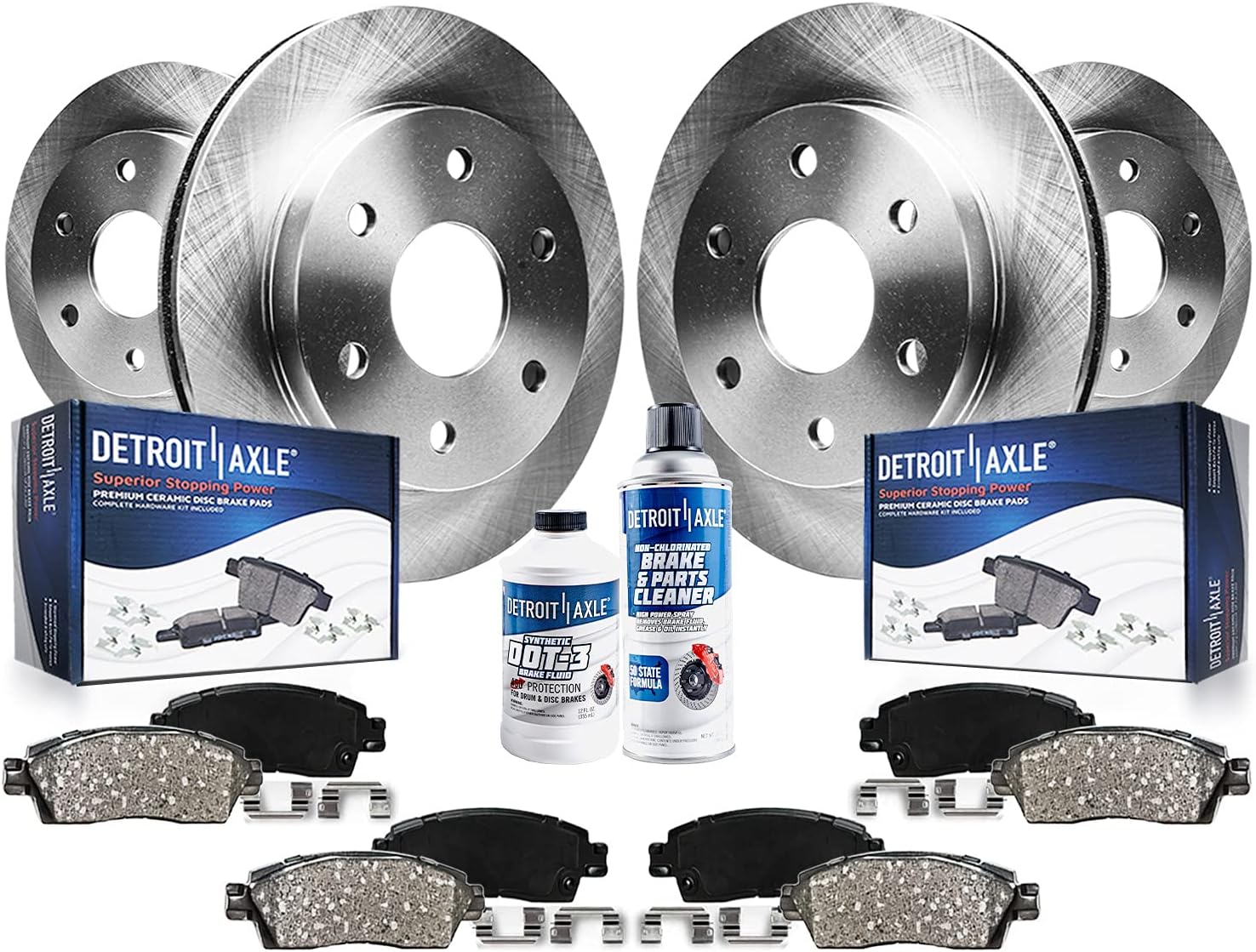
| Kit contents | 4 rotors, 4 pads with hardware, 10oz cleaner, 12oz brake fluid |
| Manufacturer | Detroit Axle |
This Detroit Axle kit supplies everything needed to refresh the braking system on a 2019–2022 Ford Ranger with the specified rotor sizes. It includes two front and two rear vented rotors plus matching ceramic pads and installation hardware, which makes it useful for a complete DIY brake job or a single-shop replacement. The rotors are zinc plated to resist corrosion and have ventilation slots to help dissipate heat and moisture, and the ceramic pads are marketed for quieter operation and reduced dust. The kit also adds a 10 oz brake cleaner and a 12 oz bottle of brake fluid so you can finish the job without sourcing small extras. Expect factory-style fitment given machined locating holes and the inclusion of hardware, but note that the kit is only for Rangers with 12.24 inch front and 12.13 inch rear rotors and does not cover other rotor size variants. Buyers doing performance driving or heavy towing may prefer upgraded performance rotors or pads tailored to higher heat loads.
Best for: Buyers who want a practical, all-in-one factory-style brake refresh for a 2019–2022 Ranger and value convenience, corrosion resistance, and quieter ceramic pads.
Less Ideal for: Drivers who prioritize track use, heavy towing, or extreme-duty braking should consider performance-focused rotors and high-temperature pads instead.
- Complete kit includes front and rear rotors, ceramic pads, hardware, brake cleaner, and brake fluid for one-stop replacement.
- Vented, slotted rotors and zinc plating help with heat dissipation and corrosion resistance for longer service life.
- Machined locating holes and included hardware simplify installation and improve fitment to the vehicle.
- Ceramic pads are engineered for lower noise and reduced brake dust compared with many semi-metallic options.
- Fitment is limited to Rangers with the listed rotor diameters so it will not fit vehicles with different rotor sizes.
Verdict: A convenient, factory-style complete brake replacement kit for 2019–2022 Rangers that bundles rotors, ceramic pads, hardware, and fluids for an efficient DIY or shop install.
4. Detroit Axle Rear Brake Kit for Ford Ranger (2019–2022) — 12.12" Rotors with Ceramic Pads and Hardware
| Fitment rotor size | 12.12 inch (308mm) |
|---|---|
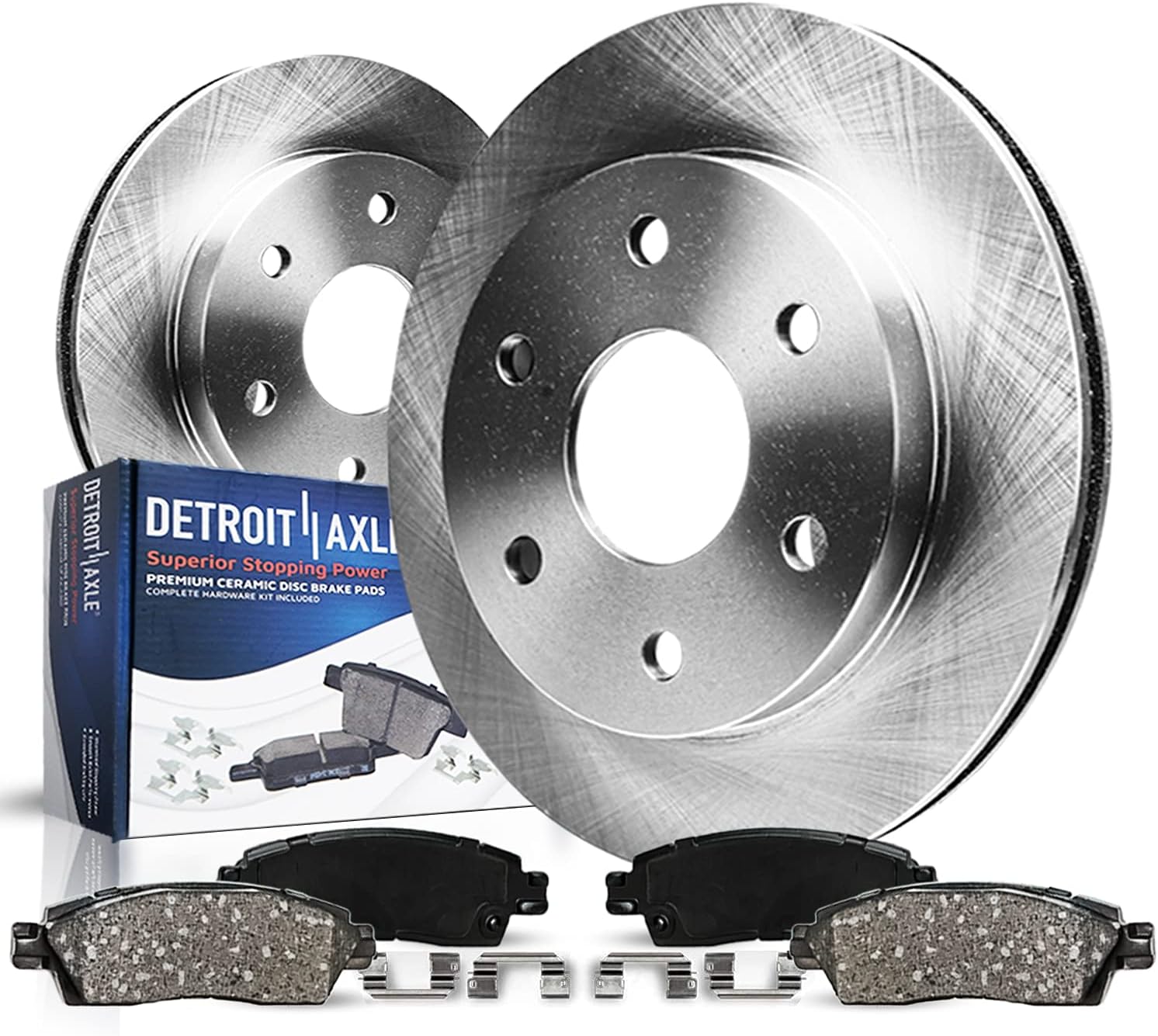
| Includes | 2 rotors, 2 ceramic pads with hardware |
| Finish | Zinc plated |
| Compatible years | 2019-2022 Ford Ranger |
This Detroit Axle rear brake kit provides a complete replacement set for Rangers that use 12.12-inch rear rotors. The kit includes two ventilated, zinc-plated rotors and two ceramic pads with the necessary mounting hardware, so you can replace both sides at once. The ventilated rotors help dissipate heat and the zinc plating reduces visible corrosion and wheel dust, which keeps the brakes looking cleaner over time. Ceramic pads are tuned for quieter operation and produce less dust than many semi-metallic pads, making them a practical choice for daily driving and light towing. Fitment is machined to match factory locating holes, so installation should be straightforward for DIYers or shops without modification. Limitations to note are that ceramic pads can show slightly different initial bite than factory pads and the kit is specified only for Rangers with the 12.12-inch rotor, so verify rotor size before ordering. For a budget-focused owner wanting a full axle swap with improved corrosion resistance and quieter stopping, this kit covers the basics well.
Best for: Budget-minded Ranger owners who need a full rear brake axle replacement that balances low noise, cleaner wheels, and straightforward DIY installation.
Less Ideal for: Drivers who do heavy towing, performance braking, or frequent aggressive use should consider performance-oriented or heavy-duty brake options designed for high heat and fade resistance.
- Complete axle kit includes both rotors, ceramic pads, and hardware for one simple purchase
- Ventilated rotors improve cooling under repeated stops compared with solid rotors
- Zinc plating helps resist corrosion and reduces visible wheel dust
- Ceramic pads produce lower noise and less dust than many semi-metallic alternatives
- Fitment limited to Rangers with 12.12-inch rear rotors, so not universal across all model configurations
- Ceramic pads may feel different from factory pads during initial bedding and heavy-duty use
Verdict: A cost-conscious, all-in-one rear axle brake kit that replaces rotors and pads with quieter ceramic pads and corrosion-resistant zinc-plated rotors for 2019–2022 Rangers with 12.12-inch rotors.
5. Detroit Axle Front and Rear Drilled & Slotted Brake Kit with Ceramic Pads for Ford Ranger (2019–2022)

| Fitment | 2019–2022 Ford Ranger with 12.24" front / 12.13" rear rotors |
|---|---|
| Rotors | Drilled and slotted, zinc plated |
| Brake Pads | Ceramic with hardware |
| Includes | Brake cleaner spray and brake fluid bottle |
This Detroit Axle brake kit supplies both front and rear drilled and slotted rotors plus front and rear ceramic pads, hardware, a brake cleaner spray, and a bottle of brake fluid to service 2019–2022 Ford Ranger models that use 12.24" front and 12.13" rear rotors. The drilled and slotted rotors help dissipate heat and shed moisture for more consistent performance under repeated stops, while the zinc plating reduces surface corrosion and wheel dust over time. Ceramic pads run quieter and produce less dust than semi-metallic options, making the kit a good fit for daily-driven Rangers. Installation is intended to match factory locating holes so no modification is required. The inclusion of basic fluids and cleaner lets you complete a full replace-and-bleed job without ordering extra consumables. Expect solid, factory-replacement stopping feel for street and light towing duties, though drivers who need heavy-duty or track performance may prefer thicker rotors or performance-oriented pad compounds. The 10-year warranty and production testing add confidence for buyers prioritizing long-term reliability.
Best for: Buyers who want a complete, factory-fit replacement that prioritizes quiet operation, corrosion resistance, and consistent everyday stopping for a 2019–2022 Ranger.
Less Ideal for: Drivers who frequently tow heavy loads, perform aggressive driving, or need track-capable braking should consider heavy-duty or performance-specific rotor and pad options instead.
- Complete kit includes front and rear drilled and slotted rotors, ceramic pads, hardware, brake cleaner, and brake fluid
- Drilled and slotted rotors promote faster heat dissipation and improved wet-weather performance
- Zinc plating reduces visible corrosion and wheel dust for cleaner appearance over time
- Ceramic pads offer quieter operation and lower dust compared with many semi-metallic pads
- Designed with factory-style locating holes for direct fitment without modifications
- Ceramic pads and drilled rotors are optimized for street use and light towing rather than heavy track or heavy-load braking
- Kit specifies rotor diameters so it only fits Rangers with the listed rotor sizes
Verdict: A ready-to-install, factory-fit kit that delivers quieter, corrosion-resistant daily braking for 2019–2022 Ford Rangers with the specified rotor sizes.
6. Max Advanced Brakes ValueMAX Carbon Ceramic Brake and Rotor Kit (Front and Rear)

| Set Name | ValueMAX Series Automotive Replacement Brake Kit |
|---|---|
| Automotive Fit Type | Vehicle Specific Fit |
| Assembly Required | No |
| Exterior | Machined |
This Max Advanced Brakes ValueMAX kit supplies front and rear rotors and pads designed to replace factory components on a 2019–2023 Ford Ranger for everyday driving. The rotors are machined and use a carbon ceramic-style surface intended to reduce dust and improve rotor life versus plain cast iron. The kit is sold as a vehicle-specific assembly so fitment and installation are straightforward for a direct swap without modifications. For day-to-day use you get quieter, cleaner braking and consistent pedal feel under normal loads. Because it is a value-series replacement, the kit focuses on cost-effective materials rather than racing-grade hardware, so it will not deliver the bite or heat management of performance track parts. Buyers should expect typical pad break-in and a short bedding period after installation. Overall the kit is a sensible factory-quality replacement that prioritizes lower dust and reliable everyday stopping for the Ranger over high‑temperature performance.
Best for: Buyers who prioritize reliable, low-dust, factory-style braking for everyday driving and want an easy direct-replacement kit with proven customer acceptance.
Less Ideal for: Drivers who frequently tow heavy loads, drive aggressively, or require track-capable stopping power should look at performance-oriented brake kits instead.
- Vehicle-specific kit includes both front and rear rotors and pads for a direct swap
- Machined rotor surface with carbon ceramic-style finish reduces brake dust and improves appearance
- Designed for daily driving with consistent pedal feel and quieter operation
- No assembly required so installation is straightforward for a standard brake replacement
- Not engineered for sustained high-temperature or track use compared with performance brake systems
- Uses value-series materials so longevity and extreme fade resistance may be lower than premium options
Verdict: A practical, vehicle-specific replacement kit that delivers cleaner, quieter daily driving braking for the 2019–2023 Ford Ranger.
7. Detroit Axle Front Brake Kit with 12.24" Rotors and Ceramic Pads for 2019–2023 Ford Ranger
| Fitment | 2019–2023 Ford Ranger (12.24 inch rotor size) |
|---|---|
| Includes | 2 front rotors, 2 front ceramic pads, hardware |
| Rotor type | Drilled and slotted vented rotors |
| Pad material | Ceramic |
This Detroit Axle front brake kit supplies two 12.24 inch vented rotors and a pair of ceramic front brake pads with installation hardware sized for 2019–2023 Ford Ranger models that use 12.24 inch rotors. The rotors are drilled and slotted for improved heat dissipation and quicker cooling during repeated stops, and a zinc plating helps resist surface corrosion and wheel dust buildup. Ceramic pads are quieter and produce less dust than many semi-metallic options, making them a good everyday replacement for daily driving and light towing. The kit is machined with accurate locating holes for bolt-on fitment and includes hardware to simplify installation. Limitations to note are that the kit is specific to Rangers with the 12.24 inch rotor diameter and ceramic pads may fade slightly sooner than heavy-duty metallic pads under extreme repeated high-heat use. For a risk-averse buyer wanting a factory-style brake refresh that balances quiet operation, cleaner wheels, and straightforward fitment, this kit is a practical choice.
Best for: Buyers who want a straightforward, factory-quality front brake replacement for a 2019–2023 Ranger and prioritize quiet, low-dust operation and reliable fitment.
Less Ideal for: Drivers who frequently perform hard track sessions or carry heavy loads regularly and need maximum high-temperature fade resistance should consider heavy-duty metallic brake options.
- Complete front kit with rotors, ceramic pads, and mounting hardware for one simple replacement job
- Drilled and slotted vented rotors improve cooling and help disperse moisture for more consistent braking
- Zinc plating reduces visible corrosion and wheel dust for cleaner-looking rotors over time
- Ceramic pads offer quieter operation but can be less durable than heavy-duty metallic pads under extreme high-heat driving
Verdict: A straightforward factory-style front brake refresh for 2019–2023 Rangers that delivers quieter, low-dust braking with easy bolt-on fitment.
Choosing the Right 2019-2023 Ford Ranger Brake Pad & Rotor Kit: Key Factors to Consider
Material Composition
Brake pad material—ceramic, semi-metallic, or organic—directly affects braking feel, noise, dust, and lifespan. Ceramic pads tend to produce less dust and are quieter but may trade some initial bite compared with semi-metallic options, which often deliver stronger fade resistance under heavy loads.
For the 2019-2023 Ranger, consider the truck s common driving conditions. If you tow or carry heavy loads regularly, a semi-metallic or blended compound can offer better heat tolerance and stopping power. If you prioritize low dust and quiet daily driving, ceramic-based kits may be preferable. Understand the material tradeoffs to match pad chemistry to your usage.
Rotor Design and Construction
Rotors differ by thickness, venting, coatings, and surface treatment. Vented rotors shed heat better than solid rotors and help prevent warping during repeated heavy braking. Slotted or drilled faces can aid gas and water evacuation, but they also change pad wear patterns and can increase noise in some combinations.
For the Ranger, thicker, well-vented rotors with proven corrosion-resistant coatings will handle towing and repeated stops more reliably. If you frequently drive in wet or muddy conditions, look for rotors with protective finishes to resist surface corrosion and maintain consistent braking feel.
Fitment and Hardware Completeness
A correct fit matters more than subtle performance claims. Kits that match the 2019-2023 Ranger s rotor diameter, caliper spacing, and bolt patterns reduce installation headaches and ensure proper braking geometry. Some kits include new hardware, shims, or replacement pad clips; others require reuse of factory pieces.
Opt for kits that explicitly list compatibility with your Ranger s model years and state which components are included. Missing clips or improperly sized rotors can cause noise or premature wear, so confirm whether the kit supplies the necessary hardware for a complete front or rear replacement.
Noise, Dust, and Comfort
Brake noise and dust are common owner complaints after replacements. Material formulation, backing plate design, and included shims all influence squeal tendencies and dust production. Some pads include noise-damping shims or chamfers designed to reduce chatter.
Decide which is most important to you: absolute quiet and low dust for daily street driving, or maximum bite and fade resistance for heavier duty use. For the Ranger, balancing quiet operation with reliable stopping under load typically leads to choosing kits with built-in noise mitigation and moderate dust profiles.
Installation and Serviceability
Ease of installation affects total ownership cost and downtime. Kits that include replacement rotors, pads, and mounting hardware reduce the need for additional parts orders. Rotor fitment that allows machining or resurfacing at service shops can extend component life, while some rotors are intended as one-time replacements.
If you plan to perform the work yourself, check whether the kit requires any special tools or adjustments. For rear brake jobs on certain Ranger trims, parking brake components may need inspection or servicing. Clear installation guidance and included components simplify the process and reduce the chance of post-install issues.
Durability Under Load
Durability concerns involve pad wear rate, rotor longevity, and how components handle repeated thermal cycling. Towing, hauling, and stop-and-go driving accelerate wear. Materials and rotor thickness both influence how long the kit will maintain acceptable performance.
When choosing for a 2019-2023 Ranger, prioritize kits with documented longevity under load or with warranties that reflect confidence in durability. Consider rotor mass and pad formulation that resist glazing and cracking when subject to frequent heavy braking.
Front Versus Rear Brake Considerations
Front and rear systems perform different duties on the Ranger and may benefit from different kit choices. The front brakes typically handle most stopping force, so front kits should emphasize heat management and initial bite. Rear kits can focus more on stability and consistent modulation, especially if the truck uses the rear for parking brake integration.
When choosing a front brake kit replacement, verify rotor thickness, hat height, and caliper clearance to ensure the new components do not interfere with wheel hardware or hub assemblies. For rear brake rotor and pads, confirm parking brake compatibility and whether additional hardware is needed to service the integrated systems.
- Front kits: prioritize rotor venting and pad compounds that resist fade.
- Rear kits: check parking brake integration and consistent pedal feel.
- Some owners replace both axles at once to keep braking characteristics balanced.
Fitment Tips and What To Check Before Buying
Accurate fitment starts with confirming the Ranger s exact year and any options that affect brakes, such as factory towing packages or brake upgrades. Match rotor diameter, thickness, and bolt pattern and verify pad backing plate shape against the factory pads.
Inspect whether the kit includes new caliper hardware, anti-rattle clips, and brake grease. If those are omitted, plan to reuse serviceable factory pieces or order the missing hardware separately to avoid installation delays.
- Measure rotor thickness of originals to compare with replacement minimums.
- Photograph current assemblies to confirm clip and sensor locations.
- Check whether the rear requires separate parking brake service.
Common Post-Installation Issues and How To Address Them
Brake noise after replacement can result from improper bedding, missing shims, or uneven rotor surfaces. Perform a proper bedding procedure if specified by the pad material, and ensure all hardware is torqued to specification. Surface contamination from grease or brake cleaner can also cause noise and should be cleaned carefully.
If the steering wheel vibrates during braking, the rotors may be warped or installed with uneven runout. Confirm rotor seating and hub surface cleanliness. Minor runout sometimes can be corrected by re-mounting or machining the rotor, but excessive warpage indicates replacement is necessary.
- Follow a bedding-in procedure tailored to pad type to optimize performance.
- Re-torque wheel lugs after initial break-in miles to ensure even seating.
- Inspect for caliper slide binding if pads wear unevenly.
When To Resurface Rotors Versus Replace Them
Deciding whether to resurface or replace rotors depends on remaining thickness, condition, and the rotor s metallurgy. Resurfacing can restore a smooth braking surface when there is adequate thickness and the rotor has uniform wear. However, modern rotors are often thin and cost-effective replacements may be safer and more reliable.
For the 2019-2023 Ranger, measure each rotor against the manufacturer s minimum thickness specification. If a rotor is close to the minimum, has deep scoring, or displays signs of thermal cracking, replace it. Consider replacement when corrosion at the hat face or ventilation vanes compromises structural integrity.
- Resurface when thickness and vent integrity are within safe limits.
- Replace if there is thermal cracking, deep scoring, or excessive rust.
- Always verify resurfaced rotor runout before reassembly.
Ceramic Versus Metallic Pads for Ranger Use
Ceramic vs metallic brake pads kit decisions come down to priorities. Ceramic pads reduce dust and are typically quieter, which suits daily street-driven Rangers. Semi-metallic pads contain metal fibers that improve heat dissipation and fade resistance, making them better for frequent towing and heavy-duty use.
If you alternate between daily commuting and occasional towing, a blended compound may offer a reasonable compromise. Keep in mind that pad choice affects rotor wear rate and bedding procedure, so plan installation and break-in according to the pad manufacturer s guidance for best results.
- Choose ceramic for low dust and quiet operation.
- Choose semi-metallic for towing and heavy-duty braking.
- Consider blended compounds for mixed-use driving.
Preparing Your Ranger for a Brake Service
Before starting a brake pad rotor replacement, ensure you have the correct jack points, a torque wrench, and any specialty tools required for your Ranger s caliper or parking brake setup. Inspect wheel bearings and hub faces for corrosion that could prevent rotor seating.
Document the order of removed hardware and clean mating surfaces thoroughly. Replace any worn caliper slides, boots, or e-brake components discovered during disassembly to avoid repeat service shortly after the job is completed.
- Keep a calibrated torque wrench on hand for wheel and caliper bolts.
- Clean hub faces to ensure correct rotor runout.
- Replace or lubricate slide pins and inspect brake hoses.
Still looking for the perfect fit?
Select your Ford Ranger configuration to see the most relevant Brake Pad & Rotor Kits recommendations
How We Chose the Best 2019-2023 Ford Ranger Brake Pad & Rotor Kit
We evaluated potential brake pad and rotor kits for the 2019-2023 Ford Ranger using practical, vehicle-specific standards to ensure each recommendation meets real-world owner needs. Key evaluation criteria included braking material composition and performance characteristics, rotor type and heat management, direct fitment and hardware completeness, and long-term durability under typical Ranger loads. We also weighed noise and dust generation expectations, since Ranger owners frequently tow or carry payloads that stress the braking system.Each kit had to be a direct fit for the specified 2019-2023 Ranger range and include the essential components or clearly list required hardware so owners would not face additional parts gaps at installation. We excluded any kits that lacked clear fitment information, omitted necessary mounting hardware, or relied on vague material claims without specifications. Final picks balanced stopping power, durability, noise control, and ease of installation for typical Ranger driving scenarios.
Our full evaluation process is outlined in our review methodology.
FAQ
How often should I replace brake pads on a 2019-2023 Ford Ranger?
Pad life depends on driving style, load, and environment. Typically pads last between 30,000 and 60,000 miles, but frequent towing or heavy city traffic can shorten that. Inspect pads during regular service intervals and measure remaining thickness to decide replacement timing.
Can I resurface my Ranger s rotors instead of replacing them?
Sometimes. Resurfacing is viable if the rotor exceeds the minimum thickness, has even wear, and no thermal cracking. If the rotor is near minimum thickness or shows deep grooves or cracks, replacement is the safer choice.
Will switching to ceramic pads reduce brake dust on my Ranger?
Ceramic pads generally produce less visible dust than semi-metallic pads, so you should notice cleaner wheels. However, dust level also depends on pad formulation and driving conditions, so results can vary.
What causes brake noise after replacement and how can I fix it?
Noise can stem from improper bedding, missing shims, contaminated surfaces, or loose hardware. Verify correct installation, perform the recommended bedding procedure, and ensure all anti-rattle hardware and shims are present and torqued to spec.
Do I need new hardware when installing a pad and rotor kit?
Not always, but new hardware often improves performance and reduces noise. Many kits include clips, shims, and grease. If a kit omits hardware, examine the existing pieces for corrosion or wear and replace them as needed to ensure proper operation.
Is a high performance brake kit necessary for everyday Ranger driving?
Usually not for standard daily driving. High performance kits offer increased fade resistance and stronger initial bite, which benefits track use or continual heavy towing. For typical commuting and occasional towing, well-matched OE-style kits are often sufficient.
Final Verdict
When replacing brake pads and rotors on a 2019-2023 Ford Ranger, match pad material and rotor design to how you use the truck. Prioritize correct fitment, adequate rotor thickness and venting for heat management, and noise-mitigation features if quiet operation matters.Balance tradeoffs between dust, noise, and fade resistance based on towing and driving habits. With attention to fitment and the factors outlined above, you can select a kit that restores reliable stopping performance and long-term durability for your Ranger.
Explore More:
- Check out all Ford Ranger parts & accessories
- Explore Brake Pad & Rotor Kits Maintenance & Repair Guides
- Explore Brake System
- Browse all Auto Parts
