

Note: This article contains affiliate links. If you click on these links and make a purchase, I may earn a small commission at no extra cost to you. This helps support my research and content. Read my full affiliate disclosure here.
If you own a 1998-2011 Ford Ranger, worn pads and scored rotors quickly reduce braking feel and safety. Picking the right brake pad & rotor kit matters because the wrong fit or compound can increase noise, shorten pad life, or change pedal feel. This guide covers seven carefully shortlisted kits that address fitment, braking performance, and longevity for the Ranger.You will find options selected for proper front and rear fit, material choices, and compatibility with common Ranger brake configurations. Below we explain the evaluation criteria and practical considerations to help you choose the right kit for your driving style and maintenance plan.
Looking for other parts? See all Ford Ranger parts & accessories.
Top Picks at a Glance
| Best Overall The best all-around choice for most situations | TRQ Front Ceramic Brake Pad and Rotor Kit (front) |  |
| Best Quality Built to a higher standard if you want something more solid | PowerStop Z36 Truck & Tow Complete Brake Kit (Pads, Drilled & Slotted Rotors, Drums) |  |
| Best Value The sweet spot between price and what you get | Detroit Axle Front Brake Kit with 10.28" Rotors and Ceramic Pads |  |
| Best Budget The cheapest option that still gets the job done reliably | Auto Shack Front Brake Rotors and Ceramic Pad Kit for Ford Ranger (2003–2011) |  |
| Highest Rated A top-rated pick with lots of positive feedback | Detroit Axle Front Brake Kit with 11.28" Rotors and Copper-Free Ceramic Pads |  |
| Most Popular A crowd favorite that many people choose with confidence | Detroit Axle 4WD Front Brake Kit with Ceramic Pads and 11.26" Rotors |  |
| Best Seller A high-volume bestseller chosen again and again | Detroit Axle Front Brake Kit with Drilled & Slotted Rotors and Ceramic Pads |  |
1. TRQ Front Ceramic Brake Pad and Rotor Kit (front)

| Included components | 1 front ceramic pad set, 2 front rotors |
|---|---|
| Friction material composition | Ceramic |
| Brake rotor venting type | Vented |
| Wheel lug count | 5 Lug |
| Orientation | Front |
This TRQ kit bundles a front ceramic brake pad set with two vented front rotors intended as a vehicle-specific replacement for select 2003–2011 Ford Ranger and compatible trucks. It is used as a one-stop front brake service kit for drivers who want pads and rotors matched for fit and basic performance. The ceramic pads aim to cut dust and noise compared with semi-metallic options while the vented rotors help with heat dissipation during repeated stops. TRQ highlights pre-assembled components and DIY installation resources, which makes the kit practical for a competent home mechanic doing a rotor-and-pad refresh. Limitations to consider are the ceramic friction profile, which favors quieter, cleaner operation but can be less aggressive than performance pads under hard use, and the kit is limited to the listed fitment so confirm exact vehicle compatibility before buying.
Best for: A practical driver who wants a matched, cleaner-running front brake refresh with easy DIY installation and quieter daily braking performance.
Less Ideal for: Drivers seeking high-performance, heavy-duty, or track-oriented braking should consider performance-specific pad and rotor options instead.
- Complete front kit includes matched ceramic pads plus two vented rotors for straightforward replacement
- Ceramic friction material reduces brake dust and typically lowers noise versus semi-metallic pads
- Vented rotors improve heat dissipation for consistent braking during normal driving
- Designed as vehicle-specific direct-fit components to simplify installation and reduce modification needs
- Manufacturer provides DIY installation videos and resources to help with at-home replacement
- Ceramic pads offer quieter, cleaner operation but are not optimized for aggressive or track-style driving
Verdict: Buy this kit if you want a complete, direct-fit front brake refresh that prioritizes quieter, lower-dust ceramic braking and easy DIY installation for compatible Ford Ranger trucks.
2. PowerStop Z36 Truck & Tow Complete Brake Kit (Pads, Drilled & Slotted Rotors, Drums)

| Manufacturer Warranty Description | 36 Month / 36,000 Mile Limited Warranty |
|---|---|
| Included Components | Front and rear Z36 pads, drilled & slotted rotors, drums, shoes, stainless-steel hardware |
| Product Type | Truck & Tow Brake Upgrade Kit |
| Compatible with Vehicle Type | Car, Truck, Van |
This PowerStop Z36 Truck & Tow kit is a complete bolt-on brake upgrade for Ranger-era trucks that need stronger, more consistent stopping power while towing or driving in hilly terrain. The kit includes carbon-fiber reinforced ceramic Z36 pads designed for low dust and quiet operation, matched to drilled-and-slotted G3000 rotors that improve cooling and help resist fade on long descents. Coated drums, copper-free shoes, and stainless-steel hardware round out the package so you can replace front and rear components in one job. In practice the pads deliver firmer initial bite than typical factory replacements while keeping everyday drivability and minimal wheel soiling. The drilled and slotted rotors shed heat and gas during heavy use, but because they are performance-oriented they may show increased wear compared with heavier-duty commercial rotors under extreme fleet duty. Installation is straightforward using factory mounting points, making this suitable for competent DIYers or a standard shop install.
Best for: Drivers who prioritize improved braking performance for towing, hauling, or spirited driving and want a bolt-on upgrade that balances strong bite with low dust and quiet operation.
Less Ideal for: Fleet operators or commercial users who need the absolute longest service intervals under continuous heavy loads should consider heavy-duty commercial brake components instead.
- Complete front-and-rear kit includes pads, drilled-and-slotted rotors, drums, shoes, and stainless-steel hardware for one-stop replacement.
- Carbon-fiber ceramic Z36 pads offer stronger stopping power with low dust and built-in noise control.
- Drilled and slotted G3000 rotors improve heat dissipation to reduce brake fade during towing or long downhill runs.
- Zinc-plated rotors and coated drums resist corrosion for longer visible life behind wheels.
- Performance rotors and pads can wear faster than heavy commercial-grade components under continuous heavy towing.
- Kit is vehicle-specific so fit must be confirmed before purchase.
Verdict: Choose this kit when you want a complete, bolt-on braking upgrade that delivers stronger, fade-resistant stopping for towing and hilly driving.
3. Detroit Axle Front Brake Kit with 10.28" Rotors and Ceramic Pads
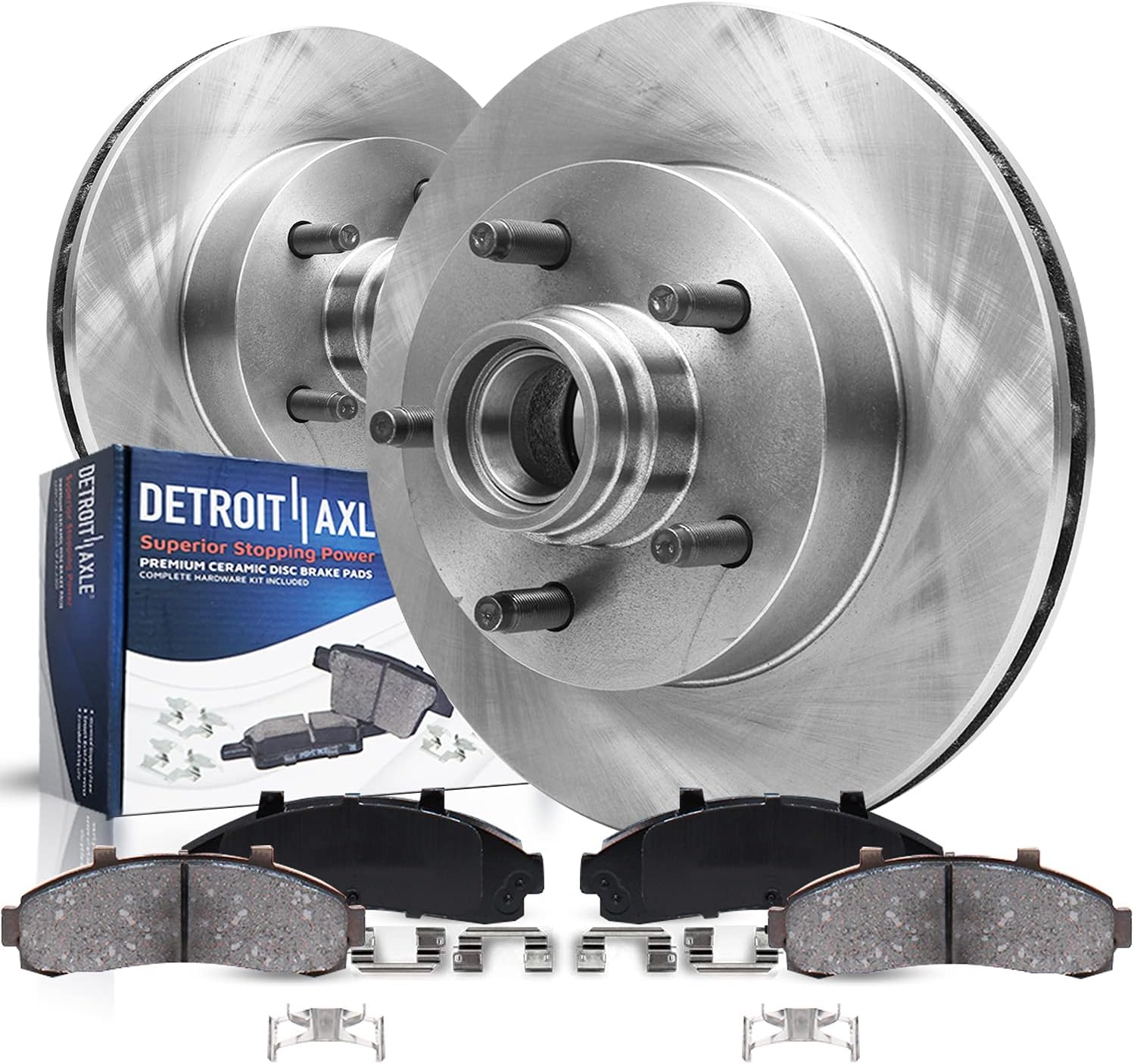
| Measurement | 10.28 inch (261 mm) front rotor |
|---|---|
| Includes | 2 front rotors + 2 front ceramic brake pads |
| Orientation | Front |
| Compatible with Vehicle Type | Truck |
| Manufacturer Warranty Description | 10 Year |
This Detroit Axle front brake kit supplies two 10.28" front rotors and a set of ceramic front brake pads designed for 1998–2003 Ford Ranger and compatible Mazda B-series trucks. It is intended as a direct replacement for worn front discs and pads, letting you restore stopping performance without modifying the vehicle. The rotors are described as built to exceed factory specifications and the ceramic pads are low-metallic, which typically reduces brake dust and noise compared with semi-metallic pads. The kit includes installation hardware and carries a long 10-year warranty from the brand, which adds confidence for a DIY install or a budget-conscious shop job. Expect quieter operation and cleaner wheels, but ceramic pads can feel slightly less aggressive under hard, repeated braking compared with performance-oriented semi-metallic compounds. Fitment is specific to the listed Ranger and Mazda model years so confirm wheel and hub details before ordering.
Best for: Buyers who want a cost-effective, factory-style brake refresh for older Ranger-era trucks and prefer quieter, lower-dust ceramic pads and straightforward DIY or shop installation.
Less Ideal for: Drivers who push brakes hard in towing, racing, or frequent heavy-duty use should consider heavy-duty or performance brake compounds instead.
- Complete front kit replaces both rotors and pads for a single maintenance job
- Ceramic pads produce lower dust and typically quieter braking than many semi-metallic pads
- Rotors advertised to exceed factory specification for fit and finish
- Includes installation hardware and multi-year warranty for added confidence
- Ceramic pads may deliver less initial bite under repeated high-heat braking compared with performance semi-metallic pads
Verdict: A practical, all-in-one front brake replacement that restores stopping performance with low-dust ceramic pads and rotors matched to Ranger-era trucks.
4. Auto Shack Front Brake Rotors and Ceramic Pad Kit for Ford Ranger (2003–2011)

| Included Components | Brake Rotor, Ceramic Brake Pad Set |
|---|---|
| Orientation | Front |
| Compatible with Vehicle Type | Truck,SUV |
| Automotive Fit Type | Vehicle Specific Fit |
| OEM Equivalent Part Number | 680027, 680027R, EHT833H |
This Auto Shack front brake kit replaces the front rotors and pads on compatible Ford Ranger applications and is aimed at restoring reliable stopping power without a big investment. The kit ships with two vented 12.01-inch rotors and a single set of ceramic pads intended to reduce dust and noise compared with semi-metallic pads. In practice the rotors provide predictable braking feel for everyday driving and the ceramic pads are quieter during light to moderate use. The kit is a vehicle-specific fit which simplifies installation for a DIYer or an independent shop, and the rotors list OEM-equivalent numbers to help confirm compatibility. Key limitations are the basic 6-month part-only warranty and that this is a standard replacement kit rather than a performance upgrade, so it may not suit heavy towing or aggressive driving. Also confirm stud count and rotor size before purchase since the package requires correct fitment for the intended Ranger year and brake setup.
Best for: Buyers looking for an inexpensive, straightforward front brake replacement for everyday driving on a 2003–2011 Ranger who prioritize quiet, low-dust pads and simple fitment.
Less Ideal for: Drivers who regularly tow heavy loads, track the vehicle, or require upgraded stopping power should consider performance-oriented rotors and pads instead.
- Complete front kit with both rotors and ceramic pads for a single purchase
- Vehicle-specific fit simplifies DIY installation and reduces fitment guesswork
- Ceramic pads offer quieter operation and lower dust compared with many metallic pads
- Vented rotor design helps dissipate heat during normal driving
- Warranty covers parts only for six months and does not include labor or related costs
Verdict: A budget-friendly, vehicle-specific front rotor and ceramic pad kit that restores quiet, low-dust braking for 2003–2011 Ford Rangers.
5. Detroit Axle Front Brake Kit with 11.28" Rotors and Copper-Free Ceramic Pads

| Rotor diameter | 11.28 inch (287mm) |
|---|---|
| Pads | Copper-free ceramic |
| Orientation | Front |
| Vehicle type | Truck (RWD fitment listed) |
This Detroit Axle front brake kit supplies everything needed to replace the front braking surface on RWD Ranger/Explorer-era trucks with 11.28 inch rotors. The kit bundles two ventilated rotors finished with zinc plating, a set of copper-free ceramic pads, installation hardware, a bottle of brake fluid and a can of brake cleaner so you can complete the job without extra parts. Ventilated rotors and ceramic pads help keep temperatures in check and reduce dust compared with metallic pads, while the machined locating holes are intended to simplify alignment and fitment. The zinc plating adds corrosion resistance for longer visual life in wet climates. Because this is an aftermarket replacement kit designed for specific RWD applications, buyers should confirm fitment for their suspension and rotor diameter before installing. The included fluid and cleaner are convenient for a one-stop service but professional installations may prefer to use shop-grade fluids. For someone replacing worn front rotors and pads on a compatible Ford Ranger or Explorer chassis, this kit is a practical, reliability-minded option.
Best for: Drivers who prioritize a dependable, all-in-one front brake replacement for older RWD Ford Ranger/Explorer-era trucks and want parts that focus on quiet performance and corrosion resistance.
Less Ideal for: Anyone seeking high-performance or track-oriented brake upgrades or owners of 4WD or non-11.28 inch rotor configurations should look for kits matched to their specific needs.
- Complete kit includes rotors, ceramic pads, hardware, brake fluid and cleaner for a single-stop repair
- Ventilated rotors with zinc plating resist heat and corrosion for longer service life
- Copper-free ceramic pads reduce dust and are designed for quieter operation
- Machined locating holes for straightforward bolt-up fitment
- Fitment is limited to RWD models with 11.28 inch front rotors so verify vehicle configuration before buying
- Included brake fluid and cleaner are convenient but may not match shop-grade products preferred by professionals
Verdict: A practical, reliability-focused front brake kit that supplies rotors, ceramic pads and basic service items to restore dependable, low-dust braking on compatible RWD Ranger/Explorer-era trucks.
6. Detroit Axle 4WD Front Brake Kit with Ceramic Pads and 11.26" Rotors

| Position | Front |
|---|---|
| Fits | 4WD models |
| Brake pads | Ceramic |
| Manufacturer | Detroit Axle |
This Detroit Axle front brake kit supplies two 11.26-inch rotors and a pair of ceramic front pads intended for 4WD Ford Ranger, Explorer and related vehicles from the late 1990s and early 2000s. It is a direct-replacement aftermarket kit built to meet or exceed factory specifications, and the rotors are advertised as going through impact, wear and fatigue testing for durability. The ceramic pads reduce dust and tend to run quieter than semi-metallic options, making them a good fit for daily driving and light towing. Installation follows the same steps as a factory swap, so a competent DIYer or a local shop can fit the parts without modification. A notable benefit is the included 10-year warranty which offers long-term reassurance. The kit is limited to 4WD front applications and does not cover other drivetrains, and ceramic pads may show slightly less initial bite than metallic pads under hard repeated braking.
Best for: Buyers who want a factory-style direct replacement kit for routine driving and occasional towing and who value lower dust, quiet operation, and long-term warranty backing.
Less Ideal for: Drivers who need extreme fade resistance for frequent heavy towing, motorsport use, or those who require front brake parts for 2WD vehicles.
- Designed to meet or exceed factory fit and finish for direct replacement
- Includes ceramic pads that generate lower dust and quieter operation
- Rotors tested for impact, wear and fatigue for improved durability
- Long 10-year warranty provides extended coverage and buyer confidence
- Fitment restricted to 4WD front applications only
- Ceramic pads can feel less aggressive than metallic pads during heavy or repeated hard braking
Verdict: A durable, factory-style front rotor and ceramic pad kit that offers quiet, low-dust braking and a long warranty for 4WD Rangers and similar Ford models.
7. Detroit Axle Front Brake Kit with Drilled & Slotted Rotors and Ceramic Pads

| Rotor size | 11.28 inch (287mm) |
|---|---|
| Orientation | Front |
| Kit contents | 2 rotors and 2 ceramic pads with hardware |
| Compatible vehicle type | Truck |
| Manufacturer warranty | 10 Year |
This Detroit Axle front brake kit supplies two 11.28 inch ventilated, drilled-and-slotted rotors plus a set of ceramic front pads and installation hardware. It is intended as a direct replacement for certain RWD Ford Ranger model years and several compatible Mazda trucks, with machined locating holes and zinc plating to resist corrosion. The drilled and slotted rotors aid heat dissipation and help reduce brake fade during repeated stops, while the ceramic pads are quieter and produce less dust than many semi-metallic compounds. Installation is intended to match factory fit, so a home mechanic with basic tools or a shop can swap the parts without modification. Limitations to note are that fitment is vehicle-specific and this kit covers front brakes only, so rear service is separate; ceramic pads also tend to offer slightly less initial bite than some performance-focused pads. For buyers prioritizing reliable, low-noise replacement hardware and corrosion resistance, this kit delivers practical, factory-style stopping performance.
Best for: Buyers who want a reliable, factory-style front brake replacement for older Ford Ranger and compatible truck models and prioritize low noise, reduced dust, and straightforward installation.
Less Ideal for: Drivers seeking ultimate track-level stopping power or a full-vehicle brake overhaul in one purchase should consider performance-oriented pads or complete front-and-rear kits instead.
- Drilled and slotted vented rotors improve cooling and help reduce fade under repeated braking
- Ceramic brake pads are quieter and generate less brake dust than many alternatives
- Zinc plating on rotors offers added corrosion resistance for longer visual life
- Machined locating holes and supplied hardware aim for direct, hassle-free fitment
- Front-only kit requires purchasing rear components separately for a full brake refresh
- Ceramic pads may have milder initial bite compared with aggressive performance pads
Verdict: A dependable front brake replacement that focuses on quiet, low-dust ceramic pads and drilled-and-slotted rotors for reliable, factory-style stopping on older Ford Ranger trucks.
Choosing the Right 1998-2011 Ford Ranger Brake Pad & Rotor Kit: Key Factors to Consider
Fitment and Kit Completeness
Correct fitment is the single most important factor for the 1998-2011 Ford Ranger. Brake systems changed subtly across model years and axle setups, so you need a kit that lists compatibility with the Ranger year range and specifies front or rear application. A complete kit should include rotors, pads, and necessary hardware such as caliper bolts, anti-rattle clips, and shims when applicable.
Incomplete kits force additional purchases and can introduce installation delays or fit problems. Also verify whether the kit assumes resurfacing existing rotors or provides new rotors. For the Ranger, getting a kit that matches the caliper mounting style and parking brake arrangement will reduce installation friction and ensure proper braking geometry.
Pad Material and Performance Tradeoffs
Pad compound determines initial bite, fade resistance, dust generation, and rotor wear. Ceramic-style compounds generally produce less dust and quieter operation but may wear differently and offer different cold-bite characteristics compared with semi-metallic pads. Semi-metallic pads often provide stronger initial bite and better heat tolerance during heavy use, but they can be noisier and increase rotor wear.
For typical Ranger driving—commuting, towing light loads, and occasional highway travel—many owners prefer a balance between low dust and reliable stopping power. If you frequently tow or drive in hilly terrain, prioritize compounds with higher fade resistance and thermal capacity.
Rotor Construction and Heat Management
Rotor thickness, venting, and metallurgy affect heat dissipation and resistance to warping. Vented rotors evacuate heat more effectively than solid rotors and are generally preferred for front applications on vehicles that experience sustained braking. The Ranger often sees mixed duty including towing, so rotors that maintain structural integrity under heat cycles are beneficial.
Consider whether rotors are cross-drilled, slotted, or plain. Slotted or drilled patterns can help gas and debris escape, improving bite under heavy use, but they can also reduce rotor longevity in some situations. Match rotor type to expected driving demands: daily driving favors plain or lightly slotted rotors for longevity and low noise, while towing-oriented use can justify more aggressive venting or slotting.
Brake Noise, Dust, and Comfort
Noise and dust are common owner complaints after a brake job. Different pad compounds and backing plate treatments influence squeal and vibration. Kits that include shims, anti-rattle hardware, and quality backing plates are less likely to produce annoying noises once installed. Dust level is influenced by the pad compound; ceramic-type pads usually keep wheels cleaner, while metallic compounds can generate more visible residue.
Comfort also covers pedal feel and modulation. A kit that offers predictable engagement and minimal pedal fade under everyday conditions will make daily driving more confidence-inspiring. For the 1998-2011 Ranger, seek solutions that balance quiet operation with firm, progressive braking response.
Durability and Maintenance Considerations
Longevity of both pads and rotors matters for total ownership cost and convenience. Rotor hardness, pad compound wear rate, and how parts react to moisture and road salt affect replacement intervals. Some replacement rotors are coated to resist corrosion, which can be helpful for Rangers in wet or salted climates.
Also consider whether the kit allows future serviceability, for example using commonly available hardware and standard rotor thickness specifications. Choosing parts that are widely supported makes future resurfacing or replacement easier and less expensive.
Installation and Compatibility With Brake Systems
Ease of installation affects both DIY owners and shops. Direct-fit kits that match existing caliper brackets, ABS sensors locations, and parking brake interfaces reduce troubleshooting. Check rotor thickness and hub bore dimensions against the Ranger's specifications so the wheel alignment and hub clearance are not impacted.
Additionally, consider whether the kit includes instructions or online resources for torque specs and bedding procedures. Proper bedding is important to achieve consistent performance and reduce noise after installation, so compatibility with standard bedding techniques is a practical factor.
Front Versus Rear Kit Choices
Front and rear braking duties are different on the Ranger. The front axle handles most of the braking load, especially under heavy stops or downhill driving, so front kits often require rotors with superior heat dissipation and pads with stable friction characteristics. Rear kits may see less thermal stress but must be compatible with the parking brake system if integrated into the rotor design.
When deciding whether to replace front, rear, or both, inspect rotor thickness and pad wear. If rotor runout or deep scoring is present on either axle, replacing rotors along with pads can restore proper contact patterns and reduce noise. For routine service where rotors are in good condition, a pad-only replacement may be acceptable, but only after verifying rotor surface and thickness limits.
- Prioritize vented front rotors if you do heavy towing or repeated downhill driving.
- Ensure rear rotors and pads match the parking brake design where applicable.
- Replace both pads on an axle to maintain balanced stopping performance.
Fitment Verification and What to Check
Before purchasing a kit, verify the listed fitment against your Ranger's year range and any known axle or trim differences. Look for explicit mention of 1998-2011 Ford Ranger compatibility and whether the kit is designated for front or rear application. Cross-check part numbers and physical dimensions like rotor diameter, thickness, and bolt pattern.
Also inspect included hardware and see if the kit provides anti-rattle clips, shims, and caliper guide pins. Missing small pieces can complicate installation and cause noise or uneven wear, so kits that include these components reduce installation risk.
- Compare rotor diameter and thickness to the vehicle specification.
- Confirm mounting hole locations and parking brake interface where applicable.
- Check for inclusion of installation hardware and anti-squeal shims.
Installation Tips and Bedding Procedure
Proper installation and bedding substantially influence performance and long-term satisfaction. Start with clean mating surfaces: remove rust from the hub face and ensure rotors sit flush. Follow torque specs for caliper and wheel mounting bolts to avoid warping rotors through uneven clamping.
Bedding new pads and rotors helps transfer a uniform layer of friction material to the rotor and balances initial braking performance. A basic bedding routine includes a series of moderate-to-hard stops from city speeds, allowing cool-down intervals between sequences. Avoid aggressive or repeated hard stops until a proper transfer layer is established.
- Clean hubs and mounting faces before installing new rotors.
- Torque hardware to spec and use a star pattern for wheel lugs.
- Perform a progressive bedding sequence to establish a friction layer.
When to Resurface Rotors Versus Replace
Deciding whether to resurface or replace rotors hinges on remaining thickness, runout, and the extent of surface damage. Rotors have a minimum safe thickness stamped or specified; if resurfacing would leave the rotor below that minimum, replacement is necessary. Likewise, severe scoring or heat cracks require replacement to maintain safety.
Resurfacing can be cost-effective when rotors have only light wear and are within thickness limits. However, many replacement kits include new rotors at a price point that makes replacement the wiser long-term choice, especially if the old rotors have been through multiple machining cycles.
- Measure rotor thickness and compare to the vehicle minimum spec.
- Inspect for heat cracks or deep scoring that resurfacing cannot remove.
- Consider replacement when rotors have been machined multiple times previously.
Material Choices: Ceramic, Semi-Metallic, and Performance Options
Ceramic compounds are popular for their low dust and quiet operation in everyday driving. Semi-metallic pads offer higher heat tolerance and strong initial bite, which can be advantageous for tougher driving conditions or occasional towing. Some kits marketed as high performance use specialized blends aimed at track use and may sacrifice low-noise characteristics.
Match the compound choice to how you use the Ranger. For mostly commuting and light hauling, ceramic or blended compounds often provide the best balance of cleanliness and comfort. If you regularly haul heavier loads or tow, consider a compound with higher thermal capacity to minimize fade.
- Choose ceramic for low dust and quiet operation in daily driving.
- Pick semi-metallic for stronger bite and improved heat resistance.
- Reserve aggressive performance compounds for track or extreme-duty use.
Dealing With Common Post-Installation Issues
After a brake job, a few issues can emerge such as noise, uneven wear, or vibration. Squeal is often caused by lack of shims or improper hardware; ensure anti-rattle clips and shims are installed and that pads have full, even contact. Vibration or pulsation typically indicates rotor runout or warping and may require machining or replacement.
If you notice persistent dust, it is likely a result of the pad compound. Switching to a lower-dust formulation can address this. For changes in pedal feel, bleed the brake system to remove air and verify caliper slide pin mobility to ensure even pad retraction and engagement.
- Install shims and anti-rattle hardware to mitigate squeal.
- Check rotor runout if vibration appears after installation.
- Bleed brakes and inspect caliper slides to restore pedal firmness.
Still looking for the perfect fit?
Select your Ford Ranger configuration to see the most relevant Brake Pad & Rotor Kits recommendations
How We Chose the Best 1998-2011 Ford Ranger Brake Pad & Rotor Kit
We applied a Ranger-specific selection framework to narrow dozens of kits down to seven solid options. First, fitment accuracy was mandatory: each kit had to match the 1998-2011 Ford Ranger braking assemblies and common caliper configurations for that range. Second, braking performance data and buyer feedback on stopping distance, pedal feel, and fade resistance were considered to ensure usable real-world results.Third, material and construction were weighted heavily; we evaluated pad compound type, rotor metallurgy and balance, and whether kits included hardware and proper shims. Fourth, long-term durability indicators such as pad wear rates and rotor resistance to warping were factored in. We also checked noise and dust tendencies reported by owners because these affect everyday ownership.Excluded were kits lacking clear Ranger fitment information, units without basic installation hardware, and options designed only for racing use or non-street applications. The final picks prioritize direct-fit replacement, a range of compound choices, and clear indications of whether the kit covers front, rear, or both axle replacements.
Our full evaluation process is outlined in our review methodology.
FAQ
How do I know whether I need front or rear kits for my Ranger?
Inspect pad thickness and rotor surface on each axle. If front rotors show heavy scoring, glazing, or are below minimum thickness, replace the front kit. Rear rotors should be inspected for parking brake integration and similar wear; replace the axle with the more worn components to maintain balanced braking.
Can I resurface my Ranger rotors instead of buying new ones?
Often resurfacing is acceptable if the rotor thickness remains above the minimum spec and runout is within tolerance. However, if rotors have deep scoring, heat cracks, or would end up below the safe thickness after machining, replacement is required.
What bedding procedure should I follow after installing new pads and rotors?
Use a progressive bedding routine of a series of controlled stops from moderate speed with cooling intervals between sets. Avoid repeated hard stops until a transfer layer forms. Proper bedding reduces noise and improves consistent initial braking performance.
Why do my brakes squeal after replacement?
Squeal is commonly caused by missing shims, improper hardware, or glaze on new pads. Ensuring anti-rattle clips and shims are installed, cleaning mating surfaces, and following a correct bedding procedure usually reduces or eliminates squeal.
Should I choose ceramic or semi-metallic pads for my Ranger?
It depends on use. Ceramic pads are quieter and produce less dust for daily driving, while semi-metallic pads provide stronger initial bite and better heat tolerance for towing or heavy-duty use. Balance noise, dust, and performance needs when choosing.
How often should I inspect brake components on a 1998-2011 Ranger?
Inspect pads and rotors at least every 12,000 miles or during routine service intervals. Check sooner if you notice vibration, reduced pedal feel, unusual noises, or increased stopping distances. Regular inspection helps catch issues before they cause damage to other components.
Final Verdict
For the 1998-2011 Ford Ranger, prioritize kits that guarantee correct fitment for your axle and parking brake configuration, and pick pad materials that match your driving demands. Front kits should emphasize heat management and stable friction, while rear kits need to integrate with parking brake components when present.Balance noise and dust preferences against thermal performance and durability. When in doubt, choose a direct-fit kit that includes hardware and clear specifications; that approach reduces installation headaches and helps ensure predictable braking behavior for daily driving and light-duty towing.
Explore More:
- Check out all Ford Ranger parts & accessories
- Explore Brake Pad & Rotor Kits Maintenance & Repair Guides
- Explore Brake System
- Browse all Auto Parts
