

Note: This article contains affiliate links. If you click on these links and make a purchase, I may earn a small commission at no extra cost to you. This helps support my research and content. Read my full affiliate disclosure here.
If you own a 1998-2011 Ford Ranger, worn or warped brake rotors can make stopping feel vague, introduce vibration, and shorten pad life. Choosing the right replacement rotors matters because the correct fit and construction directly affect braking performance, pedal feel, noise, and long-term durability. This guide covers seven vetted rotor options that fit the 1998-2011 Ranger, shortlisted for common driving needs including daily commuting, towing, and occasional off-road use.The selections ahead are evaluated on fitment accuracy, material and machining quality, and heat-handling characteristics, so you can pick the rotor type that matches how you drive. Read on for practical buying guidance and maintenance tips before you install replacement rotors.
Looking for other parts? See all Ford Ranger parts & accessories.
Top Picks at a Glance
| Best Overall The best all-around choice for most situations | Detroit Axle Front Disc Brake Rotors (11.28") — Pair |  |
| Best Quality Built to a higher standard if you want something more solid | TRQ Front Ceramic Brake Pad and Rotor Kit (Front) |  |
| Best Value The sweet spot between price and what you get | Max Advanced Brakes Front Brake Rotor Set — OE-Style Replacement for 2002–2011 Ford Ranger |  |
| Best Budget The cheapest option that still gets the job done reliably | Auto Shack Front Brake Rotors, vented 11.26 in (pair) |  |
| Highest Rated A top-rated pick with lots of positive feedback | Detroit Axle 4WD Front Brake Kit with 11.26" Rotors and Ceramic Pads |  |
| Most Popular A crowd favorite that many people choose with confidence | Detroit Axle Front Brake Kit with 10.28" Rotors and Ceramic Pads |  |
| Best Seller A high-volume bestseller chosen again and again | Bendix Premium PRT5341 Front Brake Rotor |  |
1. Detroit Axle Front Disc Brake Rotors (11.28") — Pair

| Fitment rotor diameter | 11.28 inch (287mm) |
|---|---|
| Kit contents | 2x front disc brake rotors |
| Exterior finish | Zinc |
| Compatible vehicle types | Cars, SUVs, Trucks, Vans |
These Detroit Axle front disc rotors are a direct-fit replacement intended for vehicles with 11.28-inch (287mm) front rotors. Supplied as a two-piece kit, the rotors are vented for improved heat dissipation and are zinc plated to resist corrosion and reduce visible wheel dust. They are machined with accurate locating holes so installation is straightforward and typically does not require modifications. In normal driving the vented design and claimed heat resistance help reduce fade during repeated stops while the zinc finish keeps corrosion at bay for longer service life. These rotors are offered as a value aftermarket option that aims to match factory fit and braking performance, but they do not include parking brake components or hardware beyond the rotors themselves. Buyers should expect a break-in period and verify rotor thickness and runout during installation to ensure smooth, quiet operation.
Best for: Buyers seeking a balanced, cost-conscious replacement rotor that aims to restore factory-style braking and corrosion resistance for everyday driving and light towing on compatible Ranger and Explorer models.
Less Ideal for: Drivers who need performance-oriented rotors for track use or heavy-duty commercial towing should consider drilled/slotted or heavy-duty aftermarket options instead.
- Direct-fit machining for easy installation without modification
- Vented design improves cooling and helps reduce brake fade under repeated stops
- Zinc plating resists corrosion and minimizes visible wheel dust
- Sold as rotors only with no brake pads or installation hardware included
Verdict: A practical, corrosion-resistant direct-fit rotor pair that restores factory-style stopping for 11.28-inch front rotor Ford Rangers and related models.
2. TRQ Front Ceramic Brake Pad and Rotor Kit (Front)

| Included components | 1 front ceramic pad set, 2 front rotors |
|---|---|
| Friction material composition | Ceramic |
| Brake rotor venting type | Vented |
| Wheel lug count | 5 Lug |
| Orientation | Front |
This TRQ kit bundles a front ceramic brake pad set with two vented rotors intended as a direct replacement for specified Ford Ranger and compatible Mazda trucks. The ceramic pads are formulated to cut dust and reduce noise compared with semi-metallic options, while the included vented rotors help manage heat during repeated stopping. Installation is aimed at DIYers and independent shops since the kit includes preassembled components and TRQ provides step-by-step video resources. For everyday driving and spirited street use the combination delivers predictable stopping feel, quieter operation, and cleaner wheels. Limitations: ceramic pads typically sacrifice a small amount of initial bite versus aggressive performance pads and are not optimized for heavy track use or repeated high-temperature braking. Also this kit is a vehicle-specific fit so confirm exact model-year and hub type before buying.
Best for: Buyers who want a quieter, cleaner-feeling front brake upgrade for daily driving and occasional spirited use on 1998–2011 Rangers and similar trucks and who prefer a straightforward direct-fit replacement with DIY support.
Less Ideal for: Drivers who prioritize maximum track performance, recurring high-temperature braking, or extremely aggressive stopping power should consider competition-oriented brake pads and rotors instead.
- Factory-fit replacement design simplifies installation and fitment for listed Ranger/B-series trucks
- Ceramic friction material reduces brake dust and runs quieter than many semi-metallic pads
- Vented rotors improve heat dissipation for more consistent braking under repeated stops
- Kit includes both pads and rotors so front braking components are matched for balanced performance
- Ceramic pads provide less initial bite than aggressive or track-focused pad compounds
Verdict: Choose this kit if you want a quiet, low-dust, direct-fit front brake replacement that balances everyday comfort with improved heat-managed stopping for Rangers and compatible trucks.
3. Max Advanced Brakes Front Brake Rotor Set — OE-Style Replacement for 2002–2011 Ford Ranger

| Compatible vehicles | 2002–2011 Ford Ranger (front) |
|---|---|
| Material Type | Cast Iron |
| Exterior Finish | Machined |
| Automotive Fit Type | Vehicle Specific Fit |
These Max Advanced Brakes front rotors are a direct-fit replacement intended for everyday driving on 2002–2011 Ford Ranger trucks. Made from G3000-grade cast iron and machined flat, the rotors are factory-balanced to reduce vibration and help ensure even pad contact for a smoother pedal feel. The set includes two front OE-style replacement rotors engineered to match factory fitment so installation is straightforward for a DIY mechanic or a shop. For routine commuting and light towing the rotors offer consistent stopping performance and durability under normal use, and the machined finish helps minimize uneven wear. Limitations to note are that these are value-oriented replacement rotors rather than high-performance or drilled/slotted designs, so they will not provide the extra cooling or bite that aggressive driving or track use demands. Also the warranty for individual rotors is shorter than for combined kits, which is common among budget-focused parts.
Best for: Buyers who prioritize reliable, cost-effective maintenance and want a straightforward, factory-style front rotor replacement that restores OEM braking feel for daily driving.
Less Ideal for: Drivers who frequently tow heavy loads, do aggressive driving, or want higher-performance rotors with enhanced cooling or braking bite should consider performance-oriented alternatives.
- Direct bolt-on fit engineered to match factory specifications for 2002–2011 Ford Ranger front hubs
- Precision-machined, factory-balanced surfaces reduce vibration and promote even pad wear
- Cast-iron construction (G3000-grade) built for routine durability under everyday driving
- Includes two front rotors so you can replace both sides at once for balanced braking
- Not a performance rotor — no drilled or slotted features for extra cooling or aggressive stopping
- Warranty term for individual rotors is limited compared with combined kits
Verdict: A practical, factory-style front rotor replacement that restores smooth, vibration-free braking for 2002–2011 Ford Ranger owners focused on reliable everyday performance.
4. Auto Shack Front Brake Rotors, vented 11.26 in (pair)

| Rotor Construction | Vented |
|---|---|
| Outer Diameter | 11.26 in (286 mm) |
| Wheel Bolt Holes | 5 |
| Material Type | Alloy Steel |
These Auto Shack front rotors are a budget-friendly, direct-fit replacement intended for front axle service on specified Ranger, Explorer and related models. Supplied as a pair, the rotors are vented alloy-steel units with a 11.26 inch diameter and five lug holes, so installation follows the same steps as swapping factory front rotors. In daily driving the design aims to deliver consistent stopping performance and reliable everyday service rather than track-level braking. The rotors are finished in silver to resist surface corrosion during storage and fit typical truck and SUV brake setups without additional machining. Important compromises are that these are economy replacement parts with a short six-month part-only warranty and they lack upgraded coatings or performance features like cross-drilling or slotted faces. If your priority is a low-cost, straightforward rotor swap that restores original braking feel, these provide an economical option; those wanting longer life or enhanced heat management should consider higher-end replacements.
Best for: Buyers looking to restore factory-style braking on a tight budget who prioritize affordable, direct-fit replacements for routine daily driving.
Less Ideal for: Drivers who frequently tow, haul heavy loads, or do spirited driving and need rotors with extended life, performance features, or upgraded corrosion protection should look at premium options.
- Sold as a matched pair for front axle replacement
- Direct-fit, vehicle-specific design simplifies installation
- Vented construction for routine heat dissipation during everyday driving
- Alloy steel construction common for standard replacement rotors
- Six-month part-only warranty is relatively short and does not cover labor or installation
Verdict: A cost-conscious, direct-fit pair of vented front rotors that restores everyday braking performance for compatible Rangers without added performance features.
5. Detroit Axle 4WD Front Brake Kit with 11.26" Rotors and Ceramic Pads

| Position | Front |
|---|---|
| Manufacturer | Detroit Axle |
| Manufacturer Part Number | R-54035 + P-652 |
| Fits | 4WD models (Ford Ranger, Explorer, Mazda B3000/B4000, Mercury Mountaineer) |
This Detroit Axle front brake kit supplies two 11.26-inch rotors and a pair of ceramic front brake pads intended for 4WD Ford Ranger and compatible vehicles from the late 1990s and early 2000s. The rotors are manufactured to meet or exceed factory specifications and the kit is positioned as a direct replacement for worn components. In use the ceramic pads offer quieter operation and less dust than some semi-metallic options, while the rotors' stated testing for impact, wear, and fatigue suggests decent longevity under normal driving conditions. The kit is straightforward for a mechanic or competent DIYer to install as a single assembly for both front wheels. Important limitations are that this listing is for 4WD models only and ceramic pads can have slightly different bite characteristics when cold compared with other pad compounds. For buyers prioritizing a reliable, factory-style replacement for routine street use, this kit delivers solid stopping performance and service life without bells and whistles.
Best for: Buyers who want a dependable, factory-style front brake replacement for a 4WD Ford Ranger and value quiet, low-dust ceramic pads and straightforward installation.
Less Ideal for: Drivers seeking aggressive track performance or heavy towing upgrades should look for performance-oriented rotors and high-friction pad compounds instead.
- Rotors built to meet or exceed factory specifications for fit and finish
- Includes ceramic pads for quieter braking and reduced wheel dust
- Undergoes impact, wear, and fatigue testing for durability
- Complete front kit simplifies replacement with both rotors and pads included
- Compatible only with specified 4WD applications and not suitable for 2WD models
Verdict: A practical, factory-quality front brake kit that offers quiet, low-dust ceramic braking and reliable fitment for 4WD Ford Ranger-era vehicles.
6. Detroit Axle Front Brake Kit with 10.28" Rotors and Ceramic Pads
| Fitment | 1998-2002 Ford Ranger (RWD, 4-Wheel ABS); select Mazda B2300/B3000/B4000 models |
|---|---|
| Rotor Outside Diameter | 10.28 inch (261mm) |
| Pads Material | 100% Ceramic |
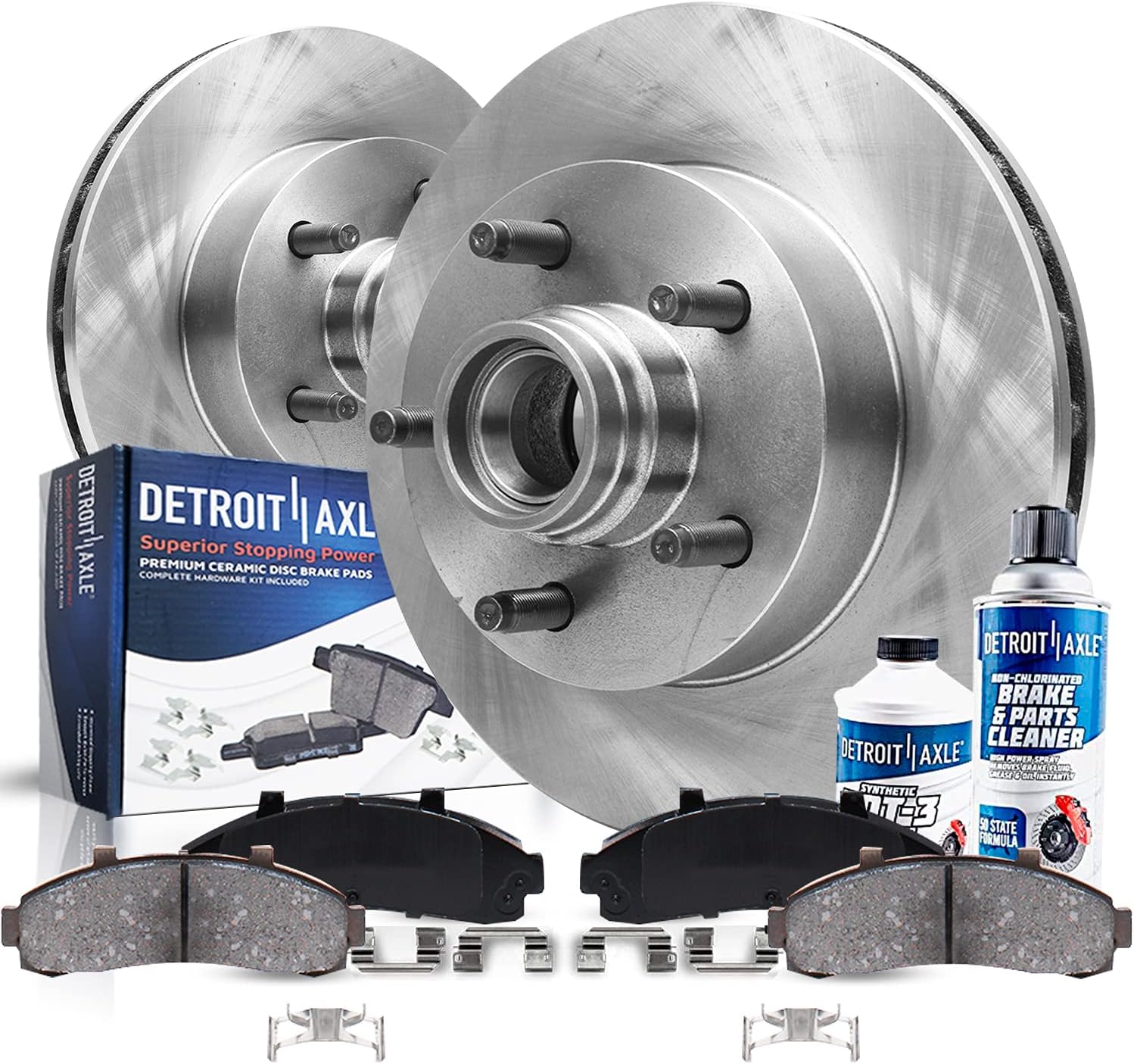
| Kit Contents | 2 front rotors, 2 front pads, hardware, brake cleaner, brake fluid |
This Detroit Axle front brake kit supplies both front rotors and ceramic pads plus hardware and small bottles of cleaner and brake fluid for a straightforward brake service. The rotors are vented and zinc plated to help with heat dissipation and corrosion resistance, while the 100% ceramic pads are designed for low noise and minimal dust. Installation is intended to be direct-fit for rear-wheel-drive Rangers and the listed Mazda models when the 10.28" rotor diameter is used, so most DIYers can swap the pair without machining or modification. The included cleaner and fluid are convenient for a single-vehicle job but are not full-size service bottles. The kit is targeted at repairing front braking components only and must be matched by measuring rotor diameter before ordering; selecting the wrong rotor size is the most common mistake. Fitment notes emphasize RWD with 4-wheel ABS and compatible rear drum configurations, so check your vehicle details carefully before purchase.
Best for: Buyers who prioritize proven community feedback and want a ready-to-install front brake service kit for a Ranger-era RWD vehicle, with an emphasis on low-noise ceramic pads and direct-fit replacement.
Less Ideal for: Anyone who needs rear braking parts, a different rotor diameter, or full workshop-sized supplies should look for a different kit or separate parts.
- Complete kit includes rotors, ceramic pads, hardware, brake cleaner, and brake fluid for one front axle service
- Vented rotors with zinc plating improve cooling and resistance to corrosion
- 100% ceramic pads aim for low noise and reduced brake dust
- Machined locating holes for proper fit help simplify installation on specified vehicles
- Kit only fits the 10.28" front rotor diameter so wrong-size selection will require returning the kit
- Brake cleaner and fluid are small service-sized bottles not intended for multiple jobs
Verdict: A convenient, well-reviewed direct-fit front brake kit for RWD Ranger-era trucks when you need 10.28" rotors and low-dust ceramic pads.
7. Bendix Premium PRT5341 Front Brake Rotor
| Material Type | Cast Iron |
|---|---|
| Exterior Finish | Machined |
| Included Components | (1) Bendix Rotor |
| Compatible with Vehicle Type | Cars, Sport-Utility-Vehicles, Trucks |
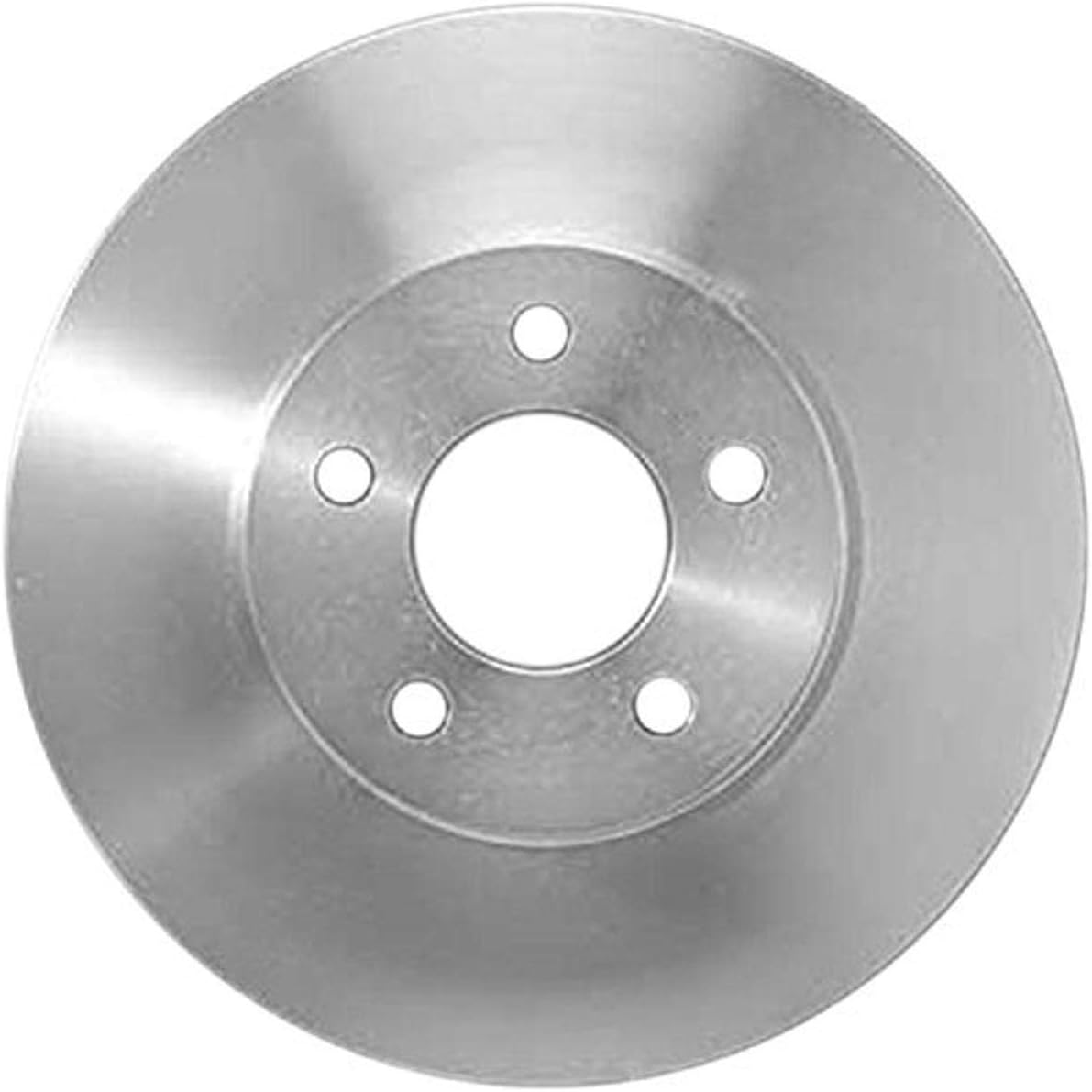
The Bendix Premium PRT5341 is a single front brake rotor made from high-grade cast iron and machined for a factory-style fit. It is intended as a direct replacement to restore braking feel on compatible vehicles and is dynamically balanced to limit vibration. In use it provides consistent stopping power and is designed with vented construction to help dissipate heat during everyday driving, which reduces the chance of brake fade on highway trips or towing at moderate loads. The machined finish and emphasis on noise reduction mean it runs relatively quietly once bedded in. Because this listing is a single rotor, installers replacing both sides will need to buy a matching unit or a pair. The rotor is a straightforward option for routine maintenance or mileage-driven replacement and includes Bendix fitment engineering familiar to repair shops, but it does not include hardware or pads so plan accordingly.
Best for: A buyer who prefers conservative, factory-quality replacements to maintain original braking behavior and who values predictable, low-risk performance for everyday driving and light towing.
Less Ideal for: Drivers wanting performance-oriented rotors for track use or those who need upgraded corrosion-resistant coated rotors for heavy off-road or salt-exposed environments.
- Factory-style fit and form for direct replacement on listed models
- High-grade cast iron construction for durability under repeated heat cycles
- Vented, machined design and dynamic balancing to reduce vibration and heat soak
- Engineered to minimize noise for a quieter bedding-in and daily operation
- Sold as a single rotor rather than a pair so you may need to purchase two for an axle replacement
Verdict: Choose this Bendix rotor if you want a factory-quality, durable front replacement that restores reliable, low-vibration braking on supported Rangers.
Choosing the Right 1998-2011 Ford Ranger Brake Rotors: Key Factors to Consider
Correct Fitment and Specifications
Fitment accuracy is the top priority because incorrect rotor dimensions lead to caliper misalignment, uneven pad contact, and possible safety concerns. Confirm rotor diameter, thickness, bolt pattern, and hub pilot diameter match the 1998-2011 Ford Ranger requirements before purchase.
Rotor offset, hat height, and ventilation vane arrangement must align with the vehicle hub and caliper clearance. Even small differences in hub bore or thickness can cause runout or require spacers. For this Ranger, paying attention to these measurements reduces installation headaches and ensures consistent braking performance.
Material and Casting Quality
Most replacement rotors are made from cast iron, but the grade and casting process affect wear life and heat tolerance. Higher-quality castings with finer grain and fewer porosity issues resist cracking and warping under heavy use. Look for rotors with machining tolerances and balanced surfaces to minimize vibration.
Corrosion-resistant coatings or e-coatings help slow rust on the hat and outer faces, which matters if the Ranger sees salt or wet environments. Better material quality translates to longer service intervals and steadier braking under repeated heat cycles.
Thermal Management and Design
Rotor designs that manage heat reduce the chance of warping and maintain consistent friction between the pad and rotor. Vented rotors with well-designed vanes for air movement lower operating temperatures during repeated stops, which is important for towing or heavy-load driving often done with Rangers.
Features like directional venting, thicker vanes, and additional mass where needed help dissipate heat. If you frequently tow or do stop-and-go driving, prioritize rotors with better thermal handling to prevent fade and premature wear.
Surface Finish and Machining
The rotor surface finish affects initial bedding, noise, and pad transfer. Precisely machined faces and tight runout tolerances reduce vibration and uneven pad wear. Many ready-to-install rotors come properly machined and balanced; others may require resurfacing prior to use.
Consistent surface flatness helps pads bed evenly and limits pulsation felt through the pedal. For the Ranger, choosing rotors with factory-machined, balanced faces reduces the chance of premature brake judder after installation.
Design Features: Slotted, Drilled, or Plain
Different face designs serve different needs. Plain blank rotors offer the simplest, quietest ride and often the longest life for routine commuting. Slotted rotors help clean pad material and maintain bite under heavy use. Drilled rotors can aid gas and water evacuation but may be more prone to cracking under extreme stress.
Select based on driving style: daily drivers typically do best with plain or lightly slotted rotors, while occasional towing or spirited driving can benefit from slotted designs. For sustained heavy-duty use, prefer vented, well-constructed rotors over drilled patterns to avoid stress concentrations.
Serviceability and Maintenance
Consider whether the rotor can be resurfaced and the minimum serviceable thickness. Some rotors are sold as ''resurface-friendly, while others are only intended as one-time replacements. Knowing the rotor's minimum thickness lets you determine how many future resurface cycles are possible before replacement is required.
Also check whether the rotor is hub-centric or requires shims, and whether replacement hardware like retaining screws or anti-seize is needed. For Ranger owners who plan DIY maintenance, straightforward install fit and clear service specs reduce time in the garage.
Common Brake Rotor Wear Symptoms on the Ranger
Recognizing rotor wear early prevents secondary damage to calipers and pads. Typical signs on the 1998-2011 Ranger include a pulsating brake pedal during stops, a noticeable vibration through the steering wheel, and an increase in stopping distance. These symptoms often indicate thickness variation or warping.
Other visible signs include deep grooves, heavy rust flaking on the braking surface, or blue discoloration from overheating. If you notice metal-to-metal grinding noises, the pads may be worn enough to damage the rotor, and the rotor should be inspected immediately.
- Pulsation or vibration under braking
- Visible scoring or deep grooves on rotor face
- Blueing or heat spots indicating overheating
- Rust flaking or severe pitting on contact surfaces
How To Measure Rotor Thickness and Runout
Measuring rotor thickness requires a micrometer or caliper and checking against the rotor's minimum thickness stamp. Remove the wheel and, where necessary, the caliper to access the rotor edge; take measurements at multiple points around the circumference to detect thin spots.
Runout is checked with a dial indicator mounted to the knuckle or caliper bracket while rotating the hub. Small runout can be corrected by repositioning the rotor on the hub or replacing warped rotors. For the Ranger, always compare your readings with the vehicle service manual or the rotor manufacturer specifications.
- Use a micrometer to measure thickness at several points
- Compare readings to stamped minimum thickness
- Check lateral runout with a dial indicator
- Replace if out of spec or if resurfacing would reduce thickness below minimum
Slotted Vs Drilled Vs Plain Rotors: Which Suits Your Ranger?
Plain rotors offer quiet operation and long life for everyday commuting and lighter duty. They are often the best choice for Rangers used primarily for daily driving or light weekend tasks. Slotted rotors provide improved pad cleaning and consistent bite under heavier use, making them suitable for towing or more aggressive driving.
Drilled rotors help with gas and water evacuation but introduce stress risers that can lead to cracking under heavy loads or frequent high-heat cycles. For most Ranger owners, slotted or plain vented rotors strike the best balance between performance and longevity.
- Plain: quiet, durable, best for daily driving
- Slotted: better pad cleaning and bite for heavier use
- Drilled: improved evacuation but higher crack risk under extreme heat
Rotor Resurfacing Vs Replacement for the Ranger
Resurfacing (turning) a rotor can restore a flat braking surface if the rotor has sufficient remaining thickness and no structural damage. It is practical when the rotor has light scoring or minor thickness variation and the remaining thickness stays above the stamped minimum after machining.
Replacement is the safer choice when rotors have deep grooves, cracks, severe corrosion, or when repeated resurfacing would leave the rotor too thin. For the 1998-2011 Ranger, check minimum thickness specs and consider replacement when doing so preserves heat capacity and long-term safety.
- Resurface if thickness stays above minimum and no cracks
- Replace if deep grooving, cracking, or heavy corrosion present
- Replacement preserves thermal mass for heavy towing or load use
Installation Tips and Torque Specs Guidance
Proper installation reduces vibration and improves safety. Clean the hub surface of rust and debris before mounting the rotor to ensure true seating. Use anti-seize sparingly on the hub pilot if recommended, and ensure the rotor is seated flush before torquing the wheel studs.
Torque wheel lug nuts to the vehicle-specified pattern and torque values in steps to avoid rotor runout. After installing new rotors and pads, perform a gradual bed-in procedure to transfer a uniform pad layer and stabilize friction characteristics for reliable braking performance on the Ranger.
- Clean hub mating surfaces prior to installation
- Tighten wheel nuts in a crisscross pattern to spec
- Bed-in brakes gradually after installation
- Recheck torque after a short driving interval
Matching Rotors to Brake Pads and Driving Use
Rotors and pads act as a system; pairing the rotor design with appropriate pad compounds yields the best results. For normal driving, a standard ceramic or semi-metallic pad matches well with plain or lightly slotted rotors. For towing or heavy use, pair slotted rotors with pads rated for higher heat and friction stability.
Avoid mixing highly aggressive pads with thin or drilled rotors as this combination can accelerate rotor wear or promote cracking. Choose pads and rotors with compatible friction characteristics and bedding procedures for the most consistent braking behavior on the Ranger.
- Standard pads pair well with plain or slotted rotors
- High-heat pads work best with vented, robust rotors
- Avoid aggressive pad/low-mass rotor combinations
Still looking for the perfect fit?
Select your Ford Ranger configuration to see the most relevant Brake Rotors recommendations
How We Chose the Best 1998-2011 Ford Ranger Brake Rotors
We prioritized fitment and safety first, only considering rotors that match the 1998-2011 Ford Ranger specifications for diameter, bolt pattern, and hub height. Durability was assessed through material and manufacturing details such as cast iron grade, cross-drilling or slotting processes, and coating or corrosion resistance. Thermal performance and resistance to warping were evaluated by looking for design features that improve heat dissipation, such as ventilation vanes and surface machining tolerances. Noise and vibration potential were judged by machining precision and balance specifications. Ease of installation and common serviceability items were also considered, including whether the rotors require machining or are ready to install.We excluded any rotors that lack clear specification data, ambiguous fitment claims for the Ranger years, or those that require vehicle-specific hub modifications. The final list emphasizes rotors that balance real-world durability, braking consistency, and straightforward replacement for Ranger owners.
Our full evaluation process is outlined in our review methodology.
FAQ
How often should I replace rotors on a 1998-2011 Ford Ranger?
Replacement frequency depends on driving style and conditions. Typical rotors last longer than pads under normal driving, but heavy towing or repeated high-heat braking shortens life. Inspect thickness and surface condition during pad changes and follow minimum thickness guidelines.
Can I resurface Ranger rotors instead of replacing them?
Often you can resurface rotors if they have light scoring and sufficient remaining thickness. Do not resurface if there are cracks, heavy corrosion, or if machining would reduce the rotor below the minimum thickness stamp.
Are slotted or drilled rotors better for towing with my Ranger?
Slotted rotors usually provide better pad cleaning and consistent bite under towing loads. Drilled rotors can help with water evacuation but may be more vulnerable to cracking under sustained high heat, so slotted vented rotors are generally a safer choice for towing.
What tools do I need to measure rotor runout and thickness?
A micrometer or digital caliper measures thickness accurately, while a dial indicator measures lateral runout. Basic hand tools to remove the wheel and caliper are also required. Accurate measurements at multiple points around the rotor are important for diagnosis.
Will installing thicker or heavier rotors improve braking on my Ranger?
Heavier or thicker rotors can increase thermal capacity and reduce fade, but they must match the Ranger's fitment specs and clearances. Unapproved changes to rotor mass may affect ABS and suspension behavior, so stick to parts specified for the vehicle.
How can I reduce brake noise after replacing rotors on a Ranger?
Ensure proper surface cleaning and bedding-in of new pads and rotors. Use quality pads compatible with the rotor surface, check caliper hardware and anti-rattle components, and verify the rotor is free of runout and properly torqued.
Final Verdict
When replacing rotors on a 1998-2011 Ford Ranger, prioritize correct fitment, material quality, and thermal design to match your driving and load needs. Decide between plain, slotted, or drilled faces based on whether you need quiet, everyday performance or improved pad cleaning for heavier use.Weigh the tradeoffs between resurfacing and full replacement, and always compare measured thickness and runout to specifications before reusing a rotor. Focusing on these criteria will help you pick a rotor that restores braking feel, maintains safety, and minimizes future maintenance.
Explore More:
- Check out all Ford Ranger parts & accessories
- Explore Brake Rotors Maintenance & Repair Guides
- Explore Brake System
- Browse all Auto Parts
