

Note: This article contains affiliate links. If you click on these links and make a purchase, I may earn a small commission at no extra cost to you. This helps support my research and content. Read my full affiliate disclosure here.
If you own a 2012-2015 Honda Civic you know the braking system plays a big role in daily drivability and safety. Replacing both pads and rotors together restores pedal feel, reduces vibration, and can eliminate persistent squeal caused by worn surfaces. This guide focuses on full brake pad and rotor kits selected for the 2012-2015 Civic chassis (FB and FG), covering front and rear fitment where applicable.We shortlisted seven well-suited kits and evaluated them across key factors like braking feel, rotor longevity, and noise control so you can pick the right balance of comfort, durability, and stopping power. Read on for the selection rationale and practical buying guidance before the product list.
Looking for other parts? See all Honda Civic parts & accessories.
Top Picks at a Glance


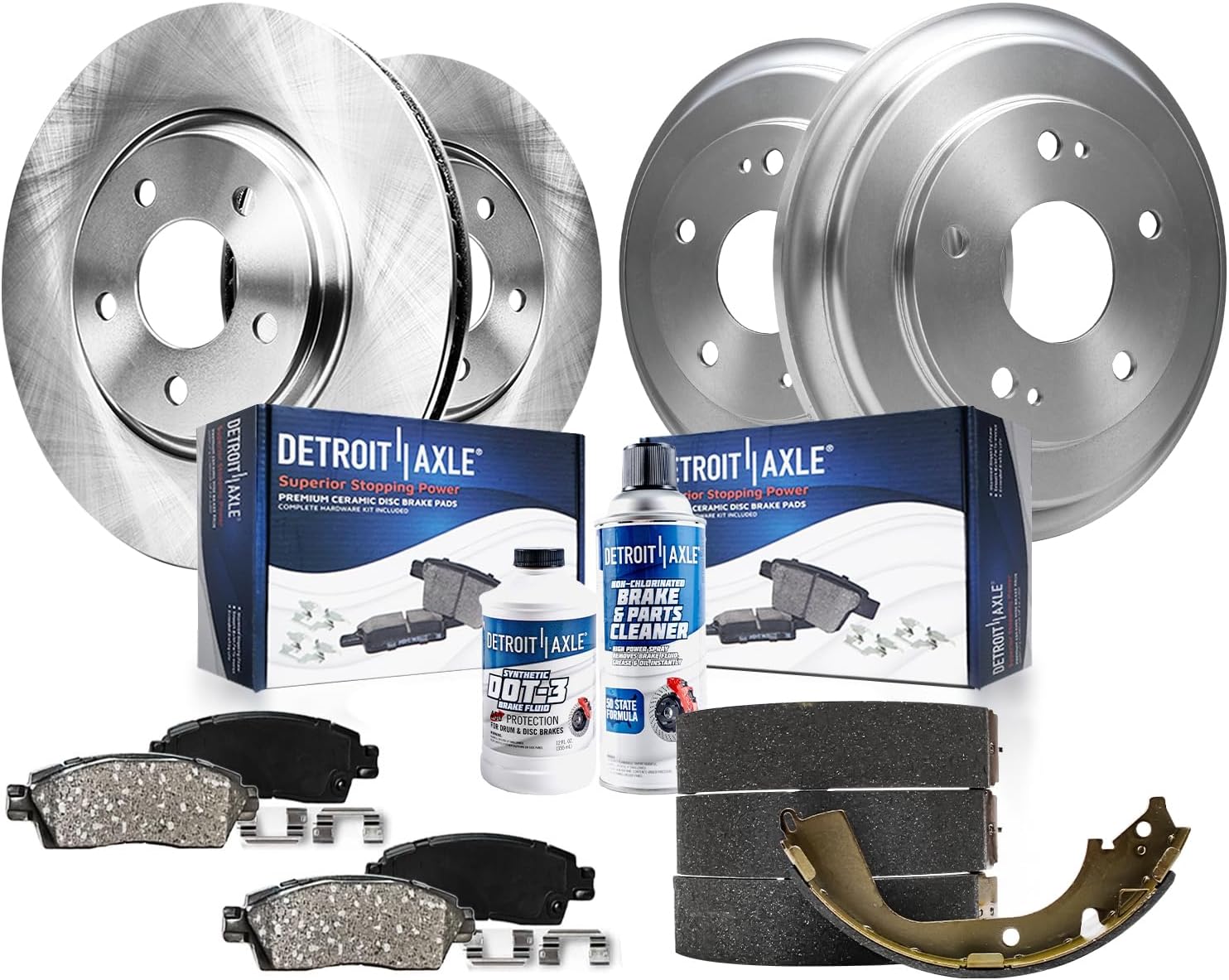
1. Detroit Axle Front and Rear Brake Kit for 2012–2015 Honda Civic (10.31" Front Rotors)
| Front rotor size | 10.31 inch (262mm) |
|---|---|
| Front pads | Ceramic (hardware included) |
| Rear shoes | Semi-metallic |
| Orientation | Dual |
This Detroit Axle kit supplies everything needed to refresh the braking system on compatible 2012–2015 Honda Civic models that use 10.31 inch front rotors and rear drum brakes. The kit includes two vented front rotors, two rear drums, ceramic front pads with hardware and semi-metallic rear shoes. The rotors are zinc plated for corrosion resistance and have ventilation to help dissipate heat, while the ceramic front pads aim to reduce dust and noise during normal driving. Parts are machined to locating holes that match factory fitment so installation should be straightforward for a DIYer or independent shop. Practical benefits include a full-vehicle service in one purchase and components designed for quieter, low-dust operation on street-driven Civics. Limitations are that the kit is specific to Civic trim and rear-drum configurations that use the 10.31 inch rotor size, so it will not fit Civics with different rotor diameters or rear disc setups.
Best for: Buyers who want a balanced, all-in-one replacement that refreshes both front and rear braking on compatible 2012–2015 Civic models and value quiet, low-dust street performance.
Less Ideal for: Drivers with Civic configurations that use rear disc brakes or a different front rotor diameter should look for a kit matched to their specific brake setup.
- Complete kit includes front rotors, front ceramic pads with hardware, rear drums and rear semi-metallic shoes for a full brake service
- Vented front rotors and zinc plating improve heat dissipation and resist corrosion for longer rotor life
- Machined locating holes for factory-style fitment reduce the need for modifications during installation
- Ceramic front pads are formulated to produce lower dust and quieter operation in everyday driving
- Fitment limited to Civic variants with 10.31 inch front rotors and rear drum brakes, so not universal across all 2012–2015 Civics
Verdict: A single purchase that provides factory-fit front rotors, ceramic pads and rear drum components to fully renew the braking system on compatible 2012–2015 Honda Civics.
2. PowerStop Z23 Front and Rear Brake Kit with Drilled & Slotted Rotors and Carbon-Fiber Ceramic Pads

| Included Components | 4 rotors, pad sets, installation hardware, brake lube |
|---|---|
| Fit Type | Vehicle Specific Fit |
| Pad Formula | Z23 Carbon-Fiber Ceramic |
| Warranty | 60-day/36,000-mile |
This PowerStop Z23 kit replaces both front and rear pads and rotors with a complete bolt-on upgrade aimed at daily-driven performance for 2012–2015 Civic Si and 2013–2015 Acura ILX 2.4L applications. The Z23 carbon-fiber ceramic pads deliver stronger stopping power than typical factory replacements while producing less dust and reduced noise thanks to rubberized shims and chamfered edges. Matched drilled and slotted rotors are zinc plated to resist corrosion, and the drilled holes plus rounded slots help dissipate heat and clear debris to reduce fade during spirited driving. The kit includes stainless-steel hardware and brake lube so installation requires no modifications. Expect improved pedal feel and cooler braking under repeated stops, with the trade-off that aggressive track use will still push these street-oriented components toward higher wear than purely OEM replacements. The included warranty and complete hardware make it a practical single-purchase upgrade for someone upgrading the whole braking system without custom work.
Best for: Drivers who want a noticeable braking upgrade for spirited street driving and commuting, and who prefer a complete bolt-on kit that reduces dust and noise while improving pedal feel.
Less Ideal for: Those seeking specialized track-only components or professional race setups should look at track-focused pads and rotors designed for extreme temperatures and quicker serviceability.
- Complete front and rear kit includes pads, rotors, stainless-steel hardware and brake lube for a straightforward bolt-on installation.
- Carbon-fiber infused ceramic Z23 pads offer stronger stopping power with low dust and reduced noise.
- Drilled and slotted zinc-plated rotors improve cooling and help prevent corrosion for longer rotor life in wet or salty conditions.
- Designed as a street performance upgrade so extreme track use may increase wear compared with track-specific components.
Verdict: A full bolt-on brake upgrade that raises stopping power, reduces dust and noise, and keeps rotors cooler for spirited street driving on 2012–2015 Civic Si and 2013–2015 ILX.
3. TRQ Front Ceramic Brake Pad and Vented Rotor Kit for 2012–2015 Honda Civic

| Included components | 1 Front Ceramic Brake Pad Set, 2 Front Brake Rotors |
|---|---|
| Friction material composition | Ceramic |
| Front brake rotor venting type | Vented |
| Orientation | Front |
| Compatible with vehicle type | Car |
This TRQ kit bundles a front ceramic brake pad set with two vented front rotors designed to replace the factory components on compatible 2012–2015 Honda Civic front applications. The ceramic pads are intended to reduce brake dust and noise compared with semi-metallic pads while the vented rotors help dissipate heat during repeated stops. Fitment is vehicle-specific so installation is straightforward for a typical DIYer or a shop, and TRQ provides installation videos to simplify the process. In real-world use the combination should deliver quiet, predictable stopping for daily driving and highway commuting; ceramic pads sacrifice a small amount of initial bite versus more aggressive compounds but reward with cleaner wheels and smoother operation. The kit is focused on routine street use rather than track duty, and drivers seeking maximum fade resistance or heavy towing performance may prefer performance-oriented materials instead.
Best for: Buyers who want a no-fuss front brake service that prioritizes low dust, quiet operation, and reliable everyday stopping for a Civic used mainly for commuting and general driving.
Less Ideal for: Drivers who regularly push the car on track, carry heavy loads, or need maximum fade resistance should choose a performance-focused brake compound and rotors instead.
- Vehicle-specific direct-fit parts for straightforward installation
- Ceramic friction material reduces brake dust and tends to run quieter
- Vented rotors improve heat dissipation for consistent stopping under normal driving
- Includes both pads and rotors so front service is done in one purchase
- Ceramic pads generally provide less initial bite and are not optimized for aggressive or track driving
Verdict: A practical, direct-fit front pad-and-rotor kit that delivers quieter, low-dust braking ideal for everyday 2012–2015 Honda Civic use.
4. A-Premium 10.31 in Front Vented Disc Rotors and Ceramic Pads Kit for Honda Civic (2012–2015)

| Orientation | Front |
|---|---|
| Compatible with Vehicle Type | Car |
| Automotive Fit Type | Vehicle Specific Fit |
| OEM Equivalent Part Number | R-31601, P-1578, SBC1578, ZD1578, 171578 |
This A-Premium six-piece front brake kit provides a straightforward replacement package for compatible 2012–2015 Honda Civic models with manual transmission. The kit includes two vented 10.31 inch rotors, ceramic-formula pads made in a controlled environment, wear indicators, mounting hardware, and high-temperature grease so you can replace both front rotors and pads in one job. The rotors use a metallic coating to resist surface rust and the pads advertise low dust and low noise thanks to the MTF602 carbon ceramic formula and a sub-5% copper content. In real-world terms that means cleaner wheels and a quieter daily drive after bedding in. Some owners report solid stopping performance and an easy fit, though a few reviews note fitment mix-ups between rotor sizes and occasional early rust spotting on the surface. This is a practical, budget-focused OE-style replacement for Civic owners who want a complete front brake refresh without upgrading to performance-grade components.
Best for: Buyers replacing worn front brakes on a 2012–2015 Honda Civic who prioritize an all-in-one, affordable kit that reduces wheel dust and minimizes installation hassle.
Less Ideal for: Drivers who want higher-performance braking, track use, or the highest corrosion protection should consider upgraded or specialty rotors and pads instead.
- Complete kit includes front rotors, pads, wear indicators, hardware, and high-temperature grease for one convenient install
- Ceramic pad formula designed for low dust and noise keeps wheels cleaner and reduces cabin squeal
- Rotors have a corrosion-resistant metallic coating to slow surface rust and extend usable life
- Vehicle-specific fitment for Honda Civic 2012–2015 manual-transmission front applications simplifies selection
- Some buyers reported fitment confusion with different rotor sizes across Civic variants
- Not a performance-oriented pad/rotor set so braking feel and fade resistance are basic compared with upgraded options
Verdict: A practical, budget-friendly front brake kit that replaces both rotors and pads on compatible 2012–2015 Honda Civics for cleaner, quieter everyday braking.
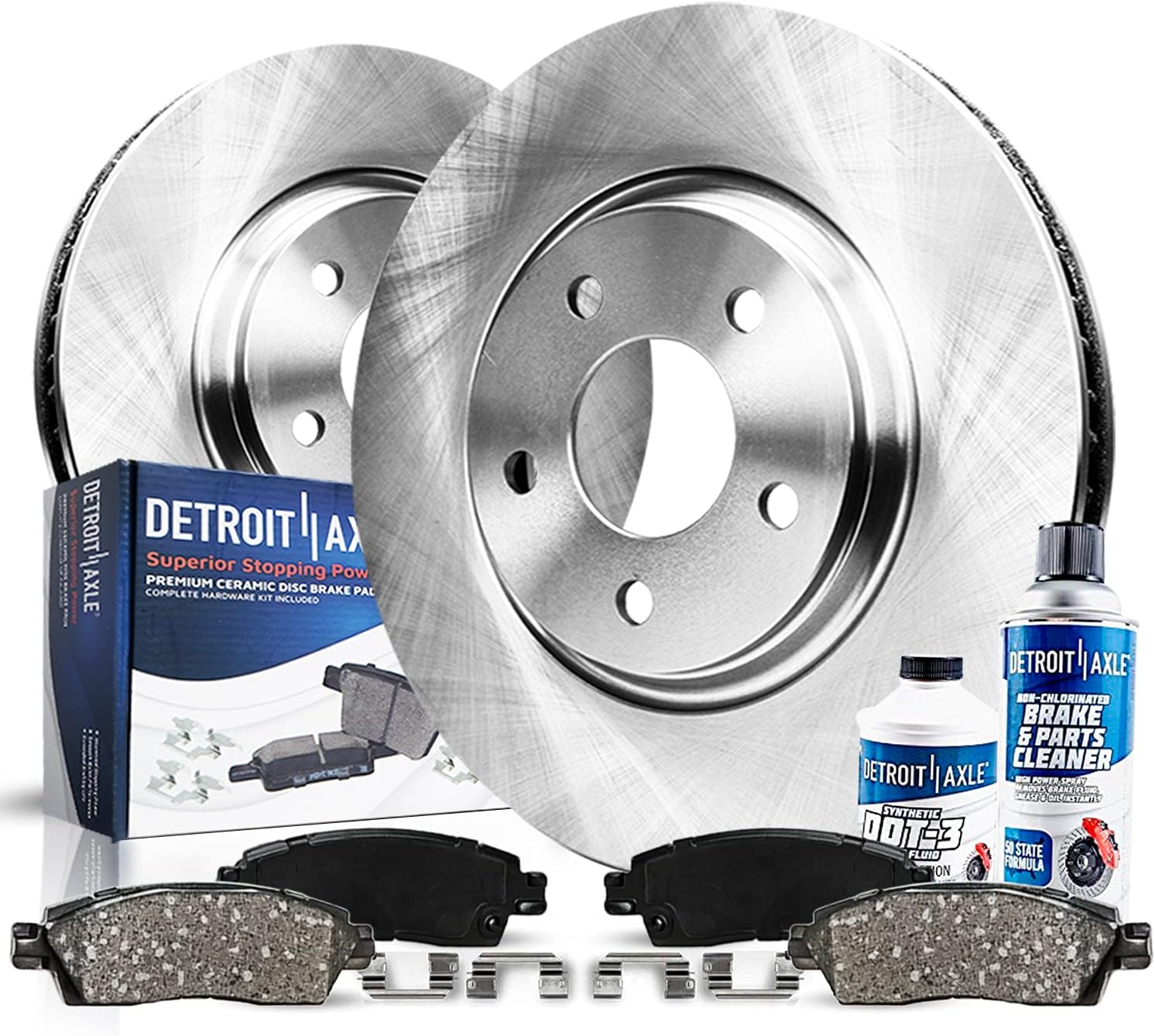
5. Detroit Axle Front Brake Kit for 2012–2015 Honda Civic (10.31" Rotors)
| Fitment | 2012–2015 Honda Civic front (10.31" rotors) |
|---|---|
| Pad Material | 100% Ceramic |
| Rotor Type | Vented, zinc plated |
| Kit Contents | 2 rotors, 2 pads, hardware, brake cleaner, brake fluid |
This Detroit Axle front brake kit replaces the front rotors and pads on select 2012–2015 Honda Civic models and ships as a matched set with hardware, a brake cleaner and a small bottle of fluid. The kit uses vented, zinc-plated 10.31 inch rotors designed for faster cooling and corrosion resistance, paired with 100% ceramic pads that aim to reduce noise and dust. Installation is straightforward for a competent DIYer because the rotors are machined with locating holes to match factory fitment and the kit includes the pad hardware. In real-world use the ceramic pads offer quieter operation and less visible wheel dust compared with semi-metallic pads, and the vented rotor design helps keep temperatures down during repeated stops. Limitations are that ceramic pads typically sacrifice some initial bite and fade resistance under extreme, repeated heavy braking compared with performance-oriented metallic compounds, and the included brake fluid and cleaner are small service-size quantities rather than full shop supplies. For buyers seeking a reliable, complete front-end replacement that restores factory-style stopping and fits Civic front applications, this kit covers the basics without extra performance features.
Best for: Buyers who prioritize dependable, factory-style replacement parts and a complete, easy-to-install front brake refresh for a 2012–2015 Civic will appreciate this kit.
Less Ideal for: Drivers who regularly subject brakes to track use or heavy towing and want maximum high-temperature stopping performance should choose a performance-oriented brake compound instead.
- Complete matched set with rotors, ceramic pads, hardware, cleaner and fluid for a single front axle service
- Vented rotors with zinc plating to aid cooling and resist corrosion
- Machined locating holes for straightforward, factory-quality fitment
- Ceramic pads produce lower noise and reduced visible wheel dust
- Ceramic pads generally provide less initial friction and can underperform in sustained, high-temperature braking compared with metallic performance pads
- Included brake fluid and cleaner are small service quantities and may not be sufficient for a full brake fluid flush
Verdict: A straightforward, factory-style front brake replacement kit that restores reliable, quiet braking for 2012–2015 Honda Civic owners focused on longevity and low maintenance.
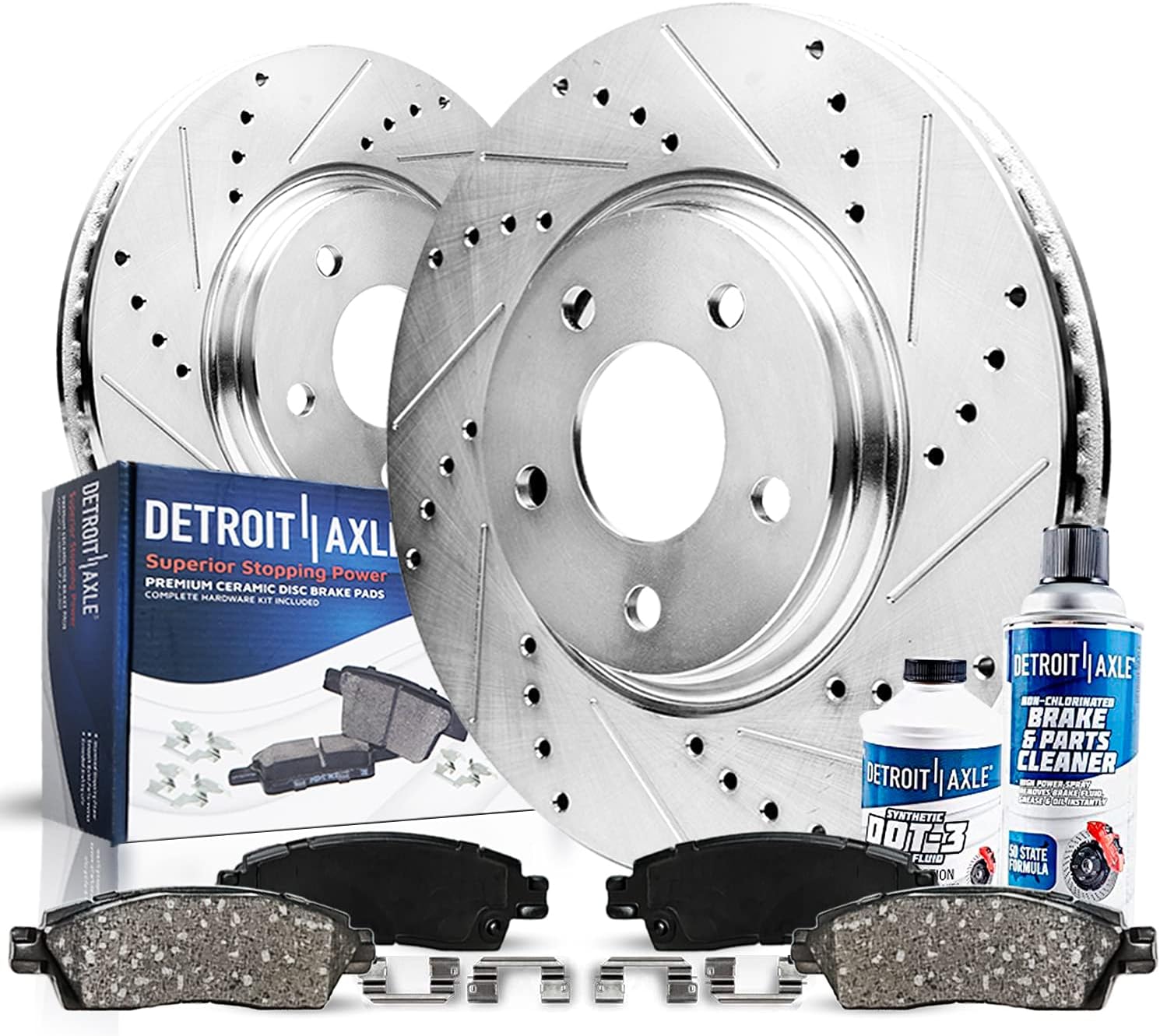
6. Detroit Axle Front Drilled & Slotted Brake Rotor and Ceramic Pad Kit
| Compatible with Vehicle Type | Car |
|---|---|
| Orientation | Front |
| Manufacturer Warranty Description | 10 – Year |
This Detroit Axle front kit supplies two drilled and slotted rotors plus ceramic brake pads, hardware, a brake cleaner spray, and a small bottle of brake fluid to replace front brakes on the listed vehicles. The drilled and slotted rotors help dissipate heat and shed moisture for stronger performance under repeated stops, while the zinc plating reduces visible corrosion and wheel dust. The ceramic pads are metal-free, so they tend to be quieter and produce less dust than semi-metallic options once bedded in. Buyers report the kit fits accurately and includes the clips and accessories needed for a straight swap, which simplifies a DIY replacement. Expect a short bedding-in period when new pads and rotors may be slightly noisy for a couple weeks. Also note the included brake fluid is DOT 3 in some packs while many newer Hondas prefer DOT 4, so verify fluid type before use. Overall this kit delivers a complete, factory-replacement style refresh that balances stopping performance, appearance, and ease of installation for common Civic and ILX front brake jobs.
Best for: Buyers who prioritize a well-reviewed, complete front brake replacement that fits as a direct swap and want the convenience of a single kit that includes consumables for a DIY or home-garage install.
Less Ideal for: Drivers seeking high-performance race pads or those who want a completely silent, no-bedding-in replacement should consider performance or premium-brand alternatives instead.
- Complete kit includes rotors, ceramic pads, hardware, brake cleaner and brake fluid for an easier DIY install
- Drilled and slotted rotors improve heat dissipation and wet-weather performance
- Zinc plating on rotors helps resist corrosion and reduces visible wheel dust
- Ceramic pads produce less dust and are generally quieter once bedded
- Some users report prolonged initial noise and longer bedding-in time with the drilled/slotted rotors and new ceramic pads
- Included brake fluid may be DOT 3 which might not match every vehicle's specified fluid
Verdict: A complete, well-reviewed front brake refresh kit that makes a direct-fit DIY replacement easy while improving cooling and reducing corrosion.
7. PowerStop Z17 Front Brake Kit — Ceramic Pads & OE Replacement Rotors (KOE1043)

| Brand | PowerStop |
|---|---|
| Position | Front |
| Model | Power Stop KOE1043 |
| Pads | Z17 Ceramic |
This PowerStop front brake kit bundles Z17 ceramic brake pads, two front replacement rotors, stainless-steel hardware, and rubberized shims to provide a straightforward rotor-and-pad replacement. It is designed as a bolt-on, vehicle-specific kit for many Honda applications and aims at quiet, low-dust daily driving performance. In use the ceramic pads bed quickly and deliver smooth, relatively quiet stopping suited to commuter and family cars, while the milled rotors help avoid vibration for a comfortable pedal feel. The included hardware and shims simplify a DIY install, though a few owners noted the supplied springs and some shims differ from factory pieces so you may prefer to reuse OEM clips if exact fitment is critical. Fitment errors have been reported on a small number of orders, so confirm the vehicle application before purchase. For a risk-averse buyer looking for an affordable factory-style replacement that reduces wheel dust and restores braking performance, this kit is an easy, cost-effective choice.
Best for: Buyers who prioritize a quiet, low-dust, factory-style replacement for daily-driven 2012–2015 Honda Civics and who prefer a complete kit they can install themselves or have fitted by a shop.
Less Ideal for: Drivers seeking high-performance or heavy-duty braking upgrades for track use or towing should choose a sport or heavy-duty kit instead.
- Includes both front rotors and ceramic pads for a complete replacement in one purchase
- Z17 ceramic pads are low-dust and engineered for quiet, thermal-scored break-in
- Mill-balanced replacement rotors help reduce vibration and restore smooth pedal feel
- Comes with stainless-steel installation hardware and shims to simplify DIY installation
- Some customers reported mismatched springs or shims compared with factory hardware
- A minority of fitment errors reported, so vehicle confirmation is necessary
Verdict: A budget-friendly, ready-to-install front brake kit that restores quiet, low-dust stopping for everyday Honda Civic use.
Choosing the Right 2012-2015 Honda Civic Brake Pad & Rotor Kit: Key Factors to Consider
Pad Material and Friction Profile
Pad material determines bite, fade resistance, dust output, and noise. Ceramic compounds typically offer quieter operation and lower dust, which suits daily-driven Civics where comfort and wheel cleanliness matter. Metallic or semi-metallic pads provide stronger initial bite and better heat handling, which can help during frequent hard stops but may increase noise and rotor wear.
Understanding the friction rating and how it translates to pedal feel is important: higher friction coefficients give firmer, more immediate stopping but can make the pedal feel grabby in light-town driving. Consider the typical driving you do with your Civic and choose a compound that matches that use rather than chasing maximum stopping force alone.
Rotor Construction and Surface Treatment
Rotors vary by material quality, venting, and surface coatings. Solid, vented, or slotted/drilled designs affect heat dissipation and how the rotor handles repeated stops. For the 2012-2015 Civic, rotors with good venting reduce the risk of warping under sustained braking and help maintain consistent pedal feel.
Coatings or protective finishes reduce corrosion on the rotor hat and edges, which matters in regions with road salt or coastal humidity. Also consider whether the rotor is cross-drilled or slotted; these features can aid brake bite and gas/dust evacuation but may shorten rotor life in some conditions. For most Civic owners, a plain vented rotor with a durable coating on non-contact areas strikes a sensible balance.
Fitment Accuracy and Included Hardware
Exact fitment for the FB and FG chassis is critical to avoid installation delays and ensure correct rotor centering and caliper clearance. Kits that include hub-centric fitment details, correct diameter and thickness, and any required shims or clips will reduce installation headaches.
Also check whether the kit supplies new mounting hardware, anti-rattle clips, or compatible sensor adapters if applicable. Missing or incorrect hardware can lead to uneven pad wear, brake noise, or the need for additional parts purchases, so prioritize kits that document compatibility clearly for the 2012-2015 Civic.
Noise, Vibration, and Harshness (NVH) Control
Brake noise is one of the most common complaints after a pad or rotor replacement. Manufacturers use chamfers, slots, shims, and bedding compounds to reduce squeal. For Civic owners who drive in stop-and-go traffic, NVH control techniques matter because repeated brief stops can highlight squeal and vibration issues.
Look for pads with anti-squeal shims or proprietary backing plate treatments and rotors with balanced machining. Proper bedding-in procedures also influence NVH outcomes, but choosing components with built-in noise mitigation reduces the likelihood of persistent squeal after installation.
Heat Management and Fade Resistance
Heat buildup affects braking performance during repeated heavy stops. Rotor venting, pad formulation, and rotor mass all influence how quickly the braking system sheds heat. For drivers who encounter steep descents or tow light loads occasionally, improved fade resistance preserves stopping power under stress.
Consider rotors with optimized venting and pads rated for higher operating temperatures if your driving involves repeated aggressive stops. Keep in mind that more aggressive heat-handling parts may trade off slightly higher dust or noise.
Serviceability and Longevity
Long-term ownership considerations include rotor thickness, the ability to resurface versus replace, and expected pad life based on compound. Rotors with adequate discard thickness give more opportunities for machining, but some modern rotors are mass-produced to a point where resurfacing is not recommended; knowing this upfront helps plan future maintenance costs.
Choose pads and rotors whose expected lifespan aligns with your maintenance preferences. If you prefer lower long-term cost and less frequent interventions, aim for longer-wearing compounds and rotors with protective finishes to delay corrosion-related replacement.
Front Versus Rear Kit Considerations for the Civic FB and FG
The front brakes on the 2012-2015 Civic carry most of the stopping load and therefore wear faster than the rear. When selecting a kit, confirm whether it covers front, rear, or both axles and match that selection to the mileage and wear pattern on your vehicle.
Front rotors are usually larger and may require different pad compounds to balance modulation and initial bite. Rear kits often focus more on stability and even wear, so choosing matched compounds or coordinated kits helps maintain consistent pedal feel and balanced stopping behavior.
- Inspect current rotor thickness and pad wear before deciding front-only or full-axle replacement.
- Matched kits can simplify bedding-in and reduce uneven wear between axles.
- Consider rotors with better venting for the front axle if you do frequent highway braking.
Understanding Fitment Information on Kit Listings
Fitment details can include rotor diameter, thickness, bolt pattern, and any necessary hardware. For the FB and FG Civic, ensure the listed dimensions match OEM specifications to avoid clearance issues with calipers or hub shoulders.
Look for explicit mention of 2012-2015 Civic FB and FG or FG fitment rather than generic Civic fitment. Listings that provide hub-centric measurements or mention included shims reduce the risk of installation surprises.
- Compare listed rotor thickness with your current rotors to verify replacement suitability.
- Check whether the kit includes anti-rattle clips and wheel-speed sensor compatibility where relevant.
Bedding-In and Break-In Procedures
Proper bedding helps transfer a uniform layer of friction material to the rotor surface and stabilizes pedal feel. For most pad and rotor kits, a progressive series of moderate stops from 30 to 60 mph followed by a cool-down period is recommended.
Avoid heavy, repeated stops during the initial 200 miles to prevent glazing. Follow any manufacturer-specific instructions included with the kit to minimize noise and ensure optimal friction behavior.
- Perform several gradual decelerations before any aggressive braking.
- Allow the brakes to cool after bedding runs to prevent uneven pad deposits.
When to Resurface Rotors Versus Replace
Resurfacing can extend rotor life if thickness and runout remain within safe limits. However, modern rotors often have limited machining allowance, and resurfacing may not be practical if the rotor is already near its minimum thickness.
If rotors show deep scoring, warping, or are below specification, replacement is the safer choice. The decision also depends on whether your chosen kit supplies ready-to-install rotors or expects you to reuse existing rotors.
- Measure rotor thickness and compare to the vehicle service limit before choosing resurfacing.
- Consider replacement if rotors have heat cracks or severe corrosion on the hat and edges.
Maintaining Brakes After Installation
Regular inspections and periodic cleaning help preserve both pad and rotor life. Remove wheel grime and brake dust buildup and check for uneven pad wear or rotor scoring during tire rotations.
Keep brake fluid fresh and within specification, as older fluid can affect pedal feel and increase the risk of fade. Address minor noises early; what starts as a small squeal can indicate hardware issues or improper bedding.
- Inspect pads at each tire service interval and measure rotor thickness annually.
- Flush brake fluid per the maintenance schedule or when contamination is suspected.
Still looking for the perfect fit?
Select your Honda Civic configuration to see the most relevant Brake Pad & Rotor Kits recommendations
How We Chose the Best 2012-2015 Honda Civic Brake Pad & Rotor Kit
We prioritized kits that address the common braking needs of 2012-2015 Honda Civic owners while reflecting real-world use around daily driving, commuting, and occasional spirited runs. Our evaluation emphasized concrete, measurable criteria: material composition and friction characteristics of the pads, rotor construction and coating for corrosion resistance, compatibility and fitment accuracy with the FB and FG chassis, and the expected maintenance lifecycle including rotor serviceability.We also considered installation practicality, such as whether the kit includes necessary hardware and whether the rotors require machining or are ready-to-install. Noise and dust control features were factored in because many Civic owners prioritize quiet operation and clean wheels. Safety-related aspects, including consistent pedal modulation and fade resistance under repeated stops, were weighted heavily.Excluded items: individual replacement pads or loose rotors sold separately, specialty racing-only components that sacrifice daily drivability, and kits that lacked clear fitment information for the 2012-2015 (FB and FG) Civic. The resulting list favors kits that balance reliability, clear fitment, and real-world braking performance for this vehicle.
Our full evaluation process is outlined in our review methodology.
FAQ
How do I know if I need a full pad and rotor kit for my 2012-2015 Civic?
If you have scored or warped rotors, uneven pad wear, persistent vibration, or noisy braking, a full pad and rotor kit is often the most reliable fix. Also consider a complete kit when pads are low and rotors are near minimum thickness to ensure consistent braking performance.
Can I resurface my Civic's rotors instead of replacing them?
Resurfacing is possible if rotor thickness and runout remain within the service limits, and there are no heat cracks. Many modern rotors have limited machining allowance, so replacement is often recommended if the rotor is close to its minimum thickness.
Will switching to ceramic pads reduce brake dust on my Civic?
Ceramic pads generally produce less visible dust than metallic compounds and are quieter in typical driving. They may have slightly less initial bite under some conditions, but for daily driving the reduced dust and lower noise are common benefits.
What causes brake noise after replacement and how can I prevent it?
Noise after replacement often stems from improper bedding, missing anti-rattle hardware, glazed pad surfaces, or uneven rotor finish. Following correct bedding procedures, using shims or anti-squeal compounds, and ensuring proper fitment reduces the chance of persistent squeal.
Should I choose slotted or plain rotors for normal Civic commuting?
For regular commuting, plain vented rotors usually provide the best balance of longevity and low noise. Slotted or drilled rotors can help with heavy-duty heat management but may reduce overall rotor life under typical daily use.
How often should I inspect brake components on a 2012-2015 Civic?
Inspect pads and rotors at every tire rotation or at least every 6,000 to 8,000 miles. More frequent checks are wise if you do a lot of city driving, towing, or aggressive braking, since these conditions accelerate wear.
Final Verdict
When replacing brake pads and rotors on a 2012-2015 Honda Civic, prioritize fitment accuracy for the FB and FG chassis, the pad compound that matches your driving style, and rotors with sufficient construction and corrosion protection. Balance noise control against desired bite and heat resistance to match daily use versus occasional spirited driving.Select a kit that includes correct hardware and clear fitment data, and follow proper bedding and maintenance routines to get consistent pedal feel and long service life. With those priorities in mind you can choose confidently between quieter, longer-wearing setups and more aggressive options that improve fade resistance.
Explore More:
- Check out all Honda Civic parts & accessories
- Explore Brake Pad & Rotor Kits Maintenance & Repair Guides
- Explore Brake System
- Browse all Auto Parts
