

Note: This article contains affiliate links. If you click on these links and make a purchase, I may earn a small commission at no extra cost to you. This helps support my research and content. Read my full affiliate disclosure here.
If you own a 2010-2014 Subaru Outback, worn pads and warped rotors are a common source of vibration, reduced stopping power, and brake noise. Replacing both pads and rotors together often gives the most consistent pedal feel and helps avoid repeat labor. This guide covers seven top shortlisted brake pad and rotor kits chosen for dependable fitment, stopping performance, and long-term durability for the Outback.Below you will find practical evaluation criteria and the reasons each kit made the list, plus guidance on fitment, installation considerations, and tradeoffs between quiet comfort and performance.
Looking for other parts? See all Subaru Outback parts & accessories.
Top Picks at a Glance


1. PowerStop Z17 Ceramic Brake Pad and Rotor Kit (KOE6083)

| Brand | PowerStop |
|---|---|
| Includes | Pads, rotors, shims, hardware |
| Pad formula | Z17 ceramic |
| Rotor exterior | Milled |
| Position | Rear and Front fitment listed |
This PowerStop Z17 kit bundles ceramic brake pads and OE-style replacement rotors for a full front-and-rear refresh on compatible Subaru models. It includes Z17 low-dust ceramic pads that are chamfered, slotted, and thermally scorched for quick break-in, plus mill-balanced rotors and stainless steel hardware for a straightforward bolt-on install. In everyday driving the ceramic pads deliver quiet, predictable stopping with reduced wheel dust compared with semi-metallic options, and the precision-milled rotors help minimize vibration for a smooth pedal feel. The kit is packaged to replace both axles at once, which simplifies maintenance and ensures matched components. Limitations are that this kit targets daily driving rather than track use, so it is not intended for heavy towing or performance braking demands, and ceramic pads typically generate less initial bite than high-friction compounds. Expect easy installation and cleaner wheels in exchange for a focus on comfort and longevity over extreme fade resistance.
Best for: Buyers who want a matched, easy-to-install brake refresh that prioritizes quiet operation, cleaner wheels, and reliable daily-driving performance for their 2010–2014 Subaru Outback and similar models.
Less Ideal for: Drivers who frequently do high-speed track sessions, heavy towing, or need maximum fade resistance should choose a higher-performance brake compound instead.
- Complete front-and-rear kit includes pads, rotors, shims, and stainless-steel hardware for one-stop replacement
- Low-dust ceramic Z17 pads help keep wheels cleaner and reduce brake dust buildup
- Chamfered and slotted pad design with thermal scorched surface for quieter operation and faster break-in
- Mill-balanced replacement rotors reduce vibration for a smoother pedal feel
- Bolt-on installation with included hardware simplifies a do-it-yourself replacement
- Formulated for daily driving so it is not optimized for heavy track use or severe towing scenarios
Verdict: A ready-to-install matched pad-and-rotor kit that delivers quiet, low-dust daily-driving braking and a smooth bolt-on replacement for compatible Subaru models.
2. Max Advanced Brakes PerformanceMAX Front & Rear Drilled and Slotted Brake Kit for Subaru

| Included Components | Brake Rotors, Brake Pads, Hardware |
|---|---|
| Set Name | PerformanceMAX Series Automotive Replacement Brake Kit |
| Manufacturer Part Number | KT101483 |
| Compatible with Vehicle Type | Car, Truck, Van |
| Automotive Fit Type | Vehicle Specific Fit |
This PerformanceMAX kit replaces both front and rear rotors and pads to deliver stronger, more consistent stopping power for 2010–2014 Subaru Outback applications. The kit pairs e-coated, cross-drilled and slotted rotors with carbon ceramic pads designed for fade resistance under heavy loads like towing or mountain driving. In practice the slots and drill-holes help evacuate heat, gas, and water so braking remains more stable on long descents, while the e-coating improves corrosion resistance for cleaner-looking wheels. The carbon ceramic pads use dual-layer shims to cut noise and reduce dust compared with standard semi-metallic pads, and the package includes hardware, anti-seize lubricant, and gloves to ease installation. Expect a firmer pedal feel during spirited driving and better high-temperature performance, though drilled rotors can be noisier under some conditions and may require bedding-in for optimal pad transfer. Fitment is vehicle-specific so confirm compatibility before buying.
Best for: Drivers who push their Outbacks with towing, frequent mountain driving, or spirited use and want upgraded stopping power and heat management while keeping wheel dust and noise lower than with conventional pads.
Less Ideal for: Owners who prioritize the absolute lowest long-term rotor durability for track-only high-heat use or those seeking an exact factory replacement feel should consider alternatives tailored to those needs.
- Complete front and rear kit includes rotors, pads, hardware, lubricant, and gloves for a single replacement job.
- Drilled and slotted, e-coated rotors improve cooling and resist corrosion for better performance under load.
- Carbon ceramic pads offer fade resistance and produce less dust with dual-layer shims to reduce noise.
- Designed and packaged as a vehicle-specific fit for Subaru models in the stated years, simplifying selection.
- Drilled rotors can be more prone to cracking under extreme repeated high-heat cycles compared with plain rotors.
- May require bedding-in and occasional rotor surface cleanup to achieve quietest operation and optimal pad transfer.
Verdict: Choose this kit to upgrade a 2010–2014 Subaru Outback with a complete front-and-rear set that improves high-temperature braking, corrosion resistance, and reduces dust and noise for performance-minded drivers.
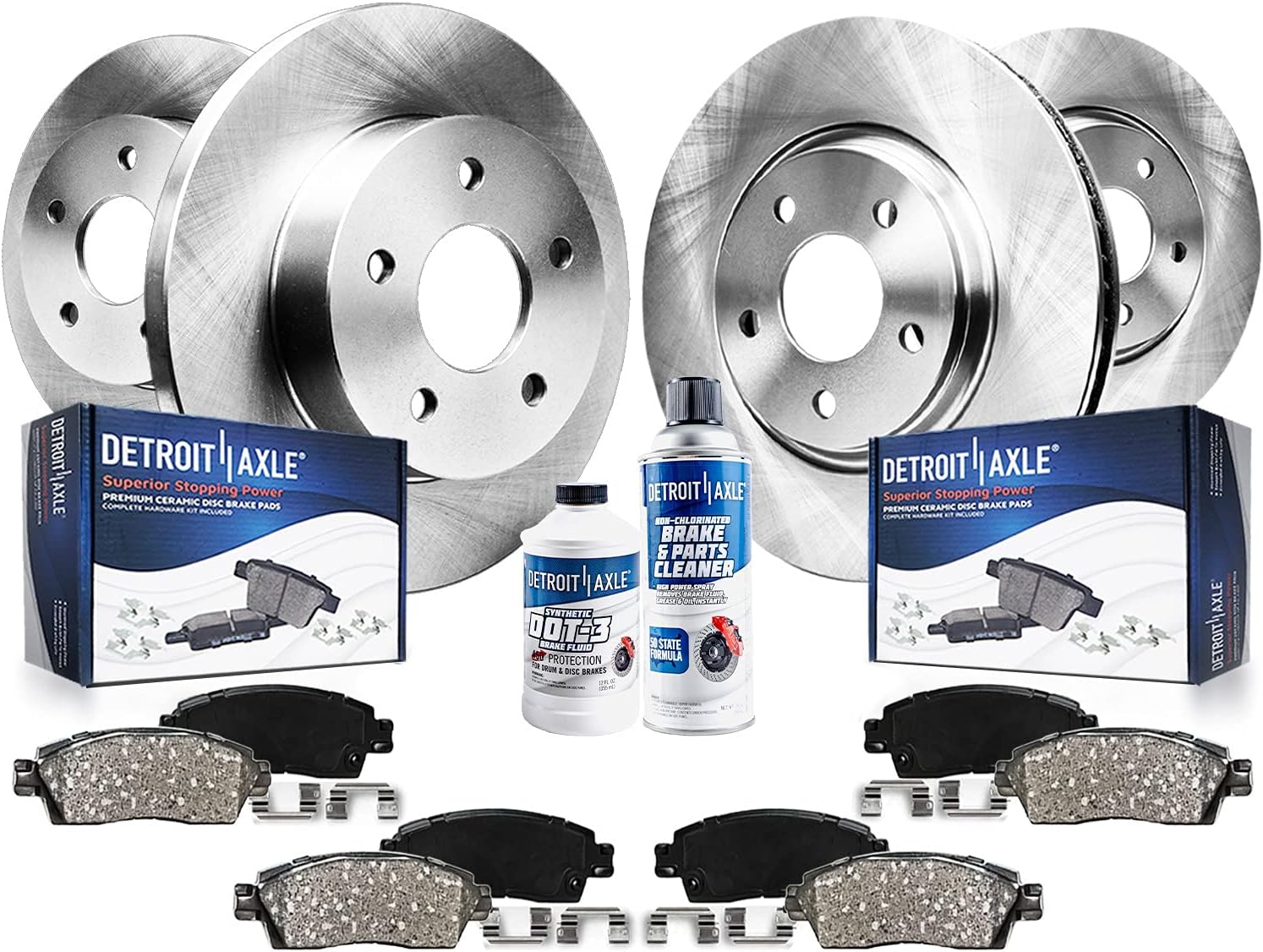
3. Detroit Axle Front and Rear Brake Rotors and Ceramic Pads Kit for 2010-2012 Subaru Outback/Legacy/Impreza/Forester
| Front rotor diameter | 11.54 inch (293mm) |
|---|---|
| Rear rotor diameter | 11.26 inch (286mm) |
| Pad material | Ceramic |
| Includes | 2 front rotors, 2 rear rotors, front and rear pads, brake cleaner and fluid |
This Detroit Axle kit supplies both front and rear disc rotors plus ceramic pads and basic brake fluid and cleaner so you can refresh the entire braking system in one job. It is intended as a direct replacement for certain 2010 to 2012 Subaru Outback/Legacy/Impreza/Forester fitments with 11.54-inch front and 11.26-inch rear rotors. The rotors are drilled and slotted and are promoted as meeting or exceeding factory fit and finish, while the ceramic pads are positioned for quieter operation and lower dust compared with semi-metallic pads. Including both rotors and pads for front and rear simplifies installation and reduces parts-matching headaches, and the extra fluids/cleaner are handy for a single-shop service. Expect typical benefits for street-driven cars: improved bite over worn parts, reduced pad dust, and a cleaner install process. Limitations are that the kit targets specific rotor diameters and Subaru configurations only, and drilled/slotted rotors can wear faster under heavy track use compared with plain rotors designed for high thermal mass.
Best for: Buyers who want a practical, all-in-one brake refresh for street-driven 2010–2012 Subaru models and value a quiet, low-dust ceramic pad with matched rotors for a straightforward DIY or shop install.
Less Ideal for: Drivers who need brake components optimized for frequent track sessions, heavy towing, or extended high-temperature use should choose performance-oriented or heavy-duty rotor and pad options instead.
- Complete kit includes front and rear rotors and ceramic pads plus brake cleaner and fluid for a one-stop replacement
- Drilled and slotted rotors improve initial bite and help clear gases and debris under normal driving
- Ceramic pads tend to produce less dust and run quieter than many semi-metallic alternatives
- Made and tested to match factory fit and finish for the specified Subaru rotor sizes
- Drilled and slotted rotors are less ideal for heavy track or towing use where plain high-mass rotors may last longer
Verdict: This kit is the practical choice for replacing front and rear rotors and pads together on the specified Subaru models, delivering quieter ceramic pads and matched drilled/slotted rotors for a clean, trouble-free street-focused brake refresh.
4. Detroit Axle Rear Brake Kit with 11.26" Rotors and Ceramic Pads

| Fitment rotor size | 11.26 inch (286mm) rear rotor |
|---|---|
| Pad type | Ceramic brake pads |
| Finish | Zinc plated rotors |
| Kit contents | 2 rotors, 2 pads, hardware |
This Detroit Axle rear brake kit supplies two 11.26 inch vented disc rotors and a set of ceramic brake pads with mounting hardware intended as a direct replacement for specified 2010–2014 Subaru Outback rear setups. The rotors are zinc plated to resist corrosion and are vented for quicker cooling, which helps maintain braking performance during regular street driving. The ceramic pads are designed for low noise and should fit without modification thanks to factory-style locating holes. Installation is straightforward for anyone comfortable with a basic brake job, and the included hardware saves a parts trip. Keep in mind this is an aftermarket replacement aimed at value buyers, so while it matches factory fit and reduces dust compared with some metallic pads, it is not a performance upgrade for track use. Buyers wanting heavy towing capability or aggressive repeated high-temperature stops should consider higher-spec or dedicated performance rotors and pads instead.
Best for: Buyers looking for an affordable, factory-fit rear brake replacement for 2010–2014 Subaru Outback models who prioritize straightforward installation and reduced dust and noise.
Less Ideal for: Drivers who frequently tow heavy loads or do spirited driving and need high-temperature fade resistance should choose a performance-grade brake kit instead.
- Zinc plating helps resist corrosion and keeps the rotor surface cleaner over time
- Vented rotor design promotes faster cooling under normal driving conditions
- Ceramic pads are engineered for quieter operation and lower dust than many metallic pads
- Includes mounting hardware for a complete rear pad and rotor replacement
- Aftermarket, budget-focused construction may not match premium aftermarket or upgraded factory performance under repeated high-heat use
Verdict: A practical, budget-friendly rear rotor and ceramic pad kit that delivers factory-style fit, quieter braking, and corrosion resistance for 2010–2014 Subaru Outback owners.
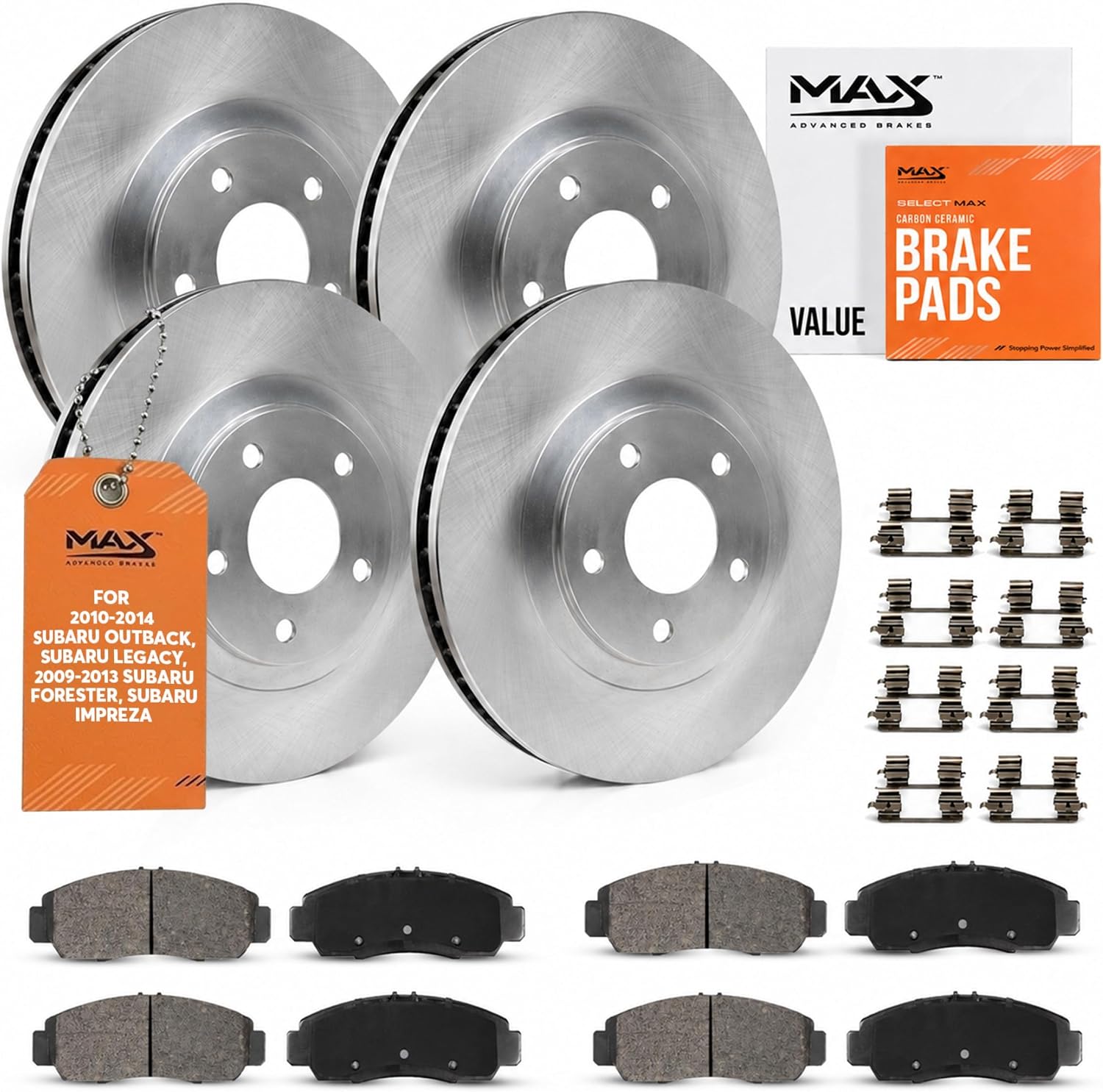
5. Max Advanced Brakes ValueMAX Front & Rear Brake Kit for Subaru Outback (2010–2014)
| Compatible Vehicle Type | Car, Truck, Van |
|---|---|
| Automotive Fit Type | Vehicle Specific Fit |
| Included Components | Brake Rotors, Brake Pads, Hardware |
| Orientation | Dual |
This ValueMAX kit from Max Advanced Brakes supplies both front and rear rotors, pads, and installation hardware sized for 2010–2014 Subaru Outback models with the 2.5 H4 engine. It pairs precision-machined cast-iron rotors with carbon ceramic-style pads that are designed to be low-noise and low-dust for everyday commuting. The kit is intended as a direct, bolt-on replacement and includes shims and hardware to simplify installation. In practice you can expect smooth, consistent stopping power suitable for city and highway driving, reduced vibration from the balanced rotors, and cleaner wheels thanks to the low-dust pads. The manufacturer backs combined rotor-and-pad kits with a one-year warranty, while individual components have shorter coverage. This is primarily a reliability-focused, OEM-style replacement rather than a high-performance upgrade, so drivers seeking track-oriented friction or specialty rotors should look elsewhere. Fitment is vehicle-specific so confirm the Subaru Outback engine and year before purchase.
Best for: Buyers who prioritize dependable, factory-style replacement braking for daily driving and want a complete kit that minimizes maintenance hassles and keeps wheel dust down.
Less Ideal for: Drivers who want track-capable friction, race-style pads, or specialty slotted/drilled rotors for aggressive driving should consider performance-focused options instead.
- Complete front-and-rear kit includes rotors, pads, and installation hardware for a single purchase.
- Precision-machined cast-iron rotors aimed at reduced vibration and consistent braking feel.
- Carbon ceramic-style pads engineered for low dust and reduced noise to keep wheels cleaner.
- Vehicle-specific fitment simplifies installation and helps ensure correct alignment with Subaru braking components.
- Warranty periods differ by component with shorter coverage for individual rotors or pads compared to the combined kit.
Verdict: Choose this kit if you want a straightforward, vehicle-specific front-and-rear replacement that restores reliable, low-noise everyday braking for 2010–2014 Subaru Outback models.
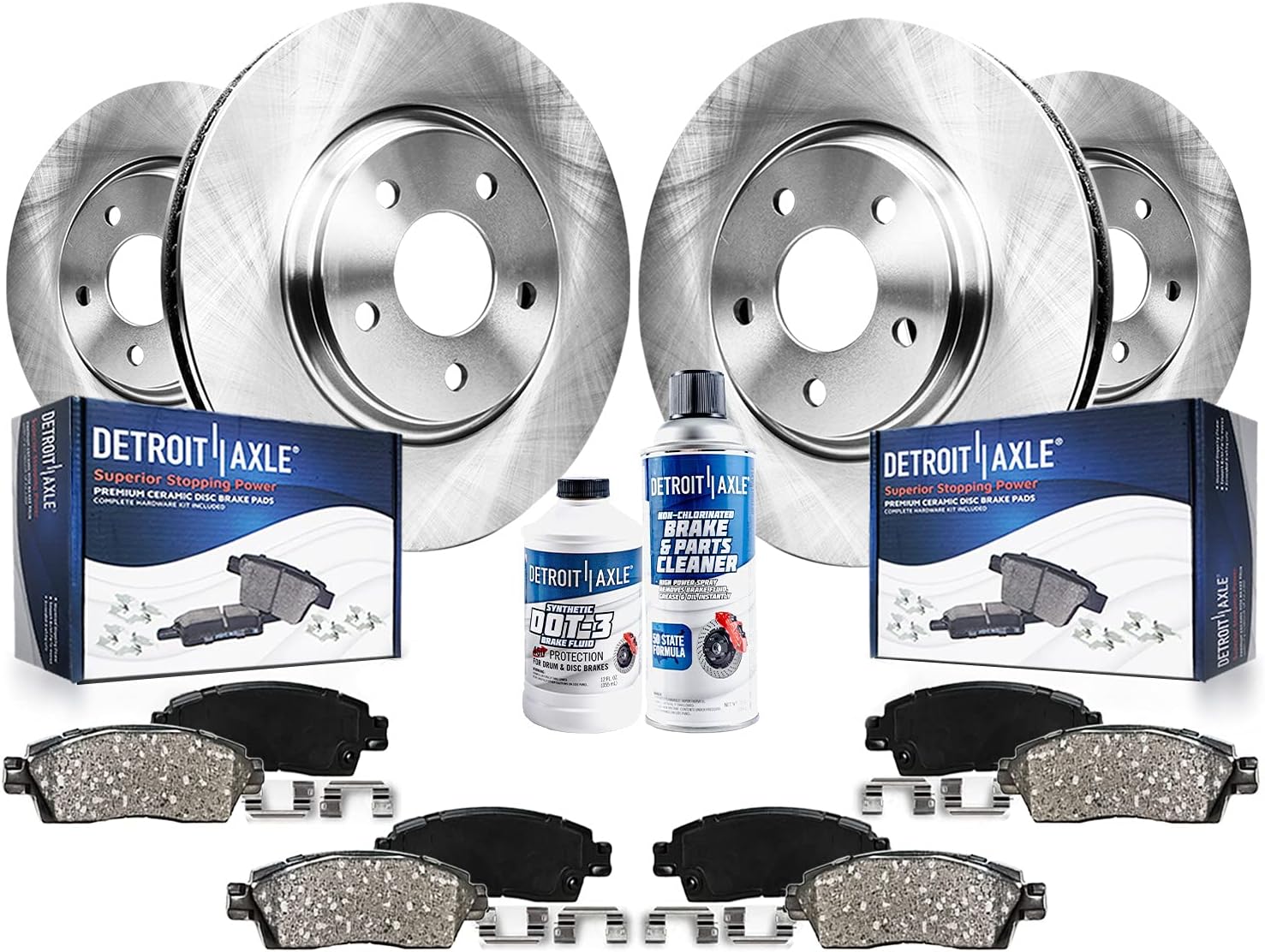
6. Detroit Axle Front and Rear Brake Kit with Ceramic Pads and Rotors for 2010–2014 Subaru Legacy/Outback
| Model Year | 2010 |
|---|---|
| Compatible with Vehicle Type | Car |
| Orientation | Dual |
This Detroit Axle brake kit supplies replacement front and rear rotors plus ceramic pads and basic hardware intended as a complete service kit for the 2010–2014 Legacy/Outback applications listed. It pairs cast iron rotors that the listing says meet or exceed factory specifications with 100% ceramic pads, so drivers get quieter, low-dust braking compared with semi-metallic pads. The kit includes front and rear rotors, front and rear ceramic pads, and brake cleaner and fluid, which makes a brake job more straightforward for a DIYer or a shop doing a full axle service. Ceramic pads trade some ultimate fade resistance for better noise and cleanliness, so this is well suited to daily driving and light towing rather than heavy track or prolonged downhill work. Installation hardware is included but the kit description does not list premium coatings or cross-drilled/slotted rotors, so finish and high-temperature performance are typical of an all-purpose replacement. Given the broad vehicle coverage and a stated 10-year warranty, this kit is a practical, low-dust option for routine brake replacement on the specified Subaru models.
Best for: Buyers who want a complete, low-dust replacement brake service for everyday driving on the specified Subaru Legacy/Outback models and value included hardware and fluids to simplify installation.
Less Ideal for: Drivers who regularly tow heavily, do spirited driving, or need track-capable braking should choose performance-oriented pads and rotors instead.
- Complete front-and-rear kit includes rotors, ceramic pads, installation hardware and basic fluids for a single service
- Ceramic brake pads produce less dust and are generally quieter than semi-metallic pads
- Rotors are advertised as meeting or exceeding factory specifications for fit and stopping power
- Includes brake cleaner and fluid which simplifies a DIY or shop-level brake job
- Ceramic pads favor low dust and quiet operation over ultimate fade resistance in high-heat or track conditions
- Rotors are standard cast type without drilled or slotted performance features
Verdict: A full, easy-to-install ceramic pad and rotor kit that reduces dust and noise for routine brake replacement on the 2010–2014 Subaru Legacy/Outback lineup.
7. Callahan Brake Parts Front and Rear Brake Kit with Ceramic Pads and Rotors

| Compatible Models | 2010-2013 Forester; 2011-2014 Impreza WRX; 2013-2014 Legacy/Outback 2.5i |
|---|---|
| Included Components | Front and rear rotors, front and rear ceramic pads, pad hardware |
| Rotor Material | G3000 cast iron |
| Pad Type | Ceramic, slotted and chamfered |
| Orientation | Dual |
This Callahan brake kit supplies both front and rear rotors plus ceramic pads and the necessary pad hardware for a complete brake refresh on the specified Subaru models. The rotors are precision machined and balanced and cast from G3000 iron, while the pads are slotted and chamfered to reduce noise and promote quick response. The kit is intended as a direct replacement built to match factory rotor thickness and vane count, so installation is straightforward for a competent DIYer or a shop. Including front and rear components and clips reduces parts hunting and helps ensure consistent braking feel after the job. Limitations are that the kit is a stock replacement designed for everyday driving rather than performance braking, and it only fits the listed model years and engine/configuration restrictions, so verifying compatibility with your exact Outback build is essential.
Best for: Subaru owners who prioritize reliable, factory-quality braking and want a complete replacement kit that reduces the risk of fitment issues and extra parts shopping.
Less Ideal for: Drivers who need aggressive or track-oriented braking upgrades or who plan to modify braking for motorsport applications should look at performance-specific options.
- Includes both front and rear rotors and ceramic pads for a full brake job
- Rotors are precision machined and balanced to restore smooth braking
- Pads are slotted and chamfered to help reduce noise and improve initial bite
- All necessary pad hardware included for a more complete, hassle-free installation
- Designed as a stock replacement so it is not optimized for high-performance or track use
Verdict: Choose this kit if you want a complete, factory-quality front-and-rear replacement that restores reliable, quiet braking on the specified 2010–2014 Subaru models.
Choosing the Right 2010-2014 Subaru Outback Brake Pad & Rotor Kit: Key Factors to Consider
Fitment and Rotor Specifications
Correct fitment is the first priority for any brake pad and rotor kit for the 2010-2014 Subaru Outback. That means matching rotor hat diameter, bolt pattern, and overall rotor diameter so the rotors mount without modification.
Rotor thickness and minimum thickness spec matter because they determine whether a rotor can be resurfaced or must be replaced. Paying attention to runout and lateral tolerance helps prevent pulsation at the pedal. Confirming that brake pad backing plates and pad shape match the caliper carrier avoids fitment issues and uneven pad wear.
Pad Compound and Performance
The pad compound determines how the Outback will stop, how much dust it produces, and how much noise it creates. Organic and ceramic-oriented compounds tend to be quieter and produce less dust, which is beneficial for everyday driving and longevity of wheel appearance.
Higher friction metallic or semi-metallic compounds deliver stronger bite and fade resistance during repeated hard stops, which can be important if you tow or drive aggressively. Consider expected use and climate when choosing the compound so braking performance matches your driving style.
Noise, Vibration, and Harshness Control
Brake noise after replacement is a common concern for Outback owners. Look for features such as chamfered pad edges, bonded or multi-layer shims, and friction formulations that reduce vibration. Proper bedding and correct torque on caliper hardware also influence noise outcomes.
Some kits include anti-rattle clips or torque-specific hardware which help maintain pad position and reduce unwanted vibration. Choosing a kit with clear installation guidance will help minimize post-install noise issues.
Rotor Construction and Finish
Rotors can vary in metallurgy, venting, and surface finish. Cross-drilled or slotted rotors offer improved gas and heat evacuation under high load but may shorten rotor life in everyday driving. Smooth, iron rotors with protective coatings resist corrosion better in wet or salted conditions common in many Outback owners' climates.
Venting style and material quality affect heat dissipation and long-term warp resistance. Ensure the rotor face finish is compatible with the chosen pad compound to avoid accelerated wear or glazing.
Hardware and Kit Completeness
A complete front brake kit replacement for the Outback should include all necessary clips, shims, and sometimes caliper guide pins or bolts. Missing hardware can complicate installation and lead to suboptimal operation or noise.
Some kits supply anti-seize or lubricant for sliding components; others expect you to reuse existing parts. Confirm what is included and whether any ancillary parts are required to finish the job correctly.
Serviceability and Long-Term Maintenance
Consider how the chosen kit affects future service. Rotors with easily measurable minimum thickness make it simpler to determine when replacement is necessary versus resurfacing. If you prefer to resurface, check the rotor resurface vs replace thresholds for the Outback to avoid unsafe reuse.
Also evaluate expected pad life and ease of sourcing matching pads for the rear axle so both axles can be refreshed with similar performance characteristics over time.
Front Versus Rear Considerations for the Outback
Front and rear brake kits serve different roles on the 2010-2014 Subaru Outback. The front brakes usually handle the majority of braking force and therefore experience higher temperatures and wear. That makes front brake kit replacement the area to prioritize for stopping performance and heat resistance.
Rear brake rotor and pads are often more about balanced pedal feel and parking stability than outright stopping power. When replacing front hardware, consider whether matching pad friction and rotor condition on the rear axle will preserve consistent brake modulation.
- Replace rotors in pairs on an axle to ensure even braking.
- When changing front pads, check rear pad thickness to determine if simultaneous replacement is warranted.
- Use factory torque specifications for caliper mounting bolts to prevent warping or noise.
Fitment Tips and Measuring Rotor Wear
Before purchasing a brake pad rotor set fitment details, measure existing rotor thickness and compare it to the vehicle's minimum spec. Also check rotor runout with a dial indicator if possible; excessive runout indicates the rotor is out of tolerance and should be replaced.
Confirm the kit lists 2010-2014 Subaru Outback explicitly and includes part numbers or dimensions for rotor hat diameter and bolt circle. If the kit provides compatibility notes for certain trim or AWD configurations, verify those align with your vehicle's setup.
- Measure rotor thickness in at least two places near the outer edge to detect taper.
- Inspect rotor surface for scoring or heat spots which suggest replacement rather than resurfacing.
- Compare pad backing plate shape to the old pads to avoid surprises during installation.
Ceramic Vs Metallic Compounds: Tradeoffs
Choosing between ceramic vs metallic brake pads kit options involves balancing noise, dust, and stopping power. Ceramic-based pads are typically quieter and produce less dust, which helps keep wheels cleaner on the Outback. They also tend to be kinder to rotors under normal driving.
Metallic or semi-metallic pads deliver stronger initial bite and better heat tolerance during repeated aggressive stops or when towing. However, they may increase rotor wear and generate more audible braking noise. Match compound choice to your driving conditions for the best outcome.
- Ceramic: quieter, lower dust, comfortable for daily driving.
- Semi-metallic: better high-temperature performance, may be louder and more abrasive on rotors.
Installation Checklist and Common Pitfalls
When performing how to replace brake pads and rotors on the Outback, follow a clear checklist: lift the vehicle safely, remove the wheel, inspect caliper and guide pins, remove old pads and rotors, clean mounting surfaces, install new rotors and pads, torque fasteners to spec, and bed the pads according to the manufacturer's recommended procedure.
Common mistakes include reusing warped rotors, failing to replace or lubricate guide pins, and not tightening bolts to torque specs. These errors can cause brake noise after replacement, uneven wear, or diminished stopping performance.
- Always use a torque wrench and verify factory torque values.
- Clean mating surfaces to prevent rotor runout.
- Pump the brake pedal to restore pressure before driving and perform a controlled bed-in routine.
When to Resurface Rotors and When to Replace
Deciding between brake rotor resurface vs replace depends on rotor thickness, presence of heat cracks, and runout. If the rotor is above the minimum thickness, has no cracks, and can be trued within runout tolerance, resurfacing can extend life and save cost.
However, many modern rotors have thin castings and corrosion-protective coatings that make replacement the safer long-term option. For the Outback, consider replacement if corrosion near the hat prevents a true seating surface or if the rotor requires removing more material than allowed by the minimum thickness specification.
- Resurface when thickness and metallurgy are within spec and surface damage is minor.
- Replace when runout or cracks exceed safe limits or minimum thickness would be breached by machining.
High-Performance Options and Everyday Usability
A high performance brake kit can improve fade resistance and pedal feel for owners who tow, carry heavy loads, or drive in mountainous areas. These kits often use different compounds and rotor venting designs to manage heat more effectively.
For average commuting and light cargo duty, prioritize kits that balance quiet operation, low dust, and predictable pedal modulation rather than extreme track-focused solutions that may increase noise or reduce rotor life in daily driving.
- High-performance kits: better heat management, suited for heavy-duty use.
- Daily-use kits: prioritize quiet, low dust, and long pad life.
Still looking for the perfect fit?
Select your Subaru Outback configuration to see the most relevant Brake Pad & Rotor Kits recommendations
How We Chose the Best 2010-2014 Subaru Outback Brake Pad & Rotor Kit
We applied selection filters that focus specifically on 2010-2014 Subaru Outback fitment and real-world braking needs. Primary evaluation criteria included correct rotor hat diameter and bolt pattern, pad compound and coefficient of friction, rotor thickness and runout tolerances, and overall kit completeness for front or rear fitment. We also weighed durability indicators such as pad wear rate and rotor metallurgy, surface finish, and any anti-corrosion treatments relevant to the Outback's typical driving environment.Additional criteria covered braking performance under repeated stops, noise and vibration mitigation features, and whether the kit includes necessary hardware like shims, clips, and proper fasteners to avoid extra parts purchases. We prioritized options that provide clear vehicle-specific fitment information and manufacturer tolerance specifications.Items were excluded if they lacked explicit 2010-2014 Outback fitment data, omitted essential hardware, or used unspecified friction formulas. We did not consider aesthetic-only upgrades or kits without rotor thickness and minimum spec documentation. The result is a curated set of kits that meet practical fitment and performance expectations for this Subaru model.
Our full evaluation process is outlined in our review methodology.
FAQ
How often should I replace brake pads on a 2010-2014 Subaru Outback?
It often depends on driving habits, but many owners see pad life between 30,000 and 60,000 miles. Aggressive driving, frequent towing, or hilly terrain will shorten pad life and require earlier replacement.
Can I resurface my Outback rotors or should I replace them?
It depends on measured thickness and runout. If the rotor exceeds the minimum thickness and has no cracks, resurfacing is an option. If it is near or below the minimum thickness or shows heat cracking, replacement is recommended.
Why do I hear brake noise after replacement on my Outback?
Noise often results from incorrect pad seating, missing shims, improper torque, or incompatible pad compound. Proper installation, the use of anti-rattle hardware, and correct bedding procedures usually reduce or eliminate most noises.
Do I need to replace both front and rear pads at the same time?
Not always. Front brakes handle more braking force and may wear faster. However, replacing pads on both axles at similar times helps preserve balanced pedal feel. Inspect rear brake rotor and pads to decide whether rear replacement is also needed.
Is a high performance brake kit necessary for everyday driving?
Usually not. High-performance kits offer better fade resistance and heat management but can produce more noise or dust. For typical commuting and light hauling, a comfort-focused kit is often more practical.
How important is bedding in for new pads and rotors?
Bedding is important because it helps transfer a uniform layer of pad material to the rotor and improves initial stopping performance. Follow the kit's recommended bedding steps to reduce glazing and premature wear.
Final Verdict
When selecting a brake pad & rotor kit for your 2010-2014 Subaru Outback, prioritize correct fitment and rotor specifications first, then match pad compound to your driving style. Consider rotor condition and whether resurfacing is appropriate, and choose kits that include necessary hardware to avoid installation surprises.Balance tradeoffs between quiet, low-dust ceramic options and higher-friction metallic compounds if you need greater fade resistance. By focusing on fitment, compound, and kit completeness you can restore consistent pedal feel and reliable stopping performance for your Outback.
Explore More:
- Check out all Subaru Outback parts & accessories
- Explore Brake Pad & Rotor Kits Maintenance & Repair Guides
- Explore Brake System
- Browse all Auto Parts
