

Note: This article contains affiliate links. If you click on these links and make a purchase, I may earn a small commission at no extra cost to you. This helps support my research and content. Read my full affiliate disclosure here.
If your Honda Accord is showing a soft or sinking brake pedal, replacing the master cylinder can restore confidence and stopping power. Picking the right Honda Accord brake master cylinder matters because fitment, sealing performance, and reservoir compatibility directly affect braking safety and maintenance time.This guide shortlists the top options in this category and explains the evaluation criteria used to assess them, including fit accuracy, seal quality, and ease of installation. Read on to see which units meet those standards and why they made the list.
Looking for other parts? See all Honda Accord parts & accessories.
Top Picks at a Glance
| Best Reviewed A top-rated pick with lots of positive feedback | A-Premium Brake Master Cylinder with Reservoir and Sensor for Honda and Acura V6 models |  |
| Most Popular A crowd favorite that many people choose with confidence | A-Premium Brake Master Cylinder with Reservoir and Sensor for Honda Accord Non-ABS |  |
| Best Quality Built to a higher standard if you want something more solid | Dorman Master Cylinder M630925 for Select Honda Accord Models |  |
| Best Budget The cheapest option that still gets the job done reliably | PHILTOP Brake Master Cylinder Assembly (fits 1991–1997 Honda Accord and select Honda/Acura models) |  |
| Most Sold A high-volume bestseller chosen again and again | A-Premium Brake Master Cylinder with Reservoir and Sensor |  |
| Best Value for Money The sweet spot between price and what you get | Raybestos Element3 Replacement Brake Master Cylinder (MC39970) |  |
| Best Overall The best all-around choice for most situations | TRQ Brake Master Cylinder for 2003–2007 Honda Accord |  |
1. A-Premium Brake Master Cylinder with Reservoir and Sensor for Honda and Acura V6 models

| Number of Outlets | 2 |
|---|---|
| Material | Aluminum Alloys 101 |
| Bore Diameter | 1 inch |
| Rearward Outlet Size | M12 X 1.0 |
This A-Premium brake master cylinder is a factory-replacement style assembly that swaps into compatible Honda Accord and Acura V6 vehicles to restore brake pedal feel and hydraulic pressure. It includes a removable plastic reservoir and an integrated sensor so it can be installed as a direct replacement during a brake system repair. The unit is made from aluminum alloy and lists the original reference numbers to match factory fitment for 2001-2002 Accord and relevant Acura CL and TL V6 applications. In practice the product is used when the original master cylinder shows internal leaks, a soft pedal, or contamination; installers will bench-bleed the unit and then bleed the system after install. Notable benefits are the included sensor and reservoir which simplify swapping components, and the aluminum construction that resists corrosion. Expect to follow standard bleeding procedures and verify thread sizes match your vehicle lines since this is a vehicle-specific part and not a universal solution.
Best for: Reliability-focused buyers who prioritize restoring factory brake function with a direct replacement part and want a unit that includes the reservoir and sensor for a cleaner, simpler swap.
Less Ideal for: Drivers who prefer fully remanufactured dealer parts or who need a universal master cylinder solution for multiple vehicle models should look elsewhere.
- Direct-fit replacement for specified 2001–2003 Honda Accord and Acura V6 models listed by reference numbers
- Includes removable reservoir and brake fluid sensor for straightforward swap-in
- Aluminum alloy body offers corrosion resistance compared with some cast-iron units
- Supplies necessary outlet thread fittings that match factory connection types
- Requires proper bench-bleeding and system bleeding after installation which may be time consuming
- Fitment is vehicle-specific so it is not suitable for models outside the listed years and engines
Verdict A practical, vehicle-specific replacement master cylinder that restores factory-style braking with an included reservoir and sensor for reliability-minded owners.
2. A-Premium Brake Master Cylinder with Reservoir and Sensor for Honda Accord Non-ABS

| Vehicle fitment | Honda Accord 1998-2002 Non-ABS L4 2.3L |
|---|---|
| Material | Aluminum |
| Master cylinder bore | 0.938 inch |
| Reservoir | Included |
| Sensor | Included |
This A-Premium brake master cylinder is a direct replacement assembly for non-ABS Honda Accord models from 1998 through 2002 and includes the reservoir and sensor for plug-and-play installation. It is pressure tested at the factory and uses a machined aluminum body with a 0.938 inch bore to restore hydraulic pressure to the braking system. Typical use is as a like-for-like repair when a worn or leaking master cylinder causes poor pedal feel or brake fluid loss. The included reservoir and sensor remove the need to transfer parts from the old unit, which simplifies installation and reduces bench time. Practical benefits are straightforward: factory-style fitment, pressure-tested internals, and compatibility with the referenced Honda part numbers for straightforward ordering. Limitations are that this unit is intended only for non-ABS Accord variants and purchasers should confirm fitment before buying; warranty and long-term durability depend on proper installation and maintenance rather than any advanced corrosion treatments. Expect a cost-effective factory-quality replacement rather than a high-end performance upgrade.
Best for: Convenience-minded owners who need a ready-to-install, factory-quality replacement that minimizes installation time and restores normal braking without part swapping.
Less Ideal for: Drivers seeking a high-performance or upgraded braking component or anyone with an ABS-equipped Accord should look at alternative solutions.
- Includes reservoir and sensor for direct replacement without transferring parts
- Pressure tested at the factory to ensure consistent hydraulic performance
- Aluminum construction with a specified bore size for predictable brake feel
- Built to match factory part numbers for straightforward fitment on specified Accords
- Fits only non-ABS Honda Accord models from 1998–2002 so not suitable for ABS-equipped cars
- Longevity and corrosion resistance depend on installation and service conditions rather than enhanced coatings
Verdict A practical, ready-to-install factory-quality master cylinder for non-ABS 1998–2002 Honda Accords when you want a fast, reliable repair.
3. Dorman Master Cylinder M630925 for Select Honda Accord Models

| Manufacturer | Dorman Products |
|---|---|
| Brand | Dorman |
| Model | Master Cylinder |
| Exterior | Machined |
| OEM Part Number | 46100-T2F-A02; 46100T2FA01 |
This Dorman master cylinder is a 100 percent new, factory-style replacement designed to restore proper brake hydraulic function on compatible Honda Accord years. It replaces the original unit with a machined housing and new rubber components formulated for resistance to glycol-based brake fluid, so it holds up under normal driving and heavier use. Typical installation is a direct swap into the master cylinder mounting and brake lines for the listed model years, making it suitable for professional installers and experienced DIYers. Notable features include precision-engineered casting to match the factory part and EPDM rubber seals for durability and fluid compatibility. The practical benefits are predictable pedal feel and restored braking performance without the cost of an OEM part. Limitations are that fitment is specific to certain Accord model years and trims, so confirming exact compatibility before purchase is required, and buyers replacing other brake system components should account for bench bleeding and proper brake system bleeding during installation.
Best for: Performance-oriented buyers who prioritize factory-quality braking feel and reliability for an Accord and want a robust replacement that restores original system performance.
Less Ideal for: Casual DIYers looking for a universal or multi-vehicle part or buyers who need coverage for multiple model years without verifying trim-specific fitment.
- Made entirely of new materials for consistent, non-remanufactured performance
- Precision-machined housing engineered to match factory casting and function
- EPDM rubber components resist glycol-based brake fluid for better durability
- Designed as a direct-fit replacement for specified Honda Accord years to simplify installation
- Compatibility limited to specific Honda Accord years and trims so fit must be verified
- Requires correct bench bleeding and system bleeding during installation which can add labor time
Verdict A factory-style, performance-focused master cylinder replacement for specific Honda Accord years that restores original braking feel without being a universal fit.
4. PHILTOP Brake Master Cylinder Assembly (fits 1991–1997 Honda Accord and select Honda/Acura models)

| Fitment | Honda Accord 1991-1997 and select Honda/Acura models |
|---|---|
| Material | Aluminium |
| Master Cylinder Bore Diameter | 1(IN) |
| Number of Outlets | 2 |
| Reservoir | Included |
This PHILTOP brake master cylinder is a direct aftermarket replacement intended to restore brake hydraulic function on compatible late 1990s Honda and Acura models. It replaces the factory unit and includes the reservoir and sensor so you can swap the assembly without sourcing separate components. Constructed from aluminum with EPDM rubber parts and a 1 inch bore, it reproduces the original casting material to match fit and mounting points. Typical use is a like-for-like replacement when the original master cylinder leaks, fails, or the reservoir is cracked. The practical benefit is a low-cost, complete assembly that reduces installation steps compared with buying multiple parts separately. Limitations to expect are the usual for economy aftermarket parts: fitment may require minor adjustments on some vehicles and bore tolerances can vary slightly compared with the factory unit. For drivers who want a low-cost restoration of braking function, this provides a functional option, but those seeking factory-quality refinements or OE-level finish may prefer a higher-end replacement or remanufactured unit.
Best for: Budget-conscious owners looking to replace a failed master cylinder with a complete, affordable assembly that gets the braking system back to service without sourcing extra parts.
Less Ideal for: Drivers prioritizing OEM-level finish, exact factory tolerances, or long-term warranty-backed remanufactured units should consider higher-end replacements.
- Complete assembly includes reservoir and sensor for straightforward replacement
- Aluminum housing and EPDM rubber components resist brake fluid corrosion
- Built to match original casting material to aid fitment with factory mounting points
- Low-cost option compared with higher-end or remanufactured master cylinders
- Aftermarket tolerances may require minor adjustments during installation
- Bore diameter and fit can differ slightly from factory parts on some vehicles
Verdict A cost-effective, all-in-one replacement for older Honda Accord brake systems that restores function at a budget price while accepting modest aftermarket fitment variation.
5. A-Premium Brake Master Cylinder with Reservoir and Sensor

| Material | Cast Iron HT200 |
|---|---|
| Bore Diameter | 0.875 inch |
| Rearward Outlet | M12 x 1.0 |
| Secondary Outlet Thread | 12 mm |
| Includes Sensor | Yes |
This A-Premium brake master cylinder is a direct replacement-style assembly that includes a removable plastic reservoir and a brake fluid level sensor, intended to restore hydraulic braking function on compatible Honda Accord and related models. It is typically used when the original master cylinder fails, leaking internally or externally, or when the brake warning light indicates a sensor issue. Key features visible in the listing are a cast iron body, 0.875-inch bore, included sensor, and factory-style outlet thread sizes, which make installation straightforward for shops or experienced DIYers who follow vehicle-specific instructions. The removable reservoir simplifies bench bleeding and replacement of the plastic tank if needed. Practical benefits include getting the hydraulic system back to working order with a single assembled unit and avoiding separate part sourcing. Limitations are that proper fitment must be confirmed against the vehicle identification before purchase and installers should bench-bleed and torque fittings to factory specifications to avoid brake performance issues.
Best for: Risk-averse mainstream buyers who prioritize restoring factory-quality braking performance with a single replacement assembly and prefer a part that includes the reservoir and sensor.
Less Ideal for: Buyers looking for a budget partial-repair solution or those who want a universal or adjustable master cylinder for custom projects should consider other options.
- Complete assembly includes master cylinder, removable reservoir, and fluid level sensor for one-step replacement
- Cast iron construction offers durability consistent with factory-style hydraulic components
- Bore and outlet thread sizes match common Honda service specifications for direct fit on listed models
- Removable reservoir simplifies bench bleeding and future reservoir replacement without replacing the entire unit
- Requires careful fitment check against vehicle information to ensure compatibility
- Installation and bleeding require mechanical experience or professional service for safe operation
Verdict A complete, factory-style replacement master cylinder that restores brake hydraulics on compatible Honda models but requires correct fitment and professional-style installation.
6. Raybestos Element3 Replacement Brake Master Cylinder (MC39970)

| Model | MC39970 |
|---|---|
| Automotive Fit Type | Vehicle Specific Fit |
| Exterior | Machined |
| Assembly Required | No |
This Raybestos Element3 master cylinder replaces the factory unit on compatible Honda and Acura models and is sold as a ready-to-install, bench-bleedable assembly. It is engineered to match OEM fit, form, and function, and each unit is pressure tested at the end of the line to reduce the chance of leaks. Typical use is a direct swap during a brake system repair where technicians bench-bleed the cylinder, install it, then perform a full system bleed. Notable features include a machined exterior, included bench-bleeding plugs, and vehicle-specific fitment that avoids modification. Practical benefits are straightforward installation for a DIYer or shop, consistent sealing from pressure testing, and long-term service expectations from the Element3 hydraulic line. Limitations to note are that the package does not reliably include the nipple/hose fitting some installers prefer for bench bleeding and the reservoir orientation may require repositioning during installation. Those small installation inconveniences aside, this is a solid, cost-effective factory-quality replacement for affected Accords and related models.
Best for: Practical optimizers who want a reliable, factory-quality replacement that balances cost and long-term reliability for routine brake repairs on compatible Honda Accord models.
Less Ideal for: Buyers seeking a master cylinder with included bleeding hose and fittings out of the box or those who prefer a performance or upgraded braking component beyond factory-spec replacements.
- Vehicle-specific fit for direct replacement on listed Honda and Acura models
- 100% end-of-line pressure tested to reduce leak risk
- Comes bench-bleeding ready to simplify installation
- Machined exterior and factory-style construction for reliable service
- Does not consistently include nipple/hose fittings for bench bleeding which may require a separate purchase
- Reservoir may arrive misaligned and need repositioning before filling
Verdict A cost-effective, factory-quality replacement master cylinder that fits select Hondas and Acudas and is pressure tested for leak-free service, though you may need to source a bench-bleeding hose separately.
7. TRQ Brake Master Cylinder for 2003–2007 Honda Accord
| Fitment | 2003–2007 Honda Accord L4 2.4L |
|---|---|
| Master Cylinder Bore Diameter | 0.8125 in |
| Material | Aluminum |
| Reservoir Included | Yes |
| Sensor Included | Yes |
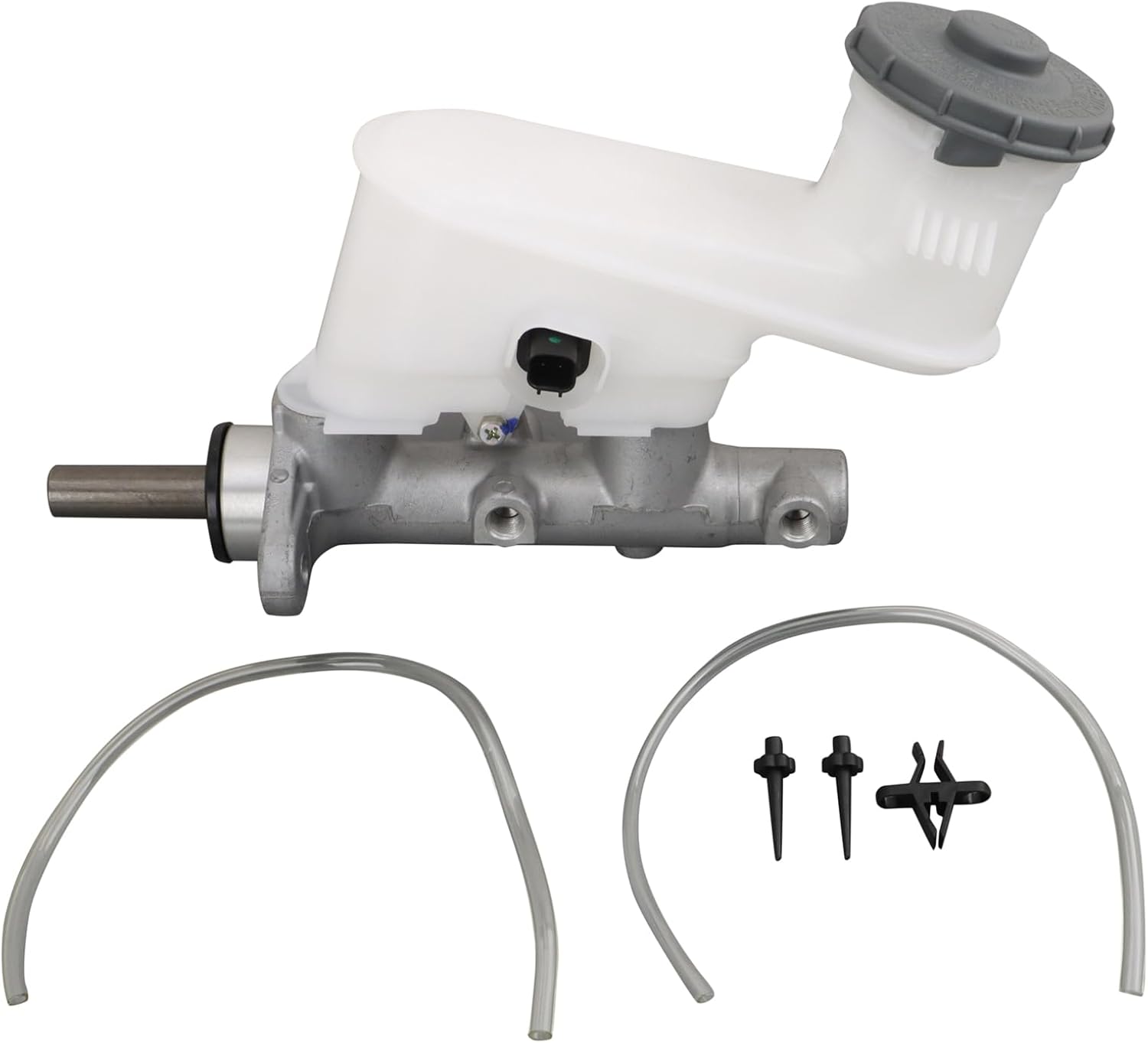
This TRQ master cylinder is a factory-replacement style unit made for 2003–2007 Honda Accord 2.4L engines with a 13/16 inch bore. It arrives preassembled with the reservoir, cap, pressure sensor, O ring for the booster, and a bleeder kit so you can bench-bleed and install without sourcing extra parts. Typical use is a like-for-like swap when the original unit has failed or when replacing the unit during a brake booster service. The aluminum construction and machined exterior indicate corrosion resistance and a close fit to factory mounting points, and TRQ provides installation videos to help DIYers. Practical benefits include fewer missing parts during install and ready-to-use hardware for bleeding. Limitations to note are reports that the included bleeder fittings can be finicky and that the reservoir cap is softer than factory, which may affect long-term durability under heavy service conditions. Expect straightforward installation for a balanced buyer who wants a dependable, ready-to-install replacement without premium performance upgrades.
Best for: Buyers seeking a balanced, no-nonsense factory-quality replacement for a 2003–2007 Honda Accord who prioritize fitment and a straightforward DIY install.
Less Ideal for: Drivers wanting performance or racing-grade brake upgrades or those who prefer OEM parts with identical tactile components should consider other options.
- Direct-fit replacement specifically for 2003–2007 Honda Accord 2.4L with correct 13/16 in bore.
- Ships preassembled with reservoir, sensor, cap, O ring, and bleeder kit for easier installation.
- Aluminum, machined construction for corrosion resistance and close-fit mounting.
- Includes step-by-step installation videos to aid DIY installers.
- Some buyers report the included bleeder fittings can admit air or be difficult to use.
- Reservoir cap is softer than factory and may feel less durable over time.
Verdict A ready-to-install, well-equipped factory-style replacement for 2003–2007 Honda Accord owners who want reliable fitment and easier DIY installation.
Choosing the Right Honda Accord Brake Master Cylinder: Key Factors to Consider
Fitment and Port Alignment
Correct fitment ensures the master cylinder lines up with the brake booster, mounting points, and fluid ports. If ports or mounting ears are misaligned, you may need adapters or modifications that increase installation time and risk of leaks.
Port alignment also affects hose routing and the ease of bleeding the system. Choosing a part that matches the Accord’s factory mounting pattern minimizes installation errors and preserves original brake line geometry, which helps maintain consistent hydraulic performance.
Seal and Bore Quality
The integrity of internal seals and the finish of the bore determine whether the unit will hold pressure and resist internal leaks. Inferior seals can swell, harden, or develop gaps when exposed to brake fluid and heat, resulting in spongy pedal feel or loss of hydraulic pressure.
A smooth, properly honed bore paired with compatible sealing materials reduces the chance of master cylinder seal leak issues and extends service life. Consider units that specify compatible seal materials or offer rebuild kits for future maintenance.
Reservoir Compatibility and Venting
Reservoir design affects fluid capacity and how air is purged during bleeding. An adequately sized, properly vented reservoir helps maintain consistent fluid levels under load and reduces the risk of aeration during heavy braking or prolonged driving.
Check that the reservoir shape and mounting match the Accord’s under-hood space and that venting or cap design does not introduce contamination or impinge on lines. Proper reservoir compatibility also simplifies topping off and diagnostic checks.
Durability and Material Construction
Materials used for the master cylinder body, pistons, and internal components influence resistance to corrosion and wear. Metal bodies and plated or coated surfaces often withstand heat and road contaminants better, while some polymer reservoirs are chosen for corrosion resistance and weight savings.
Evaluate how the construction will stand up to the Accord’s operating environment, including temperature fluctuations and exposure to brake fluid. Long-term durability reduces the chance of unexpected failures and the need for early replacement.
Ease of Installation and Serviceability
A design that is easy to install reduces labor time and the potential for installation errors. Features that help include clear port labeling, correct mounting ear locations, and accessible bleeder ports. Units that allow reuse of existing clips and fittings cut down on additional parts required.
Serviceability matters because you may need to replace seals or perform a rebuild later. Availability of rebuild kits or clearly documented service procedures makes future maintenance faster and more reliable.
Compatibility with Brake Fluid and System Pressure
The master cylinder must be compatible with the type of brake fluid used and able to handle the system’s operating pressures. Seal materials and piston tolerances should be rated for common brake fluids to avoid swelling or degradation.
Also consider the unit’s ability to maintain pressure under repeated stops. A device that cannot reliably sustain system pressure will lead to inconsistent pedal feel and reduced braking performance.
FAQ
What are common master cylinder symptoms on a Honda Accord?
Common signs often include a soft or sinking brake pedal, reduced braking responsiveness, or visible brake fluid near the firewall or under the master cylinder. You may also notice the need for more travel to engage the brakes. These symptoms usually indicate internal seal wear, fluid leaks, or loss of hydraulic pressure and often point to the master cylinder as a possible cause.
Can I replace the Honda Accord brake master cylinder myself?
Many mechanically inclined owners can perform the replacement, but it requires careful work and proper bleeding of the brake system afterward. You will need basic tools, a safe way to support the vehicle if wheels need removal, and a clean workspace to avoid contaminating the hydraulic system. If you are not comfortable with brake bleeding or torque specifications, professional installation is a safer choice.
How do I know if the master cylinder has an external leak or an internal failure?
An external leak is usually visible as brake fluid around the master cylinder body, fittings, or the vehicle firewall. Internal failure often shows as a gradually sinking pedal or poor pressure without visible fluid on the exterior. Inspecting fluid levels, looking for wet spots, and observing pedal behavior during a pressured test can help differentiate between the two.
Are rebuild kits a viable option for master cylinder issues?
Rebuild kits can be a cost-effective solution if the cylinder bore is in good condition and only seals are worn. A proper rebuild restores sealing surfaces and piston performance, but it requires attention to cleanliness, correct parts, and assembly technique. If the bore is scored or corroded, a full replacement is usually more reliable.
What should I consider when planning the master cylinder installation?
Plan for proper brake fluid handling and system bleeding. Ensure you have the correct fluid type, clean containers, and a way to capture old fluid safely. Verify port and reservoir fitment before starting and allow time for a complete bleeding procedure, including ABS system cycling if applicable. Double-check torque values and line connections for a secure install.
Will a soft brake pedal always mean the master cylinder is bad?
Not always. A soft pedal can result from low fluid level, air in the lines, worn brake pads, or failing calipers and wheel cylinders. The master cylinder is one possible cause, particularly if pedal feel worsens over time or the pedal sinks under steady pressure. A systematic diagnosis helps pinpoint the root cause.
How We Chose the Best Honda Accord Brake Master Cylinder
We selected entries based on criteria that reflect what matters most when replacing the Honda Accord brake master cylinder. Fitment accuracy and correct port/reservoir alignment were primary filters because improper fit leads to bleed and connection issues. Seal and bore quality were evaluated to reduce the risk of brake fluid leaks and to maintain consistent hydraulic pressure. Durability under thermal and chemical exposure was considered to ensure long-term reliability in daily driving conditions. Ease of installation and clear port labeling were weighed to minimize shop time and the potential for user error during replacement. Lastly, parts compatibility with the Accord hydraulic system and availability of replacement seals or rebuild kits were included to support future maintenance.We excluded units without clear fitment data or those lacking compatible seals and service parts. Products that required vehicle-specific modifications or extensive rework were not considered. The list therefore favors direct-fit assemblies and components that match the Accord's original system geometry and serviceability requirements.
Our full evaluation process is outlined in our review methodology.
Conclusion
When choosing a Honda Accord brake master cylinder, prioritize correct fitment, seal integrity, and materials that match the vehicle’s operating conditions. Consider ease of installation and whether rebuild kits or service parts are available to extend life.Tradeoffs typically involve balancing long-term durability against ease of service. Focusing on accurate fit, quality seals, and compatibility with your brake fluid will deliver the most reliable outcome for restoring pedal feel and preventing leaks.
Explore More:
- Check out all Honda Accord parts & accessories
- Explore Brake Master Cylinders Maintenance & Repair Guides
- Explore Brake System
- Browse all Auto Parts
