

Note: This article contains affiliate links. If you click on these links and make a purchase, I may earn a small commission at no extra cost to you. This helps support my research and content. Read my full affiliate disclosure here.
If you own a 2015-2019 Subaru Outback, choosing the right brake fluid matters for safe, predictable braking and long-term brake-system health. Brake fluid affects pedal feel, resistance to vapor lock, and internal corrosion, all of which influence stopping performance in everyday driving and towing or hilly terrain. This guide covers the top shortlisted brake fluids suited to the 2015-2019 Outback and explains the criteria used to evaluate them.Below you will find concise explanations of key specifications, maintenance considerations, and practical recommendations to help you pick a compatible fluid. The next section presents the shortlisted options and why each made the list.
Looking for other parts? See all Subaru Outback parts & accessories.
Top Picks at a Glance
| Best Overall Brake Fluid Balanced performance, compatibility, and reliability for most DIY brake jobs | Bosch ESI6 Low Viscosity Extended Life Brake Fluid, 1 Quart |  |
| Best Budget Brake Fluid Low-cost DOT 3/4 bottles that cover routine top-offs and small jobs | Valvoline DOT 3 & 4 Synthetic Brake Fluid, 12 oz |  |
| Best OEM Subaru Brake Fluid Genuine Subaru-formulated DOT fluid sold in manufacturer-branded small bottles | Subaru Genuine Brake Fluid DOT3, 12 fl. oz. |  |
| Best Synthetic DOT 3/4 Brake Fluid Full-synthetic formulas that raise wet/dry boiling points and resist moisture | Valvoline DOT 3 & 4 Synthetic Brake Fluid, 32 oz |  |
| Best High-Temperature Racing Brake Fluid Hi-temp, racing-grade fluids with very high dry boiling points for heavy use | Wilwood Hi-Temp 570 Racing Brake Fluid (4 x 12 oz) |  |
| Best Extended-Life / Low-Maintenance Fluid Formulations advertised for longer service intervals and extended oxidation resistance | ATE Original SL DOT 4 Brake Fluid, 1 L Can |  |
| Best Bulk / Gallon Brake Fluid Large-volume quarts or gallon cans for frequent bleeding or shop use | Johnsen's 2234 Premium DOT-3 Brake Fluid, 1 Gallon |  |
1. Bosch ESI6 Low Viscosity Extended Life Brake Fluid, 1 Quart
Best Overall Brake Fluid

| Unit Count | 32 Fluid Ounces |
|---|---|
| Item Form | Liquid |
| Container Type | Can |
| Viscosity | 5w |
Bosch ESI6 is designed as a next-generation DOT-compatible brake fluid that combines a relatively high wet boiling point with low viscosity to improve response in electronic stability systems and modern ABS. It is typically used as a direct replacement or top-off for vehicles specifying DOT 3, DOT 4, or DOT 5.1 fluid, and Bosch recommends a full fluid change for best performance. Notable features include a wet boiling point around 360 to 365°F, improved lubricity to reduce component wear and noise, and claimed extended service intervals compared with older formulations. For a 2015–2019 Subaru Outback, ESI6's lower cold viscosity can help with faster ABS/ESP response while the high wet boiling point reduces vapor-lock risk under heavy braking. Practical benefits include fewer fluid changes and potentially quieter operation. Limitations are that it is not compatible with DOT 5 silicone systems and one quart will not be sufficient for a full system flush and bleed, so plan to buy multiple quarts if replacing all fluid.
Best for: DIYers working on 2015–2019 Subaru Outback models who want a single, DOT-compatible fluid that improves ABS/ESP responsiveness and lets them extend service intervals.
Less Ideal for: Owners with brake systems that explicitly require DOT 5 silicone fluid or technicians who prefer to stick strictly to the factory-specified DOT grade without switching to a modern low-viscosity formulation.
- Low viscosity improves response times for ABS and stability systems
- High wet boiling point (~360–365°F) reduces risk of vapor formation under heavy braking
- Designed for extended service intervals compared with older DOT 3/4 fluids
- Good lubricity to help reduce brake component wear and operational noise
- Not compatible with DOT 5 silicone brake systems
- One-quart container requires multiple quarts for a full flush and bleed
Verdict: The go-to choice for most DIY mechanics who want a reliably performing brake fluid that balances boiling point, corrosion protection, and compatibility with common systems.
2. Valvoline DOT 3 & 4 Synthetic Brake Fluid, 12 oz
Best Budget Brake Fluid

| Recommended Uses For Product | Brake oil |
|---|---|
| Specific Uses For Product | Hydraulic Brake Systems, Disc Brake Systems |
| Unit Count | 12.0 Fluid Ounces |
| Container Type | Bottle |
Valvoline DOT 3 & 4 is a straightforward synthetic brake fluid intended for routine topping off and scheduled brake maintenance on compatible vehicles like the 2015–2019 Subaru Outback. It meets DOT 3 and DOT 4 specifications, so it mixes with conventional fluids and offers a higher boiling point and low moisture formulation to help resist vapor lock under normal driving and light towing. The 12 oz bottle is easy to handle for DIY service and the product lists corrosion protection to help preserve rubber seals and metal components. Because it is a multi-spec fluid rather than a vehicle-specific formulation, it is best used for maintenance top-ups or when the system does not require a dedicated DOT 4 high-performance fluid. It is not a substitute for a full system flush when heavy contamination or a professional-grade fluid is required, but for routine service intervals on an Outback it provides an economical, factory-quality replacement that balances performance and price.
Best for: Buyers who want a safe, economical DOT 3/4 fluid for routine topping off and scheduled brake maintenance on a 2015–2019 Subaru Outback without paying for specialty fluids.
Less Ideal for: Drivers planning a full brake-system overhaul, heavy track use, or who need a dedicated high-performance DOT 4 fluid should choose a professional-grade product instead.
- Covers both DOT 3 and DOT 4 specs so it mixes with common fluids
- Higher boiling point and low-moisture formulation helps resist vapor lock in normal driving
- Corrosion protection helps preserve brake system components
- 12 oz bottle size is convenient for DIY topping off and small maintenance jobs
- Small 12 oz volume may not be enough for a full system flush on larger brake jobs
Verdict: Choose this inexpensive bottle when you need a safe, economical DOT 3/4 fluid for topping off or routine maintenance without overspending.
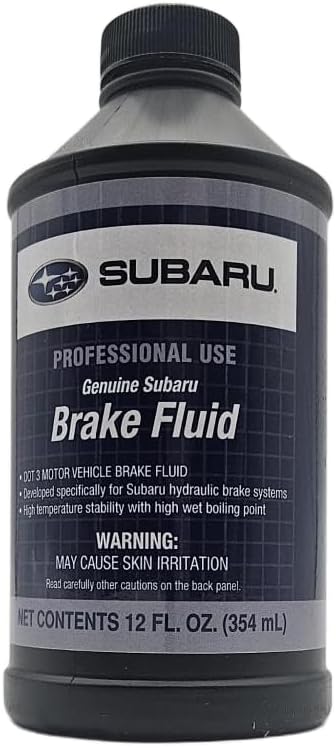
3. Subaru Genuine Brake Fluid DOT3, 12 fl. oz.
Best OEM Subaru Brake Fluid
| SAE J300 Viscosity Grade | 8 |
|---|---|
| Upper Temperature Rating | 500 °F |
| Unit Count | 12 Fluid Ounces |
| Item Form | Liquid |
This genuine Subaru DOT3 brake fluid is formulated for Subaru brake and hydraulic clutch systems and comes in a 12 fluid ounce bottle for routine maintenance or top-ups. It is designed to maintain a high boiling point under severe operating conditions and to reduce the risk of vapor lock, which makes it suited to everyday driving and towing scenarios where brakes can heat up. The fluid also claims superior metal protection and high-temperature stability with no harmful sediment formation, and it is compatible with synthetic fluids and rubber components used in Subaru systems. The practical benefit is straightforward: using factory-formulated fluid reduces uncertainty about compatibility with Subaru seals and components and supports consistent braking performance after a fluid change. The main limitation is the small bottle size, which is intended for partial fills or bleeding single calipers rather than full-system replacements for larger vehicles, so plan to buy additional volume if you need a full flush.
Best for: Buyers who prioritize factory chemistry and worry-free compatibility with Subaru braking components and want a small, OEM-spec top-up or maintenance fluid.
Less Ideal for: Drivers planning a full brake system flush or servicing multiple vehicles who need larger quantities per service.
- Factory-formulated for Subaru brake and hydraulic clutch systems to ensure compatibility
- High boiling point and good high-temperature stability to reduce vapor lock risk
- Provides metal corrosion protection and resists sediment formation
- Compatible with synthetic fluids and common rubber components
- Only 12 fl. oz. bottle which may be insufficient for a complete system flush on larger vehicles
Verdict: Pick this factory-formulated brake fluid if you prefer OEM chemistry and fit-and-forget compatibility with original Subaru hydraulic components.
4. Valvoline DOT 3 & 4 Synthetic Brake Fluid, 32 oz
Best Synthetic DOT 3/4 Brake Fluid

| Liquid Volume | 0.92 Liters |
|---|---|
| Unit Count | 32.0 Fluid Ounces |
| Recommended Uses For Product | Automotive |
| Specific Uses For Product | Vehicle Brake Systems |
Valvoline DOT 3 & 4 Synthetic Brake Fluid is a ready-to-use hydraulic brake fluid that blends with conventional fluids and is aimed at improving thermal stability and system protection compared with basic fluids. Typical use is topping off or replacing the brake fluid in disc and drum systems on passenger vehicles; it is compatible with ABS and other standard hydraulic components. Notable features include a low-moisture formulation to resist vapor lock and additives intended to limit corrosion inside brake lines and calipers. In practice that means more consistent pedal feel under heavy braking and reduced risk of moisture-related boiling during spirited driving or towing. Because it is rated for DOT 3 and DOT 4 applications it offers flexibility for systems requiring either spec, but it is not a dedicated high-performance DOT 5.1 product so racers seeking maximum wet and dry boiling points should look elsewhere. The 32 oz bottle is convenient for DIY bleeds and routine service, and it mixes with existing conventional fluids for easy top-offs.
Best for: DIYers who want a step up from basic brake fluids for improved thermal stability and corrosion resistance when servicing the brake system on their 2015–2019 Subaru Outback.
Less Ideal for: Drivers who need the highest wet and dry boiling points for track or heavy towing duty should choose a dedicated DOT 5.1 or performance brake fluid instead.
- Blends with conventional DOT 3 and DOT 4 fluids for easy topping off
- Low-moisture formula improves resistance to vapor lock under heavy braking
- Corrosion protection additives help preserve brake lines and internal components
- Ready-to-use 32 oz bottle size suitable for DIY bleeding and refill
- Not a DOT 5.1 fluid so it has lower maximum boiling performance than top-tier racing fluids
Verdict: This slot is for synthetic DOT 3/4 fluids offering improved thermal stability and corrosion protection for DIYers who want better performance than basic fluids.
5. Wilwood Hi-Temp 570 Racing Brake Fluid (4 x 12 oz)
Best High-Temperature Racing Brake Fluid

| Unit Count | 12 Ounce |
|---|---|
| Number of Items | 4 |
| Material | Synthetic |
| Specific Uses For Product | Automotive Racing, Brake System Lubrication |
Wilwood Hi-Temp 570 is a synthetic brake fluid engineered for high-heat braking situations commonly encountered on track days and spirited driving. It is supplied in four individual 12-ounce hermetically sealed bottles to minimize moisture absorption until the moment you open each container. The fluid's advertised 570°F dry boiling point and relatively low viscosity make it easier to bleed and help reduce pedal aeration during aggressive use. For a 2015-2019 Subaru Outback, this fluid is appropriate when you plan track sessions, mountain runs, or towing where sustained heavy braking can elevate system temperatures. Because the product is optimized for racing, it is packaged to preserve boil performance and requires careful handling and correct DOT compatibility checks before use. Buyers should also plan for more frequent fluid changes than typical street fluids if the car sees mixed daily and high-heat track use, and keep in mind the smaller 12-ounce bottles mean you may need multiple bottles to complete a full system service.
Best for: Drivers of a 2015–2019 Subaru Outback who plan occasional track days, hard mountain driving, or heavy braking and prioritize maximum boil resistance and fade control.
Less Ideal for: Owners who only do routine street driving and prefer low-maintenance fluids or longer service intervals should consider standard DOT-spec street brake fluids instead.
- High dry boiling point rated at 570°F for excellent resistance to vapor lock and fade under extreme heat
- Synthetic formulation with low viscosity for easier bleeding and reduced foaming during heavy pedal use
- Sold in hermetically sealed 12-ounce bottles to limit moisture contamination prior to opening
- Four-bottle pack provides multiple service fills or several top-ups for repeated track days
- Smaller 12-ounce bottles may require multiple bottles to complete a full brake system service
- Formulated for high-heat/racing use so it may be overkill for strictly street driving and requires more frequent changes under mixed use
Verdict: Select a high-temp racing fluid when you need maximum boil resistance and fade control for spirited driving, track days, or heavy-duty braking.
6. ATE Original SL DOT 4 Brake Fluid, 1 L Can
Best Extended-Life / Low-Maintenance Fluid

| Liquid Volume | 1000 Milliliters |
|---|---|
| Recommended Uses For Product | Brake oil |
| Lower Temperature Rating | 204 Degrees Celsius |
| Flash Point | 200 Degrees Celsius |
| Model | Original DOT 4 |
ATE Original SL DOT 4 is a DOT 4 hydraulic brake and clutch fluid designed for passenger cars and light trucks. It meets FMVSS 116 DOT 4, SAE J1704 and ISO 4925 Class 4 standards, and the formula includes corrosion-inhibiting additives and sealing-material compatibility to reduce component wear. In real-world use the product is poured from a metal 1 liter can during brake fluid changes or system flushes; its higher dry boiling point and wet boiling characteristics help maintain pedal feel under heavier use and resist vapor lock over time. The metal can provides secure storage and a five-year shelf life makes it convenient for owners who buy fluid infrequently. Limitations: it is a standard DOT 4 fluid rather than a DOT 5.1 high-performance formulation, so drivers seeking maximum wet boiling performance for track use should consider other fluids. Also the product is sold as a single 1 liter can, so multiple cans are needed for full system flushes on some vehicles.
Best for: Owners who prefer to extend service intervals and keep a shelf-stable, factory-quality DOT 4 fluid on hand for scheduled flushes and occasional maintenance.
Less Ideal for: Drivers who demand maximum high-temperature or track-focused wet boiling performance should choose a higher-spec brake fluid instead.
- Meets DOT 4 standards and recognized industry specifications for brake fluids.
- Corrosion-inhibiting additives improve long-term durability of brake components.
- Metal 1 L can with a five year shelf life is convenient for infrequent maintenance.
- Optimized compatibility with common brake system sealing materials reduces risk of seal damage.
- Not a DOT 5.1 formulation so it has lower wet boiling performance than higher-spec fluids.
Verdict: This pick suits owners who prefer brake fluids marketed for extended service life and better long-term stability to stretch maintenance intervals.
7. Johnsen's 2234 Premium DOT-3 Brake Fluid, 1 Gallon
Best Bulk / Gallon Brake Fluid

| Brake fluid type | DOT 3 |
|---|---|
| Liquid volume | 128 Fluid Ounces |
| Minimum boiling point | 450 Degrees Fahrenheit |
| Intended systems | Disc, drum, ABS |
Johnsen's 2234 Premium DOT-3 is a gallon-sized synthetic brake fluid formulated for routine service and workshop supply use on vehicles that call for DOT 3 fluid. Packaged in a jug, it mixes with other DOT 3 fluids and is designed for disc, drum and ABS systems. The advertised 450°F minimum boiling point means it resists vapor lock under normal driving and light performance use, and the gallon volume keeps a steady supply on hand for frequent brake bleeding, fleet maintenance, or multiple jobs. It is not a DOT 4 or DOT 5.1 product, so it will not match the higher wet boiling points those fluids offer; for vehicles that require DOT 4 or higher performance you should choose a different spec. For the 2015–2019 Subaru Outback models that specify DOT 3, this jug is a practical workshop choice that reduces trips for small bottles while providing a factory-quality DOT 3 replacement that is easy to store and pour.
Best for: Buyers who do frequent brake service or maintain a home or shop supply for multiple vehicles and prioritize having a large, ready-to-use container of DOT 3 fluid.
Less Ideal for: Owners who need higher-temperature DOT 4 or DOT 5.1 fluids for heavy towing, track use, or vehicles specified for higher-grade brake fluid should choose a different product.
- Gallon volume reduces refill frequency for multiple jobs or shop use
- Synthetic formulation with a 450°F minimum boiling point helps resist vapor lock under normal driving
- Spec-compliant DOT 3 fluid that mixes with other DOT 3 products
- Packaged in a jug that is easy to pour and store in a workshop
- Not suitable where DOT 4 or DOT 5.1 performance is required due to lower wet/dry boiling limits
Verdict: Choose a bulk-sized container if you do many brake jobs or want to keep a workshop supply on hand to avoid repeated small purchases.
Choosing the Right 2015-2019 Subaru Outback Brake Fluid: Key Factors to Consider
Boiling Point (Dry and Wet)
Boiling point determines how well brake fluid resists vaporization under heat. A higher dry boiling point helps during repeated heavy braking or towing, while the wet boiling point indicates performance after the fluid has absorbed moisture over time.
For the 2015-2019 Outback, choose fluid with published dry and wet boiling points that suit your driving. Drivers who tow, carry heavy loads, or do frequent downhill braking should prioritize higher boiling-point ratings to avoid spongy pedal feel. Note that wet boiling points typically drop as fluid absorbs moisture, so maintenance interval planning affects real-world performance.
Compatibility With Subaru Specifications
Brake fluid chemistry must be compatible with Subaru seals, ABS pumps, and master cylinder materials. Using a fluid outside Subaru's recommended spec can accelerate seal wear or cause component malfunction.
Verify that the fluid meets the OEM or industry standards appropriate for the Outback, and prefer fluids that explicitly state compatibility with Subaru systems. This reduces the risk of unexpected leaks, soft pedal feel, or ABS errors caused by incompatible additives or solvent bases.
Hygroscopic Properties And Maintenance Interval
Most brake fluids absorb moisture from the air, which lowers wet boiling point and can increase corrosion risk. Fluids that absorb moisture more slowly extend safe service life but still require scheduled replacement.
Plan maintenance based on the fluid's hygroscopic rate and Subaru's recommended service interval. Regular fluid checks and timely brake fluid flushes preserve boiling-point performance and protect internal components from rust.
Corrosion Inhibition And Seal Protection
Good corrosion inhibitors prevent rusting of steel lines, calipers, and the master cylinder. Some formulations also include additives that condition rubber seals and hoses to reduce swelling and deterioration.
For a 2015-2019 Outback, corrosion protection is important in climates with road salt or high humidity. Prefer fluids with documented additive packages aimed at long-term seal health and inhibitor longevity to minimize costly system repairs.
Material Compatibility With ABS And Electronic Systems
Modern Outbacks use ABS and stability control units with sensitive internal pumps and valves. Fluid viscosity, additive content, and detergency can affect the operation and longevity of these components.
Choose fluids tested for use in vehicles with ABS, and consider manufacturer guidance on viscosity and additive profiles. Fluids that meet recognized standards for ABS-equipped cars reduce the risk of pump cavitation, valve sticking, or unexpected diagnostic trouble codes.
Performance Use Versus Everyday Driving
Your driving style matters. High-performance formulations offer higher boiling points and better fade resistance for spirited driving or towing, but some aggressive chemistries may require more frequent changes or special seal compatibility checks.
If most driving is daily commuting and occasional long trips in the 2015-2019 Outback, a balanced fluid with manufacturer compatibility and solid corrosion protection is often the better choice. Match the fluid to the primary use case to avoid unnecessary maintenance tradeoffs.
Understanding Subaru Fluid Recommendations
Subaru specifies certain brake fluid standards for the Outback to ensure system reliability and safety. These recommendations reflect material compatibility, minimum boiling-point requirements, and suitable additive chemistries tailored to Subaru components.
When selecting fluid, consult the vehicle's owner manual for the specified DOT rating and any service-interval guidance. Following the recommended spec preserves warranty alignment and reduces the risk of premature component wear.
- Check the owner manual for the exact DOT rating required
- Confirm compatibility with ABS and electronic stability systems
- Avoid mixing incompatible fluid chemistries unless explicitly allowed
DOT Ratings Explained and What They Mean for the Outback
DOT classifications like DOT 3 and DOT 4 indicate minimum boiling-point thresholds and base chemistries. DOT 4 generally has higher boiling points than DOT 3 and is commonly recommended in modern vehicles with ABS systems for better heat tolerance.
For the 2015-2019 Outback, understanding whether DOT 3 or DOT 4 is appropriate depends on the manual specification and your driving demands. Using the recommended DOT rating ensures pump and seal compatibility while providing the baseline thermal performance expected by Subaru engineers.
- DOT 3: lower boiling point, suitable for light-duty urban driving when specified
- DOT 4: higher boiling point, better for heavier duty or ABS-equipped systems
- Do not interchange DOT ratings without verifying compatibility in the owner manual
When To Flush Brake Fluid On Your Outback
Brake fluid should be flushed at regular intervals to maintain boiling-point performance and corrosion protection. Frequency depends on the fluid's hygroscopic rate, local climate, and how the vehicle is used. In humid or salted-road regions, more frequent service is prudent.
Signs that a flush may be needed include softer pedal feel, sponginess after heavy braking, or a service light related to braking systems. Even absent symptoms, scheduled replacement preserves wet boiling point and reduces internal corrosion risk.
- Follow Subaru's service interval as a baseline
- Consider more frequent flushes if you tow, do mountain driving, or live in high-humidity areas
- Use a brake-fluid tester or have a technician measure moisture content when in doubt
Mixing Fluids And Top-Up Best Practices
Mixing different brake fluids can cause performance issues because of differing base chemistries and additive packages. While some DOT-compatible fluids can be mixed in emergencies, routine topping up with a different type should be avoided.
When topping up, always use fluid that matches the DOT rating and manufacturer guidance. For a proper service, a full system flush and bleed is preferable to repeated top-ups, which can leave accumulated moisture and contaminants in the system.
- Never add a fluid with a lower DOT rating than specified
- If you must top up, match the DOT rating and change the fluid properly at the next service
- Bleed brakes correctly after any fluid change to remove air and restore pedal firmness
Special Considerations for Towing and Mountain Driving
Owners who tow trailers or frequently drive in mountainous regions put extra thermal stress on their brake systems. Repeated heavy braking can raise fluid temperature and accelerate moisture-related performance loss.
For these use cases, prioritize fluids with higher dry and wet boiling points and maintain a more aggressive service schedule. Also inspect calipers, pads, and rotors regularly because fluid performance is one part of an effective high-load braking system.
- Monitor brake temperatures and pedal feel during and after heavy use
- Use fluids with proven wet boiling performance for towing or sustained downhill driving
- Increase inspection frequency of brake hardware when towing regularly
Environmental And Storage Tips
Brake fluid is hygroscopic and will absorb moisture from the air once opened. Store unused containers tightly sealed in a cool, dry place to preserve performance.
When disposing of old fluid, follow local hazardous-waste guidelines. Avoid leaving partially used bottles in a tool chest for long periods; when in doubt, replace the bottle for critical maintenance tasks.
- Keep bottles sealed and use within the manufacturer-recommended shelf life after opening
- Label stored fluid with the opening date if you keep spare containers
- Dispose of used fluid responsibly according to local regulations
Still looking for the perfect fit?
Select your Subaru Outback configuration to see the most relevant Brake Fluids recommendations
How We Chose the Best 2015-2019 Subaru Outback Brake Fluid
We evaluated options against criteria that matter specifically for the 2015-2019 Subaru Outback brake system. Core evaluation points included boiling-point performance under wet and dry conditions, fluid chemistry and compatibility with Subaru seals and ABS components, and corrosion inhibition to protect master cylinder, lines, and calipers. We also considered manufacturer-recommended specifications and how closely products meet or exceed Subaru's OEM requirements.Additional filters included handling hygroscopic moisture absorption rates, the presence of anti-foam and anti-oxidation additives, and suitability for vehicles that tow or encounter frequent steep descents. We excluded any fluid that explicitly conflicts with Subaru service specifications or lacks published technical data on boiling point and compatibility. Tradeoffs such as higher boiling points vs. more aggressive chemistries were noted so readers can match priorities like track use, towing, or long-service intervals.In short, our list reflects fluids that balance performance, system compatibility, and longevity for the 2015-2019 Outback brake system rather than marketing claims or unsupported test results.
Our full evaluation process is outlined in our review methodology.
FAQ
What DOT rating should I use in a 2015-2019 Subaru Outback?
You should follow the DOT rating specified in your Outback's owner manual. Many modern Outbacks require DOT 4 due to higher boiling-point needs and ABS compatibility, but verify the exact specification for your model year and configuration.
How often does brake fluid need to be flushed in the Outback?
Recommended intervals vary, but many owners follow manufacturer service intervals as a baseline. If you drive in humid climates, tow frequently, or do heavy downhill braking, consider more frequent flushes to maintain wet boiling performance.
Can I switch from DOT 3 to DOT 4 in the Outback?
Switching to a higher DOT rating is generally acceptable if it is compatible with Subaru recommendations, but changing DOT types requires a full system flush and proper bleeding. Do not mix ratings without confirming compatibility.
How do I know if my brake fluid has absorbed too much moisture?
Common signs include spongy pedal feel, decreased braking efficiency, or a drop in wet boiling performance. A brake-fluid tester can measure moisture content directly, and many shops offer that check during service.
Is synthetic brake fluid necessary for the Outback?
Synthetic-designated fluids can offer higher boiling points and longer service intervals, but suitability depends on Subaru's specified chemistry and seal compatibility. Choose a fluid that lists compatibility with Subaru systems rather than assuming synthetic is always better.
What should I do after topping up brake fluid myself?
After a top-up, bleed the brake system to remove air and verify pedal firmness. If the top-up involved a different DOT rating or an older, opened bottle, plan a full flush and bleed at the next service to avoid mixed-chemistry issues.
Final Verdict
Choose brake fluid for your 2015-2019 Subaru Outback by balancing boiling-point performance, Subaru compatibility, and maintenance cadence. Prioritize fluids that meet the DOT rating specified in your owner manual and offer documented corrosion inhibition and ABS compatibility.If you tow, drive in mountainous terrain, or subject the brakes to frequent heavy use, favor fluids with higher dry and wet boiling points and adopt a more proactive flush schedule. For everyday driving, pick a compatible fluid with solid corrosion protection and follow regular service intervals to keep pedal feel consistent and components protected.
Explore More:
- Check out all Subaru Outback parts & accessories
- Explore Fluids & Chemicals
- Browse all Accessories
