

Note: This article contains affiliate links. If you click on these links and make a purchase, I may earn a small commission at no extra cost to you. This helps support my research and content. Read my full affiliate disclosure here.
If your 1998-2002 Subaru Forester shows uneven braking, fluid leaks, or a spongy pedal, replacing the brake calipers can restore safe stopping performance. The right calipers match the Forester's original fitment, withstand heat and corrosion, and use durable seals that resist leakage and sticking.This guide reviews seven top-caliber options shortlisted for this year range of Forester, and explains the key criteria we used to evaluate them, including fitment, materials, sealing, and rebuildability. Read on to compare the options and decide which caliper choice best suits your maintenance or repair plan.
Looking for other parts? See all Subaru Forester parts & accessories.
Top Picks at a Glance
| Best Overall The best all-around choice for most situations | A-Premium Front Left Driver Disc Brake Caliper with Bracket |  |
| Best Quality Built to a higher standard if you want something more solid | Detroit Axle Front Left Brake Caliper with Bracket |  |
| Best Value The sweet spot between price and what you get | A-Premium Front Right Passenger Dual-Piston Brake Caliper with Bracket |  |
| Best Budget The cheapest option that still gets the job done reliably | SCITOO Front Right Disc Brake Caliper with Bracket (Fits 1998–2002 Subaru) |  |
| Highest Rated A top-rated pick with lots of positive feedback | DRIVESTAR Rear Brake Caliper Pair (19B2066/19B2067) for 1998–2003 Subaru |  |
| Most Popular A crowd favorite that many people choose with confidence | TRQ Front Driver and Passenger Brake Caliper Set (Dual Piston, Zinc Coated) |  |
| Best Seller A high-volume bestseller chosen again and again | Detroit Axle Front Brake Caliper Pair with Brackets |  |
1. A-Premium Front Left Driver Disc Brake Caliper with Bracket

| Brake piston count | 2 Pistons |
|---|---|
| Piston material | Steel piston |
| Bleeder port size | M7 x 1.0 |
| Fitment | Front left driver side for specified Subaru models |
This A-Premium front left driver brake caliper is a direct-fit replacement that includes the caliper, mounting bracket, metal pistons, and installation hardware for compatible Subaru vehicles. It uses a dual-piston design with steel pistons and an anti-rust coating intended to resist corrosion and extend service life. Installers will appreciate that it arrives ready to bolt on for routine brake repairs or rotor-and-caliper jobs, and the included bracket and bleeder port sized M7 x 1.0 make bleeding and installation straightforward. In real-world use the dual pistons provide solid clamping force for consistent pad contact, which helps restore stopping performance after worn or seized factory calipers. The unit is backed by a one-year unlimited-mileage guarantee from the brand. Limitations to note are that this listing is for the front left driver side only and it does not include brake pads, so buyers should plan to purchase or transfer pads and confirm exact fitment against the reference part numbers before installation.
Best for: Drivers seeking a straightforward, factory-style replacement to restore braking performance on a compatible Subaru; good for owners who want a ready-to-install caliper when repairing front brakes.
Less Ideal for: People who want a performance upgrade, a matched left-and-right caliper set, or a kit that includes new pads and rotors should consider other options.
- Direct-fit assembly includes caliper, bracket, metal pistons, and installation hardware
- Dual-piston design restores even pad contact and strong clamping force
- Anti-rust coating helps prolong component life in wet or salty conditions
- Bleeder port sized M7 x 1.0 and included bracket simplify installation and bleeding
- Sold as a single front driver-side caliper and does not include brake pads
Verdict: Choose this caliper if you want a hands-on, factory-style front left replacement that restores braking feel on the covered Subaru models without needing extra fabrication.
2. Detroit Axle Front Left Brake Caliper with Bracket

| Position | Front Left |
|---|---|
| Piston Size | 1.68 inch (42.75mm) |
| Piston Material | Steel |
| Piston Quantity | 2 |
| Brake Caliper Bracket Included | Yes |
This Detroit Axle front left brake caliper is a direct replacement unit intended to restore braking function on compatible Subaru models. It uses two steel pistons (1.68 inch / 42.75 mm) and ships with the caliper bracket pre-installed, which simplifies installation compared with buying separate components. The dual-piston design provides stronger clamping force than single-piston alternatives, so it is useful for drivers who want firmer, more consistent pedal feel under spirited driving. The caliper is built to withstand impact and wear testing and is offered with a long warranty, which signals durability for everyday and performance use. Installation is typical for a caliper swap and will require bleeding the brake system after fitting. Keep in mind this is a direct replacement caliper without performance upgrades like larger pistons, specialized coatings, or high-temp seals, so enthusiasts seeking track-focused hardware may prefer an aftermarket performance caliper instead.
Best for: Drivers who want a robust, factory-style replacement that improves pedal feel and restores braking performance for spirited road use on compatible Subaru models.
Less Ideal for: Track-focused owners seeking larger pistons, multi-piece racing calipers, or advanced coatings should consider dedicated performance calipers instead.
- Dual steel pistons provide stronger, more even clamping force than single-piston calipers
- Included bracket simplifies installation by reducing parts to source
- Built and tested for impact and wear with a long warranty for peace of mind
- Uses steel pistons without specialty coatings, which may be more prone to corrosion than coated alternatives
Verdict: A durable dual-piston factory-style replacement caliper that restores stronger, more consistent braking for performance-minded Subaru drivers without requiring extra parts.
3. A-Premium Front Right Passenger Dual-Piston Brake Caliper with Bracket

| Compatible models | Subaru Forester 1998-2002; Impreza 1998-2001; Legacy 1997-2002; Outback 2000 |
|---|---|
| Position | Front right passenger side |
| Piston count | 2 Pistons |
| Bleeder port size | M7 x 1.0 |
This A-Premium caliper is a direct-fit front right passenger-side replacement that comes with the bracket, metal pistons, and installation hardware for compatible Subaru models. Built as a dual-piston design with steel pistons and an anti-rust coating, it is intended for routine brake system repairs when a worn or seized caliper needs replacing. Installation is typical for a brake caliper swap and should be straightforward for a mechanically inclined DIYer or a shop; the unit includes the bleeder port and mounting bracket so you do not need to transfer parts from the old caliper. The anti-rust coating and included hardware reduce preparation time and help durability in wet climates, though buyers should ensure piston size and reference numbers match their vehicle. It is not a performance upgrade; it restores factory-style braking rather than improving stopping power or pedal feel beyond factory expectations.
Best for: A practical buyer looking to replace a failing front right caliper on a compatible Subaru with a ready-to-install, factory-style assembly to return braking function without extra parts hunting.
Less Ideal for: Not a good choice for drivers seeking performance upgrades, track use modifications, or custom caliper features beyond factory replacement.
- Direct-fit assembly that includes caliper, bracket, pistons, and installation hardware for quicker replacement
- Dual-piston design matches factory configuration for consistent braking balance
- Steel pistons and anti-rust coating improve durability in corrosive or wet environments
- Includes bleeder port and bracket so fewer parts need transferring from the original unit
- Not intended as a performance or upgraded caliper; it restores factory-level function rather than enhancing stopping power
Verdict: Choose this A-Premium front right dual-piston caliper when you want a ready-to-install, factory-style replacement to restore reliable braking on late 1990s to early 2000s Subaru Forester models.
4. SCITOO Front Right Disc Brake Caliper with Bracket (Fits 1998–2002 Subaru)

| Position | Front Passenger Side |
|---|---|
| Brake Piston Count | 2 Pistons |
| Piston Size | 43 mm |
| Inlet Port Size | M10 x 1.0 |
This SCITOO front right disc brake caliper is a direct-fit replacement intended to restore braking function on compatible 1998–2002 Subaru vehicles. It ships with the mounting bracket and uses a two-piston iron piston design with a 43 mm piston diameter, matching common factory configurations for affected Forester, Impreza, Legacy, and Outback years. Installation follows standard procedures with common hand tools and the part includes the inlet and bleeder port sizes used on these Subarus for straightforward hose and bleeding connections. The caliper is painted and treated with an anti-rust coating to help longevity in wet and salty climates. For budget-focused repairs this caliper offers a low-cost way to replace a worn or leaking unit without modifying the brake system. Limitations to note are that it comes without brake pads and buyers should confirm exact trim, engine, and drivetrain fitment before ordering; a professional bleed and torque sequence is recommended if you are not experienced with brake work.
Best for: A buyer focused on an affordable, straightforward repair for a 1998–2002 Subaru who wants a ready-to-install caliper that matches factory braking layout.
Less Ideal for: Anyone looking for a performance upgrade, custom finish, or a complete brake kit including pads and rotors should consider other options.
- Direct-fit replacement with bracket for specified 1998–2002 Subaru models
- Two iron pistons with factory-style 43 mm diameter for consistent braking feel
- Painted, anti-rust finish to resist corrosion in harsh conditions
- Includes hardware-compatible inlet and bleeder port sizes for standard brake lines
- Sold as caliper only and does not include brake pads
Verdict: A budget-friendly, direct-fit front right replacement caliper that restores factory-style braking on compatible 1998–2002 Subaru models.
5. DRIVESTAR Rear Brake Caliper Pair (19B2066/19B2067) for 1998–2003 Subaru

| Position | Rear |
|---|---|
| Manufacturer | DRIVESTAR |
| Manufacturer Part Number | 19B2066+19B2067 |
These DRIVESTAR rear brake calipers replace the left and right rear units on late 1990s and early 2000s Subaru Forester and Impreza models. Sold as a matched pair, they are cast iron replacements intended to restore braking stability and reduce noise compared with worn units. Installation is typical of a rear caliper swap and they are presented as new factory-quality parts rather than rebuilt cores. The cast-iron construction improves rigidity and resists deformation so internal components stay aligned under repeated stopping. That builds confidence for everyday driving and highway stops. Practical benefits include straightforward fitment to the listed Subaru applications and the convenience of receiving both driver and passenger side calipers together. Limitations are that pads, hardware, and brake lines are not included so you may need additional parts or a caliper piston tool during installation, and cast-iron calipers add weight compared with some lightweight aftermarket options.
Best for: Buyers who prioritize dependable, long-lasting replacement parts to restore factory braking performance on their 1998–2002 Subaru Forester or compatible Impreza models and value straightforward, like-for-like repairs.
Less Ideal for: Drivers seeking lightweight performance upgrades, a complete brake service kit with pads and hardware, or a restored core option to reduce initial cost should consider other choices.
- Cast iron construction for strong, deformation-resistant caliper body
- Supplied as a matched left and right rear pair for convenient replacement
- Marketed as new factory-quality replacements rather than rebuilt units
- Does not include brake pads, mounting hardware, or brake hoses
Verdict: Choose this matched pair when you want a durable, factory-quality rear caliper swap that restores reliable braking on late 1990s to early 2000s Subaru models.
6. TRQ Front Driver and Passenger Brake Caliper Set (Dual Piston, Zinc Coated)

| Position | Front |
|---|---|
| Exterior | Machined |
| Zinc Coated | Rust prevention |
| Seals | EPDM |
This TRQ two-piece front caliper set replaces the driver and passenger side dual-piston calipers and is designed for a direct-fit installation on compatible 1998–2002 Subaru Forester and related models. Each caliper arrives preassembled with zinc coating to resist rust and EPDM seals intended to handle heat and extend service life. The kit includes mounting hardware and an abutment kit so you can complete the repair without chasing extra parts. In real-world use the preassembled units simplify a DIY brake job and reduce bench time compared with rebuilding originals, and TRQ provides installation videos that make the procedure easier for less-experienced technicians. On the downside these are replacement calipers without pads, so you will need to install new pads or reuse serviceable ones and confirm fitment against your vehicle before purchase. For buyers prioritizing an accessible, factory-quality replacement with clear install guidance, this set covers the core needs for a dependable front brake repair.
Best for: Buyers who want a reliable, factory-quality front caliper replacement with clear installation support and prefer a preassembled kit that minimizes time in the garage.
Less Ideal for: If you need a complete brake service out of the box including new pads, or prefer rebuilding originals for cost savings, this kit is not the best single-purchase solution.
- Direct replacement design with preassembled components reduces installation time
- Zinc coating for corrosion resistance in wet or salty climates
- EPDM seals improve resistance to thermal deterioration
- Includes hardware and abutment kit so no additional mounting parts are required
- Step-by-step installation videos available to support DIY repairs
- Sold without brake pads, requiring a separate pad purchase or reuse of existing pads
- Not a remanufactured core-exchange unit so buyers cannot refurbish original calipers
Verdict: Choose this TRQ front caliper set when you want a direct-fit, preassembled replacement with corrosion protection and DIY installation support for 1998–2002 Subaru Forester front brakes.
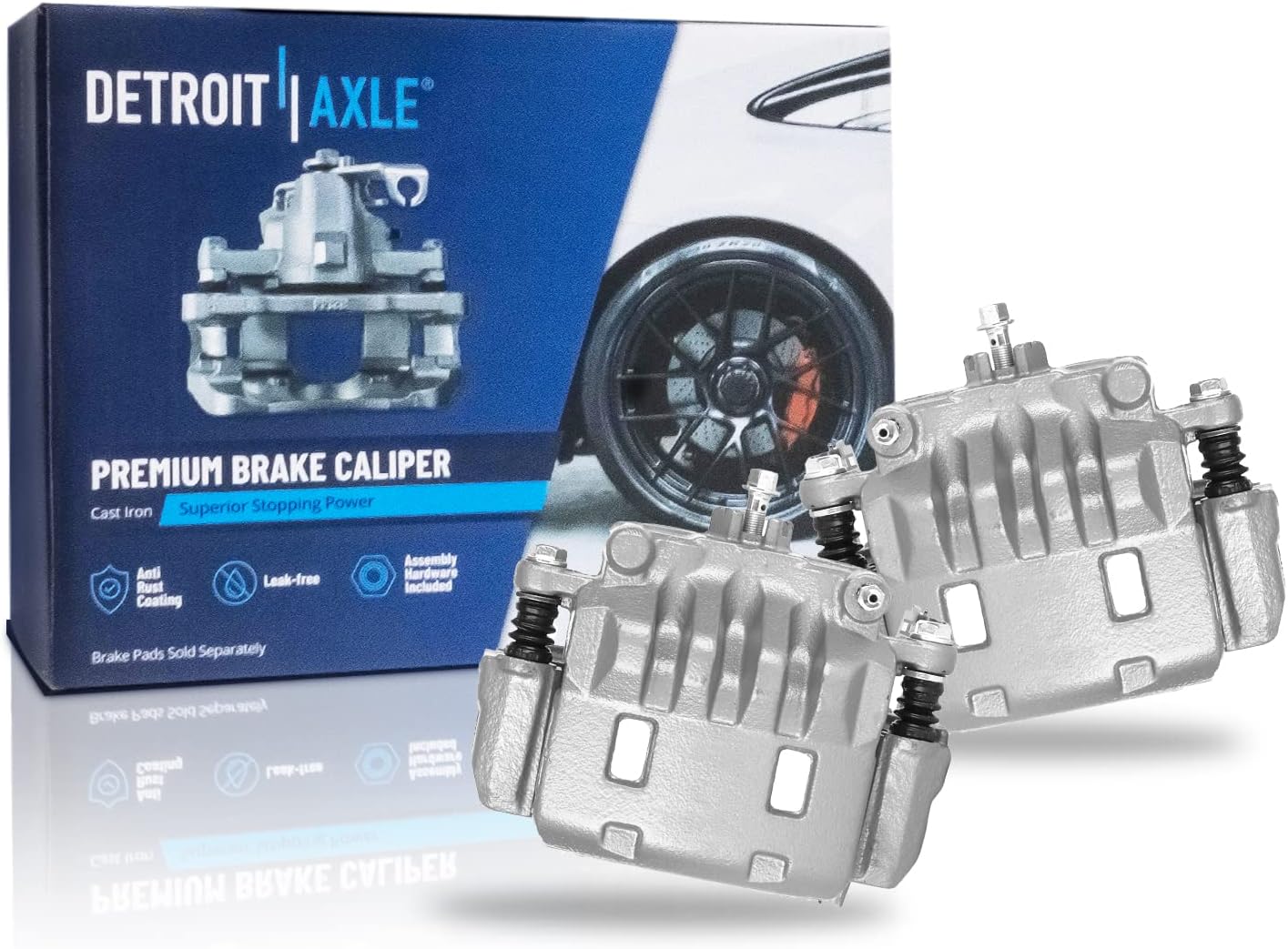
7. Detroit Axle Front Brake Caliper Pair with Brackets
| Piston size | 43 mm (1.69 inch) |
|---|---|
| Piston material | Steel |
| Position | Front left and right |
| Kit contents | 2 front calipers with brackets |
These Detroit Axle front calipers come as a two-piece kit with mounting brackets and are intended to replace worn or leaking front calipers on compatible Subaru vehicles. They use two 43 mm steel pistons per caliper and are supplied ready to install with brackets, so they are typically used during a front brake job when swapping rotors and pads. The calipers are described as undergoing impact, wear, and fatigue testing, which supports long-term durability for everyday driving. Practical benefits include straightforward bolt-on fitment when the vehicle match is correct and the included brackets that simplify installation compared with buying calipers and brackets separately. Limitations to note are that the listing does not include brake pads, so you must purchase pads and hardware separately, and professional installation or solid DIY experience is recommended to ensure correct bleeding and alignment. For buyers prioritizing a conservative, long-lasting repair, these calipers present a direct replacement option that focuses on reliability rather than performance upgrades.
Best for: Buyers who want a dependable factory-style front caliper replacement to restore safe braking on an older Subaru and prefer parts with tested durability over performance upgrades.
Less Ideal for: Shoppers looking for a high-performance or upgraded braking solution, or those who want a complete plug-and-play kit that includes pads and hardware.
- Includes both left and right front calipers plus mounting brackets for a coordinated replacement
- Steel 43 mm pistons designed for durability under normal driving conditions
- Described as impact, wear, and fatigue tested to support long-term reliability
- Sold as a matched pair which helps ensure consistent braking feel front-to-front
- Does not include brake pads or installation hardware, requiring separate purchases
- Requires proper brake bleeding and installation skills or professional service
Verdict: If you need a conservative, durable front caliper replacement for a Subaru, this matched pair with brackets gives a reliable, tested option to restore braking performance.
Choosing the Right 1998-2002 Subaru Forester Brake Calipers: Key Factors to Consider
Fitment and Mounting Compatibility
Correct fitment is essential because calipers must align with the Forester's existing mounting points, rotor diameter, and brake line connections. An exact-match caliper avoids the need for brackets, adapters, or modifications that can complicate installation and affect brake geometry.
Pay attention to whether the caliper is specified for front or rear use, and confirm piston size and mounting bolt spacing. Mismatched calipers can lead to uneven pad contact, premature wear, or interference with the wheel. For the 1998-2002 Forester, prioritizing calipers that list this exact year range reduces the risk of fitment-related issues at install.
Seal and Piston Design
Seals and pistons are the parts most likely to cause leaks or sticking symptoms over time. Look for calipers that use high-quality elastomers resistant to brake fluid and heat, and pistons made from corrosion-resistant materials such as stainless steel or plated alloys.
A robust dust boot and a well-designed piston lip seal keep contaminants out and maintain hydraulic integrity. Since symptoms like a soft pedal or dragging brakes often trace back to failing seals or corroded pistons, choosing calipers with superior sealing components can prevent recurring problems.
Materials and Corrosion Resistance
Calipers operate in a harsh environment where salt, water, and road debris cause corrosion. Cast iron calipers are common and durable, but protective coatings, zinc plating, or ceramic paints significantly extend service life in wet climates.
Consider calipers with anti-corrosion finishes or those built from alloys that resist pitting. Corroded sliders and bodies can cause pistons to stick or lead to uneven pad wear, so material choice directly impacts long-term reliability for Foresters driven in varied conditions.
Rebuildability and Parts Availability
Choosing a caliper that accepts standard rebuild kits and replacement hardware saves money and reduces future downtime. Rebuildable calipers allow you to replace seals, pistons, and boots rather than replacing the entire unit when only the seals fail.
Check whether common rebuild kits are available for the caliper design used on the 1998-2002 Forester, and whether hardware like guide pins and boots can be sourced separately. This factor affects lifecycle cost and maintenance flexibility.
Brake Performance and Heat Management
Calipers must dissipate heat effectively to avoid fade during repeated braking. Designs with efficient fluid flow, larger piston area where appropriate, and good thermal mass help maintain braking consistency under load.
Consider how the caliper pairs with rotor size and pad compound; a caliper that consistently applies pressure without overheating reduces fade and uneven pad glazing. For a Forester used for daily driving or light towing, prioritize stable performance over track-oriented designs that emphasize extreme heat resistance.
Installation and Serviceability
Ease of installation matters for owners doing their own work or independent shops. Calipers that reuse original hardware or include comprehensive mounting kits reduce labor and the chance of mistakes.
Look for calipers that provide clear instructions, use commonly available bleeder fittings, and sit inboard of standard wheel clearances. Consider whether bleeding and bed-in procedures are straightforward, and whether the design allows easy access to guide pins and bleeder screws during routine service.
Common Brake Caliper Symptoms on 1998-2002 Forester
Recognizing failing caliper symptoms early can prevent more expensive repairs. Typical signs include uneven pad wear, a pulsing brake pedal, fluid leaks at the wheel, or a vehicle that pulls to one side during braking. A spongy pedal often points to internal seal failure or contaminated fluid.
Sticking calipers can cause a hot wheel or dragging odor after short drives. If a forester exhibits these symptoms, inspecting the caliper pistons, guide pins, and boots for corrosion and damage is a good first step.
- Uneven pad wear or rotor scoring
- Brake fluid leaks near the caliper
- Vehicle pulls to one side under braking
- Spongy or low brake pedal feel
- Hot or burning smell after driving
Front Vs Rear Caliper Considerations
Front and rear calipers serve different roles on the Forester. Front calipers typically handle a greater share of braking force and may have larger pistons or different mounting hardware than rear units. When replacing calipers, confirm whether the part is designated for front or rear to match rotor size and braking balance.
Replacing only one axle's calipers can lead to uneven braking characteristics. Many technicians recommend replacing calipers in axle pairs to maintain balanced pedal feel and equal wear across the system.
- Confirm front or rear designation before purchase
- Consider axle-pair replacement for consistent braking
- Match piston size and pad backing plate design
Remanufactured Vs New-Style Calipers
Remanufactured calipers rebuild existing cores and can be a cost-effective option if the rebuilding process addresses corrosion, machining, and seal replacement thoroughly. Ensure reman units include replaced seals and meet factory specifications for piston fit and surface finish.
New replacement calipers eliminate prior corrosion and come with fresh seals, but quality varies by manufacturer. Assess the finish, seal materials, and whether the unit accepts standard rebuild kits if long-term serviceability matters.
- Reman units can save cost if properly rebuilt
- New calipers remove prior corrosion risk
- Verify included hardware and seal material quality
Maintenance Tips to Extend Caliper Life
Regular brake fluid changes, proper torque on mounting bolts, and periodic inspection of guide pins and boots help extend caliper life. Corrosion on guide pins can cause calipers to bind, so clean and lubricate them with appropriate high-temperature grease during pad service.
Addressing caliper leaks or sticking at the first sign prevents rotor damage and uneven pad wear. If you plan to keep the Forester long-term, consider corrosion-resistant coatings or regular undercarriage wash to limit salt and grime buildup.
- Flush brake fluid at recommended intervals
- Clean and lubricate guide pins during pad changes
- Inspect dust boots and replace if cracked
- Keep wheel wells free of salt and debris
What to Expect During a Caliper Replacement Job
A standard caliper replacement on a Forester involves removing the wheel, unbolting the caliper, disconnecting the brake hose, and installing the new or rebuilt caliper. Bleeding the brake system afterward is necessary to remove air and restore pedal firmness. Expect to check rotor and pad condition while the wheel is off and replace or resurface rotors if heavily scored.
Torque specifications, correct bleeder orientation, and safe support of the vehicle are important for a reliable job. If reusing brake lines, inspect their condition and the banjo bolt washers or fittings for leaks.
- Wheel removal and caliper unbolt
- Brake hose disconnection and reuse assessment
- System bleeding and pedal test
- Inspect rotors and pads for compatibility
When to Consider Rebuilding Instead of Replacing
Rebuild kits can restore calipers when the body and slide surfaces are intact but seals and pistons show wear. Rebuilding is practical if the caliper body is straight, mounting faces are true, and replacement pistons are available for the Forester's caliper design.
Choose rebuilding when parts are readily available and corrosion is limited. If the caliper body has heavy pitting or damaged threads, replacement is safer to ensure braking reliability.
- Use a rebuild kit when body surfaces are sound
- Replace the caliper if there is heavy corrosion or damage
- Verify availability of pistons, seals, and hardware before starting
Still looking for the perfect fit?
Select your Subaru Forester configuration to see the most relevant Brake Calipers recommendations
How We Chose the Best 1998-2002 Subaru Forester Brake Calipers
We selected calipers using a practical, vehicle-focused editorial framework tailored to the 1998-2002 Subaru Forester. First, fitment accuracy was mandatory: each candidate must match mounting points, piston size, and brake line fittings for the specified year range and common front or rear positions. Second, materials and corrosion resistance were evaluated to estimate service life in mixed climates where road salt and moisture accelerate wear. Third, seal and piston design mattered because quality seals reduce leaks and sticking symptoms under heat and cycling. Fourth, rebuildability and parts availability were considered, favoring options that accept standard rebuild kits and replacement hardware. Fifth, performance under load and heat dissipation characteristics were reviewed from spec sheets and manufacturer data rather than lab testing.We excluded calipers that required nonstandard adapters, significant bracket modification, or changes to hydraulic components. We also filtered out options with unclear fitment information or poor-quality seals. The final list balances correct fitment, durability, ease of service, and clear specifications that align with typical Forester maintenance needs.
Our full evaluation process is outlined in our review methodology.
FAQ
How long do brake calipers typically last on a 1998-2002 Forester?
Caliper life varies with driving conditions and maintenance. In dry climates they often last many years, while exposure to salt and moisture can shorten life. Regular inspections and fluid changes help extend service intervals.
Can I replace only one caliper instead of both on the same axle?
You can replace a single failed caliper, but replacing both on the same axle is generally recommended to maintain balanced braking feel and even pad wear. Pair replacement reduces the chance of uneven braking.
What causes a caliper to stick on this Forester model range?
Sticking calipers are usually caused by corroded guide pins, seized pistons, or deteriorated seals that allow fluid bypass. Contaminated fluid and lack of lubrication on sliding components accelerate sticking symptoms.
Are remanufactured calipers reliable for the 1998-2002 Forester?
Remanufactured calipers can be reliable when the remanufacturer replaces seals, machines contact surfaces, and verifies proper piston fit. Ensure reman units meet clear rebuilding standards and include necessary hardware.
Is it worth rebuilding calipers with a rebuild kit?
Rebuilding is worth it when the caliper body and mounting surfaces are in good condition and parts are available. Rebuilding saves cost and returns serviceable components, but heavily corroded calipers should be replaced.
What maintenance prevents brake caliper problems on the Forester?
Periodic brake fluid changes, cleaning and lubricating guide pins, and inspecting dust boots for damage will prevent many caliper issues. Addressing leaks and replacing compromised seals early avoids pad and rotor damage.
Final Verdict
For the 1998-2002 Subaru Forester, prioritize calipers that provide exact fitment and robust sealing to avoid leaks and sticking symptoms. Balance material and finish choices against long-term serviceability; corrosion resistance and the ability to rebuild are key tradeoffs.Choose calipers based on whether you prefer a fresh new unit that eliminates prior corrosion or a remanufactured option that offers value and rebuildability. Focus on fitment, seal quality, and ease of service to restore consistent braking and minimize repeat visits to the garage.
Explore More:
- Check out all Subaru Forester parts & accessories
- Explore Brake Calipers Maintenance & Repair Guides
- Explore Brake System
- Browse all Auto Parts
