

Note: This article contains affiliate links. If you click on these links and make a purchase, I may earn a small commission at no extra cost to you. This helps support my research and content. Read my full affiliate disclosure here.
If your 1996-2000 Honda Civic has weak airflow, rattling from the dash, or inconsistent fan speeds, swapping the blower motor often fixes the problem. For EJ, EK, and EM/EM chassis Civic owners, a properly matched blower motor restores HVAC performance for heating and cooling and reduces irritating noise that builds up with age. This guide covers seven shortlisted blower motors that fit the 1996-2000 (EJ, EK, and EM) Civic scope and evaluates them by airflow, noise output, build quality, and fitment reliability. Read on to see which options are best suited for restoring strong, quiet cabin airflow and what factors to weigh before buying.
Looking for other parts? See all Honda Civic parts & accessories.
Top Picks at a Glance
| Best Overall The best all-around choice for most situations | YHTAUTO Blower Motor Assembly for 1992–2001 Honda/Acura Applications |  |
| Best Quality Built to a higher standard if you want something more solid | Rareelectrical Front HVAC Blower Motor (direct replacement) |  |
| Best Value The sweet spot between price and what you get | Aspligo Blower Motor Fan Assembly for 1992–2001 Honda/Acura Applications |  |
| Best Budget The cheapest option that still gets the job done reliably | LSAILON Replacement Heater Blower Motor for 1992–2006 Honda and Acura Models |  |
| Highest Rated A top-rated pick with lots of positive feedback | SCITOO Heater Blower Motor with Fan Cage (700001) |  |
| Most Popular A crowd favorite that many people choose with confidence | COOLIGO AC Heater Blower Motor with Fan (fits various Honda/Acura 1992–2006) |  |
| Best Seller A high-volume bestseller chosen again and again | POHILA HVAC Heater Blower Motor with Fan Cage (BM00039DX) |  |
1. YHTAUTO Blower Motor Assembly for 1992–2001 Honda/Acura Applications

| Voltage | 12 Volts |
|---|
This YHTAUTO blower motor assembly replaces the cabin fan in compatible 1990s Honda and Acura vehicles to restore ventilation, heating, and air conditioning airflow. It is a direct-fit style unit intended to drop into the factory blower housing and plug into the existing wiring, so installation is straightforward for someone comfortable removing dash panels or inner trim. The motor is rated for 12 volts and customers report it runs quietly with OEM-like performance, which helps eliminate weak airflow, rattling, or noise from a failing original motor. Practical benefits include affordable pricing and a design that matches factory mounting points and connectors, reducing the need for modifications. Limitations are typical of aftermarket replacements: fit depends on selecting the correct part reference for your year and trim and occasional minor noise has been reported by some users. The part comes with basic manufacturer support and fits models listed in the product fitment, making it a reasonable repair option for Civic owners wanting to restore climate control function without an expensive dealer part.
Best for: Buyers who want a cost-effective, factory-style replacement to restore cabin airflow in older Honda Civics and similar 1990s models and prefer an easy direct-fit swap over custom repairs.
Less Ideal for: People seeking a premium performance blower with higher airflow than factory spec or those who need multi-vehicle compatibility beyond the listed 1990s Honda/Acura fitment.
- Direct-fit replacement that uses factory mounting points and connectors
- Quiet operation reported by multiple users compared with worn originals
- Affordable alternative to dealer blower motors
- Covers a broad range of 1990s Honda and Acura models listed in the fitment
- Fitment requires confirming reference numbers and year compatibility before purchase
- Aftermarket unit may have occasional minor noise on some vehicles
Verdict: Choose this YHTAUTO blower motor when you need an affordable, factory-style replacement to reliably restore ventilation in a 1990s Honda Civic.
2. Rareelectrical Front HVAC Blower Motor (direct replacement)

| Part Number | 700001*2 |
|---|---|
| Position | Front |
| Included Components | HVAC Blower Motor |
| Material Type | Evap |
This Rareelectrical front HVAC blower motor replaces the factory unit to restore heating and A/C airflow in compatible 1990s Honda and Acura cars. It installs in the front position with the correct mounting pattern and electrical connector so no modifications are needed. The motor is marketed as a new aftermarket part built to meet or exceed factory fit and function, offering consistent airflow and quieter operation thanks to its precision-engineered rotor and tested electrical connections. Typical use is a direct swap when an original blower fails, eliminating weak airflow or noisy operation and returning full cabin climate control. Limitations to consider are that this is an aftermarket unit rather than a branded OEM part and long-term durability can vary compared with factory-original motors. Also verify exact part numbers and vehicle application lists before ordering to ensure precise fit for a 1996 to 2000 Civic.
Best for: Buyers who need a reliable, bolt-in replacement to restore strong HVAC airflow in late 1990s Civics and prioritize straightforward installation and performance recovery.
Less Ideal for: Those seeking an exact branded factory-original motor or extended OEM-backed warranty should consider sourcing a factory replacement or remanufactured unit instead.
- Direct front-position replacement with matching mounting and connector pattern
- Built to meet or exceed factory specifications for fit and function
- Precision-engineered motor designed for consistent airflow and reduced noise
- Tested for proper electrical connections to simplify plug-and-play installation
- Aftermarket part so long-term durability may differ from original factory units
Verdict: Choose this blower motor if you want a direct-fit aftermarket replacement that restores strong, quiet cabin airflow for late 1990s Honda Civics.
3. Aspligo Blower Motor Fan Assembly for 1992–2001 Honda/Acura Applications

| Voltage | 12 Volts |
|---|---|
| Horsepower | 700001 Horsepower |
| Material Type | Metal |
This Aspligo blower motor is a straightforward replacement designed to revive cabin airflow for compatible 1990s Honda and Acura vehicles. It installs where the factory blower sits and draws air through the HVAC evaporator or heater core, restoring both cold and warm air delivery to vents. The unit uses a metal and ABS construction with a motor tuned for quicker airflow and reduced electrical interference, which the listing says yields quieter operation and longer life than older failed units. Typical use is a like-for-like swap when your Civic’s blower has slowed, squealed, or stopped; expect improved fan response across speeds and decent durability for daily driving. Limitations include the need to confirm exact fit for your Civic year and trim and that this is a replacement motor assembly rather than a performance upgrade; it will restore factory function but not increase HVAC output beyond design. Install may require moderate hand tools and basic HVAC access, so a DIYer comfortable removing the glove box or under-dash panels can handle it, otherwise plan for shop time.
Best for: A practical buyer who wants a reliable, cost-effective replacement to restore normal HVAC airflow in a late 1990s Honda Civic and similar Acura models and prefers a durable, straightforward swap they can do themselves or have installed cheaply.
Less Ideal for: Not a good choice for someone seeking increased HVAC performance beyond factory capability or for vehicles outside the listed Honda/Acura fitment range.
- Designed as a direct replacement for late 1990s Honda/Acura blower applications
- Metal and ABS construction for improved durability over brittle OEM units
- Motor tuned for faster airflow and reduced electrical interference for quieter running
- Fits ventilation and heating functions to restore both A/C and heater performance
- Fitment must be verified against year and submodel before purchase
Verdict: If you need a durable, quiet factory-style replacement to restore HVAC airflow in a late 1990s Honda Civic, this Aspligo blower motor is a practical, effective fix.
4. LSAILON Replacement Heater Blower Motor for 1992–2006 Honda and Acura Models

| Compatible models | Selected 1992–2006 Honda and Acura models (see fitment list) |
|---|---|
| Material Type | beaded |
| Manufacturer | YACAI |
| Part Number | 151834-5415-0950241482 |
This LSAILON blower motor is a budget-focused replacement designed to restore HVAC airflow in older Honda and Acura cars listed in the fitment. It installs in place of the factory unit and is used to recover blowing power for heating, ventilation, and air conditioning when the original motor fails or becomes noisy. The listing highlights a silicon steel rotor plate and enameled copper windings, which suggest basic durability and typical electric motor construction. Buyers can expect straightforward, direct-fit installation where the mounting and electrical connector match factory locations for the specified years. Practical benefits include improved air volume and reportedly lower noise compared with a failing unit, and it comes from a vendor emphasizing cost-effectiveness. Limitations are typical for economy aftermarket parts: long-term longevity and exact OEM match for every vehicle variant may vary, and the product lacks extensive brand reputation or verified performance data in this listing. For a simple, inexpensive swap to get cabin climate control working again, this unit covers the essentials.
Best for: Buyers looking to restore heating and A/C function on an older Honda or Acura without spending much, prioritizing immediate, affordable repairs over long-term premium parts.
Less Ideal for: Those seeking a factory-backed replacement with documented longevity or professional restorers who need guaranteed OEM-spec performance should consider higher-end or dealer options.
- Direct-replacement fit for many 1992–2006 Honda and Acura models listed in the fitment
- Designed with silicon steel rotor plate and enameled copper windings for basic durability
- Advertised larger airflow and reduced noise compared with a worn blower motor
- Economical option that targets budget repairs and restorations
- Seller-provided information is limited so long-term reliability and exact OEM parity are not documented
Verdict: A cost-effective direct-replacement blower motor to quickly restore cabin airflow on older Honda and Acura vehicles.
5. SCITOO Heater Blower Motor with Fan Cage (700001)
| Placement on Vehicle | Front |
|---|---|
| Working Voltage | 12V |
| Number of Terminals | 2 |
| Material Type | silicon steel |
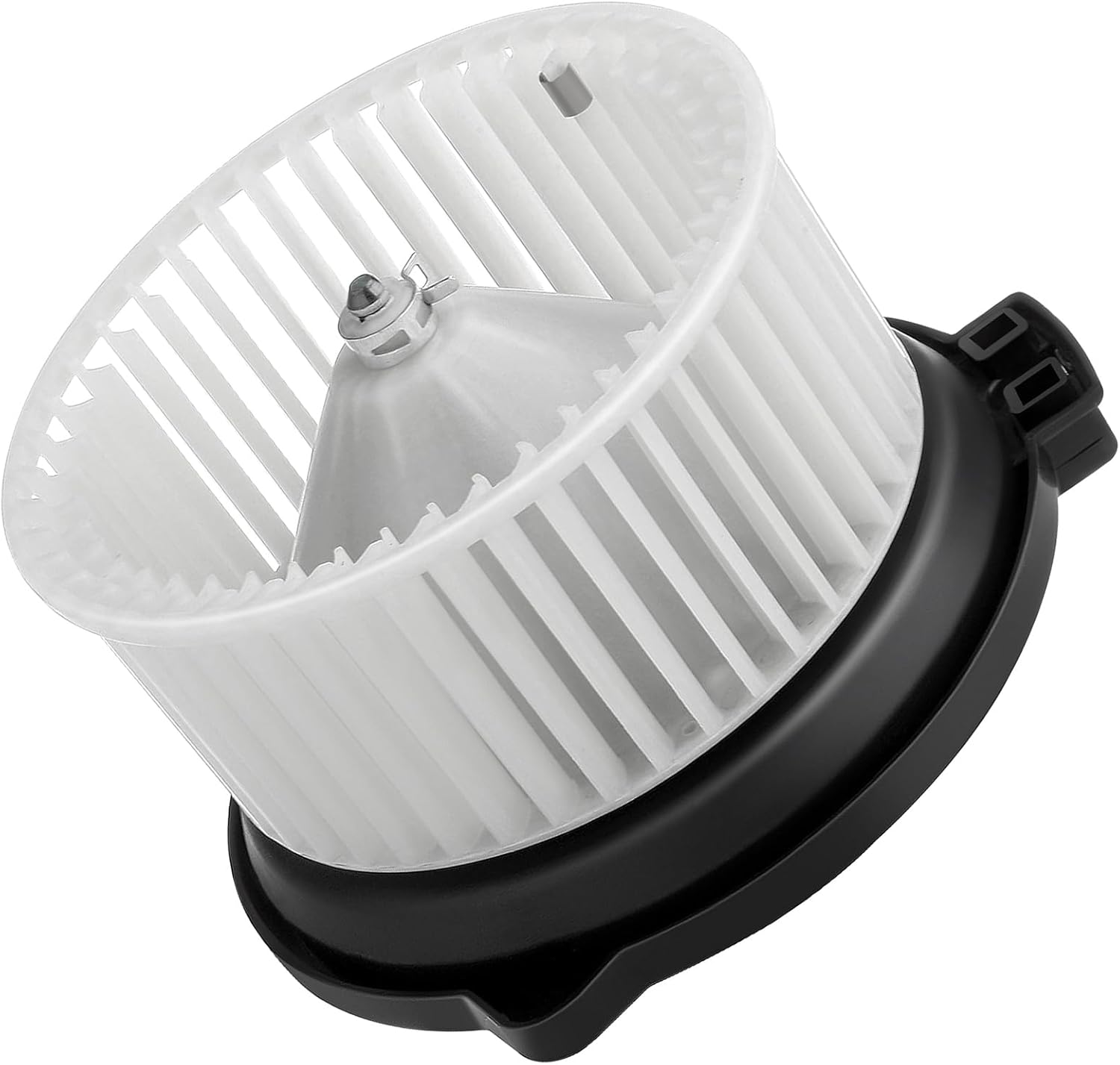
This SCITOO blower motor is a plug-and-play replacement intended to restore cabin airflow and fan speed control on older Hondas and Acuras. It ships with the fan cage attached and a two-terminal connector that matches the factory-style plug, so typical installation takes 20 to 30 minutes with basic hand tools. The unit is built with silicon steel components and a flanged, vented housing to match factory fitment and alignment. In use it provides firm airflow across multiple speeds and users report generally quiet operation after a short break-in period. The motor aims to fix common failures such as weak airflow, rattling, and complete motor burnout by using balanced blades and improved bearings. Limitations are that fitment must be confirmed against part numbers and vehicle application since interchange numbers vary, and a small number of buyers have reported noise differences or receiving incorrect listings, so verify the connector and mounting before installation.
Best for: A reliability-first buyer who needs a straightforward, factory-replacement blower to restore consistent cabin airflow on a 1996–2000 Honda Civic and prefers a unit that installs quickly without wiring changes.
Less Ideal for: Buyers looking for a performance upgrade with higher airflow than factory or for universal aftermarket units that require modification should consider other options.
- Factory-style two-terminal connector for plug-and-play installation
- Includes fan cage so no separate wheel purchase is needed
- Balanced blades and improved bearings reduce vibration and common failure symptoms
- Designed to match factory housing and mounting for straightforward fitment
- Compatibility depends on exact OE/part-number match so you must confirm fitment before buying
Verdict: Choose this SCITOO blower motor if you want a reliable, direct-fit replacement that restores factory-style airflow and installs with minimal fuss.
6. COOLIGO AC Heater Blower Motor with Fan (fits various Honda/Acura 1992–2006)

| Compatible models | Honda Insight/Accord/Civic/Prelude/Civic del Sol; Acura CL/Integra (years in listing) |
|---|---|
| Replace part numbers | 700001, 18061146, 19149001, 23147290, 25840786, 84231007 |
| Manufacturer | COOLIGO |
| Date first available | October 31, 2024 |
This COOLIGO blower motor replaces a failed cabin blower to restore heating and air conditioning airflow in compatible older Hondas and Acuras. It includes the fan wheel and is intended as a direct replacement for applications that use part number 700001 and related OEM references. Typical use is swapping it into the vehicle's HVAC housing when vents blow weakly or the motor only works at low speeds. The listing emphasizes factory-spec manufacturing and wear-resistant materials, which suggests consistent airflow and quieter operation than a worn original. Installation is a standard vehicle cabin/heater access job and will get your vents moving again without modifying the HVAC system. Limitations: fitment must be checked carefully against year and model because this unit covers many generations, and a proper electrical connector and mounting orientation must match your car. The product offers a multi-year coverage period, which provides extra reassurance for buyers concerned about reliability on older vehicles.
Best for: Buyers who want a reliable, factory-style blower motor replacement to restore HVAC airflow and prefer products with documented fitment and post-sale coverage.
Less Ideal for: If you need a blower motor for a vehicle outside the listed fitment or require a performance-upgrade unit with higher airflow, this standard replacement is not the right choice.
- Direct-replacement design that includes the blower fan for a complete swap
- Made to factory-spec guidance with wear-resistant parts for steady airflow
- Aimed at quiet, smooth operation compared with a failing original motor
- Covers multiple Honda and Acura model years commonly needing replacement
- Must verify exact vehicle fit and connector type since listing covers many models
Verdict: Choose this COOLIGO blower motor when you want a factory-style replacement that restores HVAC airflow in older Honda and Acura models with the reassurance of multi-year coverage.
7. POHILA HVAC Heater Blower Motor with Fan Cage (BM00039DX)

| Speed | 3200 RPM |
|---|---|
| Voltage | 12 Volts |
| Wattage | 180 watts |
This POHILA blower motor is a direct-replacement HVAC motor sold with the fan cage for straightforward installation into compatible late 1990s Honda Civics and similar models. It runs on 12 volts and is rated at 180 watts with a 3200 RPM impeller speed, which translates to strong airflow for faster cabin heating and cooling. The motor uses permanently lubricated self-aligning bearings and claims a precision-balanced impeller to reduce vibration and noise during operation. Built from motor-grade silicon steel and enameled copper windings, it is presented as a factory-style replacement intended to fit without modification. Expect typical use to be in restoring HVAC function after a failed blower motor, and professional installation is recommended to ensure proper fit and connector alignment. Limitations to note are that long-term durability will depend on installation and vehicle conditions and that small fitment differences across production years may require verification against the vehicle fit guide before purchase.
Best for: Buyers who prioritize a low-risk, factory-style replacement to restore reliable HVAC airflow in a 1996–2000 Honda Civic and prefer a product that minimizes guesswork about fit and function.
Less Ideal for: People seeking a performance upgrade for increased airflow beyond factory levels or those who need a blower motor for a different vehicle make or year range.
- Direct-fit design with included fan cage for simpler replacement
- Permanent lubrication and self-aligning bearings intended to reduce maintenance and vibration
- Motor-grade materials and balanced impeller aimed at quieter operation
- Sufficient power and 3200 RPM speed to restore strong HVAC airflow
- Manufacturer recommends professional installation rather than DIY for many users
Verdict: Choose this POHILA blower motor when you want a direct-fit, factory-style replacement to reliably restore HVAC airflow in a 1996–2000 Honda Civic.
Choosing the Right 1996-2000 Honda Civic Blower Motor: Key Factors to Consider
Airflow and CFM
Airflow determines how quickly the cabin reaches the set temperature and how well the defroster clears the windshield. For a 1996-2000 Civic, look for motors and fan assemblies rated for sufficient CFM to push air through the stock ducting and heater core without overworking the motor.
Lower airflow rates can make the HVAC feel weak even when the compressor or heater is functioning, while an oversized fan can create excess noise and stress the resistor and wiring. Consider reported airflow in real-world use and whether the replacement fan is the same swept-volume size as the factory unit to preserve expected performance.
Noise and Vibration
Older blower motors often produce rattles, grinding, or whine as bearings wear and the squirrel-cage fan becomes unbalanced. Noise level is not only an annoyance but can indicate impending failure.
Prioritize motors with sealed bearings, balanced impellers, and solid mounting flanges to minimize vibration transfer into the dash. Read descriptions and reports about bearing type and noise performance because quieter operation will make daily driving more comfortable.
Fitment and Electrical Compatibility
Correct fitment for the Civic HVAC housing and matching electrical connector are essential to avoid modification. The 1996-2000 Civic uses specific mounting points and a particular plug for blower control; a direct-fit motor will save time and reduce installation risk.
Check that the replacement motor matches the OEM mounting pattern, shaft length, and connector pinout. Mismatched motors may require adapter harnesses or bracket modifications that increase labor and potential failure points.
Durability and Materials
Materials and construction govern how long the replacement motor will last under dust, humidity, and continuous use. Motors with corrosion-resistant housings, quality bearings, and reinforced fan blades tend to outlast cheaper alternatives in daily driving conditions.
Also consider the motor's thermal tolerance and whether it can withstand repeated duty cycles from long heater or A/C use. Durable components reduce the chance of repeat replacement and make the upfront effort more worthwhile.
Installation Complexity
Some blower motor swaps require only removing a few screws under the glovebox, while others involve partial dash disassembly. For many Civic owners, ease of installation is a deciding factor because it affects time, tools required, and the risk of interior trim damage.
Look for motors that come with clear instructions, replacement hardware if needed, and match-fit features. If you plan to do the job yourself, ensure you have basic hand tools and a safe way to support the dash or glovebox during removal to avoid scratched panels or broken clips.
Compatibility With Resistors and Fan Speed Controls
Blower motor operation depends on the vehicle's fan speed control module or resistor pack; some replacement motors draw different current profiles that can affect speed steps or lead to resistor overheating. For the 1996-2000 Civic, ensure the motor works with the factory speed control and does not exceed expected current draw.
If a motor draws significantly more current, the existing resistor or wiring could be stressed and fail prematurely. Confirm reported compatibility and, when necessary, verify that the resistor housing and connector are in good condition before installation.
Common Symptoms of a Failing Blower Motor
Recognizing early symptoms helps prioritize replacement before a complete failure leaves you without cabin airflow. Typical signs include reduced fan speed across all settings, intermittent operation, a grinding or squealing noise from the dash, and a burning smell from the vents.
You may also notice that certain speed settings work while others do not, which can indicate worn motor windings or intermittent electrical contact. Identifying the symptom pattern narrows whether the motor itself, the resistor, or wiring is at fault.
- Weak airflow even at higher fan settings
- Rattling or grinding noises coming from the HVAC area
- Fan only works on certain speed settings or intermittently
- Burning odor during operation indicating electrical overheating
Diagnosing Before You Buy
Before ordering a replacement, perform basic diagnostic checks to confirm the blower motor is the root cause. Inspect the blower housing for debris or a damaged fan cage that can cause imbalance and noise. Check the fuse and measure voltage at the blower connector while the key is on and the fan is commanded on.
If the motor receives full battery voltage but does not run or runs erratically, the motor itself is likely failing. If voltage varies with speed settings, the issue may involve the resistor or control circuitry. Testing saves time and ensures you replace the right component.
- Visual inspection for debris and physical damage
- Voltage check at the blower motor connector
- Inspect the resistor pack and harness for corrosion or heat damage
Installation Tips for 1996-2000 Civic Owners
Most Civic blower motor replacements are accessible from under the dash or glovebox area, but the procedure can vary slightly with EJ, EK, and EM chassis differences. Work on a cool engine bay and disconnect the battery before accessing the blower to avoid short circuits.
Support the glovebox or lower dash panel as needed to avoid stressing trim clips. When removing the old motor, note the orientation of the fan and any shims or spacers so you can reinstall the new unit in the same position. After installation, test all fan speed settings and inspect for unusual noise before reassembling trim panels.
- Disconnect battery before starting work
- Keep track of screws, clips, and any spacers
- Test fan speeds and listen for unusual noises before finishing reassembly
When to Replace the Blower Motor Vs the Resistor
A failing resistor typically affects only certain speed settings, often leaving high or low speeds functional, while a failed blower motor usually causes no speeds to work or produces consistent noise and weak output across all settings. However, the two components can fail together, so inspect both when symptoms overlap.
If testing shows the motor receives voltage but does not run smoothly, replace the motor. If the motor works but some speeds are missing, start with the resistor assembly. Because resistors can suffer heat damage, check for melted connectors or discoloration when deciding which part to replace.
- Resistor issues often manifest as missing speed steps
- Motor failures usually cause no operation or persistent noise
- Inspect both components when in doubt
Maintaining Your Replacement Blower Motor
After installing a new motor, routine checks can extend its service life. Keep the cabin air filter clean to reduce dust load on the motor and fan blades. Periodically inspect the blower housing for leaves, debris, or accumulated dust, especially if the vehicle is driven in dusty areas.
Address any rattles or unusual noises quickly, as these can indicate early imbalance or foreign-object contact. Proper maintenance reduces stress on bearings and helps the motor last longer under daily driving cycles.
- Replace cabin air filter as recommended to reduce dust
- Check for debris in the blower housing during regular service
- Address unusual noises early to prevent accelerated wear
Still looking for the perfect fit?
Select your Honda Civic configuration to see the most relevant Blower Motors recommendations
How We Chose the Best 1996-2000 Honda Civic Blower Motor
We prioritized criteria that matter for restoring HVAC performance in 1996-2000 Honda Civic (EJ, EK, and EM) cars. First, airflow performance was evaluated by rated CFM or manufacturer airflow claims and by reported real-world effectiveness in moving conditioned air through the Civic cabin. Second, noise and vibration were weighted heavily because older Civics commonly develop fan rattle and bearing noise; we favored motors with quieter bearings and balanced fans. Third, fitment and connector compatibility were checked to ensure direct replacement for the Civic HVAC housing and factory wiring harness. Fourth, durability and materials were considered, including motor housing construction, bearing type, and expected service life under typical driving conditions. Fifth, ease of installation and serviceability were noted, since many owners perform the replacement themselves. We excluded units that require major dash modifications or extensive rewiring, and anything with widespread reports of rapid failure. The final list balances airflow, quiet operation, durability, direct-fit compatibility, and straightforward installation for this vehicle scope.
Our full evaluation process is outlined in our review methodology.
FAQ
How do I know if the blower motor or resistor is bad?
If the fan does not run at all or makes grinding noises across all speeds, the blower motor is likely at fault. If some speed settings work while others do not, the resistor or speed control is often the culprit. Voltage testing at the motor connector helps confirm which part is failing.
Can I replace the blower motor myself on a 1996-2000 Civic?
Yes, many owners can perform the swap with basic tools by accessing the motor from under the glovebox. Take care to disconnect the battery, keep track of fasteners, and test fan operation before reassembling trim. If you are not comfortable with dash panels or electrical testing, professional help is a reasonable choice.
What causes blower motor noise in older Civics?
Noise typically comes from worn bearings, a bent or unbalanced fan cage, or debris contacting the impeller. Over time, lubricant dries and bearings develop play, which increases vibration and noise. Replacing the motor or cleaning the housing usually resolves these issues.
Should I replace the cabin air filter when replacing the blower motor?
It is a good practice to inspect and, if necessary, replace the cabin air filter when changing the blower motor. A clogged filter increases load on the motor and can reduce airflow, so a fresh filter helps the new motor perform optimally.
Will a higher-power blower motor stress the Civic's electrical system?
A motor that draws significantly more current can increase stress on the resistor, wiring, and related connectors. Choose a motor that reports similar current draw to the stock unit or confirm compatibility to avoid overloading the 1996-2000 Civic electrical system.
Final Verdict
For 1996-2000 Honda Civic owners, prioritize a blower motor that balances strong airflow with quiet operation and direct-fit compatibility. Focus on confirmed fitment for the EJ, EK, and EM chassis, durable bearings, and materials that resist dust and corrosion. Remember to verify electrical compatibility with the existing resistor and wiring and to follow safe installation practices. With those tradeoffs in mind, you can confidently select a replacement that restores reliable, quiet cabin airflow for daily driving.
Explore More:
- Check out all Honda Civic parts & accessories
- Explore Blower Motors Maintenance & Repair Guides
- Explore HVAC
- Browse all Auto Parts
