

Note: This article contains affiliate links. If you click on these links and make a purchase, I may earn a small commission at no extra cost to you. This helps support my research and content. Read my full affiliate disclosure here.
Maintaining the cooling system in a 2015-2019 Subaru Outback is essential for engine longevity and dependable winter performance. The right antifreeze prevents freeze damage, reduces corrosion inside aluminum and alloy components, and maintains proper heat transfer under a range of driving conditions.This guide covers the top six antifreeze options shortlisted for the 2015-2019 Outback and explains the practical differences that matter for everyday owners. We evaluate products based on corrosion control, expected service interval, and compatibility with Subaru cooling system materials to help you pick the right solution. Read on for a quick summary of strengths, and then dive into the criteria used to choose these top picks.
Looking for other parts? See all Subaru Outback parts & accessories.
Top Picks at a Glance
| Best Overall Antifreeze The best all-around coolant balancing performance, protection, and value | Subaru Genuine Super Coolant Blue Prediluted 1 Gallon (50/50) |  |
| Best Budget Antifreeze A low-cost coolant that still protects engine cooling systems | Zerex Asian Vehicle Blue Prediluted 50/50 Antifreeze/Coolant 1 gal |  |
| Best Premium Antifreeze Higher-end formula with advanced corrosion inhibitors and longer service life | PEAK OET Extended Life Blue 50/50 Prediluted Antifreeze/Coolant, 1 Gal |  |
| Best Long-Life Antifreeze Formulated for extended service intervals and prolonged corrosion protection | Prestone MAX Asian Green 50/50 Antifreeze Coolant |  |
| Best Concentrated Antifreeze Undiluted concentrate that must be mixed to desired coolant strength | PEAK OET Extended Life Blue Concentrated Antifreeze/Coolant, 1 Gal. |  |
| Best Hybrid Antifreeze Hybrid/HOAT-style formula blending organic and inorganic inhibitors | Zerex Asian Vehicle Green 50/50 Ready-to-Use Antifreeze/Coolant, 1 Gallon |  |
1. Subaru Genuine Super Coolant Blue Prediluted 1 Gallon (50/50)
Best Overall Antifreeze

| Model | SOA868V9270 |
|---|---|
| Prediluted | 50/50 |
| Volume | 1 Gallon |
| Vehicle coverage | 2009 and newer Subaru models |
This Subaru Genuine Super Coolant arrives pre-mixed 50/50 for easy top-up and full coolant changes without needing to dilute. It is formulated with organic corrosion inhibitors to protect aluminum and other cooling system components, and the product copy advertises freeze protection down to about -62°F, which covers harsh winter use. Typical use is direct fill for a drain-and-fill service or as a replacement for the specified Subaru coolant at service intervals; the prediluted format reduces the risk of incorrect mixing. Practical benefits include factory-spec chemistry that matches Subaru service recommendations and reduced maintenance guesswork for DIY mechanics. Limitations are that it is a brand-specific factory product so its blue color and formula are intended for Subaru systems; cross-vehicle compatibility guidance is not provided here and users should follow the Outback service manual. Also it comes as a single-gallon container, so you may need multiple bottles for full-system flushes on larger or heavily diluted systems.
Best for: DIY Subaru owners who want a direct-fit, factory-formulated coolant for routine drain-and-fill or top-up service on their 2015–2019 Outback and prefer a ready-to-use 50/50 mix.
Less Ideal for: Shoppers seeking a universal, multi-vehicle coolant chemistry or larger bulk volume for fleet servicing should consider other options.
- Prediluted 50/50 ready to use for straightforward fill or service.
- Factory-formulated for Subaru cooling systems with organic corrosion inhibitors.
- Advertised cold-weather protection to about -62°F suitable for severe winters.
- Sold in one-gallon bottles which may require multiple units for full-system flushes.
- Formula and color are specific to Subaru systems which limits universal interchange guidance.
Verdict: The best all-around antifreeze for most DIY mechanics, offering reliable corrosion protection, freeze/boil control, and compatibility while balancing price and longevity.
2. Zerex Asian Vehicle Blue Prediluted 50/50 Antifreeze/Coolant 1 gal
Best Budget Antifreeze

| Brand | Zerex |
|---|---|
| Model | Asian Vehicle Blue |
| Item model number | 861398 |
| ASIN | B071RTG2QM |
This one-gallon bottle of Zerex Asian Vehicle Blue is a prediluted 50/50 antifreeze designed for Asian-made cars and trucks; it delivers ready-to-pour freeze and boil protection without mixing. It uses a HOAT formula with a phosphate additive and omits silicates and borates, which helps reduce scale and protect aluminum components commonly found in Subaru cooling systems. Typical use is topping off the radiator or performing a complete coolant flush and refill; the factory-style chemistry is meant to match blue-spec coolants specified by some Asian manufacturers. Its practical benefits are simple: no measuring, corrosion control across multiple metals, and compatibility with systems that call for a silicate-free blue coolant. The product is not focused on ultra long-life intervals, so owners should follow Subaru recommended service intervals rather than expect extended drain periods. Overall it is a straightforward, vehicle-specific coolant for those who want OEM-style protection without specialty long-life additives.
Best for: Buyers who need a low-cost, ready-to-use blue coolant that delivers dependable freeze and corrosion protection for mid-2010s Asian-derived vehicles and prefer a straightforward, factory-style replacement.
Less Ideal for: Those seeking extended drain intervals or specialized long-life chemistries should consider long-life or manufacturer-specific coolants instead.
- Prediluted 50/50 ready to pour so no mixing or measuring required
- HOAT chemistry with phosphate additive protects aluminum and other cooling system metals
- Formulated without silicates and borates to reduce scale and deposits
- One-gallon size covers a full flush and refill for many passenger vehicles
- Not formulated as an ultra long-life coolant so it may require more frequent service than extended-life formulations
Verdict: The best budget antifreeze for buyers who need dependable freeze and corrosion protection at a low price without extra long-life additives.
3. PEAK OET Extended Life Blue 50/50 Prediluted Antifreeze/Coolant, 1 Gal
Best Premium Antifreeze

| Volume | 1 gallon |
|---|---|
| Dilution | 50/50 prediluted |
| Chemistry | Phosphate-enhanced OET (POAT) |
| Recommended for | Asian vehicles |
This PEAK OET Extended Life Blue 50/50 antifreeze is a ready-to-use, phosphate-enhanced organic acid technology coolant aimed at Asian-engine vehicles. It is sold prediluted so you can top off the coolant quickly without mixing, and the formula includes corrosion inhibitors geared toward protecting radiators, water pumps, and hoses over long service intervals. PEAK claims extended-life protection when installed after a complete flush and fill, which makes it useful for owners who prefer fewer coolant changes. The blue POAT chemistry matches factory-style coolant recommendations for many Japanese-designed engines, and the product includes a bittering agent to discourage accidental ingestion. Limitations: this is formulated specifically for Asian vehicle coolant specs, so it may not match every Subaru formulation and color; always verify your Outback’s required coolant type before using. The prediluted gallon is convenient for topping off but offers less flexibility if a concentrate is needed for specific service tasks.
Best for: Buyers who prioritize long service intervals and stronger corrosion protection and who want a ready-to-use coolant for routine top-offs on compatible vehicles.
Less Ideal for: Do not choose this if you need a concentrate for custom mixing or if you must strictly match Subaru factory coolant specifications and color requirements.
- Prediluted 50/50 formula for immediate use and quick top-offs
- Extended-life POAT inhibitor package intended to reduce frequency of coolant changes
- Formulated to protect engine cooling components from rust and corrosion
- Includes bittering agent to deter accidental ingestion
- Formulated for Asian vehicle coolant specifications which may not match Subaru factory requirements
Verdict: The best premium antifreeze for owners willing to pay more for superior inhibitor packages, extended change intervals, and enhanced protection under demanding conditions.
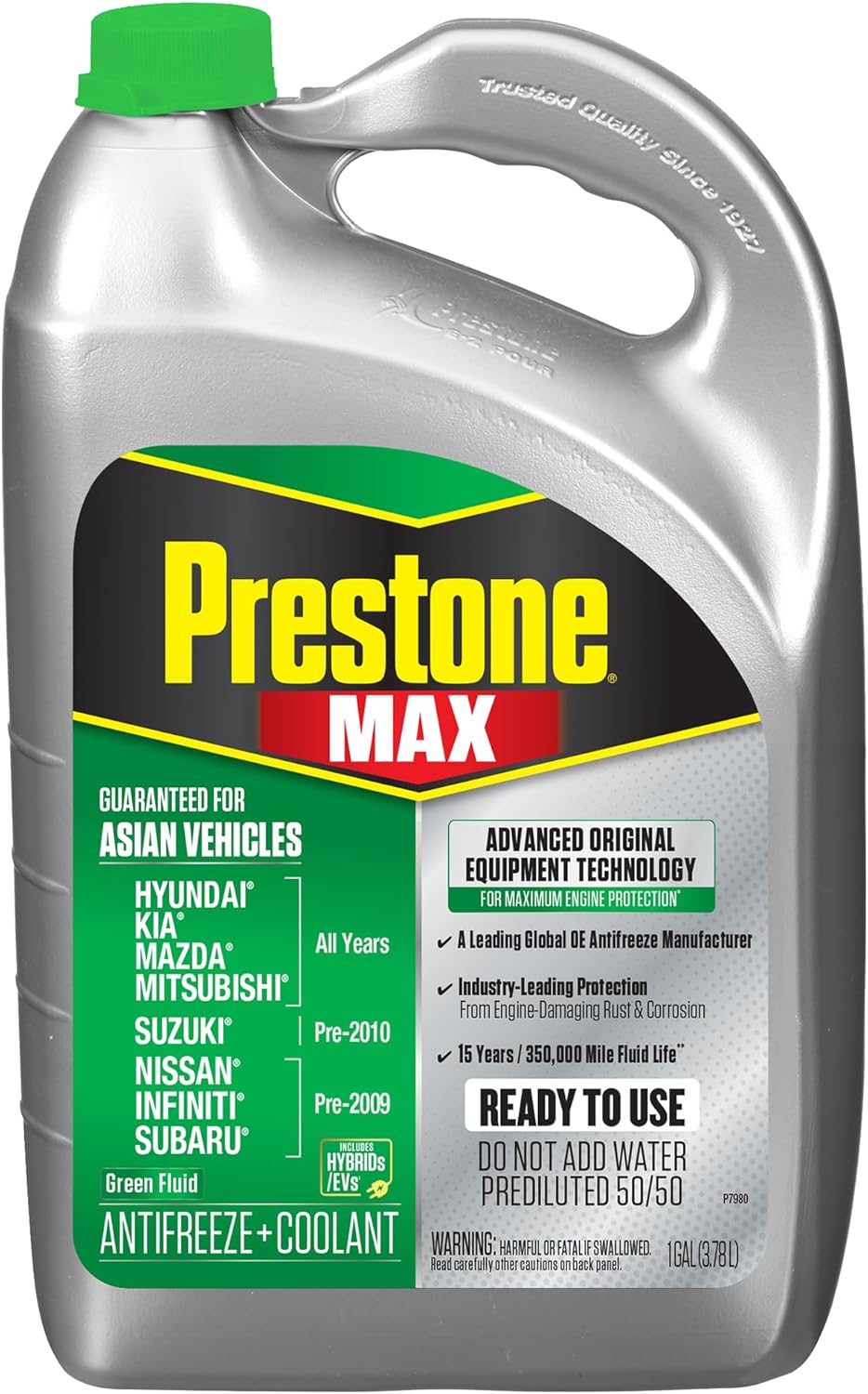
4. Prestone MAX Asian Green 50/50 Antifreeze Coolant
Best Long-Life Antifreeze
| Formulation | 50/50 pre-mixed |
|---|---|
| Technology | Prestone CorGuard |
| Intended market | Asian vehicle formulation |
| Bitterant | Included |
This Prestone MAX Asian Green 50/50 antifreeze is a ready-to-use coolant formulated for Asian vehicle cooling systems and engineered to provide extended corrosion protection. It is typically poured directly into the radiator or coolant reservoir when servicing or topping off the cooling system and is intended to be left for long drain intervals compared with conventional coolants. Notable features include Prestone CorGuard technology for corrosion resistance, extreme temperature protection to handle deep freezes and high-heat conditions, and a bitterant to discourage accidental ingestion. For a Subaru Outback from 2015 to 2019 this product matches the Asian formulation many manufacturers recommend and removes the need to mix concentrate. Limitations are that it is a single-vehicle-specific color and formulation, so you should avoid mixing it with incompatible coolants and confirm Subaru guidance before switching; it also comes as a single 50/50 fill so you cannot custom-blend concentration on the spot.
Best for: Mechanics and owners who prioritize long drain intervals and want a pre-mixed Asian-formula coolant that reduces the frequency of full coolant changes.
Less Ideal for: Drivers who need a universal or multi-vehicle coolant solution or who prefer to custom-blend concentrate to a specific freeze/boil point.
- Ready-to-use 50/50 mix eliminates the need to dilute concentrate before filling
- Asian-specific formulation suited to vehicles that require that chemistry
- CorGuard corrosion inhibitors designed for long-life protection
- Provides broad temperature protection for both cold starts and hot operating conditions
- Not intended to be mixed with different coolant chemistries which limits cross-vehicle use
Verdict: The best long-life antifreeze for mechanics who prefer products designed to remain effective for many miles and reduce frequency of coolant changes.
5. PEAK OET Extended Life Blue Concentrated Antifreeze/Coolant, 1 Gal.
Best Concentrated Antifreeze

| Volume | 1 gallon |
|---|---|
| Compatibility note | Designed for Asian blue POAT systems |
| Concentrated | Yes |
| Service life guarantee | Up to 150,000 miles or 5 years |
This PEAK OET concentrated blue antifreeze is a factory‑style extended‑life formula designed for Asian vehicles and sold in a one‑gallon concentrate so you can mix to the freeze and boil protection you need. It uses a phosphate‑enhanced Organic Acid Technology (POAT) aimed at preventing rust and corrosion across cooling system components and is intended for vehicles that specify a blue POAT formula. Typical use is flushing and refilling the cooling system or topping off after draining; because it is concentrate you must mix it with distilled water to reach a 50/50 or other desired ratio. The product carries a manufacturer service life guarantee of up to 150,000 miles or 5 years when installed after a complete flush and fill. Practical benefits include precise control over coolant concentration, reduced corrosion with extended‑life chemistry, and a full gallon supply for larger systems or future topping. Important limitations are that it is formulated for Asian-spec blue POAT systems, so matching your Subaru Outback's coolant spec is required, and concentrated fluid requires careful mixing and correct coolant selection before use.
Best for: Buyers who prefer to control coolant concentration and top up with distilled water to achieve specific freeze and boil points for their 2015–2019 Subaru Outback and prioritize extended‑life protection.
Less Ideal for: Drivers who want a ready‑to‑use prediluted coolant or who are unsure which coolant chemistry their Outback requires should choose a premixed product or consult a dealer before buying.
- Concentrated gallon allows precise mixing to target freeze/boil protection.
- Extended‑life POAT chemistry protects against rust and corrosion.
- Manufacturer guarantee for up to 150,000 miles or 5 years when used with a full flush and fill.
- Formulated specifically to meet blue POAT requirements used by many Asian vehicles.
- Requires mixing with distilled water so additional supplies and care are needed.
- Formulation targets blue POAT systems and may not be appropriate if the vehicle requires a different coolant chemistry.
Verdict: The best concentrated antifreeze for buyers who want to mix coolant to specific freeze/boil ratios or top up with distilled water for optimal control.
6. Zerex Asian Vehicle Green 50/50 Ready-to-Use Antifreeze/Coolant, 1 Gallon
Best Hybrid Antifreeze

| Formulation | Hybrid Organic Acid Technology with phosphate |
|---|---|
| Mix | 50/50 ready-to-use |
| Compatibility note | Made for many Asian vehicles; silicate- and borate-free |
| Freeze protection | Protects to about -34F |
Zerex Asian Vehicle Green is a factory-quality, ready-to-use 50/50 hybrid antifreeze designed to meet the coolant needs of many Asian-brand engines. It pairs Hybrid Organic Acid Technology with a phosphate additive to protect aluminum radiators, water pumps, and other metal cooling parts from corrosion, scale, and rust while remaining free of silicates, borates, amines and nitrites. For a 2015–2019 Subaru Outback, this formula provides strong long-term corrosion control and is convenient for top-offs or full system flushes since it requires no mixing. Notable practical benefits include proven freeze protection to about -34F and boil-over resistance up to around 265F, plus additives that are safe for gaskets, hoses, and plastics. The main limitation is that this product is a vehicle-specific green HOAT formula intended for applications calling for that chemistry, so it should only be used where the manufacturer or service guidance allows a phosphate-containing hybrid coolant for that Subaru model and year range.
Best for: Buyers who want a long-lasting, hybrid inhibitor coolant that balances corrosion protection with broad material compatibility for mid-2010s Asian vehicles and prefer the convenience of a pre-mixed product.
Less Ideal for: Those who need a coolant that exactly matches a different specified chemistry for their vehicle or who prefer concentrated concentrate formulas to control dilution precisely.
- Ready-to-use 50/50 mix for easy top-offs and flushes
- HOAT formulation with phosphate additive for extended corrosion protection of aluminum and other metals
- Free of silicates, borates, amines, and nitrites which reduces risk of certain deposit and compatibility issues
- Engineered to protect against freezing and boiling extremes commonly encountered in service
- Intended for vehicles that specify a green phosphate HOAT coolant so it may not match all Subaru coolant specifications
Verdict: The best hybrid antifreeze for users seeking a blend of organic and traditional inhibitors that balances long-term corrosion resistance with broad material compatibility.
Choosing the Right 2015-2019 Subaru Outback Antifreeze: Key Factors to Consider
Corrosion Inhibitor Type
The chemical inhibitors in antifreeze determine how well it protects aluminum heads, radiators, and internal engine passages. Organic acid technology and hybrid formulations tend to offer different protection timelines and mechanisms. For a 2015-2019 Subaru Outback, where aluminum components are common, choosing a coolant with inhibitors formulated for aluminum helps prevent pitting and electrochemical reactions.
Inhibitor chemistry also affects compatibility when topping off or mixing fluids. Some inhibitor packages are not compatible with others and can form sludge or reduce effectiveness. Prioritizing a coolant with a proven inhibitor type for modern light-duty passenger vehicles reduces the risk of premature corrosion and maintains heat transfer efficiency over the drain interval.
Service Interval and Longevity
Antifreeze formulas advertise different service lives, from two-year turns to long-life offerings rated for five years or more. A longer service interval can lower maintenance frequency and reduce the chance of neglected coolant becoming acidic or corrosive. For the Outback, consider the tradeoff between an extended-interval product and the condition of an older cooling system when deciding whether to adopt long-life coolant.
Longer-life coolants rely on stable inhibitor packages that resist depletion. If your Outback has known cooling system issues, a shorter interval with periodic testing may be safer until repairs are completed. Otherwise, long-service products can be more convenient and cost-effective over time, provided they match the carmaker recommendations.
Freeze and Boil Protection
Cold climates demand reliable freeze protection to prevent block or cracked components, while hot or high-load driving benefits from strong boilover resistance. Antifreeze concentrates and typical 50/50 mixes offer predictable freeze and boil points, but actual protection depends on mixture ratio and fluid condition.
When selecting a coolant for winter use in a 2015-2019 Outback, verify the required concentration for your climate and maintain the recommended mix to protect against both freezing and overheating. Consider how often you drive in subzero temperatures and whether you need extra margin beyond the standard specifications.
Compatibility and Mixing Risks
Mixing different antifreeze chemistries can cause reactions that reduce corrosion protection or produce gel-like deposits. Because many owners top up fluids on the go, compatibility matters for serviceability. Confirm whether a long-life or conventional ethylene glycol formula is compatible with what is already in your Outback before adding new fluid.
If the current coolant is unknown or you suspect contamination, a flush and refill with the selected product is often the safer approach. Compatibility also extends to hoses, seals, and plastics in the cooling system; choose coolants that list compatibility with modern elastomers to avoid seal swelling or hardening.
Heat Transfer and Engine Efficiency
Antifreeze affects the cooling system's ability to move heat away from the engine. Some additive packages and concentrate levels can slightly influence thermal conductivity. For a Subaru Outback where efficient heat rejection matters for both towing and daily driving, pick a coolant that maintains stable thermal performance throughout its service life.
Regular testing and maintaining the correct concentration ensures consistent engine temperatures. Poor heat transfer due to degraded coolant can lead to higher operating temperatures, increased wear, and reduced fuel efficiency over time.
Serviceability and Maintenance Considerations
Ease of topping off, clear labeling of mix ratios, and availability of testing strips or service tools all contribute to long-term maintenance success. Products that are easy to flush and come with clear instructions reduce the risk of maintenance errors.
Also consider shop and DIY service routines for the Outback. If you prefer to perform maintenance yourself, choose a coolant that does not require special procedures or proprietary additives. If a dealer or shop will service the vehicle, confirm their preferred service interval and whether they recommend a specific coolant chemistry.
Understanding Subaru Cooling System Requirements
Subaru engines in the 2015-2019 Outback use aluminum components and specific elastomers in hoses and seals. That means inhibitor chemistry and elastomer compatibility are more important than simply choosing the coldest-freezing product. Use a coolant that is formulated for modern passenger vehicles with aluminum heads and radiators.
Check your owner manual for any factory guidance on coolant specifications and recommended service intervals. Even when using a long-life antifreeze, periodic testing of pH and inhibitor strength helps catch degradation before it affects system performance.
- Verify recommended mix ratio for your local climate.
- Inspect hoses and clamps during coolant service.
- Keep records of fill dates and service intervals.
When to Do a Coolant Flush on a 2015-2019 Outback
Timing a coolant flush depends on the age and condition of the current fluid, driving habits, and whether the vehicle has experienced overheating or contamination events. If the coolant color is dark, smells acidic, or if you encounter rust particles, a flush is warranted regardless of the advertised service life.
Routine flushing at manufacturer-recommended intervals is typically sufficient, but owners who switch to a different inhibitor chemistry should consider a full flush to avoid mixing incompatible formulas. Also flush the system after any repairs that introduce air or contaminants into the cooling circuit.
- Flush if the coolant appears contaminated or degraded.
- Consider a flush before switching inhibitor chemistries.
- Perform a flush after significant repairs or overheating events.
Preparing for Winter: Concentration and Test Methods
For winter protection, a measured mixture of antifreeze concentrate and water is essential. Most owners use a 50/50 mix for balanced freeze and boil protection, but colder climates may require a higher concentration. A refractometer or hydrometer provides a reliable reading of freeze point, and test strips can indicate inhibitor strength and pH.
When preparing your Outback for extended cold exposure, verify both freeze point and inhibitor condition. Do not exceed the manufacturer-recommended concentration ceiling, because overly concentrated mixtures can reduce heat transfer efficiency.
- Use a refractometer for accurate concentration readings.
- Test inhibitor strength annually for long-life coolants.
- Top off with premixed solution to avoid mix errors.
Common Cooling System Issues in Older Outbacks
As Outbacks age, hoses, clamps, and plastic components can degrade and cause leaks. Corrosion inside the radiator or heater core may show up as poor heater performance or localized overheating. Regular inspections during coolant service help identify failing components before they cause more serious damage.
If you encounter persistent overheating or coolant loss without visible leaks, it may indicate internal leaks or head gasket concerns. Address mechanical issues before relying on any coolant performance claims to fix symptoms, because antifreeze cannot compensate for mechanical failures.
- Inspect heater core performance for early signs of internal corrosion.
- Replace deteriorated hoses and clamps during coolant service.
- Investigate unexplained coolant loss promptly.
DIY Top-Offs and Shop Service Practices
When topping off between services, match the existing coolant chemistry whenever possible. If the current fluid is unknown, a safe approach is to drain and refill with the chosen product to avoid mixing issues. Keep a small supply of premixed coolant on hand for emergency top-offs to maintain proper concentration.
If a shop handles coolant service, confirm they use the same chemistry you prefer and ask about their flush procedures. Proper flushing removes deposits and avoids cross-contamination when different inhibitor types were used previously.
- Carry premixed coolant for emergency top-offs.
- Ask shops about their flush and refill process.
- Label the coolant type after service for future reference.
Environmental and Disposal Considerations
Antifreeze contains ethylene or propylene glycol which can be toxic to pets and wildlife. Collect used fluid carefully and dispose of it through an approved recycling or hazardous-waste program. Many service centers accept used coolant for recycling.
Avoid spilling or dumping antifreeze into storm drains or soil. When handling coolant, wear gloves and eye protection, and clean up spills immediately to prevent environmental contamination.
- Store used coolant in sealed containers for proper disposal.
- Use recycling centers or community hazardous-waste programs.
- Keep coolant away from pets and wildlife.
Still looking for the perfect fit?
Select your Subaru Outback configuration to see the most relevant Antifreezes recommendations
How We Chose the Best 2015-2019 Subaru Outback Antifreeze
Our editorial selection focused on properties that directly affect long-term cooling system health and winter performance for 2015-2019 Subaru Outback owners. We prioritized corrosion protection specifically for aluminum heads, radiators, and alloy components, because these are common materials in the Outback cooling system. Service life and recommended drain intervals were key filters, since longer-lasting formulas reduce maintenance frequency and lower the risk of neglect-related failures. Thermal performance and freeze/boil protection across typical regional temperature extremes were evaluated to ensure year-round reliability. Compatibility with Subaru-recommended specifications and with mixed-coolant situations was considered to minimize the likelihood of chemical reactions that can cause gelling or sludge.We excluded formulas clearly intended only for heavy-duty diesel or industrial equipment and any coolants that require proprietary additives or adapters that are not practical for routine owner maintenance. Our final list reflects options that balance corrosion inhibition, longevity, and straightforward serviceability for the 2015-2019 Outback.
Our full evaluation process is outlined in our review methodology.
FAQ
Can I mix different types of antifreeze in my 2015-2019 Outback?
Mixing different inhibitor chemistries can reduce corrosion protection or cause gelling. It often depends on the specific formulations involved, so if the existing coolant is unknown a full system flush and refill with the selected product is the safer option.
How often should I test antifreeze in the Subaru Outback?
For long-life coolants test annually to check inhibitor strength and pH. Conventional coolants may warrant more frequent inspection; testing after three years or per manufacturer guidance is common to ensure protection is still adequate.
What concentration of antifreeze should I use for winter driving?
A 50/50 mix is standard for balanced freeze and boil protection, but in very cold climates a higher concentration can be used. Use a refractometer or manufacturer guidance to verify the freeze point and avoid exceeding recommended concentration limits.
Do I need to flush the system when replacing a thermostat or water pump?
It is advisable to at least flush or thoroughly drain and refill the cooling system after replacing major components to remove contaminants and air. This helps restore proper circulation and prevents trapped debris from damaging the new parts.
Are there signs that my antifreeze is failing?
Indicators include discolored or rusty coolant, a sour or acidic smell, reduced heater performance, or localized overheating. If you observe any of these signs, test the coolant and consider a flush and refill.
Is ethylene glycol the only acceptable base for my Outback?
Both ethylene and propylene glycol bases are used in passenger vehicle coolants. The key is matching inhibitor chemistry and verifying compatibility with Subaru materials. Check specifications and choose a product with appropriate corrosion inhibitors.
Final Verdict
For the 2015-2019 Subaru Outback, prioritize antifreeze options that offer suitable corrosion protection for aluminum components, a service interval that fits your maintenance habits, and proven freeze and boil performance for your climate. Address any mechanical issues and degraded components before relying on coolant performance alone, and prefer a full flush when chemistry is uncertain.Balancing inhibitor compatibility, longevity, and thermal performance will help you choose the right antifreeze for reliable year-round operation. With those priorities in mind, pick the formula that best matches your expected service cadence and winter exposure to make a confident choice.
Explore More:
- Check out all Subaru Outback parts & accessories
- Explore Fluids & Chemicals
- Browse all Accessories
