

Note: This article contains affiliate links. If you click on these links and make a purchase, I may earn a small commission at no extra cost to you. This helps support my research and content. Read my full affiliate disclosure here.
Keeping the cooling system in good condition matters for any older Rogue, especially models from 2008 through 2013. The right antifreeze helps prevent freeze damage in cold months, controls corrosion inside the engine and radiator, and supports proper temperature regulation under daily driving conditions. For a vehicle in this age range, choosing the right coolant can reduce the risk of leaks, head gasket issues, and premature water pump wear.This guide shortlists the top antifreeze options for the 2008-2013 Nissan Rogue and explains the key reasons we considered them. We evaluated freeze protection, corrosion inhibitors, and compatibility with the Rogue's cooling components so you can pick the best option for protection and service life. Read on for practical buying guidance and maintenance tips that matter for this model.
Looking for other parts? See all Nissan Rogue parts & accessories.
Top Picks at a Glance
| Best Overall Antifreeze A reliable, well-reviewed cooling formula that balances protection and compatibility | Zerex Asian Vehicle Blue Prediluted Antifreeze/Coolant 1 gal |  |
| Best Budget Antifreeze An inexpensive ready-to-use coolant that protects without breaking the bank | PEAK 50/50 Prediluted All-Vehicle Antifreeze/Coolant, 1 Gal |  |
| Best OEM Nissan Antifreeze The factory-specified premix coolant matching original equipment specifications | Nissan Genuine Blue Long Life Antifreeze/Coolant 1 Gallon |  |
| Best 50/50 Pre‑Mixed Antifreeze Ready-to-use, 50/50 premix coolants for fast, no-mix top-offs and fills | PEAK OET Extended Life Blue 50/50 Prediluted Antifreeze/Coolant (1 Gal) |  |
| Best Concentrate Antifreeze Concentrated coolant for DIYs who mix to a custom 50/50 with distilled water | Valvoline MaxLife Concentrate Antifreeze/Coolant, 1 Gallon |  |
| Best Extended‑Life OAT Antifreeze Organic‑acid technology formulas that offer longer service intervals and corrosion control | PEAK OET Extended Life Purple 50/50 Prediluted Antifreeze/Coolant, 1 Gal |  |
| Best Bulk Gallon Pack Larger multi-gallon or multipack options for complete system drains and shops | Nissan Blue Long Life Antifreeze/Coolant 3 Gallons (50/50 Premix) |  |
1. Zerex Asian Vehicle Blue Prediluted Antifreeze/Coolant 1 gal
Best Overall Antifreeze

| Formulation | HOAT (Hybrid Organic Acid Technology) |
|---|---|
| Mixture | Prediluted 50/50 ready-to-use |
| Chemistry notes | Silicate-free, borate-free, phosphate additive |
| Volume | 1 gallon |
Zerex Asian Vehicle Blue is a 50/50 prediluted coolant formulated for Asian-made cars and SUVs that require a silicate- and borate-free blue HOAT formula. It is designed for routine DIY use such as topping off the radiator or performing a full system flush and refill. The formula includes phosphate additives to fight corrosion, scale, and deposits across common cooling system metals and is intended to protect radiators, water pumps and aluminum components. Because it is prediluted, it saves mixing steps and reduces the chance of incorrect concentration during service. The product meets several manufacturer and industry specs that align with Asian OEM requirements and is free of amines, nitrites and 2-EHA. Important limitations are that the blue silicate-free chemistry is specific to vehicles that call for this formulation, so it should not be mixed with incompatible colors or chemistries, and it is targeted at Asian OEM specs rather than being a universal coolant for every vehicle type.
Best for: Buyers who maintain a 2008–2013 Nissan Rogue and prioritize an easy, manufacturer-aligned coolant for routine topping off or a full system service will appreciate this ready-to-use blue formula.
Less Ideal for: Drivers who need a universal or cross-make coolant for mixed-fleet vehicles or who require a different chemistry specified by non-Asian manufacturers should choose a match for those OEM requirements instead.
- Prediluted 50/50 mix ready to pour for quick DIY top-offs and refills.
- HOAT formula with phosphate additive reduces corrosion, scale and deposits on aluminum and other cooling-system metals.
- Silicate- and borate-free formulation matches the blue coolant specification used by many Asian manufacturers.
- Meets multiple OEM and industry specifications relevant to Asian vehicles, supporting compatibility and protection.
- Not suitable to mix with coolants of different chemistries or colors; doing so can reduce protection.
- Formulation is optimized for Asian vehicle specifications and may not match non-Asian OEM coolant requirements.
Verdict: Choose this pick if you want a broadly compatible, top-performing coolant that combines corrosion protection, freeze/boil suppression, and strong user feedback for routine DIY cooling-system service.
2. PEAK 50/50 Prediluted All-Vehicle Antifreeze/Coolant, 1 Gal
Best Budget Antifreeze

| Compatible with Vehicle Type | Car, Truck, Motorcycle, SUV |
|---|---|
| Automotive Fit Type | Universal Fit |
| Liquid Volume | 1 Gallons |
| Size | 50/50 |
This PEAK 50/50 prediluted antifreeze supplies ready-to-use cooling and year-round protection for routine maintenance on the 2008–2013 Nissan Rogue. It is pre-mixed so you can top off the radiator or refill the cooling system without measuring concentrate, and it claims extended life protection to reduce how often you need to change coolant. The formula includes corrosion inhibitors designed to protect aluminum and other cooling-system metals, and PEAK specifies universal fit for passenger cars and light trucks. Practical benefits are convenience and long service life for drivers who want a low-effort, maintenance-friendly product. Limitations are that it is a universal, one-size formula rather than a vehicle-specific coolant chemistry, so if you prefer a factory-recommended fluid with a particular OEM specification or color matching for warranty-sensitive repairs, this is not a direct match for those needs.
Best for: Buyers who want a low-cost, ready-to-use coolant for routine top-offs and scheduled coolant changes on a 2008–2013 Nissan Rogue and prioritize convenience and long service life.
Less Ideal for: Owners who need a coolant that explicitly matches a Nissan factory-specified formulation for warranty or dealer service requirements should consider a manufacturer-specified fluid instead.
- Comes prediluted for immediate use with no mixing needed
- Extended-life formulation intended to reduce coolant change frequency
- Contains inhibitors to protect aluminum and other cooling-system metals
- Universal fit for cars, SUVs, motorcycles, and light trucks
- Not formulated to match a specific manufacturer color or proprietary coolant chemistry
Verdict: Pick this if you need a low-cost, ready-to-use antifreeze that provides basic freeze and corrosion protection for routine maintenance on a tight budget.
3. Nissan Genuine Blue Long Life Antifreeze/Coolant 1 Gallon
Best OEM Nissan Antifreeze

| Formulation | Blue long life antifreeze/coolant |
|---|---|
| Mixture | 50/50 premix |
| Volume | 1 gallon |
| Compatible materials | Aluminum and cast iron engine parts |
This is the factory-formulated Nissan blue long-life coolant supplied as a 50/50 premix in a one-gallon container. It is intended as a direct match to the coolant used in new Nissan vehicles and can be added straight to the radiator without dilution. The formula is designed for mixed aluminum and cast iron engine components and excludes amines, silicates, and borates that can accelerate seal or aluminum corrosion, which helps protect water pump seals and aluminum surfaces over time. Using the exact factory spec reduces the chance of chemical incompatibility when topping off or refilling a Nissan cooling system. The main limitation is that it is a single-brand, vehicle-specific fluid, so it is best used when you want to maintain factory chemistry rather than switching to a different coolant type or color for universal fitment needs.
Best for: Buyers who want to maintain original factory coolant chemistry and minimize the risk of mixing incompatible formulations when servicing a 2008–2013 Nissan Rogue.
Less Ideal for: Drivers who prefer a universal or extended-life aftermarket coolant with different color or chemistry options should consider other products.
- Factory-formulated to match Nissan factory fill chemistry for low compatibility risk
- Sold as a 50/50 premix so no mixing with water is required
- Formulated for aluminum and cast iron engines to reduce corrosion risk
- Free of amines, silicates, and borates that can damage seals and aluminum parts
- Only available in Nissan factory formulation so not suitable if switching to a different coolant chemistry
Verdict: Select this slot when you prefer the exact factory-formulated coolant spec that matches factory fill chemistry and reduces compatibility risk with the existing system.
4. PEAK OET Extended Life Blue 50/50 Prediluted Antifreeze/Coolant (1 Gal)
Best 50/50 Pre‑Mixed Antifreeze

| Volume | 1 gallon |
|---|---|
| Dilution | 50/50 prediluted |
| Chemistry | Phosphate-enhanced POAT |
| Vehicle focus | Designed for Asian vehicles |
This 1 gallon PEAK OET Extended Life Blue 50/50 prediluted coolant is designed to let you refill a cooling system without mixing water, so you can top off or perform a flush-and-fill quickly. It uses a phosphate-enhanced Organic Acid Technology formulation aimed at Asian vehicles and claims rust and corrosion protection for cooling system components. For a 2008–2013 Nissan Rogue this simplifies maintenance: pour and go with the correct blue POAT chemistry instead of measuring concentrate. The product is labeled for extended-life service and includes a bittering agent to discourage ingestion. Practical benefits include immediate usability, compatibility with similar extended-life coolants, and protection targeted to systems that specify this chemistry. Limitations are that it is color- and chemistry-specific, so it should only replace or top off coolants that call for POAT blue formulas; it is not a multi-chemistry universal coolant and does not replace a full OEM-specified service if the vehicle requires a different formulation.
Best for: Buyers who want a convenient, no-mix 50/50 coolant to quickly top off or refill a 2008–2013 Nissan Rogue and prefer a factory-style POAT blue formula.
Less Ideal for: Drivers looking for a universal, multi-chemistry coolant or owners whose vehicle service manual specifies a different coolant technology should choose an alternative.
- Prediluted 50/50 ready to use for immediate top-offs or flush-and-fill
- Formulated with phosphate-enhanced POAT chemistry for compatibility with Asian vehicle coolant specs
- Extended-life formulation intended to reduce frequency of changes when used as part of a proper service
- Includes bittering agent to discourage accidental ingestion
- Specific POAT blue chemistry means it is not suitable as a replacement for vehicles that require a different coolant formulation
Verdict: Use this pick when you want a convenient premixed 50/50 coolant so you can refill the system immediately without measuring or adding water.
5. Valvoline MaxLife Concentrate Antifreeze/Coolant, 1 Gallon
Best Concentrate Antifreeze

| Compatible with Vehicle Type | Car, Truck |
|---|---|
| Automotive Fit Type | Universal Fit |
| Liquid Volume | 1 Gallons |
| Included Components | Engine Coolant / Antifreeze |
Valvoline MaxLife Concentrate is a yellow, concentrate engine coolant intended to be mixed with water to the dilution you need. It contains Alugard Plus, an additive package designed to help multiple chemistries work together so systems with prior silicate or non-silicate fluids get corrosion protection across metals including aluminum. You would use this product when flushing and refilling a cooling system or when topping off large-volume jobs where shipping water is impractical. Benefits include comprehensive corrosion and rust inhibition, protection for gaskets and hoses, and flexibility to set freeze/boil protection by choosing a 50/50, 60/40, or 70/30 mix. The concentrate form reduces shipping weight and lets you match the coolant strength to climate and service needs. Important limitations are that you must measure and dilute it correctly before use and that mixing with an unknown existing coolant chemistry can require a thorough system flush to avoid compatibility issues. Follow the vehicle manufacturer guidelines for coolant type and concentration when servicing a 2008–2013 Nissan Rogue.
Best for: Buyers who want to ship or store less water and prefer to set the coolant concentration themselves for climate-specific freeze and boil protection when servicing their vehicle.
Less Ideal for: Do not choose this if you want a pre-mixed, drop-in coolant or if you are unable to flush the cooling system before changing coolant chemistry.
- Concentrate form lets you control dilution for climate and service needs
- Alugard Plus additive improves compatibility between silicate and non-silicate chemistries
- Protects aluminum and other cooling system metals from corrosion and rust
- Formulated to protect gaskets, hoses, and plastics when used as directed
- Requires correct mixing and handling before use rather than ready-to-use convenience
- May need a full cooling system flush before switching from another coolant chemistry
Verdict: Choose a concentrate if you prefer to control dilution ratio or need to mix coolant to replace large volumes while minimizing shipping of water.
6. PEAK OET Extended Life Purple 50/50 Prediluted Antifreeze/Coolant, 1 Gal
Best Extended‑Life OAT Antifreeze

| Formula type | Organic Acid Technology (OAT) |
|---|---|
| Mix | 50/50 prediluted |
| Volume | 1 Gal. |
| Vehicle fitment note | North American vehicles (purple OAT) |
This PEAK OET Extended Life Purple coolant is a 50/50 prediluted OAT formula intended for modern North American engines. It is used as a direct top‑off or refill after a full flush and is designed to protect aluminum and other cooling system components with organic acid corrosion inhibitors. The prediluted gallon removes the need to mix concentrate and simplifies do‑it‑yourself maintenance. PEAK advertises extended service life when installed during a complete flush and fill, and the formula includes corrosion protection comparable to factory‑quality extended‑life coolants. Practical benefits are straightforward: easy installation, long service interval potential, and protection against rust and scale in high‑temperature engines. Limitations are that this purple OAT formula is specified for North American vehicle chemistry and should only be used where that coolant type is recommended; it is not a universal one‑size‑fits‑all for mixed coolant systems and a complete system flush is recommended before switching to avoid compatibility issues.
Best for: A buyer who wants a long‑life, low‑maintenance coolant for routine flushes and top‑offs and prioritizes extended drain intervals and aluminum protection for modern North American engines.
Less Ideal for: Drivers who need a universal or hybrid coolant for mixed‑chemistry systems or who cannot perform a full flush and fill before switching coolant types.
- Prediluted 50/50 mix ready to pour with no measuring or mixing needed
- Organic acid technology (OAT) formulation for long‑life corrosion protection
- Designed for modern North American engines and aluminum cooling systems
- Suitable for use after a proper flush and fill to extend drain intervals
- Color and OAT chemistry require compatibility check with existing coolant before mixing systems
Verdict: Pick this when you want a long‑life, OAT-style coolant designed to extend drain intervals and provide robust aluminum corrosion protection for modern engines.
7. Nissan Blue Long Life Antifreeze/Coolant 3 Gallons (50/50 Premix)
Best Bulk Gallon Pack
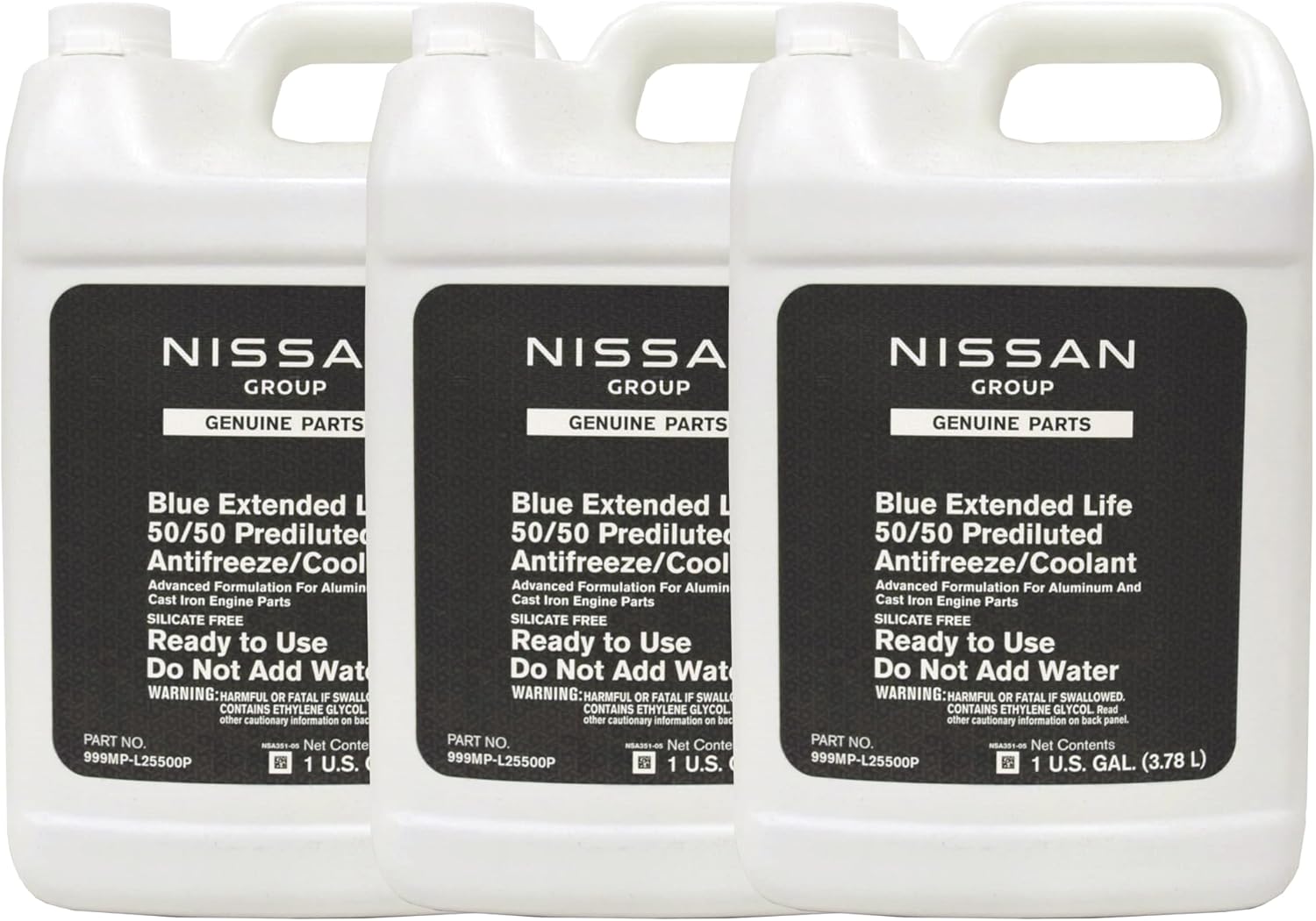
| Formulation | Blue long life antifreeze/coolant |
|---|---|
| Mixture | 50/50 premix |
| Volume | 3 Gallons |
| Service Interval | Drain and fill every 50,000 miles |
This three-gallon Nissan long-life blue antifreeze comes premixed 50/50 so you can drain and refill a full cooling system without adding water. It is the same factory-style coolant used in Nissan vehicles and is formulated for long service intervals, with a recommended drain and fill every 50,000 miles. The product ships double sealed and includes a bittering agent for safety. In practice the large container is convenient for a complete radiator and heater core refill or for keeping spare supply on hand for frequent maintenance. The premix saves mixing time and reduces the risk of incorrect dilution when servicing the 2008-2013 Rogue. The container weight and bulk make it less convenient for one-person handling and storage, and the single 3-gallon pack is more than needed for partial top-offs.
Best for: People planning a full cooling-system drain-and-fill on a 2008–2013 Rogue or owners who perform frequent coolant maintenance and want a factory-matching premix on hand.
Less Ideal for: Drivers who only need occasional small top-ups or who prefer to buy smaller bottles for easier handling and storage.
- Three-gallon premix covers a full drain-and-fill without needing additional water
- Factory-formulated blue long-life coolant matched to Nissan specifications
- Long service interval with recommended drain and fill every 50,000 miles
- Comes double sealed for transit and includes a bittering agent for safety
- Large, heavy container can be awkward to lift and store for home mechanics
- Single pack is overkill for small top-offs or minor coolant additions
Verdict: Select this slot if you plan a full drain-and-fill, frequent maintenance, or want multiple gallons on hand to service the entire cooling system without multiple purchases.
Choosing the Right 2008-2013 Nissan Rogue Antifreeze: Key Factors to Consider
Coolant Type and Chemistry
The chemical base of an antifreeze determines how it protects metal surfaces and manages service life. For a 2008-2013 Nissan Rogue, compatibility with aluminum components is critical because many cooling-system parts are aluminum. Organic acid technology, inorganic additive technology, or hybrid formulations each offer different corrosion control approaches and maintenance intervals.
Choosing the right chemistry affects how frequently you need to change the coolant and whether you can mix new product with the existing fluid. Mixing incompatible chemistries can reduce corrosion protection and may lead to deposits or premature component wear. Always verify the coolant type recommended for your vehicle and prioritize products that clearly state compatibility with Nissan engine materials.
Freeze and Boil Protection
Freeze point and boiling point ratings dictate how well the coolant will protect the engine in extreme temperatures. For owners who drive a 2008-2013 Nissan Rogue in cold climates, a low freeze point prevents ice formation inside the block and radiator, which can cause cracks and coolant line damage. Boil-over resistance matters in hot weather and under heavy engine loads because it helps maintain system pressure and prevents vapor lock.
Look for performance specifications that show protectable temperature ranges at realistic coolant-to-water mixes, typically 50/50. Labels that list freeze and boiling points let you compare how much margin a product provides for winter and summer conditions.
Corrosion Inhibitor Package
The inhibitor package is what actively protects metal surfaces, gaskets, and solder joints from corrosion. In a Rogue that is several years old, internal corrosion can accelerate if the coolant lacks effective inhibitors or if inhibitors have been depleted. Good inhibitor packages slow electrochemical reactions, prevent pitting in aluminum components, and reduce scale formation.
When assessing options, consider how long the inhibitors are rated to last and whether the formula is designed for mixed-metal engines. Products that offer extended inhibitor life can reduce maintenance frequency, but only if the chemistry matches the vehicle's existing coolant or a complete flush is performed before switching.
Material Compatibility and Seal Safety
Antifreeze contacts many materials beyond metal, including rubber hoses, seals, plastic tanks, and the water pump. Some formulations can cause rubber to swell or harden, leading to leaks or hose failure in older Nissan Rogues. Ensuring compatibility reduces the risk of accelerated wear to hoses, O-rings, and the radiator cap.
Check product literature for explicit statements about rubber, plastic, and aluminum compatibility. For vehicles with original hoses and seals, a more neutral, OEM-compatible formula is often safer than a highly concentrated or experimental additive package.
Service Interval and Maintenance
Different antifreezes support different recommended service intervals. Traditional inorganic additive coolants may require more frequent changes, while long-life or organic acid coolants can extend drain intervals. For a 2008-2013 Nissan Rogue, consider whether you prefer a longer interval to minimize service or a conventional product that aligns with existing maintenance records.
Also consider the state of the current coolant. If the system has never been flushed, a full antifreeze flush may be advisable before switching chemistries. Maintenance needs include periodic testing of corrosion inhibitors and checking coolant concentration to retain proper freeze and boil protection.
Compatibility With Antifreeze Flush Procedures
When performing an antifreeze flush on a 2008-2013 Nissan Rogue, you need a product that works well with the chosen flush method. Some flush additives and cleaners are alkaline and can interact with certain long-life formulas if not thoroughly rinsed. Incomplete flushing can leave residual chemistry that reduces the effectiveness of the fresh coolant.
If you plan to use a chemical flush, select a coolant that explicitly tolerates standard flush procedures and follow the vehicle manufacturer's recommendations for draining and refilling. Proper flushing helps ensure the new antifreeze delivers its full corrosion protection and thermal performance.
How Coolant Age Affects Older Rogue Engines
Coolant degrades over time as inhibitors are consumed and contamination accumulates. For 2008-2013 Nissan Rogue owners, older coolant can mean reduced corrosion protection and buildup that restricts flow or blocks heater cores. Regularly testing coolant condition helps identify when a flush or replacement is needed.
Signs of degraded coolant include color change, visible particulates, a sweet odor, or overheating during normal driving. Monitoring coolant concentration and inhibitor levels can prevent small issues from turning into costly repairs like corroded radiators or water pump failures.
- Test for freeze point using a refractometer or hydrometer
- Inspect coolant color and clarity when the system is cool
- Watch for unexplained overheating or heater performance loss
Flushing the Cooling System: Timing and Best Practices
A proper antifreeze flush removes residual inhibitors and contaminants that reduce effectiveness. For a Rogue in the 2008-2013 range, consider a full flush when switching between different coolant chemistries or when coolant shows signs of contamination. Follow safe procedures: drain with the engine cool, open bleed points as needed, and refill to the correct level.
When flushing, avoid leaving mixing residues by running the system briefly with plain water to remove cleaners, then drain and refill with the chosen antifreeze blend. Proper bleed and pressure checks after refill help eliminate air pockets that can cause hot spots or poor heater performance.
- Perform a pressure check after refill to confirm no leaks
- Follow vehicle-specified coolant concentration ratios
- Dispose of old coolant responsibly according to local rules
Winter Preparation Tips for Rogue Owners
If you drive your 2008-2013 Rogue in cold regions, confirm the coolant concentration provides adequate freeze protection. A 50/50 mix is common, but more extreme climates may require a higher antifreeze ratio. Check hoses, clamps, and the radiator cap to reduce the chance of leaks that are harder to spot in winter.
Also inspect the thermostat and heating system before cold weather arrives. A well-maintained cooling system ensures reliable cabin heat and reduces stress on the engine during cold starts.
- Verify freeze point at or below expected winter lows
- Replace worn hoses and clamps before winter
- Test the heater core for proper flow and warmth
Mixing Coolants: Risks and When to Avoid It
Mixing different coolant chemistries can neutralize inhibitor packages and produce sludge. For a 2008-2013 Nissan Rogue, avoid topping up with an unknown formula unless you know it is compatible with the existing coolant. If compatibility is uncertain, perform a full drain and flush before refilling.
When topping off between full services, use the same type and chemistry as the current coolant. If the vehicle's service history is unclear, a conservative approach is to flush and refill with a known, compatible product.
- Confirm existing coolant chemistry before topping up
- When in doubt, flush and refill instead of mixing
- Use manufacturer-recommended concentration ratios
Tools and Supplies for DIY Coolant Service
Servicing the cooling system on a Rogue requires a few specialty items beyond common hand tools. Useful tools include a coolant refractometer or hydrometer for checking concentration, a pressure tester to find leaks, and a proper funnel and bleed tool to remove air pockets during refill. Also plan for a drain pan sized to capture the system volume safely.
Selecting the right replacement hoses, clamps, and a new radiator cap if needed can save time and reduce callbacks. Follow safe handling practices and dispose of drained coolant at an appropriate recycling facility.
- Refractometer or hydrometer
- Cooling system pressure tester
- Large drain pan and proper funnel
Still looking for the perfect fit?
Select your Nissan Rogue configuration to see the most relevant Antifreezes recommendations
How We Chose the Best 2008-2013 Nissan Rogue Antifreeze
We prioritized products that address the specific needs of 2008-2013 Nissan Rogue cooling systems. Our editorial filters favored antifreezes with clear compatibility information for Nissan engines, robust corrosion inhibitor packages, and verified freeze/boil protection levels appropriate for varied climate conditions. We also looked for formulas that support common service intervals for this vehicle and that are designed to be safe with aluminum radiators, water pumps, and seals used on the Rogue.Evaluation criteria included freeze point and boiling point performance under typical mixed coolant ratios, the longevity and type of corrosion inhibitors, material compatibility with aluminum and rubber components, and whether the product supports standard drain-and-fill intervals or extended service intervals. We excluded products without clear specifications, ambiguous compatibility claims, or formulations known to be incompatible with common Nissan coolant mixes. The final list reflects a balance of protection, longevity, and fitment relevance for the 2008-2013 Rogue owner.
Our full evaluation process is outlined in our review methodology.
FAQ
What type of antifreeze does a 2008-2013 Nissan Rogue require?
It often depends on what has been used previously, but compatibility with aluminum engine components is essential. Verify the current coolant chemistry before changing types, and follow Nissan recommendations when available.
How often should I flush the coolant in a 2008-2013 Rogue?
Typical intervals vary by coolant type and usage. Traditional formulas may require more frequent changes while long-life coolants can extend intervals. Check inhibitor condition and the vehicle's maintenance history to decide when to flush.
Can I add antifreeze concentrate directly to the radiator without draining?
Topping up with concentrate without checking the current mixture can result in an incorrect freeze point. For best results, measure existing concentration and adjust the mix or perform a drain and refill to achieve the recommended ratio.
Will switching antifreeze chemistry damage seals or hoses in my Rogue?
Switching chemistries can cause issues if incompatible products are mixed. To avoid problems, flush the system thoroughly before introducing a different chemistry and inspect hoses and seals for age-related degradation.
How do I check if my antifreeze still protects against corrosion?
Use test strips or a coolant tester that evaluates inhibitor levels and pH. If tests show depleted inhibitors or contamination, plan a flush and refill to restore proper corrosion protection.
Is there a difference between engine antifreeze and antifreeze coolant terms?
The terms are often used interchangeably. What matters is the product chemistry and specifications, such as freeze/boil points and inhibitor package, rather than the specific label wording.
Final Verdict
For a 2008-2013 Nissan Rogue, prioritize coolant compatibility with aluminum components, a robust inhibitor package, and appropriate freeze and boil protection for your climate. Decide between longer-life formulas and conventional coolants based on maintenance preferences and the condition of the current system. When switching chemistries, perform a full flush to avoid mixing incompatibilities and inspect hoses and seals during service.Ultimately, focus on protecting the cooling system from corrosion and temperature extremes to preserve engine life and heater performance. Choosing a coolant that matches the vehicle's needs and following proper service procedures will deliver the most reliable long-term results.
Explore More:
- Check out all Nissan Rogue parts & accessories
- Explore Fluids & Chemicals
- Browse all Accessories
