

Note: This article contains affiliate links. If you click on these links and make a purchase, I may earn a small commission at no extra cost to you. This helps support my research and content. Read my full affiliate disclosure here.
Maintaining the CVT in your Nissan Rogue starts with the right fluid. The correct Nissan Rogue CVT transmission fluid supports smooth gear transitions, reduces wear on internal parts, and helps prevent overheating during city driving or long highway runs. In this guide we shortlisted the seven best fluids suited for the Rogue CVT and evaluated them against the specific needs of this transmission type.You will see how each option measures up on compatibility, thermal performance, and wear protection so you can pick a fluid that matches your driving patterns and maintenance goals.
Looking for other parts? See all Nissan Rogue parts & accessories.
Top Picks at a Glance
| Best Overall Transmission Fluid The best all-around CVT fluid balancing performance and reliability | Nissan Genuine CVT-3 Transmission Fluid 5 Quart Jug |  |
| Best Premium Transmission Fluid Higher-end formulation with enhanced additives and longer service life | Idemitsu CVT Type N3 Transmission Fluid (1 qt) |  |
| Best Synthetic Transmission Fluid Full-synthetic CVT fluid for improved temperature stability and protection | MANNOL NS-3 Synthetic CVT Transmission Fluid, 4 L Bottle | 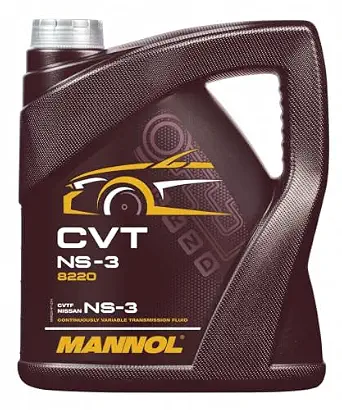 |
| Best OEM-Spec Transmission Fluid Meets factory specifications and approvals for guaranteed compatibility | Alpaca NS-3 Continuously Variable Transmission (CVT) Fluid, 4 Quarts |  |
| Best Long-Life Transmission Fluid Formulated for longer drain intervals and extended service schedules | ENEOS ECO CVT Fully Synthetic Transmission Fluid, 5 qt |  |
| Best Bulk Transmission Fluid Larger container sizes for frequent servicing or multiple vehicles | Nissan Genuine CVT-3 Transmission Fluid 999MP-NS300P (12 Quarts) |  |
1. Nissan Genuine CVT-3 Transmission Fluid 5 Quart Jug
Best Overall Transmission Fluid

| Liquid Volume | 5 Quarts |
|---|---|
| Item Form | Oil |
| Manufacturer | Nissan |
| Manufacturer Part Number | 999MP-CV0NS3 |
This genuine Nissan CVT-3 fluid is the factory-recommended lubricant for CVT gearboxes that specify the NS-3 formula. It is used when topping off or performing a fluid exchange in Nissan CVT-equipped vehicles and is formulated with friction modifiers and additives tuned for smooth belt and pulley engagement. In practice it delivers good low-temperature flow for smoother start-up behavior and maintains pressure and stability under higher operating temperatures, which helps preserve consistent shift feel. Because it is the manufacturer-specified fluid, it simplifies compatibility decisions and reduces the risk of incorrect friction characteristics that can affect CVT performance. The main limitation is that this is a vehicle-specific, factory-formulated fluid rather than a universal CVT product, so it must be used only where the NS-3 spec is called for and professional-level service is recommended for proper fill and level checks to avoid transmission harm.
Best for: Buyers who want the safest, factory-recommended CVT fluid for routine maintenance and worry-free compatibility when servicing a Nissan CVT vehicle.
Less Ideal for: Drivers looking for a multi-vehicle or universal CVT fluid option or those planning DIY work without proper tools for accurate fluid level and exchange.
- Factory-formulated to Nissan CVT NS-3 specification for correct friction behavior
- Good low-temperature fluidity for smoother cold starts
- Stabilized additives to help maintain pressure and consistent shift feel in heat
- Sold in a 5-quart jug suitable for a full service or multiple top-offs
- Must be used only where NS-3 specification is required so not a universal CVT fluid
Verdict: The best all-around transmission fluid for most buyers, balancing friction characteristics, longevity, and compatibility to deliver reliable CVT shifting and protection.
2. Idemitsu CVT Type N3 Transmission Fluid (1 qt)
Best Premium Transmission Fluid

| Manufacturer | Idemitsu |
|---|---|
| Item model number | 30041102-75000C020 |
| Item Weight | 1.9 pounds |
| Date First Available | February 1, 2019 |
Idemitsu CVT Type N3 is a purpose-built CVT fluid designed to meet Nissan CVT needs and to reduce shudder while protecting transmission internals. It is used as a direct fill or top-up for compatible Nissan continuously variable transmissions where a CVT-specific fluid is required. The formulation highlights frictional control to prevent judder, strong resistance to oxidation for longer fluid life, and anti-wear chemistry to protect gears and bearings under heavier use. It also claims good seal compatibility to limit leaks and keeps internals clean by resisting varnish and sludge. The practical benefits are smoother low-speed operation, longer service intervals compared with conventional fluids, and less risk of premature component wear during tow or repeated heavy driving. Limitations are that this is a single-quart retail pack intended for service or small top-ups, so buying multiple quarts is necessary for a full drain-and-fill, and it must be matched to Nissan CVT specifications rather than used across non-CVT transmissions.
Best for: Buyers who prioritize long-term transmission durability and smooth CVT operation and are prepared to spend for enhanced thermal stability and wear protection.
Less Ideal for: Drivers looking for a budget, bulk fluid option or those who need a non-CVT automatic fluid for other transmission types.
- Formulated specifically for Nissan CVT friction characteristics to reduce shudder.
- High resistance to oxidation and thermal breakdown for extended fluid life.
- Anti-wear additives protect gears and bearings under heavier use.
- Good seal compatibility to minimize leaks and condition seals.
- Helps maintain transmission cleanliness by resisting sludge and varnish deposits.
- Sold in single-quart bottles, so multiple units are required for complete fluid changes.
Verdict: The best premium transmission fluid for buyers willing to pay more for superior thermal stability, extended life, and improved wear protection under heavier use.
3. MANNOL NS-3 Synthetic CVT Transmission Fluid, 4 L Bottle
Best Synthetic Transmission Fluid

| Brand | MANNOL |
|---|---|
| Item Form | Oil |
| Unit Count | 135.25 Ounce |
| Liquid Volume | 4 Liters |
This MANNOL NS-3 synthetic CVT fluid is designed for continuously variable transmissions that call for NS-3 or equivalent Mitsubishi CVT specification. It is a full-synthetic formula intended to reduce shudder, resist foaming, and maintain consistent hydraulic pressure across a wide temperature range, which helps preserve smooth acceleration and shift feel. Typical use is a drain-and-fill or top-up during service intervals in CVT-equipped vehicles; the 4 liter bottle is large enough for a full fluid change on many compact crossovers. Notable features include low-temperature flow down to very cold starts, anti-wear additives to protect belts and pulleys, and seal compatibility to avoid swelling or leakage. In practice this offers quieter operation, reduced sludge buildup, and longer fluid life compared with conventional ATFs. Limitations are that it is formulated specifically to NS-3 compatibility, so buyers must confirm their vehicle requires that spec, and professional-level flushing or filter replacement may still be needed for heavily contaminated systems.
Best for: DIYers servicing CVT-equipped compact crossovers who prioritize stable shifting, improved high- and low-temperature performance, and longer fluid life compared with conventional oils.
Less Ideal for: Drivers who are unsure of their CVT fluid specification or those wanting a one-size-fits-all ATF should verify their vehicle's required spec or consider a different fluid.
- Formulated to NS-3/Mitsubishi CVT specification for direct compatibility with matching CVT systems
- Full synthetic base and anti-wear additives reduce belt and gear wear under stress
- Wide temperature range and low-temperature flow help preserve shift quality in cold starts
- Seal-compatible formulation reduces risk of swelling or leaks and helps maintain pressure balance
- Intended for vehicles that require NS-3 compatibility so it is not universal across all CVTs
Verdict: The best synthetic transmission fluid for DIYers who want enhanced high- and low-temperature performance, reduced breakdown, and consistent shifting compared with conventional oils.
4. Alpaca NS-3 Continuously Variable Transmission (CVT) Fluid, 4 Quarts
Best OEM-Spec Transmission Fluid

| Liquid Volume | 4 Quarts |
|---|---|
| Viscosity | 5W-30 |
| Material | Synthetic |
| Specific Uses For Product | CVT Transmissions in Nissan and Infiniti Vehicles |
| Unit Count | 128.0 Fluid Ounces |
This Alpaca NS-3 CVT fluid is a synthetic transmission oil sold in a four-quart bottle and intended for use in Nissan and Infiniti continuously variable transmissions that require NS-3 specification fluid. In use it replaces factory fluid during service or full drain-and-fill jobs and is aimed at preserving the friction characteristics CVT units need for smooth belt or chain operation. The product lists 128 fluid ounces and a 5W-30 viscosity while noting synthetic base material and explicit compatibility with Nissan/Infiniti CVTs. For routine maintenance it should provide consistent lubrication, heat resistance, and stable performance under normal driving loads. Limitations are that buyers must confirm NS-3 requirement for their specific model and model year before purchasing and that specialty CVT additives or dealer-specific formulations may still be recommended for certain warranty-sensitive repairs. Bottle format makes pouring and storing straightforward, but professional-level shop procedures may still call for dealer-specified products.
Best for: Buyers who want a factory-spec compatible CVT fluid that matches Nissan/Infiniti NS-3 requirements and prioritize maintaining correct friction and shift feel during routine transmission servicing.
Less Ideal for: Drivers looking for a universal or multi-vehicle transmission fluid, or those who need dealer-branded fluids specifically mandated by a warranty or service advisor.
- Formulated to NS-3 specification for Nissan and Infiniti CVTs
- Synthetic base offers stable high-temperature performance
- Supplied in a four-quart bottle suitable for a full service
- 5W-30 viscosity aligns with common CVT fluid requirements
- Requires buyer confirmation that NS-3 is the correct spec for their specific vehicle and year
Verdict: The best OEM-spec transmission fluid for buyers who prioritize exact factory specifications and approvals to ensure correct friction properties and warranty-friendly compatibility.
5. ENEOS ECO CVT Fully Synthetic Transmission Fluid, 5 qt
Best Long-Life Transmission Fluid

| Brand | Eneos |
|---|---|
| Liquid Volume | 5 Quarts |
| Compatible with Vehicle Type | Car |
| Automotive Fit Type | Vehicle Specific Fit |
ENEOS ECO CVT is a fully synthetic continuously variable transmission fluid formulated to match many Japanese CVT specs and intended for extended service life. It is typically used as a direct-fill or service fluid for belt- and chain-type CVTs and lists compatibility with several Nissan CVT specifications (NS-1/NS-2/NS-3), so it can be used when a Nissan-specified CVT fluid is required. The formula emphasizes low-temperature flow, high-temperature stability, and deposit control, which helps maintain smooth belt and pulley operation and reduces transmission noise in real-world driving. ENEOS notes its internal testing shows noise reduction and claims cleaning action to help prolong transmission life. Important limitations: it is not recommended for certain hybrid eCVT designs, toroidal or dry-type CVTs, and compatibility should be confirmed against the Rogue CVT spec in the owner's manual before use.
Best for: Owners who prioritize longer drain intervals and a fluid engineered to resist oxidation and deposit formation in conventional belt- or chain-type CVTs and who want a factory-quality replacement aligned to Nissan CVT specs.
Less Ideal for: Drivers of vehicles using hybrid eCVT systems, toroidal or dry-type CVTs, or anyone who cannot confirm their Rogue requires an NS-series CVT fluid should choose a different fluid or consult a dealer.
- Fully synthetic formula aimed at oxidation resistance and thermal stability
- Lists direct compatibility with Nissan CVTF specifications (NS-1/NS-2/NS-3)
- Low-temperature flow and additives designed to reduce transmission noise and deposits
- Packaged in a 5 quart bottle suitable for service fills or top-offs
- Not recommended for hybrid eCVT, toroidal, or dry-type transmissions
- Manufacturer compatibility notes require verifying exact Nissan Rogue CVT spec before use
Verdict: The best long-life transmission fluid for owners who prefer extended service intervals and fluids engineered to resist oxidation and maintain performance over more miles.
6. Nissan Genuine CVT-3 Transmission Fluid 999MP-NS300P (12 Quarts)
Best Bulk Transmission Fluid

| Unit Count | 384 Fluid Ounces |
|---|---|
| SAE J300 Viscosity Grade | 0W-20 |
| Item Form | Liquid |
| Manufacturer | Nissan |
This 12-quart package of Nissan Genuine CVT-3 transmission fluid supplies the factory-specified fluid for Nissan CVT transmissions and is sized for frequent servicing or multiple vehicle jobs. It is typically used by DIY mechanics and shop technicians who need factory-recommended fluid for CVT fill and drain procedures; the large drum reduces trips to buy single bottles and keeps a dedicated CVT fluid on hand. Notable features are that it is factory branded, labeled as CVT-3 formulation, and offered in a drum-sized unit rather than small bottles. Practical benefits include correct fluid chemistry for Nissan CVT systems when the owner's manual calls for CVT-3, a lower per-quart cost compared with single-quart purchases, and enough volume to service several transmissions without repackaging. Important limitations are that it must be stored and handled properly to avoid contamination and that it is specific to CVT-3 applications, so it is not a universal transmission fluid for conventional automatics or manual gearboxes.
Best for: Buyers who regularly service Nissan CVT-equipped vehicles or run a small shop and prioritize having factory-specified CVT fluid on hand to speed jobs and reduce per-quart cost.
Less Ideal for: Casual owners who only need a single CVT fluid top-up or drivers of non-CVT vehicles seeking a universal transmission fluid.
- Factory-branded CVT-3 formulation matched to Nissan CVT requirements
- Large 12-quart quantity suitable for multiple services or high-frequency use
- Drum packaging lowers per-quart cost versus individual bottles
- Fluid is specific to CVT-3 applications and not suitable for non-CVT transmissions
Verdict: The best bulk transmission fluid for DIY mechanics and shop users who perform frequent fluid changes or service multiple vehicles and want lower per-quart cost.
Choosing the Right Nissan Rogue CVT Transmission Fluid: Key Factors to Consider
CVT Compatibility and Specification Approval
CVT units rely on specific friction characteristics and additive packages that differ from conventional automatics. Using a fluid not specified for your Nissan Rogue CVT can change belt or chain friction, leading to shudder, slippage, or premature wear. Always check that the fluid formulation matches the CVT specification recommended for the Rogue and lists compatibility with Nissan CVT requirements.
Specification approval matters because formulations approved or designed for CVTs balance friction modifiers and viscosity so the transmission operates quietly and smoothly. For DIY or shop-based maintenance, choosing a fluid with explicit CVT compatibility reduces the risk of drivability issues after a transmission fluid change.
Friction Characteristics and Shudder Resistance
Friction behavior determines how smoothly the CVT transitions under varying loads. Fluids with the wrong friction profile can cause shudder or judder during acceleration or at cruising speeds. For the Nissan Rogue CVT, look for fluids engineered to provide consistent clutch engagement across temperature ranges.
Shudder resistance is often a function of both friction modifiers and the stability of those additives over time. Fluids that maintain stable friction properties through heat cycles help preserve a vibration-free driving experience and reduce wear on the belt or chain surfaces.
Thermal Stability and Oxidation Resistance
CVTs can run at elevated temperatures, especially during towing, heavy city traffic, or hot-weather driving. Fluids with strong thermal stability resist viscosity breakdown and oxidation, which preserves lubrication and prevents formation of sludge or varnish that can impair valve operation.
Oxidation-resistant formulations extend service intervals and protect internal components from corrosive byproducts. For owners who frequently drive in stop-and-go conditions or tow light loads with their Rogue, prioritize fluids with documented high-temperature performance.
Wear Protection and Additive Package
A CVT fluid's additive package should include robust anti-wear agents to protect bearings, gear teeth, and belt or chain contact surfaces. Because CVTs transmit power through a belt or chain under continuous variable ratios, surface protection is key to longevity.
The right anti-wear chemistry helps minimize metal-to-metal contact and reduces pitting or scoring. Evaluate fluids that advertise enhanced wear protection and that provide technical details about the types of additives used to achieve that protection.
Service Life and Maintenance Interval Impact
Some CVT fluids are formulated for extended drain intervals while others are intended for more frequent changes. Service life affects overall maintenance costs and how often you need fluid replacement. A longer-lasting fluid can be an advantage if it maintains performance and compatibility over time.
Consider the recommended transmission fluid change interval for the Nissan Rogue CVT and how the chosen fluid aligns with or extends that interval. If you do a transmission fluid change yourself, factor in the ease of obtaining the correct fluid and recommended service procedures.
Cold-Weather Flow and Start-Up Protection
Viscosity at low temperatures affects how quickly the CVT receives protection during cold starts. Fluids that flow well at low temperatures reduce wear during initial movement and help maintain smooth operation until the transmission reaches operating temperature.
If you live in a cold climate, prioritize fluids with proven low-temperature performance and fast shear recovery to ensure the Rogue CVT shifts smoothly from the first mile. Cold-flow characteristics also influence fuel efficiency and drivability in daily commuting.
When To Change CVT Fluid In A Nissan Rogue
Nissan recommends inspecting and changing CVT fluid at intervals based on driving conditions and mileage. Regular fluid changes prevent contamination buildup and preserve the friction and thermal properties the transmission needs to operate properly. Owners who frequently tow, drive in heavy traffic, or operate in mountainous terrain should consider earlier changes.
A proper fluid change typically involves warming the vehicle, draining the old fluid, and refilling to the correct level using the specified fluid type. Ensuring correct fill level and using the right fluid are critical because overfill or underfill can cause shifting issues or internal pressure problems.
- Inspect fluid for dark color or burnt smell as signs of degradation
- Follow Nissan-recommended intervals as a baseline
- Adjust frequency for heavy-duty or extreme driving conditions
DIY Tips For A Successful Transmission Fluid Change
If you plan to change the CVT fluid yourself, use a clean workspace and the correct tools to avoid contamination. Warm the engine to operating temperature before draining to ensure most of the old fluid flows out. Work carefully around the drain and fill points to prevent introducing dirt.
Use a calibrated method for refilling to the factory-specified level. After refilling, cycle the transmission through its range per service instructions to allow trapped air to escape and verify the fluid level again. Keep records of service dates and mileage for future maintenance planning.
- Warm vehicle before draining to improve old fluid evacuation
- Use the manufacturer-recommended fill procedure and level checks
- Cycle the transmission through gears to remove air pockets before final level check
How Fluid Choice Affects Fuel Economy And Drive Feel
The right CVT fluid maintains stable viscosity and friction behavior, which helps the transmission operate at peak efficiency. Fluids with appropriate low-temperature flow and low shear loss can slightly improve fuel efficiency by reducing parasitic losses in the gearbox.
Drive feel is influenced by how consistently the fluid delivers friction characteristics under load. A stable fluid reduces hesitation and unwanted vibration, delivering a smoother acceleration curve and predictable response.
- Low shear-loss fluids help maintain intended viscosity under load
- Stable friction modifiers support smooth acceleration and fewer vibrations
Signs Your Nissan Rogue CVT Fluid Needs Attention
Be alert for symptoms like shuddering during acceleration, delayed or harsh engagement, slipping under load, or a noticeable burning smell from the transmission area. These issues can indicate degraded fluid or contamination affecting friction and lubrication.
Routine visual inspection of fluid color and smell provides early clues. Dark, murky fluid or a burnt odor typically signals oxidation or overheating. Address signs promptly to prevent progressive damage to belts, pulleys, or clutches.
- Shudder or judder during acceleration
- Delayed engagement or slipping
- Darkened fluid color or burnt smell
Choosing Between Longer-Drain And Frequent-Change Strategies
Longer-drain fluids reduce the frequency of service but must reliably maintain friction and thermal protection for the extended interval. If you prioritize lower maintenance frequency and the fluid has verified CVT compatibility, longer-drain fluids can be beneficial.
Frequent-change strategies reduce the chance of contamination and let you reset fluid condition more often, which can be advantageous for high-mileage Rogues or vehicles used in severe conditions. Evaluate your driving habits and maintenance preferences when deciding which approach to use.
- Longer-drain: lower maintenance frequency, requires proven stability
- Frequent-change: better control over fluid condition in severe use
Still looking for the perfect fit?
Select your Nissan Rogue configuration to see the most relevant Transmission Fluids recommendations
How We Chose the Best Nissan Rogue CVT Transmission Fluid
We prioritized criteria that matter for CVT-equipped Nissan Rogue owners and that affect real-world transmission life and drivability. Compatibility with Nissan CVT specifications was the first filter, favoring fluids formulated to meet or exceed manufacturer-recommended viscosity and additive profiles. Thermal stability and shear resistance were next, because CVTs run hot and require fluids that maintain viscosity under sustained load and temperature.Wear protection and friction characteristics were evaluated to ensure smooth belt or chain operation and consistent clutch engagement. Fluid longevity and oxidation resistance were considered to reduce service frequency and protect internal components over time. We also looked at manufacturer technical data and formulation transparency to verify claimed properties.We excluded fluids intended solely for conventional automatic or manual transmissions unless their specifications explicitly listed compatibility with NV-based CVT systems. Fluids lacking clear performance data or CVT compatibility were not considered. The result is a focused list of seven fluids that meet the chemical and performance demands of the Nissan Rogue CVT.
Our full evaluation process is outlined in our review methodology.
FAQ
Can I use conventional automatic transmission fluid in my Nissan Rogue CVT?
Usually not. CVT units require fluids with specific friction and additive properties. Using a conventional automatic transmission fluid not rated for CVT use can cause shudder or premature wear. Always choose a fluid specified for CVT compatibility.
How often should I change the CVT fluid in a Nissan Rogue?
That depends on driving conditions. For normal driving, follow Nissan's recommended interval as a baseline. For frequent towing, heavy traffic, or mountainous driving, consider shorter intervals and inspect the fluid more often.
Will a higher-performance CVT fluid extend my transmission's life?
Possibly. Fluids with better thermal stability and anti-wear additives can reduce degradation and protect internal components over time. However, longevity also depends on correct service procedures, proper fill level, and driving habits.
Can I top off my CVT fluid with a different brand?
Topping off with a fluid that matches the CVT specification is acceptable in small amounts, but mixing dissimilar formulations can alter friction characteristics. For best results, use the same type or a clearly compatible fluid when topping off.
What are the risks of delaying a transmission fluid change?
Delaying fluid changes increases the chance of oxidation, varnish, and contamination, which can impair valve operation and friction stability. Over time, this accelerates wear on belts, pulleys, and clutches and can lead to costly repairs.
Does cold weather require a different CVT fluid choice?
Cold weather highlights the importance of low-temperature flow properties. A fluid that maintains good viscosity at low temperatures reduces start-up wear and improves early driveability. Choose a fluid with documented cold-flow performance if you frequently operate in freezing conditions.
Final Verdict
For Nissan Rogue CVT owners, prioritize fluids that explicitly state CVT compatibility, maintain stable friction characteristics, and offer strong thermal and anti-wear protection. Your decision should balance maintenance frequency, driving conditions, and whether you need enhanced high-temperature stability or better cold-start flow.Ultimately, choose a fluid that aligns with the Rogue CVT specifications and your usage patterns. That approach minimizes drivability issues, extends transmission life, and gives you the most reliable long-term outcome.
Explore More:
- Check out all Nissan Rogue parts & accessories
- Explore Fluids & Chemicals
- Browse all Accessories
