

Note: This article contains affiliate links. If you click on these links and make a purchase, I may earn a small commission at no extra cost to you. This helps support my research and content. Read my full affiliate disclosure here.
If you own a 2008-2013 Nissan Rogue, the transmission fluid you use directly affects shift quality, component life, and long-term reliability. Using the correct fluid helps the transmission operate at the intended temperatures and pressures, reduces wear, and can prevent costly repairs down the road. This guide covers seven top-rated transmission fluids specifically suited to the 2008-2013 Rogue, with attention to fluid compatibility, heat tolerance, and how fluids influence shift feel.Below we summarize the shortlisted fluids and explain the technical criteria we considered so you can pick the right option for routine service, high-mileage maintenance, or towing and heavier duty use. Read on for the evaluation factors and practical advice for changing fluid in this Rogue model range.
Looking for other parts? See all Nissan Rogue parts & accessories.
Top Picks at a Glance
| Best Overall Transmission Fluid Top all-around CVT fluid that balances OEM spec and performance | Idemitsu CVT Type N (NS-2) Transmission Fluid, 5 qt |  |
| Best Budget Transmission Fluid Low-cost CVT/ATF option that still meets basic shifting needs | Valvoline CVT Full Synthetic Continuously Variable Transmission Fluid, 1 qt |  |
| Best OEM Nissan Fluid Factory-specified Nissan CVT/ATF in OEM packaging for exact fitment | Nissan CVTF I-NS2 Continuously Variable Transmission Fluid (5 Quart) |  |
| Best NS-2 Spec CVT Fluid Fluids formulated to the NS-2/Type N CVT specification for compatibility | Idemitsu CVT Type N (NS-2) Transmission Fluid, 1 Quart |  |
| Best Full‑Synthetic CVT Fluid Fully synthetic CVT fluid for improved temperature stability and longevity | ENEOS ECO CVT Fully Synthetic Transmission Fluid, 1 Quart (6-Pack) |  |
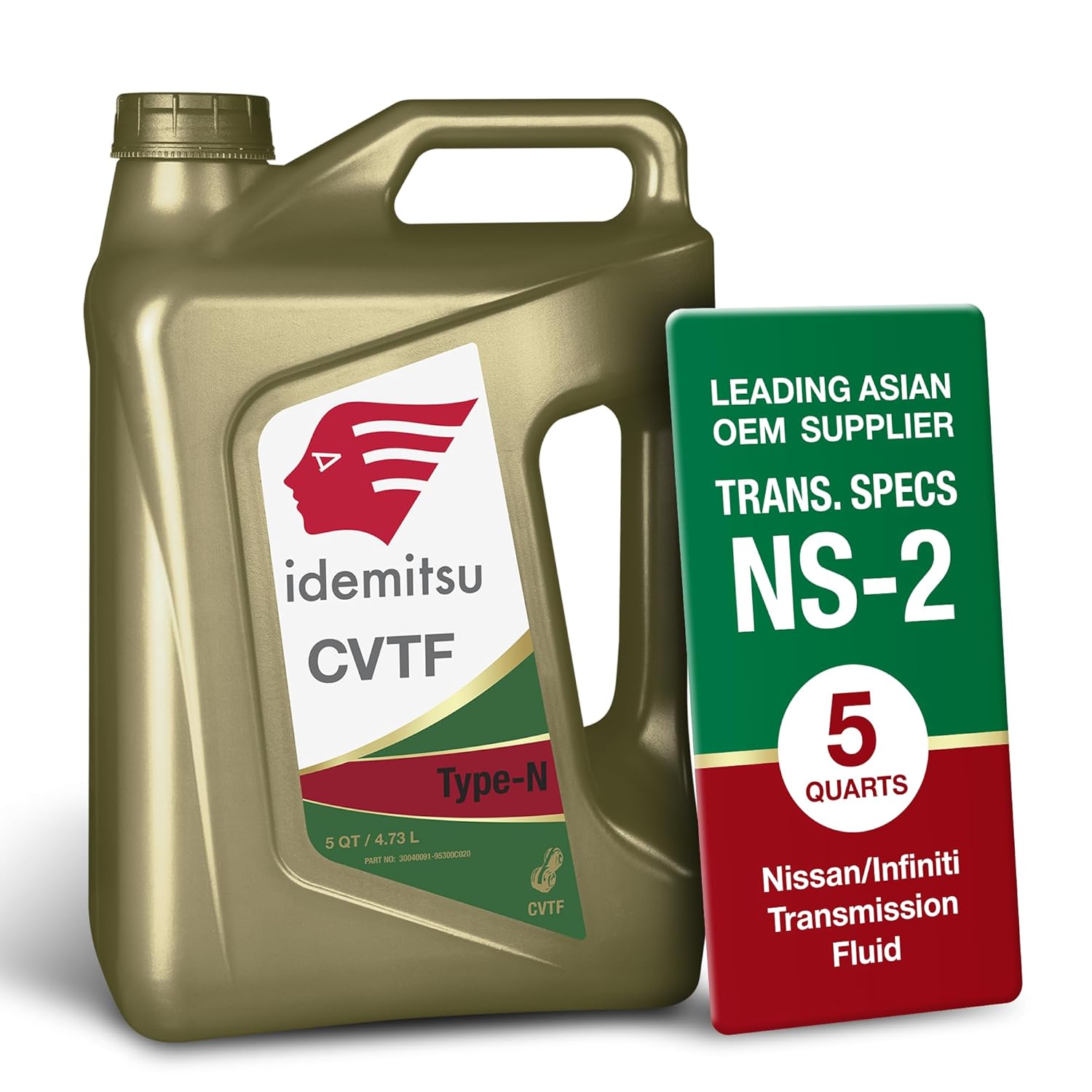
1. Idemitsu CVT Type N (NS-2) Transmission Fluid, 5 qt
Best Overall Transmission Fluid
| Material | Synthetic |
|---|---|
| Liquid Volume | 5 Quarts |
| Viscosity | 5w-30 |
| Flash Point | 180 Degrees Celsius |
| Specific Uses For Product | Automobile Transmission Lubrication, Maintenance of CVT Transmissions |
Idemitsu CVT Type N (NS-2) is a synthetic transmission fluid designed to replicate factory friction behavior in Nissan and Infiniti CVT gearboxes. It is typically used for fluid changes and top-ups during routine service on vehicles specified for Type N/NS-2 fluids. The formula emphasizes anti-shudder performance and precise friction control so shifting and belt engagement remain smooth under higher torque loads. It also includes anti-wear and deposit-control chemistry to protect pulleys and metal surfaces from corrosion and buildup, plus good low-temperature flow for easier cold starts. Practical benefits for a DIYer include factory-like performance expectations and a 5-quart jug that covers a full drain and fill on many CVT services. The main limitations are that it is specific to CVTs requiring the Type N/NS-2 specification and will not be appropriate for conventional automatic or continuously variable transmissions with different manufacturer requirements.
Best for: A DIY maintainer of 2008–2013 Nissan Rogue CVTs who wants a factory-compatible refill that preserves original shift feel and protects belt-driven CVT components.
Less Ideal for: Drivers with conventional automatic transmissions or CVTs specified to a different fluid chemistry should choose a fluid matched to their transmission specifications.
- Formulated to match Nissan/Infiniti CVT Type N/NS-2 friction characteristics for anti-shudder performance
- Synthetic base with anti-wear and deposit-control additives to protect belts, pulleys, and metal surfaces
- Good low-temperature fluidity for easier cold starts and consistent viscosity control under heat
- Available in a 5-quart jug suitable for a full CVT service without needing multiple bottles
- Intended specifically for CVTs that call for Type N/NS-2 fluid so it is not a universal transmission fluid
Verdict: Choose this slot if you want the broadly recommended CVT fluid that most closely matches factory friction, protections, and long-term reliability for DIY servicing.
2. Valvoline CVT Full Synthetic Continuously Variable Transmission Fluid, 1 qt
Best Budget Transmission Fluid

| Item Form | Liquid |
|---|---|
| Specific Uses For Product | CVT transmission protection and optimization in automatic vehicles |
| Material | Synthetic |
| SAE J300 Viscosity Grade | 10W |
This Valvoline CVT fluid is a full synthetic formula intended for use in belt and chain-driven continuously variable transmissions like those in the 2008–2013 Nissan Rogue. It is formulated with shear-stable viscosity modifiers, anti-wear additives, and friction modifiers to promote smooth shifting, improved torque transfer, and anti-shudder protection during everyday driving. In practice it is used the same way as other CVT fluids: drain and refill or top off as specified by the vehicle manufacturer. The 1 quart bottle is convenient for DIY routine services or for topping up between services. Because it is a general-purpose CVT fluid rather than a vehicle-specific specialty fluid, it offers solid protection for routine maintenance but does not claim extended drain intervals or high-performance racing-level protections. If your Rogue needs a standard CVT service solution that restores clutch feel and reduces shudder without specialty additives, this product is an appropriate, easy-to-use choice.
Best for: Owners looking for an affordable, full synthetic CVT fluid to perform routine maintenance on a 2008–2013 Nissan Rogue who prioritize dependable day-to-day protection over specialty performance claims.
Less Ideal for: Drivers needing factory-specified OEM specialty fluids, extended drain intervals, or high-mileage formulations should consider manufacturer-recommended or specialty alternatives.
- Full synthetic formula with shear-stable viscosity modifiers for consistent performance
- Formulated specifically for belt and chain-driven CVTs to help smooth shifting and reduce shudder
- Anti-wear additives and metal-on-metal protection to support transmission longevity
- Convenient 1 quart bottle size suitable for DIY top-offs and routine services
- Not marketed as a vehicle-specific OEM-matching specialty fluid for extended service intervals
Verdict: Pick the budget slot when you need an inexpensive fluid that will get the job done for routine service without specialty performance claims.
3. Nissan CVTF I-NS2 Continuously Variable Transmission Fluid (5 Quart)
Best OEM Nissan Fluid

| Specification | CVTF I-NS2 |
|---|---|
| Unit Count | 160 Fluid Ounces |
| Material | Synthetic |
| Part Number | 8542047910 |
This is the factory-spec CVTF I-NS2 transmission fluid supplied by Nissan for compatible CVT-equipped vehicles. It is designed to deliver the friction characteristics, thermal stability, and wear protection Nissan specifies for smooth belt or chain operation in a CVT. Typical use is a full service or top-up during scheduled maintenance where the vehicle owner or technician needs the exact factory formulation to preserve shifting behavior and transmission longevity. The product comes in a 5-quart synthetic bottle that replaces earlier Nissan part numbers and is intended to be a direct match for Nissan CVT service recommendations. Because it is the manufacturer formulation, it reduces the risk of improper frictional properties that can alter CVT feel or cause premature wear, but buyers should verify compatibility against the vehicle VIN or owner’s manual before use. This fluid is focused on matching factory requirements rather than offering aftermarket performance additives or cross-vehicle versatility.
Best for: Buyers who prioritize using the manufacturer-recommended fluid to preserve original CVT shift feel and longevity during scheduled maintenance on their Nissan vehicle.
Less Ideal for: Shoppers looking for a universal aftermarket CVT fluid with alternate friction additives or those who need a formulation for non-Nissan transmissions should consider other options.
- Genuine Nissan formulation matched to factory CVT friction and wear requirements
- Synthetic base provides thermal stability for consistent performance under load
- Supersedes earlier Nissan part numbers for straightforward replacement and fitment
- Supplied in a 5-quart container suitable for a full service refill
- Intended only for Nissan CVT systems that require NS-2 specification and not a universal CVT fluid
Verdict: Use this slot if you prefer factory-formulated fluid sold to meet the transmission maker’s exact specifications for friction characteristics and compatibility.
4. Idemitsu CVT Type N (NS-2) Transmission Fluid, 1 Quart
Best NS-2 Spec CVT Fluid

| Unit Count | 32.0 Fluid Ounces |
|---|---|
| Viscosity | 10W |
| Upper Temperature Rating | 185 Degrees Celsius |
| Flash Point | 180 Degrees Celsius |
| Material | Synthetic |
This Idemitsu CVT Type N fluid is formulated specifically for transmissions that require the NS-2/Type N specification and is sold as a one-quart synthetic bottle. It is designed to control friction precisely to prevent shudder in belt-type CVTs and to provide stable viscosity across temperature extremes for smoother starts and consistent belt and pulley engagement. The fluid also includes anti-wear and deposit-control additives to protect internal components and resist corrosion. In practical use it replaces factory-spec fluid during service or refresh intervals, reducing the chance of transmission judder and maintaining shift feel in vehicles tuned to NS-2 requirements. Limitations are typical for a single-quart retail package: a full service may require multiple quarts and professional disposal of drained fluid. The formula is focused on NS-2 compatibility so it should not be substituted where a different CVT spec is required.
Best for: Buyers whose transmissions specify the NS-2/Type N CVT fluid and who prioritize restoring or maintaining factory friction characteristics and anti-shudder performance.
Less Ideal for: People looking for a universal CVT fluid or a different manufacturer specification should choose a product matched to their transmission’s required spec instead.
- Engineered to NS-2/Type N friction characteristics to reduce CVT shudder
- Synthetic formulation for stable viscosity and performance across temperatures
- Contains anti-wear and deposit-control additives to protect belts, pulleys, and metal surfaces
- Sold in a convenient one-quart bottle for single-service top-ups or partial drains
- One-quart packaging may require purchasing multiple bottles for a full fluid change
Verdict: Select this pick when your transmission calls for an NS-2/Type N specification and you want a product engineered to those friction and anti-shudder requirements.
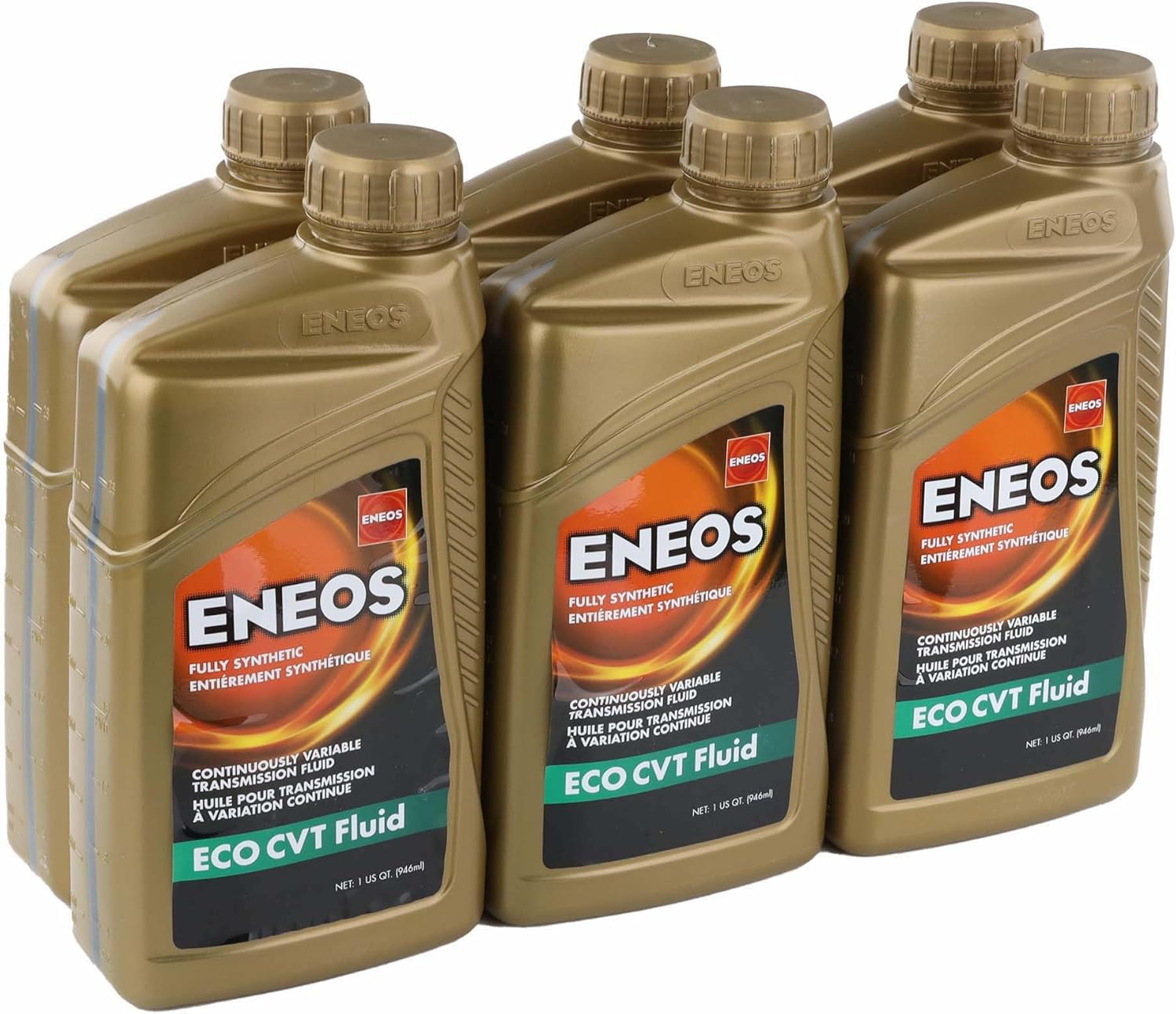
5. ENEOS ECO CVT Fully Synthetic Transmission Fluid, 1 Quart (6-Pack)
Best Full‑Synthetic CVT Fluid
| Compatible with Vehicle Type | Car |
|---|---|
| Automotive Fit Type | Vehicle Specific Fit |
| Liquid Volume | 1 Quarts |
| Included Components | 1 Quart, 6 Pack |
This ENEOS ECO CVT fluid is a fully synthetic CVT oil developed to meet many Asian manufacturer specifications for belt and chain type continuously variable transmissions. It is typically used for fluid service and top-ups where manufacturer compatibility calls for Toyota CVTF TC/FE, Honda/Acura CVTF/HCF-2, Nissan NS-1/NS-2/NS-3, Mazda CVTF 3320, Mitsubishi J-series, or Subaru CVTF specs. The formula emphasizes low-temperature responsiveness, high-temperature stability, and additives to help clean and maintain transmission internals while reducing noise. In practice that means smoother, quieter operation and a fluid that resists viscosity breakdown under heat and load better than conventional oils. Important limitations: it is not recommended for Toyota hybrid eCVT, Nissan Extroid CVT, toroidal, or dry-type CVTs, so confirm the Rogue's specific CVT designation before use. The six-quart pack suits a service or two without buying individual bottles, and the product is positioned as a factory-quality, fuel-efficient CVT fluid rather than a racing-grade specialty oil.
Best for: Drivers who prioritize a fully synthetic CVT fluid that holds viscosity at temperature extremes and supports longer service intervals for belt or chain type CVTs in Asian vehicles.
Less Ideal for: People with vehicles using hybrid eCVT, Extroid, toroidal, or dry-type continuously variable transmissions should seek a product specified for those systems instead.
- Fully synthetic formula designed for CVT applications to improve thermal stability and oxidation resistance
- Meets a wide range of Asian CVT specifications including Nissan NS-1/NS-2/NS-3 and Toyota CVTF TC/FE
- Formulation targets reduced transmission noise and helps clean internal components
- Sold as a multi-quart pack suitable for multiple services
- Not compatible with certain CVT types such as Toyota hybrid eCVT, Nissan Extroid CVT, toroidal, or dry-type CVTs
Verdict: Opt for this slot when you want a fully synthetic formulation that resists oxidation, maintains viscosity at extremes, and can extend service intervals under heavier use.
Choosing the Right 2008-2013 Nissan Rogue Transmission Fluid: Key Factors to Consider
Manufacturer Specification Compatibility
Confirming compatibility with Nissan's recommended specifications is the first and most important step. The wrong fluid chemistry can change friction characteristics and lead to harsh shifting, slipping, or premature wear. For the 2008-2013 Rogue, that means using fluids that explicitly reference the correct Nissan or OEM approval, or that match the documented viscosity and additive profile for the vehicle's transmission.
Compatibility also affects warranty considerations and future service flexibility. Using a fluid that does not meet the specified standard can complicate diagnostics and increase the risk of costly internal damage. When in doubt, consult the vehicle's service manual or a qualified technician to verify which spec the transmission requires before selecting a fluid.
Fluid Type and Transmission Design
Different model years of the Rogue may use variations of continuously variable transmissions or automatic transmissions; selecting a fluid formulated for the specific transmission design is critical. CVT systems rely on a narrow friction band and specialized additives to protect belts or chains, while traditional automatics need fluids that manage clutch pack friction and hydraulic control. Choosing the right fluid type ensures proper pressure control and engagement behavior.
Using a fluid intended for a different transmission architecture can cause slippage, shocky shifts, overheating, or accelerated component wear. Make sure the fluid you pick is categorized for the correct transmission type used in your 2008-2013 Rogue.
Thermal Stability and High-Temperature Performance
Transmission fluid must maintain viscosity and protective properties as it heats up during operation. Fluids with superior thermal stability resist oxidation and varnish formation, which helps keep valve bodies and clutch surfaces clean. For owners who drive in hot climates, tow, or frequently encounter stop-and-go traffic, selecting a fluid with strong high-temperature performance reduces the risk of breakdown under load.
Lower-quality fluids can thin excessively or lose additives when exposed to repeated thermal cycling, leading to loss of hydraulic control and increased wear. Look for fluids with documented oxidation resistance and stable viscosity indices to ensure consistent performance over service intervals.
Friction Characteristics and Shift Quality
Friction modifiers and additive packages determine how smoothly gears and clutches engage. The right balance delivers consistent, predictable shifts without slipping or harsh engagement. For the 2008-2013 Rogue, fluids that match the transmission's intended friction profile will preserve factory shift feel and protect clutch surfaces from glazing or wear.
Some formulations target firmer shifts for sporty feel, while others emphasize smoothness and longevity. Choose a fluid whose friction characteristics align with how you use the vehicle and that is recommended for the transmission design to avoid unintended changes in shift behavior.
Wear Protection and Additive Robustness
Additives such as anti-wear agents, detergents, and corrosion inhibitors extend component life by minimizing metal-to-metal contact and preventing deposit formation. A robust additive package helps protect bearings, gears, and clutch surfaces, especially in higher-mileage transmissions. For the Rogue, a fluid with proven wear protection can mitigate further degradation in older units.
Over time, additives get consumed, so selecting a fluid formulated for extended protection can lengthen the interval between services and reduce the risk of internal damage. Prioritize fluids with clear technical documentation on wear control performance.
Service Interval and Maintenance Practicality
Consider how the fluid selection affects your maintenance schedule. Some fluids are designed for routine drain-and-fill maintenance, while others are intended for longer-life fills or specific overhaul procedures. The ease of sourcing the fluid, availability of compatible service kits, and whether the fluid supports partial fluid changes all factor into the practical ownership experience.
If you perform your own maintenance, choose a fluid that is compatible with commonly available filters and replacement procedures for the 2008-2013 Rogue. For higher-mileage transmissions, fluids that improve seal conditioning or reduce leakage tendencies can simplify midlife maintenance.
CVT-Specific Considerations for the Rogue
Many 2008-2013 Rogue models use continuously variable transmissions that require specialized CVT fluids. CVT fluids are formulated to protect belts or chains and to provide a narrow friction band so that ratio changes remain smooth and controlled. Using a non-CVT fluid in a CVT can cause belt slippage, excessive wear, or loss of ratio control.
When selecting a CVT fluid, prioritize products that document compatibility with Nissan CVT requirements and that offer belt/chain protection plus thermal resistance. Also consider whether the fluid helps reduce belt noise and preserves clutch friction material characteristics over time.
- Check label for CVT compatibility and Nissan specs
- Prefer fluids that emphasize belt or chain wear protection
- Look for good cold-start flow for smooth initial engagement
Preparing Your Rogue for a Transmission Fluid Change
Before performing a fluid change on a 2008-2013 Rogue, verify the transmission type and fluid capacity from the service manual. Gather the correct fluid, filter, pan gasket, and any special tools required for draining and refilling. If the vehicle has high mileage, inspect for leaks and signs of worn seals that could affect fluid retention after the change.
Decide whether to perform a simple drain-and-fill or a more thorough service. Drain-and-fill replaces a portion of the fluid and is often sufficient for routine maintenance, while full flush or fluid exchange services replace a larger percentage of fluid but may require professional equipment and careful procedure to avoid displacing friction-adapted clutches.
- Confirm transmission type and capacity in the service manual
- Decide between drain-and-fill and full exchange based on vehicle condition
- Inspect for leaks and worn seals before refilling
Signs Your Rogue Needs a Fluid Service
Watch for symptoms like delayed engagement, slipping, unusual noises, or harsh shifting. Changes in shift quality or transmission responsiveness often indicate degraded fluid or internal wear. In a CVT-equipped Rogue, increased belt noise or jerky ratio changes are also red flags that warrant a fluid inspection.
Regularly check fluid level and condition. Contaminated fluid may appear dark or have a burnt odor, and should be addressed promptly. Catching issues early through fluid inspection can prevent escalation to costly internal repairs.
- Delayed engagement or slipping under load
- Harsh or erratic shifting behavior
- Dark, dirty fluid or burnt odor
High-Mileage Maintenance Tips
For higher-mileage 2008-2013 Rogues, consider fluids formulated for seal conditioning and enhanced wear protection. Older transmissions can benefit from fluids that help restore seal pliability and reduce leaks. When performing service on aging units, change the fluid more frequently until a stable condition is observed.
Also inspect the transmission pan for metal particles and consider a magnetized drain plug or pan inspection to detect early wear. If the vehicle has extensive service history gaps, perform a careful assessment before choosing a long-life fluid or extended interval approach.
- Use fluids with seal conditioners for leak-prone seals
- Inspect pan for metal debris during service
- Increase service frequency temporarily after major work
Practical Steps After Installing New Fluid
After refilling the transmission, follow the proper fill and bleed procedures described for the 2008-2013 Rogue. Verify fluid level at the correct operating temperature and with the vehicle in the specified gear. Incorrect fill level can cause overheating, poor shift quality, or premature wear.
Perform a short break-in routine if recommended by the fluid manufacturer: a series of light acceleration and steady cruising to help the fluid distribute through the system. Monitor for leaks and recheck fluid level after a short drive to ensure everything is sealing correctly.
- Follow manufacturer-specified fill and check procedures
- Verify level at correct temperature and gear position
- Drive a short break-in route and recheck level
Still looking for the perfect fit?
Select your Nissan Rogue configuration to see the most relevant Transmission Fluids recommendations
How We Chose the Best 2008-2013 Nissan Rogue Transmission Fluid
We focused on fluids that match the 2008-2013 Nissan Rogue's transmission requirements and that address common owner concerns. Evaluation prioritized verified compatibility with the vehicle's original specifications, thermal stability under load, and friction characteristics that influence shift quality. We also looked at oxidation resistance and additive package robustness because these affect service life and deposit control. Viscosity stability across operating temperatures was included to ensure consistent hydraulic performance.Operational considerations such as suitability for routine drain-and-fill vs full flush procedures were part of the selection criteria. Fluids known to perform well in high-mileage units and those formulated to protect clutch packs and seals were favored. We excluded products that do not list compatibility with Nissan specifications or lack clear technical data. The final shortlist emphasizes reliability, protection, and consistent shift feel for the 2008-2013 Nissan Rogue.
Our full evaluation process is outlined in our review methodology.
FAQ
How often should I change the transmission fluid in a 2008-2013 Nissan Rogue?
Intervals depend on transmission type and driving conditions. Many owners follow the service manual interval, but heavier use or towing can require more frequent changes. Inspect fluid condition and consult the manual for the recommended mileage interval.
Can I switch to a different brand of transmission fluid for my Rogue?
You can switch brands as long as the replacement meets the required Nissan specification and is formulated for the correct transmission type. Avoid mixing incompatible fluid chemistries that could alter friction characteristics.
Is a drain-and-fill sufficient for a high-mileage Rogue?
Drain-and-fill replaces only part of the fluid but is often adequate for routine maintenance. For high-mileage vehicles with contamination or degraded fluid, a more thorough exchange may be beneficial but should be performed carefully to avoid dislodging deposits.
What are the signs of failing transmission fluid in a Rogue?
Common signs include slipping, delayed engagement, harsh shifts, unusual noises, and dark or burnt-smelling fluid. In CVT variants, increased belt noise or jerky ratio changes are warning signs to inspect fluid condition.
Should I use a fluid labeled for CVT in a Rogue that has a CVT?
Yes. CVT-equipped Rogues require CVT-specific fluids to protect belts or chains and to maintain the correct friction behavior. Using a non-CVT fluid can cause slippage and premature wear.
Can transmission fluid help fix minor leaks or slipping?
Some formulations include seal conditioners that can reduce minor leaks and improve seal pliability, but they are not a permanent fix for significant mechanical issues. Slipping due to worn internal components will not be cured by fluid alone.
Final Verdict
Prioritize fluids that match the 2008-2013 Nissan Rogue's specified transmission type and manufacturer compatibility. Focus on thermal stability, correct friction characteristics, and robust wear protection to preserve shift quality and extend component life. For high-mileage vehicles, consider fluids that aid seal conditioning and increase service frequency until a stable condition is achieved.Make your final choice based on the transmission design in your Rogue, the vehicle's mileage and operating conditions, and the documented specifications for compatibility. Selecting the right fluid and following proper fill procedures will deliver the best balance of smooth shifting and long-term reliability.
Explore More:
- Check out all Nissan Rogue parts & accessories
- Explore Fluids & Chemicals
- Browse all Accessories
