

Note: This article contains affiliate links. If you click on these links and make a purchase, I may earn a small commission at no extra cost to you. This helps support my research and content. Read my full affiliate disclosure here.
If you own a 2007-2011 Honda CR-V and are troubleshooting charging issues or planning a preventive maintenance swap, picking the right alternator matters for day-to-day reliability. A correctly specified alternator restores battery charge, powers accessories, and prevents unexpected stalls or electrical glitches that are especially disruptive during commutes.This guide covers the top alternators shortlisted for the 2007-2011 CR-V, with practical notes on electrical output, build quality, and installation considerations. We evaluate units based on performance, durability, and ease of fit so you can choose an option that matches how you use your vehicle.
Looking for other parts? See all Honda CR-V parts & accessories.
Top Picks at a Glance
| Best Overall The best all-around choice for most situations | ASTOU 13980 105A Alternator for Honda/Acura 4‑Cylinder Models |  |
| Best Quality Built to a higher standard if you want something more solid | DENSO Alternator for Honda CR-V 2.4L (2007–2011) |  |
| Best Value The sweet spot between price and what you get | SCITOO 12V 105A Alternator (vehicle-specific fit) |  |
| Best Budget The cheapest option that still gets the job done reliably | Aeagle 105A 12V Alternator (CW Rotation) for 2007-2011 Honda CR-V 2.4L |  |
| Highest Rated A top-rated pick with lots of positive feedback | BDELI Alternator Replacement 12V 105A for Honda 2.4L (2003–2011) |  |
| Most Popular A crowd favorite that many people choose with confidence | SHICHU CFA16 Replacement Alternator, 105A, 12V |  |
| Best Seller A high-volume bestseller chosen again and again | WAGSON Alternator Replacement WOALT027 (fits 2007-2011 Honda CR-V 2.4L) |  |
1. ASTOU 13980 105A Alternator for Honda/Acura 4‑Cylinder Models

| Output | 105 Amp/12 Volt |
|---|---|
| Rotation | Clockwise (CW) |
| Pulley | 7‑groove pulley |
| Regulator | Internal (IR) |
| Fan | Internal (IF) |
This ASTOU 13980 is a direct-replacement alternator built for Honda and Acura 4‑cylinder vehicles, including CR‑V 2.4L (2007–2011). It produces 105 amps at 12 volts, uses a clockwise rotation and an internal regulator and fan, and comes with a 7‑groove pulley to work with the original accessory belt. In day‑to‑day use the higher output helps stabilize voltage at idle and supports added electrical loads such as upgraded audio, lighting, or accessories, reducing dimming and battery drain. The die‑cast aluminum housing and upgraded rotor and brushes improve heat dissipation and durability compared with many worn original units. Installation is the same bolt‑in pattern as listed OEM numbers, but professional installation is advised to ensure correct belt tension and electrical connections. Expect a solid, cost‑effective upgrade for CR‑V owners who need stronger charging performance, though the part requires matching to your existing alternator configuration and careful connection to avoid fitment or belt alignment issues.
Best for: Buyers who want a reliable, higher‑output factory‑style replacement for a 2007–2011 CR‑V that restores charging performance and supports extra electrical accessories.
Less Ideal for: Drivers who prefer remanufactured original parts with identical stock output or who plan extensive custom electrical modifications beyond the alternator alone.
- 105 amp output addresses dimming and charging issues and supports added aftermarket electrical loads
- Direct bolt‑in compatibility with multiple OEM part numbers for straightforward replacement
- 7‑groove pulley matches factory belt to reduce slippage and installation rework
- Aluminum die‑cast housing and upgraded internals improve heat dissipation and durability
- Requires correct belt tension and electrical hookup; installer adjustment may be needed for minor bracket bushing height differences
Verdict: A straightforward 105A direct‑fit upgrade for 2007–2011 CR‑V owners who need stronger, more stable charging without changing belt hardware.
2. DENSO Alternator for Honda CR-V 2.4L (2007–2011)

| Fitment | Honda CR-V 2007–2011 2.4L L4 |
|---|---|
| Output | 105 Amp |
| Manufacturer | DENSO |
| Manufacturer Part Number | 4056532560 |
This DENSO alternator is a direct-replacement unit built to restore charging performance on 2007–2011 Honda CR-V 2.4L engines. It supplies up to 105 amps, which is suitable for vehicles with factory electrical loads and modest aftermarket accessories. The unit installs in the factory location and includes original-style hardware and packaging for an easier swap. For everyday driving it provides stable voltage output and reliable starts, and its factory-quality design reduces the risk of premature failure compared with generic rebuilds. The alternator is best used as a like-for-like repair or when replacing a worn factory unit; it is not aimed at heavy-duty high-amperage audio or extreme accessory setups. Buyers should confirm fitment for their exact year and engine and be prepared for a professional or DIY installation that may require basic hand tools and belt tensioning. Overall this is a practical, performance-minded replacement that preserves the CR-Vs electrical system behavior without changing charging characteristics.
Best for: Buyers who want a reliable, factory-quality replacement that restores original charging performance on a 2007–2011 Honda CR-V 2.4L and prefer a near-direct swap over aftermarket high-output upgrades.
Less Ideal for: People building high-demand electrical systems, such as competition audio or heavy accessory installs, should look for a higher-output performance alternator instead.
- Direct factory-style replacement from a recognized alternator manufacturer
- 105 amp output suitable for factory electrical systems and moderate accessory loads
- Includes original-style packaging and hardware to simplify installation
- Designed to restore stable charging and reliable starts comparable to factory performance
- Not intended for high-amperage aftermarket setups or heavy accessory loads
Verdict: Choose this DENSO 105A unit if you want a factory-quality, direct-replacement alternator that reliably restores charging performance on a 2007–2011 Honda CR-V 2.4L.
3. SCITOO 12V 105A Alternator (vehicle-specific fit)

| Voltage | 12 Volts |
|---|---|
| Amperage | 105 Amps |
| Rotation | Clockwise (CW) |
| Regulator | Internal regulator |
| Pulley | 7-groove pulley |
This SCITOO alternator is a direct-fit replacement designed to restore charging on compatible 2.4L and 2.0L Honda/Acura four-cylinder engines, including 2007–2011 CR-V 2.4L. It provides 12 volts at up to 105 amps with an internal regulator and internal fan and uses a 7-groove pulley and clockwise rotation. In everyday use it replaces a failing factory unit to bring charging voltage back into the proper range so the battery stays topped and electronics run reliably. The unit is machined and tested in certified facilities and many owners report straightforward fitment and steady charging voltages between roughly 13.4 and 14.6 volts. Expect a compact, high-output unit that drops in with factory mounting points, but installation on Hondas can be tight and may require patience to reseat the serpentine belt. There are mixed long-term reports, so expect typical reman/new-aftermarket longevity rather than an extended OEM lifespan.
Best for: Buyers who want a direct, practical replacement to restore charging on a 2007–2011 CR-V 2.4L without modifying the vehicle and who prioritize correct fit and tested performance over premium OEM branding.
Less Ideal for: Anyone looking for a high-output upgrade beyond 105 amps or a long-term premium OEM remanufactured unit should consider alternative, higher-spec options.
- Vehicle-specific fit for 2003–2011 Honda/Acura four-cylinder applications including CR-V 2.4L
- 105 amp output suitable for standard electrical loads and accessories on older CR-Vs
- Internal regulator and fan simplify wiring and installation compared with separate components
- Manufactured in ISO 9001 and IATF 16949 certified facilities with testing documentation provided
- Some users report early failures and limited warranty coverage in practice
- Tight engine bay on Honda CR-Vs can make belt routing and installation difficult
Verdict: A practical, vehicle-specific 105A replacement that restores reliable charging for 2007–2011 CR-V 2.4L owners who want a tested direct-fit swap.
4. Aeagle 105A 12V Alternator (CW Rotation) for 2007-2011 Honda CR-V 2.4L
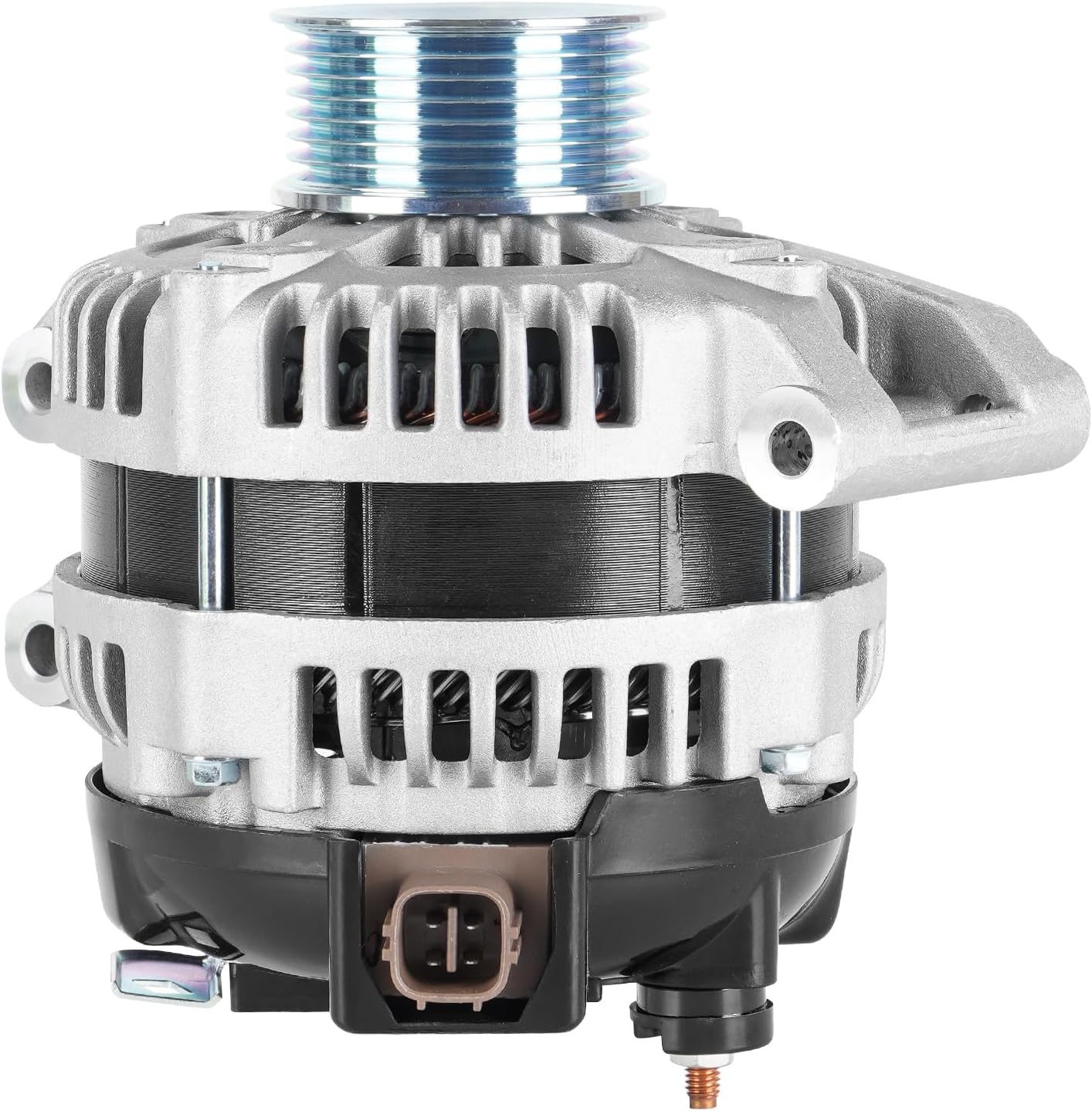
| Voltage | 12V |
|---|---|
| Amperage | 105A |
| Rotation | CW |
| Regulator | IR |
| Pulley Class | 7S |
This Aeagle alternator is a budget-focused replacement for the 2007–2011 Honda CR-V 2.4L. It supplies 12 volts at 105 amps with clockwise rotation, an internal regulator, and a 7S pulley class so it installs like a factory-style unit on compatible CR-V engines. The design emphasizes tested thermal tolerance and precise mounting points to simplify direct swap installation and restore charging performance for an aging or failed factory alternator. In practice it works well for daily drivers that need a reliable charging source for lights, infotainment, and battery charging without expensive OEM pricing. Expect basic, functional construction rather than premium materials or long-term durability guarantees; buyers should verify pulley and connector fit before installation and be prepared to replace if exposed to high-mileage wear. For owners on a tight budget this alternator offers a cost-effective way to get a CR-V back on the road with factory-like electrical output, provided fitment checks are made ahead of purchase.
Best for: Drivers who need an affordable, direct-replacement alternator to restore charging on a 2007–2011 CR-V and prioritize low upfront cost and straightforward installation.
Less Ideal for: Those seeking a long-warranty, premium rebuilt or OEM alternator for high-mileage or heavy accessory use should consider higher-end or remanufactured options.
- Factory-style 12V/105A output suitable for typical CR-V electrical loads
- Clockwise rotation and internal regulator match factory installation on specified models
- 7S pulley class and measured mounting points aid direct-fit installation
- Manufacture claims high thermal testing for basic durability under load
- Limited long-term durability data compared with higher-end remanufactured or OEM units
Verdict: A practical, budget-friendly direct-replacement alternator that restores reliable charging for 2007–2011 Honda CR-V 2.4L owners looking to avoid OEM prices.
5. BDELI Alternator Replacement 12V 105A for Honda 2.4L (2003–2011)

| Voltage | 12V |
|---|---|
| Amperage | 105A |
| Rotation | CW |
| Regulator | Internal (IR/IF) |
This BDELI alternator is a direct replacement unit intended to restore charging to affected Honda and Acura four-cylinder vehicles. It provides 12 volts at a 105 amp output with clockwise rotation and an internal regulator, and is sold as a new, tested unit from a certified manufacturing line. Typical use is a straight swap for a failed alternator on compatible CR-V, Civic, Accord, Element, TSX, or CSX applications where connectors and pulley class match. Buyers will appreciate that the unit ships with the expected plug code and pulley class for easier fitment and that the manufacturer reports ISO and IATF quality control and bench testing. Practical benefits include quick restoration of battery charging and accessory operation and lower cost compared with some branded remanufactured units. Limitations to consider are mixed longevity reports in user feedback and occasional fitment or minor prep work required at installation, so expect to inspect mounting holes and confirm connector compatibility before bolting it in.
Best for: Buyers who prioritize restoring reliable charging on a mid-2000s Honda CR-V with a cost-effective new replacement and who prefer a factory-style swap over repairing or sourcing a used core.
Less Ideal for: Drivers seeking a long-term premium branded alternator with an extended proven lifespan or those unwilling to perform basic fitment checks during installation.
- Factory-compatible electrical specs: 12V output with 105A capacity suitable for stock charging demands
- Manufactured and tested to ISO 9001 and IATF 16949 standards for consistent production controls
- Includes matching plug code and pulley class to simplify direct replacement fitment
- New unit condition reduces variables compared with used or unknown remanufactured alternators
- Some users report premature failures, indicating variable long-term durability
- May require minor modification or drilling of mounting holes in rare cases to fit perfectly
Verdict: A budget-friendly, factory-style 12V/105A replacement built and tested to automotive quality standards for restoring charging on compatible Honda CR-Vs.
6. SHICHU CFA16 Replacement Alternator, 105A, 12V

| Amperage Rating | 105 Amp |
|---|---|
| Voltage | 12.0 Volt |
| Rotation Direction | Clockwise |
| Pulley Groove Quantity | 7 |
This SHICHU CFA16 alternator is a direct-replacement style unit intended for Honda applications including CR-V models in the 2006–2011 range and similar engines. It delivers a 12.0 volt output with a 105 amp rating and a clockwise rotation, so it can run vehicle electrical systems and keep the battery charged under typical driving loads. Installation is straightforward for anyone comfortable with basic hand tools and common alternator procedures; several buyers report easy fitment and immediate charging after install. The unit uses a seven-groove pulley and a plastic pulley reinforced with an aluminum ring on some builds, which reduces cost but may feel less premium than a fully metal pulley. Customer feedback is mixed on longevity: many users see months of reliable service while others report premature failure or noise developing within a year. The seller offers a one-year quality guarantee and responsive support. If you need an affordable replacement to restore charging quickly, this alternator can be a practical option, but expect variable long-term durability compared with higher-end remanufactured or factory-quality units.
Best for: Buyers who prioritize restoring charging function quickly and saving money over having a premium factory replacement, and who accept some variability in long-term durability.
Less Ideal for: Drivers who need a long-term, high-mileage guaranteed alternator or who prefer fully metal components and extended service life should consider higher-end remanufactured or dealer units instead.
- 105 amp rated output suitable for stock electrical loads
- Direct-replacement fit for many Honda models including CR-V 2006–2011
- Easy to install with common tools according to multiple buyers
- Lower cost than many local remanufactured or dealer alternatives
- Mixed reports on long-term durability with some units failing within a year
- Pulley may be plastic on some builds rather than full metal
Verdict: A cost-effective 105A 12V replacement that gets a 2007–2011 CR-V charging again quickly, suitable if you accept variable long-term durability.
7. WAGSON Alternator Replacement WOALT027 (fits 2007-2011 Honda CR-V 2.4L)

| Brand | WAGSON |
|---|---|
| Manufacturer Part Number | WOALT027 |
| OEM Part Number(s) | 13980, 31100-RAA-A01, 104210-4732 |
| Vehicle Fit | 2007–2011 Honda CR-V 2.4L |
This WAGSON alternator is a ready-to-install replacement intended to restore charging system performance on 2007–2011 Honda CR-V 2.4L models. It arrives preassembled and appears to use factory-style mounting and terminal locations so installation is straightforward for a DIYer or a mechanic. The listing emphasizes 100 percent performance testing and premium internal components, which translates into consistent output once fitted and immediate resolution of battery drain and charging warnings. Buyers report easy, direct fit and reliable output on like-model cars, though a minority of reviews mention early failures so long-term durability may vary. Practical benefits include saving the cost and time of a remanufactured core exchange and getting a unit that should bolt in without modification. Keep in mind you should verify the exact reference numbers against your vehicle before purchase and retain the original for comparison to ensure correct fitment.
Best for: Buyers who prioritize a straightforward, factory-style replacement that gets a tired charging system back to normal quickly and with minimal fuss.
Less Ideal for: If you want a long-term high-mileage warranty-backed rebuild or aftermarket performance upgrade, consider a remanufactured unit from an established rebuild specialist or a performance alternator instead.
- Direct-fit design for 2007–2011 CR-V 2.4L so installation is typically plug-and-play
- Manufacturer claims 100% no-load and load testing for consistent electrical output
- Comes fully assembled which avoids core-return hassles and speeds replacement
- Multiple listed OEM reference numbers help confirm compatibility with factory charging systems
- Some customers reported premature failures, indicating variable long-term durability
Verdict: A practical direct-fit replacement that restores factory charging performance quickly for 2007–2011 CR-V 2.4L owners who want a low-risk, easy swap.
Choosing the Right 2007-2011 Honda CR-V Alternator: Key Factors to Consider
Correct Electrical Output and Amperage
Alternators must supply adequate amperage to recharge the battery while running accessories. For the 2007-2011 Honda CR-V, matching the factory-rated output ensures the charging system holds voltage under load and avoids frequent battery depletion.
Underestimating required amperage leads to dimming lights, slow accessory operation, and quicker battery wear. Conversely, overspecified units may be heavier and generate more heat. Confirm the alternator's continuous and peak amperage specs and ensure the voltage regulator maintains steady output across RPM ranges to protect the vehicle's electronics.
Voltage Regulation and Electrical Stability
A stable voltage regulator prevents over- or under-charging, both of which can damage the battery and onboard electronics. For the CR-V, the alternator should maintain the charging voltage within the factory tolerance at idle and cruising RPMs.
Check for alternators with sealed, reliable regulators and clear specifications for voltage range. Poor regulation can cause battery swelling, premature failure, or electronic faults. Good regulation also reduces flicker and voltage spikes that affect sensors and control modules.
Mechanical Build Quality
Mechanical durability determines how long the alternator will last in the CR-V's engine bay. Look for heavy-duty bearings, high-quality brushes, and a robust pulley assembly. These components reduce the chance of premature bearing failure, brush wear, or pulley misalignment.
Alternators operate in a high-vibration, high-heat environment so materials and assembly quality are critical. Units with better internal components typically run quieter, produce steadier output, and require less frequent service, which matters if you intend to keep the vehicle long term.
Cooling and Heat Management
Alternators generate heat, and inadequate cooling shortens component life. For the 2007-2011 CR-V, consider alternators with effective internal ventilation or external cooling features that suit the engine compartment layout.
Heat affects bearings, brushes, and the regulator. Models with improved airflow, heat-dissipating housings, or thermal protection last longer under heavy accessory loads or in hot climates. Proper cooling is especially important if you run additional electrical accessories that increase the alternator's duty cycle.
Fitment and Connector Compatibility
A straightforward mechanical and electrical fit reduces installation time and risk of wiring mistakes. Confirm that mounting points, pulley type, and electrical connectors match the 2007-2011 CR-V configuration so you do not need to modify brackets or rewire connectors.
Mismatched connectors or pulley diameters can affect belt alignment and charging performance. Selecting a unit designed to fit the CR-V minimizes the chance of accessory belt issues and ensures the alternator mates cleanly with the vehicle's harness and ground points.
Warranty and Serviceability
Warranty terms indicate the manufacturer's confidence and affect long-term ownership costs. For alternators, look for clear coverage on core defects and reasonable replacement periods. Also consider how serviceable the unit is, including availability of replacement brushes or rebuild kits.
A strong warranty reduces risk if a unit fails early. Serviceable alternators with accessible parts options give you repair alternatives versus full replacement, which can be valuable for older CR-Vs where long-term maintenance may be the priority.
Common Alternator Symptoms on 2007-2011 CR-Vs
Knowing the typical signs of alternator trouble helps you diagnose charging issues before they cause a breakdown. Owners often notice dimming headlights, an illuminated battery light on the dash, or accessories that operate inconsistently when the alternator output falls below required levels.
Other symptoms include recurring dead batteries despite a good battery, unusual whining or grinding noises from the engine bay that point to worn bearings, and erratic electrical behavior such as flickering dash lights. Pay attention to symptoms that occur during idling or under heavy accessory load, as these often indicate regulator or output problems.
- Dimming or flickering headlights at idle
- Battery warning light illumination
- Repeated dead battery after short drives
- Unusual alternator noises or belt squeal
- Erratic electronic accessory behavior
How Alternator Testing Works
Basic alternator testing verifies output voltage and charging behavior under load. A multimeter can measure resting battery voltage and charging voltage with the engine running. Resting voltage near 12.6 volts indicates a healthy battery; charging voltage typically sits between about 13.8 and 14.6 volts if the alternator and regulator are working correctly.
More advanced testing uses an ammeter or clamp meter to measure current flow and load testers to simulate accessory demand. Testing at idle and elevated RPM gives a clearer picture of regulator performance. If you detect voltage drops, excessive ripple, or inconsistent current, the alternator or regulator likely needs attention.
- Measure battery voltage at rest and while running
- Check for steady charging voltage across RPM range
- Use a clamp meter to confirm output amperage under load
- Listen for mechanical noises during testing
Installation Considerations and Basic Steps
Installing an alternator on a 2007-2011 CR-V typically requires battery disconnect, removal of the drive belt or tensioner, disconnecting electrical connectors, and unbolting the alternator from its mounts. Familiarity with the vehicle's belt routing and tensioner placement reduces installation time and lowers risk of belt damage.
Plan for a safe workspace and have basic hand tools, a torque wrench, and a service manual or torque specs handy. After installation, check belt alignment, confirm secure grounding connections, and verify charging voltage at the battery to ensure the alternator is functioning correctly.
- Disconnect the battery before starting work
- Relieve belt tension and note routing
- Confirm electrical connector and ground fit
- Verify charging voltage after installation
When to Consider a Rebuild Versus Replacement
Whether to rebuild or replace depends on the alternator's condition, cost, and availability of quality rebuild kits. Rebuilding can be economical if the casing and rotor are sound and only wear items like brushes, bearings, or the voltage regulator need replacement.
However, if internal damage is extensive or thermal degradation has compromised windings or diodes, full replacement is often more reliable. Consider warranty coverage, part availability, and how long you expect to keep the CR-V when deciding between a rebuild and a full replacement.
- Rebuild if mechanical core is intact and wear parts are accessible
- Replace if windings, diodes, or thermal damage are present
- Factor in warranty and expected vehicle ownership duration
Preventive Maintenance to Extend Alternator Life
Regular belt inspection, keeping electrical connections clean, and ensuring proper battery health all help extend alternator life. A slipping or glazed belt increases wear and heat on the alternator pulley and bearings, while poor battery condition forces the alternator to work harder.
Addressing oil leaks and preventing contaminant build-up on the alternator housing preserves ventilation and cooling. Routine checks during scheduled maintenance let you spot early signs of trouble and act before a full failure occurs.
- Inspect and replace worn drive belts promptly
- Keep battery terminals and connectors clean
- Check for oil or coolant leaks near the alternator
- Monitor charging voltage during routine service
Still looking for the perfect fit?
Select your Honda CR-V configuration to see the most relevant Alternators recommendations
How We Chose the Best 2007-2011 Honda CR-V Alternator
We focused on the criteria that most directly affect on-vehicle performance and long-term reliability for the 2007-2011 Honda CR-V. Selection prioritized correct electrical output and voltage regulation, robust internal components such as bearings and brushes, and housings that match the factory mounting points to minimize installation issues. We also weighted thermal performance and cooling design since heat shortens alternator life, and considered warranty coverage and documented longevity to reflect real-world durability.Our review filtered out units with unclear electrical specifications, incomplete connector or bracket compatibility, and those lacking clear warranty terms. We excluded remanufactured cores without disclosed rebuild processes and products that require significant vehicle-side modification. In short, candidates had to offer the right amperage and voltage regulation for the CR-V, durable mechanical components, and straightforward fitment to be included.
Our full evaluation process is outlined in our review methodology.
FAQ
What voltage should I see at the battery with the CR-V running?
With the engine running, a healthy charging system usually shows about 13.8 to 14.6 volts at the battery. Readings consistently below or above that range often indicate regulator or alternator issues.
Can a bad alternator drain the battery when the car is off?
A faulty alternator can contribute to a drained battery if diodes short and allow current leakage. However, many battery drain issues come from other parasitic draws, so testing is needed to isolate the alternator as the cause.
How long does an alternator typically last on a 2007-2011 CR-V?
Alternator lifespan varies with driving conditions, maintenance, and accessory load, but they often last many years. Heavy accessory use, heat, and poor belt condition shorten life while regular maintenance can extend it.
Is it necessary to replace the battery when installing a new alternator?
It is not always necessary, but testing the battery before and after replacing the alternator is wise. A weak or damaged battery can place extra strain on a new alternator and affect charging performance.
How do I know if the alternator bearings are failing?
Worn bearings usually produce a growling, whining, or grinding noise that changes with engine speed. You may also notice wobble in the pulley or accelerated belt wear. A mechanic can confirm bearing condition during inspection.
Are rebuilt alternators a good option for this CR-V?
Rebuilt alternators can be a practical choice if the rebuild process replaces wear items like brushes and bearings and if the core is solid. Evaluate the rebuild quality and warranty, and prefer rebuilds that disclose the replaced components.
Final Verdict
For the 2007-2011 Honda CR-V, prioritize alternators that match the vehicle's electrical output, offer stable voltage regulation, and have solid mechanical construction. Balance considerations like ease of fitment, cooling design, and warranty support against how you use the vehicle and how long you intend to keep it.Choose a unit that aligns with the CR-V's factory specifications and offers clear warranty terms or serviceability. That approach minimizes installation issues and helps ensure dependable charging performance over time.
Explore More:
- Check out all Honda CR-V parts & accessories
- Explore Alternators Maintenance & Repair Guides
- Explore Electrical System
- Browse all Auto Parts
