

Note: This article contains affiliate links. If you click on these links and make a purchase, I may earn a small commission at no extra cost to you. This helps support my research and content. Read my full affiliate disclosure here.
When a 2007-2011 Honda CR-V fails to crank consistently, the starter motor is often the culprit. Properly chosen starter motors restore reliable starts, protect the vehicle electrical system, and reduce the risk of being stranded. This guide focuses on the specific fitment and performance needs of CR-V owners from 2007 through 2011.Below you'll find a shortlist of the top starter motor options selected for fitment, cranking torque, and long-term durability. We evaluated each choice using criteria that matter to real-world driving, including installation compatibility and electrical reliability, to help you pick the right replacement for your CR-V. Read on for installation pointers, diagnosis steps, and maintenance tips before you pick a unit.
Looking for other parts? See all Honda CR-V parts & accessories.
Top Picks at a Glance
| Best Overall The best all-around choice for most situations | EZEXPREZE Starter Motor for 2006–2011 Honda/Acura 2.0–2.4L Engines |  |
| Best Quality Built to a higher standard if you want something more solid | AISIN Starter Motor ESMH-00552 — 12V, 1.6 kW, 9‑Tooth |  |
| Best Value The sweet spot between price and what you get | Boatrip Starter Motor Replacement for 2007–2011 Honda CR-V and compatible 2.4L L4 vehicles |  |
| Best Budget The cheapest option that still gets the job done reliably | AotoParts 17960N Starter Replacement for Honda/Acura Fitment |  |
| Highest Rated A top-rated pick with lots of positive feedback | KAX Starter Motor 12V 1.7KW for 2007-2011 Honda CR-V (9-Teeth, Clockwise) |  |
| Most Popular A crowd favorite that many people choose with confidence | BDELI Starter Motor BDSTAT17960NA for 2007–2011 Honda CR-V (2.4L) |  |
| Best Seller A high-volume bestseller chosen again and again | A-Premium 12V 1.6KW Starter Motor for 2007–2011 Honda CR-V (9‑Tooth, Clockwise) |  |
1. EZEXPREZE Starter Motor for 2006–2011 Honda/Acura 2.0–2.4L Engines

| Voltage | 12 Volts |
|---|---|
| Wattage | 1.6 KW |
| Material Type | Metal |
This EZEXPREZE starter is a direct replacement unit intended for 2.0L and 2.4L Honda and Acura four-cylinder engines used in Accord, Civic, CR-V, Element, CSX, and TSX model years listed. It supplies 12 volts and about 1.6 kW of cranking power, so it handles normal cold starts and daily driving demands. The unit is metal-bodied and built to be a straightforward swap with the factory mounting points and electrical connections, which makes it suitable for DIY installation or a quick shop job. The listing notes DV testing and a one-year support warranty, which provides some reassurance if problems appear early. Practical benefits include OEM-style fitment and a compact package that eases installation in tight engine bays. Limitations are typical of aftermarket starters: longevity depends on installation and vehicle condition, and access to the starter on some CR-V and Accord engines can be difficult, sometimes requiring removal of surrounding components for service. Overall it covers routine replacement needs without extra performance features.
Best for: Buyers who want a reliable, factory-style replacement starter for routine use on the specified Honda and Acura four-cylinder models and prefer an affordable option that installs like the original.
Less Ideal for: Drivers seeking high-performance starters for racing, heavy-duty repeated starts, or upgrades beyond factory starting power should consider performance-specific units instead.
- Direct-fit replacement for specified Honda and Acura 2.0L and 2.4L engines, simplifying installation
- Rated 12V/1.6 kW to provide solid cranking for everyday starting needs
- Metal construction and factory-style mounting for durable, familiar handling during installation
- Manufacturer reports 100% DV testing and offers one-year support and warranty
- No enhanced cold-weather or high-torque performance claims beyond standard cranking power
Verdict: A straightforward, factory-style replacement starter that delivers dependable everyday cranking for the listed Honda and Acura 2.0L and 2.4L models.
2. AISIN Starter Motor ESMH-00552 — 12V, 1.6 kW, 9‑Tooth

| Voltage | 12 Volts |
|---|---|
| Power rating | 1.6 KW |
| Number of teeth | 9 Teeth |
| Rotation | Clockwise |
This Aisin starter motor is a factory-style direct replacement built for quick, reliable engine cranking on compatible 2.0L and 2.4L Honda and Acura 4‑cylinder engines. It installs plug-and-play using the vehicle's existing mounting and electrical connections, and the included manual helps guide a straightforward swap. The 1.6 kW output and responsive electromagnetic switch deliver strong initial torque for faster starts, which is useful in cold weather or on higher-compression engines. Construction and environmental sealing are positioned to tolerate typical under-hood conditions, and the nine-tooth pinion matches factory gearing for smooth engagement. Limitations are that fitment is specific to listed years and engines so verify part numbers against your vehicle, and this is a replacement starter rather than a high-performance aftermarket unit tuned for racing use. For owners seeking a robust, OEM-style restart solution for a 2007–2011 CR‑V, this balances power and compatibility without extra modification.
Best for: Buyers who prioritize a reliable, factory-style starter that restores strong cranking performance on 2007–2011 CR‑V engines and value straightforward, no-modification installation.
Less Ideal for: Drivers looking for an upgraded high-performance or motorsport starter with increased power beyond factory-equivalent output should consider specialty performance units instead.
- Direct replacement designed for plug-and-play installation with factory mounting and connectors
- 1.6 kW power and responsive electromagnetic switch for strong, quick cranking
- Nine-tooth pinion that matches factory gear engagement for smooth starts
- Built to tolerate typical under-hood environments for durability
- Fitment limited to specific Honda and Acura 4‑cylinder model years so verification is required
Verdict: Choose this Aisin starter when you want a durable, factory-compatible replacement that restores strong, reliable cranking to a 2007–2011 CR‑V without modification.
3. Boatrip Starter Motor Replacement for 2007–2011 Honda CR-V and compatible 2.4L L4 vehicles

| Wattage | 1.6 KW |
|---|---|
| Manufacturer | Boatrip |
| Item model number | YWSM71002 |
| Manufacturer Part Number | YWSM71002 |
This Boatrip starter is a straightforward replacement unit designed to fit 2007–2011 Honda CR-V and other compatible 2.4L L4 models. It uses all-new internal components and a 1.6 kW motor intended to meet factory-style performance, so it is used the same way as the original starter: bolt in, connect the battery and solenoid wiring, and crank the engine. Notable features include standardized production for precise fitment and an extended two-year replacement warranty from the brand. In real use buyers report the part installs like the original and restores reliable starting power, making it a practical choice when an OEM unit has failed. Limitations to consider are the variability common to aftermarket starters versus expensive brand-name remanufactures and the occasional reports of early failure tied to related electrical issues such as relays or installation complications. Expect a cost-effective solution that performs like a factory replacement for routine repairs, but be prepared to verify vehicle wiring and mounting during installation.
Best for: Buyers who want a practical, cost-conscious replacement that restores reliable starting without paying for premium OEM remanufactures; suitable for DIYers or technicians replacing a failed starter on a 2007–2011 CR-V.
Less Ideal for: Do not choose this if you prioritize the longest-term durability available or if you prefer manufacturer-branded remanufactured units for warranty coverage through a dealer network.
- All-new internal components engineered to meet or exceed factory specifications
- Standardized production for accurate fitment and straightforward installation
- 1.6 kW output suitable for restoring normal starting performance
- Backed by a two-year replacement warranty from the brand
- Aftermarket consistency can vary compared with premium remanufactured starters
- Some reported failures traced to vehicle electrical components rather than the starter itself
Verdict: A budget-friendly, factory-fit replacement that reliably brings a 2007–2011 Honda CR-V back to life without the premium price of dealer remanufactured starters.
4. AotoParts 17960N Starter Replacement for Honda/Acura Fitment

| Brand Name | AotoParts |
|---|---|
| Model | 17960N Starter |
| Material Type | Alloy Steel |
| Included Components | 1 x Starter Replacement 17960N |
This 17960N starter from AotoParts is a direct-fit aftermarket replacement intended for 2007–2011 CR-Vs with the 2.4L four-cylinder and other compatible Honda/Acura models. It replaces the factory unit and installs in the same location, so typical use is a one-to-one swap during a starter failure or while performing engine maintenance. Key features called out by the maker include alloy steel construction, multiple OEM part-number cross-references, and claimed OEM-quality fit. In practice the unit offers a budget-friendly way to restore starting function without paying dealer prices. Buyers report straightforward fitment and that the package includes the single starter motor needed for replacement. Expect savings versus dealer parts but accept some variability in long-term durability based on user reports; a few customers experienced early failures while others had trouble-free service. Installation can be labor-intensive on some models because of access; plan for moderate mechanic time if you are not doing it yourself. For budget repairs on a CR-V this is a reasonable choice if you prioritize upfront cost over a long factory-backed lifespan.
Best for: Buyers who need an affordable, direct-replacement starter to get a 2007–2011 CR-V back on the road quickly and who accept a budget aftermarket option over dealer parts.
Less Ideal for: Those who want a factory-backed or long-term remanufactured starter with extended warranty coverage should consider higher-end remanufactured or dealer units instead.
- Direct-fit design intended for Honda/Acura 2.4L four-cylinder applications for simple replacement
- Alloy steel construction and multiple part-number cross-references suggest compatibility with factory mounting points
- Includes the complete starter motor so no additional components are required for a basic swap
- Lower price than dealer or remanufactured options, making it attractive for budget repairs
- Mixed reports on longevity with some early failures reported by users
- Not backed by a manufacturer lifetime warranty; seller warranty terms vary
Verdict: If you need a low-cost, direct-fit replacement starter for a 2007–2011 Honda CR-V 2.4L, this AotoParts 17960N restores starting function affordably.
5. KAX Starter Motor 12V 1.7KW for 2007-2011 Honda CR-V (9-Teeth, Clockwise)

| Voltage | 12 Volts |
|---|---|
| Wattage | 1.7 KW |
| Number of Teeth | 9 |
| Rotation | Clockwise |
| Material Type | Pure Copper Windings, Aluminum Housing, Laminated Steel Core |
This KAX starter motor is a direct-replacement unit intended to restore reliable starting on compatible 2007–2011 Honda CR‑V engines. It delivers 1.7 kW of cranking power from a 12V system and uses a 9‑tooth pinion that rotates clockwise, so it is installed and used the same way as a factory-style starter. Construction highlights include pure copper windings, an aluminum housing, and a laminated steel core for durability. In practice the starter provides strong initial torque for quick engine ignition while keeping electrical draw modest, which helps preserve the battery. The unit ships with a basic manual and is offered with a two-year warranty. Important limitations are that fitment is specific to models listed and the rotation/teeth count must match the vehicle; incorrect specification will prevent engagement. Also this is a standard replacement component rather than a high-performance upgrade, so it focuses on dependable, day-to-day reliability rather than extra cold-weather cranking amps.
Best for: Someone who needs a dependable, factory-style replacement starter for routine driving and values long-term starting reliability over performance upgrades.
Less Ideal for: Not a good choice for owners seeking high-output starters for frequent cold-climate starts or performance applications that demand higher cranking power.
- Direct-fit replacement for listed Honda and Acura models, simplifying installation
- Built with copper windings and laminated steel core for durability
- 1.7 kW power rating provides robust cranking for reliable engine starts
- Aluminum housing resists corrosion and helps with heat dissipation
- Compatibility requires matching rotation direction and tooth count to the vehicle
Verdict: Pick this starter if you want a factory-style, durability-focused replacement that restores reliable starting for 2007–2011 CR‑V models.
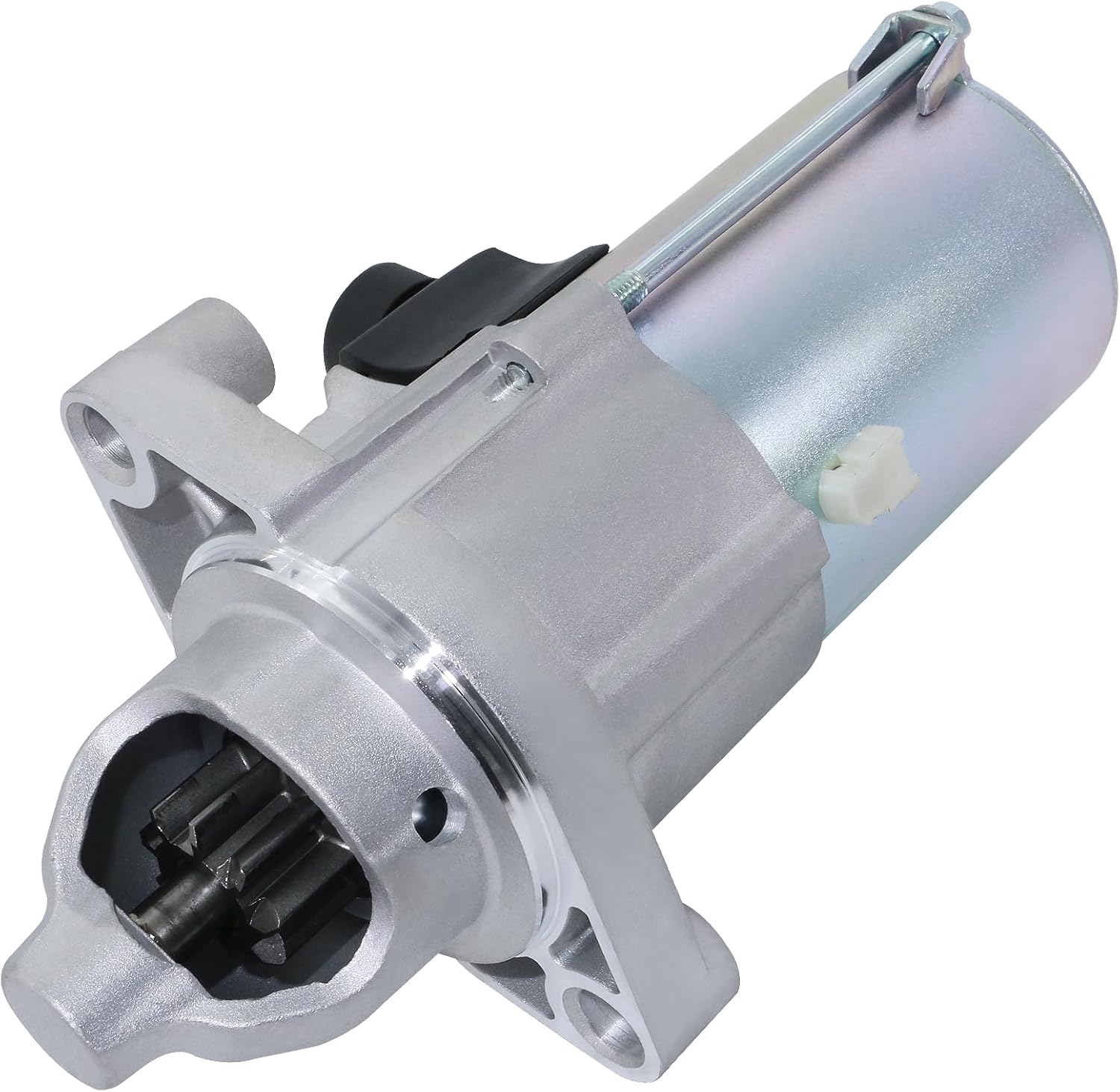
6. BDELI Starter Motor BDSTAT17960NA for 2007–2011 Honda CR-V (2.4L)
| Wattage | 1.6 KW |
|---|---|
| Material Type | Metal |
This BDELI starter is a direct replacement designed to restore reliable cranking on 2007–2011 Honda CR-V 2.4L engines. It installs like a factory unit and uses standard mounting points and terminals so most DIYers or technicians can swap it in without modification. Notable features include a 1.6 kW motor rating and metal construction intended for durability; the listing and customer feedback indicate consistent fit and strong starting power with minimal noise. Practical benefits are immediate: faster, more consistent engine starts and a lower cost alternative to dealer parts. Buyers should note it is an aftermarket part rather than a factory-branded unit and a few customers reported lower-quality supplied bolts, so reusing original fasteners or using higher-grade replacements during install is wise. The seller offers a one-year replacement policy and the product shows extensive positive user feedback for fitment and performance, which helps reduce perceived risk when choosing this as a replacement starter.
Best for: Buyers who prioritize a reliable, cost-effective replacement backed by many positive user experiences and want a unit that installs without modification.
Less Ideal for: If you require an exact factory-branded part or extended commercial-duty lifespan beyond typical passenger use, consider a factory-quality or heavy-duty OEM alternative.
- Built to match factory mounting points and electrical terminals for straightforward installation
- 1.6 kW motor provides solid cranking power for reliable starts
- Metal construction and tested components aim to improve durability over cheap rebuilds
- Strong customer feedback reporting consistent fit and immediate performance
- Some included mounting bolts have been reported as low quality so replacement fasteners may be needed
Verdict: A value-focused aftermarket starter that fits the 2007–2011 CR-V 2.4L and delivers reliable, factory-style starting backed by strong user feedback.
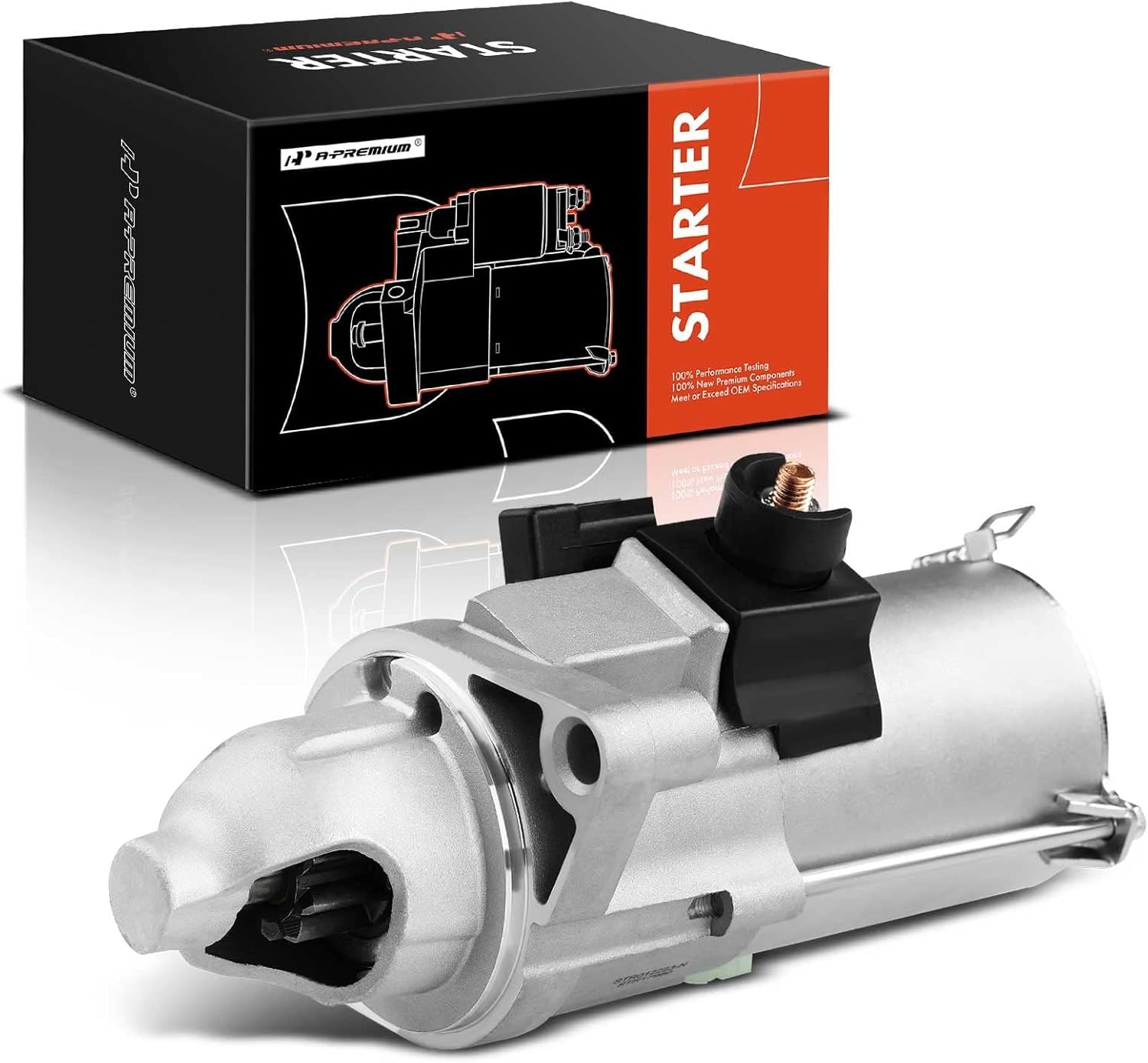
7. A-Premium 12V 1.6KW Starter Motor for 2007–2011 Honda CR-V (9‑Tooth, Clockwise)
| Power Rating | 1.6KW |
|---|---|
| Volts | 12V |
| Number of Teeth | 9 |
| Rotation | Clockwise |
| Vehicle Fitment | 2007–2011 Honda CR-V L4 2.4L |
This A-Premium starter is a direct-fit replacement designed for 2007–2011 Honda CR-V 2.4L engines. It delivers 1.6 kW of cranking power, a 9‑tooth pinion, and clockwise rotation so it lines up with the factory geartrain and bolts. Typical use is simple: swap the failed unit for this motor and reconnect the battery and wiring; many installers report it bolts in without modification and restores instant cranking. Notable features include factory-style mounting, a new (not reman) construction, and an included inspection test sheet. Practical benefits are reliable starts after installation, a build that looks and fits like the original, and a one-year unlimited-mileage guarantee for peace of mind. Limitations to expect are installation difficulty on tight engine bays where the rear mounting bolt can be hard to reach and that this is an aftermarket alternative to higher-cost branded replacements. For buyers who want a budget-friendly, OEM-like replacement that performs consistently, this is a sensible choice.
Best for: Buyers who prioritize low risk and value a near‑factory replacement that restores reliable starting without dealer pricing; good for DIY installers and technicians seeking a budget-conscious, dependable swap.
Less Ideal for: Those who want the longest possible service life from a premium OEM-brand part or who prefer professional install-only solutions to avoid tight-bay mounting challenges.
- Direct-fit design for 2007–2011 CR-V 2.4L which simplifies installation
- New 1.6 kW motor with 9-tooth pinion matches factory gearing for reliable cranking
- Appears and functions like the factory unit according to user reports
- Includes an inspection/test sheet and a one-year unlimited-mileage guarantee
- Rear mounting bolt can be difficult to access during replacement, adding installation time
- Aftermarket unit may not match longevity of higher-priced branded starters
Verdict: A budget-friendly, factory-style replacement that reliably restores starting for 2007–2011 CR-Vs while minimizing risk for mainstream buyers.
Choosing the Right 2007-2011 Honda CR-V Starter Motor: Key Factors to Consider
Fitment and Bolt Pattern
Exact fitment matters because the starter must align precisely with the flywheel or flexplate teeth and the bellhousing bolt locations. Misaligned starters can cause gear wear, starter engagement failure, and vibration that leads to premature failure.
When selecting a starter for a 2007-2011 Honda CR-V, confirm the bolt hole pattern, starter nose length, and mounting flange orientation. Also verify the pinion gear tooth count and engagement depth to ensure proper mesh with the ring gear. Proper fitment reduces installation time and avoids modifications that can compromise reliability.
Cranking Torque and Speed
Cranking torque and rotational speed determine how quickly and reliably the engine will turn over, particularly in cold starts or with higher-compression engines. A unit with insufficient torque can struggle to start the engine, leading to repeated attempts that stress the battery and starters.
Look for starters specified with torque or rated for equivalent starting conditions to the original Honda unit. Matching or exceeding the OEM cranking characteristics helps ensure reliable starts across temperature ranges and fuel/engine conditions common to the CR-V's 2.4L engine in those years.
Electrical Compatibility and Current Draw
Starter current draw affects the battery and charging system. Excessive draw can indicate internal friction or electrical faults, while insufficient current might point to poor solenoid engagement. Both scenarios lead to unreliable starting and potential damage to wiring or the ignition switch.
Check that the replacement's electrical specifications align with the vehicle's charging and wiring capability. Confirm terminal types and positions match the CR-V harness to avoid splices or adapters. Proper electrical compatibility minimizes voltage drop and ensures consistent solenoid activation.
Durability and Internal Components
A starter's internal design—brushes, commutator quality, bearings, and pinion engagement system—governs its service life. Components made from higher-grade materials and designs that reduce brush wear or incorporate better sealing tend to last longer, especially for vehicles with frequent short trips.
Consider units with sealed housings to resist moisture and contaminants, quality bearings for smoother operation, and robust pinion mechanisms to limit premature failure. These features reduce the likelihood of repeat replacements on a CR-V that sees varied driving conditions.
Solenoid and Drive Mechanism Behavior
The solenoid both actuates the drive and completes high-current circuits. Poor solenoid design can cause slow engagement, intermittent starting, or visible symptoms like clicking. The drive mechanism, whether a Bendix-style or overrunning clutch, affects how the starter disengages after start.
Choose starters with reliable solenoid action and proven drive engagement to avoid common failure modes. Smooth engagement reduces stress on the ring gear and prevents grinding or repeat-start issues on the 2007-2011 CR-V.
Installation Accessibility and Hardware
Ease of installation influences labor time and the chance of installation errors. Starters that include correct mounting bolts, gaskets or shims, and clear terminal labeling help ensure a straightforward swap. For the CR-V, limited workspace around the starter makes correct orientation and connector accessibility particularly important.
Verify whether the unit comes with the necessary hardware or if any factory clips need to be reused. Proper instructions and matching terminal types reduce installation headaches and the risk of loose connections that can cause later failures.
Common Starter Motor Symptoms on 2007-2011 CR-Vs
Recognizing starter-related symptoms helps determine whether the starter motor is the likely cause of a no-start condition. Common signs include a single click or rapid clicking when the key is turned, consistent grinding, or the engine turning over slowly despite a healthy battery.
Some symptoms overlap with battery or wiring problems, so a systematic diagnosis is important. Pay attention to when the issue occurs, such as only in cold weather or after the vehicle sits idle for long periods, as this timing can point to worn brushes or intermittent solenoid contacts specific to the starter.
- Single click without cranking often indicates solenoid engagement failure or poor electrical connection.
- Rapid clicking typically signals insufficient battery voltage or high resistance in starter leads.
- Slow cranking despite full battery can mean internal wear, high-friction bearings, or low cranking torque.
- Grinding suggests misalignment between the pinion and ring gear or worn teeth.
How to Diagnose Starter Vs Battery or Wiring
Before replacing the starter, rule out battery and wiring issues. Check battery state of charge and terminal cleanliness, then inspect starter power and ground leads for corrosion or loose connections. Voltage drop testing across the starter circuit under crank is a practical way to separate a weak battery from a failing starter.
If voltage at the starter remains high while the starter does not engage, suspect the solenoid or internal drive. If voltage collapses at the starter during crank, focus on battery health, alternator condition, and heavy-load charge capacity before replacing the starter.
- Measure battery voltage at rest and during crank to spot voltage collapse.
- Perform a voltage drop test across positive and ground circuits to identify wiring resistance.
- Tap the starter lightly while cranking; a temporary change can indicate worn brushes or stuck drive components.
Basic How-To: Starter Motor Installation Tips
Installation on a 2007-2011 Honda CR-V typically requires careful access to the starter location and attention to terminal orientation. Disconnect the negative battery terminal before starting, support the vehicle securely if you need to work underneath, and note the routing of wiring to avoid pinching.
When installing the replacement, hand-thread mounting bolts first to prevent cross-threading, and tighten to the specified torque. Reconnect wiring in the original configuration and secure any harness clamps. After installation, confirm starter operation with the hood open and a helper to check for unusual noises or smoke.
- Always disconnect the negative battery cable before touching starter terminals.
- Use thread locker or proper torque values where specified to prevent loosening.
- Verify ground connections and clean mating surfaces to minimize resistance.
Maintenance and Preventive Steps to Extend Starter Life
Regular maintenance can extend starter life and reduce unexpected failures. Keep battery terminals clean and tight, maintain a healthy charging system, and address oil or coolant leaks that could contaminate the starter housing. Periodic inspection can catch early signs of wear such as oil-soaked housings or corroded connectors.
Address driving habits that stress the starter, like repeated crank attempts during a single start event. If your CR-V frequently experiences short trips, ensuring the starter is a higher-quality unit with better sealing and durable internals will pay dividends in longevity.
- Inspect starter wiring for corrosion during routine service intervals.
- Avoid extended cranking; let the starter cool between attempts to prevent overheating.
- Repair nearby leaks promptly to prevent contamination.
When to Replace the Starter Instead of Repairing
Some starter failures can be repaired if the fault is limited to brushes, solenoid contacts, or the drive. However, on a 2007-2011 CR-V, consider replacement when multiple symptoms are present, there is evidence of housing damage, or the unit has high mileage. Replacement is often more reliable and faster than iterative repairs in many cases.
If a starter has intermittent failures that cannot be consistently replicated during bench tests, replacement reduces downtime and the chance of repeat failures. Also factor in labor accessibility; sometimes replacing the entire unit is more cost-effective given the CR-V's installation space and the time required to disassemble a starter for repair.
- Replace if there are visible gear or housing damages.
- Consider replacement for multiple intermittent electrical failures.
- Repair may be viable for isolated brush wear if labor access and parts availability are favorable.
Still looking for the perfect fit?
Select your Honda CR-V configuration to see the most relevant Starter Motors recommendations
How We Chose the Best 2007-2011 Honda CR-V Starter Motor
We prioritized criteria that directly affect reliability and fitment for 2007-2011 Honda CR-V owners. Core evaluation factors included confirmed bolt pattern and gear tooth engagement to ensure direct replacement without modification, cranking torque and rotational speed to match engine starting demands, and electrical specifications such as current draw and solenoid response to prevent charging system stress. We also assessed build quality indicators like housing materials, bearings, and expected service life based on design features.Additional editorial filters included warranty coverage and availability of replaceable wear items like drive-end bushings and pinion return springs. We excluded units that required adapter plates, significant wiring changes, or nonstandard ring gear modifications. Units lacking documented compatibility with the 2007-2011 CR-V bellhousing or that had inconsistent fitment reports were not considered. The final list balances ease of installation, dependable cranking performance, and longevity for everyday driving.
Our full evaluation process is outlined in our review methodology.
FAQ
What are the most common starter motor symptoms on a 2007-2011 CR-V?
Common symptoms include a single click or rapid clicking when turning the key, slow cranking despite a healthy battery, or grinding noises during engagement. These signs often point to solenoid issues, worn internal parts, or misalignment.
How can I test the starter motor on my CR-V before replacing it?
Start by checking battery voltage at rest and during crank, then perform a voltage drop test across the starter circuit. If possible, bench-test the starter or have a shop verify solenoid engagement and current draw to confirm an internal fault.
Is a starter clicking noise always a bad starter on these CR-Vs?
A clicking noise is not always the starter itself; it can indicate low battery voltage, poor connections, or excessive circuit resistance. If battery and connections test good, the solenoid or starter internal components become more likely causes.
Can I replace the starter motor myself on a 2007-2011 CR-V?
Many owners can perform the replacement with basic hand tools, but the job requires proper safety steps like disconnecting the battery and safely supporting the vehicle. Tightening to the specified torque and ensuring correct wiring are important to avoid issues.
What starter motor replacement parts should I keep in mind?
Consider replacement bolts, terminal connectors, and any sealing gaskets or heat shields that might be disturbed during removal. Having clean hardware and correct terminal types reduces the chance of electrical problems after installation.
Could starter solenoid problems mimic other issues on my CR-V?
Yes. A faulty solenoid can produce symptoms similar to battery or ignition switch failures, including intermittent starts and clicking. Diagnostic tests that isolate the starter circuit help distinguish solenoid issues from other electrical faults.
Final Verdict
For a 2007-2011 Honda CR-V, prioritize starters that match OEM fitment, provide sufficient cranking torque, and have solid electrical compatibility. Balancing durable internal components and reliable solenoid action will minimize repeat service and improve daily dependability.Decide based on the symptoms you observe and the vehicle's service history. If the starter shows multiple failure signs or intermittent engagement, replacement with a properly specified unit is usually the most dependable solution for long-term reliability.
Explore More:
- Check out all Honda CR-V parts & accessories
- Explore Starter Motors Maintenance & Repair Guides
- Explore Electrical System
- Browse all Auto Parts
