

Note: This article contains affiliate links. If you click on these links and make a purchase, I may earn a small commission at no extra cost to you. This helps support my research and content. Read my full affiliate disclosure here.
If your Subaru Outback is blowing warm air or you see visible damage to the condenser, replacing the AC condenser can restore cooling and prevent compressor damage. The right Subaru Outback AC condenser matters because fitment, cooling efficiency, and durability affect both comfort and long-term system health.This guide shortlists the top condenser options for the Outback and explains the practical differences that matter to owners. We evaluated cooling performance, fitment accuracy, corrosion resistance, and ease of installation to assemble a selection of reliable choices. Read on for the factors that influence which condenser is best for your driving and maintenance needs.
Looking for other parts? See all Subaru Outback parts & accessories.
Top Picks at a Glance
| Best Overall The best all-around choice for most situations | PACIFIC BEST INC. A/C Condenser (Compatible Replacement for 73210AL00A) |  |
| Best Quality Built to a higher standard if you want something more solid | Subaru Condenser Assembly |  |
| Best Value The sweet spot between price and what you get | A-Premium A/C Condenser with Receiver Drier for Subaru Outback and Legacy 2015–2019 |  |
| Best Budget The cheapest option that still gets the job done reliably | Kool-Vue A/C Condenser for Subaru Outback (2015–2019) |  |
| Highest Rated A top-rated pick with lots of positive feedback | Sunbelt Radiators A/C Condenser Compatible with Subaru Legacy/Outback 2005–2009 |  |
| Most Popular A crowd favorite that many people choose with confidence | UIU Model 3885 A/C Condenser for Subaru Legacy/Outback 2010–2014 |  |
| Best Seller A high-volume bestseller chosen again and again | Orceed A/C Condenser with Receiver Drier for Subaru Legacy/Outback (2010–2014) |  |
1. PACIFIC BEST INC. A/C Condenser (Compatible Replacement for 73210AL00A)

| Manufacturer Part Number | CD4454 |
|---|---|
| OEM Part Number | 73210AL00A |
| Core Dimension (in) | 24.89 x 11.62 x 0.48 |
| Includes | Receiver and dryer |
| Vehicle Tested | Yes |
This PACIFIC BEST INC. A/C condenser is a direct-replacement condenser built to match factory fit and function for the specified Subaru application. It is used to replace a failing or damaged condenser when the A/C blows warm or has reduced cooling efficiency. The unit is described as vehicle tested for a drop-in fit and includes a receiver and dryer, which simplifies installation and helps avoid contaminant issues in the system. Its core dimensions indicate a compact, vehicle-specific design that should clear factory mounting points and lines without modification. Practical benefits include restoring proper cooling performance and reducing installation time compared with generic universal condensers. Limitations are that compatibility is limited to the matching Subaru part number and the listing does not provide extensive material or longevity data beyond a one-year manufacturer warranty, so long-term durability compared with higher-end aftermarket or OEM condensers may vary.
Best for: Buyers who want a balanced, no-frills replacement condenser that restores factory-style cooling and keeps installation simple without overspending.
Less Ideal for: Anyone seeking a premium performance or heavy-duty condenser upgrade, or buyers who need documented long-term durability data beyond the one-year coverage.
- Designed as a vehicle-tested drop-in replacement for straightforward installation
- Includes receiver and dryer to simplify servicing and protect the system from contamination
- Manufactured to match factory-style core dimensions for proper fit and airflow
- Manufacturer provides only a one-year warranty and limited published longevity data
Verdict: A practical, vehicle-tested replacement condenser that restores factory cooling with easy installation for buyers wanting a reliable, budget-conscious fix.
2. Subaru Condenser Assembly

| Manufacturer | Subaru |
|---|---|
| Model | CONDENSER ASSEMBLY |
| Item model number | 73210SC013 |
| Manufacturer Part Number | 73210SC013 |
This is a factory Subaru condenser assembly intended as a direct replacement for a failed or leaking AC condenser. It swaps in where the original condenser mounts and connects to the vehicle HVAC lines, restoring the heat-exchange surface that dissipates refrigerant heat and allows the system to blow cold air. As a genuine manufacturer part, it matches factory fit and connection points which simplifies installation and reduces the need for custom brackets or adapters. Buyers will appreciate the machined exterior and OEM part number match for straightforward service and reliable sealing when installed with new O-rings and proper refrigerant recycling. The main limitation is that this is a like-for-like replacement rather than an upgraded performance condenser, so it does not increase cooling capacity for high-load or heavily modified setups. For routine repairs on an Outback this restores original performance and avoids compatibility hassles, but those seeking greater cooling under extreme conditions should consider performance-oriented aftermarket options.
Best for: Drivers who prioritize restoring factory air conditioning performance and want a direct-fit, manufacturer-quality condenser for routine repairs on their Subaru Outback.
Less Ideal for: Owners seeking increased cooling for towing, track use, or heavily modified engines should look at aftermarket high-capacity condensers instead.
- Factory Subaru part for direct fitment and correct mounting points
- Matches manufacturer part number for straightforward replacement and compatibility
- Machined exterior and factory construction support reliable sealing and longevity
- Restores original cooling performance when installed with proper refrigerant service
- Not designed as a performance upgrade so it does not increase cooling capacity for heavy-duty or modified use
Verdict: Choose this genuine Subaru condenser to replace a failed unit and restore original AC performance with factory fit and reliability.
3. A-Premium A/C Condenser with Receiver Drier for Subaru Outback and Legacy 2015–2019

| Fitment | Subaru Outback and Legacy 2015-2019 2.5L/3.6L |
|---|---|
| Core type | Parallel flow aluminum |
| Includes | Receiver drier and bracket |
| Manufacturer part number | APCON714 |
This A-Premium condenser is a direct bolt-on replacement designed to restore factory-style cooling to Subaru Outback and Legacy models from 2015 to 2019 with 2.5L or 3.6L engines. The unit uses a parallel-flow aluminum core and ships with the receiver drier and bracket included, which simplifies installation and reduces the number of parts you must source separately. In practice it replaces the failed condenser to reestablish proper refrigerant flow and heat rejection, improving cabin cooling and reducing compressor load. The build targets factory fit and finishes so it lines up with factory mounting points and hose locations, and the included drier helps ensure the system is clean after installation. Trade-offs are typical for aftermarket replacements: you get a cost-effective repair but may want a professional recharge and leak check during installation to confirm system integrity. A-Premium backs the part with a one-year unlimited-mileage guarantee for added confidence.
Best for: Buyers who want a practical, cost-effective factory-style condenser replacement for a 2015–2019 Subaru Outback or Legacy and value straightforward installation and included hardware.
Less Ideal for: This is not aimed at custom cooling upgrades or performance-tuned AC systems where specialty cores or custom plumbing are required.
- Direct bolt-on design that matches factory mounting points for straightforward replacement
- Includes receiver drier and bracket so you do not need to buy those separately
- Parallel-flow aluminum core designed for efficient heat dissipation and improved cooling performance
- One-year unlimited-mileage guarantee provides post-installation peace of mind
- May require professional refrigerant evacuation and recharge to install correctly and validate leak-free operation
Verdict: Choose this condenser if you need an affordable, direct-fit replacement that includes the receiver drier for a straightforward repair on a 2015–2019 Subaru Outback or Legacy.
4. Kool-Vue A/C Condenser for Subaru Outback (2015–2019)

| Fitment | Subaru Outback 2015-2019 |
|---|---|
| Core material | Aluminum |
| Manufacturer part number | KVAC4454 |
| OEM part number | 73210AL00A |
This Kool-Vue condenser is a straightforward direct-fit replacement for Subaru Outback models from 2015 through 2019. It is built with an aluminum core and arrives pre-tested for fit and leaks so you can drop it in during a condenser or A/C system repair. The unit is intended to restore cooling performance when paired with the existing compressor and clutch components and its reinforced bracket design helps with installation alignment. Practical benefits include corrosion-resistant aluminum construction and factory-style finish that keeps the engine bay appearance tidy. Installation is typical of condenser swaps and will usually require recharging the system and replacement or inspection of associated components to avoid premature failure. The part comes with a one-year limited warranty, but color or finish may vary and the listing does not include installation hardware or refrigerant, so factor those into the repair plan.
Best for: Buyers repairing an Outback on a budget who want a reliable, direct-fit condenser that restores cooling without paying for a dealer unit; best for DIY installers and independent shops focused on cost-effective repairs.
Less Ideal for: Drivers who want a premium aftermarket performance condenser or who plan to replace multiple A/C components at once may prefer a higher-end or matched kit option.
- Direct-fit design for 2015–2019 Subaru Outback simplifies installation
- Aluminum core for efficient heat transfer and improved corrosion resistance
- Factory-style finish and strengthened bracket for better alignment during installation
- Units are leak and fit tested before shipping
- Does not include installation hardware, refrigerant, or associated service parts
Verdict: A budget-friendly, drop-in condenser that restores A/C cooling on 2015–2019 Outbacks with minimal fuss, making it a practical choice for value-minded repairs.
5. Sunbelt Radiators A/C Condenser Compatible with Subaru Legacy/Outback 2005–2009
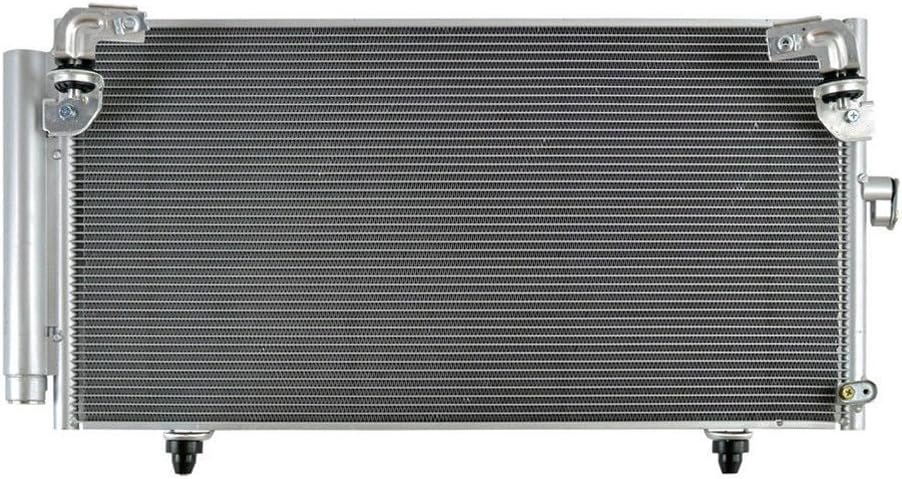
| Position | Front |
|---|---|
| Manufacturer | Sunbelt Radiators |
| Model | Automotive Condenser |
| Manufacturer Part Number | SBC3314 |
This Sunbelt Radiators condenser is a direct-replacement unit that restores the vehicle air conditioning condenser function for 2005–2009 Subaru Legacy and Outback 2.5L and 3.0L models. Installed in the front of the vehicle, it dissipates refrigerant heat to bring cabin temperatures back under control during hot weather, heavy traffic, or towing. The core is aluminum with reinforced components and is pressure- and leak-tested at the factory to provide dependable performance out of the box. Because it matches factory mounting points and connector locations, installation is straightforward for a professional or a competent DIYer and typically does not require modifications. Expect solid corrosion resistance compared with lower-quality aftermarket cores, though longevity will still depend on local road salt and maintenance. This part focuses on replacing a failing condenser rather than improving cooling beyond factory levels, so buyers seeking performance upgrades should look elsewhere.
Best for: Buyers who prioritize a reliable, factory-style replacement to get their Subaru's A/C working again with minimal fuss and predictable performance.
Less Ideal for: Drivers wanting a higher-capacity or performance-oriented condenser for modified cooling systems should consider performance-specific aftermarket options.
- Direct-fit design that matches factory mounting and connector locations for easy installation
- Aluminum core with reinforced components for improved corrosion and vibration resistance
- Factory pressure and leak testing for out-of-box reliability
- Designed to restore original cooling performance under heavy use such as towing or traffic
- Restores factory-level cooling but does not provide upgraded performance beyond stock
- Exterior is unpainted which may show surface oxidation over long-term exposure in harsh climates
Verdict: Choose this condenser if you want a tested, direct-fit replacement that reliably restores factory A/C cooling on 2005–2009 Subaru Outback and Legacy models.
6. UIU Model 3885 A/C Condenser for Subaru Legacy/Outback 2010–2014

| Fitment | Subaru Legacy/Outback 2010-2014 2.5L 3.6L |
|---|---|
| Built-in Receiver Dryer | Yes |
| Condition | New |
| Manufacturer | UIU |
| OEM Part Number | 73210AJ00A |
The UIU Model 3885 condenser replaces the factory unit to bring an air conditioning system back to factory-quality cooling on 2010–2014 Subaru Legacy and Outback 2.5L and 3.6L applications. It installs in the condenser location ahead of the radiator and includes a built-in receiver dryer, which simplifies recharge after installation. Typical use is as a like-for-like replacement after a leak or crash damage; it accepts the same inlet and outlet plumbing so plumbing changes are minimal. Notable features shown in the listing are the built-in receiver dryer and factory-style mounting points, which speed up fitment and reduce the need for modification. Practical benefits include restoring cold-air performance and avoiding the expense of a shop repair when you have the skills to swap condensers. Limitations to note are that buyers must verify vehicle fitment carefully against OEM reference numbers and core dimensions before ordering, and installation may require refrigerant evacuation and professional tools if you cannot service A/C systems yourself.
Best for: Buyers who want a budget-conscious, direct replacement condenser with documented fitment and reviews to back up reliability and are comfortable verifying compatibility before ordering.
Less Ideal for: If you prefer a turnkey shop repair, a performance upgrade condenser, or cannot handle refrigerant service, this replacement part is not the best choice.
- Direct-fit replacement for 2010–2014 Subaru Legacy and Outback 2.5L/3.6L, matching factory mounting and ports
- Built-in receiver dryer included, simplifying system drying and recharge after install
- Machined exterior and listed OEM reference numbers aid compatibility checks
- Accepts original inlet and outlet plumbing so minimal modification is typically required
- Core dimensions are listed in the description so buyers must confirm precise fit rather than assume universal compatibility
- Installation requires refrigerant recovery and recharge equipment or a professional for safe, legal service
Verdict: A straightforward, buyer-reviewed direct replacement condenser that restores A/C cooling for 2010–2014 Subaru Outback and Legacy models while keeping installation largely OEM-compatible.
7. Orceed A/C Condenser with Receiver Drier for Subaru Legacy/Outback (2010–2014)

| Compatible vehicles | Subaru Legacy/Outback 2010-2014 |
|---|---|
| Includes | Receiver drier and bracket |
| Material | Aluminum |
| Replacement part numbers | 3885, 940399, 73210AJ00A/73210AJ001/73210AJ000 |
This Orceed A/C condenser replaces the factory condenser on Subaru Legacy and Outback models from 2010 through 2014 and is supplied as a complete kit with a receiver drier and bracket. Built from aluminum with high-density multilayer fins, it is designed to improve heat dissipation and cooling efficiency compared with a worn core. The manufacturer states it follows the factory design for fit and mounting, which simplifies installation for a tear-down-and-swap job and reduces the chance of alignment issues. Gaskets and rings are treated for thermal shock resistance to better handle cold starts and service conditions. Practical benefits include faster cabin cooling after replacement and the convenience of receiving the drier and bracket together so you do not need to source additional parts. Limitations are typical for aftermarket condensers: success depends on correct part selection and careful installation, and you should have the system flushed and recharged by a qualified technician to avoid contamination or refrigerant-related problems.
Best for: Buyers who want a reliable, factory-style replacement condenser for a Subaru Legacy or Outback 2010–2014 and prefer a ready-to-install kit that reduces parts sourcing and fitment uncertainty.
Less Ideal for: Do-it-yourselfers without A/C service equipment or anyone seeking a performance-upgrade condenser beyond factory specifications.
- Direct-fit design matches factory mounting for straightforward drop-in replacement
- Includes receiver drier and mounting bracket so additional parts are not required
- Aluminum construction with high-density multilayer fins improves heat dissipation
- Gaskets and rings treated for thermal shock resistance to withstand cold conditions
- Requires professional system flush and refrigerant recharge for safe, reliable installation
Verdict: A practical, factory-style condenser kit that minimizes fitment risk and includes necessary parts for a straightforward replacement on 2010–2014 Subaru Legacy and Outback models.
Choosing the Right Subaru Outback AC Condenser: Key Factors to Consider
Fitment and Mounting Accuracy
Correct fitment is essential because the condenser must align precisely with factory mounting points, line connections, and the receiver-drier or accumulator location. A condenser that requires bending brackets or adapter hoses increases installation time and raises the risk of leaks.
Pay attention to port type and orientation, mounting hole spacing, and overall unit dimensions. For the Subaru Outback, ensuring match to the original connection heights and line angles prevents stress on fittings and avoids interference with the bumper support and cooling fan shroud. Even small misalignments can complicate the refrigerant line routing and may necessitate additional parts or professional installation.
Cooling Efficiency and Core Design
Cooling efficiency determines how effectively the condenser rejects heat from the refrigerant to ambient air. Units with denser fin arrays, larger frontal core area, or multi-row tube designs typically provide better heat transfer and lower high-side pressures under load.
Consider core thickness and fin type because overly thick cores can restrict airflow behind the grille or require fan modifications, while thin cores may not deliver adequate cooling in hot climates. For Outback owners who tow, carry heavy loads, or drive in warm regions, prioritize condensers with proven heat rejection characteristics to maintain consistent cabin temperatures and reduce compressor stress.
Corrosion Resistance and Materials
Condensers are exposed to road debris, moisture, and deicing salts that accelerate corrosion. Material choice and protective coatings matter for longevity. Aluminum cores are standard, but the quality of brazing and any anti-corrosion finish affects how long the condenser will last in aggressive environments.
Look for units with protective coatings around vulnerable seams and along end tanks. In areas with heavy winter road treatment, enhanced corrosion protection reduces the likelihood of pinhole leaks and premature failure. Durable construction also minimizes the chance of internal contamination from corrosion debris, which can damage the compressor and other system components.
Serviceability and Installation Ease
A condenser that is straightforward to install reduces labor time and the chance of installation errors. Features that improve serviceability include OEM-style port locations, preinstalled fittings or caps, and compatibility with standard receiver-drier or accumulator assemblies.
Evaluate whether the condenser requires additional parts such as new O-rings, expansion valves, or receiver-driers to meet OEM service practices. Units designed with easy line access and clear connection points simplify refrigerant evacuation and recharge procedures. For owners planning DIY installation, consider how accessible mounting hardware and brackets are from under the hood and whether removing the bumper or other components is necessary.
Leak Resistance and Manufacturing Quality
Leaks in the condenser are a primary cause of AC failure. Manufacturing quality, including brazing integrity, seam strength, and pressure testing, directly influences leak resistance. Units that undergo thorough leak testing and quality control are less likely to develop hairline cracks or joint failures.
Inspect for reinforced end-tank joints, consistent welds, and a clean finish that suggests attention to detail. Reliable manufacturing reduces the chance of refrigerant loss and contamination entering the cabin system. For Outback owners, a condenser that resists vibration and road stress will maintain system charge longer and lower the frequency of repairs.
Compatibility With AC System Components
The condenser functions as part of a closed refrigeration circuit, so compatibility with the compressor, receiver-drier or accumulator, and expansion valve is crucial. Mismatched internal volume or port sizing can change system pressures and affect performance.
Confirm that the condenser's internal flow characteristics and port fittings match the Outback's AC architecture. Some condenser upgrades alter charge requirements or necessitate replacing the receiver-drier at the time of installation. Understanding these dependencies helps you plan for necessary additional parts or service steps to get the system back to full operation.
Common AC Condenser Symptoms to Watch For
Recognizing symptoms early can save you from more expensive repairs. Common signs of a failing condenser include reduced cooling output, intermittent cold air, and visible oil or refrigerant residue on the condenser fins or nearby components.
Other indicators are higher-than-normal compressor cycling or unusual hissing sounds when the system runs. If the condenser sustains physical damage from road debris, the airflow will be restricted and cooling efficiency will drop.
- Warm air at the vents despite compressor engagement
- Cooling drops under load or while idling
- Visible bent fins, dents, or oil stains on the condenser
- Unusual compressor noise or frequent cycling
Diagnosing Leaks and Performing Vehicle Condenser Leak Detection
Leak detection starts with a visual inspection for oil stains and damaged fins, then progresses to pressure testing and the use of UV dye or electronic leak detectors. Proper diagnosis helps you determine whether the condenser is the source or if leaks occur elsewhere in the system.
A pressure test with nitrogen can reveal whether the condenser holds pressure before connecting to the rest of the system. When using dye, allow the system to run briefly after injecting dye so it circulates and makes pinhole leaks visible under UV light.
- Perform visual checks for oil or refrigerant traces
- Use low-pressure nitrogen testing to verify hold
- Apply UV dye for pinpointing small leaks
- Consider an electronic sniffer for trace detection
Installation Tips: AC Condenser Flush and Install Considerations
When replacing the condenser, it is best practice to flush the system as required to remove debris and contaminants that could damage a new condenser or the compressor. Flushing helps prevent cross-contamination from corrosion products left in the lines or receiver-drier.
Always replace sealing components such as O-rings and the receiver-drier or accumulator when specified by service guidelines. Proper vacuuming and dehydration of the system before recharge are essential to remove moisture that can form acids and harm system components.
- Replace the receiver-drier when changing the condenser if service guidance recommends
- Flush lines to remove corrosion debris and contamination
- Use new O-rings and apply appropriate refrigerant oil
- Evacuate to recommended vacuum levels before recharge
Understanding Repair Vs Replacement for AC Condenser Leak Repair
Minor leaks on external fittings or O-ring failures can sometimes be repaired without full condenser replacement. However, pinhole leaks in the core or widespread corrosion usually require a full condenser swap to restore long-term reliability.
Deciding between repair and replacement depends on leak location, extent of corrosion, and the condenser's age. For older units with multiple compromised areas, replacement is often the more durable and cost-effective solution in the long run.
- Repair is viable for isolated fitting leaks or damaged O-rings
- Core or widespread corrosion generally calls for replacement
- Consider future reliability and potential system contamination when choosing
Planning for AC Condenser Part Fitment and Additional Components
Before ordering a replacement condenser, verify exact fitment information and whether additional parts are required for installation. Some condensers require a new receiver-drier, expansion valve, or specific O-ring sizes to maintain a leak-free system.
Check whether any mounting brackets or fasteners are reusable. Planning these details ahead reduces delays during installation and helps you budget for any companion parts needed to complete the job properly.
- Confirm port types and orientations for the Outback
- Identify companion parts such as receiver-driers or O-rings
- Inspect mounting hardware for reuse or replacement
- Account for refrigerant and oil handling during service
How We Chose the Best Subaru Outback AC Condenser
We evaluated candidates using criteria that reflect real-world needs for Subaru Outback owners. Primary filters included vehicle-specific fitment and mounting point alignment to avoid modification during installation. We prioritized heat rejection performance based on design features such as tube-fin density and overall core size, since better heat transfer translates to lower head pressures and improved cabin cooling.Corrosion resistance was another key criterion, favoring condensers with protective coatings or aluminum formulations less prone to galvanic wear in road-salt environments. We assessed serviceability, including port spacing and accessibility for line connections, as well as whether the unit accepts OEM-style receiver-drier or accumulator interfaces. Durability factors covered brazing quality, end-tank strength, and warranty terms when available.Excluded items included universal-fit or non-vehicle-specific cores that require fabrication or trimming, and units lacking clear fitment documentation for the Outback. We also deprioritized options with known reliability issues or poor corrosion protection for northern climates. The resulting list reflects a balance of fit, cooling efficiency, corrosion resistance, and installation practicality for Subaru Outback owners.
Our full evaluation process is outlined in our review methodology.
FAQ
How long does an AC condenser typically last in a Subaru Outback?
Condenser lifespan varies with driving conditions and climate. Often it lasts many years, but exposure to road salt, debris, or repeated overheating can shorten life. Regular inspections help catch problems before failure.
Can I replace the condenser myself on an Outback?
DIY replacement is possible if you have mechanical experience and the right tools for refrigerant evacuation and recharge. However, proper evacuation, vacuuming, and recharge procedures are critical and often require specialized equipment or professional service.
Will a small puncture in the condenser always require full replacement?
Not always. Small external fitting leaks or O-ring failures can sometimes be repaired, but punctures in the core or extensive corrosion typically mean replacement is the more reliable option to prevent future failures.
Do I need to replace the receiver-drier if I change the condenser?
Replacing the receiver-drier is commonly recommended because it traps moisture and debris that could contaminate a new condenser. Whether it is required depends on service guidelines and the condition of the existing drier.
What are common AC condenser symptoms that indicate failure?
Typical symptoms include reduced cooling, warm air at the vents despite compressor operation, visible oil or refrigerant residue, and higher compressor cycling. Physical damage to fins also reduces efficiency.
How can I detect a slow refrigerant leak in the condenser?
Start with a visual inspection for oily residue, then use UV dye or an electronic leak detector for trace leaks. Low-pressure nitrogen testing can also reveal whether the condenser holds pressure before connecting other components.
Final Verdict
When choosing a replacement condenser for a Subaru Outback, prioritize accurate fitment, robust corrosion protection, and proven cooling capacity. Consider the vehicle's operating environment and whether you tow or drive in hot climates, since those conditions increase demand on the condenser.Balance ease of installation and serviceability against long-term durability. If you plan to perform the work yourself, pick a unit with OEM-style connections to simplify installation and remember to address companion parts like the receiver-drier and O-rings. Prioritizing these factors will help you restore reliable AC performance and minimize follow-up repairs.
Explore More:
- Check out all Subaru Outback parts & accessories
- Explore AC Condensers Maintenance & Repair Guides
- Explore HVAC
- Browse all Auto Parts
