

Note: This article contains affiliate links. If you click on these links and make a purchase, I may earn a small commission at no extra cost to you. This helps support my research and content. Read my full affiliate disclosure here.
If you own a 2015-2019 Subaru Outback, the cabin air filter plays a big role in the comfort and air quality inside your vehicle. A properly selected cabin air filter can cut down dust, pollen, and road odors while keeping the HVAC system operating efficiently. This guide shortlists the top options for the 2015-2019 Outback and explains the practical tradeoffs between filtration, airflow, and longevity.Each of the seven shortlisted cabin air filters was evaluated for fitment reliability and particle-removal performance, plus real-world factors like ease of installation and resistance to clogging. Read on for what matters when replacing the cabin pollen filter and which characteristics suit your driving routine.
Looking for other parts? See all Subaru Outback parts & accessories.
Top Picks at a Glance
| Best Overall The best all-around choice for most situations | Subaru Genuine Cabin Air Filter (72880AL00A) |  |
| Best Quality Built to a higher standard if you want something more solid | Bosch 6055C HEPA Cabin Air Filter |  |
| Best Value The sweet spot between price and what you get | KAX Engine and Cabin Air Filter Kit for Subaru Outback & Legacy (2010–2019) |  |
| Best Budget The cheapest option that still gets the job done reliably | SINGARO CF10285 Cabin Air Filter with Activated Carbon |  |
| Highest Rated A top-rated pick with lots of positive feedback | N2ZQ8D Cabin and Engine Air Filter Kit for Subaru Outback (2010–2019) |  |
| Most Popular A crowd favorite that many people choose with confidence | Puroma Cabin Air Filter with Activated Carbon (CP285 / CF10285) |  |
| Best Seller A high-volume bestseller chosen again and again | Carory CF285 2-Pack Activated Carbon Cabin Air Filter |  |
1. Subaru Genuine Cabin Air Filter (72880AL00A)

| Brand | Subaru |
|---|---|
| Model | Air Filter |
| Manufacturer Part Number | 72880AL00A |
This genuine Subaru cabin air filter is a direct-fit replacement intended to restore factory filtration and airflow in the vehicle cabin. Installed behind the glovebox, it captures dust, pollen, and other common airborne debris so the ventilation system delivers cleaner air. Because it is an OEM part, fitment and installation are straightforward and match the original filter slot and sealing features, which reduces chances of gaps or poor sealing that can let unfiltered air bypass the filter. Practical benefits include maintaining HVAC performance and reducing cabin odors and particulate exposure for occupants. The filter does not advertise enhanced activated-carbon or high-efficiency media beyond standard factory spec, so drivers seeking upgraded allergen or odor control may prefer specialty aftermarket options. In routine maintenance cycles this filter is a simple swap that keeps the ventilation system functioning as the manufacturer intended without vehicle modifications.
Best for: Buyers who want a straightforward, factory-grade replacement to maintain original ventilation performance and avoid fitment issues when servicing their vehicle.
Less Ideal for: Drivers whose priority is maximum allergen removal or odor absorption should consider aftermarket high-efficiency or activated-carbon filters instead.
- Genuine Subaru part for assured fit and compatibility with the 2015–2019 Outback filter housing
- Restores factory airflow characteristics and sealing to prevent bypass
- Simple direct-replacement installation with no modifications required
- No explicit upgraded filtration media or activated-carbon layer for extra odor or allergen control
Verdict: Choose this genuine Subaru cabin filter if you want a trouble-free, factory-fit replacement to restore original cabin air performance in a 2015–2019 Subaru Outback.
2. Bosch 6055C HEPA Cabin Air Filter

| Model | 6055C |
|---|---|
| Filtration efficiency | 99.97% at 0.3 microns |
| Media construction | Melt-blown electrostatic layer + static cotton layer |
| Replacement interval | 12 months or 12,000 miles |
The Bosch 6055C is a HEPA-style cabin air filter built to capture very small particles and reduce allergens and dust entering the passenger compartment. It installs like a standard cabin filter and is intended as an annual service item to keep the HVAC system drawing cleaner air. The filter uses a melt-blown electrostatic layer plus an added static cotton layer for higher dust-holding capacity, and molded ribs keep the media stable so the filter holds its shape and airflow over its service life. Bosch specifies filtration efficiency of 99.97% at 0.3 microns, which makes it well suited for drivers concerned about pollen, smoke, or fine road dust. Because it does not include chemical odor neutralizers, it focuses on particulate removal rather than masking smells. Fitment notes indicate compatibility with select Subaru Outback model years; verify exact fit for a 2015 to 2019 Outback before purchase. Replacement every 12 months or 12,000 miles is recommended to maintain performance.
Best for: Drivers who prioritize the cleanest possible cabin air and want a filter focused on trapping fine particulates and allergens in everyday driving.
Less Ideal for: Buyers whose main priority is odor control or who prefer filters with activated charcoal or fragrance additives should consider alternatives.
- HEPA-level filtration rated 99.97% at 0.3 microns for excellent particle capture
- Melt-blown electrostatic media plus a cotton layer increases dust-holding capacity
- Structural ribs maintain filter shape and consistent airflow through service life
- No added chemical odor neutralizers for true particulate cleaning
- Does not provide active odor neutralization or fragrancing
Verdict: Choose the Bosch 6055C when you want HEPA-level particulate protection for your cabin air in a 2015–2019 Subaru Outback.
3. KAX Engine and Cabin Air Filter Kit for Subaru Outback & Legacy (2010–2019)

| Unit Count | 2 Count |
|---|---|
| Included Components | Engine & Cabin Air Filter Kit |
| Product Grade | Replacement Part |
| Fit Type | Vehicle Specific Fit |
This KAX kit bundles a vehicle-specific engine air filter and a cabin air filter so you can replace both at once. The engine filter uses multi-layer filtration media to help keep intake air cleaner for combustion, while the cabin filter adds a charcoal layer to reduce odors and trap dust and pollen for the passenger compartment. Installation is straightforward and typically takes only a few minutes per filter, so it is a quick DIY maintenance task. The two-in-one packaging removes the hassle of ordering filters separately and aligns with routine replacement intervals. The kit is marketed as having extended life compared with some stock filters, but buyers should still follow the recommended replacement schedule and inspect fitment before installation. If you want a simple, cost-effective way to keep both engine breathing and cabin air quality maintained on a 2015–2019 Outback, this kit is a practical choice.
Best for: Buyers who prioritize straightforward, time-saving maintenance and want to replace both engine and cabin filters in one purchase for their 2015–2019 Outback to keep engine performance and in‑car air quality consistent.
Less Ideal for: Drivers seeking premium OEM-branded filters or specialized high-performance filtration should consider other options tailored to those priorities.
- Includes both engine and cabin filters in one kit for convenient simultaneous maintenance
- Cabin filter contains activated charcoal to reduce odors in the passenger compartment
- Vehicle-specific fit designed for Subaru Outback and Legacy 2010–2019 ensures correct sizing
- Multi-layer filtration media aimed at improved particle capture for engine intake
- Manufacturer warranty is limited to one year
- Claims about extended lifespan are comparative and replacement intervals should still be followed
Verdict: A convenient two-filter kit that lets practical owners quickly service both the engine intake and cabin air in 2015–2019 Subaru Outbacks without separate orders.
4. SINGARO CF10285 Cabin Air Filter with Activated Carbon

| Compatible Devices | Automotive HVAC Systems |
|---|---|
| Product Grade | new |
| Common Applications | Allergen Reduction, Antimicrobial, High Strength, Odor Reduction |
| Material Type | Polyethylene |
| Air Filter Construction | Baffle |
The SINGARO CF10285 is a budget-friendly cabin air filter built with multiple filtration layers including an activated carbon layer to trap dust, pollen and many odors. It installs like a standard cabin filter and is intended for routine HVAC maintenance to keep cabin air cleaner and to help the heating and air conditioning system run efficiently. The product description highlights a four-layer construction that combines a high-efficiency filter layer, particle reinforcement, coconut-shell activated carbon, and a fine final layer, which in practice should reduce airborne particles and roadside smells. Replacement is straightforward and the manufacturer recommends swapping the filter every 6 to 12 months depending on use. Expect good basic filtration for everyday driving and seasonal allergy relief, though this is a no-frills aftermarket option rather than a premium, heavy-duty filter for extreme dust or specialized pollutant removal.
Best for: Drivers who prioritize an affordable, effective cabin filter for routine maintenance and improved in-cabin air quality in daily driving and light seasonal allergies.
Less Ideal for: Drivers who need heavy-duty filtration for severe dust, smoke, or industrial pollutants should consider higher-end or specialized filters.
- Multi-layer construction with activated carbon for odor reduction
- Promoted as effective against common allergens and particulate matter
- Simple, standard replacement that fits typical cabin filter housings
- Low-cost option suitable for regular maintenance intervals
- Not marketed as a high-capacity or specialized pollutant filter for heavy-duty environments
Verdict: A cost-conscious replacement that gives reliable multi-layer filtration and odor control for routine cabin air maintenance in a 2015–2019 Subaru Outback.
5. N2ZQ8D Cabin and Engine Air Filter Kit for Subaru Outback (2010–2019)

| Unit Count | 2 Count |
|---|---|
| Model Number | NQBU285-997OUT |
| Product Grade | Replacement Part |
| Fit Type | Vehicle Specific Fit |
This kit provides a matched cabin and engine air filter sized for Subaru Outback model years 2010–2019 and is aimed at straightforward, maintenance-focused replacements. The filters are described as vehicle-specific fit parts engineered for easy, tool-free installation so owners can swap them quickly during routine service. The listing highlights high-efficiency filtration and durable, heat-resistant construction, which should help keep cabin air cleaner and protect engine intake from particulates for consistent performance. The kit includes two filters, so you get both cabin and engine elements in one purchase, simplifying scheduled upkeep. Limitations are that the listing does not provide specific filtration ratings or materials, so you cannot directly compare particle capture efficiency to OEM or premium brands, and long-term lifespan is implied rather than quantified beyond a suggested 12,000 miles or 12 months. For reliability-focused buyers this is a practical, ready-to-install replacement that covers both cabin comfort and engine protection without complicated fitment steps.
Best for: Buyers who prioritize straightforward, reliable maintenance and want a ready-to-install replacement kit that covers both cabin comfort and engine intake protection for Outback models from 2010–2019.
Less Ideal for: Drivers who need certified high-efficiency filtration data or who prefer branded premium filter media with published laboratory ratings should consider other options.
- Includes both cabin and engine filters in one kit for convenient simultaneous replacement
- Vehicle-specific fit for Subaru Outback 2010–2019 intended to simplify installation
- Designed for tool-free, quick swap so routine maintenance is fast
- Constructed from heat-resistant materials for durability under engine-bay conditions
- No specific particulate filtration rating or media type listed to compare filtration performance directly
Verdict: A practical two-filter kit that makes dependable, no-fuss cabin and engine filter replacement for Subaru Outback 2010–2019 owners.
6. Puroma Cabin Air Filter with Activated Carbon (CP285 / CF10285)

| Item model number | CP285, CF10285 |
|---|---|
| Manufacturer Part Number | TCF285S |
| Item Weight | 6.4 ounces |
| Compatible vehicles listed | Subaru Outback (2010-2019) |
The Puroma cabin air filter uses a multi-layer non-woven media plus an activated carbon layer to capture dust, pollen, and odors before they enter the cabin. For routine maintenance it is installed in the vehicle HVAC intake and is intended to be replaced about once a year or sooner in polluted or dusty conditions. Notable features include a close-meshed filtration layer to protect the HVAC system and a clear airflow arrow on the frame that speeds correct installation. In real-world use you can expect improved cabin air freshness and steady HVAC flow compared with a clogged or very old filter, and the filter’s fit is advertised as a direct replacement for 2010–2019 Outback models listed in the compatibility notes. Limitations are that long-term filtration efficiency and exact pollutant removal ratings are not specified, and drivers with severe allergies or who need HEPA-level filtration may prefer a medical-grade option.
Best for: Drivers who prioritize predictable, affordable cabin air maintenance and want an odor-reducing replacement that installs quickly and fits stated Outback model years.
Less Ideal for: People who require certified HEPA-level filtration or documented particulate removal ratings for severe respiratory conditions should consider purpose-built medical-grade filters instead.
- Activated carbon layer helps reduce cabin odors and volatile compounds.
- Close-meshed non-woven media captures common particulates like dust and pollen.
- Easy installation with an airflow arrow and marketed as a direct-fit replacement for compatible models.
- Promotes consistent HVAC airflow which can reduce strain on the blower and vents.
- Manufacturer does not list specific filtration efficiency metrics such as micron rating or MERV class.
Verdict: A straightforward, easy-to-install activated-carbon cabin filter that refreshes cabin air and fits the 2015–2019 Outback when you want an affordable, odor-reducing replacement.
7. Carory CF285 2-Pack Activated Carbon Cabin Air Filter
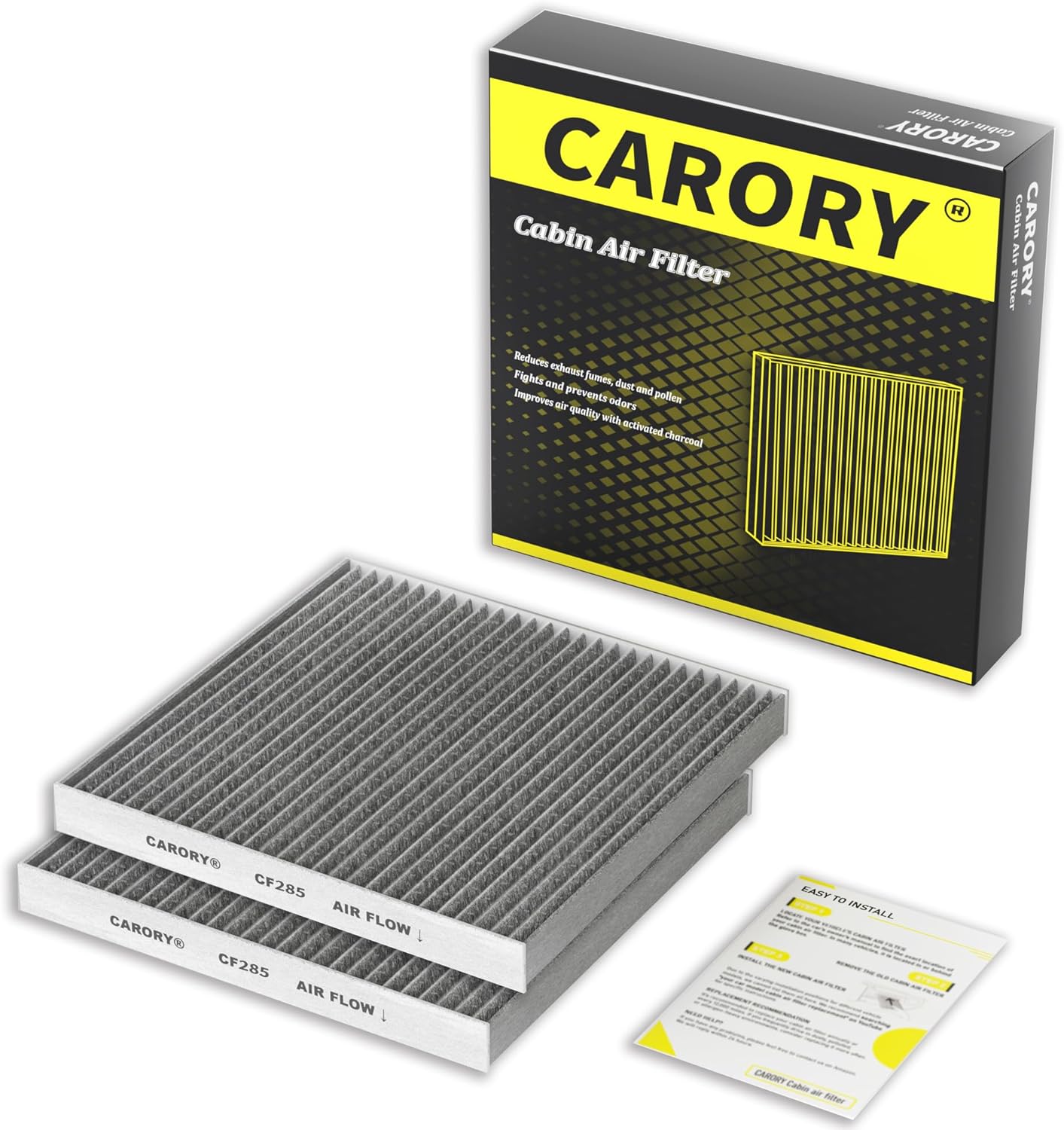
| Brand | Carory |
|---|---|
| Model | CF285-2PK |
| Item Weight | 13.1 ounces |
These Carory CF285 cabin air filters are sold in a two-pack and use an activated carbon layer to reduce odors and trap pollen, dust, and particulates entering the vehicle HVAC system. Installation is the same as other paper-type cabin filters: remove the glove box or access panel, swap the old filter for the new one, and confirm the directional airflow arrow. The activated carbon helps with smells from traffic and exhaust while the pleated media captures common allergens, which is useful for daily commuting and seasonal pollen. The filters cover the fitment references listed for many Subaru Outback model years in the article goal range. Packaged as a basic replacement, they offer affordable routine maintenance with no special tools needed. Limitations: these are disposable paper/carbon filters meant for periodic replacement rather than a washable long-life option, and performance will depend on correct fit and installation in the vehicle's filter housing.
Best for: Buyers who prioritize reliable, straightforward replacements to restore cabin air quality and reduce odors during daily driving and seasonal pollen peaks.
Less Ideal for: Drivers seeking a washable or lifetime cabin filter or those who want specialized high-efficiency particulate filters beyond basic activated carbon and pleated media.
- Activated carbon layer reduces cabin odors and fumes.
- Pleated filter media captures pollen, dust, and common particulates.
- Sold as a two-pack for convenient paired replacements.
- Direct-fit reference numbers provided for matching OEM replacement part codes.
- Disposable design requires periodic replacement rather than being reusable.
Verdict: A practical, budget-friendly two-pack with activated carbon that restores cabin air quality for mid-2010s Subaru Outback owners who want a simple factory-style replacement.
Choosing the Right 2015-2019 Subaru Outback Cabin Air Filter: Key Factors to Consider
Filtration Efficiency
Filtration efficiency determines how well a cabin air filter removes particles that matter in everyday driving, such as pollen, road dust, and fine brake dust. Higher-efficiency media will capture smaller particles, which helps allergy sufferers and reduces visible dust buildup on interior surfaces.
However, denser media can increase resistance to airflow. For the 2015-2019 Subaru Outback, choose a filter that provides documented particle capture performance without excessively restricting blower airflow under normal HVAC settings. Consider MERV-equivalent ratings or manufacturer particle retention data when comparing options.
Airflow and HVAC Load
Airflow through the filter affects cabin ventilation, defogging speed, and HVAC fan noise. A filter that is too restrictive can make the blower work harder, potentially reducing cabin airflow and increasing blower wear over time.
Look for filters designed to balance dust capture with low pressure drop. For drivers who frequently use the defogger or drive in heavy traffic, prioritize options tested for low airflow resistance while still providing adequate filtration for common airborne contaminants.
Fitment and Seal Integrity
A correct physical fit and a tight seal prevent unfiltered air from bypassing the media. The 2015-2019 Outback uses a specific cabin filter housing and frame; poorly fitting filters can rattle, allow gaps, or require shims to stay in place.
Check that the filter's frame tolerances and gasket features match the Outback's housing dimensions. Filters with reinforced edges or molded seals reduce the risk of bypass and ensure consistent performance over the service interval.
Media Type and Longevity
Different media types, such as pleated paper, electrostatically charged media, or multi-layer hybrid media, affect service life and performance in polluted or humid conditions. Pleat count and media surface area determine how much contaminant the filter can hold before restricting airflow.
Select a media that suits your driving environment. If you frequently encounter heavy dust, choose a higher-capacity pleated design. In areas with high humidity, corrosion-resistant frames and moisture-tolerant media help prevent breakdown and mold growth.
Odor and Gas Control
Some filters include activated carbon or other adsorbents to reduce odors and volatile organic compounds that enter the cabin from traffic or exhaust. For Outback owners who often drive in urban areas or near heavy traffic, odor-control media can noticeably improve comfort.
Keep in mind that carbon layers add thickness and may slightly increase airflow resistance. Decide whether odor reduction is an essential feature or a secondary convenience based on your typical routes and sensitivity to smells.
Installation Ease and Maintenance
How easy the filter is to replace affects whether it gets changed on schedule. The Outback's cabin pollen filter is accessible but can be awkward if filter dimensions or orientation are nonstandard. Clear installation markings, correct dimensions, and a sturdy frame simplify the DIY replacement process.
Also consider service interval recommendations. Filters with longer rated lifespans reduce replacement frequency, but you may still need to check them in dusty seasons. Pick a filter that fits cleanly and allows quick swaps during routine maintenance.
When To Replace the Cabin Air Filter
Replacement intervals vary with driving conditions. For typical driving in suburban or highway environments, inspect the cabin filter every 12 months or 12,000 miles, and replace as needed. If you routinely drive on gravel roads, in construction zones, or in areas with heavy pollen, check the filter more often.
Watch for practical signs that the filter needs attention. Reduced airflow at vent outlets during fan operation, longer defogging times, or a persistent musty or exhaust-like smell when HVAC runs indicate the media is loaded or compromised. Scheduled inspection makes replacement predictable and prevents unexpected HVAC performance issues.
- Inspect filter visually for dirt, discoloration, or debris buildup.
- Check cabin airflow and defogger performance as a functional test.
- Replace more frequently during high-pollen seasons or dusty driving.
How Cabin Filter Choice Affects HVAC Performance
The cabin air filter sits upstream of the blower and directly influences the volume and quality of air delivered into the cabin. A high-efficiency but high-resistance filter can reduce airflow, affecting comfort settings and HVAC responsiveness. Conversely, a low-resistance filter with poor filtration may protect airflow but let more particulates into the cabin.
When choosing for the 2015-2019 Outback, balance particulate capture against pressure drop. Consider HVAC performance in cold or humid conditions, where rapid defogging is important. Choosing a medium-efficiency design with good pleat area often yields the best day-to-day compromise between clean air and steady airflow.
- High resistance reduces blower output and can increase fan noise.
- Adequate pleat surface area extends service life while keeping airflow stable.
- Carbon layers help with odors but can slightly increase pressure drop.
Signs Your Cabin Filter Is Clogged or Failing
Several observable symptoms indicate a clogged or failing cabin filter. The most common are noticeably weaker airflow from the vents, slower windshield defogging, and new or worsening odors when the HVAC is operating. In severe cases, dust may start to appear on interior surfaces soon after cleaning.
Electrical or mechanical blower issues are less common but can be aggravated by a badly clogged filter that forces the blower to run under higher loads. If you notice unusual blower noise or inconsistent fan speeds, include the cabin filter check in your troubleshooting sequence.
- Weak vent airflow, especially at lower fan settings.
- Delayed or ineffective defogging of the windshield.
- Musty or exhaust-like odors entering the cabin.
DIY Replacement: What to Expect
Replacing the cabin air filter on a 2015-2019 Subaru Outback is commonly a straightforward DIY job that takes under 30 minutes for most owners. The filter is typically behind a glovebox or access panel; you will need basic hand tools and a clean work area to avoid introducing debris into the HVAC inlet.
When swapping filters, pay attention to airflow direction markings and ensure the new filter sits flush in the housing. Inspect the housing for leaves or debris and clean the cavity before installing the new media. Proper orientation and a secure fit prevent bypass and maintain the filter's rated performance.
- Have a flashlight and gloves for cleaner handling.
- Observe the airflow arrow and housing locating tabs.
- Clear out any trapped leaves and vacuum the compartment if needed.
Carbon Vs. Standard Media: Pros and Cons
Activated carbon layers capture odors and some gaseous pollutants that standard pleated media do not. For Outback owners exposed to frequent highway traffic or strong smells, carbon-enhanced filters can make the cabin noticeably more pleasant. However, carbon layers can add to media thickness and modestly increase airflow resistance.
Standard pleated filters often provide the best airflow-to-filtration ratio at a lower cost and with simpler installation. If odor control is not a priority, a high-quality pleated media filter with good pleat count typically offers longer service life and lower impact on HVAC performance.
- Carbon layers reduce odors but may slightly lower airflow.
- Standard pleated designs balance airflow and particle capture.
- Choose carbon only if odor or gas adsorption is a regular concern.
Still looking for the perfect fit?
Select your Subaru Outback configuration to see the most relevant Cabin Air Filters recommendations
How We Chose the Best 2015-2019 Subaru Outback Cabin Air Filter
We focused on attributes that matter specifically for the 2015-2019 Subaru Outback and filtered candidates by real-world fit and function. Primary evaluation criteria included filtration efficiency for common particulates like pollen and fine dust, measured or specified MERV-equivalent performance where available, and the effect on HVAC airflow and blower load. We also assessed physical fitment reliability to the Outback's cabin filter housing, including gasket design and dimensional tolerance, to avoid wobble or gaps that can bypass filtration.Durability and service life were considered, emphasizing media types and pleat density that balance lifespan with pressure drop. Ease of installation and clear replacement alignment were included since many owners replace this filter themselves. Corrosion or moisture resistance of the frame and media was checked for suitability in wet or snowy climates common to many Outback owners. We excluded options lacking verifiable fitment information for the 2015-2019 Outback, filters without clear filtration ratings, and any items without a replaceable pleated media design. Final selections represent a balance of filtration, airflow, fitment, and service life for everyday use.
Our full evaluation process is outlined in our review methodology.
FAQ
How often should I replace the cabin air filter in my 2015-2019 Outback?
For average driving, inspect the filter annually or every 12,000 miles and replace as needed. If you drive in dusty conditions or during heavy pollen seasons, check and likely replace it more frequently.
What are common cabin air filter symptoms I should watch for?
Common symptoms include reduced airflow from vents, slower windshield defogging, and persistent musty or exhaust-like odors when the HVAC runs. Visible dust on interior surfaces soon after cleaning is another sign.
Can I change the cabin air filter myself on a 2015-2019 Outback?
Yes. The cabin pollen filter is accessible and can usually be replaced with basic tools. Follow airflow direction markings and clear any debris in the housing before installation to ensure a proper seal.
Does a higher-efficiency cabin filter hurt HVAC performance?
Higher-efficiency media can increase airflow resistance, which may reduce vent output or slightly increase blower noise. For most drivers, a balanced medium-efficiency filter provides good particle removal without noticeably compromising HVAC performance.
Is activated carbon worth it for the Outback?
Activated carbon helps reduce odors and some gases, which is useful if you frequently encounter traffic or strong smells. If odor control is not a priority, a high-quality pleated filter without carbon often offers better airflow and longer life.
How do I confirm the correct cabin air filter size for my Outback?
Verify the filter dimensions against the Outback's service manual or the existing filter dimensions. Ensure the replacement matches the housing shape and thickness so it seals correctly and does not rattle in the compartment.
Final Verdict
When choosing a cabin air filter for a 2015-2019 Subaru Outback, prioritize a balance of filtration efficiency and low airflow resistance to maintain comfortable ventilation and effective defogging. Consider carbon-enhanced media if odor control is important, but be mindful that it can slightly increase pressure drop. Ensure the filter has a reliable frame and correct dimensions to prevent bypass and extend service life.Ultimately, pick a filter that matches your driving environment and maintenance preferences. Regular inspection and timely replacement protect cabin air quality and help the Outback's HVAC system perform reliably over time.
Explore More:
- Check out all Subaru Outback parts & accessories
- Explore Cabin Air Filters Maintenance & Repair Guides
- Explore HVAC
- Browse all Auto Parts
