

Note: This article contains affiliate links. If you click on these links and make a purchase, I may earn a small commission at no extra cost to you. This helps support my research and content. Read my full affiliate disclosure here.
If you own a Ford Ranger, choosing the right catalytic converter matters for emissions compliance, engine performance, and long-term reliability. A properly selected converter helps maintain exhaust flow while reducing harmful pollutants and can prevent recurring faults that trigger emissions-related indicators. This guide covers seven shortlisted Ford Ranger catalytic converter options that meet common fitment and emissions needs. We evaluated products for fit accuracy and emission reduction performance to help you pick the right unit for your application. Read on to find the factors to weigh before deciding.
Looking for other parts? See all Ford Ranger parts & accessories.
Top Picks at a Glance
| Best Reviewed A top-rated pick with lots of positive feedback | HIGHBRICK Catalytic Converter, direct-fit for Ford Ranger 4.0L (2001–2003) |  |
| Most Popular A crowd favorite that many people choose with confidence | Walker Ultra 15828 Direct-Fit Catalytic Converter for Ford Ranger |  |
| Best Quality Built to a higher standard if you want something more solid | Walker CalCat 82529 Universal Catalytic Converter |  |
| Best Budget The cheapest option that still gets the job done reliably | PHILTOP Rear Catalytic Converter Compatible with 1998–2000 Ford Ranger and Mazda B3000/B4000 |  |
| Most Sold A high-volume bestseller chosen again and again | Walker CalCat 84226 Catalytic Converter, CARB Certified for Ford Ranger |  |
| Best Value for Money The sweet spot between price and what you get | Walker Standard Direct-Fit Catalytic Converter for Ford Ranger |  |
| Best Overall The best all-around choice for most situations | Walker Ultra Direct-Fit Catalytic Converter for Ford Ranger | 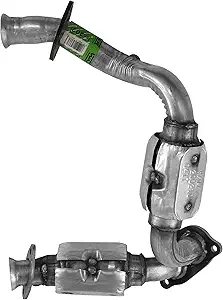 |
1. HIGHBRICK Catalytic Converter, direct-fit for Ford Ranger 4.0L (2001–2003)

| Vehicle compatibility | Ford Ranger 2001–2003, 4.0L |
|---|---|
| EPA status | Federal EPA compliant only |
| Construction | Stainless steel housing with ceramic core |
This HIGHBRICK catalytic converter is a bolt-on replacement intended to restore emissions control and drivability on compatible 4.0L Ford Ranger models from 2001–2003. It is built with a stainless steel outer shell and a ceramic core to perform the three-way catalytic reaction that reduces hydrocarbons, CO, and NOx. The unit is described as EPA compliant for federal use and includes mounting points and hardware to install without cutting or welding, which simplifies workshop or DIY replacement. Buyers can expect a factory-style installation process and a part that resists thermal shock for longer service life. Important limitations are that it is certified only to federal EPA standards and is not legal for sale or use in certain states with stricter rules, and it must be matched carefully to the Ranger engine and exhaust routing to ensure fit. For reliability-focused owners this converter prioritizes direct replacement fit and emission compliance where allowed, but check local regulations before purchasing.
Best for: Reliability-focused buyers who prioritize a direct-fit, factory-style replacement to restore emissions control and drivability on a 2001–2003 Ford Ranger 4.0L without extensive exhaust modifications.
Less Ideal for: Buyers in states with stricter emissions rules or anyone needing a California-compliant or multi-vehicle universal converter should look for compliant alternatives.
- Direct bolt-on design with mounting points and hardware included for straightforward installation
- Constructed with stainless steel exterior and ceramic core for thermal resistance and durability
- Designed to perform three-way catalytic conversion to control emissions and restore proper engine operation
- Meets federal EPA standards only and is not legal for sale or use in certain states with stricter regulations
- Compatibility limited to specific Ford Ranger model years and engine; requires verification before purchase
Verdict A practical, direct-fit replacement for 2001–2003 Ford Ranger 4.0L owners seeking a reliable federal-compliant catalytic converter where allowed.
2. Walker Ultra 15828 Direct-Fit Catalytic Converter for Ford Ranger

| Compatibility | 1995–1997 Ford Ranger; 1995–1997 Mazda B2300 |
|---|---|
| Inlet Outside Diameter | 2.5 Inches |
| Manufacturer | Tenneco (Walker) |
The Walker Ultra 15828 is a direct-fit catalytic converter designed specifically for 1995–1997 Ford Ranger applications. It replaces the factory unit with OE-style flanges, hangers, brackets and heat shields, so installation is a straightforward bolt-on job for technicians or DIYers comfortable working under the vehicle. The converter is built with a stainless-steel body and an EPA-compliant catalyst washcoat and precious metal load intended to restore emissions performance and pass inspections for the applicable model years. Practical benefits include factory-like fitment that minimizes exhaust modifications and robust hardware that resists corrosion around the mounting points. Limitations are that it is made for pre-OBDII Ranger models only and does not include installation consumables such as gaskets or bolt kits, so you should plan to buy those separately. Expect a reliable, long-lasting replacement when you need to return an older Ranger to factory emission levels rather than pursue performance upgrades.
Best for: Convenience-driven buyers who want a straightforward, factory-style replacement that reinstates emissions compliance on an older Ranger with minimal fabrication or modification.
Less Ideal for: Owners seeking performance gains, universal fit options, or converters for newer OBDII Rangers should look at other products or upgrades.
- Direct-fit design with factory-style flanges and hangers for bolt-on installation
- EPA-compliant washcoat and precious metal loading to meet emissions requirements for the covered model years
- Stainless-steel construction and OE-style heat shields for durability and undercarriage protection
- Designed to match original routing and length to minimize exhaust system adjustments
- Designed only for 1995–1997 Ford Ranger and Mazda B2300 applications, not suitable for newer vehicles
- Does not include exhaust gaskets or hardware, so additional parts are needed for installation
Verdict A convenient, factory-style replacement to restore emissions compliance on 1995–1997 Ford Rangers if you need a direct-fit catalytic converter.
3. Walker CalCat 82529 Universal Catalytic Converter

| Brand | Walker |
|---|---|
| Model | 82529 |
| CARB EO# | D-182-58 |
| Compatibility note | For OBDII vehicles and states requiring CARB-compliant converters |
The Walker CalCat 82529 is a CARB-compliant catalytic converter built for durability and emissions compliance. It is designed with a stainless-steel body, aluminized pipe sections, and heat shields to resist corrosion and manage underbody heat. The unit is offered as a universal-style converter with expandable bushings and a direct-fit approach intended to simplify installation for technicians, though some vehicles may still require minor fabrication or welding to achieve a final fit. Walker highlights an OE-style catalyst coating and a high-technology washcoat to maintain consistent conversion efficiency for OBDII systems, which helps the vehicle stay within emissions limits while preserving exhaust flow. In practice this converter suits professional fitment scenarios where longevity and regulatory compliance matter, but installers should expect to adapt the inlet or outlet on some exhaust systems and confirm Ford Ranger-specific fit before ordering. The practical benefit is a regulation-focused replacement that balances durability and emissions performance, while the main compromise is the potential need for fabrication for exact vehicle fitment.
Best for: Performance-oriented buyers who prioritize emissions compliance and durable, factory-quality replacement components and who expect to have a professional installer adapt the exhaust as needed.
Less Ideal for: Buyers seeking a guaranteed bolt-on, vehicle-specific converter or a do-it-yourself owner who cannot accommodate minor fabrication or welding.
- CARB-compliant for emissions-regulated areas, suitable for OBDII vehicles
- Stainless-steel body with aluminized pipe and heat shields for corrosion and heat resistance
- OE-style catalyst coating and high-technology washcoat for consistent conversion performance
- Universal design with expandable bushings to aid fitment and reduce installation time for professional installers
- Universal design may require cutting, welding, or adapter work for a precise fit on some exhaust systems
- Not guaranteed as a direct bolt-in for Ford Ranger without verification of inlet/outlet diameters
- No explicit fitment parts or vehicle-specific hangers included
Verdict A durable, CARB-compliant converter aimed at performance-focused owners and professional installers, but verify Ford Ranger fitment first.
4. PHILTOP Rear Catalytic Converter Compatible with 1998–2000 Ford Ranger and Mazda B3000/B4000

| Fitment | 1998–2000 Ford Ranger rear; Mazda B3000/B4000 compatible |
|---|---|
| Manufacturer | PHILTOP |
| Position | Rear |
This PHILTOP rear catalytic converter is a budget-focused replacement for 1998–2000 Ford Ranger and the equivalent Mazda B3000/B4000 models. It installs in place of the factory unit using the included gaskets and hardware so no modification is necessary for typical rear-muffler–area swaps. The unit uses a stainless steel aluminized pipe body and a double-layer, high-temperature ceramic carrier intended to improve flow and maintain oxygen storage for emissions control. For owners looking to restore emissions function or pass an emissions inspection outside of restricted states, it offers a practical way to replace a damaged or clogged converter without a high parts cost. Limitations include state-by-state legal restrictions for aftermarket catalytic converters and the usual caveat that long-term durability and exact emissions performance can vary compared with direct factory replacements. Expect this part to serve well as an economical, direct-replacement repair when compliance and fit are the priorities.
Best for: Budget-conscious owners focused on an affordable, straightforward emissions repair for a 1998–2000 Ford Ranger who prioritize low upfront cost and ease of installation.
Less Ideal for: Drivers in states with restrictive aftermarket converter laws or owners seeking a guaranteed factory-quality emissions match should consider higher-end or factory-replacement options.
- Direct-fit rear replacement with included gaskets and hardware for straightforward installation
- Stainless steel aluminized pipe body resists rust and extends service life
- Double-layer high-temperature ceramic carrier is designed to improve flow and oxygen storage
- EPA compliant for use in states that allow aftermarket converters
- Cannot be sold or installed in some states due to local emissions regulations
- Long-term durability and exact emissions performance may not match factory-quality converters
Verdict A cost-conscious, direct-fit rear catalytic converter for late-1990s Ford Rangers that prioritizes affordability and straightforward installation but is subject to state emissions restrictions.
5. Walker CalCat 84226 Catalytic Converter, CARB Certified for Ford Ranger

| Manufacturer | Walker Exhaust |
|---|---|
| Model | Walker Exhaust |
| Exterior | Machined |
The Walker CalCat 84226 is a direct-fit catalytic converter engineered to replace the factory unit on specific Ford Ranger model years without cutting or welding. It is CARB certified, which means it meets California emissions standards, and is EPA compliant for OBDII vehicles so it preserves legal emissions performance. Walker uses a stainless-steel body with OE-style flanges, hangers and brackets for a bolt-on installation that aligns with factory routing and heat shielding. The converter employs a high-technology washcoat and precise catalyst coating process to deliver consistent exhaust flow and emissions control. For a risk-averse buyer focused on reliable compliance and a straightforward installation, this unit reduces the need for fabrication and should integrate cleanly with factory exhaust hardware when fitment is correct. The main trade-offs are that installation still benefits from professional handling to ensure proper sealing and that fitment must be confirmed for the exact Ranger year and engine before purchase.
Best for: Practical, risk-averse buyers who prioritize emissions compliance and a factory-style replacement that minimizes modifications and future inspection risk.
Less Ideal for: Drivers seeking a low-cost universal or performance-tuned converter or those planning custom exhaust fabrication should consider other options.
- CARB certified and EPA compliant for OBDII vehicles, ensuring legal emissions performance in regulated areas
- Direct-fit design with OE-style hangers and flanges for bolt-on installation without cutting or welding
- Stainless-steel body and aluminized pipe with heat shields for corrosion resistance and durability
- Consistent catalyst coating and advanced washcoat formulation intended to maintain reliable emissions control
- Requires verification of exact Ford Ranger year and engine fitment before purchase
- Proper installation may need professional tools or an experienced technician to ensure correct sealing and hangar alignment
Verdict A factory-style, CARB-certified direct-fit converter that gives risk-averse Ford Ranger owners a reliable, regulation-compliant replacement with minimal fabrication.
6. Walker Standard Direct-Fit Catalytic Converter for Ford Ranger

| Brand | Walker |
|---|---|
| Model | Catalytic Converter |
| Manufacturer | Walker Exhaust |
| Manufacturer Part Number | 54613 |
This Walker Standard catalytic converter is a direct-fit replacement for older Ford Ranger trucks (pre-1995) intended to restore emissions control without custom fabrication. It installs in place using OE-style hangers, flanges and brackets, so most installs require only basic hand tools or standard shop work; some buyers report rusted fasteners on older trucks can complicate fitment. The unit includes aluminized heat shields where originally equipped and a machined exterior for durability, helping protect underbody components and maintain factory routing. Because it is EPA-compliant for pre-OBD vehicles and built to match factory attachment points, it is practical for owners who want a straightforward emissions replacement that behaves like a factory part. Limitations are that it is only intended for 1995-and-older applications, so it is not suitable for later Rangers or vehicles requiring modern OBD-II compliant converters, and aging hardware on the vehicle can add installation time and extras like clamps or pipe work.
Best for: Practical optimizers who want a durable, factory-like emissions replacement for an older Ford Ranger and prefer a straightforward, bolt-on repair over custom fabrication.
Less Ideal for: Owners of post-1995 Ford Ranger models or buyers seeking an OBD-II compliant converter with modern emissions controls should look elsewhere.
- Direct-fit design with factory-style hangers and flanges for bolt-on installation
- Includes aluminized heat shields to match factory protection and routing
- Built to meet EPA requirements for pre-OBD vehicles so it restores emissions control
- Thick flanges and brackets for improved strength and durability
- Compatible only with pre-OBD (1995 and older) vehicles
- Installation on older trucks may require cutting rusted bolts or additional exhaust parts
Verdict A budget-minded, factory-style replacement that restores emissions control on pre-1995 Ford Rangers with minimal fabrication required.
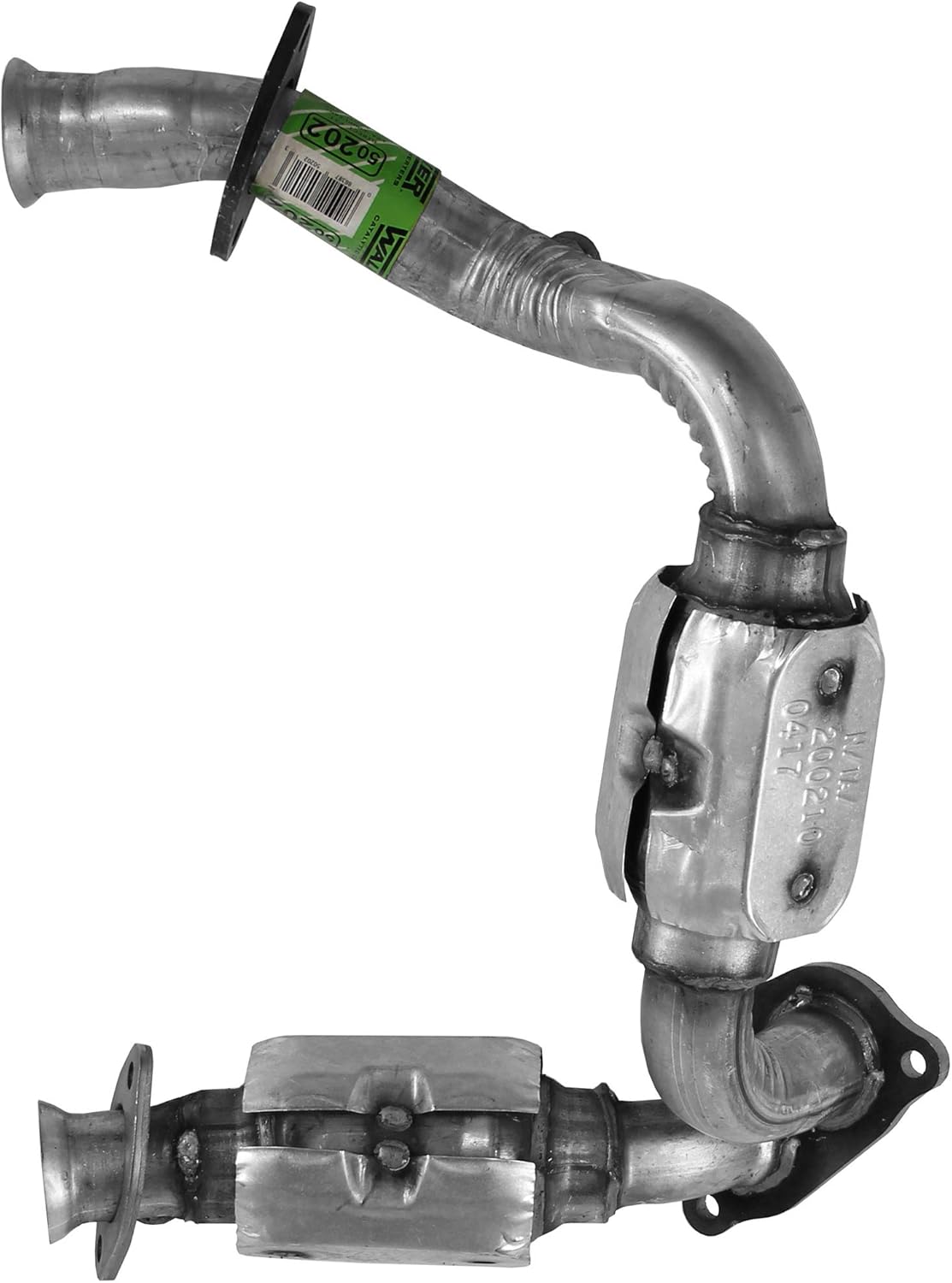
7. Walker Ultra Direct-Fit Catalytic Converter for Ford Ranger
| Brand | Walker |
|---|---|
| Manufacturer | Walker Exhaust |
| Item model number | 50202 |
| ASIN | B000VKYCN0 |
This Walker Ultra direct-fit catalytic converter is a bolt-on replacement intended for Ford Ranger applications and similar Ford models from the same era. It installs using factory-style flanges, hangers, brackets and heat shields so no welding or custom fabrication is required for a typical replacement job. The unit is built to meet EPA OBDII compliance for 1996-and-newer vehicles and uses a high-technology washcoat with an optimal precious metal load to restore emissions control and help the vehicle run as intended. Thick flanges and OE-style mounting points improve durability and make alignment during installation easier. Because it is a direct-fit part, buyers should confirm year, engine and trim compatibility before purchase; it is a replacement part rather than an upgraded high-flow or performance converter, so expect factory-level emissions control rather than measurable power gains. This product is best when you need a straightforward, compliant factory-quality replacement for a failing or removed converter on the specified Ranger fitment.
Best for: Balanced buyers who want a practical, factory-quality replacement to restore emissions compliance and normal operation on their Ford Ranger without fabrication work.
Less Ideal for: Drivers seeking a high-performance or racing-oriented exhaust upgrade should choose a performance converter or custom solution instead.
- Direct-fit design with factory-style hangers and flanges for bolt-on installation without welding
- EPA-compliant for OBDII vehicles, restoring required emissions control
- OEM-style washcoat and precious metal load to match factory emissions performance
- Robust construction with thick flanges, hangers and brackets for durability
- Not designed as a high-flow or performance converter so it will not increase horsepower
- Compatibility limited to specific vehicle years and trims, requiring verification before purchase
Verdict A practical, EPA-compliant direct-fit replacement that restores factory emissions control and installs like the original part.
Choosing the Right Ford Ranger Catalytic Converter: Key Factors to Consider
Fitment and Vehicle Specificity
Correct fitment is essential because the converter must line up with the Ranger's exhaust flanges, oxygen sensor ports, and mounting points. A unit designed specifically for the Ford Ranger reduces installation time and lowers the risk of leaks or sensor misalignment. If the converter requires modifications, consider how extensive they are and whether you have the tools or professional help to make those changes. Proper fitment also affects exhaust geometry and backpressure, which can influence engine performance and fuel economy.
Emission Reduction Performance
A catalytic converter's core composition and washcoat determine how effectively it converts hydrocarbons, carbon monoxide, and nitrogen oxides. Look for converters with documented emission reduction characteristics that match regulatory expectations for your vehicle's configuration. Effective emission performance helps keep the vehicle within legal limits and reduces the likelihood of failing emissions inspections. It also ties into engine management, because inefficient conversion can trigger fault codes tied to exhaust composition.
Material and Build Quality
Materials such as stainless steel housings and high-density ceramic or metallic substrates influence durability under high temperatures and corrosive exhaust conditions. Robust construction and quality welding reduce the chance of cracks and leaks over time. Heat rejection and corrosion resistance matter in regions with road salt or high humidity. A well-built converter is less likely to deteriorate prematurely, which reduces the need for frequent replacements and related labor.
Oxygen Sensor and Port Compatibility
Modern Ford Rangers rely on upstream and downstream oxygen sensors for feedback to the engine control system. Ensure the converter has the correct number and placement of sensor ports so the factory sensors can be used without extension harnesses or relocation. Using the right sensor configuration helps avoid incorrect readings that can lead to drivability issues or trigger diagnostic trouble codes. If sensor relocation is required, factor in the cost and complexity of harnesses or adapters.
Backpressure and Flow Characteristics
Catalytic converters introduce some resistance to exhaust flow, so their internal design affects backpressure. Excessive restriction can reduce power and throttle response, while too little mass can compromise emission conversion efficiency. Choose a converter that balances sufficient substrate volume for conversion with an internal design that preserves acceptable exhaust flow for the Ranger's engine size. Consider how aftermarket modifications to the exhaust system might change flow dynamics and whether the converter suits those changes.
Durability, Warranty, and Support
A longer warranty period and accessible technical support indicate manufacturer confidence and make resolving issues easier. Check what the warranty covers, such as premature failure due to material defects or core deterioration. Also consider the availability of replacement hardware, gaskets, and the ease of obtaining service information. Durable coatings and robust housings reduce long-term ownership costs by minimizing failures tied to corrosion or thermal cycling.
FAQ
What are common catalytic converter symptoms on a Ford Ranger?
Common symptoms often include reduced engine power, poor acceleration, and a noticeable drop in fuel economy. You may also hear rattling from the converter if the internal substrate has deteriorated. Some symptoms overlap with other exhaust or engine issues, so diagnostics are important before replacement.
Will a faulty catalytic converter turn on the check engine light on a Ford Ranger?
Yes, a failing converter can trigger the check engine light, typically through oxygen sensor readings that show abnormal exhaust composition. Diagnostic trouble codes related to catalytic efficiency or oxygen sensor readings often accompany converter issues, but similar codes can come from upstream problems.
Can I use a universal CAT converter fitment for a Ford Ranger?
Universal converters are sometimes usable, but they often require modifications to piping, flanges, or sensor placement. Vehicle-specific units reduce the need for adaptation and help ensure proper sensor alignment and exhaust sealing. Consider the complexity of installation if you choose a non-specific unit.
How long does a catalytic converter usually last on a Ford Ranger?
Lifespan varies widely depending on driving conditions, maintenance, and exposure to corrosion. Converters often last many years under normal driving, but repeated engine misfires, oil contamination, or corrosive environments can shorten service life. Regular maintenance and addressing engine faults promptly helps extend longevity.
Is catalytic converter replacement difficult on a Ford Ranger?
Difficulty depends on the converter location and whether the replacement is vehicle-specific. Some installations are straightforward with basic tools, while others require lifting the vehicle, cutting and welding, or special gaskets. If you lack exhaust experience, professional installation can avoid leaks and sensor issues.
How do exhaust emissions relate to catalytic converter condition?
The converter chemically reduces harmful exhaust components, so a degraded unit will be less effective at lowering hydrocarbons, carbon monoxide, and nitrogen oxides. Poor converter performance can lead to higher tailpipe emissions and increase the chance of failing emissions inspections.
How We Chose the Best Ford Ranger Catalytic Converter
Our selections focused on parts designed specifically for the Ford Ranger and those that meet common regulatory and fitment expectations. We prioritized converters with clear vehicle-specific fitment data, compatible flange and sensor locations, and documented emission reduction performance. Durability factors included construction materials, heat-resistant welding, and corrosion protection suitable for typical operating conditions. Flow characteristics and backpressure profiles were considered because they affect drivability and fuel efficiency. We also reviewed reported longevity, warranty coverage, and availability of replacement hardware or gaskets. We excluded parts intended for other vehicle models, universal heat-treatable cores without vehicle-specific fitment, and components lacking clear emissions compliance information. The final list reflects units that balance correct fitment, verified emissions performance, and build quality for Ford Ranger applications.
Our full evaluation process is outlined in our review methodology.
Conclusion
When choosing a Ford Ranger catalytic converter, prioritize correct fitment and proven emission reduction performance. Balance build quality and sensor compatibility against flow characteristics to avoid drivability tradeoffs. Consider durability and warranty as part of the total ownership picture, and address any underlying engine or sensor issues before installing a new unit. Doing so helps ensure the replacement performs reliably and maintains proper emissions control.
Explore More:
- Check out all Ford Ranger parts & accessories
- Explore Catalytic Converters Maintenance & Repair Guides
- Explore Exhaust & Emissions
- Browse all Auto Parts
