

Note: This article contains affiliate links. If you click on these links and make a purchase, I may earn a small commission at no extra cost to you. This helps support my research and content. Read my full affiliate disclosure here.
Picking the right radiator for your Ford Ranger matters because it directly affects engine temperature control, reliability, and long-term wear. A well-chosen radiator reduces the chance of overheating, minimizes coolant loss, and can extend the life of related components such as the thermostat and water pump. This guide shortlists the top radiator options for this truck and explains the key criteria used to evaluate them, including cooling capacity and construction quality. Read on for a concise overview of the leading picks and the factors to consider before you replace the radiator.
Looking for other parts? See all Ford Ranger parts & accessories.
Top Picks at a Glance
| Best overall The best all-around choice for most situations | DWVO Radiator compatible with 1998–2005 Ford Ranger/Explorer/Mountaineer 4.0L & 3.0L |  |
| Best Quality Built to a higher standard if you want something more solid | Auto Shack Radiator for Ford Ranger / Mazda B2500 (1998–2001) |  |
| Best Value The sweet spot between price and what you get | YITAMOTOR Radiator Compatible with 1998–2001 Ford Ranger 2.5L |  |
| Best budget The cheapest option that still gets the job done reliably | DNA Motoring Aluminum Radiator (OEM-RA-2173) Compatible with 98–11 Ford Ranger |  |
| Highest Rated A top-rated pick with lots of positive feedback | DWVO Complete Radiator Compatible with Ford Ranger & Mazda B3000/B4000 3.0L/4.0L V6 |  |
| Most popular A crowd favorite that many people choose with confidence | AUTOSAVER88 Radiator Compatible with Ford Ranger 3.0L/4.0L V6 |  |
| Best Seller A high-volume bestseller chosen again and again | Torchtree Aluminum Radiator Compatible with 1998–2011 Ford Ranger and Related Models |  |
1. DWVO Radiator compatible with 1998–2005 Ford Ranger/Explorer/Mountaineer 4.0L & 3.0L
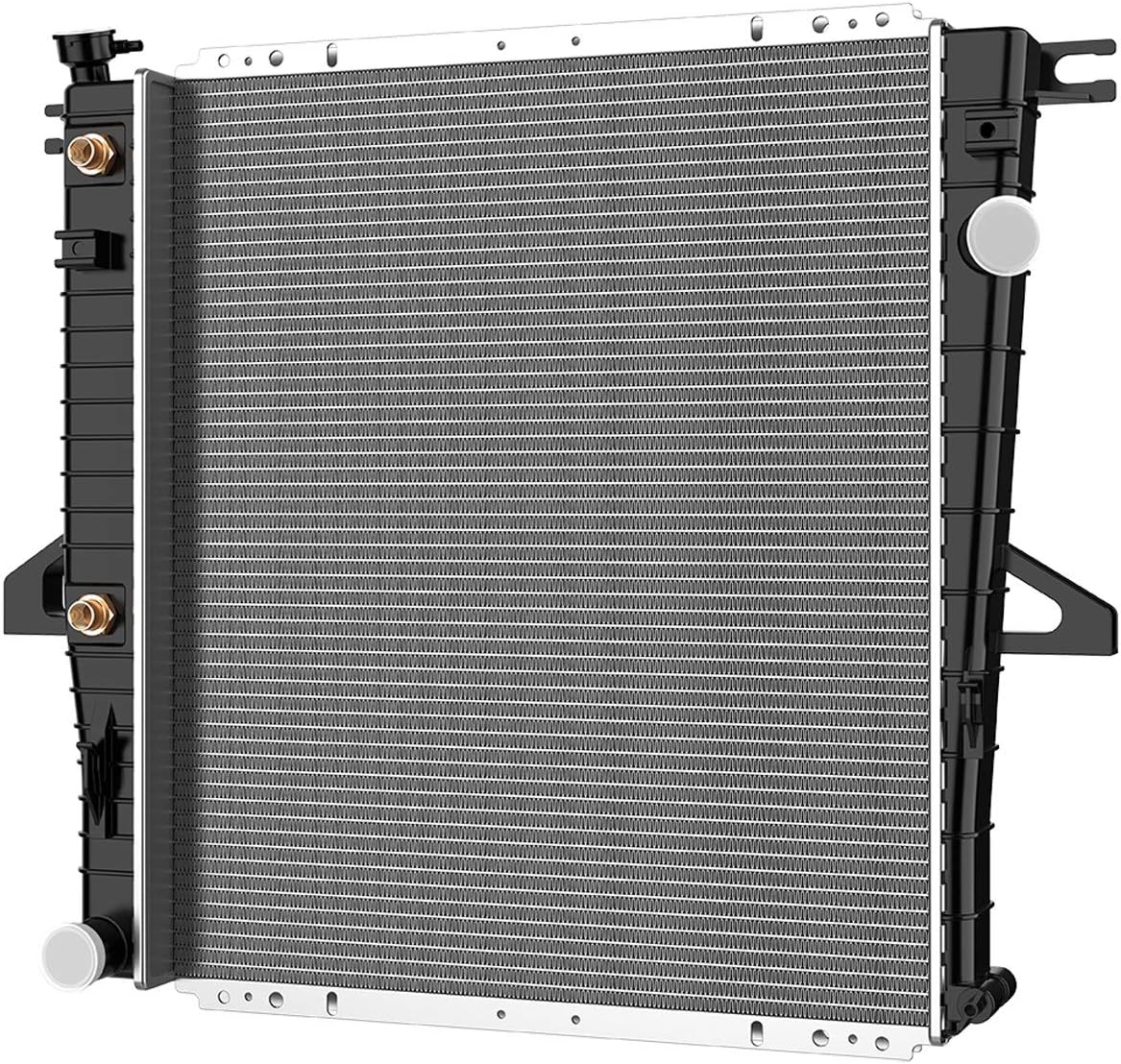
| Manufacturer Part Number | DWRD1086 |
|---|---|
| OEM Part Number | FD37071A,6L5Z8005DA |
| Compatible Engines | 3.0L and 4.0L V6 (listed Ford/Mercury models) |
| Core Material | Aluminum |
This DWVO radiator is a complete, direct-fit replacement designed for 3.0L and 4.0L Ford Ranger and related Ford/Mercury V6 models and is intended to restore proper engine cooling without modification. It installs in place of the factory unit and is commonly used when an original radiator leaks, is clogged, or fails from age. Key features include a high-density, multi-louvered aluminum core for improved heat dissipation, TIG-welded construction, PA66 GF30 inlet/outlet tanks, and an integrated brass transmission oil cooler for automatic-transmission models. The unit ships with corner foam protection and a user manual but not a radiator cap, so plan to reuse the original cap. Buyers will appreciate the OEM part-number match and the emphasis on fitment; several owners report straightforward swaps and steady temperatures after installation. Expect to have professional installation if you want warranty-level assurance and to replace related items like hoses or thermostat while the system is open. This radiator delivers factory-style cooling at value pricing but does not include small accessories such as the cap or mounting hardware in every case.
Best for: Balanced buyers who want a factory-style replacement that prioritizes fitment and reliable cooling without premium pricing for brand-name parts.
Less Ideal for: If you need a complete overhaul kit with new cap, hoses and hardware or a performance radiator for racing applications, look elsewhere.
- Direct-fit for specified Ford Ranger, Explorer and Mercury Mountaineer V6 applications to simplify installation
- Aluminum core with multi-louvered fins for efficient heat transfer
- TIG-welded construction and reinforced inlet/outlet tanks for improved durability
- Built-in brass transmission oil cooler for automatic-transmission models
- Radiator cap not included so you must reuse the original or buy a replacement separately
- Some buyers may prefer a radiator that includes mounting hardware or full accessory kit
Verdict: A value-focused, direct-fit aluminum radiator that restores factory cooling for specified Ford Ranger and related V6 models while leaving minor accessories to the buyer.
2. Auto Shack Radiator for Ford Ranger / Mazda B2500 (1998–2001)

| Manufacturer | Auto Shack |
|---|---|
| Item model number | RK803 |
| Exterior | Aluminum, Plastic |
| OEM Part Number | 2172, CU2172, F87HGGA |
This Auto Shack radiator is a direct-fit replacement built for 1998–2001 Ford Ranger and Mazda B2500 trucks and is intended to restore reliable cooling performance for daily driving and light towing. It installs in place of the factory unit and includes a single-core cooling core with a built-in transmission oil cooler compatible with automatic and manual transmissions. The aluminum core and plastic tanks aim to balance heat dissipation and cost, while the unit ships without a cap or installation hardware so you should reuse factory parts or buy replacements. In practice this radiator suits routine driving and moderate loads, keeping coolant temperatures steady when properly installed and bled. Fitment reviews show consistent correct fit on the specified Ranger/B2500 models, but buyers must verify engine, transmission, and cooling-package specifics before ordering. Professional installation is recommended because trimming, bracket alignment, or reuse of existing fittings may be necessary. For a performance-minded owner this is a practical factory-style replacement that prioritizes dependable cooling over racing-level upgrades.
Best for: Performance-oriented owners seeking a reliable factory-style replacement to restore cooling stability for a late 1990s Ford Ranger or Mazda B2500 while keeping installation close to stock behavior.
Less Ideal for: Drivers planning heavy towing, aggressive engine tuning, or track use should choose a high-capacity aftermarket performance radiator instead.
- Exact-fit design for 1998–2001 Ford Ranger and Mazda B2500 as reported by multiple installers
- Aluminum core for effective heat dissipation with plastic tanks to reduce cost and weight
- Integrated transmission oil cooler compatible with automatic transmissions
- Multiple customer reports of leak-free installs and solid performance under daily use
- Radiator cap and installation hardware are not included
- Single-row core may not match the cooling capacity of heavy-duty or performance upgrade radiators
Verdict: A dependable direct-fit radiator that restores factory-style cooling for 1998–2001 Ford Ranger and Mazda B2500 trucks with an integrated transmission cooler.
3. YITAMOTOR Radiator Compatible with 1998–2001 Ford Ranger 2.5L

| Compatibility | 1998–2001 Ford Ranger 2.5L L4 |
|---|---|
| Core material | High-density aluminum |
| Tanks | Glass fiber reinforced nylon PA66 |
| OEM part numbers | F87Z8005DA, F87Z8005GA, ZZP015200, ZZP315200 |
This YITAMOTOR radiator is a factory-style replacement built to fit 1998–2001 Ford Ranger 2.5L applications and restore the cooling system without modification. It uses a high-density aluminum core and an integrated aluminum oil cooler to improve heat dissipation compared with typical stainless-steel designs, while reinforced nylon tanks and seamless welds aim to reduce risk of cracking or leaking. Installation follows the original mounting points and is straightforward for a routine radiator swap when you follow the included instructions. Practical benefits include better cooling under load, pressure-tested packaging to reduce shipping damage, and parts that line up with factory hoses and brackets. Limitations are that the radiator cap is not included and professional installation is recommended if you are not comfortable draining and refilling the cooling system; compatibility checks are essential because fit depends on exact Ranger submodel and year. Expect a solid, budget-conscious replacement that behaves like a factory-quality unit when matched correctly to your Ranger.
Best for: Practical optimizers who want a budget-conscious, factory-style radiator swap that restores cooling performance without aftermarket bells and whistles.
Less Ideal for: Those seeking a heavy-duty performance upgrade or custom cooling modifications should consider purpose-built performance radiators instead.
- Built with a high-density aluminum core and integrated oil cooler for improved heat dissipation
- Seamlessly welded, reinforced nylon tanks to reduce cracking and leaks
- Designed to match factory mounting points for direct replacement and easier installation
- Pressure-tested and well packaged to arrive undamaged
- Radiator cap not included so a separate purchase may be necessary
- Fit depends on exact Ranger submodel and year so verification is required
Verdict: A practical, budget-focused direct-fit radiator for 1998–2001 Ford Ranger 2.5L owners who need reliable, factory-style cooling replacement.
4. DNA Motoring Aluminum Radiator (OEM-RA-2173) Compatible with 98–11 Ford Ranger

| Fitment | 1998–2011 Ford Ranger (automatic transmissions) |
|---|---|
| Construction | Full T-6061 aluminum |
| Position | Front |
This DNA Motoring aluminum radiator is a cost-focused replacement intended for 1998–2011 Ford Ranger vehicles with automatic transmissions. It replaces the factory unit with a direct bolt-on fit and a lightweight full T-6061 aluminum construction that aims to improve cooling efficiency. In practice it is used as a straightforward engine cooling swap when the original radiator is leaking or failing; installation is typically done by a DIYer or a shop and the part arrives ready to bolt in but without installation instructions. Reviewers report generally good fitment and cooling for everyday driving, though there are occasional quality-control issues such as damaged drain knobs or early leaks on some units. A few buyers noted differences in fin density and transmission cooler fitting sizes that required simple hose adapters. This radiator offers solid performance for the money if you need an affordable, OEM-style replacement, but factor in professional installation if you are unsure and be prepared to address minor fitment or hardware inconsistencies.
Best for: Budget-conscious Ford Ranger owners who need an affordable, factory-style radiator replacement and are comfortable with basic mechanical installation or using a shop.
Less Ideal for: Drivers seeking a heavy-duty or high-capacity performance radiator for towing, racing, or extreme hot-climate use should consider upgraded multi-row or purpose-built units instead.
- Direct bolt-on design for 1998–2011 Ford Ranger automatic-trans models
- Full T-6061 aluminum construction for lighter weight and improved heat dissipation
- Matches factory mounting for easy replacement in most installs
- Generally improves cooling efficiency compared with an aged radiator
- Occasional quality-control problems reported such as damaged drain petcock or leaks
- Transmission cooler fittings and fin density can differ from factory, sometimes requiring adapters
Verdict: A low-cost, full-aluminum direct-replacement radiator for Ford Rangers that offers good value if you accept occasional minor fitment or quality issues.
5. DWVO Complete Radiator Compatible with Ford Ranger & Mazda B3000/B4000 3.0L/4.0L V6

| Compatible engines | 3.0L and 4.0L V6 |
|---|---|
| Fitment | Ford Ranger, Explorer, Mazda B3000/B4000 (specified years) |
| Core material | Aluminum |
| Transmission cooler | Integrated brass oil cooler |
This DWVO complete radiator is a direct-fit replacement for select Ford Ranger and Mazda B3000/B4000 3.0L and 4.0L V6 applications and is intended to restore proper engine cooling after a failed original unit. It installs as a drop-in condenser-style radiator and is supplied as a full assembly with aluminum core, TIG-welded joints, molded inlet/outlet tanks and an integrated brass transmission oil cooler. In practice the high-density multi-louvered fins should improve heat transfer and the treated coating plus reinforced mounting foam help protect the core in transit and during installation. Many owners report straightforward installs and stable operating temperatures. Be aware there are mixed reports about leak and hose-retention issues on some builds, so professional installation and careful pressure checking after fitment are advisable. This radiator is a budget-friendly option that aims to match factory fitment and cooling rather than serve as a high-performance upgrade.
Best for: Reliability-focused buyers who want an affordable, factory-quality replacement to restore correct cooling on older Ford Ranger and compatible Mazda V6 trucks and who prioritize matching original fitment over aftermarket performance upgrades.
Less Ideal for: Drivers seeking a heavy-duty performance radiator or an upgraded all-aluminum welded core for high-stress towing, racing, or frequent severe-duty use should consider higher-end options.
- Direct-fit replacement for specified Ford Ranger and compatible Mazda/Explorer V6 models
- Aluminum core with high-density multi-louvered fins for improved cooling efficiency
- TIG-welded joints and brass transmission oil cooler integrated for ready-to-install assembly
- Includes protective foam packaging to reduce shipping damage
- Some users reported leaks or poor hose retention on certain units
- Does not include a radiator cap, requiring a separate purchase or reuse of the original cap
Verdict: A cost-conscious, direct-fit radiator that restores factory cooling for specified Ford Ranger and Mazda V6 models but requires careful installation and inspection due to some reported quality inconsistencies.
6. AUTOSAVER88 Radiator Compatible with Ford Ranger 3.0L/4.0L V6

| Core Size | 24" x 21" |
|---|---|
| Compatible OEM Part Numbers | 6L5Z8005DA, 1L5Z8005MA, 1L5Z8005NA, XL2Z8005LA |
| Brand | AUTOSAVER88 |
This AUTOSAVER88 radiator is a direct-fit replacement intended for Ford Ranger and compatible Ford/Mazda V6 models. It installs like a factory unit and is typically used to replace a failing or leaking radiator during routine cooling system repairs. Notable features include machined exterior tanks, listed OEM part number compatibility, and a core sized to fit the original mounting points. In practice buyers report straightforward installation and good initial fitment with standard hose and bracket connections, which makes it a convenient option for DIYers or quick shop jobs. Practical benefits include economy compared with dealer parts and the convenience of a plug-and-play swap that avoids radiator modifications. Important limitations are mixed reports on core density and manufacturing quality: some users note fewer cooling rows and lighter construction than factory radiators, while a minority reported leaks or poorly formed fittings. For that reason expect to inspect inlet/outlet fittings and support brackets at installation and be prepared to address minor alignment or coolant-line adjustments.
Best for: Convenience-driven owners who prioritize a quick, no-frills replacement that installs with minimal modification and gets the vehicle back on the road fast.
Less Ideal for: Owners seeking a heavy-duty, high-performance cooling upgrade or those who need a long-term, high-mileage OEM-equivalent core should consider higher-end radiators instead.
- Direct-fit design that matches factory mounting points for easier installation
- Machined exterior and OEM part number compatibility simplify part selection
- Affordable alternative to dealer replacement parts
- Many buyers report simple, straightforward installation with standard hoses and clamps
- Core has fewer rows and lower fin density than some factory units which may reduce long-term cooling capacity
- Occasional reports of poorly formed fittings or minor manufacturing defects requiring on-the-spot fixes
Verdict: A budget-friendly, direct-fit radiator that makes replacing a failed unit quick and easy but may not match OEM core density or long-term durability.
7. Torchtree Aluminum Radiator Compatible with 1998–2011 Ford Ranger and Related Models

| Compatible engines | 3.0L and 4.0L |
|---|---|
| Core thickness | 3/4 in |
| Inlet diameter | 1-1/2 in |
| Outlet diameter | 1-1/2 in |
| Exterior | Polished |
This Torchtree radiator is a full replacement unit intended as a direct bolt-on for 3.0L and 4.0L Rangers and related Explorer, Sport Trac, B3000/B4000 and Mountaineer applications. It combines an aluminum casing with plastic tank end connections and a corrugated fin design to promote heat dissipation while resisting corrosion and deformation. Installation is typical of a factory-style radiator swap and several buyers report it matched OEM mounting points and fit without modification; the product ships tested for leaks and includes standard 1.5-inch inlet and outlet connections. Practical benefits include a lightweight aluminum core that should restore proper cooling for older trucks and reduce the chance of leaks compared with a failing original. Limitations are the plastic tank connections, which are common at this price but can be more vulnerable than all-metal designs, and some buyers noted extra holes that may require plugs depending on trim or accessory fitment. Expect a sensible, value-oriented replacement that works well for routine cooling system restoration on the specified vehicles.
Best for: Risk-averse mainstream Ford Ranger owners who want a factory-style, budget-conscious replacement to reliably restore cooling on 3.0L and 4.0L engines without extensive modification.
Less Ideal for: Owners seeking a heavy-duty performance or all-metal radiator for high-boost, towing, or extreme-duty use should consider higher-spec alternatives.
- Direct bolt-on design reported to match factory mounting points for listed Ranger and Explorer models
- Aluminum core with corrugated fins for improved heat dissipation and corrosion resistance
- Factory-style inlet and outlet sizes (1.5 in) for straightforward hose connection during replacement
- Supplier reports leakage testing before shipment to reduce risk of arriving with defects
- End tanks use PA81 plastic which can be less durable than full-metal tanks over long term
- May include extra mounting/hole locations that require plugging or minor adjustment on some trucks
Verdict: A practical, factory-style aluminum replacement radiator that restores cooling for 3.0L and 4.0L Rangers and related models at a value-oriented price.
Looking for the perfect fit?
Select your Ford Ranger configuration to see the most relevant Radiators recommendations
Choosing the Right Ford Ranger Radiator: Key Factors to Consider
Cooling Capacity and Core Design
Cooling capacity is the core function of a radiator and determines how well it dissipates heat from the engine coolant. Larger core surface area, more cooling rows, and efficient fin design increase the radiator's ability to shed heat, which matters if you tow, carry heavy loads, or drive in hot climates.
Core design also affects airflow resistance. A radiator that balances high heat transfer with low airflow restriction helps maintain stable engine temperatures without overworking the cooling fan. When comparing options, look for published heat rejection specs or core dimensions to match the thermal requirements of your engine.
Materials and Corrosion Resistance
The materials used for the core, tanks, and fittings influence durability and long-term performance. Aluminum cores with brazed construction are common for their balance of weight, heat transfer, and corrosion resistance. Plastic tanks reduce weight and cost but may become brittle over many heating cycles.
Consider the local environment and coolant chemistry because salty roads or incompatible coolants accelerate corrosion. Better material choices and protective coatings can reduce the likelihood of leaks and extend service life, lowering lifetime maintenance requirements.
Fitment Accuracy and Mounting
A radiator that fits precisely with factory mounting points, hose locations, and sensor ports reduces installation time and the chance of leaks or mechanical interference. Proper fitment also ensures that shrouds, fans, and overflow connections align correctly, which affects airflow and cooling performance.
Check whether the radiator matches the Ranger's specific engine and model year mounting geometry. Small differences in bracket placement or inlet/outlet orientation can necessitate modifications that increase labor and complicate future maintenance.
Pressure Rating and Cap Compatibility
A radiator must maintain the correct system pressure to keep coolant boiling point elevated and prevent vapor lock. Pressure rating is tied to tank strength, cap compatibility, and seam quality. A radiator with an appropriate pressure rating for the vehicle prevents premature coolant boiling and helps the heater core perform reliably.
Ensure the replacement accepts the correct radiator cap type and pressure value used in the Ranger. Mismatched caps or lower-rated tanks can lead to coolant loss, overheating, or repeated pressure-related failures.
Serviceability and Installation Considerations
Ease of installation and future serviceability affect total ownership cost. Radiators that allow straightforward hose access, have replaceable fittings, or use standard hose sizes make maintenance and repairs simpler. Consider whether the radiator requires relocation of ancillary parts or cutting of shrouds, which adds complexity.
Also evaluate whether the design permits easy flushing, sensor access, and drain access. A radiator that simplifies routine tasks like coolant changes or leak checks will reduce labor time and often reduce the chance of installation errors.
Warranty and Manufacturer Support
Warranty coverage offers insight into expected longevity and manufacturer confidence. A solid warranty can offset concerns about premature failure and gives a clear remedy if defects arise. Look for coverage that addresses leaks and structural failures over a meaningful time period.
Manufacturer support also matters for replacement parts, technical guidance, and availability of compatible fittings. Good post-sale support reduces downtime and simplifies warranty claims or troubleshooting if issues appear after installation.
How We Chose the Best Ford Ranger Radiator
We selected radiators that meet the specific cooling demands and mounting points typical of the Ford Ranger platform, focusing on components that offer dependable performance in daily driving and towing scenarios. Key evaluation criteria included cooling capacity and heat dissipation, which determine how effectively a radiator controls engine temperature under load. Build quality and materials were assessed to gauge corrosion resistance and longevity. Fitment accuracy and compatibility were prioritized to ensure straightforward installation and correct hose and bracket alignment. Ease of installation and serviceability were considered because many buyers need a radiator that can be replaced or serviced without major modifications. We also reviewed warranty terms and manufacturer support as indicators of long-term reliability. Exclusions: we omitted radiators that lacked clear vehicle-specific fitment data, used unverified materials, or had insufficient cooling specifications for the Ranger's engine options. Products that required significant modification to install were not included.
Our full evaluation process is outlined in our review methodology.
FAQ
How do I know if my Ford Ranger radiator is failing?
Common signs of radiator problems include frequent overheating, visible coolant leaks under the vehicle, low coolant level without obvious external leaks, and steam or coolant smell while driving. You may also notice inconsistent cabin heat or warning lights related to engine temperature. If you observe these symptoms, inspect hoses and connections as well as the radiator core for damage.
Can I replace the Ford Ranger radiator myself?
Many owners can replace a radiator with basic mechanical skills and the right tools, but the job requires draining coolant, disconnecting hoses and fans, and ensuring proper reinstallation of sensors and shrouds. Follow a service manual or a reliable installation guide and be mindful of correct torque values and hose clamp positioning. If the installation requires modification or you are unsure, consider professional assistance.
Should I perform a coolant flush when replacing the radiator?
A coolant flush is usually recommended when replacing a radiator to remove debris and old coolant that can reduce performance or contaminate the new unit. Flushing helps ensure the cooling system is clean and that the new radiator is not exposed to residual corrosion or sediment. Use the coolant type and mix recommended for the vehicle.
What causes radiator leaks in a Ford Ranger?
Leaks often stem from corrosion, physical damage to the core or tanks, failed hose connections, or degraded seals. Repeated temperature cycling and road debris can accelerate wear. Regular inspections and timely coolant maintenance reduce the risk of leakage, and replacing old hoses and clamps during a radiator replacement lowers the chance of future failures.
How can I choose between OEM and aftermarket radiators?
The decision depends on priorities like fitment precision, warranty, and cost. OEM-style units typically match factory form and fit closely, which simplifies installation, while aftermarket radiators may offer different materials or enhanced cooling features. Evaluate construction quality, published cooling specs, and warranty terms rather than assuming one option is always superior.
Will upgrading the radiator prevent all overheating issues?
Upgrading to a higher-capacity radiator can reduce overheating risk, but it may not solve issues caused by a failing water pump, clogged thermostat, collapsed hoses, or low coolant. A holistic approach that inspects the entire cooling system and addresses weak components will have the best chance of resolving persistent overheating.
Conclusion
Choosing the right radiator for your Ford Ranger means balancing cooling capacity, build materials, and fitment accuracy. Prioritize a unit that provides adequate heat rejection for your typical driving conditions and that matches the Ranger's mounting and hose orientations to minimize installation hassle.Also weigh long-term considerations such as corrosion resistance, pressure rating, and warranty. Addressing related components like hoses, the thermostat, and coolant quality at the same time will help ensure the new radiator delivers reliable performance and reduces the likelihood of repeat repairs.
Explore More:
- Check out all Ford Ranger parts & accessories
- Explore Radiators Maintenance & Repair Guides
- Explore Cooling System
- Browse all Auto Parts
