

Note: This article contains affiliate links. If you click on these links and make a purchase, I may earn a small commission at no extra cost to you. This helps support my research and content. Read my full affiliate disclosure here.
If you own a 2003-2008 Subaru Forester, worn brake pads and warped rotors can noticeably affect stopping distance, pedal feel, and cabin noise. Choosing the right brake pad & rotor kit ensures the front or rear braking system is returned to factory-like performance and longevity.This guide covers six shortlisted brake pad and rotor kits selected for fitment to the 2003-2008 Forester. We focus on real-world decision points like rotor thickness and run-out tolerances, pad material and bedding behavior, fitment compatibility, and installation practicality. Read on to compare kits that balance noise, dust, and stopping power, and to learn which factors matter most for safe, reliable braking.
Looking for other parts? See all Subaru Forester parts & accessories.
Top Picks at a Glance
| Best Quality Built to a higher standard if you want something more solid | PowerStop Z23 Evolution Sport Brake Pad and Drilled & Slotted Rotor Kit (K2376) |  |
| Best Value The sweet spot between price and what you get | Detroit Axle 8pc Brake Kit with Front and Rear Rotors and Ceramic Pads |  |
| Best Budget The cheapest option that still gets the job done reliably | Detroit Axle Front Brake Kit — 11.54" Rotors with Ceramic Pads |  |
| Highest Rated A top-rated pick with lots of positive feedback | PowerStop Autospecialty Front and Rear Brake Kit with Z17 Ceramic Pads and Rotors |  |
| Most Popular A crowd favorite that many people choose with confidence | Detroit Axle Front and Rear Drilled & Slotted Brake Kit with Ceramic Pads for Subaru Forester/Impreza/Saab 9-2X |  |
| Best Seller A high-volume bestseller chosen again and again | Detroit Axle Front and Rear Brake Rotors with Ceramic Brake Pads Kit |  |
1. PowerStop Z23 Evolution Sport Brake Pad and Drilled & Slotted Rotor Kit (K2376)

| Included components | Front and rear Z23 ceramic pads, drilled & slotted rotors, installation hardware |
|---|---|
| Manufacturer Warranty Description | 36 Month / 36,000 Mile Limited Warranty |
| Automotive Fit Type | Vehicle Specific Fit |
| Compatible with Vehicle Type | Car, Truck, Van |
This all-in-one kit replaces both pads and rotors front and rear with PowerStop Z23 carbon-fiber ceramic pads and drilled-and-slotted rotors, designed as a bolt-on upgrade for daily-driven Subarus. The Z23 pads use a low-dust ceramic compound reinforced with carbon fiber to give stronger, fade-resistant stopping power while keeping brake noise low thanks to chamfers and stainless shims. The rotors are precision drilled and slotted to help vent heat and clear debris, and a zinc-type plating helps resist surface corrosion. Installation hardware and grease are included so a competent DIYer can swap the whole set without modifications. In practice this kit delivers crisper initial bite compared with many stock replacements and noticeably cleaner wheels from reduced dust, with better high-temperature control during spirited driving. The kit is aimed at improved street performance rather than track-only endurance, so drivers expecting extreme motorsport durability may want a more competition-focused rotor or pad compound.
Best for: Drivers who want a noticeable, low-dust braking upgrade for spirited street driving and daily commuting on a 2003–2008 Forester, and who value easier DIY installation and improved pedal feel.
Less Ideal for: Enthusiasts who run frequent track days or demand extreme fade resistance and long-duration high-heat performance should consider track-focused pads and rotors instead.
- Carbon-fiber infused ceramic pads deliver stronger, fade-resistant stopping with low dust
- Drilled and slotted rotors improve cooling and help clear gas and debris under heavy use
- Includes stainless-steel hardware and grease for straightforward bolt-on installation
- Zinc-type plating on rotors reduces surface rust and keeps them looking better behind wheels
- Designed more for street performance than continuous track use where aggressive compounds and heavier-duty rotors are preferred
Verdict: A convenient bolt-on upgrade for 2003–2008 Subaru Forester drivers seeking stronger, low-dust street braking with improved cooling and simple DIY installation.
2. Detroit Axle 8pc Brake Kit with Front and Rear Rotors and Ceramic Pads

| Fits rotor sizes | Front 11.54 inch, Rear 10.47 inch |
|---|---|
| Pads | Ceramic, hardware included |
| Kit contents | 2 front rotors, 2 rear rotors, 2 front pads, 2 rear pads |
| Manufacturer | Detroit Axle |
This Detroit Axle 8-piece brake kit supplies both front and rear rotors and ceramic pads so you can service all four corners in one job. Installation is the same as a factory-style replacement: the rotors swap in where the original discs were and the ceramic pads install with included hardware. The rotors are stated to meet or exceed factory specifications and the pads are ceramic, which typically offer quieter operation and less dust than semi-metallic compounds. For a practical DIY or budget-focused repair, having matched rotors and pads in one kit reduces part-matching headaches and helps ensure consistent braking feel front to rear. Limitations to expect are that ceramic pads can produce slightly less initial bite than aggressive compounds and the kit is sold as a direct replacement rather than an upgraded performance option, so it is aimed at restoring everyday braking rather than track use.
Best for: Buyers who want a practical, one-purchase solution to replace worn brakes and restore factory-style stopping on daily-driven Subarus, especially DIYers looking to complete a full front-and-rear service in a single visit to the garage.
Less Ideal for: Drivers who prioritize high-performance braking for track days or heavy towing should choose specialty performance rotors and pads instead.
- Complete kit includes front and rear rotors plus front and rear ceramic pads and hardware for a full brake job
- Rotors built to meet or exceed factory specifications to ensure correct fit and finish
- Ceramic pads tend to run quieter and produce less brake dust than many metallic pads
- Single-purchase kit simplifies parts matching and reduces the chance of mixing pad compounds
- Ceramic pads are tuned for comfort and low dust rather than aggressive stopping or track performance
- Kit is a direct replacement option and not a performance upgrade for heavy-duty or racing use
Verdict: Choose this all-in-one kit if you want an affordable, factory-style brake replacement that restores reliable daily braking with minimal parts hassle.
3. Detroit Axle Front Brake Kit — 11.54" Rotors with Ceramic Pads

| Rotor diameter | 11.54 inch (293mm) |
|---|---|
| Includes | 2 front rotors, 2 front ceramic pads |
| Vehicle type compatibility | Car |
| Orientation | Front |
This Detroit Axle front brake kit supplies two vented 11.54-inch rotors and a pair of ceramic front pads intended as a vehicle-specific replacement for select 2003–2008 Subaru models and the Saab 9-2X. The rotors are zinc plated to resist corrosion and feature ventilation slots to help dissipate heat for more consistent braking under repeated stops. The ceramic pads are advertised as low-noise and nonmetallic, which typically produces quieter operation and less brake dust compared with metallic compounds. Fitment is machined to match factory locating holes, so installation should be straightforward for a DIYer or a shop without modifications. Trade-offs to expect are that ceramic pads prioritize quiet and low dust over maximum fade resistance under heavy track use, and aftermarket rotors may not match the longevity of premium factory-quality discs in all driving conditions. The kit includes installation hardware and carries a long warranty, making it a practical option for economical repairs and routine maintenance on covered Forester models.
Best for: Buyers seeking an affordable, ready-to-install front brake replacement for covered Subaru Forester years who prioritize quiet operation, low brake dust, and straightforward DIY or shop installation.
Less Ideal for: Drivers who frequently do high-speed track sessions, heavy towing, or require maximum fade resistance should consider performance-oriented brake compounds and rotors instead.
- Complete front kit with both rotors and ceramic pads for one-stop replacement
- Vented rotors with slots for improved heat dissipation during repeated braking
- Zinc plating helps resist surface corrosion and visible wheel dust
- Machined locating holes for direct-fit installation without modifications
- Includes installation hardware and a long manufacturer warranty
- Ceramic pads offer quieter operation but are less suited to aggressive or track driving where higher fade resistance is required
Verdict: A budget-friendly, direct-fit front brake kit for covered Forester models that delivers quiet, low-dust ceramic braking and corrosion-resistant vented rotors for routine road use.
4. PowerStop Autospecialty Front and Rear Brake Kit with Z17 Ceramic Pads and Rotors

| Included Components | 4 OE Brake Rotors, Z17 Ceramic Brake pad Sets, Installation Hardware, Brake Lube |
|---|---|
| Manufacturer Warranty Description | 1-year/12,000-mile |
| Compatible with Vehicle Type | Car, Truck |
| Orientation | Dual |
This PowerStop Autospecialty kit bundles everything needed to restore factory-style braking on compatible 2003–2008 Subaru Forester models with rear drum brakes. The kit supplies two front replacement rotors, two rear drums, a front Z17 ceramic pad set, rear shoes with hold-down hardware, stainless hardware and brake lube for a single purchase installation. The rotors are mill balanced and cast to tight tolerances for smooth, vibration-free stopping, while the Z17 ceramic pads aim for low dust and quiet operation compared with older stock pads. Including drums, shoes and installation hardware makes the kit a practical one-stop solution for a full axle refresh and reduces parts sourcing time. Expect OEM-like stopping feel and easy bolt-on fitment when installed correctly, though professional installation is recommended if you lack experience with drum assemblies. The kit focuses on stock performance rather than high-performance braking, so it is intended for daily-driven Foresters needing reliable, low-maintenance replacement rather than aggressive track use.
Best for: Drivers who prioritize dependable, low-dust, OEM-style braking for daily driving and want a single kit that replaces both front and rear components without sourcing separate parts.
Less Ideal for: Enthusiasts seeking upgraded performance for towing or track driving or owners who require rear disc conversions should look at performance-specific kits instead.
- Complete kit includes rotors, drums, pads, shoes and installation hardware for a single purchase brake refresh
- Mill-balanced rotors cast to OE tolerances for smooth, vibration-free braking
- Z17 ceramic pads formulated for low dust and reduced noise compared with many stock pads
- Includes stainless-steel hardware and brake lube to simplify installation
- Designed for stock performance only and not tuned for heavy towing or track use
- Rear component is drum-based so less heat capacity and modulation than rear disc setups
Verdict: If you want a reliable, bolt-on, factory-style brake refresh for a 2003–2008 Subaru Forester with rear drums, this all-in-one kit makes the job simple and dust-minimized.
5. Detroit Axle Front and Rear Drilled & Slotted Brake Kit with Ceramic Pads for Subaru Forester/Impreza/Saab 9-2X

| Compatible with Vehicle Type | Car |
|---|---|
| Automotive Fit Type | Vehicle Specific Fit |
| Orientation | Dual |
| Manufacturer Warranty Description | 10 Year |
| Model Year | 2004 |
This Detroit Axle kit supplies both front and rear drilled and slotted rotors together with ceramic front and rear pads, hardware, a brake cleaner and a small bottle of brake fluid, sized to fit specific Subaru Forester and Impreza WRX (non-STI) models and Saab 9-2X Aero. The drilled and slotted rotors are ventilated and zinc plated to help cooling and corrosion resistance, while the ceramic pads promise quieter operation and low dust compared with semi-metallic compounds. Installation is straightforward for a competent DIYer or a shop because locating holes are machined to match factory fitments and the kit includes mounting hardware. This is a good option if you want a matched set and an upgrade from worn stock parts without hunting separate components. Limitations: the kit is vehicle- and configuration-specific so confirm exact fitment before buying, and ceramic pads generally offer gentler bite under extreme track conditions compared with performance metallic pads.
Best for: Buyers who want a fully matched front-and-rear replacement kit that restores braking performance with quieter, lower-dust ceramic pads and dependable factory-style fitment.
Less Ideal for: Drivers who prioritize maximum track performance or aggressive braking feel should consider performance-oriented metallic pads or specialty rotors instead.
- Complete matched set includes front and rear drilled/slotted rotors, ceramic pads, installation hardware and basic fluids
- Zinc plating and ventilation slots aid corrosion resistance and faster heat dissipation
- Ceramic pads produce lower dust and typically quieter braking than metallic pads
- Vehicle-specific machining for locating holes helps fit without modifications
- Ceramic pads deliver less initial bite and fade resistance than high-performance metallic pads under heavy track use
Verdict: Choose this kit when you want a complete, vehicle-specific rotor-and-pad replacement that improves cooling and reduces dust while maintaining factory-style fit and quiet operation.
6. Detroit Axle Front and Rear Brake Rotors with Ceramic Brake Pads Kit
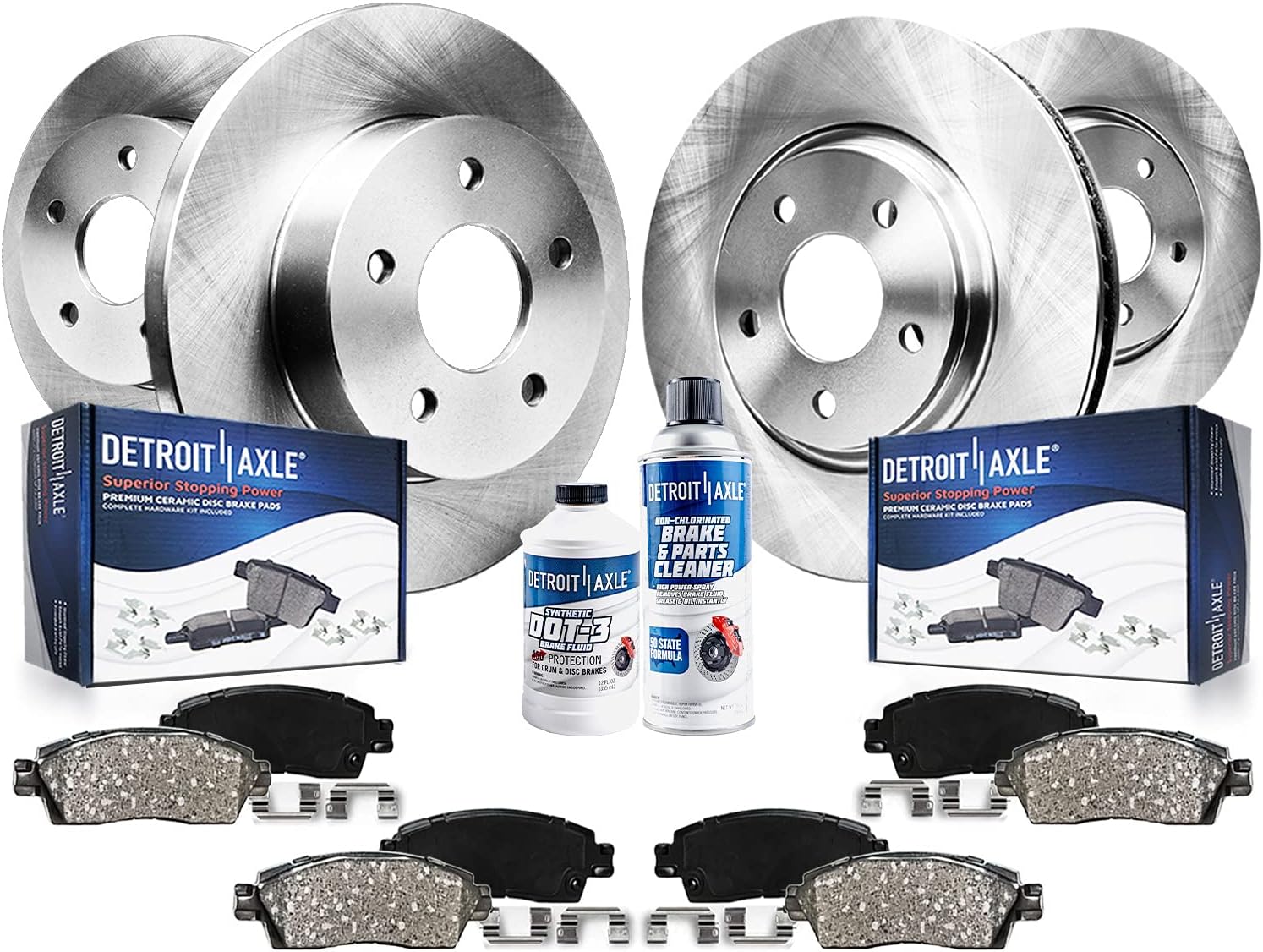
| Fitment measurement | 11.54 inch front, 11.26 inch rear |
|---|---|
| Brake pad material | Ceramic |
| Package contents | 2 front rotors, 2 rear rotors, front and rear pads, brake cleaner and fluid |
| Manufacturer | Detroit Axle |
| Manufacturer part number | 10PR2200130 |
This Detroit Axle kit supplies two front and two rear rotors plus ceramic front and rear pads and small bottles of brake cleaner and fluid, intended as a direct replacement for compatible Subaru Forester brake systems. The drilled and slotted rotors are finished to match factory fitment and aim to improve heat dissipation and fade resistance compared with plain rotors. Ceramic pads offer quieter operation and lower dust levels than semi-metallic compounds, making them a good choice for daily driving. The package is useful for a full-service brake job since it groups all four rotors and both pad sets together, saving the trouble of sourcing parts separately. On the other hand, drilled and slotted rotors can wear pads a bit faster and are more performance-oriented than strictly necessary for calm, low-mileage driving. Also the kit includes small consumables but not hardware like caliper pins or hoses, so plan on reusing or buying those separately if needed.
Best for: A buyer who wants a full, factory-fit replacement kit for a Subaru Forester and values quieter ceramic pads and improved rotor cooling for everyday driving and occasional spirited use.
Less Ideal for: Not the best choice for owners seeking the lowest-cost minimal replacement or those who only need a single axle service rather than a full kit.
- Complete front-and-rear set simplifies a single-service brake replacement
- Drilled and slotted rotors improve heat dissipation and help reduce fade under heavier stopping
- Ceramic pads reduce noise and produce less brake dust than many semi-metallic pads
- Built and tested to meet factory-style fit and durability claims
- Does not include some wear hardware or caliper components needed for a full install
- Drilled and slotted surfaces can accelerate pad wear compared with plain rotors
Verdict: Choose this kit when you want a single, factory-fit replacement that gives quieter ceramic pads and rotors designed to reduce heat for a full Forester brake service.
Choosing the Right 2003-2008 Subaru Forester Brake Pad & Rotor Kit: Key Factors to Consider
Fitment and Compatibility
Correct fitment is fundamental for safe braking on a 2003-2008 Subaru Forester. Rotors must match the vehicle's diameter, thickness, and hub bore to avoid run-out that causes vibration. Pads need the correct backing plate shape and clip locations so they sit securely in the caliper and do not shift under braking.
A kit that lists explicit Forester 2003-2008 fitment or provides vehicle-specific part numbers reduces the risk of ordering components that will not install cleanly. Pay attention to whether the kit covers front or rear application, since specifications and hardware differ between axles. Proper fitment reduces installation time and prevents issues like uneven wear or brake drag.
Rotor Specifications and Surface Finish
Rotor thickness, minimum thickness, and surface finish all affect heat capacity and how the pads mate to the rotor. Thicker rotors typically absorb and dissipate heat better, reducing fade during repeated stops; but they must match the Forester's hub clearance and caliper piston travel. Minimum thickness tells you when a rotor must be replaced to remain safe.
Surface finish and coating influence bedding and corrosion resistance. A machined, balanced rotor with a protective coating on the hat area will resist rust without altering the braking surface. For drivers who tow, haul, or do spirited driving, rotors with better heat management and balanced run-out perform more consistently under stress.
Pad Material and Performance Characteristics
Pad compound determines initial bite, peak friction, longevity, dust levels, and noise. Ceramic-style compounds tend to produce less brake dust and lower noise, while semi-metallic compounds often offer higher initial friction and better heat tolerance during aggressive use. Understanding the trade-offs helps pick a kit that matches your driving: daily commuting, highway miles, or more demanding conditions.
Also consider how the pads behave during bedding. Some materials require a controlled bedding procedure to achieve consistent friction and minimize noise. If you prioritize quiet operation and low dust for a Forester used mainly for commuting, favor compounds designed for comfort. For heavier use, prioritize compounds rated for higher thermal loads.
Included Hardware and Installation Ease
Kits that include new mounting hardware, anti-rattle clips, shims, and properly sized caliper bolts reduce installation complexity and ensure quieter operation. Missing hardware can add cost and time if you must source parts separately. For the Forester, correct-length caliper guide pins and anti-rattle components prevent uneven pad wear and reduce vibration or squeal.
Clear instructions and torque specifications are valuable, especially if you plan to DIY. Some kits also include new wheel studs or anti-seize where relevant. Prioritizing complete kits reduces the chance of post-install noise and improves the likelihood of a trouble-free brake job.
Noise, Dust, and NVH Control
Noise and vibration complaints are common after a brake job if the wrong compound or missing shims are used. NVH performance is affected by pad material, backing plate design, and whether anti-squeal shims are included. Excessive dust can harm alloy wheel finish and require more frequent cleaning.
Choose a kit with attention to NVH, such as multi-layer shims, chamfered pad edges, or a damping coating on the backing plate. For everyday Forester drivers who value a quiet cabin, these design details matter more than raw stopping numbers.
Serviceability and Long-Term Maintenance
Think about future service when selecting a kit. Rotors that can be resurfaced to a safe limit allow you to extend component life, but resurfacing requires that the rotor has sufficient thickness and is free of core defects. Conversely, low-cost thin rotors may not be suitable for resurfacing and will need replacement more frequently.
Also consider availability of replacement pads with the same compound and whether the kit's hardware matches common aftermarket parts. Ease of sourcing like-for-like pads matters if you plan phased maintenance, such as replacing pads now and rotors later.
Front Versus Rear Brake Considerations
Front and rear brakes on the 2003-2008 Forester serve different roles. The front axle typically handles the majority of braking force, so front rotors and pads often have heavier wear and need compounds with higher heat tolerance. Rear components handle less energy but are important for balance and stability during stops.
- Confirm whether the kit is front or rear specific; hardware differs between axles.
- Front rotors may be vented or thicker to manage heat; rear rotors are commonly solid and have different dimension specs.
- Balance compound characteristics across front and rear to avoid uneven pedal feel.
Bedding and Break-In Procedures
Proper bedding of new pads and rotors helps establish a consistent friction layer and reduces noise, uneven wear, and glazing. A controlled bedding routine gradually brings the pads and rotors up to temperature without aggressive thermal shock, which helps deposit a uniform transfer layer on the rotor surface.
- Perform several moderate stops from city speeds to warm components, then a few harder stops to stabilize the transfer layer.
- Avoid prolonged full-stop testing; allow components to cool between heavy stops.
- Follow any manufacturer-supplied bedding steps included with the kit.
Signs Your Forester Needs a Kit Replacement
Watch for increased stopping distance, a spongy or low brake pedal, pulsation or vibration under braking, visible rotor scoring or rust-through, and brake noise such as squeal or grinding. Any of these signs indicate it is time to inspect pads and rotors and consider a full kit replacement rather than swapping pads alone.
- Thickness below factory minimum or deep grooves on the rotor surface.
- Pad material worn to backing plate or uneven wear across the pad.
- Persistent squeal despite new pads may point to missing shims or improper bedding.
Brake Rotor Resurface Vs Replace for Forester Owners
Deciding whether to resurface rotors or replace them depends on remaining thickness, surface condition, and the rotor's specification. Resurfacing is acceptable if the rotor exceeds the minimum thickness after machining and there are no cracks or internal damage. However, repetitive resurfacing shortens rotor life and may leave rotors below the ideal thickness for heat management.
],
bullets:[
Measure thickness and compare to the kit or factory minimum specification.
If run-out or warpage is present beyond acceptable tolerances, replacement is the safer choice.
Consider replacement when rotors exhibit rust pitting or repeated vibration after resurfacing.
- Measure thickness and compare to the kit or factory minimum specification.
- If run-out or warpage is present beyond acceptable tolerances, replacement is the safer choice.
- Consider replacement when rotors exhibit rust pitting or repeated vibration after resurfacing.
When to Choose a High-Performance Brake Kit
A high-performance brake kit is appropriate if you regularly carry heavy loads, tow, or drive aggressively. Such kits use compounds and rotor designs that tolerate higher temperatures and repeated heavy stops without fading. However, they may generate more dust and noise and can reduce pad life in lighter duty use.
- Prioritize increased thermal capacity and higher friction compounds for repeated heavy braking.
- Expect trade-offs in dust and NVH when selecting higher-friction materials.
- Ensure the kit still lists explicit fitment for the 2003-2008 Forester to avoid installation issues.
Still looking for the perfect fit?
Select your Subaru Forester configuration to see the most relevant Brake Pad & Rotor Kits recommendations
How We Chose the Best 2003-2008 Subaru Forester Brake Pad & Rotor Kit
We evaluated candidate brake pad & rotor kits against criteria that matter for 2003-2008 Subaru Forester owners. Primary filters included exact fitment to the Forester 2003-2008 front and rear mounting patterns, correct rotor diameter and hub bore, and assurance that pad backing plates and hardware match the vehicle's caliper design. We prioritized kits that provide rotor specs for minimum thickness and run-out, and pad materials with documented friction coefficients and temperature range.Performance and durability factors included rotor metallurgy and balance tolerances, pad compound composition and expected lifespan, and the inclusion of installation hardware and anti-rattle clips. We also checked instructions and whether bedding guidance was provided. Exclusions: kits without clear vehicle fitment data, those missing necessary hardware, or lacking basic rotor spec information were not considered. The final picks reflect kits that best balance stopping performance, NVH control, and long-term value for this Forester generation.
Our full evaluation process is outlined in our review methodology.
FAQ
How do I know if I need front or rear pads and rotors for my Forester?
Inspect brake pad thickness and rotor surface on each axle. Front pads usually wear faster; a visual check or measuring with calipers will show remaining material. If you see deep grooves, scoring, or rotor thickness below minimum on either axle, replace that axle's pads and rotors.
Can I resurface Forester rotors instead of replacing them?
You can resurface rotors if they exceed the minimum thickness after machining and show no cracks or severe heat damage. If run-out or warpage remains after resurfacing, or the rotor is too thin, replacement is the safer option.
Will ceramic pads reduce brake dust on my Forester?
Ceramic-style pads tend to produce less visible dust than many semi-metallic compounds, though they may produce lower initial bite under extreme conditions. For daily driving and highway use on a Forester, ceramic compounds often offer a cleaner wheel appearance and quieter operation.
Why is my Forester making noise after a brake job?
Brake noise after replacement often stems from improper bedding, missing anti-rattle clips, worn or glazed pads, or lack of shims. Ensure hardware is installed correctly and follow a proper bedding procedure. If noise persists, inspect for uneven pad seating or rotor surface irregularities.
How important are anti-rattle clips and shims for installation?
They are important for reducing vibration and squeal. Correct clips and shims help hold pads in position, dampen vibration, and prevent uneven wear. Kits lacking these items can still be used, but you may need to source OEM-style hardware to achieve the best NVH performance.
What maintenance helps extend rotor and pad life on a Forester?
Keep caliper guide pins clean and lubricated, inspect pads for uneven wear, and ensure rotors remain within thickness specifications. Avoid aggressive bedding routines that overheat components, and address any caliper or suspension issues that cause uneven wear early.
Final Verdict
When replacing brakes on a 2003-2008 Subaru Forester, prioritize correct fitment, rotor specifications, and a pad compound that matches how you drive. Front and rear components serve different roles, so choose axle-specific kits and make sure new hardware and bedding instructions are included.Balance your priorities between noise, dust, and stopping performance. If you want quiet, low-dust operation for daily driving choose compounds and kits designed for NVH control. If you need greater thermal capacity for heavier use, accept some trade-offs in dust and noise. Focus on fitment, rotor thickness, and included hardware to make a confident, long-lasting choice.
Explore More:
- Check out all Subaru Forester parts & accessories
- Explore Brake Pad & Rotor Kits Maintenance & Repair Guides
- Explore Brake System
- Browse all Auto Parts
