

Note: This article contains affiliate links. If you click on these links and make a purchase, I may earn a small commission at no extra cost to you. This helps support my research and content. Read my full affiliate disclosure here.
If you drive a 1999-2007 Ford F-350 and want to widen track, clear larger brakes, or change wheel fitment, the right wheel spacers make a big difference. Proper spacers restore correct offset while maintaining hub engagement and lug torque, so your truck handles safely under load.This guide covers our seven shortlisted options that meet fitment and durability expectations for the 1999-2007 F-350. We evaluate each choice for fitment accuracy, hub-centric interface, material quality, and fastening requirements so you can pick the spacer that matches your load, wheel, and stance goals.
Top Picks at a Glance
| Best Overall The best all-around choice for most situations | KAX 2" 8x170mm Lug-Centric Wheel Spacers (4 pc) for Ford Super Duty |  |
| Best Quality Built to a higher standard if you want something more solid | Mishimoto Borne Off-Road 8×170 Wheel Spacers, 1.00 in, Black |  |
| Best Value The sweet spot between price and what you get | FLYCLE 2" 8×170 Hubcentric Forged Wheel Spacers with 14×1.5 Studs (125mm Bore) |  |
| Best Budget The cheapest option that still gets the job done reliably | EZISOE 2" 8×170 Wheel Spacers (2 pcs) — 130mm Hub, M14x2 Studs |  |
| Highest Rated A top-rated pick with lots of positive feedback | KSP PERFORMANCE 2" 8×170 Wheel Spacers for F250/F350 (125mm Bore) | 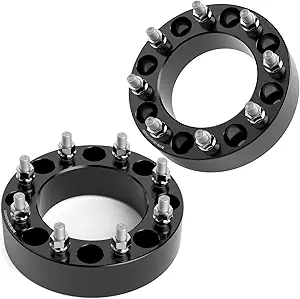 |
| Most Popular A crowd favorite that many people choose with confidence | BDFHYK 2" (50mm) Wheel Spacers, 8x170mm, Set of 4 |  |
| Best Seller A high-volume bestseller chosen again and again | Rough Country 2" Wheel Spacers for Ford F-250/F-350 SuperDuty (2003-2026) |  |
1. KAX 2" 8x170mm Lug-Centric Wheel Spacers (4 pc) for Ford Super Duty

| Thickness | 2 inch (50.8mm) |
|---|---|
| Bolt pattern | 8x170mm |
| Center bore | 130mm |
| Stud/thread | M14x2 |
| Material | 6061-T6 forged aluminum |
These KAX 2-inch wheel spacers are a bolt-on solution for Ford Super Duty trucks that need extra wheel clearance or a wider track. Sold as a 4-piece set, they mount lug-centric to an 8x170mm bolt pattern with a 130mm center bore and use M14x2 studs and hardened 12.9-grade bolts. Made from forged 6061-T6 aircraft aluminum, the spacers are corrosion resistant and lighter than steel alternatives while still offering strength for on- and off-road use. Typical uses include correcting aftermarket wheel offset, improving stance and stability, and preventing tire rub with larger tires or aftermarket brakes. Installation requires proper torque (manufacturer recommends 90-100 ft·lb) and a re-torque check after 25-50 miles; trimming studs may be needed depending on wheel stud length. Limitations are fitment specificity to certain Ford Super Duty model years and the need for professional measurement and installation to ensure safe operation. These spacers provide a durable, OEM-quality feeling upgrade when matched to the correct truck and wheels.
Best for: Buyers who want a reliable, factory-quality spacer to correct offset or widen the track on compatible Ford Super Duty trucks and who prioritize durability and proper installation.
Less Ideal for: Drivers who need universal or multi-vehicle compatibility or who prefer a plug-and-play spacer that requires no measurement or professional installation.
- Forged 6061-T6 aluminum construction for good strength-to-weight and corrosion resistance
- Hardened 12.9-grade bolts and M14x2 studs for durable clamping force
- Laser-engraved sizing and part number for easy identification
- Designed lug-centric with 130mm center bore for centered wheel mounting
- Recommended torque and re-torque guidance included for safer installation
- Fitment limited to specific Ford Super Duty years and configurations listed by the manufacturer
Verdict: A strong, lightweight 2-inch forged-aluminum spacer made specifically to correct offset and widen the track on supported Ford Super Duty trucks.
2. Mishimoto Borne Off-Road 8×170 Wheel Spacers, 1.00 in, Black

| Bolt pattern | 8×170 |
|---|---|
| Center bore | 125mm CB |
| Stud size | M14 x 1.5 |
| Thickness | 1.00" |
These Mishimoto Borne Off-Road wheel spacers move the wheel out by 1.00 inch to increase track width, clear larger brakes, and eliminate tire rub on aggressive setups for 1999-2007 Ford F-350 trucks. They are forged from 6061-T6 aluminum for a light but strong spacer and use grade 12.9 steel studs and lug nuts that come preinstalled for straightforward installation. The hub-centric design centers the wheel on the axle flange, which helps keep wheel runout and vibration low after fitment. A black anodized finish improves corrosion resistance and the kit includes the hardware you need to install two spacers. Expect an easier clearance solution for aftermarket wheels and tires with minimal added unsprung mass, but understand that any spacer changes wheel offset and requires correctly torqued hardware and periodic rechecks of fastener torque. These are aimed at performance-focused truck owners who want a durable, bolt-on spacer solution for widened stance and brake clearance on the specified F-350 years.
Best for: Truck owners who prioritize improved track width, brake clearance, or aggressive wheel fitment on 1999–2007 F-350s and want a durable, performance-minded bolt-on spacer.
Less Ideal for: Drivers looking for a maintenance-free factory setup or those who do not want to alter wheel offset or stance should avoid these spacers.
- Forged 6061-T6 aluminum construction balances strength and lightness
- Hub-centric design for precise fitment and reduced vibration
- Preinstalled grade-12.9 steel studs and included lug nuts simplify installation
- Black anodized finish offers corrosion protection
- Includes all necessary hardware for installing the two spacers
- Adds wheel offset which can change steering feel and suspension load
Verdict: If you need a strong, hub-centric 1.00 inch spacer to gain clearance and a wider stance on a 1999–2007 F-350, this Mishimoto Borne Off-Road kit is a reliable bolt-on solution.
3. FLYCLE 2" 8×170 Hubcentric Forged Wheel Spacers with 14×1.5 Studs (125mm Bore)

| Bolt pattern | 8x170mm |
|---|---|
| Thickness | 2 inch (50.8mm) |
| Thread pitch | 14×1.5 |
| Center bore | 125mm |
| Material | 6061-T6 aluminum |
These FLYCLE 2-inch hubcentric wheel spacers are built to push the wheel outward for extra tire clearance and a more aggressive stance on Super Duty trucks. Made from forged 6061-T6 aluminum with CNC machining and anodized finish, the spacers come with 14×1.5 studs and a 125mm center bore to center the wheel and reduce vibration. Typical use is on front or rear hubs where extra clearance for bigger tires or brake components is needed; the kit includes two spacers, a user manual, and thread-locking compound. Practical benefits include factory-quality centering from the hub bore, high-strength 12.9-class studs, and a corrosion-resistant surface treatment that helps longevity. Important limitations are that fitment is specific to certain Ford Super Duty years and configurations and these are not recommended for dual rear wheel (DRW) rears; they also add unsprung mass and change scrub radius, so alignment and wheel/tire choice should be checked after installation. Follow the recommended torque and installation steps to maintain safety and wheel balance.
Best for: Buyers who want a dependable, factory-quality spacer to gain tire clearance and a wider stance on a 1999–2007 Ford F-350 while prioritizing precise fit and durability.
Less Ideal for: Drivers seeking a universal spacer solution for multiple vehicle types or owners of dual rear wheel F-350s looking to modify the rear wheels should look elsewhere.
- Forged 6061-T6 construction and CNC machining for strength and precise fitment.
- Hubcentric 125mm bore centers the wheel to reduce vibration and improve balance.
- Includes high-strength 12.9-class studs and thread-locking compound for secure mounting.
- Anodized surface treatment improves corrosion resistance and durability.
- Adds 2 inches of offset which changes steering geometry and may require alignment and inspection.
- Not suitable for dual rear wheel rears and has limited compatibility across Super Duty configurations.
Verdict: If you need a strong, hubcentric 2-inch spacer to clear larger tires and achieve a wider stance on a 1999–2007 Ford F-350, this forged FLYCLE kit is a practical, durable choice.
4. EZISOE 2" 8×170 Wheel Spacers (2 pcs) — 130mm Hub, M14x2 Studs

| Thickness | 2 inch |
|---|---|
| Bolt Pattern | 8x170mm |
| Hub Bore | 130mm |
| Thread Pitch | M14x2 |
| Material Type | Aluminum |
These EZISOE wheel spacers are a budget-friendly way to widen the track on a compatible Super Duty truck. Sold as a pair, each spacer is 2 inches thick, hub-centric at 130mm, and uses M14x2 thread pitch to match factory-style studs. They are forged from 6061-T6 aluminum and CNC machined to tight tolerances, which helps keep the wheel centered and reduces vibration when installed correctly. Typical use is to move the wheel outward to clear larger tires, correct offset issues, or achieve a more aggressive stance while preserving bolt-on installation and factory hub engagement. The kit includes a high-strength thread locker and a printed manual to simplify installation. Trade-offs are typical for lightweight aluminum spacers: they do not add structural reinforcement like steel adapters and are specific to the listed bolt pattern and stud size, so fitment must be confirmed before purchase. For buyers watching cost, these deliver a practical balance of fitment, finish, and machining quality for occasional on-road and light off-road use.
Best for: A frugal F-350 owner who wants a straightforward, bolt-on way to run wider tires or correct wheel offset without spending on high-end adapters.
Less Ideal for: Drivers who need heavy-duty load-bearing adapters for constant towing, extreme off-road abuse, or who require multi-vehicle compatibility should consider heavier duty alternatives.
- Forged 6061-T6 aluminum construction with CNC machining for tight tolerances
- Hub-centric 130mm bore helps maintain wheel alignment and reduce vibration
- Includes high-strength thread locker and user manual for easier installation
- 2-inch thickness provides significant offset correction for larger tires or stance
- Aluminum spacers are not as strong as steel adapters for extreme load or heavy-duty commercial use
- Fitment is vehicle- and stud-specific so incorrect selection will prevent installation
Verdict: A cost-conscious, factory-style hub-centric spacer that gives 1999–2002 Super Duty trucks the clearance and stance benefits of a 2-inch offset without a complex install.
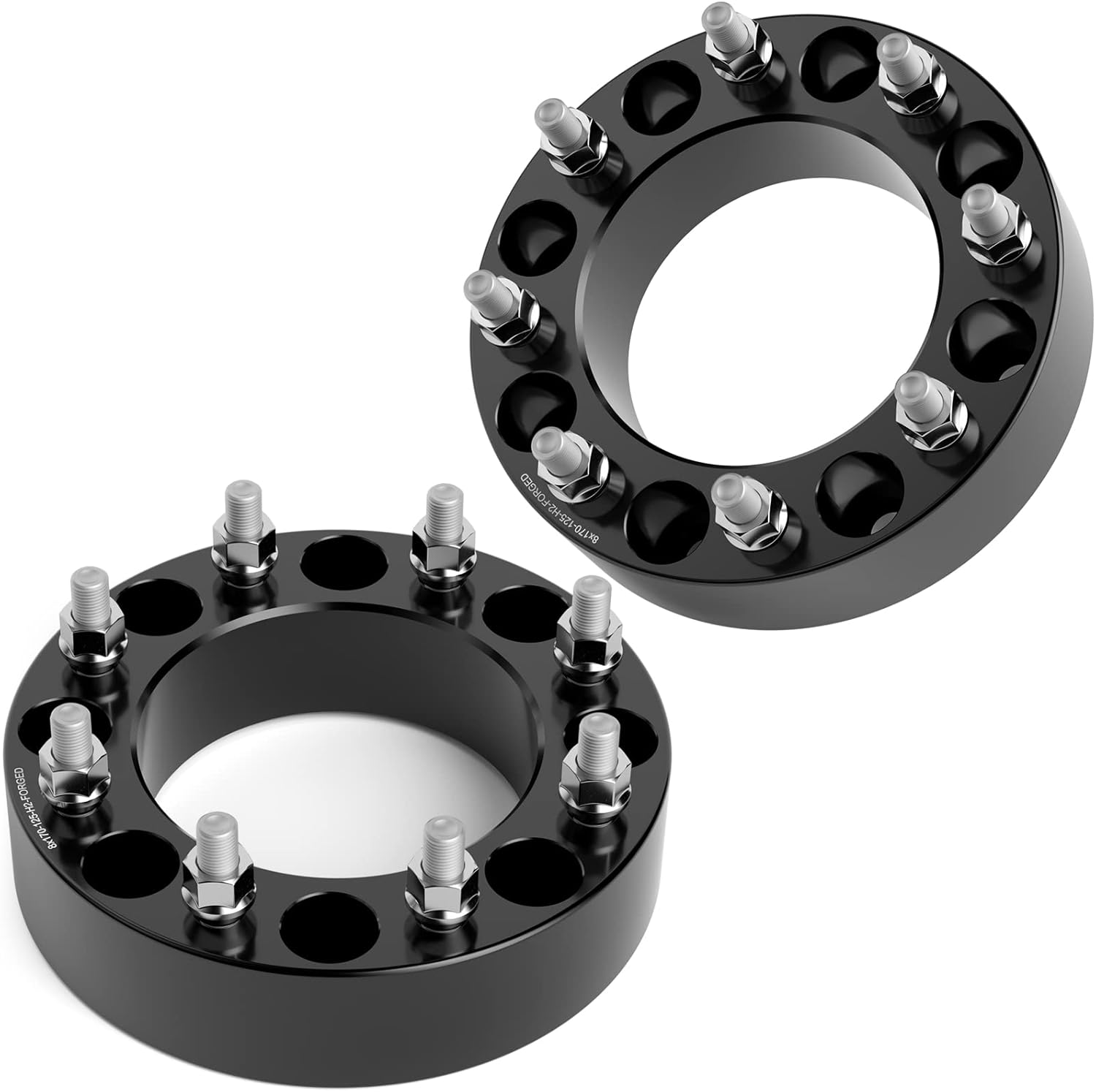
5. KSP PERFORMANCE 2" 8×170 Wheel Spacers for F250/F350 (125mm Bore)
| Bolt pattern | 8x170mm |
|---|---|
| Stud thread pitch | 14mm x 1.5 |
| Hub bore | 125mm |
| Thickness | 2 inches |
| Recommended torque | 85-95 FT/LBS |
These KSP 2" wheel spacers are cast from 6061-T6 aluminum and pair with hardened 10.9 grade bolts to add two inches of offset to 8-lug F-series wheels. For the 1999–2007 F-350 focus of this article, the spacers provide extra clearance for larger tires and brake calipers while pushing the track width outward for improved cornering stability and a more aggressive stance. Installation is straightforward for anyone comfortable with wheel torque procedures; the product is lug-centric and not hub-centric, so careful torqueing to the recommended 85–95 ft·lbs and follow-up checks are important. The black anodized finish helps resist corrosion, and the heavy-duty studs are intended to minimize vibration. Limitations include the non-hub-centric design, which can require precise installation to avoid alignment or vibration issues, and the spacers are cast rather than forged which is a consideration for drivers planning extreme loads or heavy off-road abuse. For routine street use and moderate tire upgrades on an F-350, these spacers deliver a dependable, easy-to-fit solution.
Best for: Budget-minded F-350 owners seeking a practical, reliability-oriented spacer to clear larger tires or brake components and widen track for improved on-road stability.
Less Ideal for: Drivers who regularly carry extreme loads, do heavy off-roading, or require a hub-centric, forged spacer for maximum durability and absolute wheel concentricity.
- 6061-T6 aluminum construction offers strong yet relatively light material for wheel spacers
- Includes heat-treated 10.9 grade bolts to reduce the risk of vibration and improve fastening strength
- Black anodized surface improves corrosion resistance for longer service life
- 2" thickness provides clearance for larger tires and brake calipers and widens track for improved stability
- Lug-centric (not hub-centric), so precise torqueing and periodic checks are required to avoid runout
- Cast construction instead of forged may be less durable under extreme off-road or heavy-load conditions
Verdict: A practical 2-inch aluminum spacer option that reliably adds clearance and track width for F-350 trucks when installed and torqued correctly.
6. BDFHYK 2" (50mm) Wheel Spacers, 8x170mm, Set of 4

| Thickness | 50.8 mm (2 inch) |
|---|---|
| Bolt pattern | 8x170mm |
| Center bore | 125 mm |
| Thread pitch | M14x1.5 |
| Material | 6061 aluminum |
These BDFHYK wheel spacers are a 2-inch (50.8 mm) billet aluminum spacer set sold as four pieces for Ford Super Duty trucks and early Excursions with an 8x170mm bolt pattern. They are machined from 6061 aluminum, anodized for corrosion resistance, and use high-strength class 10.9 bolts. Typical use is to push the wheels outward for a wider stance, additional clearance for larger tires or aftermarket brakes, and improved lateral stability. The kit includes cleaning wire balls and gloves for basic prep and is intended to be bolted between the hub and the wheel; because the spacers are not hub-centric you should follow proper torque sequence and use thread locker where recommended. Practical benefits include added clearance for suspension or brake upgrades and a more aggressive wheel fitment. Limitations are that these are not hub-centric spacers and require careful installation and periodic recheck of lug torque; they are specific to the listed bolt pattern and hub bore so fit must be confirmed before purchase.
Best for: Buyers who prioritize proven product quality and want a stout spacer to add clearance or a wider stance on a 1999–2007 Ford F-350 while valuing seller reviews and documented build materials.
Less Ideal for: People who prefer a hub-centric spacer for a completely centered fit or those unwilling to perform routine torque checks and maintenance after installation.
- Billet 6061 aluminum construction with anodized finish for corrosion resistance
- Includes class 10.9 hardware and basic prep tools like gloves and a cleaning wire ball
- 2-inch thickness creates significant additional clearance for larger tires or brake upgrades
- Not hub-centric so requires careful installation, correct torque, and periodic checks
Verdict: A robust 2-inch forged aluminum spacer set that gives 1999–2007 F-350 owners reliable clearance and a wider stance when installed carefully and checked regularly.
7. Rough Country 2" Wheel Spacers for Ford F-250/F-350 SuperDuty (2003-2026)

| Bolt pattern | 8x170mm |
|---|---|
| Spacer thickness | 2 inches |
| Material | 6061-T6 Aluminum |
| Position | Outer |
| Drilling required | No |
These Rough Country 2-inch wheel spacers push the wheel outward to create clearance for wider tires and a wider stance on compatible SuperDuty trucks. They are hub-centric where specified, come with preinstalled studs, and are machined from corrosion-resistant 6061-T6 aluminum so they are lightweight and resist rust compared with steel alternatives. Installation is straightforward for a competent mechanic and does not require drilling; Rough Country estimates about an hour per axle. In real-world use the spacers give a noticeable visual and handling change by increasing track width and allowing larger tire fitment, but correct installation and periodic torque checks are important—manufacturer guidance recommends retorquing after the first 500 miles and regular inspections. These fitments exclude dually models and certain post-2017 axle configurations, so confirming your truck’s stud size and axle spec is essential. The product is a practical, OEM-style accessory for drivers who want a wider stance without permanent suspension modifications.
Best for: A cautious buyer who wants a tested, vehicle-specific way to run wider tires and improve stance on a 1999–2007 F-350 without modifying suspension, and who prefers parts made for bolt-on installation by a professional.
Less Ideal for: Drivers looking for a universal spacer solution, owners of dually F-350s, or those unwilling to follow the recommended post-install inspection and torque schedule.
- Hub-centric design where applicable reduces runout and simplifies installation.
- Machined from 6061-T6 aluminum for corrosion resistance and lighter weight than steel.
- Preinstalled studs and no-drill installation speed up fitting for a technician.
- Designed specifically for 8x170mm bolt pattern on SuperDuty trucks so fitment is vehicle-focused.
- Does not fit dually models or certain 2017+ 4-inch axle configurations, limiting compatibility.
- Requires periodic torque checks and inspections after installation to maintain safety.
Verdict: A vehicle-specific, machined aluminum 2-inch spacer that lets cautious F-350 owners fit wider tires and gain a wider stance with a straightforward bolt-on installation.
Choosing the Right 1999-2007 Ford F-350 Wheel Spacers: Key Factors to Consider
Fitment and Bolt Pattern
Correct bolt pattern and hub bore are essential to safe spacer installation on the F-350. A spacer that does not match the wheel bolt pattern will not mount correctly and can introduce uneven load on studs and lug nuts. Fitment includes both the wheel-side bolt pattern and the vehicle-side lug/stud spacing. The spacer must also align concentrically with the hub bore to transfer loads through the hub rather than solely through the studs.
When assessing fitment, check both the vehicle flange dimensions and the wheel's mounting surface. Some spacer designs rely on a hub-centric lip to center the assembly. Others are lug-centric and depend on the studs for centering. For a heavy truck like the F-350, hub-centered solutions generally reduce the risk of runout and vibration because they use the hub to carry radial loads. Always verify the manufacturer's stated bolt pattern and bore size against your wheel and hub before purchasing.
Material and Manufacturing Quality
Material choice and machining quality directly affect spacer strength and longevity under heavy loads. Common materials include 6061-T6 or 7075-T6 aluminum and forged or machined steel. Aluminum is lighter and resists corrosion when anodized, but it must be properly engineered for thickness and geometry to handle F-350 loads. Steel offers higher yield strength but can add unsprung weight and may require corrosion-resistant coatings.
Look for CNC machining and clear material grade disclosures. Uniform wall thickness, chamfered lug holes, and precise hub bores indicate better manufacturing control. Poorly machined spacers can create stress risers, misalignment, or uneven clamping forces, all of which are amplified on a heavy-duty truck. Quality also matters for threaded components or extended studs included with some spacer kits.
Hub-Centric Vs Lug-Centric Design
The centering method affects vibration, wheel runout, and the distribution of radial loads. Hub-centric spacers use a protruding lip that fits the hub bore and centers the spacer and wheel on the hub itself. This approach transfers radial loads into the hub flange where it is designed to handle them, often reducing the chance of vibration at highway speeds. Lug-centric spacers rely on the studs and wheel lug holes to center the assembly and can be adequate, but they place more demand on the studs to maintain concentricity.
For the 1999-2007 F-350, which frequently carries heavy loads or tows, a hub-centric spacer reduces the risk of wheel runout and uneven wear. If choosing a lug-centric design, ensure the studs and lug nuts have sufficient thread engagement and that the spacer provides tight tolerances to minimize movement.
Thickness and Thread Engagement
Spacer thickness determines how far the wheel is pushed outward and dictates how much additional stud length or extended studs are required. Maintaining adequate thread engagement on lug nuts is critical for clamping force. For the F-350, there should be enough thread engagement so that at least the factory-specified number of threads remain engaged after spacer installation. Thin spacers may not solve clearance issues, while overly thick spacers can reduce the number of engaged threads to unsafe levels.
When evaluating thickness, confirm the spacer's packaged stud extension or whether new longer studs are required. Also consider vehicle usage: heavier loads or off-road use magnify the importance of sufficient thread length and proper torque specs.
Fastening Method and Torque Specifications
How spacers attach to the hub and wheel affects strength and maintenance. Common methods include pass-through studs, where the factory studs pass through the spacer and wheels are secured normally, or spacers with their own studs that thread into the hub. Some designs use double-nut retention or proprietary locking hardware. Each method has tradeoffs for installation complexity and redundancy.
Clear torque specs from the manufacturer are essential because correct torque ensures clamping force without overstressing studs. For the F-350, torque values must account for heavier axles and towing stresses. Also verify whether the spacer kit includes torque recommendations for initial and follow-up checks after the first 50 to 100 miles, since settling and wear can change preload.
Corrosion Protection and Long-Term Durability
Spacers are exposed to road salt, moisture, and debris, so coatings and anodizing matter. Aluminum spacers often use hard anodizing to protect against corrosion and surface wear. Steel spacers or studs should have zinc plating or other corrosion-resistant finishes. Corrosion can lead to seizing between spacer and hub and make future removal difficult.
Durability also includes resistance to galling or fretting at contact surfaces. Look for spacers with protective coatings on mating surfaces and clear maintenance guidance. For F-350 owners who tow or operate in harsh climates, prioritizing corrosion-resistant finishes reduces long-term maintenance and the likelihood of hardware failure.
Common Wheel Spacer Thicknesses and What They Do
Spacer thickness affects clearance, track width, and wheel offset. Small spacers, such as 5 to 12 millimeters, mainly correct minor offset issues or provide slight stance adjustments. Medium thicknesses, often 12 to 25 millimeters, are used to clear larger brake calipers or to achieve a wider stance for handling. Thick spacers beyond 25 millimeters push wheels substantially outward and usually require extended studs or stud conversion kits.
On the 1999-2007 F-350, consider your goals before selecting thickness. Brake clearance and fender rake are common reasons to step up thickness, while stance adjustments for appearance should be balanced against thread engagement and scrub radius changes.
- 5–12 mm: minor offset correction, minimal effect on scrub radius
- 12–25 mm: common for brake clearance and moderate stance widening
- 25+ mm: significant track increase, usually needs extended studs and careful evaluation
How Installation Typically Works on an F-350
Installation typically involves removing the wheel, cleaning the hub flange, fitting the spacer, and torquing the spacer mounting hardware or wheel nuts to spec. If using spacers with their own studs, those studs are either threaded into the hub or pressed in; if pass-through, the factory studs go through the spacer and require attention to thread engagement.
Follow-up checks are important. After the initial 50 to 100 miles, re-torque all fasteners to account for settling. Always use a calibrated torque wrench and the torque values appropriate for the F-350's wheel studs or the spacer manufacturer's guidance. If extended studs are used, verify thread engagement visually and, where required, use locking hardware to prevent loosening.
- Clean hub and wheel mounting surfaces before installation
- Install spacer and hand-start fasteners before torquing
- Re-torque after 50–100 miles, then periodically inspect
Vibration Causes and How to Avoid Them
Vibration after spacer installation is usually caused by poor centering, insufficient hub bore tolerances, or inadequate thread engagement. Hub-centric spacers reduce the chance of vibration because they align the wheel to the hub. Conversely, lug-centric setups can introduce runout if stud tolerances or wheel hole diameters vary.
To minimize vibration on an F-350, prioritize spacers with precise hub bores and verify wheel bore concentricity. Also check that wheel lug holes are not overly worn and that lug nuts seat properly. If vibration appears after installation, inspect for uneven torquing, damaged studs, or debris between mating surfaces.
- Prefer hub-centric spacers where possible
- Verify wheel and hub bores for concentricity
- Ensure correct torque and inspect for damaged hardware
When to Use Extended Studs or a Stud Conversion
Extended studs or stud conversion kits are often required when spacer thickness reduces factory thread engagement below safe levels. If a spacer pushes the wheel out so that less than the recommended number of full threads remain engaged, install longer studs designed for the application. Conversion kits that replace pressed-in studs with threaded inserts or bolts can be an option but must match torque and fatigue requirements for the F-350.
When fitting extended studs, select parts rated for heavy-duty use and ensure proper installation torque. Periodic inspection is important because studs and nuts on heavy trucks see higher cyclical loads. If in doubt, consult torque specifications and verify that the final thread engagement meets safety norms.
- Use extended studs when thread engagement is compromised
- Choose studs rated for heavy-duty axles and towing
- Inspect studs and nuts regularly under heavy usage
Practical Maintenance After Installation
Regular inspections help catch issues early. Check spacer mounting bolts, wheel nut torque, and signs of corrosion at each service interval or after heavy towing. Cleaning mating surfaces during brake service prevents debris buildup and seizing.
If you plan to remove spacers seasonally, apply appropriate anti-seize on the hub mating surface if recommended by the spacer manufacturer. However, do so carefully because some anti-seize compounds can alter torque readings or attract contaminants. Keep a record of torque values used and any follow-up re-torques performed.
- Inspect torque and hardware at regular intervals
- Clean and protect mating surfaces during brake service
- Keep installation records and follow manufacturer maintenance notes
Still looking for the perfect fit?
Select your Ford F-350 configuration to see the most relevant Wheel Spacers recommendations
How We Chose the Best 1999-2007 Ford F-350 Wheel Spacers
We selected spacers for the 1999-2007 Ford F-350 using practical, vehicle-specific criteria that matter for heavy-duty applications. First, fitment accuracy: we required bolt pattern and hub bore dimensions that match the F-350 flange to avoid off-center loading. Second, material and construction: CNC-machined aluminum or forged steel designs were prioritized for fatigue resistance and concentricity. Third, mounting method: options that provide a hub-centric interface or include dedicated mounting hardware scored higher because they reduce vibration risk. Fourth, load and thickness ratings: we considered thicknesses and stud extensions that preserve sufficient thread engagement for the F-350 factory studs and lug nuts. Fifth, corrosion protection and finish were evaluated to ensure long-term serviceability in varied conditions. We excluded spacers that lacked clear specifications for hub bore, stud extension, or material grade. We also filtered out products that did not document torque recommendations or installation hardware. The final list balances structural integrity, fitment confidence, and installation practicality for F-350 owners.
Our full evaluation process is outlined in our review methodology.
FAQ
Will wheel spacers fit all wheels on my 1999-2007 F-350?
It depends. Wheels vary in bolt pattern, center bore, and offset. You must match the spacer's bolt pattern and hub bore to both the F-350 hub and your wheels. Confirm dimensions before installing to ensure a proper fit.
Do I need longer studs when installing spacers on the F-350?
Often yes for thicker spacers. If spacer thickness reduces thread engagement below safe levels, you should use extended studs or a stud conversion. Verify that the final number of engaged threads meets heavy-duty safety norms.
Will spacers cause vibration on my F-350?
Vibration can result from poor centering, mismatched hub bores, or uneven torquing. Choosing hub-centric spacers, ensuring clean mating surfaces, and following proper torque procedures greatly reduces the risk of vibration.
How tight should I torque spacer hardware and wheel nuts?
Torque values depend on the spacer design and the F-350's stud specifications. Always use the torque values provided by the spacer manufacturer or your vehicle's wheel-stud torque spec. Re-check torque after the first 50 to 100 miles to account for settling.
Are aluminum spacers strong enough for towing with an F-350?
Aluminum spacers can be appropriate if they are made from high-grade alloys and engineered for heavy-duty use. Look for clear material specs, load ratings, and hub-centric designs. If you tow frequently with heavy loads, choose spacers with documented strength characteristics.
Do I need an installation kit to fit spacers correctly?
Some spacer kits include extended studs, nuts, or centering rings which simplify installation. An installation kit can ensure correct thread engagement and proper centering. If a spacer lacks necessary hardware, plan to obtain compatible studs or mounting components before starting the job.
Final Verdict
For the 1999-2007 Ford F-350, prioritize spacers that deliver precise fitment, hub-centric centering, and sufficient thread engagement for heavy-duty use. Balance the thickness you need for clearance or stance against the requirement to maintain proper lug thread engagement and torque. Pay attention to material grade and corrosion protection to ensure long-term reliability under towing and load conditions.Select a spacer based on verified bolt pattern and hub bore dimensions, confirm torque requirements and follow-up re-torques, and choose hardware rated for heavy-duty service. Doing so will help you gain the clearance or stance you want while keeping the truck safe and predictable on the road.
