

Note: This article contains affiliate links. If you click on these links and make a purchase, I may earn a small commission at no extra cost to you. This helps support my research and content. Read my full affiliate disclosure here.
If you own a 2017-2022 Ford F-350 and are thinking about wheel spacers, picking the right option matters for handling, braking clearance, and hub loading. The wrong spacer can lead to alignment problems, excess stress on wheel studs, or NVH like vibration. This guide pulls together the top shortlisted wheel spacers for this specific F-350 range and explains why each type is a sensible fit for common goals such as clearance for larger brakes, a wider track for stability, or achieving a flush stance.Below you will find the top picks we considered plus clear evaluation criteria including fitment, material and strength, installation needs, and how spacers affect ride dynamics. Use the sections that follow to match spacer style and thickness to your intended use before moving to installation or professional fitment.
Top Picks at a Glance
| Best Quality Built to a higher standard if you want something more solid | Mishimoto/Borne Off-Road 1.25" 8×170 Wheel Spacers (M14 x 1.5, 125mm CB) |  |
| Best Value The sweet spot between price and what you get | KAX 8x170mm 0.5" Lug-Centric Wheel Spacers (130mm Bore) — 4 Pack |  |
| Best Budget The cheapest option that still gets the job done reliably | FLYCLE 2" 8×170 Hub-Centric Forged Wheel Spacers with 14×1.5 Studs (125mm Bore) |  |
| Highest Rated A top-rated pick with lots of positive feedback | Bronson Built 10mm Hub-Centric Wheel Spacer for Ford 8×170 (124.9mm) — 2 Pack |  |
| Most Popular A crowd favorite that many people choose with confidence | KSP Performance 2" 8×170 Wheel Spacers for F250/F350 (125mm Bore) | 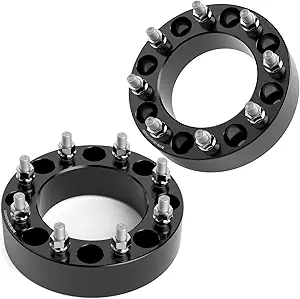 |
| Best Seller A high-volume bestseller chosen again and again | SCITOO 2 pcs 2" 8×170 Wheel Spacers with 14×1.5 Studs (124.9mm Hub Bore) |  |
1. Mishimoto/Borne Off-Road 1.25" 8×170 Wheel Spacers (M14 x 1.5, 125mm CB)

| Bolt pattern | 8×170 |
|---|---|
| Center bore | 125mm |
| Stud/thread | M14 x 1.5 |
| Thickness | 1.25" Thick |
| Included components | Aluminum wheel spacers, wheel nuts |
These wheel spacers move your wheels outward by 1.25 inches to increase track width, improve wheel fitment, and provide brake and tire clearance on compatible trucks. Designed for heavy-duty use, each spacer is forged from 6061-T6 aluminum for a balance of strength and low weight, and comes with preinstalled grade 12.9 steel studs and lug nuts for a secure mount. The hub-centric design centers the wheel on the axle hub to reduce bearing load and vibration, while the anodized finish helps resist corrosion. Installation is straightforward since the kit includes the necessary hardware and two spacers. Note that fitment is specific to vehicles with an 8×170 bolt pattern, M14 x 1.5 studs, and a 125mm center bore, so confirm compatibility before buying; using spacers changes wheel offset and can affect suspension and steering geometry if paired with very large tires. The product carries a lifetime warranty from the maker, which is useful for long-term ownership confidence.
Best for: Buyers focused on improving track width, wheel clearance, or achieving a more aggressive stance on a 2017–2022 Ford F-350 while prioritizing strength and a near-factory fit.
Less Ideal for: Drivers who want a universal or multi-vehicle solution or those unwilling to check exact bolt pattern and center bore compatibility should look elsewhere.
- Forged 6061-T6 aluminum construction offers strong yet lightweight spacers.
- Hub-centric design promotes precise wheel alignment and reduced vibration.
- Includes high-strength grade 12.9 studs and lug nuts for secure mounting.
- Preinstalled studs and complete hardware simplify installation.
- Fitment limited to vehicles with an 8×170 bolt pattern and 125mm center bore, requiring careful verification.
Verdict: A durable, hub-centric 1.25" spacer kit built for performance-minded F-350 owners who need reliable brake clearance and a wider track.
2. KAX 8x170mm 0.5" Lug-Centric Wheel Spacers (130mm Bore) — 4 Pack

| Bolt pattern | 8x170mm (8×6.5") |
|---|---|
| Thickness | 0.5 inch (12.7mm) |
| Center bore | 130mm |
| Material | 6061 T6 aircraft aluminum |
These KAX wheel spacers move each wheel outward by 0.5 inch to correct offset and increase track width on compatible heavy-duty trucks. Made from forged 6061 T6 aircraft-grade aluminum and CNC machined, they are intended to be strong and precisely located for consistent bolt alignment. The kit is lug-centric with a 130mm center bore and is sold as four spacers without studs or hub lip. Typical use is to provide extra clearance for aftermarket wheels or to widen stance for improved handling and stability when carrying loads or towing. Practical benefits include lighter forged construction compared with cast spacers, laser-engraved sizing for easy identification, and a fitment list that covers many Ford Super Duty model years. Important limitations are the small 0.5 inch thickness, which only provides modest clearance, and the need for professional measurement and correct installation plus re-torquing after initial miles. Buyers should ensure exact bolt pattern and hub bore match before installation.
Best for: Buyers who want a factory-quality, lightweight spacer to fix minor offset or clearance issues on heavy-duty trucks and who prioritize precise fit and material strength.
Less Ideal for: Drivers needing large stance changes or major clearance corrections should choose thicker spacers or different wheel solutions instead.
- Forged 6061 T6 aluminum construction for better strength-to-weight than typical cast spacers
- CNC machining and laser-engraved sizing for accurate hole placement and easy identification
- Lug-centric design with a 130mm hub bore for stable wheel centering
- Covers a long list of heavy-duty truck fitments including 2017-2022 F-350 Super Duty models
- Only 0.5 inch thickness, offering limited clearance compared with thicker spacer options
- Requires professional measurement and proper installation with re-torque after driving
Verdict: A lightweight, forged 0.5 inch spacer that provides precise, factory-quality fitment to correct minor offset and clearance issues on 2017–2022 F-350 Super Duty trucks.
3. FLYCLE 2" 8×170 Hub-Centric Forged Wheel Spacers with 14×1.5 Studs (125mm Bore)

| Bolt pattern | 8x170mm |
|---|---|
| Thickness | 2 inch (50.8mm) |
| Thread pitch | 14×1.5 |
| Center bore | 125mm |
These FLYCLE spacers push the wheels outward 2 inches to widen track width, improve clearance for larger tires, and achieve a more aggressive stance on compatible Super Duty trucks. They are forged from 6061-T6 aluminum, CNC-machined, anodized, and include 14×1.5 studs and thread-locking compound for installation. Typical use is on the front or rear (non-DRW rear not recommended) of F250/F350 Super Duty models listed to clear brake calipers and allow wider wheels. For a budget-focused buyer this kit delivers the core function: robust-looking spacers with factory-style hubcentric fit and hardened studs at a lower cost than many OEM-level options. Limitations to note are fitment restrictions (not for dual-rear-wheel models and some older SRW rear positions), the need to follow the recommended torque, and that aftermarket spacers always add unsprung and rotational mass which can affect handling and wheel bearings over time. Proper installation with torque sequence and inspection is important for longevity.
Best for: Buyers looking for an affordable way to run wider tires or correct brake clearance on 2017–2022 Super Duty trucks who prioritize value over premium-brand parts.
Less Ideal for: Drivers who want a no-compromise, manufacturer-level spacer solution or those running dual-rear-wheel setups should consider higher-end or vehicle-specific alternatives.
- Forged 6061-T6 aluminum construction with CNC machining for precise, hub-centric fit.
- Includes hardened 14×1.5 studs and thread-locking compound for secure installation.
- 2-inch thickness provides noticeable increased tire clearance and a wider stance.
- Anodized finish improves surface corrosion resistance for road use.
- Not compatible with dual rear wheel (DRW) trucks and has specific fitment notes for some SRW rear positions.
Verdict: A cost-conscious way to add 2 inches of track width on compatible F-250/F-350 Super Duty trucks while keeping a hub-centric, forged-aluminum build.
4. Bronson Built 10mm Hub-Centric Wheel Spacer for Ford 8×170 (124.9mm) — 2 Pack

| Bolt pattern | 8×170 |
|---|---|
| Center bore | 124.9mm |
| Thickness | 10mm (3/8") |
| Material | 6061 T6 billet aluminum |
| Stud fitment | Fits 14×1.5 or 14×2.0 studs |
These Bronson Built 10mm hub-centric spacers are designed to give modest wheel offset without changing studs, letting you clear a rubbing tire or achieve a slightly wider track on compatible Ford Super Duty trucks. They slip over the hub and sit against the factory centering lip so wheels remain centered and torque to factory specs; the 10mm thickness is thin enough that the manufacturer states extended studs are not required for proper thread engagement. Built from 6061 T6 billet aluminum, the spacers are lightweight yet stiff and include holes sized for 14×1.5 or 14×2.0 studs. In practice this makes them a straightforward, bolt-on solution for 1999–current F-350 (non-dually) within the 2017–2022 article scope when your truck uses the 8×170 pattern and 124.9mm bore. Important limitations: these are hub-centric with an OEM-style lip so they will not fit 2023-and-newer F-250/F-350 hubs with long straight hubs that prevent the lip from seating, and they are not intended for dually 8×200 setups or vehicles with a different bolt pattern. Verify bolt pattern and hub geometry before buying.
Best for: Buyers who prioritize a straightforward, factory-aligned upgrade to eliminate minor tire rubbing or gain slight clearance on a 2017–2022 F-350 non-dually with the 8×170 pattern, and who value a reliable, OEM-style installation.
Less Ideal for: Do not choose these if your F-350 is a dually with 8×200 bolt pattern, has the 2023+ straight hub geometry that prevents the lip from seating, or you need large offsets that require longer studs.
- Hub-centric 124.9mm center bore maintains wheel centering for reduced vibration
- 10mm (3/8") thickness provides clearance without needing extended studs on compatible hubs
- 6061 T6 billet aluminum construction for solid strength and corrosion resistance
- Holes sized for common 14×1.5 or 14×2.0 studs to match factory hardware
- Will not fit 2023-and-newer Ford Super Duty hubs with straight, non-tapered centering surfaces
- Not compatible with dually 8×200 bolt pattern F-350 trucks
Verdict: A reliable, factory-centric 10mm billet spacer to quietly fix rubbing or add small clearance on 2017–2022 F-350 non-dually trucks with the 8×170 pattern.
5. KSP Performance 2" 8×170 Wheel Spacers for F250/F350 (125mm Bore)
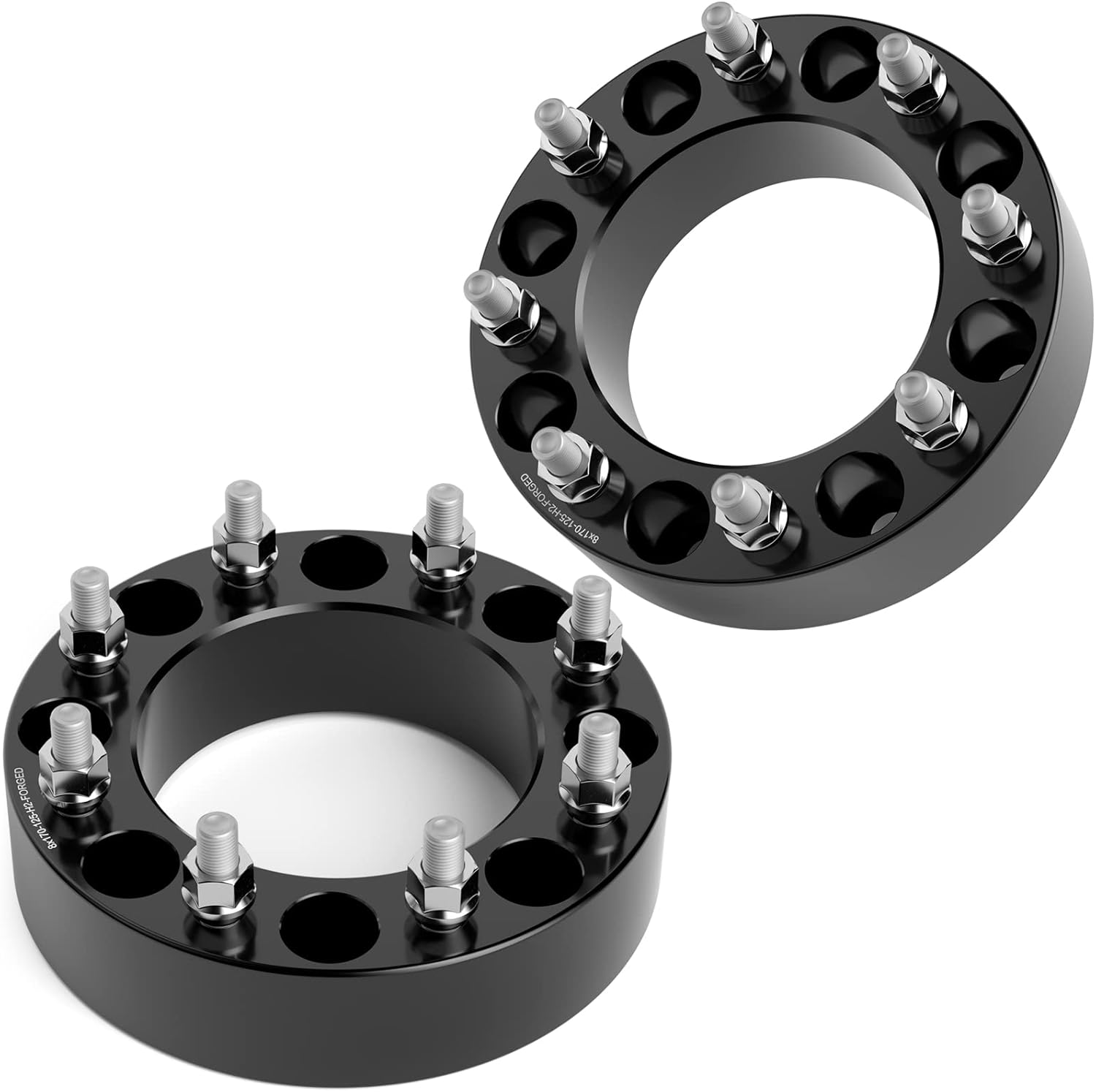
| Bolt Pattern | 8x170mm |
|---|---|
| Stud Thread Pitch | 14mmx1.5 |
| Hub Bore | 125mm |
| Thickness | 2 inches |
| Recommended Torque | 85-95 ft-lbs |
These KSP Performance 2-inch wheel spacers move the wheels outward to clear larger tires, correct caliper or tire rubbing, and give F-series trucks a wider stance. They are lug-centric spacers made from 6061-T6 forged aluminum with black anodized finish and include heat-treated 10.9-grade geomet bolts for strength. Installation is typical for spacers: remove wheels, fit the spacers to the hub, torque the supplied studs to the recommended range, then remount wheels and re-torque after a short break-in. The design provides added clearance for bigger tires and a more aggressive track width without changing suspension parts, and the anodized surface helps resist corrosion in road conditions. These spacers are not hub-centric, so careful wheel centering and correct torque sequence are important to avoid vibration; professional installation or proper hub-centric rings may be advisable. They are a practical, lightweight option for owners wanting a modest stance and tire clearance improvement while keeping the vehicle largely factory underpinnings.
Best for: Buyers who prioritize proven fitment and want to widen their truck track or clear larger tires while relying on visible build quality and secure fasteners.
Less Ideal for: Anyone seeking a hub-centric factory-style replacement or those who prefer a bolt-on solution that needs no extra centering or hub rings.
- Forged 6061-T6 aluminum construction offers a strong yet lightweight spacer option.
- Includes heat-treated 10.9-grade geomet bolts for durable clamping strength.
- 2-inch offset provides meaningful clearance for larger tires and caliper breathing room.
- Black anodized finish improves corrosion resistance for road use.
- Not hub-centric which can require extra care with wheel centering to avoid vibration.
Verdict: A robust forged-aluminum 2-inch spacer that delivers reliable tire clearance and a wider stance for F-series trucks when installed with proper centering and torque.
6. SCITOO 2 pcs 2" 8×170 Wheel Spacers with 14×1.5 Studs (124.9mm Hub Bore)

| Fitment | Ford F-350 Super Duty 2017-2022 (8×170) |
|---|---|
| Thickness | 2 inch (50 mm) |
| Stud Thread Pitch | 14×1.5 |
| Center Bore | 124.9 mm |
| Stud Grade | 10.9 |
These SCITOO spacers are made for 8×170 Ford Super Duty hubs and widen the track by 2 inches using forged aluminum construction and CNC machining for tight tolerances. They arrive with 14×1.5 grade 10.9 studs preinstalled and a 124.9mm hub bore so wheels center on the hub rather than the lug nuts. Installation is intended as a straightforward bolt-on job for F-350 Super Duty trucks from 2017 to 2022 when fitment matches the vehicle guide; no special tools are required beyond a torque wrench and re-torquing after the first 50-60 miles is recommended. In use they push the wheels outward to improve turning stability and reduce perceived top-heaviness on rough roads or light off-road trails. The product emphasizes manufacturer torque range for secure mounting and suggests professional installation if you are not comfortable working on wheel hubs. Buyers should confirm vehicle fitment carefully and plan for periodic hardware checks since proper installation and torque are critical for safety.
Best for: A safety-minded F-350 owner who wants a factory-quality spacer to widen the track and improve stability while keeping installation simple and serviceable.
Less Ideal for: Drivers who plan heavy-duty off-road abuse, extreme lifts, or matchup with nonstandard aftermarket hubs should consider specialty spacers or hub conversion kits instead.
- Made from forged aircraft-grade aluminum with CNC machining for precise fit and hubcentric centering.
- Preinstalled grade 10.9 14×1.5 studs sized for secure fastening at the recommended 85-90 ft·lbs torque.
- Designed specifically for 8×170 Ford Super Duty hubs with a 124.9mm center bore to ensure proper centering.
- Two-inch width increases track for improved on-road stability and reduced body roll during turns.
- No special tools required for basic installation beyond common hand tools and a torque wrench.
- Requires careful fitment verification and periodic re-torquing to maintain wheel security.
Verdict: If you need a hubcentric, pre-studded 2-inch spacer matched to 8×170 Ford Super Duty hubs for improved stability with straightforward installation, this SCITOO kit is a practical, safety-focused choice.
Choosing the Right 2017-2022 Ford F-350 Wheel Spacers: Key Factors to Consider
Bolt Pattern and Hub Fitment
Confirm the bolt pattern and hub-centric dimensions before selecting a spacer. For the 2017-2022 Ford F-350, accurate bolt hole alignment and an exact hub bore are essential to avoid lateral runout and stress concentrations.
A spacer that is not a precise match can introduce uneven load on studs and bearings. Hub-centric spacers that center on the vehicle hub reduce the risk of wheel vibration compared with purely lug-centered designs. Always verify the spacer's hub bore and the F-350 hub flange dimensions to ensure consistent contact and load transfer.
Material and Construction
Material choice determines long-term strength and resistance to corrosion. High-grade billet aluminum with hard-anodized finishes or forged steel constructions provide different tradeoffs in weight, strength, and thermal behavior.
Aluminum spacers are lighter and resist rust, but they must be sufficiently thick and properly anodized to resist fatigue. Steel spacers are heavier but often offer greater tensile strength. Examine manufacturing tolerances and machining quality; a well-machined, concentric spacer reduces the chance of induced vibration and promotes even torque distribution.
Spacer Thickness and Wheel Offset Effects
Thickness directly affects track width and wheel offset, altering steering feel, scrub radius, and load on suspension components. Small increases can improve stability and clearance, while excessive thickness may overload wheel bearings and affect steering geometry.
Refer to a wheel spacer thickness guide to estimate how a given millimeter increase changes scrub radius and turning clearance on the F-350. Consider progressive changes and whether wheel alignment or toe adjustments will be required after installation to maintain proper tire wear and handling.
Stud Engagement and Fastener Requirements
Adequate stud engagement is critical for safety. Spacers that require extended studs or use hub-centric bolt-through designs must provide sufficient thread engagement to maintain clamp load under heavy use.
Check whether the spacer requires longer lug bolts or a specific installation kit. Using the correct fastener length and grade maintains proper clamp force and prevents stud fatigue. Never use spacers that reduce the number of engaged threads below manufacturer-recommended minimums for the F-350.
Vibration Risk and Wheel Centering
Wheel vibration is a common concern when adding spacers. Hubcentric spacers that precisely match the hub bore reduce lateral runout and lower the chance of vibration at highway speeds.
Consider whether the spacer design includes features to ensure concentric mounting, such as pilot rings or accurate machining tolerances. Post-installation balancing and verifying torque specs help minimize vibration; if vibration persists, reassess hub centricity and stud engagement rather than increasing countermeasures.
Corrosion Protection and Long-Term Maintenance
Exposure to road salts, moisture, and dirt means spacers must resist corrosion to preserve fit and clamping force. Anodized finishes, zinc plating for steel pieces, or protective coatings extend service life.
Regular inspection for corrosion, loosening, or abnormal wear is part of maintenance after adding spacers. Tightening to specified torque values and periodic re-torque checks reduce the risk of loosening from thermal cycles and heavy-duty use on the F-350.
Understanding Hubcentric Versus Lug-Centric Designs
The distinction between hubcentric and lug-centric spacers matters for how the wheel is centered. Hubcentric spacers have a precise pilot bore that seats on the hub, centering the wheel and reducing runout. Lug-centric spacers rely on the lug nuts to center the wheel, which can be less precise and more prone to vibration.
For the F-350, hubcentric designs are preferable when possible because the truck's loads and wheel sizes demand consistent centering to avoid bearing and stud stress. If you choose a lug-centric spacer, ensure exceptional machining and balance shops verify runout after installation.
- Hubcentric spacers improve centering and reduce vibration risk
- Lug-centric spacers depend on fastener alignment and may need balancing
- Use pilot rings or matched hub bores to ensure a concentric fit
How Spacer Thickness Affects Handling and Clearance
Spacer thickness changes wheel offset and can provide clearance for larger brake calipers or control arms. A moderate increase can improve stability and aesthetic stance, but large offsets change scrub radius and steering effort.
Estimate effects before installing by consulting wheel offset charts or a wheel spacer thickness guide. If you plan to run significantly wider offsets, anticipate a wheel alignment and inspect suspension components more frequently.
- Small thickness gains improve clearance with minimal handling change
- Large thickness changes can require alignment and increase bearing load
- Test clearance at full suspension droop and full lock before finalizing fitment
Installation Essentials and Required Tools
Proper installation requires the right tools and adherence to torque specs. A torque wrench calibrated to the specified wheel spacer torque specs is essential, along with thread lubricant or anti-seize if recommended by the spacer manufacturer. Follow a star pattern when tightening lugs and re-torque after a short break-in period.
Some spacers need extended studs or a wheel spacer installation kit. If a kit is required, use the correct stud length and grade to maintain minimum thread engagement. For heavy-duty F-350 use, consider professional installation if you are unfamiliar with torque procedures and re-torque intervals.
- Use a calibrated torque wrench and follow the star pattern
- Re-torque after the first 50 to 100 miles or as recommended
- Confirm extended studs or installation kit components when needed
Balancing, Alignment, and Aftercare
After adding spacers, have wheels re-balanced and perform a wheel alignment if the offset change is significant. Balancing compensates for any minor runout introduced during installation, while alignment corrects toe and camber effects from altered scrub radius.
Regularly inspect spacer faces, lug nuts, and studs for signs of movement or corrosion. Re-torque checks during the first few hundred miles help catch settling and maintain clamp load under heavy-duty driving scenarios typical to the F-350.
- Re-balance wheels after spacer installation to reduce vibration
- Perform alignment if track width or scrub radius has changed noticeably
- Inspect and re-torque periodically, especially after heavy loads
Legal and Safety Considerations
Local regulations and vehicle safety standards can affect what spacer thickness and installation method are acceptable. On heavy-duty trucks like the F-350, altering track width may have inspection implications or affect warranty coverage for wheel bearings and suspension if not done correctly.
Prioritize spacer designs that maintain safe stud engagement and provide documented installation instructions. If in doubt, consult a qualified technician or local inspection authority to confirm the modification meets regulatory expectations.
- Verify local regulations before altering track width
- Ensure spacer maintains required stud engagement and load ratings
- Keep installation records and torque documentation for inspections
Still looking for the perfect fit?
Select your Ford F-350 configuration to see the most relevant Wheel Spacers recommendations
How We Chose the Best 2017-2022 Ford F-350 Wheel Spacers
We prioritized items that match the unique demands of the 2017-2022 Ford F-350 platform. Primary evaluation criteria included bolt pattern and hub fitment accuracy, material strength and fatigue resistance, and whether the spacer design preserves proper stud engagement. Durability under load and corrosion resistance were assessed because the F-350 is commonly used in towing and heavy-duty tasks where repeated loading is typical. We also weighted ease of installation and whether a spacer required additional components such as extended studs or a dedicated installation kit.Fitment filters removed any spacers that did not explicitly support the F-350 wheel offset, lug pattern, or axle load ratings within the 2017-2022 scope. We excluded designs that reduced stud engagement below safe limits or that lacked clear torque spec guidance. Final selection favored hubcentric constructions and fully machined pieces that minimize the chance of vibration while offering clear instructions for torque specs and installation.
Our full evaluation process is outlined in our review methodology.
FAQ
Will wheel spacers affect my F-350's handling?
Yes, spacers change track width and scrub radius which can alter steering feel and stability. Small, properly fitted spacers often improve low-speed stability, while large offsets can increase steering effort and place extra load on bearings. Plan for alignment and monitor tire wear.
How do I know if I need a hubcentric spacer for my F-350?
If you are focused on minimizing vibration and ensuring precise centering under load, choose a hubcentric spacer that matches the F-350 hub bore. Hubcentric designs reduce lateral runout compared with lug-centric options, especially important for heavy-duty driving.
Do wheel spacers cause vibration on trucks?
They can if the spacer or wheel is not concentric with the hub or if stud engagement is insufficient. Proper machining, correct hub bore fit, wheel balancing, and following torque specs reduce the risk of vibration.
What torque specs should I follow when installing spacers?
Follow the spacer manufacturer's torque specs for both the spacer fasteners and wheel lugs. Torque values depend on stud length and grade; using a calibrated torque wrench and re-torquing after initial use is recommended for the F-350.
Will adding spacers require longer studs on my F-350?
Often yes. Thicker spacers may require extended studs or longer lug bolts to retain adequate thread engagement. Check the spacer instructions and ensure that the final engaged thread count meets safety guidelines.
Can I install wheel spacers myself using a kit?
Many owners can install spacers using a wheel spacer installation kit if they have the right tools and follow torque procedures. For substantial thickness changes or if you are unsure about studs and torque specs, professional installation is a safer option.
Final Verdict
Choosing the right wheel spacer for a 2017-2022 Ford F-350 comes down to fitment, material strength, and maintaining safe stud engagement. Prioritize hubcentric designs with precise hub bores when possible, confirm spacer thickness effects on scrub radius, and plan for balancing and alignment when offsets change significantly. Regular inspection and following torque procedures keep the modification reliable under heavy-duty use.If you focus on matching bolt pattern and hub dimensions, using proper fasteners, and adhering to torque specs, you can achieve the desired clearance or stance with minimal downside. When in doubt, select a design that preserves centering and consult a professional installer to validate the final setup.
