

Note: This article contains affiliate links. If you click on these links and make a purchase, I may earn a small commission at no extra cost to you. This helps support my research and content. Read my full affiliate disclosure here.
If you own a 2008-2010 Ford F-350, a failing catalytic converter can cause emissions trouble, reduced engine efficiency, and an active check-engine light. Choosing the right catalytic converter matters because it affects emissions compliance, drivability, and longevity under heavy loads or towing. This guide summarizes the top catalytic converter options compatible with the 2008-2010 F-350 and explains the key differences that influence fitment, materials, and emissions performance. The shortlist focuses on converters that balance correct fit, durable construction, and appropriate emissions control for this truck. Read on to understand the evaluation criteria and common symptoms that indicate it is time for a replacement.
Top Picks at a Glance


1. PHILTOP Catalytic Converter Kit for 2008–2010 Ford F-250/F-350 Super Duty (5.4L/6.8L)
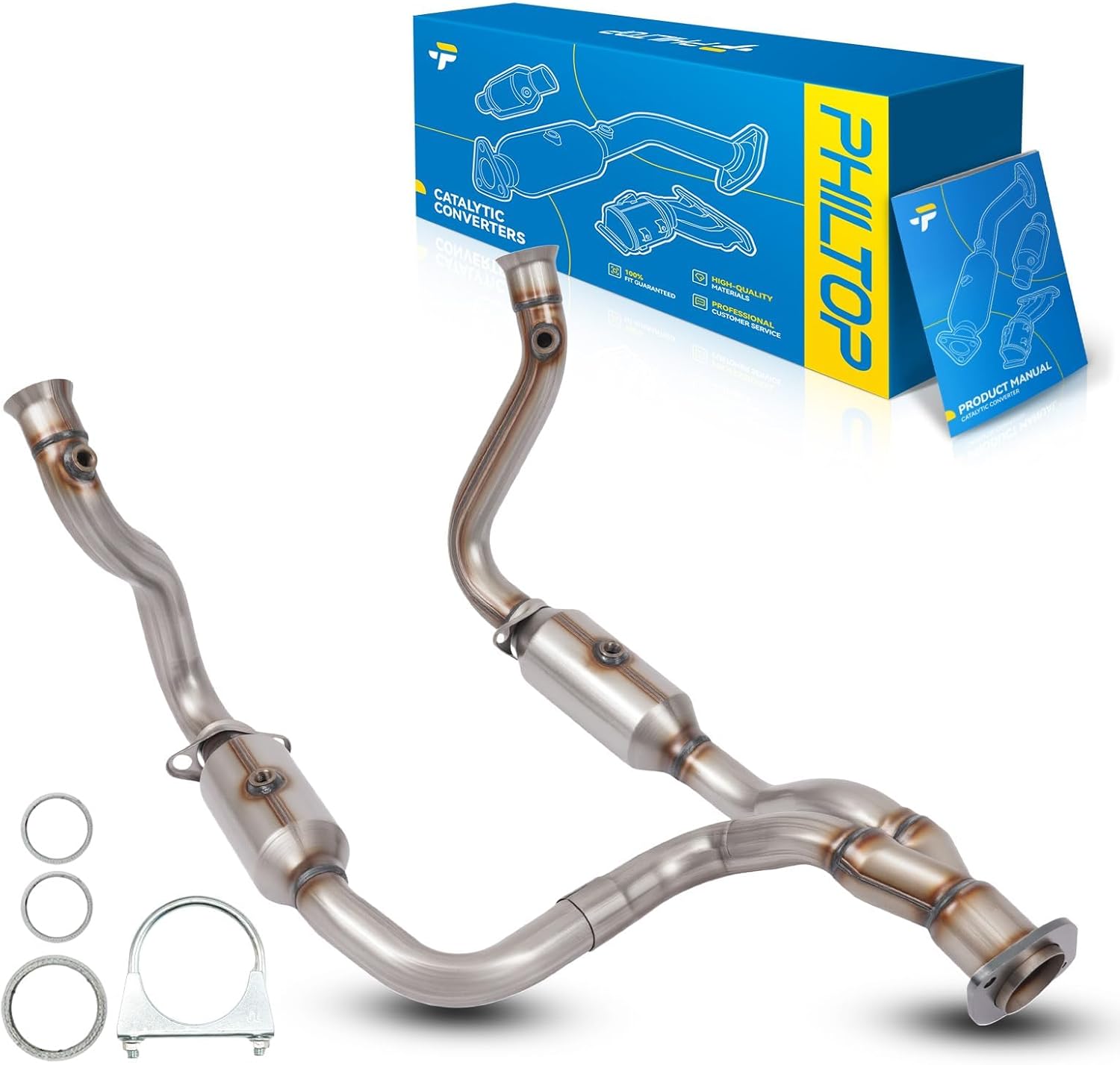
| Position | Front |
|---|---|
| Compatible engines | 5.4L and 6.8L naturally aspirated |
| Manufacturer | PHILTOP |
| EPA status | EPA-compliant (federal) |
This PHILTOP catalytic converter kit is a direct replacement intended for the front position on 2008–2010 Ford F-250 and F-350 Super Duty trucks with 5.4L or 6.8L naturally aspirated engines. It uses a stainless steel aluminized body and a double-layer high-temperature ceramic carrier to increase flow and catalytic surface area, which the maker says improves exhaust flow and can reduce backpressure compared with a failed OEM unit. The kit ships with OE-style gaskets and hardware so installation typically fits factory mounting points and can be completed in a few hours without modification. It is EPA-compliant for federal emissions (not for certain states with different rules) and may help quiet rattling or noisy exhaust if the original converter is damaged. Expect the unit to restore emissions function and drivability, while offering a balance between flow and emissions control. Buyers should note the state-specific restrictions on aftermarket converters and that professional installation is recommended if you are not comfortable with exhaust work.
Best for: Drivers looking for a straightforward, factory-style replacement that restores emissions performance and improves exhaust flow without major modification.
Less Ideal for: People in states that require CARB-compliant converters or buyers seeking a high-performance off-road or race-focused exhaust upgrade.
- Direct-fit kit includes OE-style gaskets and hardware for bolt-on installation
- Stainless steel aluminized body resists rust and aims to extend service life
- Double-layer ceramic substrate designed to increase flow and catalytic surface area
- EPA-compliant for federal emissions regions, restoring emissions control
- Not legal for use in certain states with stricter regulations such as California
- Installation can be heavy and may require lifting the vehicle or professional tools
Verdict: A reliable, direct-fit federal-emissions replacement that restores emissions function and improves exhaust flow for 2008–2010 F-250/F-350 Super Duty trucks.
2. PHILTOP Catalytic Converter Kit for 2008–2010 Ford F-250/F-350 Super Duty
| Compatible Vehicles | 2008–2010 F-250/F-350 Super Duty 5.4L and 6.8L |
|---|---|
| Material | 409L stainless steel |
| Position | Front |
| OEM Numbers | 645274, 50489, 30520 and others |
| EPA Compliance | Federal emissions (not for CA, NY, CO, ME) |
This PHILTOP catalytic converter is a direct-fit, EPA-compliant replacement built to match the factory mounting points on 2008–2010 F-250 and F-350 Super Duty 5.4L and 6.8L trucks. It uses a high-flow ceramic honeycomb substrate and 409L stainless steel construction intended to reduce backpressure and improve exhaust flow, which can help responsiveness and engine breathing for drivers focused on performance. The kit includes OE-style gaskets and hardware so a competent DIYer or independent shop can typically install it in a few hours without modifications. Because it is EPA-approved, it will pass federal emissions checks outside states with their own stricter regulations. The practical gains are modest for stock engines but noticeable when replacing a clogged or damaged converter that causes rattling or heavy restriction. Buyers should note it is not certified for use in California, New York, Colorado, or Maine and that aftermarket fit and long-term durability depend on correct installation and driving conditions.
Best for: Drivers who want a factory-style, performance-minded replacement to restore exhaust flow and responsiveness on 2008–2010 F-250/F-350 Super Duty trucks without custom fabrication.
Less Ideal for: Owners who need emissions-legal parts for states with stricter regulations or those seeking large horsepower gains from an aftermarket exhaust component alone.
- Direct-fit design with OE-style gaskets and hardware for straightforward installation
- High-flow ceramic honeycomb substrate reduces backpressure to help engine breathing
- 409L stainless steel construction for improved corrosion resistance and longevity
- EPA-approved for federal emissions compliance outside states with their own rules
- Not certified for sale or installation in California, New York, Colorado, or Maine
Verdict: Choose this direct-fit, high-flow PHILTOP converter to restore exhaust flow and modest performance gains on 2008–2010 F-250/F-350 Super Duty trucks without fabrication.
3. PHILTOP High-Flow Direct-Fit Catalytic Converter for 2008–2010 F-250/F-350 Super Duty

| Fitment | 2008–2010 F-250/F-350 Super Duty 5.4L and 6.8L NA |
|---|---|
| Position | Front |
| Construction | Stainless steel outer shell |
| Emissions compliance | EPA federal emissions model |
| Includes | OE-style gaskets and hardware |
This PHILTOP catalytic converter is a direct-fit front unit engineered for 2008–2010 F-250 and F-350 Super Duty trucks with 5.4L or 6.8L naturally aspirated engines. It uses a stainless steel outer shell and a high-flow ceramic honeycomb substrate to reduce backpressure while meeting federal EPA emissions standards. The converter ships with OE-style gaskets and hardware so most owners or an independent shop can swap it in without cutting or fabrication in roughly 3 to 4 hours. Buyers will notice quieter operation if their old converter was damaged and a potential small improvement in engine breathing under load thanks to the high-flow design. Important limits to know are that this unit is EPA-compliant but not legal for sale in states that require California-level emissions, and it is intended as a factory-style replacement rather than a performance-only race part. Fitment is vehicle-specific, so confirm compatibility with your exact model and engine before purchase.
Best for: Truck owners who prioritize a practical, factory-quality replacement that restores emissions compliance and improves exhaust flow without custom work or performance-only modifications.
Less Ideal for: If you need a California-compliant emissions part or are building a high-performance exhaust system, this factory-style direct-fit converter is not the right choice.
- Direct-fit design with OE-style gaskets and hardware for straightforward bolt-on installation
- Stainless steel outer shell and welded connections for improved durability and corrosion resistance
- High-flow ceramic honeycomb substrate reduces backpressure and can improve exhaust flow and sound
- EPA-compliant for federal emissions so it is legal in most states outside of California-style jurisdictions
- Not legal for sale in states that require California emissions standards, limiting use in those markets
Verdict: Choose this PHILTOP direct-fit converter when you want a durable, bolt-on factory-quality replacement that restores emissions compliance and improves exhaust flow on 2008–2010 Super Duty trucks.
4. KAC Stainless Steel High-Flow Catalytic Converter for F-250/F-350 2008–2010 (Front)

| Position | Front |
|---|---|
| Model | F-250 Super Duty 2008-2010 |
| Manufacturer | KAC |
This KAC catalytic converter is a direct-fit front replacement for 2008–2010 F-250 and F-350 trucks with 5.4L or 6.8L engines and is intended to restore emissions performance and reduce exhaust noise. The unit uses a ceramic substrate enclosed in a machined stainless steel shell and claims a high-flow internal design that improves conversion efficiency while maintaining exhaust flow. In practical terms that means cleaner emissions, quieter operation compared with a failing converter, and a plug-and-play swap that does not require complex modifications. The heavy-duty welded stainless housing should resist heat and corrosion better than thinner aftermarket shells, and the listing notes EPA compliance for most states. Limitations include restricted sales in some states with stricter rules and the usual sensitivity of replacement converters to fitment variations, so buyers should confirm the exact fit using year, make, and model filters before ordering. Installation may still require a professional if rusted flanges or sensors are involved.
Best for: Buyers replacing a worn or failed front catalytic converter on a 2008–2010 F-250/F-350 who want a budget-friendly, direct-fit unit that restores emissions control and reduces exhaust noise.
Less Ideal for: Drivers in states with tighter emissions regulations or anyone needing a California-specific certified converter should look for a region-compliant alternative.
- Direct-fit replacement designed for 2008–2010 F-250/F-350 5.4L and 6.8L front position
- Stainless steel outer shell with welded connections for improved durability
- High-flow ceramic substrate intended to boost conversion efficiency without restricting exhaust
- Built to meet OEM specifications and listed as EPA compliant for allowed states
- Not available for sale in certain states with stricter emission rules
- May require professional installation if existing exhaust flanges or sensors are corroded
Verdict: A cost-conscious, direct-fit stainless steel high-flow replacement that restores emissions function and quiets exhaust on 2008–2010 F-250/F-350 front converters.
5. KAX Front Catalytic Converter for F-250/F-350 Super Duty (2008–2010) — Direct-Fit Stainless Steel

| Vehicle fitment | F-250/F-350 Super Duty 2008-2010, 6.8L/5.4L |
|---|---|
| Material | Stainless steel |
| Certification | EPA-approved (not for CA, CO, ME, NY) |
| Installation | Direct-fit with OE-style gaskets and hardware |
This KAX front catalytic converter is a direct-fit replacement built from stainless steel with a welded seam and a high-flow ceramic honeycomb core. It installs using OE-style gaskets and included mounting hardware, so a typical DIY install takes about 3 to 4 hours with no cutting or modification. The high-flow internal substrate is intended to reduce backpressure compared with a clogged or failing converter, which can restore engine breathing and help maintain factory performance and fuel efficiency. KAX states the unit is EPA-certified for federal emissions but not legal in certain states. Practical benefits include corrosion resistance from the stainless construction and a plug-and-play fit that keeps exhaust geometry and sensor locations unchanged. Buyers should note the product is not approved for sale or use in California, Colorado, Maine, or New York and that state-specific compliance may require a different part; professional installation may still be preferable for complex exhaust layouts.
Best for: A buyer who prioritizes a reliable, factory-style replacement to restore emissions equipment and engine performance on a 2008–2010 Super Duty without modification or complicated fabrication.
Less Ideal for: Drivers in states with stricter emissions rules or anyone who requires a California-compliant emissions part should look for a certified state-specific converter.
- Direct-fit design with OE-style gaskets and hardware for straightforward installation
- Stainless steel body and welded seams resist rust and heat for longer service life
- High-flow ceramic honeycomb substrate reduces backpressure to help restore engine performance
- Includes mounting hardware so no cutting or welding is required
- Not compliant for sale or installation in California, Colorado, Maine, and New York
Verdict: Choose this KAX direct-fit stainless catalytic converter when you want a durable, plug-and-play replacement that restores factory-like performance on 2008–2010 F-350/F-250 Super Duty trucks.
6. ZonCar Catalytic Converter for 2008-2010 F-250/F-350 Super Duty (Front)

| Fitment | 2008-2010 F-250/F-350 Super Duty 5.4L/6.8L |
|---|---|
| Material | Stainless steel |
| Position | Front |
| Manufacturer | ZonCar |
This ZonCar catalytic converter is a direct-fit front replacement for 2008–2010 F-250/F-350 Super Duty trucks equipped with 5.4L or 6.8L engines. Built with a stainless steel housing and a honeycomb ceramic substrate treated with catalyst metals, it is intended to reduce harmful exhaust emissions while restoring exhaust flow and quieting rattled or clogged factory units. Installation is the same as most bolt-in converters and is typically done under the truck with common hand tools or by a local exhaust shop. Notable features include corrosion-resistant stainless construction and a double-layer high temperature ceramic carrier that the listing says improves flow and durability. The practical benefits are lower emissions, recovered engine responsiveness compared with a failing converter, and a longer service life versus cheaper plated housings. Important limitations: the seller notes this unit is not sold for some states with stricter emissions rules and buyers should verify local compliance before purchase, and professional installation may be required to ensure proper fit and sensor alignment.
Best for: Buyers who want a like-for-like replacement that restores emissions control and exhaust flow while prioritizing durability and peer-reviewed reliability.
Less Ideal for: Drivers in states with stricter emissions requirements that disallow this unit or owners who need a CARB-compliant converter for those jurisdictions.
- Stainless steel body resists corrosion for longer service life
- Honeycomb ceramic substrate with catalyst metals for effective emission reduction
- Designed as a direct front replacement for 2008–2010 F-250/F-350 5.4L and 6.8L engines
- Double-layer high temperature carrier aimed at improved flow and durability
- Not available for sale in certain states with stricter emission rules
- May require professional installation to ensure proper fit and sensor connections
Verdict: A durable, direct-fit front catalytic converter aimed at restoring emissions control and exhaust performance on 2008–2010 Super Duty trucks.
7. HIGHBRICK Catalytic Converter for 2008–2010 Ford F-250/F-350 5.4L & 6.8L (EPA Compliant)

| Brand | HIGHBRICK |
|---|---|
| Model | HIGHBRICK76403 |
| Compatible engines | 5.4L, 6.8L |
| Fit years | 2008-2010 |
| Exterior | Polished |
This HIGHBRICK catalytic converter is built as a bolt-on replacement for 2008–2010 Ford F-250 and F-350 trucks with 5.4L or 6.8L engines, offering an EPA-compliant option for emissions control. It uses a three-way catalytic process with ceramic substrate and stainless-steel construction to help reduce harmful exhaust gases while resisting thermal stress and cracking. The listing emphasizes a direct-fit design with included mounting points, gaskets, and hardware to simplify installation without welding or cutting, which is helpful for professional installers or competent DIYers following factory procedures. It meets federal emissions standards but is not legal for sale in certain states that require stricter certifications, so state compliance must be confirmed before purchase. Practical benefits include a factory-style replacement fit and corrosion-resistant materials that should extend service life; limitations are the regional compliance restriction and the need to verify exact vehicle fitment and sensors before ordering.
Best for: Buyers who prioritize a factory-style, emission-compliant replacement and want a straightforward bolt-on swap that minimizes modification and installation surprises.
Less Ideal for: Drivers in states with stricter local emissions rules or anyone who needs a converter certified for California or other non-federal standards.
- EPA-certified for federal emissions compliance
- Designed as a direct bolt-on replacement with included gaskets and hardware
- Stainless-steel construction and ceramic substrate for durability and thermal resistance
- Not legal for sale or use in California, New York, Colorado, or Maine due to local emissions rules
Verdict: Choose this HIGHBRICK unit if you want a direct-fit, federally compliant catalytic converter that replaces the factory unit on 2008–2010 F-250/F-350 trucks with minimal installation hassle.
Choosing the Right 2008-2010 Ford F-350 Catalytic Converter: Key Factors to Consider
Correct Fitment and Flange Style
Proper fitment is the most important factor for the 2008-2010 Ford F-350 because exhaust routing, pipe diameters, and flange patterns vary across model years and engine configurations. A direct-fit converter that matches the truck's flange type and pipe diameter reduces installation time and the need for cutting or welding. If a universal converter is used, expect additional adapters, clamps, or professional modification to achieve a leak-free connection.
Incorrect fitment can lead to exhaust leaks, poor backpressure control, and recurring check-engine lights triggered by oxygen sensor readings. When sourcing a converter, confirm inlet and outlet diameters, flange bolt pattern, and overall length to ensure the part will align with the vehicle's factory mounting points and hangers.
Substrate Type and Cell Density
The substrate inside the catalytic converter—typically ceramic or metallic—determines how the catalyst tolerates thermal cycling and mechanical stress. Ceramic substrates offer effective emissions conversion but are more brittle and can crack under vibration or impact, which is a concern for heavy-duty F-350 usage. Metallic substrates are more resistant to thermal shock and may be preferable for trucks used for towing or frequent short trips.
Cell density, expressed in cells per square inch, influences surface area available for catalytic coating and thus conversion efficiency. Higher cell densities can improve emissions reduction but may increase flow restriction. Choose a substrate and cell density that balance emissions cleaning with the F-350's need for adequate exhaust flow under load.
Catalyst Coating and Precious Metal Loading
The catalyst coating contains precious metals such as platinum, palladium, and rhodium that drive the chemical reactions reducing harmful emissions. Higher precious metal loading and a uniform washcoat generally improve conversion efficiency and longevity, which helps maintain compliant exhaust emissions for the 2008-2010 F-350 over time. Converters intended for strict emissions environments often specify richer metal loading or multi-layer coatings.
Consider how the coating is applied and whether the manufacturer discloses metal content, as this affects both initial performance and resistance to poisoning from contaminants. Heavy-duty usage and exposure to contaminants from oil burning or fuel additives can impact catalyst life, so a robust coating is valuable for F-350 owners who tow or operate in demanding conditions.
Durability and Housing Construction
The converter housing and external construction determine how well the unit resists corrosion, impact, and heat-related degradation. Stainless steel housings and corrosion-resistant flanges are preferable for trucks exposed to road salt and frequent off-highway driving. Weld quality and reinforcement at stress points reduce the risk of cracks or flange separation over time.
Durability is especially important for the 2008-2010 F-350 because heavy loads and frequent idling generate thermal cycles that can accelerate wear. Look for housings with thicker walls, protective coatings, and integrated heat shields when available to extend service life.
Oxygen Sensor Compatibility and Port Locations
Oxygen sensor placement affects emissions monitoring and the vehicle's ability to pass onboard diagnostics. The 2008-2010 F-350 may have upstream and downstream sensor locations that must be matched by the replacement converter. A unit with correctly located sensor ports avoids the need for sensor relocation or extension harnesses and helps prevent false trouble codes.
Ensure the replacement provides compatible bung sizes and positions for the truck's sensors. Some converters include welded-in bungs while others rely on threaded ports; confirm the type and sealing method to prevent leaks and ensure accurate sensor readings.
Installation Complexity and Support
Installation complexity ranges from direct bolt-in units to universal converters requiring fabrication. For most 2008-2010 F-350 owners, a direct-fit converter reduces labor time and potential for installation errors. However, if a direct-fit option is unavailable for a specific engine or configuration, factor in the cost and time of welding, adapting flanges, or replacing hangers.
Check whether the supplier or manufacturer provides fitment documentation, installation instructions, or technical support. Availability of replacement gaskets, hardware, and clear guidance on torque specs and sensor installation can simplify the job and reduce the risk of exhaust leaks or sensor faults.
Common Symptoms of Catalytic Converter Problems
Symptoms often begin subtly and progress as the catalyst degrades. A persistent check-engine light that stores codes related to oxygen sensor efficiency or catalyst performance is one of the most common indicators. You might also notice reduced throttle response, lower fuel economy, or a loss of power when towing.
Other signs include a rotten-egg sulfur smell from the exhaust or unusual rattling noises if the substrate has fractured. Increased exhaust backpressure from a clogged converter can cause drivability issues and may produce black smoke under acceleration.
- Check-engine codes tied to catalyst efficiency or oxygen sensors
- Decreased power and degraded acceleration under load
- Strong sulfur or rotten-egg odor from exhaust
- Rattling noises from the converter area
- Reduced fuel economy and elevated exhaust temperatures
Diagnosing Converter Problems on the 2008-2010 F-350
Start with OBD-II codes to identify whether the engine control module is flagging the catalyst or oxygen sensors. Live-data monitoring of upstream and downstream oxygen sensors helps determine if the converter is failing to reduce emissions as expected. Look for a lack of expected downstream sensor fluctuation compared with the upstream sensor during steady-state operation.
A visual inspection under the truck can reveal external damage, leaks at flanges, or evidence of a cracked substrate. In some cases, backpressure testing or temperature differentials measured before and after the converter can confirm internal blockage.
- Read OBD-II codes and compare upstream vs downstream O2 sensor data
- Perform visual inspection for dents, leaks, or loose flanges
- Measure exhaust temperatures before and after the converter to detect clogging
- Use a backpressure test to identify severe internal restriction
Fitment Tips for 2008-2010 F-350 Owners
Confirm the truck's engine configuration and exhaust routing before ordering a replacement. The 2008-2010 F-350 may have differences in exhaust diameter or hanger locations depending on the engine and cab configuration, so match the converter's specs to the truck's configuration.
When installing, replace gaskets and use proper torque on flange bolts to prevent leaks. If welding is required for a universal unit, check hanger alignment and relieve stress on the exhaust system to avoid premature failure of the new converter.
- Verify inlet/outlet diameters and flange bolt patterns
- Replace gaskets and hardware during installation
- Ensure correct hanger alignment to avoid vibration-induced failure
- Use anti-seize on sensor threads and confirm sensor bung placement
Maintenance Practices to Extend Converter Life
Good engine tuning and prompt attention to oil or coolant leaks reduce contaminants that can poison the catalyst. Keep the engine well maintained, address misfires, and avoid prolonged idling that can lead to overheating or thermal shock of the substrate.
Avoid using unapproved fuel additives and inspect the exhaust system periodically for corrosion or damage. Early detection of exhaust leaks or sensor faults reduces the chance of secondary damage to a new converter.
- Address misfires and engine issues promptly to prevent catalyst poisoning
- Regularly inspect exhaust mounts and flanges for corrosion
- Avoid excess idling and check for signs of oil or coolant in the exhaust
- Use proper after-repair testing to ensure sensors and catalyst operate correctly
Legal and Emissions Considerations
Emissions regulations vary by region, and replacements for the 2008-2010 F-350 should meet the emissions rules applicable where the vehicle is registered. Choose a converter that documents the emissions compliance level relevant to your jurisdiction to avoid registration or inspection issues.
Retaining or restoring proper downstream oxygen sensor function is important for onboard diagnostics to pass emissions checks. Keep records of the replacement and any supporting compliance documentation when required by inspection programs.
- Verify local emissions compliance requirements before selecting a replacement
- Retain documentation showing emissions rating or certification where applicable
- Ensure downstream O2 sensor ports and functions are preserved for diagnostics
- Consult local inspection rules if you tow across regions with different standards
Still looking for the perfect fit?
Select your Ford F-350 configuration to see the most relevant Catalytic Converters recommendations
How We Chose the Best 2008-2010 Ford F-350 Catalytic Converter
We evaluated candidate catalytic converters using criteria tailored to the 2008-2010 Ford F-350 application and common owner priorities. Primary considerations were fitment accuracy for the 2008-2010 F-350 exhaust routing and flange patterns, and verified inlet/outlet dimensions that minimize installation modifications. Emissions performance was judged by substrate type and coating, washcoat quality, and stated compliance with emissions standards relevant to the truck. Durability factors included substrate cell density, honeycomb material (ceramic versus metallic), and corrosion-resistant housings and welds suitable for heavy-duty use and exposure to road salts.We also weighed thermal management properties such as catalyst light-off temperature and heat tolerance, plus thermal shields or heat-sink features that reduce downstream component stress. Ease of installation and availability of direct-fit versus universal options were reviewed to reflect common shop-level repairs versus more involved fabrication. Exclusions: we did not include units lacking clear fitment details for the 2008-2010 F-350 or items with unspecified substrate type or insufficient durability information. The goal was to list converters that offer reliable emissions control, long service life, and straightforward installation on the 2008-2010 Ford F-350.
Our full evaluation process is outlined in our review methodology.
FAQ
What are the most common catalytic converter symptoms on a 2008-2010 F-350?
Common symptoms include an illuminated check-engine light with catalyst- or O2-related codes, reduced power or poor acceleration under load, a sulfur-like odor from the exhaust, and rattling noises if the substrate is damaged.
Can a faulty catalytic converter cause the check-engine light to come on?
Yes. The engine control module monitors catalyst efficiency through oxygen sensors and will set codes that illuminate the check-engine light when the converter is underperforming or damaged.
Is a direct-fit converter necessary for the 2008-2010 F-350?
A direct-fit converter simplifies installation and reduces the chance of leaks by matching flange patterns and sensor ports. However, universal units can be used when a direct-fit is unavailable, though they often require welding or adapters.
How can I tell if the converter is clogged or just inefficient?
Compare upstream and downstream oxygen sensor readings; a clogged converter often causes elevated backpressure and a notable temperature drop across the unit. Backpressure testing and temperature checks before and after the converter help distinguish clogging from decreased conversion efficiency.
Will replacing the catalytic converter fix poor fuel economy on my F-350?
Sometimes. If the converter is clogged or causing exhaust restriction, replacing it can restore normal exhaust flow and improve fuel economy. If the issue stems from engine tuning or sensor faults, those must be addressed separately.
Do I need to replace oxygen sensors when I replace the catalytic converter?
Not always, but replacing worn or contaminated oxygen sensors at the same time is often recommended to ensure accurate emissions monitoring and to prevent false codes that can make the new converter appear faulty.
Final Verdict
When selecting a catalytic converter for a 2008-2010 Ford F-350, prioritize correct fitment, durable construction, and a substrate/coating that suits how you use the truck. Balance cell density and flow characteristics to retain adequate exhaust flow under load while maintaining emissions control. Consider oxygen sensor port placement and housing corrosion resistance to reduce the chance of installation complications or premature failure. By focusing on these factors and choosing a unit with clear fitment documentation and solid construction, you can restore emissions function and reduce the risk of repeat diagnoses.
