

Note: This article contains affiliate links. If you click on these links and make a purchase, I may earn a small commission at no extra cost to you. This helps support my research and content. Read my full affiliate disclosure here.
If you want more ground clearance, improved off-road capability, or clearance for larger tires on a Ford Ranger Edge, choosing the right lift kit matters. The wrong kit can change handling, void warranties, or create fitment headaches, while the right kit balances ride quality, alignment needs, and long-term durability.This guide shortlists the seven top lift kits for Ford Ranger Edge owners, focusing on practical benefits like ride comfort, installation complexity, and compatibility with common suspensions and wheel-and-tire upgrades. Below we explain how we evaluated each option so you can pick the best solution for your driving style and budget.
Looking for other parts? See all Ford Ranger parts & accessories.
Top Picks at a Glance
| Best Overall Lift Kit The best all-around kit that balances price, quality, and fit | TORCH 3" Front 2" Rear Lift Kit for 1998–2011 Ford Ranger (Torsion Bar Models) |  |
| Best Budget Lift Kit A low-cost kit that delivers basic lift without breaking the bank | TORCH 3" Front Lift Kit with Extended Shocks for 1998–2011 Ford Ranger |  |
| Best Premium Lift Kit A higher-end kit with top-grade components and refined performance | MaxTrac 703030C 4" Lift Spindles for 1998–2009 Ford Ranger Edge 2WD |  |
| Best Complete Lift Kit A full kit that includes everything needed for a proper install | TORCH 3" Front 1.5"-2" Rear Lift Kit with Torsion Keys and Add-A-Leaf |  |
| Best 2-Inch Lift Kit A moderate-height kit offering lift without major geometry changes | ECCPP 2" Rear Leveling Lift Kit for 1998-2011 Ford Ranger (2WD/4WD) |  |
| Best Heavy-Duty Lift Kit Built with thicker materials for tougher loads and off-road use | WULF 4" Front / 2" Rear Leveling Lift Kit with Spindles and Shackles for 2001–2011 Ford Ranger 2WD |  |
| Best Adjustable Lift Kit A kit offering tunable or adjustable height and alignment options | TORCH Off Road 3" Front / 2" Rear Adjustable Lift Kit for 1998–2011 Ford Ranger (Torsion Bar Models) |  |
1. TORCH 3" Front 2" Rear Lift Kit for 1998–2011 Ford Ranger (Torsion Bar Models)
Best Overall Lift Kit

| Fitment | 1998-2011 Ford Ranger torsion bar models |
|---|---|
| Front lift range | 1-3 Inches |
| Rear lift range | 1-2 Inches |
| Included components | Torsion Keys, Rear Shackles, Hardware |
This TORCH lift kit provides a straightforward way to level and modestly raise a 1998–2011 Ford Ranger with torsion bar suspension. Installation is bolt-on and aimed at DIY mechanics, with adjustable forged torsion keys for 1"–3" of front lift and 1"–2" shackles for the rear so you can tune ride height to fit larger tires or improve ground clearance. The kit ships with replacement shackle hardware, instructions, and a full set of parts needed for the basic lift so you are less likely to hunt for missing pieces. The forged torsion keys are described as significantly stronger than factory keys, which should translate to better longevity under everyday driving and light off-road use. Expect an alignment after installation and some change in ride feel as the front geometry is altered. This is a practical, budget-friendly option for Ranger owners who want a factory-style, adjustable lift without extensive modifications, but it is not a heavy-duty suspension overhaul for intense off-road use.
Best for: Ranger owners looking for a balanced, do-it-yourself lift that improves ground clearance and allows larger tires while keeping installation simple and parts complete.
Less Ideal for: Drivers who need a full heavy-duty suspension rebuild for aggressive off-road use or those without torsion bar suspension should look for different solutions.
- Adjustable front torsion keys offer 1"–3" of lift to fine-tune ride height
- Includes rear shackles with 1" or 2" lift and replacement hardware to simplify installation
- Forged torsion keys are built stronger than factory keys for improved durability
- Bolt-on design with instructions aimed at typical DIY mechanics
- Altering ride height requires a post-install alignment and may change steering feel
- Not intended as a heavy-duty off-road suspension upgrade for extreme use
Verdict: The best all-around lift kit for most buyers, balancing ride quality, parts completeness, durability, and straightforward installation for typical DIY mechanics.
2. TORCH 3" Front Lift Kit with Extended Shocks for 1998–2011 Ford Ranger
Best Budget Lift Kit

| Fitment | 1998–2011 Ford Ranger torsion bar models |
|---|---|
| Front Lift Range | 1"–3" adjustable |
| Included Components | Torsion keys, front extended shocks, hardware |
| Shocks Warranty | 5 year / 50,000 mile |
This TORCH front lift kit provides a straightforward way to lift 1998–2011 Ford Ranger torsion-bar models by 1 to 3 inches. The kit replaces the front torsion keys with adjustable forged keys and fits extended nitrogen-charged shocks designed to give more droop and better articulation when running larger tires or light off-road trails. It is intended for DIY installation and ships with hardware and instructions; the bolt-on torsion key swap is commonly completed in a couple of hours by mechanically inclined owners. The shocks use a hardened chrome piston rod and beefy steel body to deliver a firmer, factory-quality feel on pavement while allowing extra travel off-road. Limitations are that this is a front-only kit and it is built for light-duty use rather than heavy-duty off-roading or extreme load carrying, and an alignment is recommended after installation. Overall it is a no-frills option that balances cost, simple installation, and usable improvement in clearance and articulation for casual users.
Best for: Cost-conscious Ranger owners wanting a simple, do-it-yourself front lift to run slightly larger tires and gain more clearance for occasional light off-road use.
Less Ideal for: Drivers who need a full-vehicle lift, heavy load handling, or serious off-road suspension upgrades should look at more robust multi-component kits.
- Adjustable 1"–3" forged torsion keys let you dial front height without replacing springs
- Extended nitrogen-charged shocks provide extra travel for improved articulation
- Designed for bolt-on DIY installation with included hardware and instructions
- Shocks have hardened chrome piston rods and sturdy steel bodies for better durability than basic replacements
- Front-only kit so rear lift or leveling requires separate parts or kits
- Built for light-duty use rather than heavy commercial or extreme off-road abuse
Verdict: The best budget lift kit for cost-conscious shoppers who want a reliable, no-frills lift and acceptable materials for occasional DIY installation and light-duty use.
3. MaxTrac 703030C 4" Lift Spindles for 1998–2009 Ford Ranger Edge 2WD
Best Premium Lift Kit

| Maximum Lifting Height | 4 inches |
|---|---|
| Material Type | Iron |
| Set Name | MaxTrac 703030C 4" Lift Spindles |
| Included Components | Installation Hardware |
These MaxTrac 4" lift spindles replace the factory front spindles on 1998–2009 Ranger Edge and Sport 2WD torsion bar trucks to provide a true four-inch front lift. Made from ductile iron and built to exceed factory specifications, the spindles are intended as a durable, long-term upgrade that preserves stock steering geometry and ride quality while adding about 0.5" of track width. Typical use is for owners who want to run larger wheels and tires—MaxTrac notes clearance up to 31" tires with the right wheel and backspacing combinations. They are a bolt-on replacement that includes installation hardware, but they are specific to torsion bar front ends and will not fit stabilitrack or coil spring models. Buyers should measure wheel/tire/backspacing carefully and be prepared to trim for optimal fender clearance on some setups. These spindles favor strength and longevity over lightweight construction, so expect a heavier but robust component that suits a premium-focused build.
Best for: Buyers building a premium, long-lasting lift for a Ford Ranger Edge who prioritize rugged materials and factory-like handling and are willing to handle a more involved installation and setup.
Less Ideal for: Drivers who need a universal or easy swap for coil-spring or stabilitrack trucks or those who want a lightweight or budget-first lift solution should look elsewhere.
- Ductile iron construction for high durability and resistance to heavy use
- Maintains stock steering geometry and ride comfort while raising the front 4 inches
- Bolt-on design with included installation hardware simplifies replacement
- Increases track width about 0.5 inch to improve stance and tire clearance
- Only compatible with 2WD torsion bar Ranger Edge/Sport front ends and not with stabilitrack or coil spring models
- May require wheel/tire selection checks and fender trimming for some tire combinations
Verdict: The best premium lift kit for buyers who prioritize superior materials, tuned suspension components, and long-term durability even if it costs more and may require more advanced installation skills.
4. TORCH 3" Front 1.5"-2" Rear Lift Kit with Torsion Keys and Add-A-Leaf
Best Complete Lift Kit

| Maximum Lifting Height | 3 Inches |
|---|---|
| Material Type | Carbon Steel |
| Auto Part Position | Front |
| Included Components | Torsion Keys, Leaf Springs, and Hardware |
This TORCH kit is a near-complete lift solution for Ford Ranger Edge owners running torsion bar suspension who want to lift and upgrade in one go. The package includes forged adjustable torsion keys for 1"–3" of front lift, an add-a-leaf rear spring to gain about 1.5"–2" of rear height, extended alignment pins, isolator pads, and hardware needed for installation. In practice it lets you level the truck and fit larger tires while improving rear spring rate and load-carrying when towing. The isolator pads and slightly heavier leafs are aimed at retaining a quieter, more controlled ride than basic aftermarket leaves. Installation is bolt-on and intended for a DIY backyard mechanic with basic tools, but the kit does not include extended U-bolts so you must verify your factory U-bolts have sufficient thread or source replacements. Alignment after installation is recommended. This kit is vehicle-specific and focused on torsion bar models only, so it simplifies buying the main components but still requires a small parts check before starting the job.
Best for: Buyers who want a single, vehicle-specific lift kit that bundles the main front and rear components and hardware to simplify a DIY install on a Ranger Edge with torsion bar suspension.
Less Ideal for: Shoppers who need a full axle or suspension overhaul, or those without basic mechanical skills or tools for a weekend install should consider professional installation or a different solution.
- Includes adjustable forged torsion keys for up to 3 inches of front lift
- Add-a-leaf rear spring increases rear height and improves load/towing capacity
- Comes with extended alignment pins, isolator pads, and necessary hardware for bolt-on installation
- Designed for a quieter ride with tapered leaf ends and isolator pads
- Does not include extended U-bolts so replacements may be needed for some trucks
Verdict: The best complete lift kit for shoppers who want a single purchase that includes all necessary brackets, hardware, and components to simplify DIY installation and avoid multiple parts orders.
5. ECCPP 2" Rear Leveling Lift Kit for 1998-2011 Ford Ranger (2WD/4WD)
Best 2-Inch Lift Kit
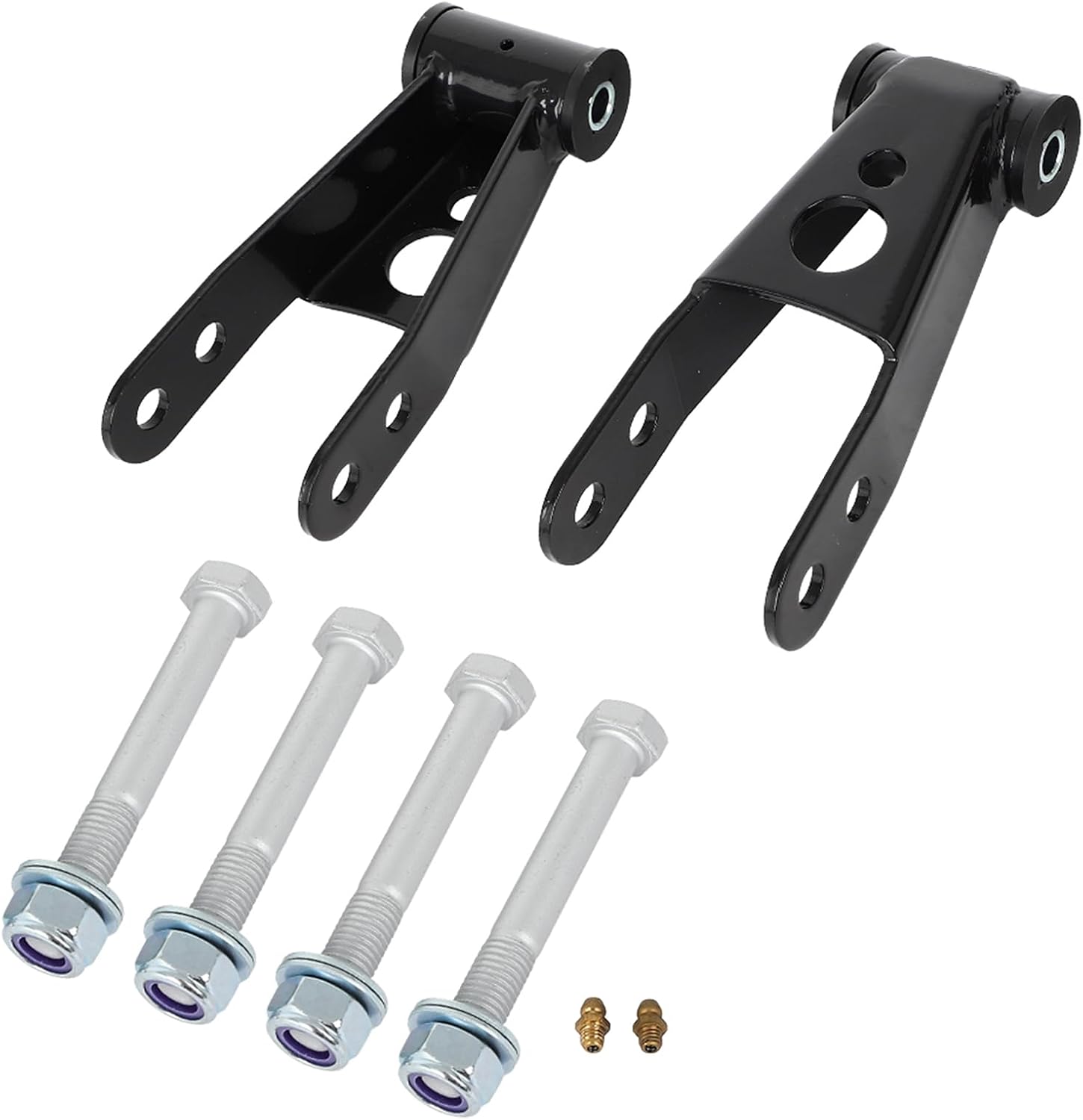
| Automotive Fit Type | Vehicle Specific Fit |
|---|---|
| Material Type | Aluminum |
| Auto Part Position | Rear |
| Maximum Lifting Height | 2 inches |
This ECCPP 2-inch rear leveling lift kit raises the back of 1998–2011 Ford Ranger trucks to eliminate factory rake and give a straighter stance. Made from 6061-T6 aluminum with anodized finish and supplied with hardened 10.9-grade bolts, the kit is engineered to be lightweight and corrosion resistant compared with steel blocks. Installation is straightforward for a competent DIYer since it is a bolt-on solution that does not require cutting, strut pre-loading, or modification of factory components and can typically be completed in a couple of hours. In use the kit provides modest additional rear clearance for slightly larger tires while preserving factory ride and steering characteristics because it keeps suspension geometry changes minimal. Limitations are its fixed rear-only lift height and 2-inch maximum raise, so it will not change front ride height or provide the larger axle travel that full suspension lifts offer. Fitment is vehicle-specific, so confirm compatibility with your Ranger trim and year before purchasing.
Best for: Ranger owners who want a small, factory-friendly rear lift to level their truck and run slightly larger tires while keeping installation simple and steering and ride quality largely unchanged.
Less Ideal for: Drivers seeking a full suspension lift, significant wheel travel increase, or a larger than 2-inch overall lift should look at more comprehensive lift kits instead.
- 6061-T6 aircraft-grade aluminum construction for strength and light weight
- Anodized finish and hardened 10.9-grade bolts for corrosion resistance and durability
- Bolt-on installation with no cutting or strut modification required, suitable for competent DIY mechanics
- Designed to preserve original ride and steering feel while providing up to 2 inches of rear lift
- Provides rear-only lift with a maximum of 2 inches so front height and full suspension geometry are unchanged
- Limited to the specified 1998–2011 Ford Ranger fitments and does not suit owners seeking larger lifts or heavy-duty off-road use
Verdict: The best 2-inch lift kit for owners seeking a modest height increase that improves clearance and stance while minimizing suspension geometry changes and installation complexity for DIY mechanics.
6. WULF 4" Front / 2" Rear Leveling Lift Kit with Spindles and Shackles for 2001–2011 Ford Ranger 2WD
Best Heavy-Duty Lift Kit

| Material Type | Cast Iron |
|---|---|
| Maximum Lifting Height | 4 inches |
| Set Name | 4" Front 2" Rear Leveling Lift Kit with Shackles |
| Automotive Fit Type | Vehicle Specific Fit |
This WULF kit replaces factory front knuckles with cast iron spindles to deliver a 4-inch front lift and uses adjustable rear shackles to add about 1.5 to 2 inches at the rear, producing a leveled stance on 2001–2011 Ford Ranger 2WD models with torsion bars. Installation typically involves swapping the front spindles/knuckles and fitting the powder-coated, greaseable shackles at the rear; the kit includes pressed greaseable poly bushings and metal sleeves for serviceability. The cast iron front components are designed for heavy-duty use and should better withstand off-road impacts and towing stress than lighter aftermarket pieces. Practical benefits include increased ground clearance up front, improved approach angle, and the ability to run larger tire diameters within the Ranger 2WD torsion-bar setup. Limitations are fitment specificity to torsion-bar 2WD Rangers only and the added weight and steering geometry changes from heavier spindles, which may require alignment and upgraded front-end components for intensive off-road use.
Best for: Buyers who prioritize rugged, reinforced front components and durable rear hardware for frequent off-road driving, hauling, or demanding use on a 2001–2011 Ford Ranger 2WD with torsion bars.
Less Ideal for: Drivers who need a universal or multi-vehicle kit or who own Rangers with Stabilitrak, 4WD, or non-torsion-bar suspension systems should look elsewhere.
- Vehicle-specific fit for 2001–2011 Ford Ranger 2WD with torsion bar suspension for straightforward compatibility.
- Cast iron front spindles/knuckles provide reinforced, durable components for heavier use and off-road impacts.
- Adjustable rear shackles with grease fittings and pressed poly bushings improve serviceability and allow fine tuning of rear ride height.
- Powder-coated hardware resists corrosion for longer life in harsh conditions.
- Only compatible with 2WD torsion-bar Ranger models and excludes vehicles with stability control systems like Stabilitrak.
- Heavier cast components add unsprung weight and may affect steering feel and require alignment after install.
Verdict: The best heavy-duty lift kit for users who need reinforced components and greater durability for frequent off-road use, hauling, or demanding driving conditions.
7. TORCH Off Road 3" Front / 2" Rear Adjustable Lift Kit for 1998–2011 Ford Ranger (Torsion Bar Models)
Best Adjustable Lift Kit

| Fitment | 1998–2011 Ford Ranger torsion bar models |
|---|---|
| Front lift range | 1"–3" adjustable |
| Rear lift range | 1" or 2" adjustable |
| Included components | Torsion keys, rear shackles, extended front and rear shocks, hardware |
| Material type | Alloy steel, aluminum, high carbon steel, stainless steel |
This TORCH Off Road kit is built for Ford Ranger torsion bar suspensions and combines adjustable forged torsion keys, adjustable rear shackles, and extended front and rear shocks so you can dial ride height and travel to suit load or terrain. Typical use is a DIY or shop install to lift and level the truck, fit larger wheels and tires, and gain extra ground clearance for light off-road work. The torsion keys allow 1 to 3 inches of front lift while the shackles give 1 or 2 inches at the rear, letting you choose a slight level or a more aggressive stance. Extended nitrogen-charged shocks increase downward travel and help maintain composure over bumps compared with stock shocks after a lift. The kit includes hardware and instructions and is packaged for torsion-bar Ranger models only. Expect an alignment after installation and understand this is a suspension lift for moderate clearance and tire fitment rather than an extreme off-road conversion.
Best for: Buyers who want a flexible, vehicle-specific lift that can be tuned for daily driving, occasional off-road use, or changing cargo loads and who plan to do the installation themselves or at a shop.
Less Ideal for: Drivers seeking a heavy-duty off-road overhaul, large-lift conversions, or compatibility with non-torsion-bar Ranger suspension setups should look elsewhere.
- Adjustable front torsion keys let you set between 1" and 3" of lift for precise height control.
- Included adjustable rear shackles provide 1" or 2" of rear lift and come with replacement hardware.
- Extended nitrogen-charged shocks restore travel and improve articulation after lifting.
- Vehicle-specific fitment for 1998–2011 Ranger torsion bar models reduces fitment guesswork.
- Comes with installation instructions and all shown hardware for a straightforward bolt-on install.
- Only compatible with torsion bar suspension Rangers and not suitable for other suspension types.
Verdict: The best adjustable lift kit for buyers who want flexibility to fine-tune ride height, alignment, or damping to match driving preferences and varying cargo or terrain conditions.
Choosing the Right Ford Ranger Edge Lift Kit: Key Factors to Consider
Lift Height and Intended Use
Deciding how many inches to lift affects everything from tire size options to steering geometry. For everyday driving and mild off-road trails, modest lifts preserve factory handling and reduce the likelihood of drivetrain stress. Bigger lifts increase clearance but often require additional hardware such as extended brake lines, driveshaft or CV axle modifications, and steering components to correct geometry.
Consider the primary use of your Ranger Edge. If you mostly drive on pavement but want a more aggressive stance and room for larger tires, a 1.5 to 2.5 inch lift can be practical. For serious off-road work, a taller suspension lift will provide more travel and approach angle but demand more attention to component strength and alignment.
Suspension Type and Components
Lift kits come in several designs including coil spring replacements, strut spacers, torsion key adjustments, and full suspension systems with new shocks. Each approach affects ride quality and handling differently. Coil spring lift kits often offer a more integrated suspension geometry and improved ride over spacer-only solutions, while spacer kits are usually less invasive and cheaper but may change damping characteristics.
When choosing for the Ranger Edge, check whether the kit includes matched shocks or whether you need upgraded shocks separately. Matched components maintain intended damping rates for the new ride height and reduce wear on other suspension parts.
Fitment and Compatibility
Exact fitment to the Ranger Edge configuration is essential. A correct fit reduces installation surprises and prevents interference with brake lines, fenders, or steering components. Kits designed specifically for the Edge will more likely account for factory options such as wheel offsets, tire sizes, and suspension variants.
Verify any notes about required additional parts, such as track bar brackets, sway bar end link extensions, or differential drop kits. Understanding these requirements upfront helps you budget for the complete installation and avoids compromises that could affect safety or handling.
Installation Complexity and Tools
Some kits are bolt-on and can be installed with common hand tools and a garage lift, while others require specialized tools, welding, or professional alignment and fabrication. Consider your mechanical skill level and whether you will perform the work yourself.
Installation complexity also affects long-term serviceability. Kits that retain factory mounting points and allow reversing to stock are often preferable for owners who may want to return the truck to stock configuration in the future.
Tire Clearance and Wheel Fitment
If your goal is to run larger tires, make sure the kit provides enough clearance without excessive trimming. Tire size capability depends on lift height, wheel offset, and fender profile. Some lift kits are optimized to accommodate a specific range of tire diameters and widths while maintaining acceptable rubbing under full steering and suspension travel.
Also consider if the kit requires wheel spacers or different offsets to achieve the desired look and clearance. Changes in wheel offset alter scrub radius and steering load, so pick wheel-and-tire combinations that work with the kit's recommendations.
Ride Quality and Handling Tradeoffs
Raising the ride height changes center of gravity and can introduce body roll or altered steering feel. Well-designed kits include damping solutions and geometry corrections to maintain balanced handling. Pay attention to whether a kit includes shock replacements or recommends matched dampers to preserve ride comfort.
Think about the tradeoffs you can accept. Some owners prioritize off-road articulation and will tolerate a firmer ride. Others want daily comfort and prefer kits tuned for a smoother on-road experience despite the added height.
How Lift Height Affects Drivetrain and Braking
Raising the Ford Ranger Edge shifts suspension angles and load paths, which can impact CV joints, driveshaft alignment, and braking geometry. Small lifts usually have minimal drivetrain impact, but taller lifts may require differential drops or longer half shafts to avoid premature wear.
Braking performance can be affected if larger tires are fitted without accounting for increased rotational mass. Bigger tires add inertia and change effective gear ratios, so upgrading brake components or ensuring proper brake cooling can be necessary for heavy usage.
- Higher lift increases angle on CV axles; watch for vibration under acceleration.
- Larger tires can lengthen braking distances; check rotor ventilation and pad selection.
- Alignment adjustments become more critical as lift height grows.
Common Installation Steps and Time Estimates
Typical install steps for a lift kit on the Ranger Edge include lifting and securing the vehicle, removing wheels, disconnecting sway bar end links and brake lines as required, swapping in new springs or spacers, and installing matched shocks or brackets. After reassembly, a professional alignment is recommended.
Time depends on kit complexity and shop experience. Simple spacer kits can be completed in a few hours, while full suspension systems that replace springs and shocks front and rear may take a full day in a well-equipped shop.
- Prepare jack stands, torque wrench, and alignment tools or plan for shop alignment.
- Set aside additional time for unexpected tasks like rusted fasteners or necessary part swaps.
Alignment and Ongoing Maintenance Needs
After lifting the Ranger Edge, a full alignment is essential to restore proper toe, camber, and caster. Some lifts change caster enough to affect highway stability, so check whether the kit includes caster correction components or if aftermarket adjustable arms are recommended.
Regular maintenance after a lift includes inspecting mounting hardware, shock bushings, and brake lines for wear. Re-torque suspension fasteners after the first 100 to 200 miles, and verify wheel torque periodically to maintain safe operation.
- Expect to pay for a professional alignment after installation.
- Inspect for rubbing during full travel and full lock steering maneuvers.
Tire and Wheel Choices That Work Best
Choosing tires that match the intended use will improve the outcome of a lift. All-terrain tires provide a good balance of on-road manners and off-road grip, while mud-terrain tires offer more aggressive traction but typically increase road noise and fuel consumption. Consider the effects of tire width and sidewall height on rubbing and steering response.
Wheel offsets that push the tire outward can enhance the truck's stance but may increase steering effort and change scrub radius. Staggered offsets and appropriate backspacing keep the tire clear of suspension components and the inner fender.
- Measure available clearance with full steering lock and suspension compression.
- Factor in tire weight when considering acceleration and braking changes.
Budgeting for a Complete Lift Project
Beyond the kit itself, plan for related expenses such as upgraded shocks, alignment, possible brake upgrades, and any track bar or brake line extensions. Labor time can vary widely depending on whether you perform the work yourself or use a shop.
A realistic budget accounts for unforeseen parts like seized fasteners, minor fabrication, or additional steering components. Prioritize safety-related items when allocating funds to avoid cutting corners on critical components.
- Allocate funds for alignment and professional inspection.
- Include contingency for additional parts commonly required with taller lifts.
Still looking for the perfect fit?
Select your Ford Ranger configuration to see the most relevant Lift Kits recommendations
How We Chose the Best Ford Ranger Edge Lift Kit
Our selection focused on attributes that matter to Ford Ranger Edge owners upgrading suspension height and capability. We prioritized fitment accuracy to the Edge configuration, ensuring each kit is designed to work with the Ranger Edge suspension geometry and common OEM components. Ride quality and handling were evaluated by looking at suspension design choices such as coil springs, strut spacers, and complete lift systems, and how those choices affect damping and steering feel.Durability was another key filter, with attention to materials, corrosion protection, and mounting methods that withstand off-road use and everyday driving. Ease of installation and serviceability counted heavily: we favored kits that provide clear instructions, reuse factory attachment points when possible, and minimize the need for extensive aftermarket modifications. Compatibility with larger tires and alignment requirements was also a deciding factor, including whether additional components such as brake line extensions, track bar brackets, or CV axle accommodations are typically required.We excluded one-off or poorly documented kits with unclear fitment, kits that require major frame cutting, and products intended only for competition use. Final choices balance everyday drivability, installation complexity, and robustness for truck owners who want a dependable lift solution for the Ford Ranger Edge.
Our full evaluation process is outlined in our review methodology.
FAQ
How tall should I lift my Ford Ranger Edge for larger tires?
It depends on the tire diameter you want and your driving needs. Small lifts around 1.5 to 2.5 inches often provide enough room for modestly larger tires without major drivetrain changes. Taller lifts allow more tire clearance but usually require additional modifications to maintain proper geometry.
Can I install a lift kit on my Ranger Edge at home?
Some kits are designed for do-it-yourself installation if you have common tools and experience with suspension work. More comprehensive systems may require a lift, specialized tools, and a professional alignment, so assess your skills and workspace before attempting installation.
Will lifting my Ranger Edge void warranties?
Warranty outcomes can vary. Simple bolt-on modifications that do not damage factory components are less likely to cause issues, but any damage clearly caused by the lift or associated modifications could be excluded. Check warranty terms and consult with your dealer or warranty provider if concerned.
Do I need new shocks with a lift kit?
Often yes. Many lift kits change the suspension travel and require shocks with different valving or longer travel to maintain ride quality. Some kits include matched shocks, while others recommend specific replacements to preserve handling and durability.
How does a lift affect fuel economy and handling?
A lift typically increases aerodynamic drag and may add rolling resistance if larger tires are used, which can reduce fuel economy. Handling changes include a higher center of gravity and potentially more body roll; well-engineered kits mitigate these effects with appropriate damping and geometry corrections.
What ongoing checks should I perform after installing a lift?
Inspect suspension fasteners, shock mounts, and brake line routing after the first few hundred miles. Re-torque hardware and watch for unusual vibrations or tire rubbing. Periodic alignment checks are recommended to ensure stable handling over time.
Final Verdict
Choosing the right lift kit for a Ford Ranger Edge means balancing desired height with ride comfort, drivetrain health, and installation complexity. Prioritize kits that match your intended use, provide clear fitment for the Edge, and include or recommend compatible shocks and alignment corrections.If you want a mild height increase for larger tires and daily driving, opt for a modest, well-documented kit that preserves factory geometry. For serious off-road capability, accept the extra installation steps and supporting components needed to maintain reliability and safe handling.
Explore More:
- Check out all Ford Ranger parts & accessories
- Explore Suspension & Steering
- Browse all Accessories
