

Note: This article contains affiliate links. If you click on these links and make a purchase, I may earn a small commission at no extra cost to you. This helps support my research and content. Read my full affiliate disclosure here.
If you want a taller stance, more underbody clearance, and the ability to run much larger tires on your Ford Ranger, a 6 inch lift kit is a common next step. A lift of this size changes handling, ride comfort, and component loads, so choosing the right kit matters for both daily driving and serious off-road use. This guide narrows the field to the top shortlisted 6 inch lift kits that suit Ranger owners, focusing on ride quality, suspension geometry, and durability.Below we summarize the evaluation criteria used and present the top picks. Read on to understand installation demands, expected driving tradeoffs, and the setup choices that best match how you use your Ranger.
Looking for other parts? See all Ford Ranger parts & accessories.
Top Picks at a Glance
| Best Overall Lift Kit The top all-around 6-inch lift kit balancing performance and fitment | Rough Country 6" Lift Kit with N3 Struts for 2019–2023 Ford Ranger 4WD |  |
| Best Budget Lift Kit A low-cost 6-inch lift kit that covers basics affordably | TSS 6" Front Lift Kit with Shocks for 2001–2012 Ford Ranger 2WD (Coil Suspension) |  |
| Best Premium Lift Kit Higher-end components and performance for demanding users | BDS 6-Inch Full Suspension Lift Kit with FOX 2.0 Shocks for Ford Ranger (2019–2023) 4WD |  |
| Best Bolt-On Lift Kit Designed for straightforward installation with minimal fabrication | RTZ 6" Front / 4" Rear Lift Kit with DT9000 Nitro Shocks for 1998–2000 Ford Ranger |  |
| Best Heavy-Duty Lift Kit Built for heavier loads and more rugged use without compromise | BDS 6-Inch Lift Kit for Ford Ranger (1983–1997) |  |
1. Rough Country 6" Lift Kit with N3 Struts for 2019–2023 Ford Ranger 4WD
Best Overall Lift Kit

| Automotive Fit Type | Vehicle Specific Fit |
|---|---|
| Material Type | Alloy Steel |
| Maximum Lifting Height | 6 inches |
| Included Components | Lift Kit |
This Rough Country 6" lift kit is a full replacement suspension package engineered specifically for 2019–2023 Ford Ranger 4WDs. It raises ride height by 6 inches using lifted cast knuckles up front, fabricated rear lift blocks, heavy-duty crossmembers, skid plate protection, and nitrogen-charged N3 shocks tuned with multiple valving stages. In use it lets you run larger tires while retaining a street-friendly ride thanks to the 10-stage variable valving and high-pressure nitrogen charge in the shocks. The kit includes substantial structural components aimed at off-road durability and provides better underbody clearance for rocks and obstacles. Installation is substantial and Rough Country recommends a certified technician; expect alignment and driveline checks after installation and periodic inspections. The kit comes with a limited lifetime replacement guarantee for the lift components, but professional installation and regular maintenance are important to preserve fitment and steering geometry over time.
Best for: Buyers who want a one-package 6-inch lift that balances daily driving comfort and off-road capability and who prefer a vehicle-specific solution with robust structural components.
Less Ideal for: Drivers seeking a simple DIY lift or a light cosmetic spacer lift should look elsewhere; this kit is aimed at those prepared for a full suspension installation and alignment.
- Complete vehicle-specific kit with front and rear components and skid plate for a full 6-inch lift
- N3 nitrogen-charged shocks with multi-stage valving for a balance of off-road capability and highway comfort
- Fabricated rear lift blocks and reinforced crossmembers designed for long-term durability under load
- Engineered to preserve factory-like ride characteristics while enabling larger tire fitment
- Installation is involved and intended for a certified technician rather than a DIY quick bolt-on
Verdict: The best all-around lift kit that balances ride quality, component quality, ease of installation, and long-term durability for most buyers seeking a 6-inch lift.
2. TSS 6" Front Lift Kit with Shocks for 2001–2012 Ford Ranger 2WD (Coil Suspension)
Best Budget Lift Kit

| Brand | TSS |
|---|---|
| Included Components | shocks,u-bolts |
| Material Type | Alloy Steel, Cast Iron |
| Maximum Lifting Height | 6 inches |
This TSS lift kit raises the front 6 inches (with a 2 inch rear level) to give 2001–2012 Ford Ranger 2WD trucks a noticeable height and improved ground clearance without complex suspension changes. It installs using ductile cast iron lift spindles/knuckles up front, coil spring spacers, and angled lift blocks with u-bolts at the rear, and includes nitro gas pressure shocks to retain damping. In practice the kit provides a straightforward bolt-on path to the target ride height and is useful for drivers who want the lifted look and better clearance for larger tires while keeping costs down. Expect a firmer ride compared with premium kits and some additional steering or alignment work after installation because of altered geometry. The kit does not support Stabilitrak or non-coil models and shocks may arrive separately, so plan the install accordingly and budget for alignment and possible ancillary parts.
Best for: Buyers who need an affordable, straightforward way to lift a 2001–2012 Ford Ranger 2WD to a 6 inch front stance and prioritize correct ride height and basic safety over premium ride comfort and advanced suspension features.
Less Ideal for: Drivers seeking the smoothest possible ride, full suspension tuning, or compatibility with Stabilitrak and non-coil setups should consider higher-end or model-specific kits instead.
- Provides the advertised 6 inch front lift and 2 inch rear leveling for the specified Ranger 2WD years
- Includes cast iron lift spindles and coil spring spacers for a bolt-on front lift
- Comes with nitro gas shocks for improved damping over stock after lift
- Rear kit includes angled lift blocks and zinc-coated u-bolts for a complete axle lift
- May produce a firmer ride and altered steering geometry requiring alignment and possible additional components
- Does not fit models with Stabilitrak or non-coil spring suspensions
Verdict: The best budget lift kit for buyers who need a cost-effective 6-inch lift solution that provides correct ride height and acceptable safety without premium features.
3. BDS 6-Inch Full Suspension Lift Kit with FOX 2.0 Shocks for Ford Ranger (2019–2023) 4WD
Best Premium Lift Kit

| Maximum Lifting Height | 6 inches |
|---|---|
| Shocks Included | FOX 2.0 Performance Series |
| Automotive Fit Type | Vehicle Specific Fit |
| Material Type | Alloy Steel, Durable Coatings, High-Performance Polymers, Polyurethane (PU) |
This BDS 6-inch full suspension lift kit is a comprehensive vehicle-specific package designed to raise a 2019–2023 Ford Ranger 4WD while keeping the truck’s steering and ESC systems functioning correctly. It uses top-mounted strut spacers up front, lift blocks in the rear, and CNC-machined steering knuckles to correct geometry after the lift. Heavy-duty 1/4-inch laser-cut crossmembers and a front skid plate increase ground clearance and protect drivetrain components. The kit ships with FOX 2.0 performance shocks for better damping and an upgraded feel over stock, plus relocation brackets, longer u-bolts, brake line brackets, and alignment cam bolts to simplify installation and alignment. Expect a firmer, more controlled ride offroad and improved capability for 35-inch tires, but installation requires frame and differential modification and attention to knuckle type on some model years. It also limits reinstallation of some factory wheel/tire setups and demands careful wheel/tire selection to avoid steering wobble. For buyers after a durable, premium lift with performance shocks and correct geometry, this kit delivers a well-engineered solution.
Best for: Buyers who prioritize a durable, factory-quality long-term lift with refined ride tuning and are willing to invest in premium components and a thorough installation process.
Less Ideal for: Drivers seeking a no-modification bolt-on lift or those unwilling to address potential steering setup changes and frame-level work should consider simpler or less-involved options.
- Vehicle-specific design with CNC-machined steering knuckles to restore correct steering geometry and maintain ESC compatibility
- Includes FOX 2.0 Performance Series shocks for improved damping and offroad control
- High-clearance 1/4-inch laser-cut crossmembers and a front skid plate for added ground clearance and protection
- Comprehensive kit with relocation brackets, longer u-bolts, brake line brackets, alignment hardware, and rear lift blocks for a complete installation
- Installation requires frame and differential modification and verification of knuckle type on 2020+ models
Verdict: The best premium lift kit for buyers willing to pay more for superior materials, refined ride tuning, and longer-lasting components under heavier use.
4. RTZ 6" Front / 4" Rear Lift Kit with DT9000 Nitro Shocks for 1998–2000 Ford Ranger
Best Bolt-On Lift Kit
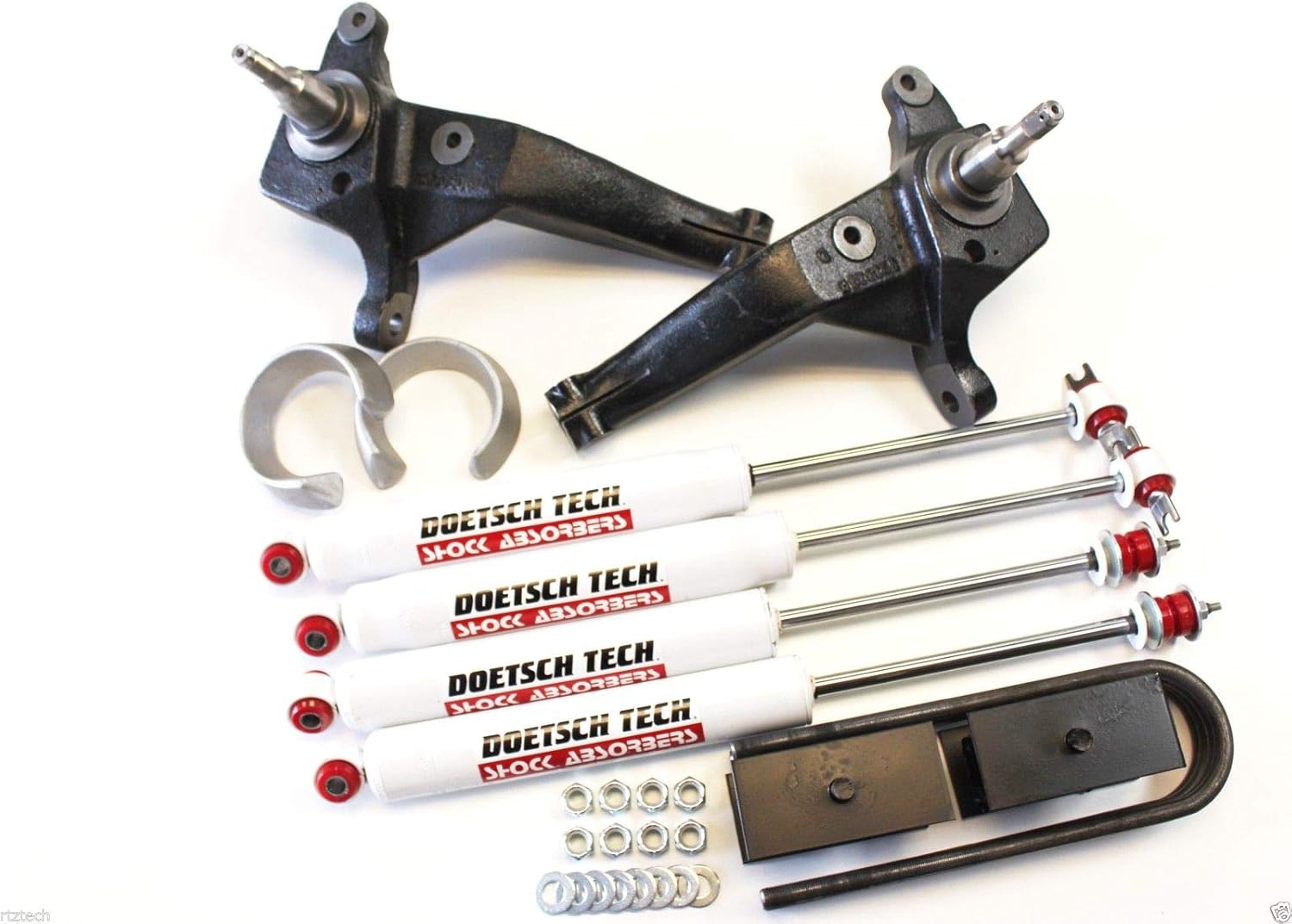
| Maximum Lifting Height | 6 inches front, 4 inches rear |
|---|---|
| Material Type | Aluminum, Steel |
| Auto Part Position | Front |
| Included Components | Installation Hardware, DT9000 Nitro Shocks |
This RTZ lift kit provides a straightforward bolt-on way to raise a 1998–2000 Ford Ranger 6 inches up front and 4 inches in the rear without welding or custom fabrication. The kit replaces the front spindles with ductile iron units and includes bottom-mounted aluminum coil spacers that seat into the lower control arms, plus tapered steel rear lift blocks, hardware, and a matched set of Doestch Tech DT9000 nitrogen shocks. For a competent DIY mechanic the parts fitment and included hardware make installation achievable with common tools and a shop press or jack for handling heavy components, then an alignment afterward. The gas-charged shocks help restore control and drivability after the lift. Limitations to note are that this kit is specific to 2WD Rangers with coil suspension and it will not work with vehicles that have Stabilitrak/AdvanceTrac; professional installation is recommended for safety when handling suspension springs and heavy spindles.
Best for: DIY mechanics who want a straightforward, factory-point bolt-on lift for a late 1990s Ford Ranger and prioritize installability with common hand tools and a post-install alignment.
Less Ideal for: Drivers who need a lift solution for 4WD Rangers, vehicles with electronic stability systems, or those unwilling to use professional help for spring and spindle installation.
- True bolt-on design with no welding or fabrication required
- Front ductile iron spindles maintain correct wheel geometry after lift
- Includes rear tapered steel blocks and OEM-grade u-bolts and hardware
- Comes with nitrogen-charged DT9000 shocks tuned to improve control after lifting
- Includes installation hardware so DIY installers have most parts needed for assembly
- Not compatible with models equipped with Stabilitrak/AdvanceTrac or non-coil rear suspensions
Verdict: The best bolt-on lift kit for DIY mechanics who prioritize straightforward, no-fabrication installations using factory mounting points and common hand tools.
5. BDS 6-Inch Lift Kit for Ford Ranger (1983–1997)
Best Heavy-Duty Lift Kit

| Brand Name | Roco 4×4 |
|---|---|
| Manufacturer | BDS |
| Automotive Fit Type | Vehicle Specific Fit |
| Material Type | Alloy Steel |
| Maximum Lifting Height | 6 inches |
This BDS 6-inch lift kit is a vehicle-specific suspension package made to raise Ford Ranger 4WD trucks from 1983 through 1997 by six inches using alloy steel components designed for front and rear installation. It installs in place of factory suspension parts to increase ground clearance and create room for larger tires, and the kit is marketed as reinforced for heavier use with components that resist wear. Typical use is for off-road driving, light towing, or hauling where extra ride height and improved obstacle clearance matter. Notable features include alloy steel construction and a full front-and-rear fitment that aims for a precise, vehicle-specific installation. Practical benefits are improved approach and departure angles, better underbody clearance, and a tougher build that should stand up to more demanding driving than a basic spacer lift. Limitations include the likely need for alignment and possible additional drivetrain or brake adjustments after installation, and the listing does not include a detailed parts breakdown or fitment instructions in the product text.
Best for: Buyers who need a rugged, vehicle-matched 6-inch lift for a 1983–1997 Ranger and prioritize reinforced construction that can handle towing, hauling, or frequent off-road use.
Less Ideal for: Drivers seeking a plug-and-play height change without follow-up suspension or driveline adjustments or those who want a lift kit with a full documented parts list and installation guide included.
- Vehicle-specific fit for 1983–1997 Ford Ranger 4WD to simplify installation
- Alloy steel construction intended for durability under heavier use
- Raises front and rear up to 6 inches to allow larger tires and increased clearance
- Includes components for both front and rear placement
- Product listing lacks a detailed parts list and installation instructions
- May require additional alignment, driveline, or brake adjustments after installation
Verdict: The best heavy-duty lift kit for buyers who need reinforced components and tougher construction to handle towing, hauling, or frequent off-road use.
Choosing the Right Ford Ranger 6 Inch Lift Kit: Key Factors to Consider
Fitment and Vehicle Scope
Confirming exact fitment is the first step because a 6 inch lift kit must match the Ranger's model years and any factory suspension variations. Differences in axle type, steering geometry, and factory control arm lengths affect how a lift performs. Using a kit explicitly specified for your Ranger avoids surprises with bracket placement, steering stops, and brake line extensions.
If you have any optional factory packages or nonstandard accessories that alter wheel offset or fender clearance, account for those when choosing a kit. A kit that lists vehicle-specific components reduces the need for custom fabrication and helps preserve factory serviceability.
Suspension Geometry and Handling
A 6 inch lift significantly changes control arm angles, axle positioning, and driveshaft alignment. Kits that include corrective components such as new control arms, adjustable track bars, or caster-correcting brackets help maintain predictable steering and tire wear. Without geometry correction, the truck can develop bump steer, poor tracking, or accelerated wear on joints and tires.
Consider how the kit manages caster and toe settings after lift. Some kits are designed to work with stock arms but recommend aftermarket adjustable components to dial in alignment. Prioritizing geometry-friendly kits improves both on-road stability and off-road articulation.
Shock Absorber Compatibility and Ride Quality
A 6 inch lift changes spring and shock travel, so matching proper shocks is critical for safety and comfort. Many kits include recommended shock lengths or require upgraded shocks to control rebound and compression across the greater travel range. The wrong shock choice leads to a floaty ride, poor damping, or premature bottoming out under load.
Think about your typical use: highway commuting and light trail use favor valved, progressive shocks for better on-road manners, while heavy off-road use benefits from longer-travel, more heavily valved shock absorbers. Ensure the kit either includes suitable shocks or lists compatible options.
Tire and Wheel Considerations
One common reason to choose a 6 inch lift is to run substantially larger tires. Confirm the maximum tire diameter and recommended wheel backspace to avoid rubbing on the fenders or suspension components. Some kits require modest trimming or aftermarket fender flares to accommodate aggressive tire treads and wider wheels.
Also consider wheel offset and hub-centric fitment to maintain correct scrub radius and steering feel. Tires add unsprung mass and can change braking distances, so select tires and wheels that balance off-road traction with acceptable on-road manners.
Installation Complexity and Required Modifications
Installing a 6 inch lift kit is more involved than a leveling kit and often needs a well-equipped shop or experienced DIYer. Expect tasks such as unbolting control arms, installing brackets, possibly modifying brake or ABS lines, and performing a full alignment afterward. Some kits require welding or cutting; understand whether the kit is bolt-on or if fabrication is necessary.
Plan for associated services like wheel alignment, potential driveshaft or CV servicing, and re-tightening procedures after initial miles. Assess your skill level and whether professional installation better protects your investment and ensures safety.
Durability, Warranty, and Material Quality
Because a 6 inch lift exposes components to higher loads and impacts, material quality and manufacturing processes are important. Look for kits that use thicker steel brackets, corrosion-resistant coatings, high-quality bearings and bushings, and hardened bolts. Heavy-use off-road environments increase wear, so robust components extend service intervals and reduce the chance of failure.
Warranty coverage and support documentation matter. A clear warranty and good installation guides indicate a manufacturer that stands behind fitment and long-term performance, which reduces risk for owners who plan aggressive use.
Understanding How a 6 Inch Lift Changes Driving Dynamics
Raising the Ranger by six inches affects center of gravity, steering response, and suspension travel. Expect a higher roll tendency in corners and different roll recovery behavior compared with stock height. That does not mean the truck is unsafe, but it does mean you should anticipate a different handling envelope and adapt driving style accordingly.
Off-road benefits are substantial: more ground clearance reduces the chance of contact with rocks and obstacles, and increased approach or departure angles help technical climbing and descending. However, the higher stance also changes how the truck responds to uneven terrain, so selecting a kit that balances articulation with stability is important.
- Higher center of gravity increases body roll during abrupt maneuvers
- Longer suspension travel can improve off-road articulation if shocks and springs are matched
- Brake feel and ABS calibration are generally unchanged but stopping distances may increase with larger rotating mass
Common Installation Steps and What to Expect
Typical installation steps include safely supporting the vehicle, removing wheels, disconnecting sway bars and control arms as needed, installing lift brackets or new coils, and fitting shocks. Some kits include replacement control arms and track bars that bolt in, while others supply lift blocks or strut spacers. After mechanical installation, a full alignment is necessary.
Plan for extra labor like brake line extensions, ABS sensor repositioning, and possibly relocating differential hardware. Even when a kit is marketed as bolt-on, it is common to need specialty tools and an alignment with caster and camber adjustments.
- Always check whether the kit requires welding or is fully bolt-on
- Expect an alignment and a recheck of fastener torque after the first 500 miles
- Have replacement or upgraded shocks ready if the kit does not include them
Tire Selection and Wheel Fitment Tips
Choosing the right tire size is one of the most important practical decisions after installing a 6 inch lift. Tires that are too large cause rubbing on turning or compression; tires that are too aggressive can negatively impact on-road noise and fuel economy. Measure current wheel backspace and consult the lift kit's recommended maximum tire diameter.
Consider wheel offset and width changes that maintain proper scrub radius and steering characteristics. If you plan to run especially wide or tall tires, investigate fender trimming options or wheel spacers that the kit supports.
- Verify maximum recommended tire diameter with the kit documentation
- Prefer moderate aggressive tread patterns for mixed on-/off-road use
- Check for necessary fender trimming or aftermarket flare compatibility
Maintaining the Lifted Ranger Over Time
After installing a lift, proactive maintenance helps avoid accelerated wear. Regularly inspect control arm bushings, ball joints, and track bar mounts for play or unusual wear. Fasteners on lift brackets and suspension links should be torque-checked after the first break-in miles and periodically thereafter.
If you do frequent off-road trips, rinse components after muddy or salty conditions and watch for corrosion on brackets or plated components. Maintaining proper tire pressures and performing routine alignments keeps tire wear even and preserves handling characteristics.
- Torque-check lift fasteners after 100 and 500 miles
- Inspect shocks and bushings for leaks and play every few months
- Rinse exposed suspension parts after harsh off-road use
Legal and Insurance Considerations
A 6 inch ride height change may affect local vehicle regulations and insurance policies. Some areas have maximum lift or bumper height rules; check local regulations before completing the modification. Additionally, notify your insurer about significant suspension changes because coverage or premiums can change depending on the modification type.
Keep documentation of the parts installed and installation receipts. That record helps with resale, warranty claims, and any necessary safety inspections.
- Verify local lift height limits and inspection requirements
- Document installation and retain manufacturer fitment guides
- Inform your insurer of major suspension modifications
Still looking for the perfect fit?
Select your Ford Ranger configuration to see the most relevant Lift Kits recommendations
How We Chose the Best Ford Ranger 6 Inch Lift Kit
We focused on practical, chassis-specific criteria that matter for Ford Ranger owners when fitting a 6 inch suspension lift kit. Selection began with compatibility and fitment accuracy to ensure kits maintain safe steering and brake line routing after installation. We prioritized kits that preserve or correct suspension geometry, including control arm and track bar provisions or adjustable components that reduce the need for additional parts.Durability and component quality were next: materials, joint types, and whether the kit includes replacement arms, shocks, and required brackets influenced our choices. Ride quality and intended use were assessed by kit design and included shock valving or recommended shock options to suit on-road comfort or aggressive off-road travel. Ease of installation and documented instructions mattered because a 6 inch lift often requires intermediate to advanced mechanical skills and possible alignment or driveline adjustments.We also considered the ability to safely accommodate larger tires without excessive trimming and whether the kit retains acceptable payload and towing characteristics. Exclusions: we did not include lift options that lack clear fitment information, kits that require extensive chassis cutting without guidance, or products without supporting alignment or geometry correction parts. The final list reflects balance across durability, handling, and realistic installation effort for Ford Ranger owners.
Our full evaluation process is outlined in our review methodology.
FAQ
Will a 6 inch lift kit affect my Ranger's towing capacity?
A lift does not automatically change the factory towing rating, but it can alter trailer geometry and tongue weight perception. Increased leverage and different suspension dynamics mean you should follow factory towing specs and verify hitch setup after lifting.
Can I install a 6 inch lift kit myself?
Some experienced DIYers can install a 6 inch lift, but the process is more complex than a small leveling kit. Expect to work with control arms, track bar adjustments, and possibly brake line modifications. If you are not confident with alignment and torque procedures, professional installation is recommended.
Do I need new shocks when installing a 6 inch lift?
Often yes. Many lift kits require or recommend longer shocks to control the increased travel and preserve damping characteristics. Check the kit documentation for compatible shock lengths and valving suited to your driving style.
Will my Ranger need trimming after a 6 inch lift?
Trimming depends on wheel, tire, and wheel offset choices. Some combinations will clear without cutting, while aggressive tire/wheel setups commonly require minor fender trimming or aftermarket flares to prevent rubbing.
How does a 6 inch lift compare to a leveling kit?
A 6 inch lift changes ride height substantially and affects suspension geometry and handling more than a leveling kit, which primarily corrects front-rear rake. The two serve different goals: leveling kits are for modest height correction while a 6 inch lift is for larger tires and significant ground clearance.
What should I budget for installation and alignment?
Installation cost varies based on whether the kit is bolt-on or requires fabrication and whether additional components like shocks or control arms are needed. Expect a full alignment and possible driveline adjustments after installation. Labor rates and regional differences make exact estimates vary.
Final Verdict
Choosing a 6 inch lift kit for your Ford Ranger is about deciding which tradeoffs you are willing to accept between clearance, handling, and installation complexity. Prioritize kits that address suspension geometry, include or recommend appropriate shocks, and clearly state tire fitment limits.If you plan frequent off-road use or larger tires, favor solutions with corrective control arms and robust brackets. If your priority is occasional trail use and better road manners, seek kits that balance lift height with compatible shock upgrades. With the right match to your driving style and careful installation, a 6 inch lift can substantially expand what your Ranger can do.
Explore More:
- Check out all Ford Ranger parts & accessories
- Explore Suspension & Steering
- Browse all Accessories
