

Note: This article contains affiliate links. If you click on these links and make a purchase, I may earn a small commission at no extra cost to you. This helps support my research and content. Read my full affiliate disclosure here.
If you want to fit larger tires, improve ground clearance, or give your Ford Ranger 2WD a more rugged stance, choosing the right lift kit matters. The wrong kit can negatively affect ride quality, steering geometry, and alignment, while the right one will preserve on-road manners and add the clearance you need for off-road trails.This guide covers six carefully shortlisted lift kits that suit Ford Ranger 2WD owners across common use cases, from mild leveling lifts to taller suspension options. We evaluate each option for ride comfort, compatibility with larger tires, durability, and installation complexity so you can match the kit to how you drive. Read on to weigh tradeoffs and pick the best path for your truck.
Looking for other parts? See all Ford Ranger parts & accessories.
Top Picks at a Glance
| Best Overall Lift Kit The best all-around lift kit balancing performance, fitment, and durability | TORCH Off Road 3" Front / 2" Rear Lift Kit for 1998–2011 Ford Ranger Torsion Bar Models |  |
| Best Premium Lift Kit Higher-end components and engineering for improved ride and longevity | MaxTrac 4" Lift Spindles for 1998–2009 Ford Ranger Edge/Sport 2WD |  |
| Best Complete Lift Kit Includes all necessary components for a full, bolt-on installation | TORCH 3" Front / 1.5"–2" Rear Lift Kit for Ford Ranger & Explorer Torsion-Bar Models |  |
| Best 2-Inch Lift Kit A specific-height kit for modest lift without major geometry changes | McBay Performance 2" Rear Lift Block and U-Bolt Kit |  |
| Best Adjustable Lift Kit Height-adjustable components to fine-tune ride and stance | TORCH Off Road 3" Front / 2" Rear Adjustable Lift Kit for 1998–2011 Ford Ranger (Torsion Bar Models) |  |
| Best Heavy-Duty Lift Kit Built-for-strength components for towing, payload, and rough use | TSS 6" Lift Kit for 2001–2012 Ford Ranger 2WD (4‑Cyl) with Shocks |  |
1. TORCH Off Road 3" Front / 2" Rear Lift Kit for 1998–2011 Ford Ranger Torsion Bar Models
Best Overall Lift Kit

| Fitment | 1998–2011 Ford Ranger torsion bar models |
|---|---|
| Front Lift Range | 1"–3" adjustable |
| Rear Lift Range | 1"–2" adjustable |
| Included Components | Torsion keys, rear shackles, hardware |
This TORCH Off Road kit raises the front 1"–3" with forged adjustable torsion keys and the rear 1"–2" using adjustable shackles to give a Ford Ranger a leveled, taller stance and room for larger tires. It is a bolt-on, vehicle-specific kit designed for torsion bar suspension models and ships with new shackles and hardware so you replace any compromised factory parts during installation. Expect a typical DIY install time of two to four hours using basic tools; the torsion keys are indexed for predictable lift without severely degrading ride quality. The kit’s forged keys are positioned as stronger than factory pieces, which should improve long-term durability compared with simple cast replacements. Important limitations are that it only fits Ranger torsion-bar models from 1998–2011 and does not include shocks or other suspension components, so an alignment and possible shock upgrade are recommended after lifting. Stickers and straightforward instructions are included to help with installation and fitment confirmation.
Best for: Buyers who want a dependable, vehicle-specific leveling and lift solution that balances improved clearance and maintainable ride quality without requiring a full suspension overhaul.
Less Ideal for: Those seeking full suspension kits with upgraded shocks, long-travel components, or users with non-torsion-bar Rangers should look at more comprehensive or differently targeted lift systems.
- Vehicle-specific fit for 1998–2011 Ford Ranger torsion bar models simplifies installation and fitment checks
- Adjustable front torsion keys (1"–3") and rear shackles (1"–2") let you level or lift to suit tire clearance needs
- Includes new shackles and hardware to replace worn factory pieces during install
- Forged torsion keys claimed stronger than factory keys for improved durability
- Bolt-on design with instructions enables a 2–4 hour DIY installation for mechanically inclined owners
- Does not include shocks or other suspension components so additional purchases may be needed for optimal ride control
- Limited to torsion bar suspension Rangers from 1998–2011 and not compatible with other suspension types
Verdict: The best all-around lift kit for most buyers, offering a balanced mix of ride quality, reliable components, straightforward installation, and long-term durability.
2. MaxTrac 4" Lift Spindles for 1998–2009 Ford Ranger Edge/Sport 2WD
Best Premium Lift Kit

| Brand | MaxTrac |
|---|---|
| Set Name | MaxTrac 703030C 4" Lift Spindles |
| Material Type | Iron |
| Maximum Lifting Height | 4 inches |
| Included Components | Installation Hardware |
These MaxTrac 4" lift spindles are a bolt-on front lift solution for 1998–2009 Ford Ranger Edge and Sport 2WD torsion-bar trucks that raise the front 4 inches while keeping the factory steering and suspension geometry. Constructed from ductile iron, the spindles are built for heavy use and should withstand daily driving and occasional off-road stress better than thinner cast parts. Installation replaces the stock spindles and includes hardware, so most competent DIYers or a shop can complete the swap without complex frame mods. They increase track width slightly and are designed to clear up to 31" tires with the correct wheel and backspacing choices, giving room for larger wheels without needing lift springs or control arm changes. Important limits: these fit torsion-bar 2WD Rangers only and will not work with Stabilitrak or coil-spring front ends, and wheel/tire selection may require trimming or careful measurement for fender clearance. For someone prioritizing durable materials and preserved steering geometry, these spindles are a practical premium front-lift option.
Best for: Buyers seeking a durable, factory-preserving front lift for a 1998–2009 Ranger Edge or Sport 2WD who value robust materials and long-term performance under heavier use.
Less Ideal for: Those running coil-spring or Stabilitrak front suspensions, owners who need a full suspension lift kit including rear lift components, or buyers wanting a cheaper temporary lift solution.
- Ductile iron construction for increased strength and long-term durability
- Bolt-on swap that preserves factory suspension and steering geometry
- Provides a solid 4-inch front lift while slightly increasing track width
- Includes installation hardware for a more complete kit
- Compatible only with 2WD torsion-bar Ranger Edge/Sport models and not with Stabilitrak or coil-spring fronts
Verdict: The best premium lift kit for buyers willing to pay more for superior materials, refined suspension geometry, and long-term durability under heavier use.
3. TORCH 3" Front / 1.5"–2" Rear Lift Kit for Ford Ranger & Explorer Torsion-Bar Models
Best Complete Lift Kit

| Fitment | 1998–2011 Ford Ranger 4×4; 2000–2011 Ranger Edge/Sport 2WD; 1995–2001 Explorer; 2001–2005 Explorer Sport Trac (torsion bar models only) |
|---|---|
| Front lift range | 1"–3" adjustable |
| Rear lift range | 1.5"–2" (add-a-leaf) |
| Material type | Carbon Steel |
| Included components | Torsion keys, leaf springs, hardware |
This TORCH kit is a targeted, vehicle-specific lift solution for torsion-bar Ford Rangers and compatible Explorers, pairing adjustable front torsion keys with an add-a-leaf rear spring to deliver a modest, level lift. The forged torsion keys let you dial in 1"–3" of front lift while the add-a-leaf increases rear height about 1.5"–2" and firms the spring rate for towing or heavier loads. Installation is bolt-on and aimed at the competent DIYer with the included hardware, alignment pins, isolator pads, and step-by-step instructions; an alignment after installation is recommended. The rear leafs and pads help reduce noise and harshness compared with a simple spacer-style lift, and the thicker leaf design is intended to retain spring rate under load. Limitations are that it does not include extended U-bolts or shocks, so you must verify U-bolt thread length and expect to source shocks if you need additional travel or damping changes; lift is modest rather than extreme. For someone wanting a durable, factory-style height increase and improved load carrying without cutting or welding, this is a practical choice.
Best for: Buyers who want a mostly complete, vehicle-specific lift that raises and levels a torsion-bar Ranger while improving rear load capacity and who are comfortable sourcing any missing fasteners or shocks.
Less Ideal for: Do not choose this if you need a full kit that includes replacement shocks or if you want large lifts beyond the modest 1"–3" front and 1.5"–2" rear range.
- Vehicle-specific kit tuned for torsion-bar Ranger/Explorer applications
- Adjustable forged torsion keys allow 1"–3" front lift and leveling
- Add-a-leaf rear springs increase rear height and improve load/towing capacity
- Includes alignment pins, isolator pads, hardware, and instructions for bolt-on installation
- Does not include extended U-bolts or replacement shocks which may be needed for some installs
Verdict: The best complete lift kit for buyers who want a single-purchase solution with all required brackets, shocks, and hardware for a straightforward install.
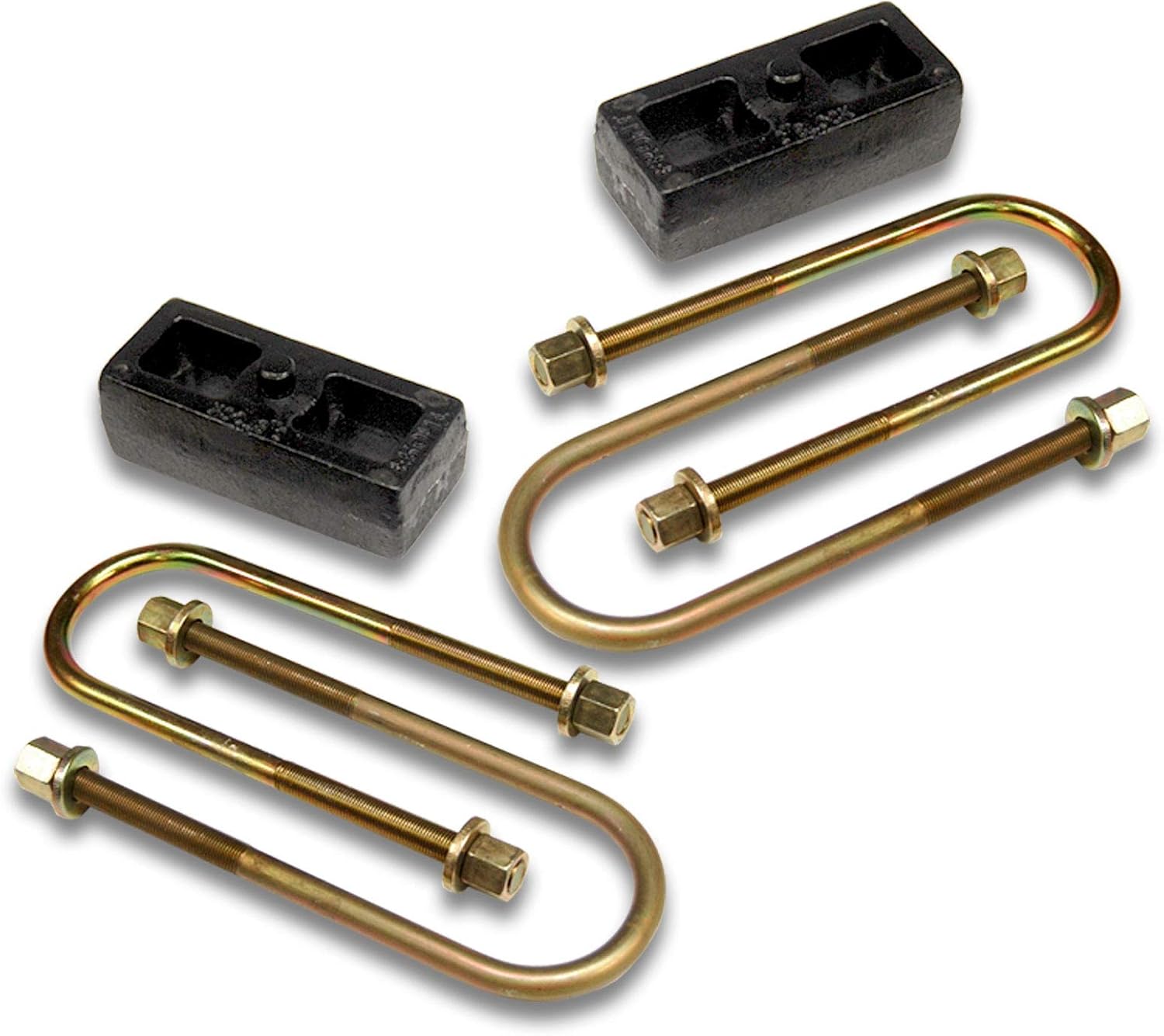
4. McBay Performance 2" Rear Lift Block and U-Bolt Kit
Best 2-Inch Lift Kit
| Automotive Fit Type | Vehicle Specific Fit |
|---|---|
| Auto Part Position | Rear |
| Material Type | Cast Iron |
| Maximum Lifting Height | 2 inches |
This McBay Performance kit provides a simple, conservative 2-inch rear lift using solid cast iron tapered blocks and the necessary U-bolts, washers, and nuts. It is intended for Ford Ranger (1998–2012) and compatible Mazda B-series 2WD trucks and installs where the factory leaf springs and axle meet to raise ride height without altering the front end. The tapered block design helps correct driveline angle and alignment, and the cast iron construction mirrors the material choice of many factory axle blocks for long-term durability. Installation is straightforward for anyone comfortable with basic suspension work and a jack and stands, and the kit includes instructions. Limitations: it only lifts the rear, so front ride height and suspension geometry remain unchanged, and heavier lift goals or changes to ride quality will require different or additional components. Also U-bolts supplied are basic replacements and may need upgrade for heavy towing or off-road abuse.
Best for: Owners who want a modest rear lift to level or slightly raise their truck while keeping stock handling and avoiding further suspension modifications.
Less Ideal for: Drivers seeking a full vehicle lift, significant ground clearance increase, or those planning heavy towing or aggressive off-road use should consider a more comprehensive suspension kit.
- Conservative 2-inch lift preserves handling and limits additional modification needs
- Tapered block corrects driveline angle for improved alignment
- Solid cast iron construction for durability and long service life
- Includes U-bolts, hardened washers, nuts, and installation instructions for a complete rear lift solution
- Rear-only lift so front ride height and stance are unchanged
Verdict: The best 2-inch lift kit for owners seeking a modest, conservative ride-height increase that preserves handling and minimizes the need for additional modifications.
5. TORCH Off Road 3" Front / 2" Rear Adjustable Lift Kit for 1998–2011 Ford Ranger (Torsion Bar Models)
Best Adjustable Lift Kit

| Fitment | 1998–2011 Ford Ranger torsion bar models |
|---|---|
| Front lift range | 1"–3" adjustable |
| Rear lift range | 1" or 2" adjustable |
| Included components | Torsion keys, rear shackles, extended front and rear shocks, hardware |
| Shocks warranty | 5 year / 50,000 mile |
This TORCH Off Road lift kit is designed for Ford Ranger torsion bar suspensions and gives owners on-the-fly control over ride height with 1"–3" adjustable front torsion keys and 1"–2" adjustable rear shackles. Installation is bolt-on and intended for DIY mechanics, and the kit includes extended front and rear nitrogen-charged shocks to restore travel and improve articulation after lifting. The strengthened forged torsion keys and supplied new shackle hardware increase durability and simplify a height change when swapping setups seasonally. Practical benefits include added ground clearance, the ability to fit larger wheels and tires, and improved off-road droop thanks to the extended shocks. Limitations are that the kit is only for torsion bar models of the 1998–2011 Ranger and that an alignment is required after installation to correct steering and tire wear; heavier-duty off-road demands may still call for more aggressive suspension components than those included.
Best for: Buyers who want a flexible, reversible lift for a 1998–2011 Ranger that lets them dial ride height for seasonal setups or mixed on/off-road use while keeping installation manageable for a competent DIYer.
Less Ideal for: Drivers seeking a heavy-duty off-road overhaul, a lift for non-torsion-bar Rangers, or those who want a permanent, large-height suspension conversion should look elsewhere.
- Adjustable front torsion keys allow 1"–3" of lift for quick height changes or seasonal setups
- Includes adjustable rear shackles and new hardware for a complete front-to-rear lift solution
- Extended nitrogen-charged shocks restore travel and improve articulation after lifting
- Vehicle-specific fit for 1998–2011 Ford Ranger torsion bar models simplifies installation
- Only compatible with torsion bar suspension Rangers and not suitable for other suspension types
Verdict: The best adjustable lift kit for users who want flexibility to set ride height and tune handling on the fly or swap setups seasonally.
6. TSS 6" Lift Kit for 2001–2012 Ford Ranger 2WD (4‑Cyl) with Shocks
Best Heavy-Duty Lift Kit

| Maximum Lifting Height | 6 inches front, 4 inches rear |
|---|---|
| Automotive Fit Type | Vehicle Specific Fit |
| Included Components | coil, shocks |
| Material Type | Cast Iron, Steel |
This TSS lift kit raises the front 6 inches and levels the rear by 4 inches for Ford Ranger 2WD 4‑cylinder trucks with coil spring suspension. The package supplies cast iron front lift spindles, front coil springs, rear angled lift blocks with U‑bolts, and nitro gas pressure shocks for both ends, so it delivers the major hardware needed to increase ride height and maintain damping after the raise. Typical use is for carrying larger tires and gaining clearance for light off‑road trails or heavier cargo; the cast iron spindles and reinforced rear blocks are built to handle higher loads than simple spacer lifts. Expect a firmer ride and altered steering geometry that may require alignment and possibly longer brake/ABS lines; the listing also notes this kit does not fit Stabilitrak or 4×4 variants and is specific to 4‑cylinder 2WD Rangers. Installation requires moderate mechanical skill and a proper shop or lift, and shock components may ship separately which can complicate a single‑day install.
Best for: Drivers who regularly carry heavier loads or run tougher off‑road routes in a 2001–2012 Ford Ranger 2WD 4‑cylinder and need a rugged, vehicle-specific lift that uses reinforced components.
Less Ideal for: If you want a mild height change, a plush daily‑street ride, or if your Ranger has Stabilitrak or is 4×4, this kit is not appropriate and a different solution should be considered.
- Vehicle-specific fit for 2001–2012 Ford Ranger 2WD 4‑cyl which simplifies parts matching
- Includes major hardware: front lift spindles, coil springs, rear lift blocks and U‑bolts
- Nitro gas pressure shock absorbers included to restore damping after lift
- Cast iron and steel construction for stronger load handling than simple leveling kits
- Not compatible with Stabilitrak, 4×4 models, or Rangers without coil spring suspension
Verdict: The best heavy-duty lift kit for drivers who need sturdier springs, reinforced mounts, and components engineered to withstand frequent heavy loads and off-road abuse.
Choosing the Right Ford Ranger 2WD Lift Kit: Key Factors to Consider
Lift Height and Intended Use
Lift height determines what you can fit under the fenders and how the truck will behave. A modest 1 to 2 inch spacer or leveling lift is usually sufficient for mild tire upsizing and maintaining near-stock handling. Taller lifts provide more clearance for off-road obstacles and much larger tires but change center of gravity and can introduce more body roll.
Match lift height to how you use the Ranger. If most driving is on pavement with occasional soft trail work, prioritize a lower lift that preserves steering feel. If you plan serious off-road driving or heavy-duty tire upgrades, choose a kit designed for the increased articulation and that includes upgraded shocks or control arms to maintain alignment and suspension geometry.
Compatibility With Larger Tires
Not all lift kits provide the same clearance for wider or taller tires. The wheel and tire combination, including backspacing and offset, interacts with lift height to determine whether rubbing will occur on the inner fender, control arms, or bumper.
Confirm the target tire size and check the kit's stated tire clearances. Remember that increased suspension travel and articulation can change where the tire contacts components under load, so look for kits that report tested tire fitment for the Ranger 2WD or that include guidance on wheel offsets and necessary trimming.
Effect on Ride Quality and Handling
Lifts alter suspension geometry, which affects ride comfort, steering precision, and braking. Spacer-style or leveling lifts tend to preserve original springs and shock valving, keeping ride quality close to stock. Full suspension lift kits often include new coils, shocks, or trailing arms that can be tuned for improved off-road control but may feel stiffer on pavement.
Consider the tradeoff between on-road comfort and off-road performance. If daily drivability is important, favor kits that maintain factory-style spring rates and progressively valved shocks. For trail-focused builds, expect a firmer, more controlled ride designed for articulation and impact absorption.
Installation Complexity and Required Modifications
Installation varies widely from simple bolt-on spacers to full suspension overhauls requiring alignment, brake line extensions, or drive shaft adjustments. A lower-height, spacer-type lift is often installable by experienced DIYers with basic tools, while multi-inch kits that include new control arms, shocks, or subframe modifications typically require professional installation and alignment.
Plan for additional parts that may be necessary, such as extended sway bar links, new bump stops, or steering-brace components. Factor in the time and workspace available and whether you want a reversible installation or a permanent modification to the vehicle.
Component Quality and Corrosion Resistance
Lift kit components are exposed to harsh conditions, especially if you take the truck off-road or drive in wet climates. Material choice, protective coatings, and fastener quality all affect long-term reliability. Look for kits that use high-strength steel, zinc plating, or powder coating to resist rust and that include greaseable bushings or sealed bearings where appropriate.
Higher-quality components reduce the chance of premature failure and make service easier. When evaluating options for the Ranger 2WD, prefer parts with clear material specs and replaceable wear items to simplify future maintenance.
Alignment, Steering, and Safety Considerations
Altering ride height changes toe, camber, and caster and can affect steering geometry. Some lift kits include corrected control arms, drop brackets, or caster correction components to return geometry to safe ranges; others rely on alignment adjustments alone. Incorrect geometry can accelerate tire wear, impair steering response, and impact vehicle stability.
Ensure you budget for a professional alignment after installation and verify whether the kit requires additional steering or suspension components to maintain factory handling characteristics. Safety should drive decisions about how far to lift the Ranger and what corrective parts are necessary.
Lift Types Explained
Lift kits come in several formats, each suited to different goals. Spacer or leveling kits raise the front of the truck to match rear ride height or provide a small overall increase without changing springs. These are less invasive and often preserve factory ride characteristics.
Suspension lift kits replace or modify springs and dampers to provide greater travel and clearance. They are designed for larger tire fitment and harder off-road use but usually require additional corrective parts and a more involved installation. Knowing the tradeoffs helps you pick the right approach for your Ranger 2WD.
- Spacer/leveling kits: minimal change to suspension geometry, easier to install
- Coil spring or leaf spring lifts: greater clearance and travel, may require new shocks
- Full suspension kits: comprehensive but more complex installation and alignment needs
Wheels, Offsets, and Tire Selection
A lift alone does not guarantee clearance. Wheel diameter, width, and offset determine how the tire sits relative to control arms and inner fenders. Lower offsets and wider wheels push the tire outward and can create rubbing against the fender flare or body if not planned correctly.
When planning a tire upgrade, reference the recommended tire sizes and wheel offsets for each lift height. Also consider load rating and sidewall construction; taller, stiffer sidewalls help resist punctures off-road and reduce the chance of rubbing on trail obstacles.
- Verify wheel backspacing and offset with the kit maker's guidance
- Consider narrower options if interior suspension clearance is limited
- Look for tire sizes tested with the given lift height
Maintenance and Long-Term Ownership
Lifted trucks require regular inspection of suspension fasteners, bushings, and steering components. Increased leverage on components can accelerate wear on ball joints, tie rods, and track bars. Greasable fittings and replaceable bushings make routine service easier and extend component life.
Plan for future maintenance costs like shock replacement and occasional re-torquing. Protect exposed metal with rust-resistant coatings and address corrosion promptly to prevent structural issues over the life of the lift.
- Regularly inspect fasteners and replace worn bushings
- Protect components with undercoating or touch-up paint where necessary
- Anticipate slightly increased maintenance for lifted suspensions
Legal and Insurance Considerations
Vehicle modifications can affect registration and insurance coverage depending on local laws and policies. Some jurisdictions limit maximum allowable lift heights or require disclosure of suspension modifications. Before committing to a significant lift, check local regulations that apply to the Ford Ranger 2WD.
Inform your insurer about major suspension changes, especially if the lift materially alters the vehicle's capability. Keeping documentation of parts and professional installations can smooth compliance and claims handling if needed.
- Confirm local height and modification rules prior to installation
- Keep installation receipts and part documentation for insurance
- Understand any inspection requirements after modification
Preparing the Truck for Installation
Before starting the install, gather needed tools and replacement items such as new sway bar links, brake line brackets, and alignment shims that are commonly associated with lift installs. Clear a safe workspace and have an up-to-date service manual or manufacturer fitment notes for reference.
If you plan to do the work yourself, verify torque specs and any special procedures like preload on coil springs. For more involved kits, reserve a qualified shop with alignment equipment to complete the installation and check steering geometry afterward.
- Have necessary tools and parts on hand before starting
- Follow torque specs and safety procedures carefully
- Schedule a professional alignment after the lift is installed
Still looking for the perfect fit?
Select your Ford Ranger configuration to see the most relevant Lift Kits recommendations
How We Chose the Best Ford Ranger 2WD Lift Kit
Our selection focused on lift kits specifically engineered for the Ford Ranger 2WD and filtered for real-world usability. We prioritized kits that address the most common owner goals: tire clearance, reliable ride quality, correct steering geometry, and installation practicality. Key evaluation criteria included fitment accuracy for the 2WD configuration, impact on suspension travel and alignment requirements, component quality and corrosion protection, and the extent of required additional parts like extended brake lines or drop brackets.We also considered installation scope by ranking kits by how much professional labor or additional modification they typically require, from bolt-on spacer-type installs to full suspension conversions. Durability factors such as material grade, fastener quality, and warranty support influenced placement on the shortlist. Excluded items were generic universal lifts and solutions that lacked documented fitment for Ford Ranger 2WD or required major frame cutting. The final list favors options that deliver predictable handling and maintain safe steering geometry while enabling the intended tire and clearance gains.
Our full evaluation process is outlined in our review methodology.
FAQ
How high can I safely lift my Ford Ranger 2WD?
Safe lift height depends on the specific kit and how you plan to use the truck. Small lifts of 1 to 2 inches are generally safe for daily driving with minimal changes to geometry. Bigger lifts require corrective components and careful setup to maintain handling and avoid accelerated wear.
Will a lift kit void my Ford Ranger 2WD warranty?
Adding a lift kit does not automatically void the vehicle warranty, but damage caused by the modification may not be covered. Keep records of installations and consult your vehicle paperwork or dealer for specifics about covered components and potential exclusions.
Can I install a lift kit myself?
Some spacer or leveling kits can be installed by experienced DIYers with basic tools, but full suspension kits that include new coils, shocks, or control arms often require specialized tools and professional alignment. Assess your skills and the kit complexity before deciding to DIY.
Do I need new shocks with a lift kit?
Often yes. Small spacer lifts may work with factory shocks for a time, but taller lifts that change spring geometry or increase travel usually need longer, revalved, or extended-shaft shocks to maintain proper damping and avoid premature wear.
How does a lift affect fuel economy and drivability?
A lift can reduce fuel economy by increasing aerodynamic drag and rolling resistance with larger tires. Heavier components and altered gearing can also affect acceleration and economy. Driveability on pavement can change depending on spring rates and shock tuning.
Will I need an alignment after installing a lift?
Yes. Any change to ride height can alter toe, camber, and caster, so a professional alignment is recommended after installation to ensure safe handling and even tire wear.
Final Verdict
When choosing a lift kit for the Ford Ranger 2WD, prioritize the combination of lift height and suspension components that match your intended use. If you want minimal impact on daily driving, favor modest spacer or leveling options that preserve factory geometry. For more aggressive tire fitment and off-road capability, select kits that include corrected control arms, appropriate shocks, and explicit guidance on tire and wheel fitment.Balance performance goals against installation complexity, long-term maintenance, and safety. Budget for a professional alignment and any necessary corrective parts to keep the truck handling predictably. With the right planning, a properly chosen lift kit will give your Ranger the clearance and look you want while maintaining safe, reliable operation.
Explore More:
- Check out all Ford Ranger parts & accessories
- Explore Suspension & Steering
- Browse all Accessories
