

Note: This article contains affiliate links. If you click on these links and make a purchase, I may earn a small commission at no extra cost to you. This helps support my research and content. Read my full affiliate disclosure here.
If you own a 2003-2007 Honda Accord and want a firmer, lower stance without sacrificing everyday comfort, the right lowering springs can deliver a big improvement. Lowering springs reduce body roll, improve cornering response, and give the car a cleaner wheel-to-fender fit while maintaining a simple, bolt-in installation compared with more complex suspension swaps.This guide covers six shortlisted lowering spring kits chosen specifically for the 2003-2007 Accord chassis. We focus on real-world factors like ride height, spring rate, and compatibility with stock dampers to help you pick a kit that matches your driving style. Read on for the evaluation criteria and practical advice to prepare for installation and ownership.
Looking for other parts? See all Honda Accord parts & accessories.
Top Picks at a Glance
| Best Overall The best all-around choice for most situations | Truhart Lowering Springs for 2003–2007 Honda Accord (Lower) |  |
| Best Quality Built to a higher standard if you want something more solid | Eibach Pro-Kit Lowering Springs for 2003–2004 Honda Accord EX V6 3.0 |  |
| Best Value The sweet spot between price and what you get | Godspeed Traction-S Performance Lowering Springs for 2003–2007 Honda Accord |  |
| Best Budget The cheapest option that still gets the job done reliably | AJP Distributors Front & Rear Lowering Coil Springs Kit |  |
| Highest Rated A top-rated pick with lots of positive feedback | D2 Pro Lowering Springs (Lower) for 2003–2007 Honda Accord |  |
| Most Popular A crowd favorite that many people choose with confidence | Truhart Lowering Springs for 2004–2008 TL, 2.0" Front / 2.0" Rear | |
1. Truhart Lowering Springs for 2003–2007 Honda Accord (Lower)

| Brand | Truhart |
|---|---|
| Position | Lower |
| Manufacturer Part Number | TH-H408 |
| Date First Available | March 1, 2013 |
These Truhart lowering springs replace the factory lower springs to drop ride height on a 2003–2007 Honda Accord, giving a firmer, lower stance and sharper cornering response. They are installed in place of the factory lower springs and are intended for street use where improved handling and reduced body roll are priorities. The kit is straightforward hardware-wise and reviewers report good fit and a smoother-than-expected ride for a lowering spring. Because the springs are stiffer than factory, expect a firmer ride over bumps and more road feedback, which benefits cornering but can transmit more vibration to the cabin. They do not include shocks or struts, so matching the springs to compatible dampers or inspecting existing struts before installation will preserve ride quality and safety. For someone seeking an affordable, simple suspension change to sharpen handling and achieve a lower look, these springs offer a reliable option when paired with appropriate dampers.
Best for: Buyers wanting a balanced suspension upgrade that sharpens handling and lowers ride height without extensive modification, and who prioritize improved cornering and appearance over plush comfort.
Less Ideal for: Drivers who prioritize a soft, cushioned daily ride or who do not want to replace or revalve existing dampers should consider alternatives that include matched shocks or progressive-rate springs.
- Direct-fit design for 2003–2007 Accord lower springs which simplifies installation
- Improves cornering and reduces body roll compared with factory springs
- Reasonably firm but reported to retain acceptable daily-drive comfort
- Affordable way to achieve a lowered ride height and improved stance
- Does not include shocks or struts so dampers may need replacement or revalving to match
- Stiffer spring rate increases road harshness and transmits more vibration to the cabin
Verdict: A cost-effective, direct-fit lowering spring kit that sharpens handling and drops the stance of a 2003–2007 Accord for buyers seeking balanced performance and style.
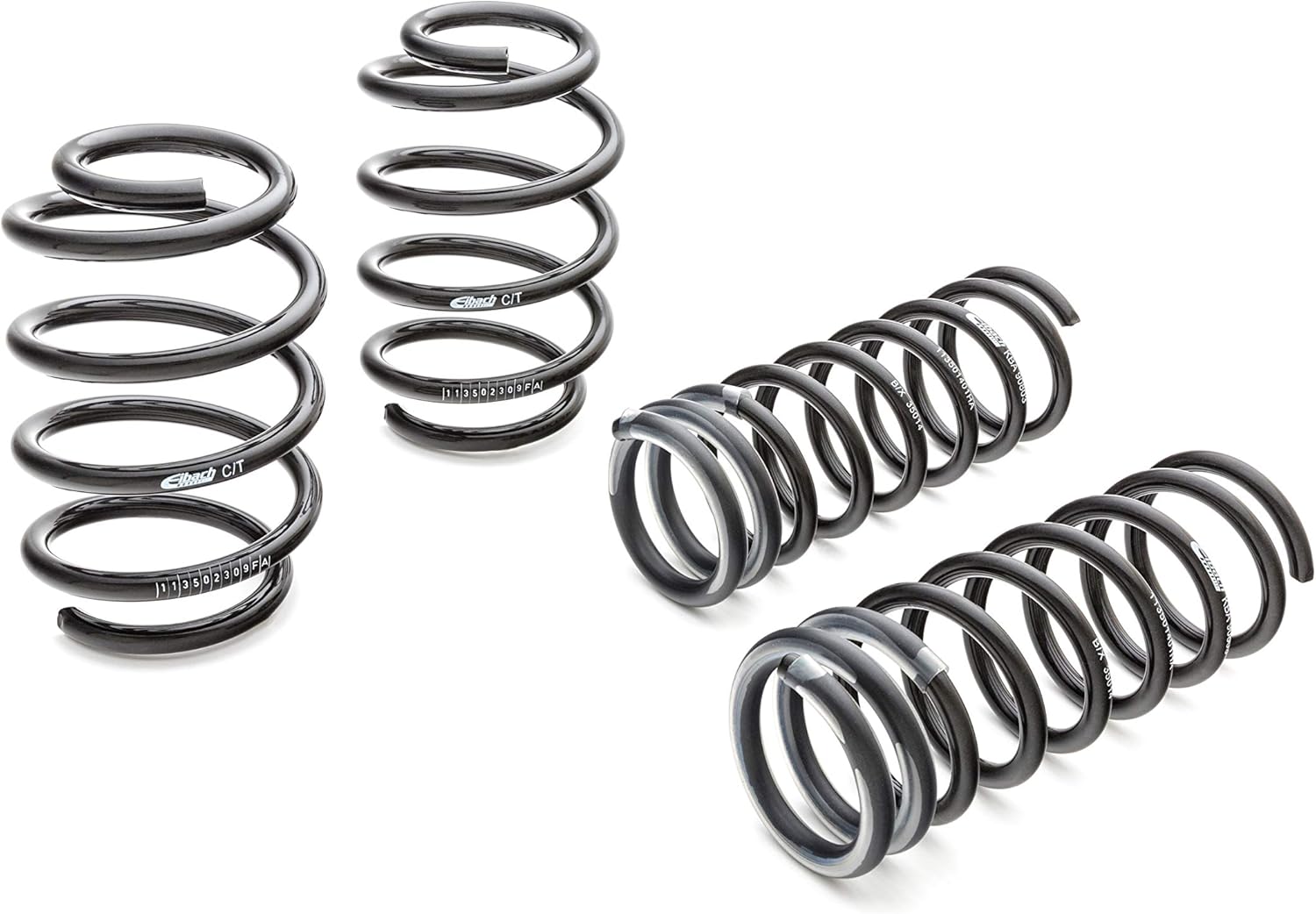
2. Eibach Pro-Kit Lowering Springs for 2003–2004 Honda Accord EX V6 3.0
| Fitment | 2003–2004 Honda Accord EX V6 3.0 |
|---|---|
| Product | Pro-Kit Lowering Springs |
| Lowering | 1.0 – 1.5 inches |
| Finish | Powder Coat |
| Manufacturer | Eibach |
These Eibach Pro-Kit lowering springs replace the factory coil springs to drop ride height about 1.0 to 1.5 inches for a 2003–2004 Honda Accord EX V6. The progressive spring design tightens body control so the car resists squat under hard acceleration, reduces body roll in corners, and limits nose dive when braking while still aiming to retain everyday ride quality. Fitment and finish are factory-style with a powder coat to resist corrosion. In practice the springs sharpen turn-in and allow lower center of gravity benefits without the harshness of race springs, and they work especially well when paired with modestly wider wheels and tires. Expect a firmer but usable daily ride and a small reduction in suspension travel that can expose worn shocks or top mounts; replacing mounts or upgrading dampers will maximize handling gains. These springs are engineered and tested by Eibach and are targeted at drivers who want a balance of improved performance and aggressive looks rather than an all-out track setup.
Best for: Drivers who want a noticeable handling and stance upgrade on a 2003–2004 Accord V6 while keeping daily drivability and a controlled ride quality.
Less Ideal for: Owners seeking a plush, factory-soft ride or those who need extreme track-focused suspension with minimal ride comfort should consider other options.
- Progressive spring rate improves cornering stability and reduces squat and nose dive
- Moderate 1.0–1.5 inch drop gives a more aggressive stance without extreme lowering
- Powder-coated finish for corrosion resistance and longer service life
- Designed and tested by suspension engineers for a balance of performance and ride comfort
- May make ride noticeably firmer compared with stock springs and can reveal worn shocks or mounts
Verdict: Choose these springs if you want a proven, street-friendly lowering kit that sharpens handling and gives a cleaner stance on a 2003–2004 Accord V6.
3. Godspeed Traction-S Performance Lowering Springs for 2003–2007 Honda Accord

| Average drop (F/R) | 2.0" / 2.0" |
|---|---|
| Spring wire | SAE 9254 |
| Finish | Powder coat |
| Designed compatibility | Works with OEM shocks; better with performance shocks |
Godspeed Traction-S lowering springs are engineered to lower a 2003–2007 Honda Accord approximately 2.0 inches at both front and rear to improve handling and stance while keeping ride quality acceptable for daily driving. The springs use SAE 9254 wire and multiple heat treatments, then are cold wound and powder coated for corrosion resistance and to reduce sag over time. They are intended to work with factory shocks but pair better with upgraded performance dampers if you want sharper control and less body roll. In practice these springs sharpen turn-in and reduce nose dive under braking, and they provide a noticeably lower center of gravity without extreme harshness. Expect modest ride firming compared with stock and potential need to check suspension geometry and alignment after installation. They come with a claimed lifetime limited warranty on material defects, but fitment and long-term durability depend on installation and road conditions.
Best for: Drivers who want a practical, budget-friendly way to lower a 2003–2007 Accord for better handling and appearance while keeping daily comfort a priority.
Less Ideal for: This is not for owners seeking an aggressive race setup or maximum track performance where dedicated coilovers and matched dampers are preferred.
- Cold-wound SAE 9254 spring wire with multi heat treatment for improved tensile strength and reduced sag.
- Average 2.0" drop front and rear provides a balanced, lowered stance and improved handling.
- Powder coat finish helps resist corrosion for longer-lasting appearance and function.
- Designed to work with factory shocks while also benefiting from performance dampers for better control.
- May produce a firmer ride than stock, so comfort-conscious drivers will notice increased harshness.
- Requires alignment and possible bump stop checks after installation to avoid clearance or handling issues.
Verdict: A practical, budget-minded lowering kit that gives 2003–2007 Accords a 2" drop with improved handling and reasonable daily comfort.
4. AJP Distributors Front & Rear Lowering Coil Springs Kit

| Compatible Models | 2004–2008 Acura TL; 2003–2007 Honda Accord V6 |
|---|---|
| Estimated Drop (Accord V6) | Front 1.8" / Rear 1.5" |
| Estimated Drop (TL) | Front 0.6" / Rear 0.7" |
| Manufacturer | AJP Distributors |
These lowering springs are a budget-friendly option that drop the car to a firmer, lower stance for improved cornering and reduced body roll. Designed as a direct replacement spring set for 2003–2007 Accord V6 and 2004–2008 TL models, the kit specifies modest drop amounts so clearance and daily usability are preserved: about 1.8" front and 1.5" rear for Accord V6 and 0.6" front and 0.7" rear for TL. Installation requires spring compression and is best handled by a shop unless you have the tools and experience. In use the springs tighten up handling and give a sportier posture, though reviewers note the ride can feel firmer or slightly bouncy on rough roads. The kit comes with manufacturer support and targets owners who want a straightforward, economical way to lower their car without changing struts or shocks immediately. Expect to evaluate ride quality after installation and consider new dampers later if you prefer a calmer ride at the lowered height.
Best for: Owners wanting an affordable, factory-replacement-style lowering solution to improve cornering and stance while keeping daily usability as a priority.
Less Ideal for: Drivers seeking maximum performance or a plush ride should consider higher-end sport springs with matching dampers or a full coilover solution instead.
- Direct-fit kit for specified 2003–2007 Accord V6 and 2004–2008 TL applications
- Moderate, predictable drop rates to maintain daily drivability
- Simple parts set that lets you lower ride height without replacing struts immediately
- Can make the ride noticeably firmer and a bit bouncy on rough surfaces
Verdict: A low-cost, direct-fit lowering spring kit that sharpens handling and stance for 2003–2007 Accord V6 owners who want an economical upgrade.
5. D2 Pro Lowering Springs (Lower) for 2003–2007 Honda Accord

| Material | High Tensile Chrome Silicon Steel |
|---|---|
| Fitment | Direct replacement for 2003–2007 Accord lower springs |
| Spring design | Progressive-rate coils |
| Position | Lower |
These D2 Pro lowering springs replace the factory lower springs to drop a 2003–2007 Accord and sharpen body control. Built from high-tensile chrome silicon steel and cold-wound with heat treatment, the springs use a progressive coil rate to keep a sport-tuned balance between comfort and cornering stability. Installation is a direct factory-style replacement for the lower springs, so a typical shop or a confident DIYer with spring compressors and basic suspension tools can complete the swap. In use the springs noticeably lower the center of gravity and reduce body roll, giving a firmer, more planted feel in turns and a cleaner, lowered stance. Expect a firmer ride over bumps compared with stock springs and possible minor tire clearance issues on aggressive wheel and tire setups. The durable purple surface finish and bench testing suggest good corrosion resistance and consistent spring rate over time, but as with any lowering spring you may want alignment and bump stop adjustments after fitting to avoid uneven tire wear.
Best for: Buyers who prioritize dependable, long-lasting handling improvements for a 2003–2007 Accord and want a factory-style lowering solution that keeps daily drivability in mind.
Less Ideal for: Drivers seeking an aggressive track setup or maximum drop should consider performance coilovers or springs tuned specifically for motorsport use instead.
- Progressive-rate design improves cornering stability without extreme harshness
- Cold-wound, heat-treated chrome silicon steel construction for consistent spring rates
- Direct factory-style replacement for lower springs simplifies fitment on the specified Accord years
- Durable surface finish for long-term corrosion resistance
- Firmer ride compared with stock springs, especially over rough roads
Verdict: A durable, factory-style lowering spring that gives 2003–2007 Accords a reliable handling boost and a modest, road-friendly drop.
6. Truhart Lowering Springs for 2004–2008 TL, 2.0" Front / 2.0" Rear
| Brand | Truhart |
|---|---|
| Position | Lower |
| Manufacturer Part Number | TH-H408 |
These Truhart lowering springs are a budget-friendly way to lower a compatible sedan by roughly two inches front and rear, tightening handling and giving the car a more aggressive stance. They replace the factory springs and are typically installed with standard suspension tools; buyers often then get an alignment and check suspension bushings. Reviewers report a noticeable drop in ride height after a few weeks and only a modest increase in firmness over stock, with some drivers seeing reduced body roll. The springs are straightforward compared with adjustable coilovers so they deliver the look and handling gains without complexity. The main trade-off is that ride comfort can be a bit firmer and the lowered clearance may increase scraping risk over steep driveways. For someone prioritizing an affordable, reliable height drop and improved turn-in without the expense of adjustable setups, these springs are a practical choice.
Best for: Buyers who want a reliable, budget-conscious way to lower their sedan for better handling and a cleaner stance while relying on other buyers' experience to confirm fit and performance.
Less Ideal for: Drivers who need adjustable ride height or who prioritize maximum ride comfort and daily-carry practicality over a permanent lower stance.
- Delivers a clear two-inch drop front and rear for a lowered look
- Improves handling and reduces perceived body roll compared with stock springs
- Simple, non-adjustable design makes installation and maintenance straightforward
- Widely reported to fit as intended with predictable, consistent results
- Firmer ride quality compared with stock springs which may reduce comfort over rough roads
- Lowered clearance increases risk of scraping on steep driveways and speed bumps
Verdict: A straightforward, affordable lowering spring set that delivers a dependable two-inch drop and sharper handling for buyers focused on cost-effective visual and handling upgrades.
Choosing the Right 2003-2007 Honda Accord Lowering Springs: Key Factors to Consider
Drop Height and Aesthetic Goals
How much lower the springs drop the car is central to both appearance and drivability. A modest drop of one to two inches can reduce the wheel gap and improve visual stance while preserving suspension travel for speed bumps and steep driveways. Larger drops can look more aggressive but often require additional modifications such as camber correction and longer bump stops.
When evaluating drop height, consider your typical driving environment. If you regularly encounter rough pavement or steep inclines, prioritize a conservative drop to avoid frequent bottoming. Also account for wheel and tire diameter since larger wheels reduce effective clearance and can change the perceived drop.
Spring Rate and Handling Balance
Spring rate determines how firm the suspension feels and how the car responds to inputs. Higher rates reduce body roll and can make turn-in feel quicker, but they also transmit more road imperfections into the cabin. Lower rates are more comfortable but provide less reduction in body roll.
For the Accord, choose a rate that complements your driving goals. Owners who want daily drivability with occasional spirited driving should look for moderate increases over stock rates. Those using the car primarily for track days should expect to pair stiffer springs with upgraded shocks or coilovers to control rebound and compression properly.
Compatibility With Stock Dampers
Not all lowering springs are optimized for the factory shock absorbers. When springs are significantly stiffer or lower than stock, the dampers may reach travel limits or deliver a harsh ride. Compatibility matters for both comfort and component longevity.
Look for spring kits that explicitly state they are matched to stock dampers for the 2003-2007 Accord or that recommend specific shock upgrades. If a kit requires replacing shocks, factor that into installation complexity and long-term maintenance.
Ride Quality and Daily Usability
Ride quality is a practical concern for owners who use the Accord as a daily driver. Lowering springs that are too stiff will make potholes and expansions joints noticeably more jarring. Conversely, well-designed progressive-rate springs can offer a softer initial compliance and firm up under heavier loads or cornering.
Assess owner reports and manufacturer specifications for expected tradeoffs between comfort and control. Think about the balance you need: a firm but livable setup for spirited street driving, or a focused, firmer feel for track-oriented use.
Corrosion Resistance and Build Quality
Springs are exposed to road salt, moisture, and debris, so finishes and material quality influence longevity. Powder coats or specialized anti-corrosion finishes slow rust and help maintain spring integrity and appearance over time.
Examine manufacturing details like consistent coil spacing, end types that seat properly on perches, and quality control indicators. Poorly made springs can creak, shift on the perch, or lose their specified drop after a season of use.
Installation and Additional Parts Needed
Installation complexity can vary from a straightforward spring swap to jobs that require spring compressors and potential shock replacement. Some kits are advertised as bolt-in for the Accord; others recommend replacing strut mounts, bump stops, or sway bar end links to preserve geometry.
Plan for a professional alignment after installation since lowering alters camber and toe. Also prepare for incidental parts that may be needed, such as new top mounts or updated bump stops, to avoid premature wear and maintain safe suspension travel.
How Much Lowering Springs Typically Lower an Accord
On a 2003-2007 Accord, lowering springs commonly reduce ride height by roughly one to two inches depending on the kit. That amount tends to strike a balance between improved aesthetics and retaining enough suspension travel for daily driving.
Keep in mind that measured static drop can vary front to rear. Some kits are designed with a slightly larger front drop to achieve a level stance, while others keep the stock rake. Expect small variations from the advertised drop due to tire size and existing suspension wear.
- Typical drop: 1.0 to 2.0 inches
- Front and rear drops may differ for level stance
- Actual drop influenced by wheels, tires, and worn components
Progressive-Rate Vs Linear Springs
Progressive-rate springs change stiffness as they compress, offering a softer initial ride that firms up under load. That makes them appealing for owners who want comfort during cruising but tighter control when cornering.
Linear springs maintain a constant rate through travel, which gives predictable handling characteristics favored in performance settings. For a street-driven Accord, progressive springs can provide a more forgiving daily experience without sacrificing responsiveness.
- Progressive: comfort at low compression, firmer under load
- Linear: predictable behavior, often preferred for track use
- Match spring type to driving priorities
Preparing for Installation and Alignment
Before installing lowering springs, inspect strut mounts, bump stops, and current shock condition. Worn shocks can undermine the benefits of new springs and lead to harsh or unstable behavior after lowering. Replace any worn components to ensure a safe and effective installation.
After the swap, a professional four-wheel alignment is essential. Lowering changes camber and toe, so alignment restores intended handling and prevents uneven tire wear. Budget for alignment costs and possible additional parts like extended bump stops or new top mounts if recommended.
- Inspect shocks and mounts before swapping springs
- Use a spring compressor or professional installer for safety
- Schedule a four-wheel alignment after installation
Common Tradeoffs: Comfort, Clearance, and Wear
Lowering improves cornering and appearance but changes vehicle dynamics. Reduced ride height cuts down suspension travel and may increase the likelihood of bottoming on larger impacts. Owners should weigh the desire for a low stance against practical factors like speed bumps and driveway angles.
Lower ride height can accelerate wear on suspension bushings and ball joints due to different load paths. Regular inspections and maintenance become more important after lowering to catch early wear and keep the Accord safe and well-handling.
- Reduced ground clearance increases risk of scraping
- Altered geometry can change wear patterns on bushings
- Regular inspections mitigate long-term maintenance issues
Tire and Wheel Considerations After Lowering
Lowering affects fitment and may require different wheel offsets or narrower tires to avoid rubbing. Check clearance at full lock and full compression to ensure the chosen wheel and tire package will not contact the fender or suspension components.
If you plan to run larger or aftermarket wheels, factor those dimensions into your spring choice. A modest lowering spring combined with appropriately sized wheels usually yields the best balance between stance and clearance.
- Verify clearance at full lock and compression
- Adjust wheel offset or tire width if rubbing occurs
- Consider mock-up or test fit before final installation
When to Consider Upgrading Dampers
If you select springs with a significantly higher rate or a large drop, pairing them with upgraded dampers improves control and prevents harshness. Upgraded shocks with adjustable rebound allow you to tune the balance between comfort and performance.
Upgraded dampers also help maintain ride height and reduce the chance of premature sag. For owners who plan frequent spirited driving or track use, matching springs and dampers is a worthwhile investment.
- Stiffer springs often require matching dampers
- Adjustable shocks let you fine-tune comfort versus control
- Damper upgrades extend component longevity under higher loads
Still looking for the perfect fit?
Select your Honda Accord configuration to see the most relevant Lowering Springs recommendations
How We Chose the Best 2003-2007 Honda Accord Lowering Springs
We prioritized lowering springs that are designed specifically for the 2003-2007 Honda Accord chassis and that balance lowered ride height with day-to-day comfort. Our editorial filters favored kits that specify both static drop and spring rates so owners can match expected handling changes with real results. We evaluated compatibility with factory shock absorbers to reduce the risk of harsh ride quality or premature wear when not pairing with upgraded dampers.Other selection criteria included build quality, such as consistent coil winding and corrosion-resistant finishes; fitment precision for correct spring perch alignment; and documented user feedback on noise, settling, and long-term sag. We also considered whether the springs support commonly installed wheel and tire sizes without rubbing or excessive camber changes.Excluded items included generic universal springs, kits intended only for racing use without streetability, and options that lacked clear drop or rate specifications. Our aim was to surface practical, well-documented lowering springs suitable for owners who want improved handling and a conservative to moderate drop on their Accord.
Our full evaluation process is outlined in our review methodology.
FAQ
How much will lowering springs change the ride comfort on my 2003-2007 Accord?
It depends on the spring rate and design. Moderate drops with progressive-rate springs usually keep ride comfort acceptable for daily driving, while stiffer, larger-drop springs will feel firmer and transmit more road harshness.
Can I install lowering springs without replacing my shocks?
Often you can, but only if the shocks are in good condition and the spring kit is rated for use with factory dampers. If shocks are worn or the springs are much stiffer, replacing dampers is recommended to preserve ride quality and safety.
Will lowering springs cause rubbing with my current wheels and tires?
Lowering can change clearances. Whether rubbing occurs depends on wheel offset, tire width, and the kit's drop. Check full-lock and full-compression clearance or consult fitment details to anticipate any interference.
Do I need a wheel alignment after installing lowering springs?
Yes. Lowering alters camber and toe, so a four-wheel alignment is necessary to restore proper geometry and prevent uneven tire wear.
Are progressive lowering springs worth the extra cost for daily driving?
Progressive springs often offer a better compromise between comfort and performance for daily-driven Accords. They provide softer initial compliance for bumps while firming up during spirited cornering, which many owners find worthwhile.
How often should I inspect suspension components after lowering my Accord?
Inspect critical components like shocks, bushings, and ball joints at least twice a year or after any significant impacts. Lowered cars can change load patterns, so more frequent checks help detect premature wear early.
Final Verdict
Choosing the right lowering springs for a 2003-2007 Honda Accord means balancing desired ride height, spring rate, and real-world usability. Prioritize kits that specify drop height and rates, match or clearly state compatibility with factory dampers, and offer corrosion-resistant finishes for longevity.For most daily-driven Accords, a moderate drop with progressive-rate springs delivers a meaningful handling and aesthetic upgrade without sacrificing comfort. If you aim for track-focused performance or a large drop, plan to pair springs with upgraded dampers and expect more frequent maintenance checks to preserve suspension health.
Explore More:
- Check out all Honda Accord parts & accessories
- Explore Lowering Springs Maintenance & Repair Guides
- Explore Suspension & Steering
- Browse all Auto Parts
