

Note: This article contains affiliate links. If you click on these links and make a purchase, I may earn a small commission at no extra cost to you. This helps support my research and content. Read my full affiliate disclosure here.
If you drive a 1998-2002 Honda Accord you already know how much mileage and time can affect braking performance. Replacing worn rotors is one of the most effective ways to restore pedal feel, reduce vibration, and maintain safe stopping distances. This guide focuses on the Accord built in 1998 through 2002 and presents a short list of the top options for rotors that meet that vehicle's fitment and braking demands.We shortlisted seven rotor options that address common buyer needs like compatibility, heat management, longevity, and serviceability. The review blocks below summarize each pick, and the rest of this guide explains how we evaluated fitment, construction, and performance so you can choose the right rotor for your driving style and maintenance plan.
Looking for other parts? See all Honda Accord parts & accessories.
Top Picks at a Glance


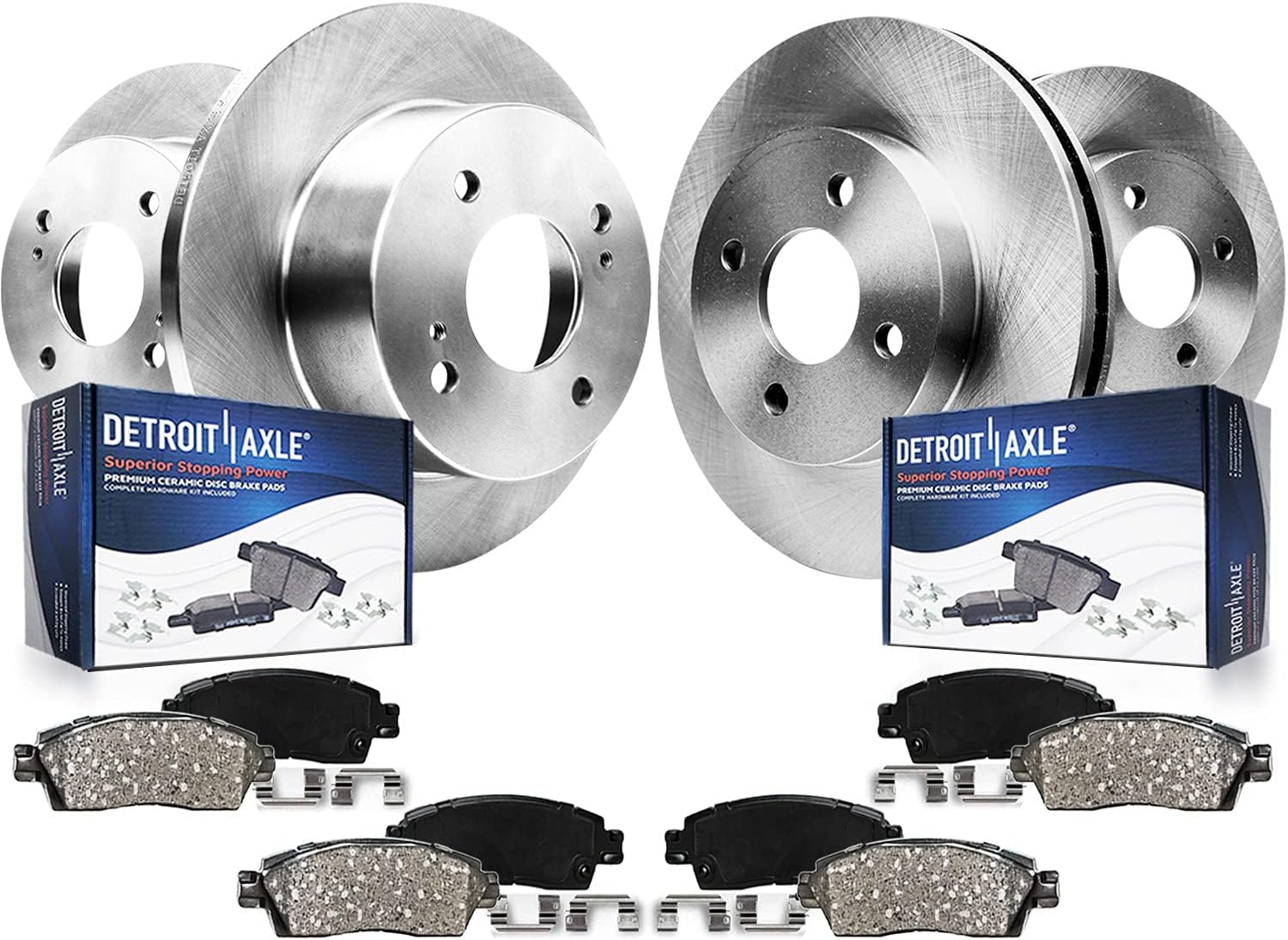
1. Detroit Axle 8-piece Brake Kit for 1998–2002 Honda Accord (2.3L) — Front & Rear Rotors with Ceramic Pads
| Fitment | 1998–2002 Honda Accord 2.3L rear-disc models |
|---|---|
| Kit contents | 2 front rotors, 2 rear rotors, front and rear ceramic pads, hardware |
| Rotor feature | Vented rotors |
| Finish | Silver zinc plating |
| Pad type | Ceramic |
This Detroit Axle kit supplies both front and rear rotors plus matching ceramic pads and basic hardware intended as a direct replacement for 1998–2002 Accord 2.3L rear-disc configurations. Typical use is a full brake refresh: swap the four rotors and pads in one job to restore stopping performance and reduce noise. The rotors are vented for faster heat dissipation and zinc plated to resist corrosion, while the ceramic pads aim for quieter, low-dust operation and longer life than basic metallic pads. Parts are machined with locating holes to fit factory mounting points so installation requires no modifications. Buyers should expect factory-style stopping for daily driving and highway use, although some owners report normal brake dust and the zinc plating may discolor over time in harsh conditions. The kit includes both front and rear components and comes with a long warranty, making it a practical option for someone replacing all wheels at once rather than swapping single components incrementally.
Best for: Buyers who want a balanced, all-in-one replacement that restores factory-style braking for everyday and highway driving without specialty performance upgrades.
Less Ideal for: Not the best choice for drivers seeking high-performance or track-oriented braking upgrades or for those who need ceramic-free metallic compounds for heavy towing or racing use.
- Complete front and rear kit includes 4 rotors and matching ceramic pads so you can replace all brakes in one job
- Vented rotors improve heat dissipation for more consistent braking under repeated stops
- Zinc plating on rotors helps resist surface corrosion and reduces visible wheel rust initially
- Fitment limited to specific 10.24 in front / 10.20 in rear rotor size and vehicle applications so confirm rotor size before buying
- Zinc plating can wear or discolor in aggressive environments and some users still report brake dust
Verdict: A convenient, factory-style full brake kit that restores quiet, reliable stopping for 1998–2002 Accord 2.3L owners who want a single-solution brake refresh.
2. R1 Concepts eLINE Front and Rear Brake Kit with Drilled Slotted Rotors and Ceramic Pads — Fits 1998–2002 Honda Accord

| Fitment | 1998–2002 Honda Accord (specified V6 EX/LX models) |
|---|---|
| Rotors | Drilled and diamond slotted, zinc coated |
| Pads | Ceramic series, low dust |
| Installation | Direct fit, no modification required |
| Manufacturer Warranty | 1 year manufacturer |
This R1 Concepts eLINE kit replaces both front and rear hardware with drilled and diamond-slotted rotors plus matching ceramic pads designed for daily driving and spirited use. The rotors are zinc coated for corrosion resistance and forged from a high-grade iron for strength and heat management; the cross-drilled pattern and diamond slotting help evacuate gas and debris to reduce pad glazing during repeated stops. The included ceramic pads run cooler, produce less dust, and are aimed at quieter operation than semi-metallic options while offering consistent bite under normal and light performance driving. Installation is direct-fit so no modifications are required, making it a practical upgrade for owners doing a full axle replacement. Expect better fade resistance and cleaner wheels, though ceramic pads can be less aggressive than metallics under heavy track use and the zinc coating will wear over time. The kit is a balanced choice if you want a noticeable improvement in street braking behavior without moving to race-oriented materials.
Best for: Drivers who want a factory-style upgrade that improves street braking feel and reduces wheel dust while remaining quiet and easy to install.
Less Ideal for: Drivers who prioritize maximum track performance or aggressive racing pads should choose dedicated competition rotors and semi-metallic or sintered pads instead.
- Complete front and rear kit for single purchase and matched performance
- Drilled and diamond-slotted rotors reduce heat and help prevent pad glazing
- Zinc coating on rotors improves corrosion resistance and appearance
- Ceramic pads offer low dust, low noise, and consistent everyday braking
- Ceramic pads provide less initial bite than some semi-metallic performance pads under heavy track use
Verdict: A convenient, matched front-and-rear kit that upgrades street braking, reduces dust, and installs without modification for 1998–2002 Honda Accord owners seeking improved everyday performance.
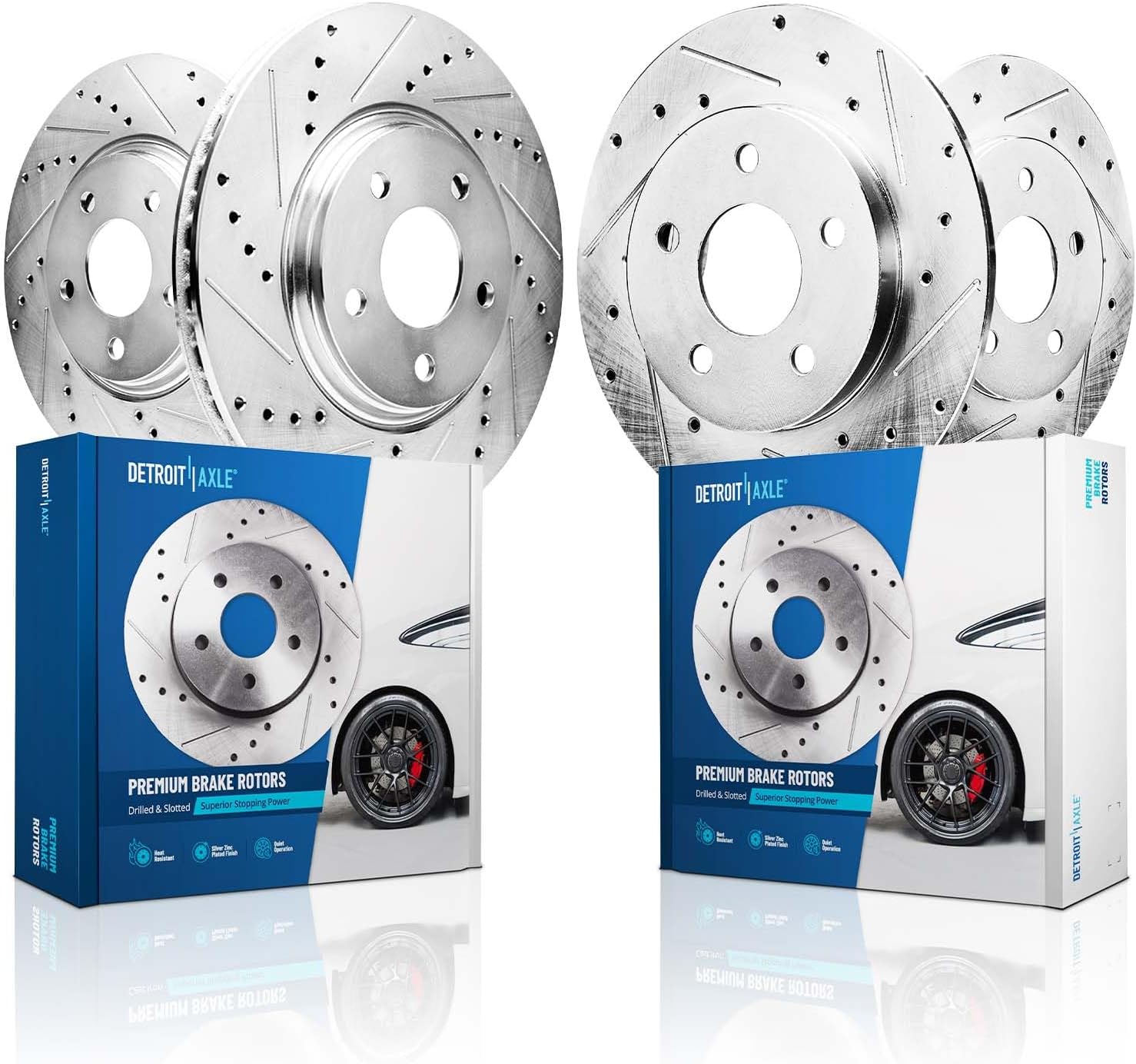
3. Detroit Axle Drilled & Slotted Brake Rotor Kit for 1998–2002 Honda Accord V6 (Front & Rear)
| Fitment | 1998–2002 Honda Accord V6 models |
|---|---|
| Kit includes | 2 front drilled & slotted rotors, 2 rear drilled & slotted rotors |
| Exterior finish | Zinc plated |
| Material type | Ceramic |
This Detroit Axle kit supplies two drilled and slotted front rotors and two drilled and slotted rear rotors sized for 1998–2002 Honda Accord V6 models. The rotors are vented and zinc plated to help dissipate heat and resist corrosion while the locating holes are machined to match factory fitment for bolt-on installation. In normal street use the drilled and slotted pattern improves brake bite and helps clear water and pad debris during repeated stops, which is useful if you tow occasionally or drive in wet conditions. The zinc coating reduces visible surface rust compared with bare cast rotors but some buyers still report surface corrosion over time so periodic inspection is prudent. These rotors are sold as a kit for a complete front-and-rear brake job, making them a practical option when you want matching performance and easier installation without custom drilling or machining. If you expect track use or aggressive high-temperature braking, a heavier duty performance rotor would be a better match.
Best for: Buyers who want a practical, factory-fit replacement set that refreshes braking on a V6 Accord with minimal fuss and matched front-to-rear components.
Less Ideal for: Drivers who need track-ready, high-temperature rotors or who require a premium anti-corrosion coating should consider a dedicated performance or coated rotor instead.
- Complete front and rear kit simplifies a full brake job
- Drilled and slotted, plus venting, for improved cooling and water/debris clearance
- Zinc plating helps reduce visible rust and wheel discoloration
- Machined locating holes for factory-style fit and straightforward installation
- Zinc plating reduces but does not eliminate rust; some customers report surface corrosion within months
Verdict: A practical, bolt-on drilled-and-slotted rotor kit that refreshes braking on V6 Accords with matched front and rear parts for an easy full-job replacement.
4. Detroit Axle Front Brake Kit for 1998–2002 Honda Accord (2.3L Sedan, 4‑lug)

| Fitment | 1998–2002 Honda Accord Sedan 2.3L (4 lugs) |
|---|---|
| Kit contents | 2 front rotors, 2 front ceramic brake pads with clips |
| Rotor type | Vented |
| Finish | Zinc plated |
| Orientation | Front |
This Detroit Axle front brake kit supplies both front rotors and ceramic pads intended as a one-stop replacement for 1998–2002 Honda Accord 2.3L sedans with 4 lugs. The rotors are vented for faster cooling and zinc plated to slow surface corrosion while machined locating holes aim for straightforward, bolt-on fitment. The ceramic pads lean toward quiet, smooth stopping and are supplied with clips and hardware to simplify installation. For a budget buyer this kit gives the components needed to refresh front stopping performance without sourcing parts separately. Expect a straightforward DIY or shop install, though some vehicles may require a caliper-piston compressor tool. Limitations to note are occasional reports of shipping damage or warped rotors and mixed feedback on pad wear and noise on some vehicles, so inspect parts at delivery and follow proper bedding and lubrication procedures during install. Overall the kit balances price and functionality for an economical front brake replacement.
Best for: Drivers replacing worn front brakes on a tight budget who want a ready-made kit that simplifies parts sourcing and provides decent stopping performance for everyday driving.
Less Ideal for: Those seeking long-life premium or high-performance braking solutions for heavy use or spirited driving should consider higher-end rotors and pads tailored to those demands.
- Complete kit includes two front rotors and ceramic pads with installation clips
- Vented rotors for improved heat dissipation during repeated stops
- Zinc plating reduces visible corrosion on non-contact surfaces
- Ceramic pads designed for quieter, smoother braking compared with generic metallic pads
- Some customers report occasional warped rotors or shipping damage on arrival
- Mixed reports on pad wear durability and possible noise on certain vehicles
Verdict: If you need an affordable, bolt‑on front brake replacement for a 1998–2002 Accord 2.3L sedan, this all-in-one kit covers rotors and ceramic pads to restore everyday stopping performance.
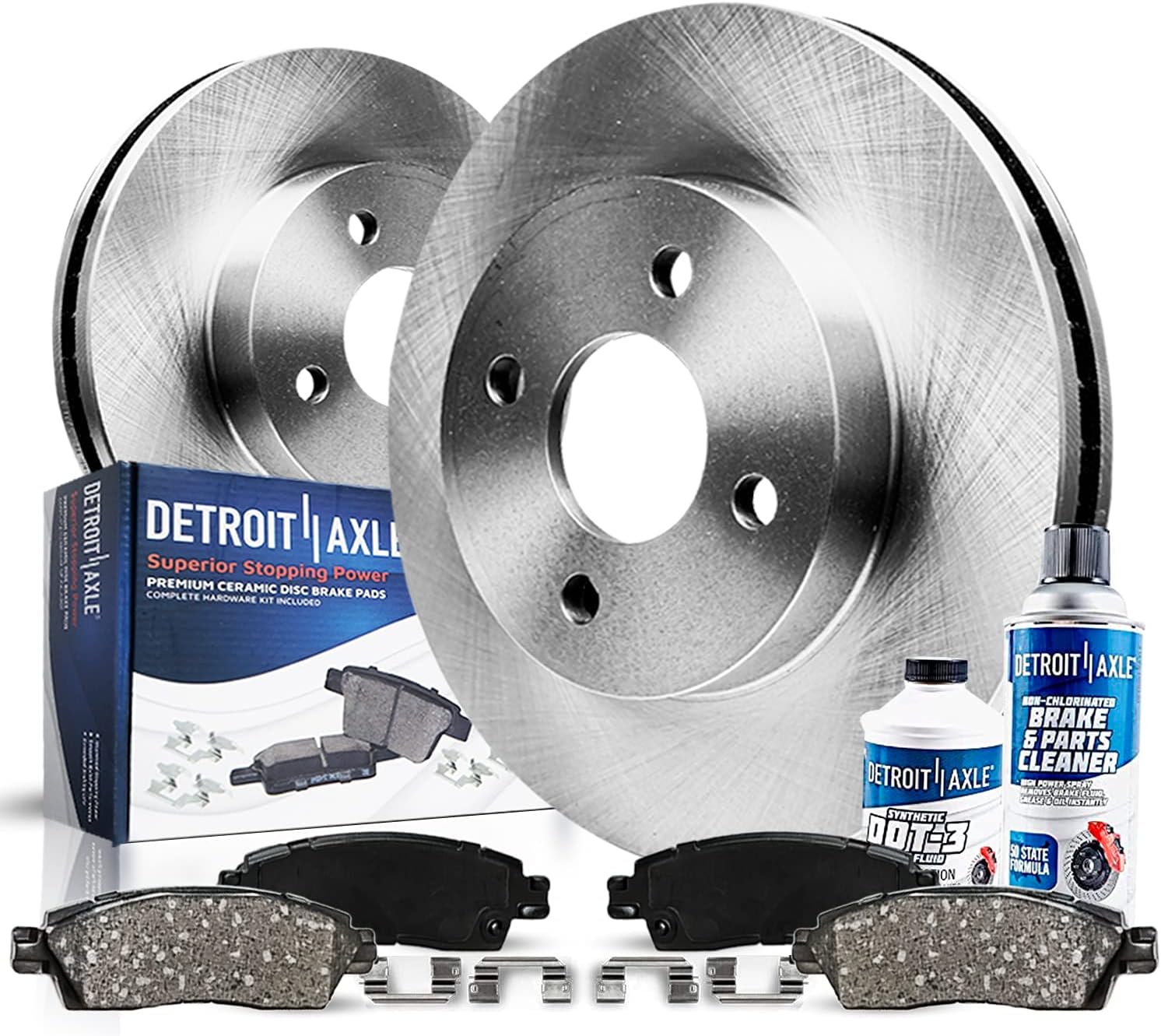
5. Detroit Axle Front Brake Kit with Ceramic Pads and Rotors for 1998–2002 Honda Accord 2.3L (Front)
| Fitment | 1998–2002 Honda Accord Sedan 2.3L (Front, 4 lugs) |
|---|---|
| Pad material | 100% Ceramic |
| Rotor type | Vented, zinc plated |
| Kit contents | 2 rotors, 1 set front pads, hardware, brake cleaner, brake fluid |
This Detroit Axle front brake kit supplies everything needed to replace the front stopping components on a 1998–2002 Honda Accord 2.3L sedan with 4 lugs. The kit includes two vented, zinc-plated rotors, a set of 100% ceramic front pads with hardware, a can of brake cleaner and a small bottle of brake fluid so you can complete the job without sourcing extras. The rotors are machined with locating holes for direct fitment and ventilation slots intended to help heat dissipation during repeated stops. Ceramic pads offer quieter operation and low dust compared with metallic pads, which is useful for everyday commuting. Practical benefits include matching fit and the included hardware that reduces parts hunting on a DIY job. Important limitations are that this is a direct replacement kit for the specified sedan 2.3L Accord only and the small bottle of fluid may not be enough for a full bleed on older cars; you should inspect caliper pins and fluid capacity before starting. The 10-year warranty provides extra reassurance for someone prioritizing long-term reliability.
Best for: Buyers who prioritize dependable, factory-style replacements and want a single package that lets them perform a front brake refresh themselves with minimal parts sourcing and long-term peace of mind.
Less Ideal for: Anyone looking for performance-oriented or heavy-duty braking upgrades for track use or towing should consider dedicated performance rotors and pads instead.
- Complete kit contains both vented rotors, ceramic pads, hardware, brake cleaner and a small bottle of fluid for a single-front replacement job.
- Vented rotors with machined locating holes for direct, bolt-on fit and improved cooling under repeated braking.
- 100% ceramic pads produce low dust and reduced noise compared with semi-metallic options, improving day-to-day comfort.
- Zinc plating on rotors helps resist corrosion and visible wheel dust for longer cosmetic life.
- Brake fluid included is a small bottle that may not be sufficient for a full bleed on systems needing more fluid.
- Fitment is limited to the 1998–2002 Accord sedan 2.3L with 4 lugs so it is not suitable for other Accord variants.
Verdict: A complete, reliability-focused front brake replacement bundle tailored to the 1998–2002 Accord 2.3L that minimizes parts hunting and offers quiet, low-dust ceramic braking.
6. Detroit Axle Brake Rotor and Ceramic Pad Kit for 1998–2002 Honda Accord (Front & Rear)

| Fitment | 1998–2002 Honda Accord 2.3L rear-disc models |
|---|---|
| Includes | Front & rear rotors, front & rear ceramic pads, hardware, brake cleaner, brake fluid |
| Rotor feature | Vented, zinc plated |
| Pad material | 100% ceramic |
| Warranty | 10 Year |
This Detroit Axle kit supplies everything needed to replace both front and rear rotors and pads on 1998–2002 Honda Accord 2.3L rear-disc models. The package includes two front and two rear rotors, matching ceramic pads with hardware, a can of brake cleaner and a bottle of brake fluid so you can perform a full four-corner job without buying extra consumables. The rotors are zinc plated and vented to resist corrosion and help cooling during repeated stops, while the 100% ceramic pads aim for low noise and dust. Fitment is vehicle-specific and many DIYers and technicians report easy installation and factory-quality fit. Practical limitations: the kit does not include replacement rotor mounting screws for hub assemblies that use retaining screws, and some buyers noted occasional hardware fitment variances that may require swapping clips or supplying extra grease and gloves. For a buyer who values a full kit that gets the car back on the road quickly, this is a solid, convenience-focused option that balances value and reliable braking performance.
Best for: Buyers who want a single, all-in-one replacement kit to do a DIY brake job and prioritize clear fitment and social-proof from many satisfied customers.
Less Ideal for: Those looking for high-performance or racing brake components or drivers who need upgraded metallic pads for heavy towing or track use should consider specialty options instead.
- Complete kit includes front and rear rotors, ceramic pads, installation hardware, brake cleaner, and brake fluid for a single purchase solution
- Zinc-plated, vented rotors improve corrosion resistance and cooling under repeated use
- Ceramic pads aim for low noise and low dust for cleaner, quieter operation
- Vehicle-specific fitment reduces the need for modifications and speeds installation
- Does not include replacement rotor retaining screws for vehicles that require them
- Hardware clips or packets of grease provided may be minimal and sometimes require substitution
Verdict: If you want a single, vehicle-specific kit that supplies rotors, ceramic pads and the consumables to complete a DIY four-corner brake job on a 1998–2002 Accord, this gives reliable fit and good value.
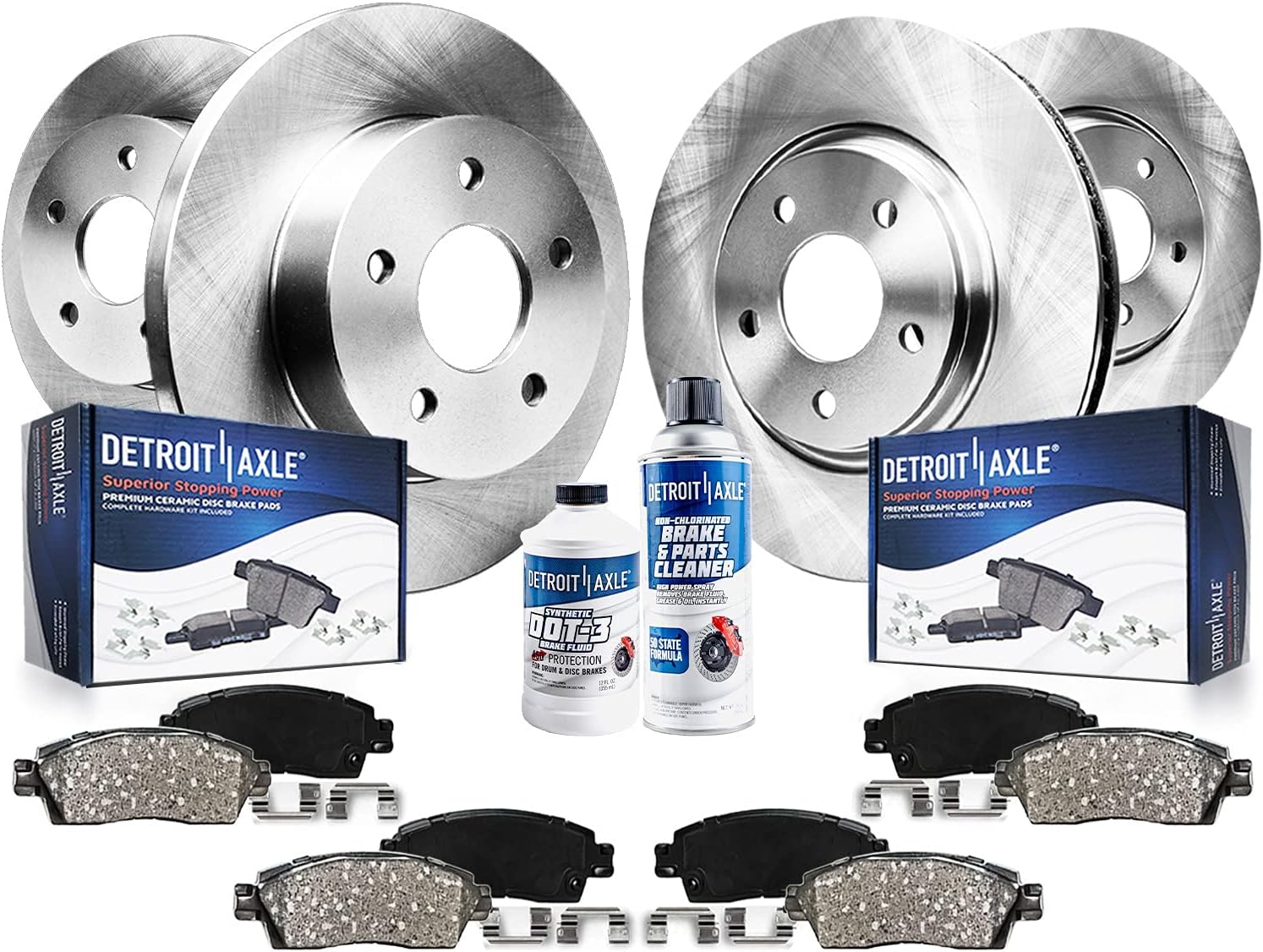
7. Detroit Axle Brake Rotor and Ceramic Pad Kit for 1998–2002 Honda Accord V6 (Front and Rear)
| Fitment | 1998–2002 Honda Accord V6 (rear disc models) |
|---|---|
| Rotors | Front 11.10 in, Rear 10.24 in (slotted, vented, zinc plated) |
| Pads | 100% ceramic front and rear (hardware included) |
| Includes | Brake cleaner spray and brake fluid |
This Detroit Axle kit supplies everything needed to replace both front and rear rotors and pads on 1998–2002 Honda Accord V6 models with rear disc brakes. The kit includes two slotted front rotors, two rear rotors, front and rear ceramic pads with hardware, a can of brake cleaner and a bottle of brake fluid. The rotors are zinc plated and vented to aid cooling and resist surface corrosion, and the pads are 100% ceramic for low noise and reduced dust. For a home mechanic the kit is convenient because it matches factory locating holes and generally fits without modification. Practical limits: the hardware pack is basic and some buyers reported minor fitment issues with clips or missing rotor screws depending on vehicle variations, so you should have common hand tools and replacement rotor screws handy. The kit is backed by a long warranty and is positioned as a cost-effective, near-factory replacement for routine maintenance rather than a high-performance upgrade for track use.
Best for: Buyers who want a low-risk, factory-style brake refresh for their Accord V6 and prefer a single kit that covers all four corners and includes basic consumables for a DIY install.
Less Ideal for: Drivers seeking high‑performance or track-oriented braking upgrades should choose performance rotors and pads instead; those who want a plug‑and‑play professional install with every small fastener included may prefer a shop-sourced OEM kit.
- Complete kit includes front and rear rotors, front and rear ceramic pads, installation hardware, brake cleaner and brake fluid
- Vented, slotted rotors with zinc plating for improved cooling and corrosion resistance
- Ceramic pads provide low noise and low dust compared with semi-metallic pads
- Hardware is minimal and some customers reported slightly mis-sized clips or missing rotor screws on certain vehicles
Verdict: A convenient, factory‑style full front-and-rear brake kit that gives risk-averse buyers an easy, cost-effective way to restore stopping performance on 1998–2002 Accord V6 models.
Choosing the Right 1998-2002 Honda Accord Brake Rotors: Key Factors to Consider
Correct Fitment and Bolt Pattern
Proper fitment is the foundation of any rotor selection for the 1998-2002 Honda Accord. Rotors must match the hub diameter, center bore, and lug pattern so they sit true on the hub. Incorrect fitment can produce runout, wheel vibration, and uneven pad wear, which compromises braking feel and safety.
Beyond bolt pattern, pay attention to rotor thickness and stepped dimensions that affect caliper clearance. Some replacement rotors are built to OEM specs while others are slightly different; choosing items that adhere to the Accord's factory dimensions reduces the chance of installation modifications or the need for additional machining.
Material and Corrosion Resistance
Rotor metallurgy affects longevity and how the rotor responds to heat. Cast iron remains the common baseline because of its thermal capacity and predictable friction characteristics. However, variations in grade, microstructure, and surface treatment change how quickly a rotor corrodes or develops rough spots.
For a car from 1998-2002, consider rotors with protective coatings or light surface treatments that resist rust on the hat and edge. Corrosion can lead to noisy brakes and make future removal difficult. Good plating or e-coating on non-friction areas preserves fit and serviceability over the long term.
Heat Management and Venting
How a rotor handles heat determines fade resistance and long-term flatness. Vented rotors with properly designed internal vanes move air more efficiently than solid discs, which helps the rotor shed heat during repeated stops. For an Accord used for daily commuting and occasional heavier loads, adequate venting stabilizes braking performance.
Thickness and the size of the friction ring also influence thermal mass. Thicker, well-vented rotors hold more heat and are less likely to warp after high-temperature events. Consider the driving patterns you expect: frequent highway stops or towing will place greater thermal demands on the rotor system.
Serviceability and Resurfacing Limits
Owners of older Accords often face the decision to resurface or replace rotors. Each rotor has a minimum allowable thickness stamped on it; resurfacing below that limit reduces heat capacity and structural integrity. Choosing rotors with adequate initial thickness gives more margin for future machining if necessary.
Also consider hat design and whether the rotor can be removed and reinstalled without special tools. Rotors that accept standard resurfacing procedures and maintain consistent dimensions after machining reduce long-term maintenance costs and make brake jobs simpler for DIY mechanics.
Rotor Design: Slotted, Drilled, or Plain
The rotor surface design affects bite, pad cleaning, and water evacuation. Plain rotors provide a consistent contact area and are often recommended for everyday driving. Slotted rotors help clear pad residue and maintain a fresh contact surface, which can improve initial bite and reduce glazing in stop-and-go conditions.
Drilled rotors are intended to aid gas and water escape and lower unsprung mass, but they can develop crack initiation points under repeated heavy thermal cycling. For a 1998-2002 Accord that sees mostly street use, weigh the benefits of slotting against the potential for stress concentrators in drilled designs.
Noise, Vibration, and Harshness Characteristics
NVH performance varies between rotor designs and manufacturing tolerances. Slight surface or dimensional inconsistencies can translate to pedal pulsation or steering-wheel vibration during braking. Balanced manufacturing and tight runout specifications minimize these issues.
Consider rotors with consistent quality control, and if noise sensitivity is high, favor smooth-faced designs and rotors manufactured to strict runout tolerances. Proper installation and use of new hardware can also mitigate many NVH concerns.
Understanding Rotor Types and Their Tradeoffs
Rotors come in several configurations that affect performance and longevity. Solid rotors are common for rear applications on some vehicles but front rotors for the Accord in this generation are typically vented to manage heat. Vented rotors use internal vanes to circulate air, helping reduce temperature buildup during repeated braking events.
Slotted surfaces help keep the pad surface fresh and can reduce glazing under heavy city use. Drilled rotors assist water and gas evacuation but may be less durable under repeated high-temperature use. Two-piece rotors separate the friction ring from the hat, offering lighter weight and easier replacement of the friction surface, while one-piece rotors are simpler and more economical.
- Solid vs vented: vented for better heat dissipation under repetitive braking
- Slotted for pad cleaning, drilled for water/gas escape with potential durability tradeoffs
- Single-piece for simplicity and cost, two-piece for weight savings and serviceability
When to Resurface Rotors Versus Replace Them
Resurfacing can be a cost-effective option if the rotor thickness remains above the manufacturer's minimum and the surface damage is minor. For a 1998-2002 Accord, check the rotor for runout, deep scoring, and the stamped minimum thickness before deciding to resurface.
If rotors are below minimum thickness, have heat cracks, or show uneven material loss, replacement is the safer choice. Replacing rotors that have been repeatedly machined preserves thermal capacity and prevents accelerated pad wear.
- Check stamped minimum thickness before resurfacing
- Avoid resurfacing if heat cracks or deep grooves are present
- Consider replacement when remaining thickness approaches the minimum limit
Measuring Rotor Thickness and Wear Symptoms
Measuring rotor thickness requires a reliable micrometer or caliper placed at the braking ring's friction surface. Record thickness at multiple points around the rotor to identify taper or uneven wear. Compare the measurements to the minimum thickness stamped on the rotor or specified in the service manual for the Accord.
Common rotor wear symptoms include a pulsating brake pedal, steering wheel vibration while braking, audible grinding or squealing, and visible scoring or rust build-up on the braking surface. These signs often indicate it is time to measure thickness and evaluate whether resurfacing or replacement is necessary.
- Use a micrometer at several radial positions to detect taper
- Look for pedal pulsation and steering vibration as early indicators
- Inspect for scoring, rust, and heat discoloration
Installation Tips for the 1998-2002 Honda Accord
When installing new rotors on an Accord from 1998 to 2002, clean the hub mating surface and ensure the hub is free of corrosion to avoid runout. Use proper torque specs on wheel lug nuts and caliper mounting bolts to manufacturer values to prevent distortion of the rotor under load.
Replace or lubricate mounting hardware as needed, and always bed in new pads and rotors following a progressive braking sequence to establish a stable transfer layer. After installation, test the car at low speed to confirm there is no vibration or noise before normal driving.
- Clean hub mating surface to ensure true seating
- Use correct torque values on lug nuts and caliper bolts
- Perform a staged bedding procedure for new pads and rotors
How Driving Style Affects Rotor Choice
If your Accord sees mostly gentle commuting with occasional highway driving, plain or lightly slotted rotors with good corrosion protection will often provide the best balance of life and quiet operation. These choices prioritize consistent contact area for smooth pedal feel and lower noise.
If you do frequent stop-and-go city driving, carry heavier loads, or perform spirited driving, choose rotors with better thermal management and possibly slotting to help maintain bite and reduce glazing. Owners who regularly subject their brakes to harder use should also monitor thickness more frequently.
- Commuting: plain or lightly slotted rotors for quiet, consistent feel
- City or spirited driving: prioritize venting and surface designs that reduce glazing
- Frequent heavy use: check thickness often and consider higher thermal-capacity options
Common Questions About Rotor Surface Treatments
Surface coatings on hats and non-friction areas protect against rust and help with future removal. Some rotors have light anti-corrosion plating while others use e-coating. These treatments do not alter friction characteristics but improve longevity and serviceability.
Friction surfaces are rarely fully plated because that would affect braking. Instead, manufacturers focus on protecting the hat, edge, and center bore. When evaluating options for the 1998-2002 Accord, prefer rotors that balance corrosion protection with true friction surface preparation.
- Coated hats resist rust and ease future removal
- Friction surface remains uncoated to ensure consistent pad contact
- Check for quality plating that does not interfere with fitment
Still looking for the perfect fit?
Select your Honda Accord configuration to see the most relevant Brake Rotors recommendations
How We Chose the Best 1998-2002 Honda Accord Brake Rotors
We evaluated candidates using criteria that matter specifically for 1998-2002 Honda Accord owners. First, fit and bolt pattern were the initial filter: only rotors that match the manufacturing tolerances and hub dimensions for the 1998-2002 Accord were considered. Second, thermal performance was assessed by looking at rotor thickness, venting design, and construction type to estimate resistance to fade under typical commuter and light performance use. Third, durability factors such as metallurgy, corrosion protection, and surface treatments were examined to predict life in varied climates.Fourth, serviceability and maintenance were weighed, including whether rotors are suitable for resurfacing, the prevalence of consistent OEM-compatible dimensions, and ease of installation without custom machining. Fifth, NVH and braking feel were judged through reported fitment experiences and common user feedback on pedal response and vibration. We excluded rotors that require hub machining, nonstandard adapters, or those with ambiguous fitment data for the 1998-2002 Accord. Overall, the list prioritizes correct fit, heat management, and long-term reliability for this specific vehicle generation.
Our full evaluation process is outlined in our review methodology.
FAQ
How do I know if my 1998-2002 Accord rotors need replacing?
Look for a pulsating brake pedal, steering vibration during braking, deep grooves, or visible heat cracks. Measure rotor thickness at several points and compare it to the minimum thickness stamped on the rotor or listed in the service manual. If measurements are at or below the limit, replacement is recommended.
Can I resurface the rotors on my Accord instead of replacing them?
You can resurface rotors if they remain above the manufacturer's minimum thickness and do not have heat cracks. However, frequent machining reduces thermal capacity and lifespan, so replacement is often the better long-term choice when remaining thickness is low.
Are slotted or drilled rotors worth it for daily driving?
For most daily driving, lightly slotted or plain rotors offer the best balance of quiet operation and durability. Slotted surfaces help prevent pad glazing in stop-and-go traffic, while drilled rotors can introduce stress points and are less necessary for typical commuter use.
How should I measure rotor thickness on my Accord?
Use a micrometer or caliper to take measurements at multiple radial positions on the friction ring. Average the readings and compare them to the minimum thickness specification. Measuring at several points helps detect taper and uneven wear that a single measurement could miss.
Will switching rotor types affect brake pad life?
Rotor surface design can influence pad wear. Aggressively slotted or uneven surfaces may accelerate pad wear compared with smooth rotors. Matching pad compound and rotor design helps optimize wear characteristics and maintain predictable bite.
How often should I inspect the rotors on a 1998-2002 Accord?
Inspect rotors at least during every pad change and anytime you notice braking vibration or noise. For higher mileage vehicles or those used in heavy stop-and-go traffic, check thickness and runout more frequently—every 10,000 to 15,000 miles is a practical interval for proactive inspection.
Final Verdict
When choosing replacement rotors for a 1998-2002 Honda Accord, prioritize correct fitment, adequate thickness, and good heat-management characteristics. Match rotor surface design to your typical driving style: plain or lightly slotted rotors for quiet everyday use, and better-vented or slotted options if you subject the brakes to heavier duty.Balance long-term serviceability and corrosion protection with thermal capacity. By focusing on these criteria and measuring rotor thickness before resurfacing, you can make a confident choice that restores safe, predictable braking for your Accord.
Explore More:
- Check out all Honda Accord parts & accessories
- Explore Brake Rotors Maintenance & Repair Guides
- Explore Brake System
- Browse all Auto Parts
