

Note: This article contains affiliate links. If you click on these links and make a purchase, I may earn a small commission at no extra cost to you. This helps support my research and content. Read my full affiliate disclosure here.
If your Honda Civic feels loose in the steering or you hear clunks over bumps, worn inner tie rod ends are often the culprit. Replacing the inner component restores the steering geometry that keeps the front wheels tracking straight and improves both road feel and vehicle safety.This guide covers six shortlisted inner tie rod ends chosen for fitment, durability, and ease of installation specifically for the Honda Civic. We evaluate each option against the most important decision factors so you can pick the right part for your driving habits and maintenance plan. Read on for what matters, common symptoms, and practical installation considerations before you buy.
Looking for other parts? See all Honda Civic parts & accessories.
Top Picks at a Glance
| Best Overall The best all-around choice for most situations | MOOG EV800246 Inner Steering Tie Rod End |  |
| Best Quality Built to a higher standard if you want something more solid | Detroit Axle Front 4-Piece Tie Rod Kit (Inner and Outer) |  |
| Best Budget The cheapest option that still gets the job done reliably | Metrix Premium Chassis Parts Front Inner Tie Rod End (47339MT) |  |
| Highest Rated A top-rated pick with lots of positive feedback | Metrix Premium Chassis Parts Front Inner Tie Rod End (50131MT) |  |
| Most Popular A crowd favorite that many people choose with confidence | Metrix Premium Chassis Parts 4‑Piece Front Inner & Outer Tie Rod End Kit |  |
| Best Seller A high-volume bestseller chosen again and again | BDFHYK 6-Piece Front Inner and Outer Tie Rod End Kit with Rack Boots for Honda Civic/Acura EL (1996–2000) |  |
1. MOOG EV800246 Inner Steering Tie Rod End

| Fit Type | Vehicle Specific Fit |
|---|---|
| Compatible with Vehicle Type | Passenger Car, Truck |
| Material Type | Rubber Bushings |
The MOOG EV800246 inner tie rod end is a direct-fit steering component intended to replace a worn or damaged inner tie rod on compatible Honda Civic models. It connects the steering rack to the front wheel assembly and is used during routine steering and suspension repairs or when symptoms like uneven tire wear, loose steering, or front-end noise appear. MOOG highlights problem-solving features such as a preloaded washer to reduce socket looseness, a gusher-style bearing that routes grease for lower friction, wrench flats for easier installation and alignment, and heat-treated studs for improved fatigue resistance. In practice these features make installation more straightforward and help maintain a firmer steering feel after replacement. The part is built with protective elements to resist road debris and contaminants, which supports longer service life. This is a single inner tie rod designed for vehicle-specific fitment so buyers replacing both inner and outer tie rods should plan accordingly and check compatibility before ordering.
Best for: Buyers seeking a durable, factory-quality inner tie rod to restore steering precision on a Civic who value straightforward installation and long-term reliability.
Less Ideal for: People who want a complete tie rod kit with both inner and outer components included or those needing universal or multi-vehicle solutions.
- Vehicle-specific fit simplifies installation and alignment.
- Gusher bearing and grease flow design reduce friction for smoother steering feel.
- Wrench flats and preloaded washer make installation and adjustment easier.
- Heat-treated ball stud improves strength and resistance to premature failure.
- Sold as a single inner tie rod so replacing both inner and outer units requires purchasing additional parts.
Verdict: Choose this MOOG inner tie rod end if you want a factory-quality, vehicle-specific replacement that simplifies installation and restores confident steering on your Civic.
2. Detroit Axle Front 4-Piece Tie Rod Kit (Inner and Outer)
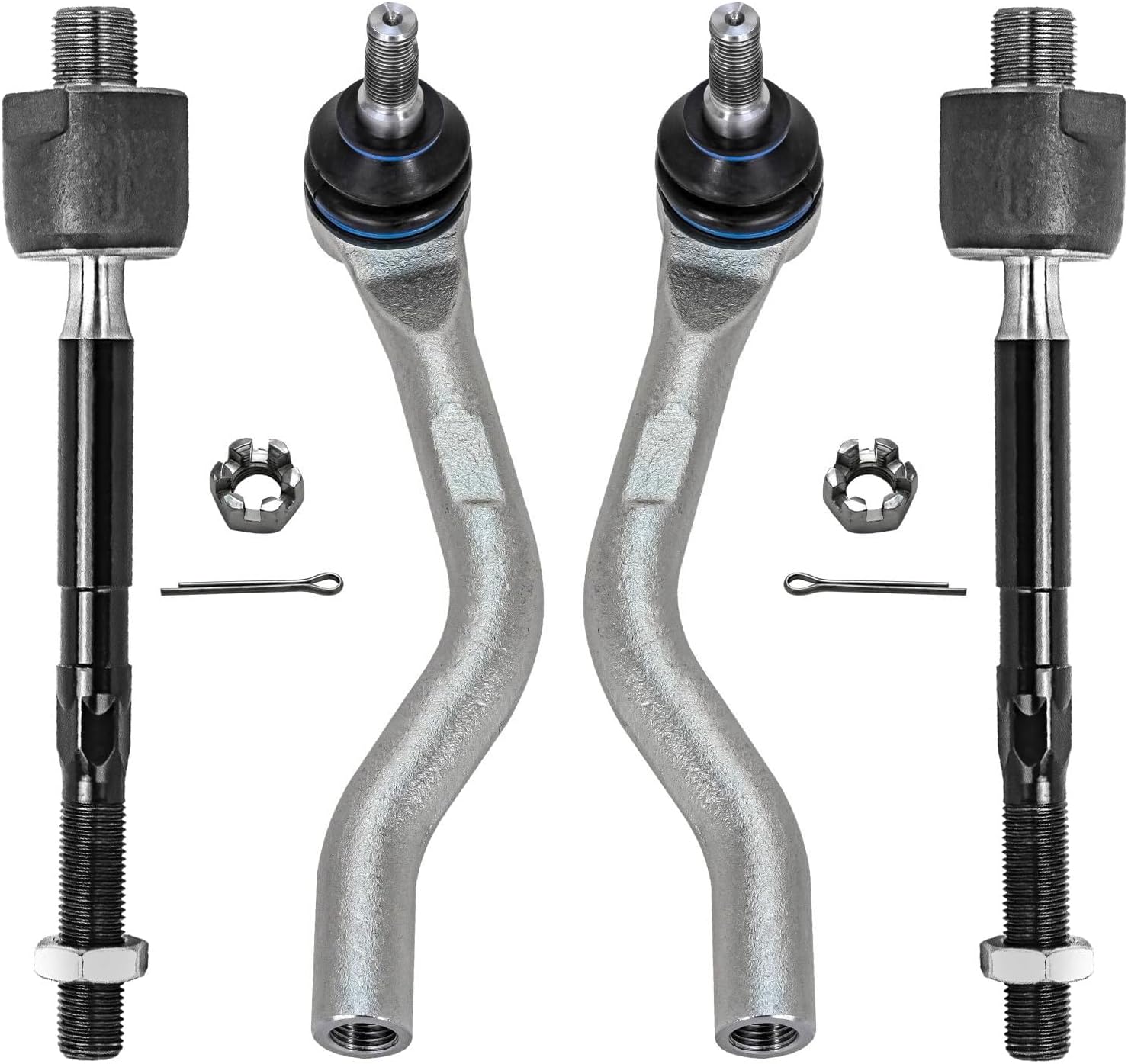
| Fitment | 2016-2025 Honda Civic (No Type R), 2023-2025 Acura Integra, 2019-2022 Honda Insight |
|---|---|
| Kit contents | 2x Front Inner Tie Rods, 2x Front Outer Tie Rods |
| Material | Premium alloy |
| Manufacturer | Detroit Axle |
This Detroit Axle kit supplies two front inner tie rods and two front outer tie rods as a direct-fit replacement for compatible Acura Integra, Honda Civic (non-Type R) and Insight models. It is intended for routine steering and front-end repairs where worn tie rods cause play, uneven tire wear, or loose steering feel. The parts are described as premium alloy with reinforced structure and corrosion resistance, and the kit includes cotter pins and Zerk fittings to simplify installation and lubrication. For drivers focused on sharper steering response, replacing both inner and outer ends together restores tightness to the linkage and makes alignment more reliable after the job. Installation is straightforward for a competent DIYer or shop and customers report good fitment. Limitations are typical of aftermarket tie rod kits: long-term durability can vary with driving conditions and this is a direct replacement rather than an upgraded performance steering component, so it will restore factory handling rather than significantly improve it.
Best for: Drivers who prioritize responsive, predictable steering and want to restore tight factory handling on their Civic or Integra by replacing worn tie rod joints without modifying the steering geometry.
Less Ideal for: Shoppers seeking performance steering upgrades that increase feedback, stiffness, or adjustability should consider dedicated performance steering components instead.
- Complete kit includes both inner and outer front tie rods so all worn steering joints can be replaced at once
- Direct-fit design aimed at matching factory fitment for easier installation and alignment
- Premium alloy construction and enhanced structural design for improved wear resistance
- Includes installation-friendly items such as cotter pins and Zerk fittings
- Not marketed as a performance-upgrade part so it restores factory steering feel rather than increasing precision or stiffness
Verdict: Buy this kit if you want a complete, direct-fit replacement to restore tight, factory-like steering on compatible Honda Civic and Acura Integra models.
3. Metrix Premium Chassis Parts Front Inner Tie Rod End (47339MT)

| Model | 47339MT |
|---|---|
| Manufacturer Part Number | 47339MT |
| Position | Front Inner |
| OE/Interchange | EV800246, 53010SNAA01 |
| Country of Manufacture | Made in Europe |
This Metrix front inner tie rod end replaces the worn steering linkage on compatible Honda Civic models and restores precise steering feel. It is pre-greased and greasable for periodic maintenance, which helps extend service life and keeps movement smooth over time. The part is machined with a locking nut and Allen counterbore to simplify installation and prevent shaft rotation during tightening, making it suitable for DIY mechanics and shops. Metrix highlights corrosion resistance via a cataphoresis coating and says the part is built to meet or exceed OEM quality under IATF 16949 and ISO 9001 standards. Practical benefits include improved steering responsiveness and predictable alignment retention after replacement. Limitations to consider are that this listing is a single inner tie rod end so you may need to buy the matching side or outer tie rods separately, and professional wheel alignment is still required after installation. The part is intended for non-electric steering configurations specified in the fitment notes, so verify your Civic variant before ordering.
Best for: Buyers looking to replace a worn inner tie rod on a Honda Civic who prioritize a low-cost, durable factory-style repair and want a part that is straightforward to install and maintain.
Less Ideal for: Shoppers seeking a complete steering overhaul kit or those who need parts for electric power steering setups should look at full kits or parts specified for those systems instead.
- Pre-greased and greasable design for easier maintenance and longer service life
- Machined construction with locking nut and Allen counterbore for straightforward installation
- Designed and tested to meet IATF 16949 and ISO 9001 quality standards
- Cataphoresis coating to improve corrosion resistance
- Sold as a single inner tie rod end so additional steering parts may be needed for a full repair
Verdict: A budget-friendly, factory-style inner tie rod end that restores steering feel and is easy to install and maintain for Honda Civic replacements.
4. Metrix Premium Chassis Parts Front Inner Tie Rod End (50131MT)

| Model | 50131MT |
|---|---|
| Material | Steel |
| Pre-greased | Yes |
| Compatible vehicles | Honda Civic, Acura Integra, HR-V, Insight (listed years) |
| Manufacturer warranty | 3 Year / 36,000 miles Limited Warranty |
This Metrix inner tie rod end is a direct-fit replacement for a range of late-model Honda and Acura compact cars and is sold as a single pre-greased unit. It connects the steering rack to the steering knuckle, restoring precise steering input and correcting sloppy wheel alignment when the original part has worn. Key features include a greasable design for periodic maintenance, a machined steel construction intended for strength, and manufacturing to IATF 16949 and ISO 9001 processes for consistent quality. In practice the part installs like a factory replacement and reviewers report snug fitment and straightforward installation; the included lock nut and Allen counterbore simplify alignment procedures during removal and installation. The greasable fitting can extend service life if maintained, but buyers should plan a wheel alignment after installation and may prefer replacing both sides at once for even handling. This part carries a limited warranty for added assurance and suits DIYers and shops that want a reliable, factory-spec steering replacement without specialty tools.
Best for: Buyers who prioritize a reliable, factory-like steering replacement for Honda Civic family cars and want a part that installs cleanly and holds alignment when serviced properly.
Less Ideal for: Customers who need a complete kit (inner plus outer tie rod) in one purchase or who prefer lifetime maintenance-free parts without greasing.
- Pre-greased design allows for initial smooth movement and easier maintenance over time.
- Machined steel construction and quality control certifications suggest consistent, factory-quality fit and finish.
- Direct-fit for specified Honda/Acura models so installation mirrors the factory part and is typically straightforward.
- Locking nut with Allen counterbore simplifies installation and reduces risk of thread damage.
- Sold as a single unit so replacing both sides requires purchasing a second part.
- Not suitable for vehicles with electric steering variants if fitment differs; confirm compatibility for specific steering systems.
Verdict: A dependable, pre-greased direct-fit inner tie rod that gives Honda Civic owners a factory-quality steering replacement focused on long-term reliability.
5. Metrix Premium Chassis Parts 4‑Piece Front Inner & Outer Tie Rod End Kit

| Compatible models | 2013-2022 Acura ILX; 2012-2015 Honda Civic |
|---|---|
| Kit contents | 2 inner tie rod ends, 2 outer tie rod ends |
| Certifications | IATF 16949 and ISO 9001 |
| Finish | Cataphoresis plating |
| Position | Front |
This Metrix 4-piece tie rod end kit supplies both inner and outer front tie rod ends to restore steering precision on compatible Civics and ILX models. Intended for DIYers and professional shops, the kit includes two inner and two outer ends sized for the listed vehicles and arrives pre-greased or with greaseable fittings depending on the variant. Key features are high‑grade steel construction, precision ball studs for accurate steering response, cataphoresis plating for corrosion protection, and compliance with production quality standards. In practice the parts drop into standard replacement procedures and most users report straightforward installs and improved steering feel; you will still need a post-install alignment and basic supplies like thread locker or anti-seize. Limitations to note are that parts may not be labeled left/right so matching by length may be required during installation, and some users report castle nut versus regular nut differences compared with factory hardware. Overall this kit is a practical, professionally oriented replacement that balances durability and fitment for the specified Honda Civic years when paired with proper installation and alignment.
Best for: Buyers who prioritize reliable, documented quality and recent positive owner feedback and want a complete front tie rod replacement they can fit themselves or hand to a shop.
Less Ideal for: If you need parts for vehicles outside the listed Honda Civic and Acura ILX model years or prefer factory‑labeled hardware and exact OEM fasteners, look for alternatives that match those constraints.
- Includes both inner and outer tie rod ends for a complete front‑end replacement
- High‑grade steel construction with precision ball studs for improved steering response
- Cataphoresis plating adds corrosion resistance for longer service life
- Pre‑greased or greaseable options reduce maintenance time and wear
- Parts are not always labeled left/right which can require matching by the old components during install
- Some hardware differs from factory design, for example use of a regular nut instead of a castle nut
Verdict: A complete, professionally built inner and outer tie rod kit that delivers improved steering feel and corrosion protection for the specified Civic and ILX model years.
6. BDFHYK 6-Piece Front Inner and Outer Tie Rod End Kit with Rack Boots for Honda Civic/Acura EL (1996–2000)

| Fitment | Honda Civic 1996-2000 (Power Steering, 1.6L); Acura EL 1997-2000 (1.6L) |
|---|---|
| Kit contents | 2 inner tie rod ends, 2 outer tie rod ends, 2 rack bellows boots |
| Material | AISI 1045 medium-carbon steel |
| Recommended service | 4-wheel alignment required after installation |
| Manufacturer | BDFHYK |
This BDFHYK kit supplies the front inner and outer tie rod ends plus rack bellows needed to restore steering feel on older Civic and Acura EL compact sedans. It is sold as a 6-piece set sized to match factory part numbers so installation is usually a direct bolt-in for the specified years and engines, and the included rack boots help seal the steering rack from moisture and road debris. The parts are forged from medium-carbon 1045 steel with heat treatment, which should give good structural strength for daily driving and occasional rough roads. Customers report generally accurate fitment and an easy installation, but a few notes: some users found variable quality on outer end threads and a minority experience early failure, so careful inspection during install is wise. A four-wheel alignment is required after replacement to restore toe and tire wear. For routine maintenance or replacing worn tie rods this kit is a practical, complete option if you want the inner and outer pieces together with protective boots.
Best for: Buyers who prioritize a full, factory-style steering repair and want a ready-to-install kit that replaces both inner and outer tie rod ends and seals in one purchase.
Less Ideal for: If you need a high-end performance steering upgrade or want parts with an extended proven track record in extreme off-road use, consider premium branded or OEM-sourced alternatives.
- Complete kit includes both front inner and outer tie rod ends plus two rack bellows for a single front-end repair
- Engineered to match factory part numbers for direct bolt-on fit to specified Civic and Acura EL models
- Forged 1045 medium-carbon steel with heat treatment for improved structural strength
- Helps eliminate steering play and reduce uneven tire wear when replacing worn components
- Some buyers report inconsistent thread quality on outer tie rod ends and isolated premature failures
Verdict: Choose this kit when you want a single, factory-matching replacement set that restores steering play and includes protective rack boots for Honda Civic and Acura EL models specified.
Choosing the Right Honda Civic Inner Tie Rod End: Key Factors to Consider
Fitment and Steering Geometry
Correct fitment to the Honda Civic s steering rack and control arm is essential. An inner tie rod end must match the rack thread pitch and taper dimensions so the steering alignment angles remain within specification. Improper fitment can introduce toe error or uneven steering response, which increases tire wear and reduces handling predictability.
When evaluating options, check threaded length and taper compatibility with the Civic s steering rack. Some replacements are direct-fit while others may require minor adjustments during installation. Ensuring the correct mechanical interface prevents additional labor and keeps alignment adjustments straightforward.
Durability and Materials
Inner tie rod ends operate under constant load and exposure to road debris and moisture, so material quality matters. Look for hardened ball-stud surfaces, corrosion-resistant plating, and resilient boot materials that resist cracking. Greaseable designs or those with effective factory lubrication extend service life by maintaining smooth articulation under load.
A well-constructed ball and socket reduces play over time, preserving steering precision. Poor materials or thin plating accelerate wear and can lead to looseness that affects steering safety, so prioritize options with clear construction details and robust sealing.
Boot and Seal Design
The protective boot and seal keep contaminants out of the joint and retain lubricant. A torn or poorly sealed boot allows dirt and water to wash lubricant away and abrade internal surfaces, causing rapid wear. Choose inner tie rod ends with durable boots that use molded rubber or thermoplastic compounds designed for temperature and ozone resistance.
Also consider how the boot attaches. Clamped or crimped designs tend to maintain a tighter seal than simple push-fit covers. Reliable seals reduce the frequency of future failures and help maintain consistent steering feel between service intervals.
Serviceability and Installation
How easy an inner tie rod end is to install affects labor time and the likelihood you ll complete the job correctly. Some units allow replacement without removing the steering rack, while others may require extra disassembly. Clear installation features, such as access for tie rod end tools or built-in installation nuts, simplify the process.
Availability of a grease fitting can also influence serviceability. Greaseable assemblies let you refresh lubrication during routine maintenance. Consider whether you have the required tools for removal and torqueing, and whether the part s design reduces the chance of damaging steering components during installation.
Tolerance for Road Conditions
Your local driving environment affects how quickly inner tie rod ends wear. Frequent driving on salted roads, gravel, or through standing water increases exposure to corrosion and impact damage. Choose parts with protective finishes and reinforced boots if you face harsher conditions.
If you regularly encounter potholes or rough surfaces, prioritize assemblies with robust internal geometry and higher load tolerance to resist accelerated wear and maintain steering stability.
Alignment and Adjustment Considerations
Replacing an inner tie rod end will typically affect toe settings and may require a professional alignment. Some replacement options preserve original adjustment range better than others, which simplifies returning the Civic to correct toe specification. Ensure the new part allows enough threaded engagement for precise alignment adjustments.
Also account for whether you plan to reuse the outer tie rod end or replace it at the same time. Coordinating replacements minimizes alignment complications and helps maintain consistent steering geometry after the repair.
Common Symptoms and When to Inspect
Pay attention to early warning signs so you can inspect the inner tie rod end before the issue worsens. Typical symptoms include increased steering play, a clunking noise when turning or going over bumps, and uneven tire wear. Steering tugging or wandering at highway speeds can also indicate inner joint wear.
If you notice any of these symptoms, perform a hands-on check with the front wheels off the ground. Grasp the tie rod near the inner joint and feel for excessive play or rough movement. Catching wear early can prevent more expensive damage to the steering rack or tires.
- Excessive free play when steering
- Clunking or knocking noises over bumps
- Uneven or accelerated tire wear
- Steering wander or instability at speed
Preparing for Replacement on a Civic
Before you start, note the Civic s factory procedures and gather the appropriate tools: a tie rod removal tool or pickle fork, torque wrench, penetrating oil, and jack stands. Secure the vehicle and follow safe lifting practices. Mark the existing toe setting if you plan to reuse the outer tie rod end to help with initial alignment.
Plan for a post-replacement alignment. Even with careful marking, the steering geometry will often require a professional alignment to restore precise toe and prevent premature tire wear. Also inspect related components like the outer tie rod end and ball joints while you have the front end accessible.
- Mark toe position before disassembly
- Have tools ready: removal tool, torque wrench, penetrating oil
- Inspect adjacent steering components during replacement
- Schedule a wheel alignment after installation
Greaseable Vs Sealed Inner Tie Rod Ends
Greaseable inner tie rod ends include a fitting that lets you add lubricant over the life of the joint. This can extend durability in high-mileage or harsh-climate applications by replenishing lost grease and flushing contaminants away from articulating surfaces.
Sealed units require no periodic greasing and reduce maintenance steps, which appeals to owners who prefer a set-and-forget approach. However, if a sealed boot fails, the entire unit typically needs replacement. Choose based on how comfortable you are with routine lubrication and how exposed your Civic is to dirt and moisture.
- Greaseable: longer service potential with maintenance
- Sealed: lower maintenance but full replacement if boot fails
How Replacement Affects Alignment
Installing a new inner tie rod end alters the toe setting and can change steering center. Even if you reuse the outer tie rod, the threads and engagement can shift toe. Expect to have the Civic s alignment checked and adjusted after replacement to ensure safe, predictable handling.
A new part that closely matches the original threaded length and taper reduces the scope of alignment adjustments, making the alignment process quicker and less expensive. Communicate the replacement to the alignment technician so they can target toe and thrust angle adjustments.
- Replacement typically requires a toe alignment
- Matching threaded engagement reduces adjustment range
- Inform the alignment shop that an inner tie rod was changed
Maintenance Tips to Extend Service Life
Regularly inspect the boots and check for grease leakage or cracks. If you drive in winter or on gravel, rinse salt and debris from the wheel wells to limit corrosive effects. For greaseable joints, add grease at recommended service intervals to maintain smooth motion and prevent contamination buildup.
Address other front-end issues promptly. Worn control arm bushings or improper wheel alignment increase stress on tie rod ends and accelerate wear. Keeping suspension components in good condition helps inner joints last longer.
- Inspect boots for cracks or leaks
- Flush salt and debris from wheel wells after harsh conditions
- Regrease greaseable joints at recommended intervals
- Fix worn suspension parts to reduce joint stress
Still looking for the perfect fit?
Select your Honda Civic configuration to see the most relevant Tie Rod Ends recommendations
How We Chose the Best Honda Civic Inner Tie Rod End
We shortlisted inner tie rod ends for the Honda Civic by applying real-world fitment and performance filters that matter to owners. Primary criteria included correct steering geometry fitment to factory specifications and robust ball-stud and taper construction to ensure predictable handling and long service life. We also prioritized materials and protective features that resist corrosion and premature wear, such as plated finishes and quality rubber boots.Durability testing proxies were considered, including bearing surface design and grease retention features that influence longevity under regular driving conditions. Ease of installation was another key filter: options that simplify swapping the inner tie rod without excessive steering rack removal scored higher. Finally, we checked compatibility across common Civic trim and suspension setups to avoid misfitment.Excluded from consideration were parts that lacked clear fitment data, aftermarket components intended only for motorsport chassis modifications, or items with poor documented quality control. The result is a focused list that balances longevity, correct fitment, and installation practicality for typical Civic owners.
Our full evaluation process is outlined in our review methodology.
FAQ
How can I tell if my Honda Civic needs an inner tie rod end replacement?
You will often notice increased steering play, clunking noises when turning or going over bumps, and uneven tire wear. A hands-on check with the wheel off the ground to feel for excessive movement at the inner joint helps confirm wear.
Is replacing the inner tie rod end on a Civic difficult for a DIYer?
Difficulty depends on your mechanical experience and tools. Many Civic owners can replace an inner tie rod with a removal tool and basic hand tools, but accessing the joint and achieving correct torque can be challenging. Plan for a wheel alignment afterward.
Will replacing only the inner tie rod end affect alignment?
Yes. Replacing the inner tie rod typically changes toe settings and usually requires a professional alignment to restore precise steering geometry and prevent uneven tire wear.
Should I replace the outer tie rod end at the same time?
It depends on condition. If the outer tie rod end shows wear or its threads are corroded, replacing both simplifies alignment and ensures consistent steering performance. Inspect the outer joint and factor its condition into your decision.
Are greaseable inner tie rod ends worth the extra maintenance?
Greaseable units can extend service life under harsh conditions because they allow periodic lubrication. If you drive in salty or rough environments and are willing to perform maintenance, they are often worth it; otherwise sealed units reduce upkeep.
How soon should I get an alignment after replacing an inner tie rod end?
Get an alignment as soon as possible after installation, ideally before driving long distances. Even a short drive can cause uneven tire wear if toe is out of specification.
Final Verdict
When replacing an inner tie rod end on a Honda Civic, prioritize correct fitment and durable construction to preserve steering precision and safety. Consider boot quality, whether the unit is greaseable, and how the part s threaded engagement will affect alignment.Balance ease of installation with long-term durability based on your local driving conditions. After installation, plan for a professional alignment to restore toe and handling. Following these priorities will help you choose a reliable inner tie rod end that keeps your Civic steering accurate and safe.
Explore More:
- Check out all Honda Civic parts & accessories
- Explore Tie Rod Ends Maintenance & Repair Guides
- Explore Suspension & Steering
- Browse all Auto Parts
